15 Serene Bedroom Styling Ideas for Better Sleep
A bedroom should be more than just a place to sleep. It should feel like a personal retreat, a calming environment that helps your body and mind slow down at the end of the day.
When a bedroom is styled with serenity in mind, it supports better sleep, reduces stress, and creates a sense of comfort that goes beyond aesthetics. Colors, textures, lighting, and layout all play a role in how restful a space feels.

Serene bedroom styling focuses on simplicity, balance, and intentional choices. Instead of filling the room with visual noise, it prioritizes calm palettes, soft materials, and thoughtful design that encourages relaxation.
Whether your bedroom is large or small, these ideas are designed to help you create a peaceful space that promotes deeper, more restorative sleep.
1. Soft Neutral Color Palette for Visual Calm
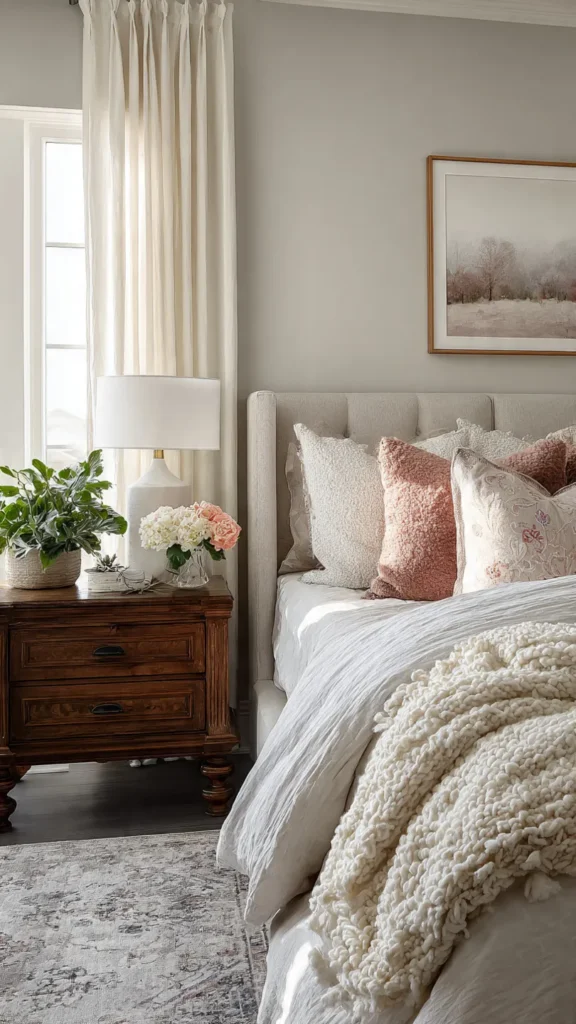
A serene bedroom begins with color. Soft neutrals like warm whites, gentle beiges, light taupes, and muted greys create a soothing backdrop that doesn’t overstimulate the senses. These shades reflect light gently and make the room feel open and airy.
Using a consistent neutral palette across walls, bedding, and furniture helps reduce visual contrast, which can be distracting before sleep. Layering slightly different tones within the same color family adds depth without disrupting the calm atmosphere.
2. Layered Bedding for Comfort and Warmth

Layered bedding isn’t just about style, it directly affects how relaxed you feel when you get into bed. Crisp sheets, a plush duvet, and a lightweight throw create a cocoon-like feeling that signals your body it’s time to rest.
Choosing breathable, natural fabrics like cotton or linen enhances comfort and regulates temperature. Keeping the layers in soft, calming colors reinforces the serene look while making the bed feel inviting at the end of the day.
3. Minimalist Furniture Layout for Mental Clarity
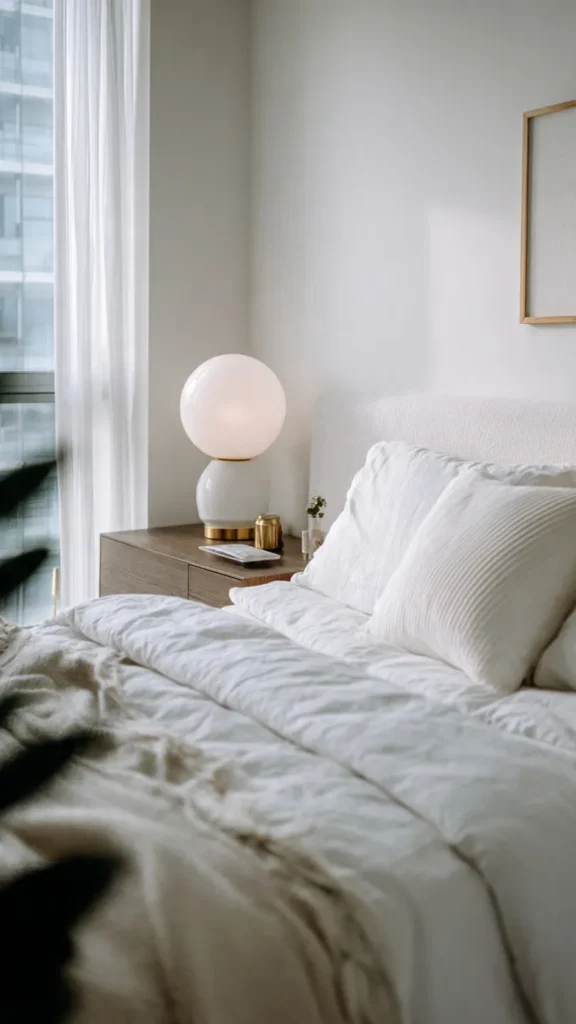
A cluttered layout can make a bedroom feel chaotic, even if the décor is beautiful. Serene styling prioritizes a minimalist furniture arrangement that allows for easy movement and visual breathing room.
Only essential pieces, such as the bed, nightstands, and a dresser, should take up space. Leaving negative space around furniture helps the room feel balanced and reduces mental stimulation, making it easier to unwind before sleep.
4. Calming Lighting Instead of Harsh Brightness
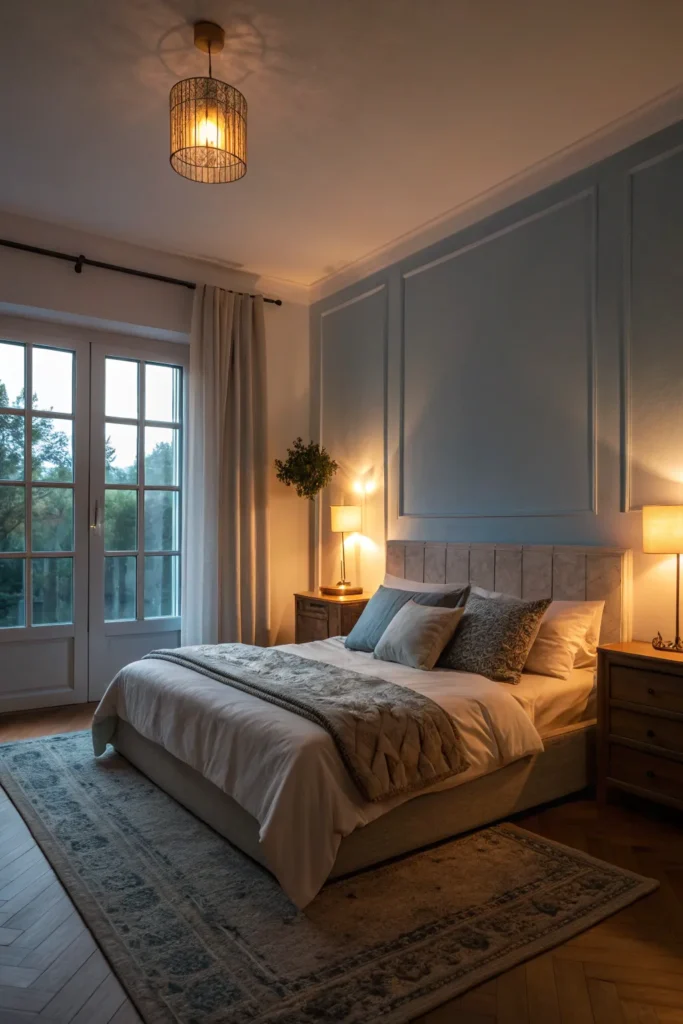
Lighting has a powerful effect on sleep quality. Bright, cool-toned lights can interfere with melatonin production, making it harder to fall asleep. Serene bedrooms rely on warm, soft lighting that mimics evening light.
Table lamps, wall sconces, or dimmable fixtures create a gentle glow rather than harsh overhead brightness. Layered lighting allows you to adjust the mood as the evening progresses, supporting a natural wind-down routine.
5. Natural Materials for Grounding Energy
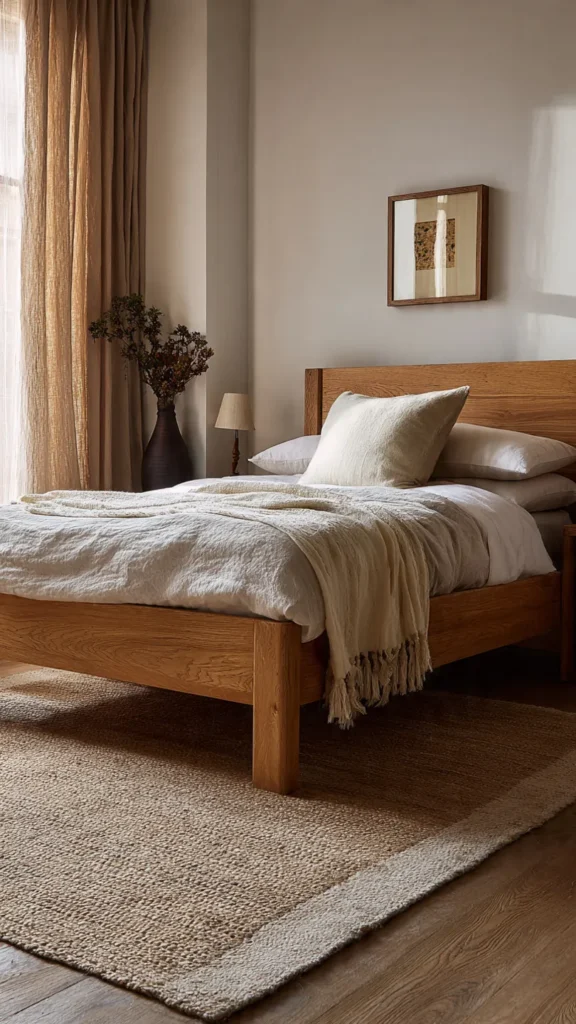
Incorporating natural materials helps create a grounded, calming atmosphere. Wood, linen, wool, and stone bring warmth and texture without visual clutter. These materials connect the bedroom to nature, which has a naturally soothing effect.
A wooden bed frame, woven rug, or linen curtains add subtle interest while maintaining simplicity. Natural finishes age beautifully and contribute to a timeless, restful aesthetic.
6. Thoughtful Window Treatments for Restful Darkness
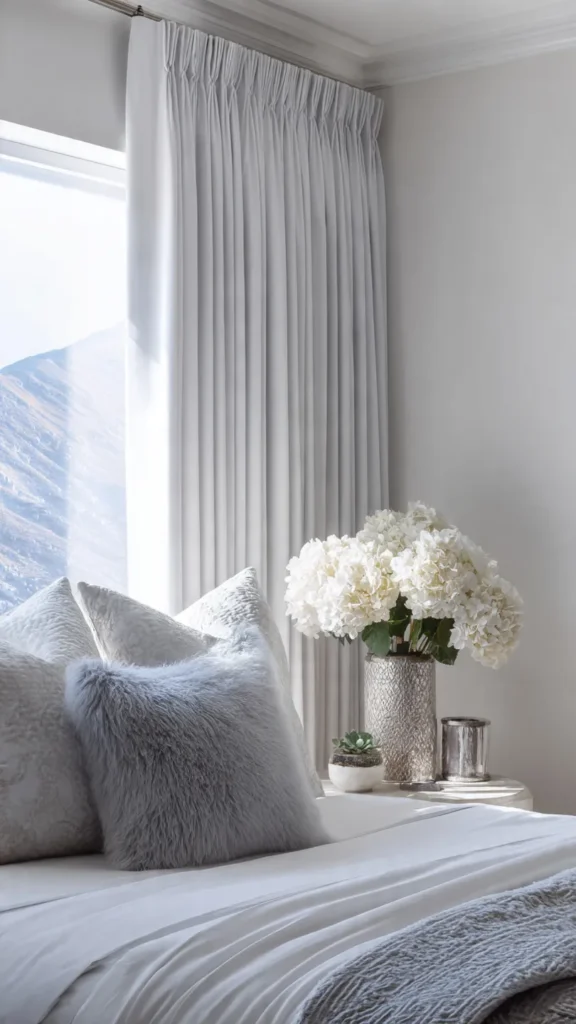
Light control is essential for better sleep. Even small amounts of outside light can disrupt sleep cycles. Serene bedrooms use window treatments that balance softness with functionality.
Sheer curtains layered with blackout drapes offer flexibility, allowing natural light during the day and complete darkness at night. Neutral-toned fabrics maintain the calm visual flow of the room.
7. Decluttered Surfaces for a Peaceful Mind
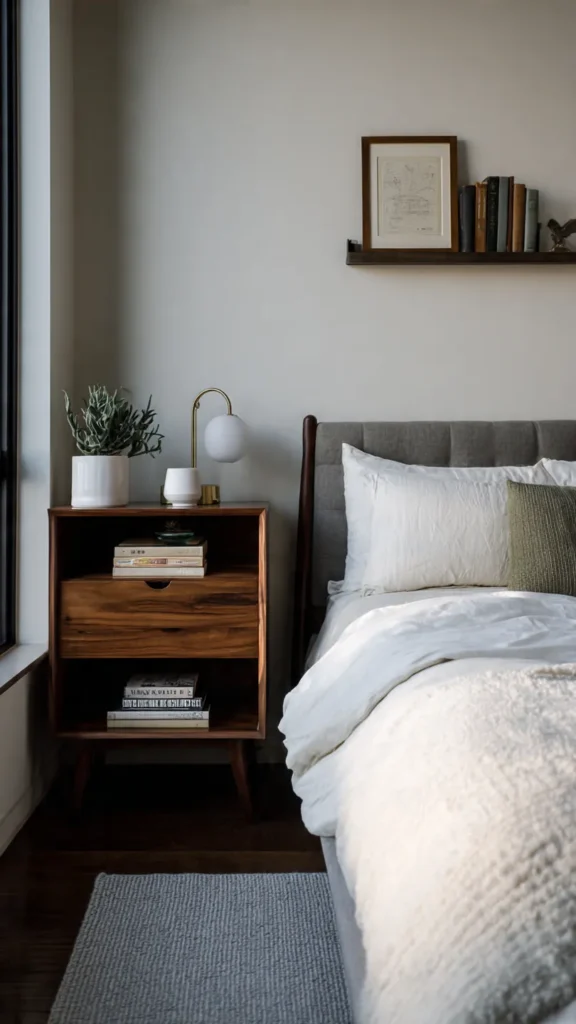
Visual clutter can quietly increase stress levels, even when you’re not consciously aware of it. Keeping surfaces like nightstands, dressers, and shelves uncluttered supports a sense of calm.
Limit bedside items to essentials such as a lamp, a book, or a small tray. Hidden storage solutions help maintain order, making the bedroom feel like a peaceful retreat rather than a storage space.
8. Soft Area Rugs for Comfort Underfoot
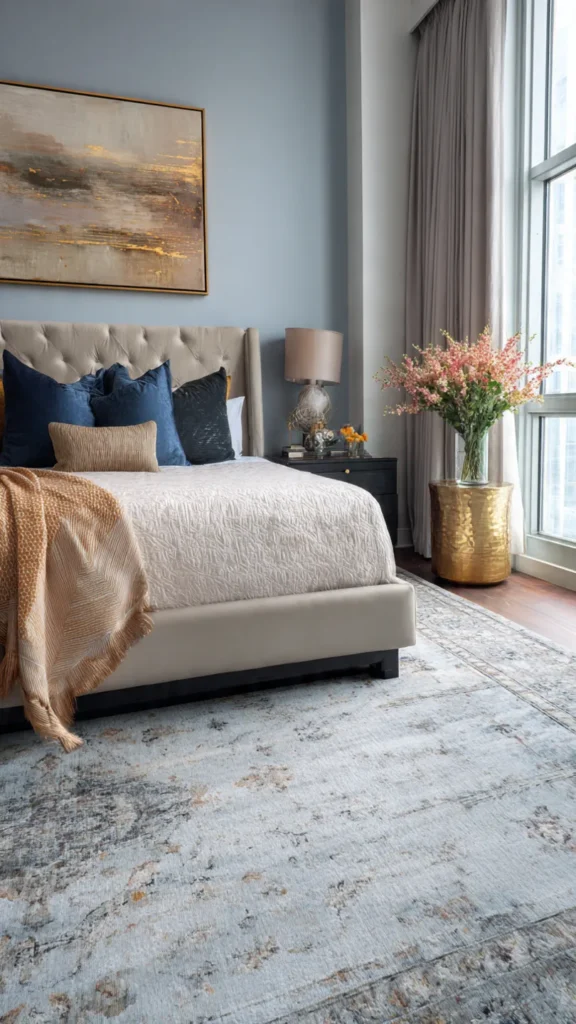
Stepping onto a soft rug in the morning or evening adds a layer of comfort that enhances the overall serenity of the bedroom. Rugs also help absorb sound, making the room quieter and more restful.
Choose low-pile or plush rugs in neutral or muted tones that complement the room’s palette. Placing a rug partially under the bed anchors the space and adds warmth without overwhelming the design.
9. Symmetry for Visual Balance
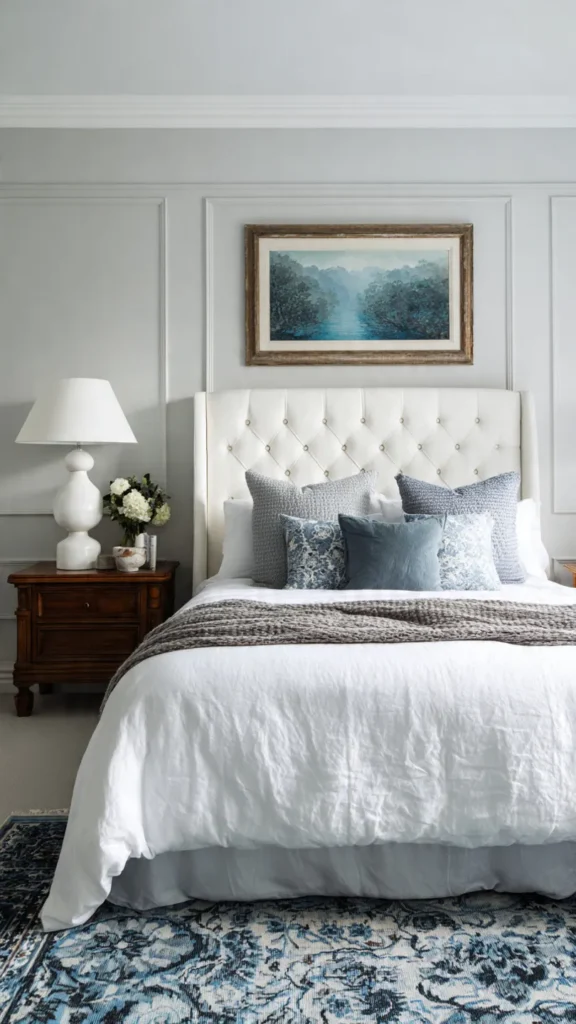
Symmetry creates a sense of order and calm that the brain naturally finds soothing. Matching nightstands, lamps, or pillows bring balance to the bedroom and make the space feel intentional.
This doesn’t mean everything has to be identical, but visual equilibrium helps reduce visual tension. A balanced room feels easier to relax in, supporting better sleep quality.
10. Soft, Breathable Fabrics Throughout the Room
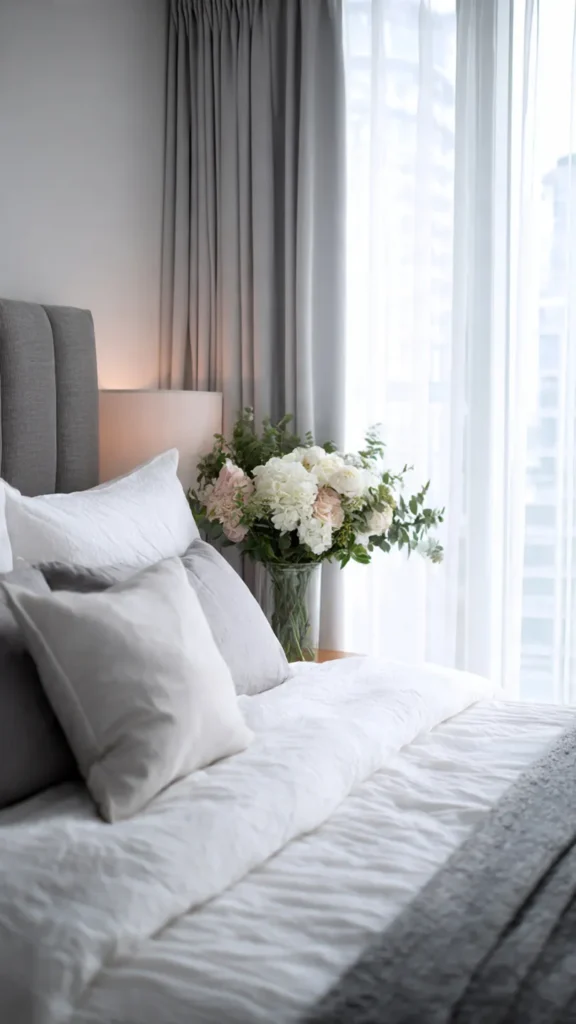
The fabrics you choose affect both comfort and atmosphere. Breathable fabrics like cotton, linen, and bamboo promote better airflow and temperature regulation, which is crucial for restful sleep.
Using these materials in bedding, curtains, and upholstery keeps the room feeling light and comfortable. Avoid heavy synthetic fabrics that can trap heat and disrupt sleep.
11. Muted Artwork for Gentle Visual Interest
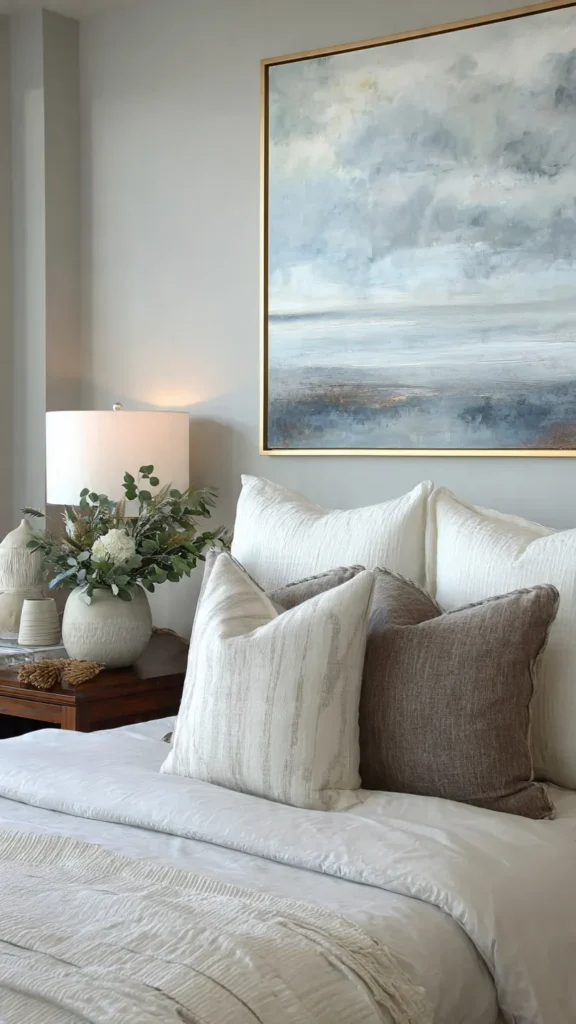
Artwork in a serene bedroom should enhance calm, not demand attention. Soft landscapes, abstract designs, or monochromatic prints add personality without overstimulating the senses.
Choosing artwork with gentle colors and simple compositions keeps the room peaceful. Hanging art at eye level and limiting the number of pieces prevents visual overload.
12. Bed as the Clear Focal Point
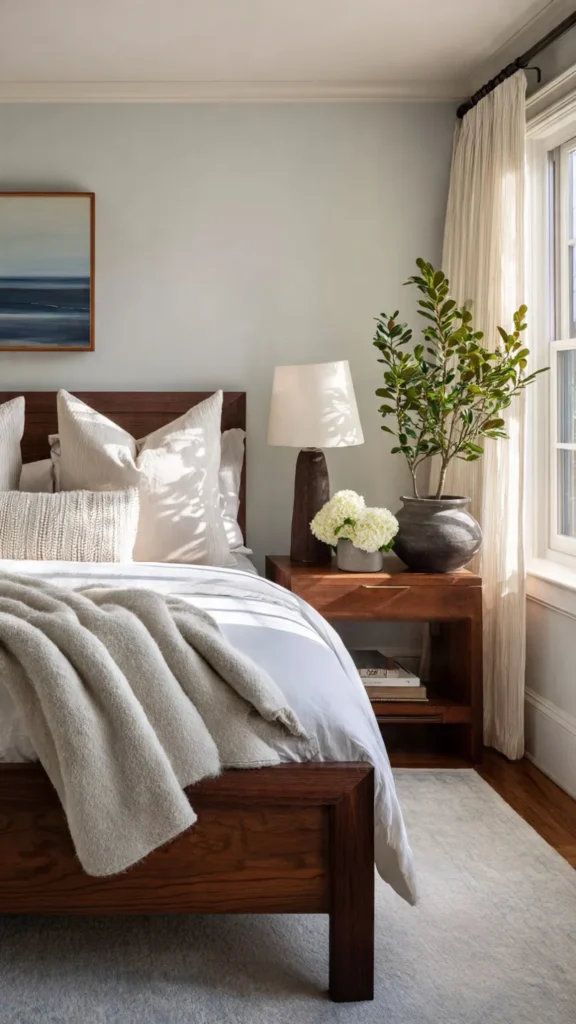
In a serene bedroom, the bed should be the undisputed focal point. Styling the bed with intention anchors the room and creates a sense of comfort and stability.
A well-dressed bed with layered pillows and cohesive bedding draws the eye naturally. Keeping surrounding décor understated ensures the bed remains the visual and emotional center of the space.
13. Subtle Scent Styling for Relaxation
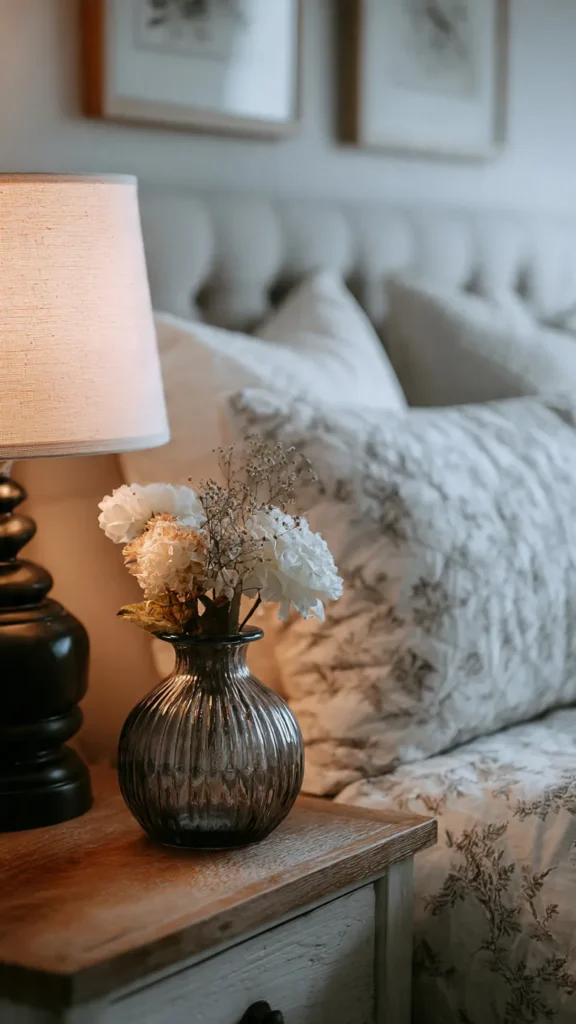
Scent is closely tied to relaxation and sleep. Incorporating subtle, calming scents like lavender, chamomile, or sandalwood can enhance the serene atmosphere.
Use candles, essential oil diffusers, or linen sprays sparingly. The goal is a gentle background scent that signals relaxation, not an overpowering fragrance that distracts from rest.
14. Soft Headboard for Comfort and Quiet
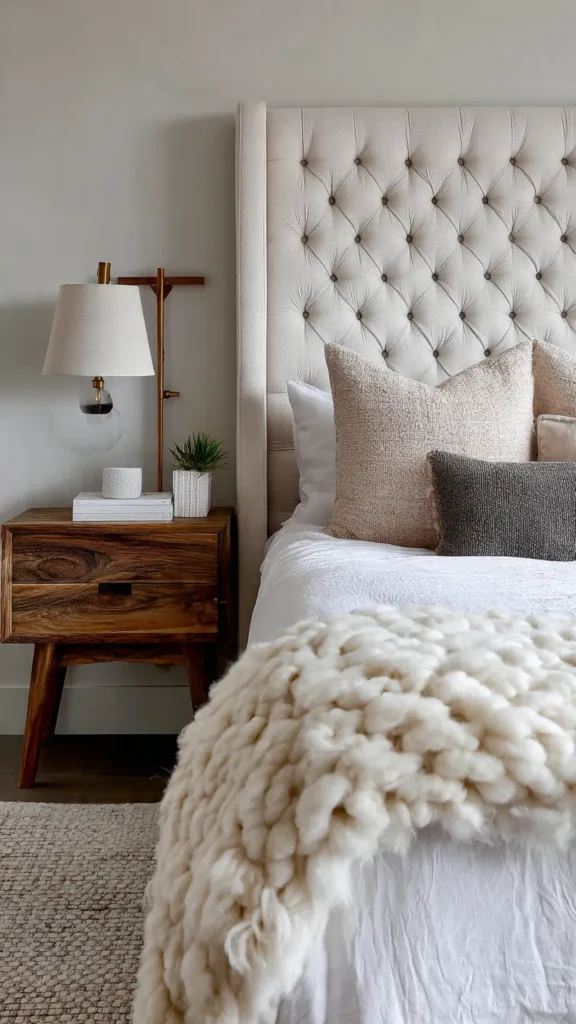
A padded or upholstered headboard adds both comfort and sound absorption. Soft surfaces help reduce noise and create a cozy feeling that supports relaxation.
Choosing a headboard in a neutral fabric keeps the look calm and cohesive. This detail also makes the bed feel more inviting and supportive, especially for reading or winding down.
15. Personal Touches That Feel Restful
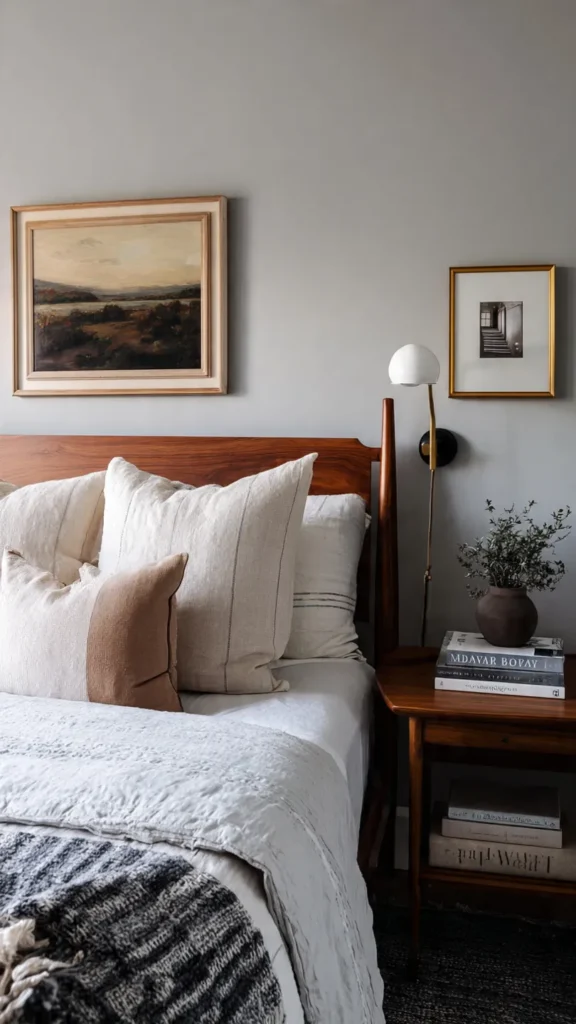
Serenity doesn’t mean removing personality. Thoughtful personal touches, such as a favorite book, a meaningful photograph, or a simple decorative object, make the space feel comforting.
The key is restraint. Choosing a few meaningful items instead of many decorative pieces maintains calm while making the bedroom feel like your own personal sanctuary.
A serene bedroom is built on intention rather than excess. By focusing on calming colors, soft textures, balanced layouts, and gentle lighting, you create an environment that supports better sleep and daily well-being.
When your bedroom feels peaceful, falling asleep becomes easier and waking up feels more refreshing. These serene styling ideas prove that thoughtful design can have a powerful impact on how well you rest and recharge every night.