15 Relaxing Swing and Hammock Ideas for a Cozy Backyard
There is a particular quality of relaxation that swinging and hammocking produce that no other garden furniture can replicate. It is not simply the comfort of the surface or the support of the structure — it is the movement itself, the gentle oscillation that the body finds so instinctively soothing that pediatricians use it to calm infants and physiotherapists use it to rehabilitate adults.
The vestibular system — the part of the brain that processes balance and spatial orientation — responds to rhythmic, predictable movement with a measurable reduction in cortisol and an increase in the kind of calm, diffuse attention that modern life rarely otherwise permits.
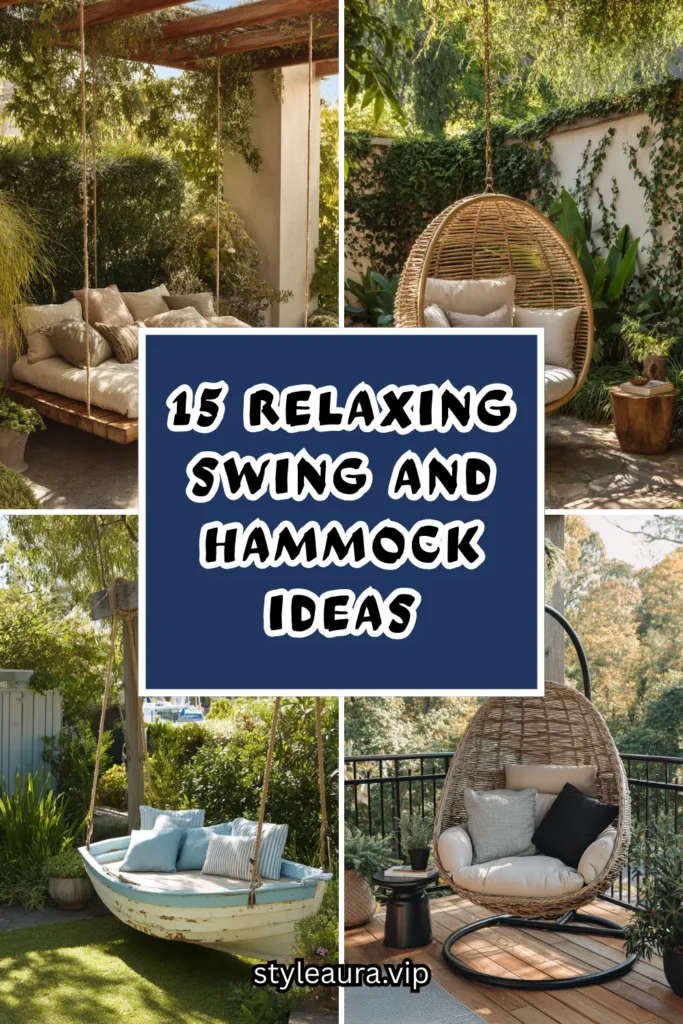
In a backyard context, this neurological fact translates into something simpler and more immediate: a swing or hammock is the piece of garden furniture from which it is hardest to leave, the spot that guests drift toward instinctively and occupy contentedly while the rest of the party circulates around them, the place where the best of a summer afternoon is most completely experienced.
The options available today — in terms of materials, configurations, supporting structures, and aesthetic styles — are more varied and more beautiful than they have ever been. Here are fifteen ideas for bringing this particular pleasure into your backyard in ways that are practical, durable, and genuinely beautiful.
1. The Classic Rope Hammock Between Two Trees
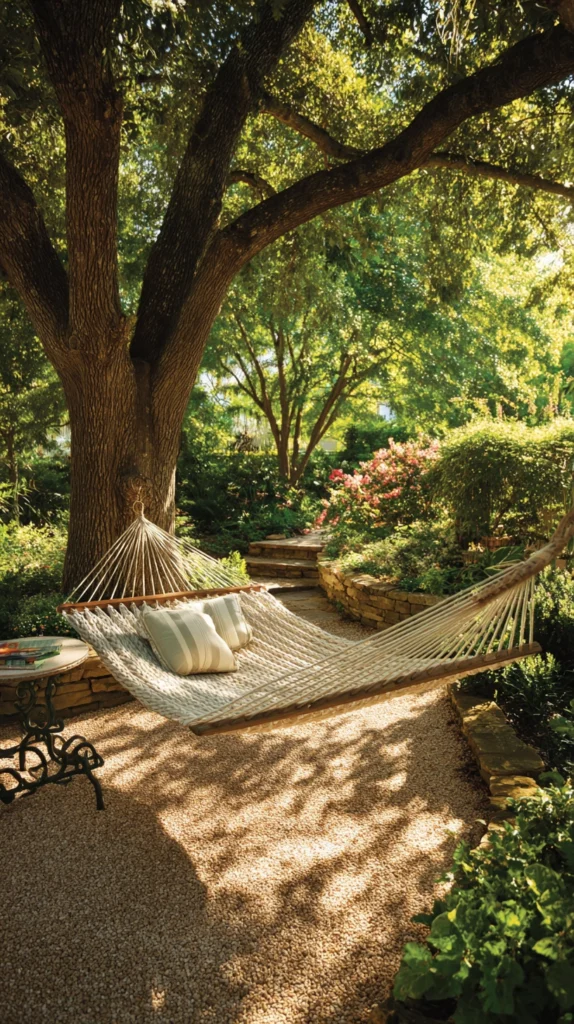
The rope hammock strung between two mature trees is one of those images so deeply embedded in the collective imagination of outdoor relaxation that it has become almost a symbol — the visual shorthand for a summer afternoon perfectly spent.
Its persistence in the imagination reflects its persistence in reality: a well-made rope hammock in a correctly chosen location is one of the most pleasurable objects in the history of outdoor furniture, and the combination of its open weave, its gentle give, and its suspended movement creates a sleeping and resting experience that has no close equivalent.
The trees should be approximately four to five meters apart, of sufficient maturity and diameter to support the hammock’s load safely, and the hammock should be hung at a height that allows easy entry and exit — approximately fifty centimeters at the lowest point of the sag when occupied.
Attach the hammock with tree-friendly straps rather than screws or bolts to protect the bark, and choose a rope construction in weatherproof polyester or cotton-polyester blend for durability alongside the traditional aesthetic.
2. A Freestanding Hammock Frame for Flexible Placement

The freestanding hammock stand — a powder-coated steel or hardwood frame that supports a hammock independently of any trees or structural supports — liberates the hammock from the tyranny of tree placement and makes it available in any backyard regardless of the presence or spacing of suitable trees.
A quality freestanding frame is also genuinely portable, which means it can be repositioned throughout the season as the garden’s shade and sun patterns change, moved to the best spot on any given afternoon, and stored indoors or under cover during winter.
The hammock itself can be changed between different styles and fabrics on the same frame — a woven cotton hammock for summer days, a padded hammock with fabric cover for cooler evenings — giving the setup a versatility that fixed-point hammocks cannot match. Choose a frame with a curved arc rather than a flat one for the most ergonomically correct hammock hang angle, and ensure the frame’s footprint fits your available space before purchase.
3. The Hanging Egg Chair as a Backyard Focal Point
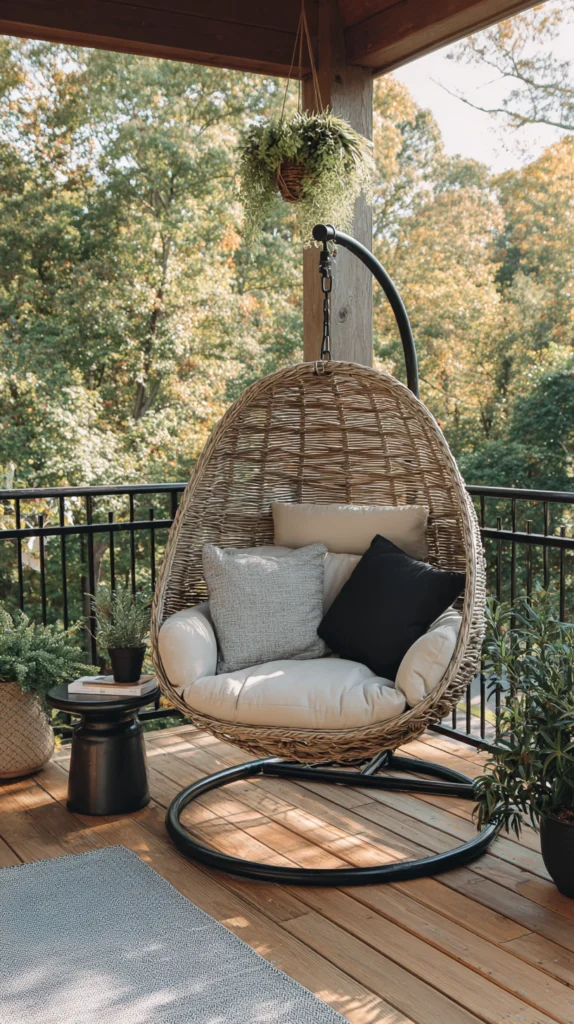
The hanging egg chair — a large, roughly spherical rattan, wicker, or synthetic wicker chair suspended from a single overhead point — occupies a unique position in outdoor furniture design as an object that is simultaneously functional and sculptural, a piece of garden furniture that looks as good in a photograph as it feels in person.
Its enclosed form creates the sensation of gentle enclosure within the garden’s open space — a personal bubble of comfort and privacy that is particularly appealing in gardens overlooked by neighbors or positioned in busy family outdoor spaces.
A hanging egg chair suspended from a purpose-built timber or metal A-frame, a pergola beam, or a sufficiently strong tree branch is a destination within the garden that virtually every visitor will seek out and be reluctant to leave. Cushion the interior generously in a weather-resistant fabric — preferably a removable cover that can be washed and dried — and add a small side table or floor-mounted tray nearby for drinks and reading material.
4. A Porch Swing on a Covered Structure
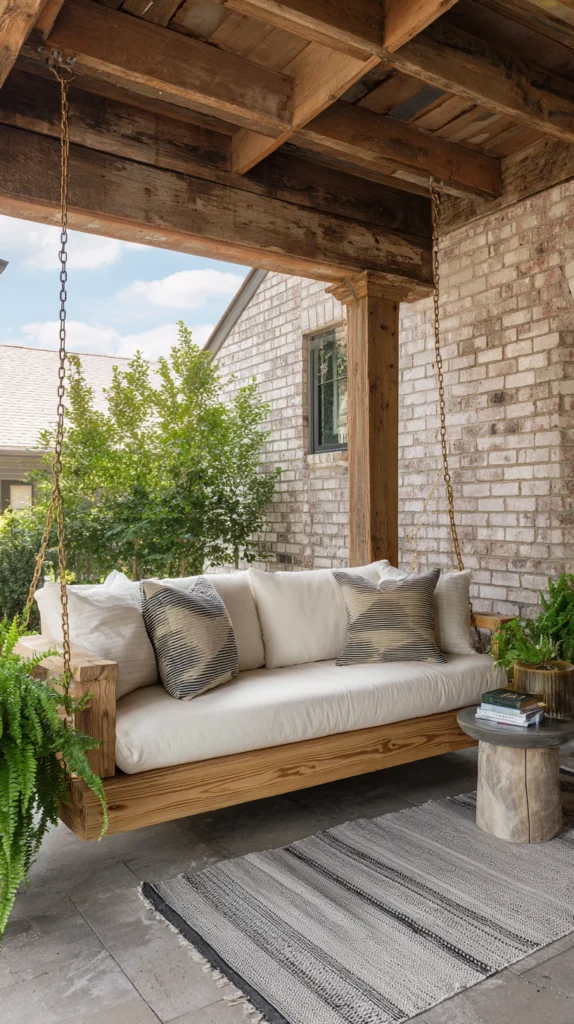
The porch swing — a wooden bench seat suspended from the ceiling of a covered porch, verandah, or pergola structure on chains or ropes — has the deepest roots of any swing in the domestic landscape, its image associated with a particularly appealing vision of slow, unhurried domestic life that transcends any specific architectural tradition.
A porch swing on a covered outdoor structure offers a quality that most other swings and hammocks cannot: protection from both sun and rain, which means it is usable in a significantly broader range of weather conditions than any exposed garden swing.
A teak or painted hardwood porch swing, hung at the correct height and angle from solid ceiling joists with appropriately rated chain or rope, with a cushion in a weather-resistant outdoor fabric, becomes the most-used piece of furniture in the outdoor space across virtually every season. Add a small side table at one end and it functions as a reading chair, a breakfast spot, and an evening relaxation zone as well as the social gathering point it naturally becomes.
5. A Double Hammock for Shared Relaxation
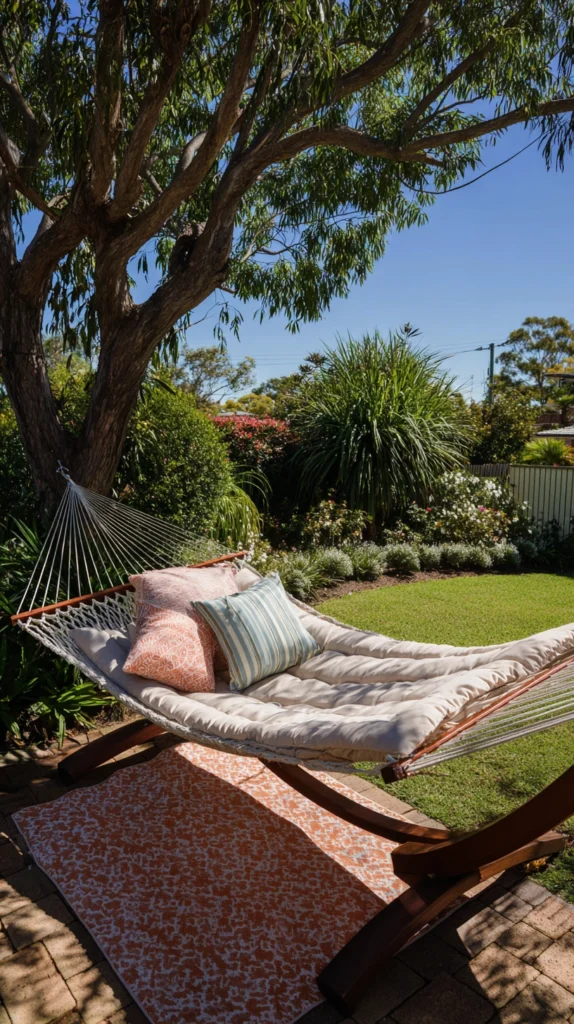
The double hammock — wider than a standard single, sized to accommodate two adults side by side or a single adult with a generous spread — is a significantly underrated option in the hammock category, because the additional width transforms the experience from something slightly precarious and individually focused into something genuinely spacious and socially comfortable.
Lying in a double hammock with a partner, a child, or a friend while a garden afternoon unfolds around you is one of those simple pleasures that is difficult to replicate through any more complicated or expensive means, and the double hammock enables it in a way that two adjacent single hammocks never quite achieve — the shared movement, the proximity, the involuntary conversation that the shared space produces.
Hang it from a wide-set pair of trees or from a freestanding frame specifically sized for double hammocks, and line the exterior with a mosquito net panel on a warm summer evening.
6. A Garden Swing Seat with Canopy
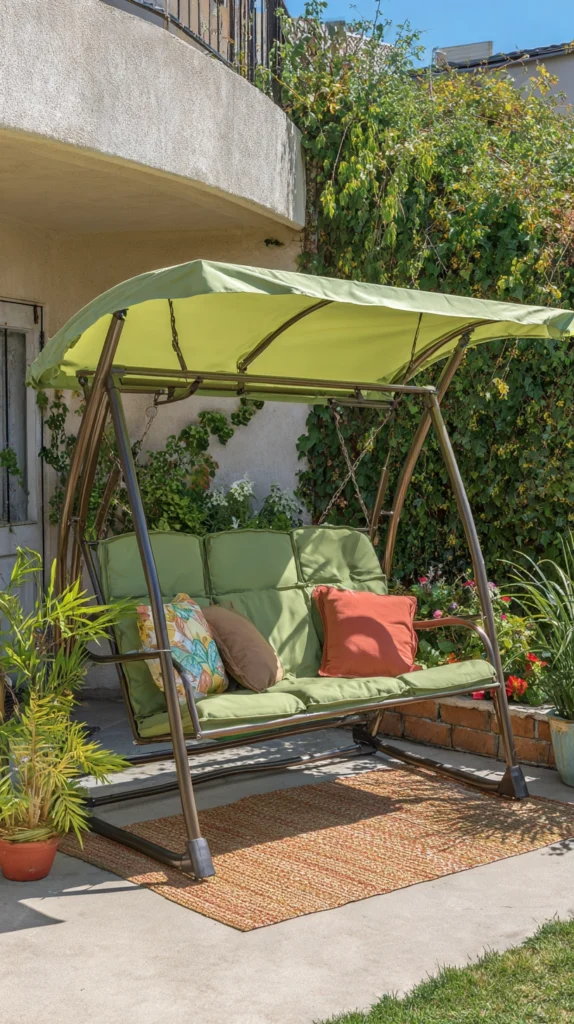
The garden swing seat with an integrated canopy — a two or three-person bench seat suspended within a rigid frame that also supports a fabric roof panel — is the most weather-resistant and most practically versatile of all backyard swing options, and its combination of shade, protection, and gentle movement makes it the preferred choice for gardens where afternoon sun is intense or where passing showers are a regular feature of the outdoor entertaining experience.
Modern versions of this classic garden furniture form have moved well beyond the rather utilitarian aesthetic of earlier generations, with frames in powder-coated aluminum or painted steel and canopy fabrics in sophisticated colors and patterns that suit contemporary outdoor spaces with real style.
The canopy fabric is typically replaceable — an important practical consideration for a piece of furniture that is exposed to UV, rain, and dirt over multiple seasons — and the cushion covers should be removable and machine washable.
7. A Macramé Hammock Chair for Boho Garden Style
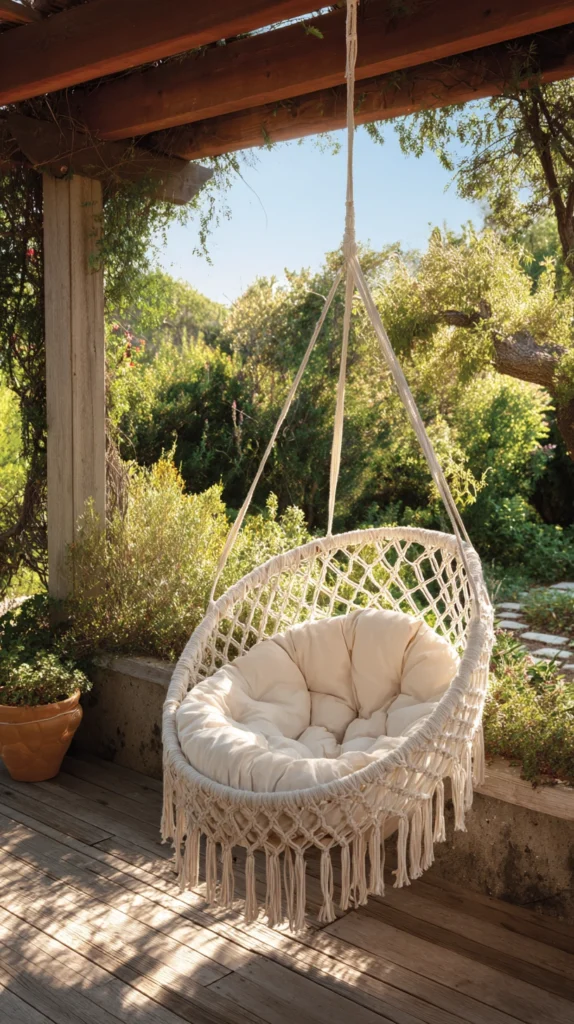
The macramé hammock chair — a hanging seat constructed from knotted natural or synthetic cord in traditional or contemporary macramé patterns — brings a handcrafted, textural quality to the backyard that wicker, timber, and metal alternatives cannot replicate.
Suspended from a single ceiling point on a pergola, from a tree branch, or from a purpose-built stand, the macramé hammock chair has a visual lightness — you can see through it, around it, the garden continues visibly behind it — that makes it ideal for smaller outdoor spaces where a more substantial piece of furniture would feel visually heavy.
The cord used should be weather-resistant if the chair will be left outside — synthetic materials treated for UV and moisture are available in the natural tones that give macramé its characteristic warmth. Add a round seat cushion in a complementary outdoor fabric for comfort without compromising the chair’s visual delicacy.
8. A Woven Cocoon Chair for Intimate Enclosure
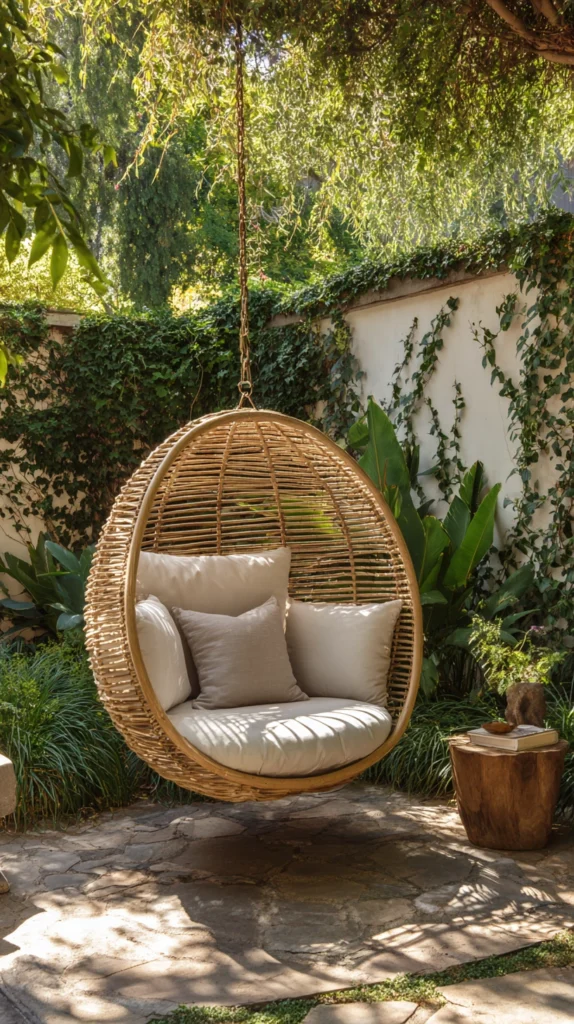
The cocoon chair — a hanging seat that fully encloses the occupant in a woven or upholstered shell, accessed through a single opening at the front — takes the egg chair concept further toward complete enclosure, creating an experience of outdoor sitting that is genuinely unlike any other available to the garden furniture market.
Inside a cocoon chair, with the garden visible through the opening and the gentle swing of the suspended form, the sensation is of being simultaneously within the garden and protected from it — an outdoor version of the interior room within a room that the best architectural niches produce.
This chair suits gardens with a strong privacy element — enclosed by hedging, walls, or fencing — where the sense of being within a defined outdoor space amplifies the cocoon’s enclosing quality. Choose a woven synthetic rattan for durability and a natural aesthetic that ages gracefully.
9. A Timber A-Frame Swing with Bench Seat

The classic A-frame swing — two triangular timber supports at either end of a horizontal beam, from which a bench seat is suspended on chains — is the backyard swing in its most archetypal form, and its appeal to adults is not fundamentally different from its appeal to the children for whom it is typically associated.
A well-built adult A-frame swing in hardwood or pressure-treated softwood, with a generous bench seat in teak or painted timber and chains of sufficient rating for adult loads, gives a backyard a focal point of genuine warmth and nostalgic charm.
Position it where the swing’s arc is unobstructed — nothing within two meters in front of or behind the seat at full extension — and on a surface of compacted bark, rubber mulch, or fine gravel that will not become muddy with regular use. A garden swing of this kind positioned at the far end of a lawn, beneath the shade of a tree, is one of the most inviting sights in the domestic outdoor landscape.
10. A Suspended Daybed for the Ultimate Outdoor Lounging
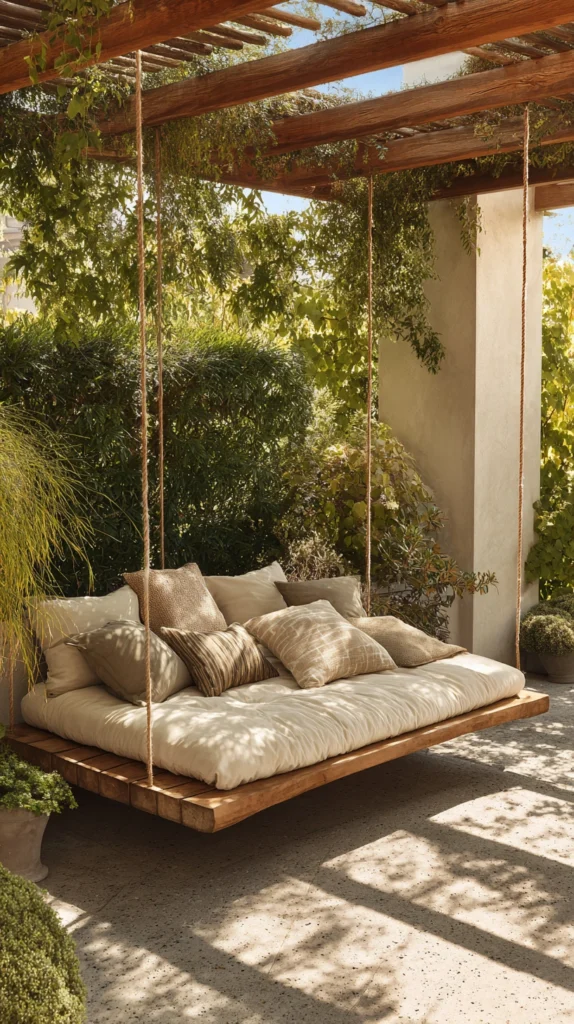
The suspended daybed — a full-length lounging surface, sized to accommodate a reclined adult, hanging from four points on a pergola or freestanding frame — is the most luxurious and most genuinely restful outdoor swing option available, sitting at the intersection of hammock, swing, and outdoor sofa in a way that combines the best qualities of all three.
Unlike a hammock, a suspended daybed has a rigid or semi-rigid base that supports the mattress or cushion pad without the lateral instability that rope construction introduces, making it easier to sit up on, read on, and occupy for extended periods without the slight athletic effort that hammock use requires.
The gentle swinging motion is present but subtle — more of a sway than a swing — and the generous surface area means that two people can use it simultaneously with genuine comfort. Shade is essential: position the daybed beneath a pergola, beneath a shade sail, or invest in a model with an integrated canopy.
11. A Garden Hammock with Mosquito Net Enclosure
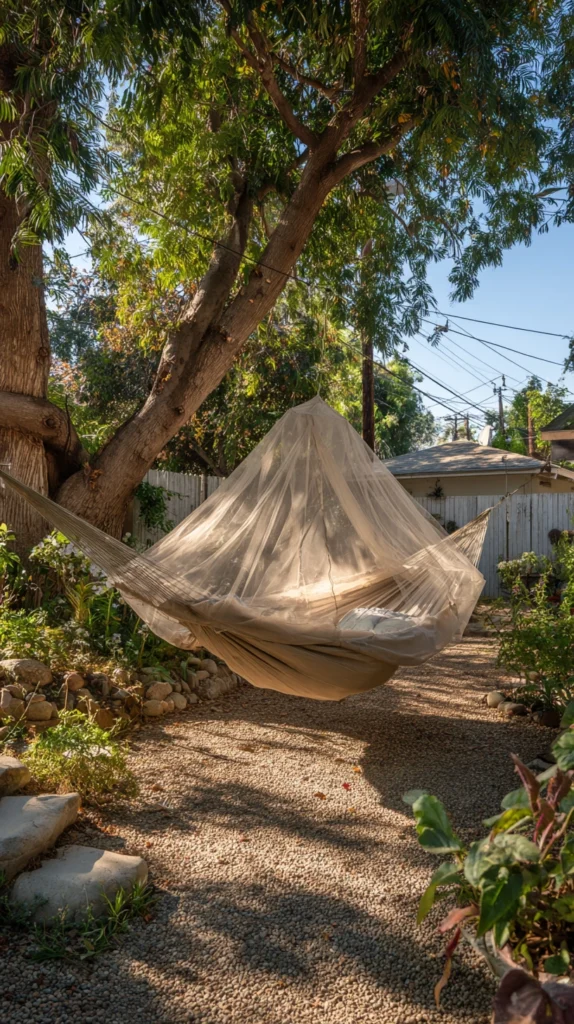
For gardens in climates where warm evenings bring insect activity that limits the enjoyment of outdoor relaxation, a hammock with a fitted mosquito net enclosure is one of the most practically rewarding upgrades available to the backyard sleep and relaxation experience.
The net enclosure — typically a fine mesh canopy that hangs over the hammock on a spreader bar and can be gathered and tied back when not needed — transforms the hammock from a daytime-only relaxation option into a genuine outdoor sleeping possibility on warm summer nights, and extends the comfortable evening use of the backyard by hours on those mid-summer evenings when the air is warm but the mosquitoes are active.
Choose a net with a fine enough mesh to exclude midges as well as mosquitoes, and ensure it can be fully closed and secured at the hammock’s entry point to prevent insects from entering once you are inside.
12. A Repurposed Boat Swing for Nautical Character
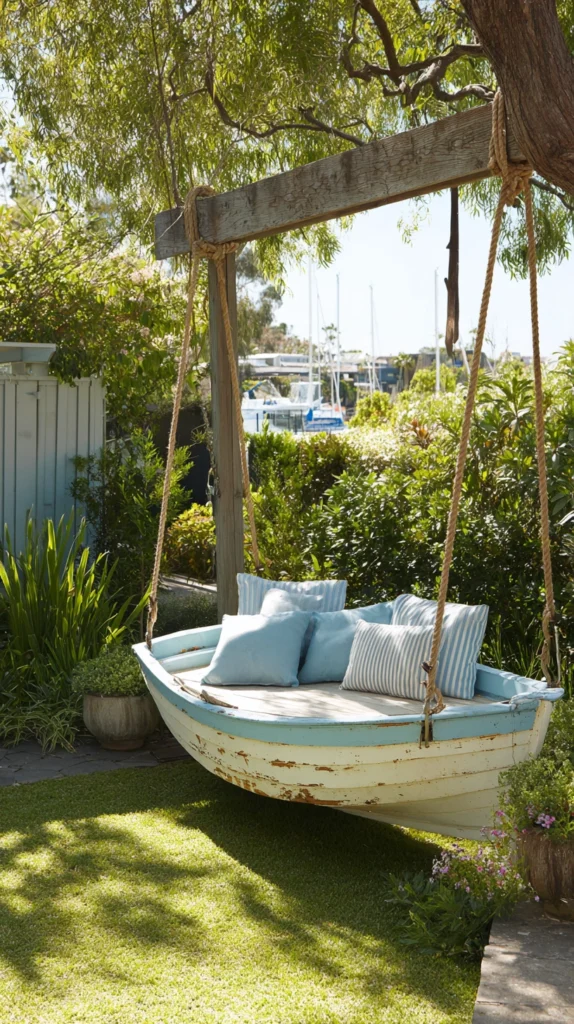
A swing constructed from a repurposed wooden boat hull — either a small dinghy hung from its gunwales by heavy rope or chain, or a purpose-built swing seat in the form of a simplified boat shape — brings a nautical narrative to the backyard that is genuinely distinctive and deeply charming.
The boat swing works particularly well in coastal gardens, lakeside properties, and any outdoor space that has a connection to water in its landscape or architecture, but it translates equally well to an inland garden where its whimsy and originality are appreciated on their own terms rather than as a literal reference.
The boat form is generously sized and naturally shaped to accommodate a reclining adult, and the visual weight of a painted wooden hull suspended from ropes between two posts or from a timber frame has a sculptural presence in the garden that conventional swings simply cannot match.
13. A Hammock Strung on a Simple Timber Post Frame
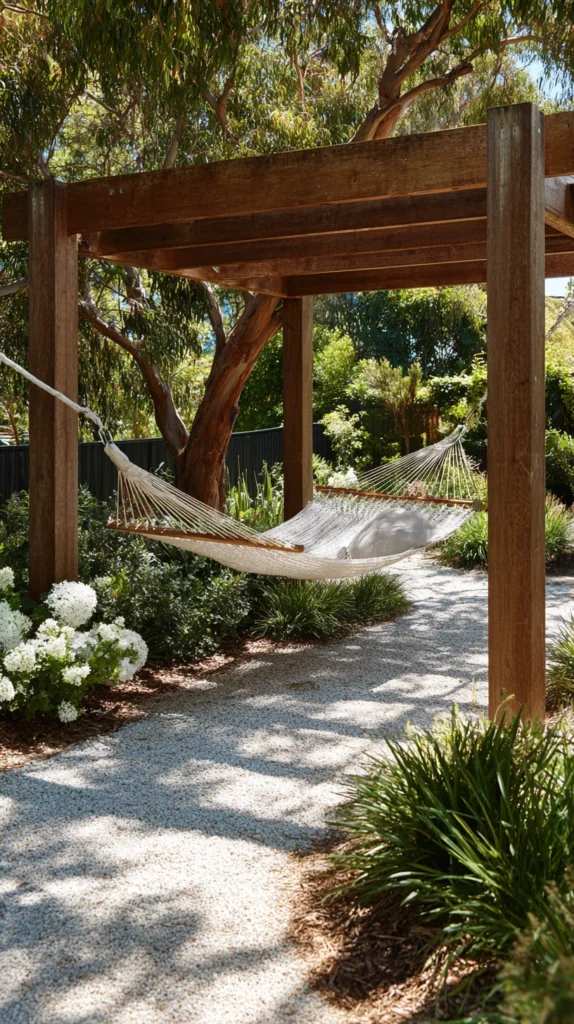
For gardens without suitable trees and where a commercial freestanding frame feels too industrial or insufficiently sympathetic to the garden’s aesthetic, a simple custom timber post frame — two upright posts set in concrete with a horizontal beam connecting them at the top — provides the cleanest, most architecturally satisfying support structure for a hammock available to the home garden.
The posts can be finished in a timber species and treatment that suits the garden — raw oak weathers to silver-gray, painted softwood can match any fence or building color, oiled hardwood maintains its warm tone indefinitely — and the horizontal beam can be sized generously enough to serve as a mounting point for additional hanging elements: a bird feeder, a string of lights, a hanging planter — alongside the hammock itself. The minimal frame disappears into the garden landscape in a way that a commercial steel stand never quite manages.
14. A Swing Integrated into a Treehouse Platform

A treehouse platform — even a relatively modest raised deck built around or between mature garden trees — gains enormously from the addition of a swing suspended either from the platform structure itself or from the tree branches above it, because the combination of elevated position and suspended movement creates an experience that is far greater than the sum of its parts.
A simple timber swing seat on rope, hung from the treehouse structure and positioned to swing out over the garden below, gives children and adults alike the particular pleasure of swinging through space with the garden spread out beneath them — a perspective on the outdoor space that no ground-level swing can provide.
The swing also makes the treehouse platform more appealing to adults than it would otherwise be, giving them a reason to ascend and a pleasurable activity to occupy them once they have.
15. A Seasonal Hammock Nook with Surrounding Planting
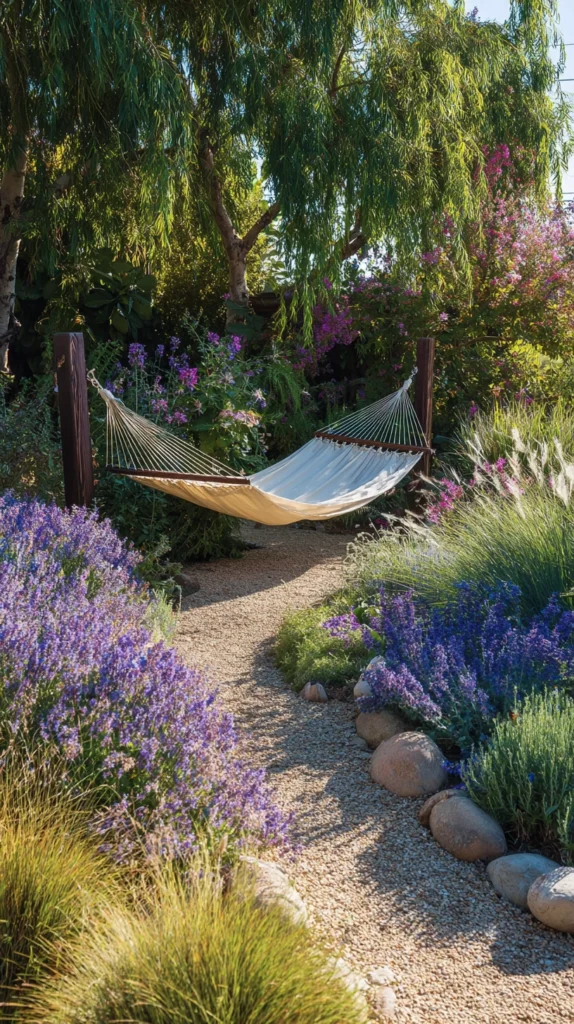
The most complete and most beautiful backyard hammock arrangement is one that integrates the hammock into a specifically designed garden nook — a planted, defined area where the hammock is the centerpiece of a broader landscape composition rather than simply a piece of furniture placed in a garden.
Two posts or trees at the hammock’s anchor points, surrounded by generous planted beds of fragrant, tactile plants — lavender, rosemary, ornamental grasses, climbing roses on additional posts — with a surface of compacted gravel or bark beneath the hammock and a simple path leading to the nook from the main garden, creates a destination within the garden that has been genuinely designed for the experience of being in a hammock rather than simply accommodating one.
The planting frames the hammock visually from the main garden, provides fragrance and movement in the breeze, and ensures that whoever is lying in the hammock is surrounded by growing things rather than simply suspended above a lawn. This is the hammock nook in its most resolved and most rewarding form, and it represents the backyard relaxation space at its most thoughtfully, most beautifully realized.