15 Rectangle Living Room Layout Ideas for a Balanced Look
Rectangle living rooms are one of the most common architectural shapes in homes, yet many people struggle to style and organize them without making the space feel tight or uneven. The trick is to understand how to distribute furniture, create walking paths, and visually balance the long, narrow proportions of the room.
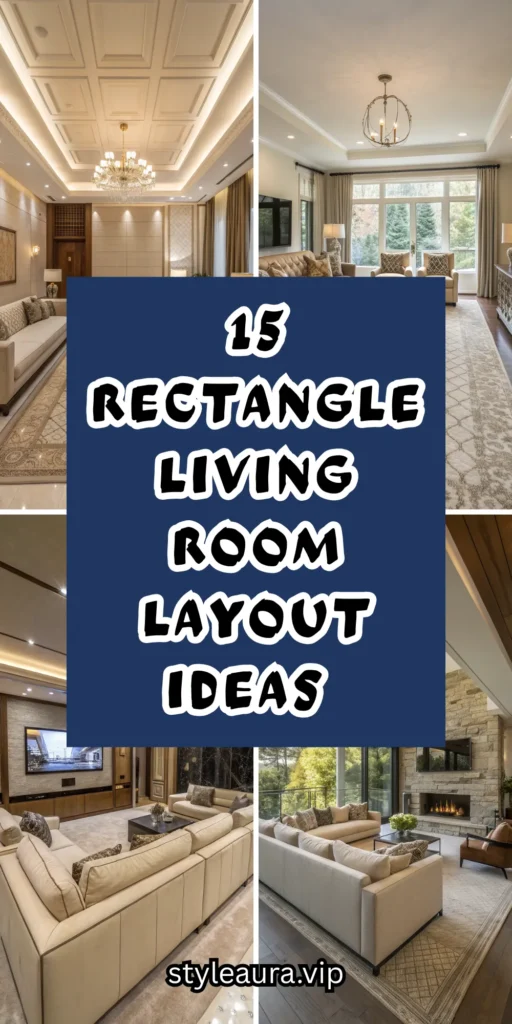
Whether you have a small rectangular living room or a spacious one, thoughtful arrangements can transform it into a comfortable, welcoming, and well-balanced space. Here are fifteen rectangle living room layout ideas that help you maximize function and beauty.
1. Create a Centered Seating Zone
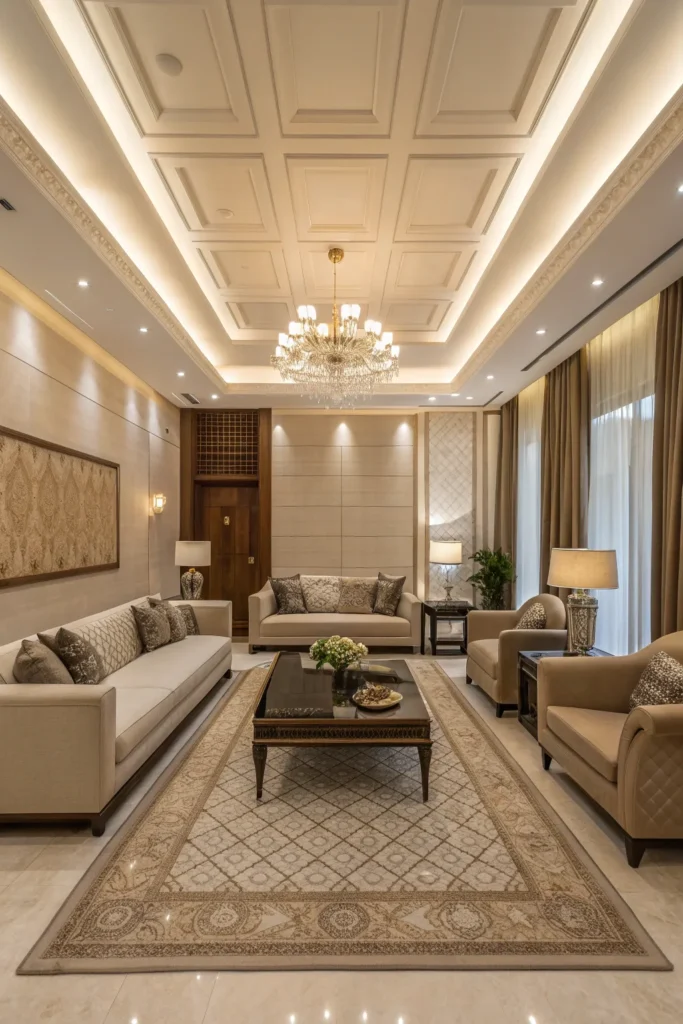
One of the easiest ways to balance a rectangular living room is by pulling furniture toward the center. Float your sofa and chairs away from the walls and arrange them around a coffee table. This creates symmetry and a strong visual core while keeping the long walls from feeling empty. It also helps with conversation flow since the seating pieces face inward.
2. Use a Rug to Anchor the Space
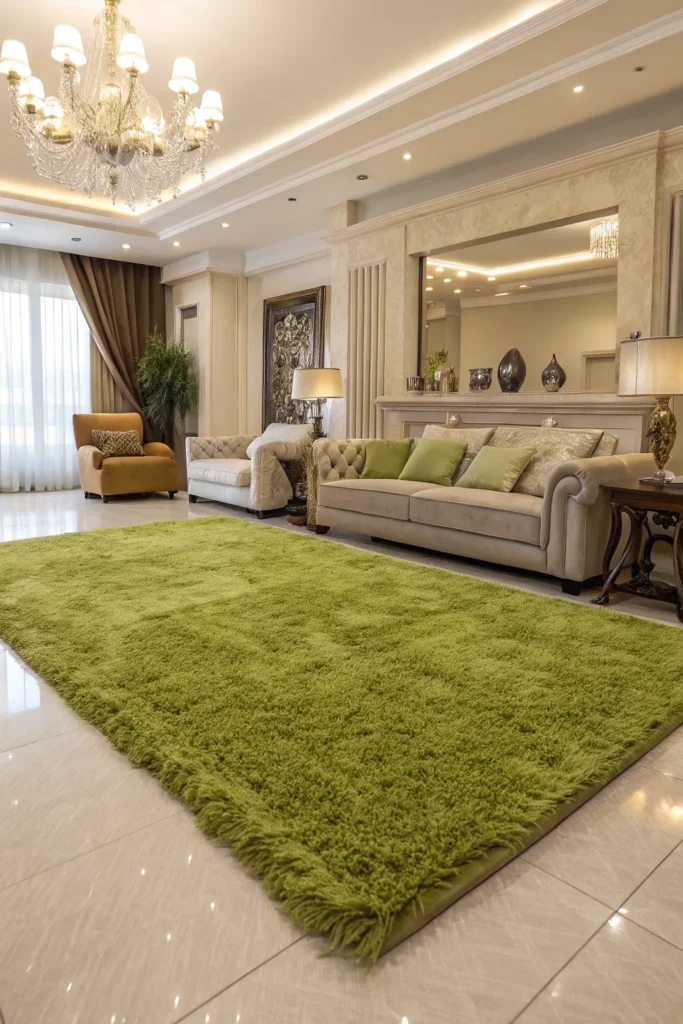
A rectangular living room benefits from a large area rug that defines zones and prevents the room from looking too stretched out. Choose a rug that fits the seating arrangement with at least the front legs of all furniture on top. This creates a cohesive layout, softens the linear dimensions, and visually pulls everything together for a balanced, grounded look.
3. Create Two Separate Zones
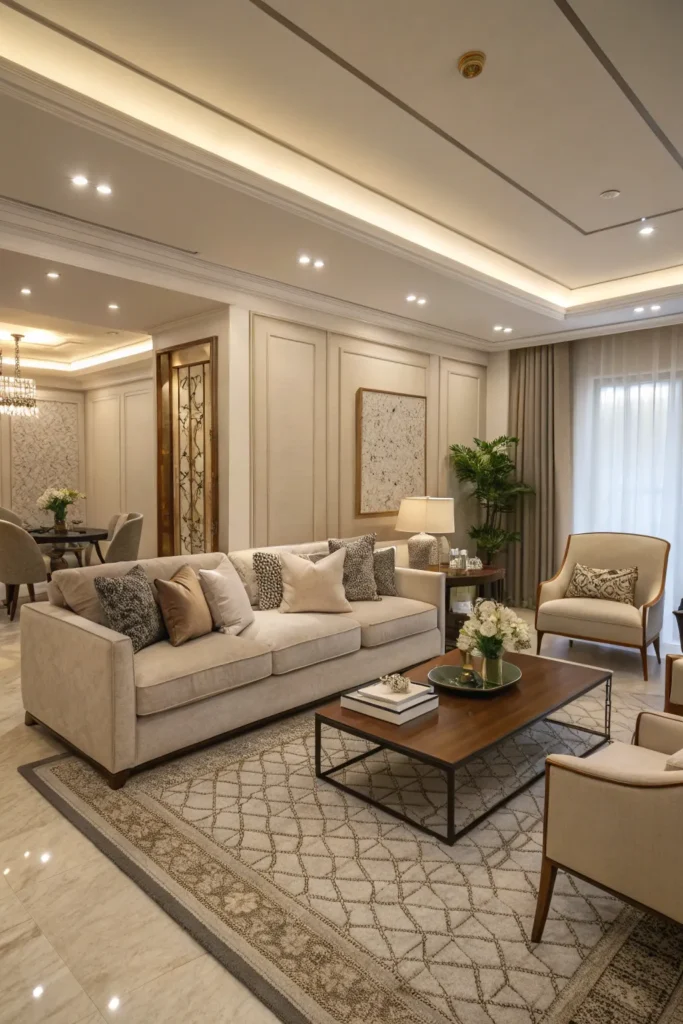
If your rectangular living room is long, divide it into two functional zones. One side can be the main seating area and the other a reading nook, small dining setup, or workspace. Use furniture placement, rugs, or lighting to subtly separate the zones. This helps you utilize every inch without making the room feel cluttered.
4. Place the Sofa Along the Longest Wall
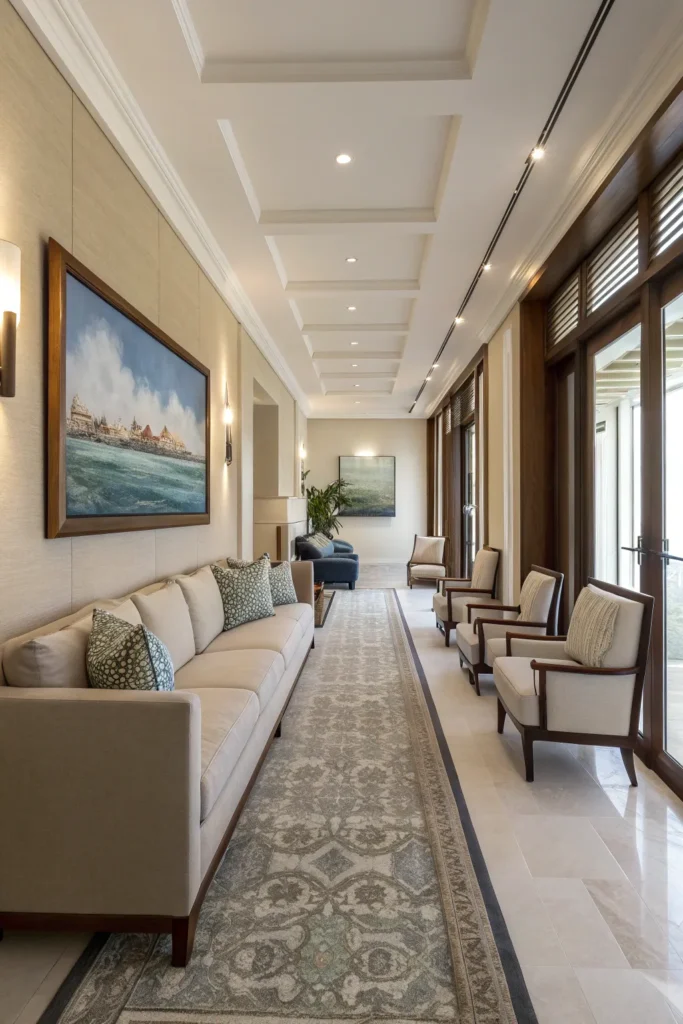
This classic approach works well for narrow rectangular living rooms. Position the sofa against the long wall, then place accent chairs across from it. This simplifies furniture flow and keeps walkways open. Add a large piece of art above the sofa to create an elegant visual anchor.
5. Float Furniture to Allow Better Circulation
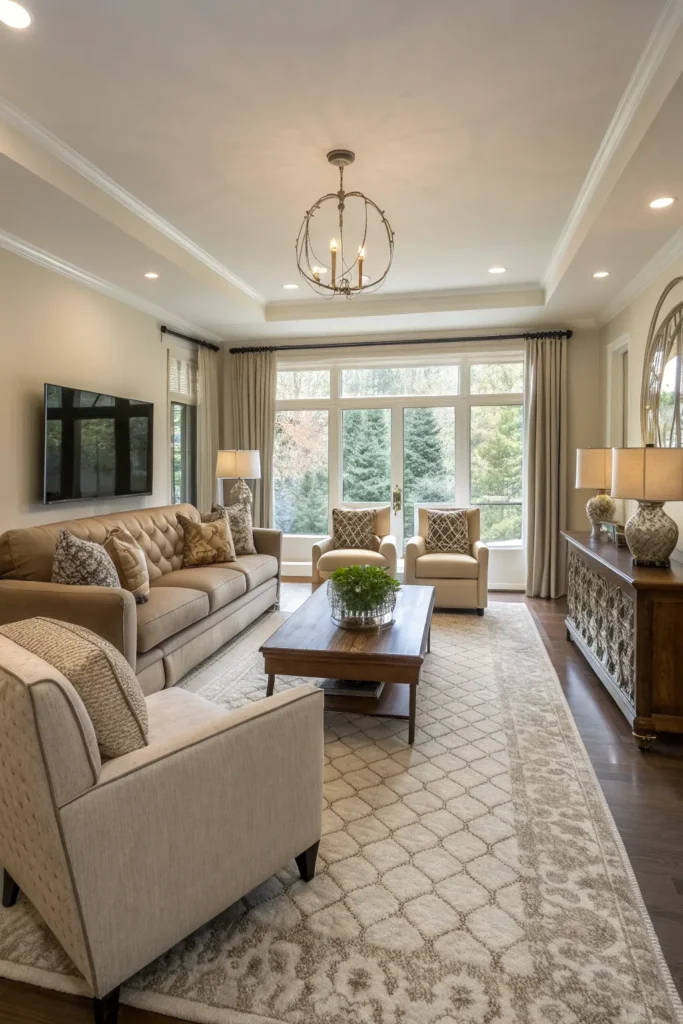
Pushing everything against the walls can make a rectangular room feel like a hallway. Instead, float key pieces such as sofas or accent chairs closer to the center. This opens up walking paths around the seating and prevents the long room from feeling too linear. It also enhances coziness and allows better access to windows or built-ins.
6. Use a Sectional to Define the Layout
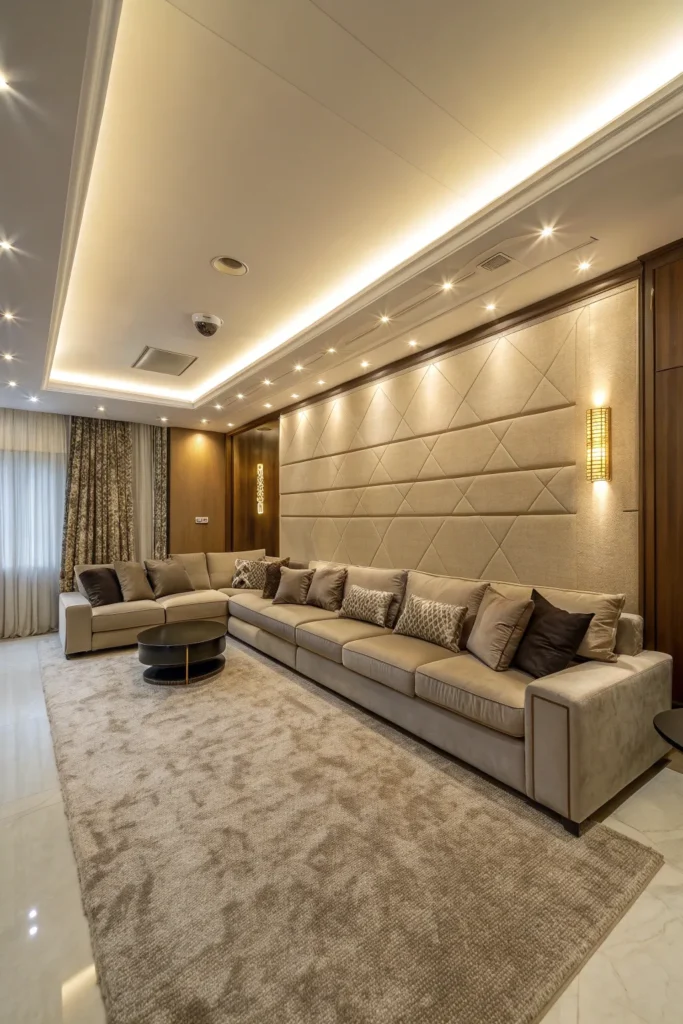
A sectional works beautifully in a rectangular space because its L-shape divides the room naturally. Place the longer side of the sectional along one of the long walls and let the shorter piece extend into the room to create a natural boundary for the seating area. This setup is ideal if you have an open-concept rectangle where the living room blends into another area.
7. Add Furniture in Pairs
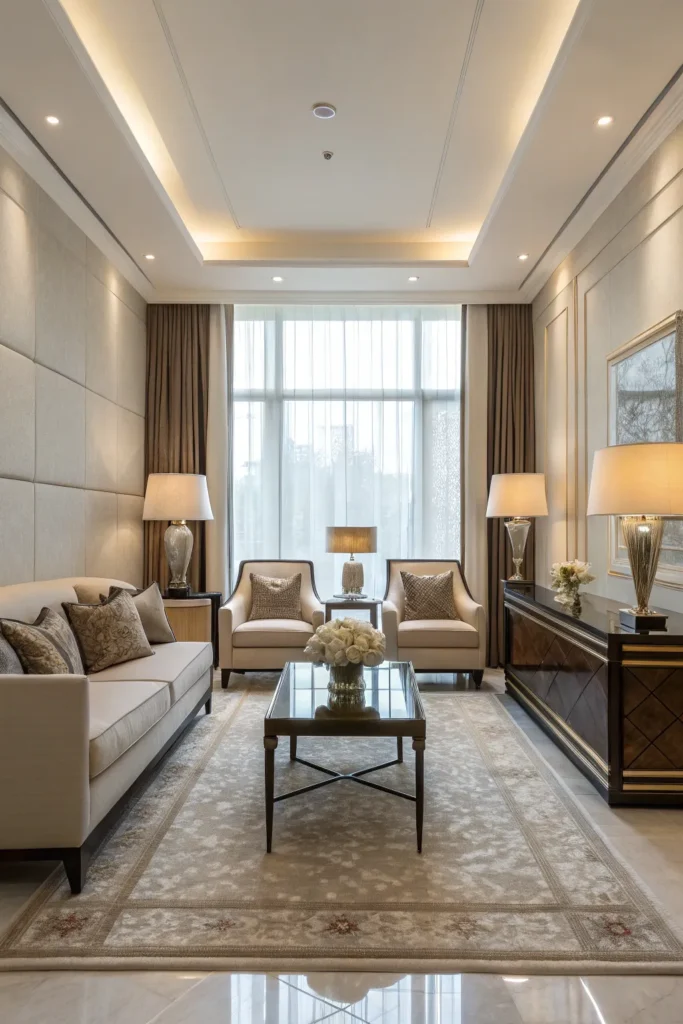
Symmetry plays an important role in calming a long rectangular room. Matching lamps, twin accent chairs, or pairs of side tables help distribute visual weight evenly. These duplications soften the stretched-out feel and create a more harmonious overall design.
8. Use Slimline Furniture for Narrow Rooms
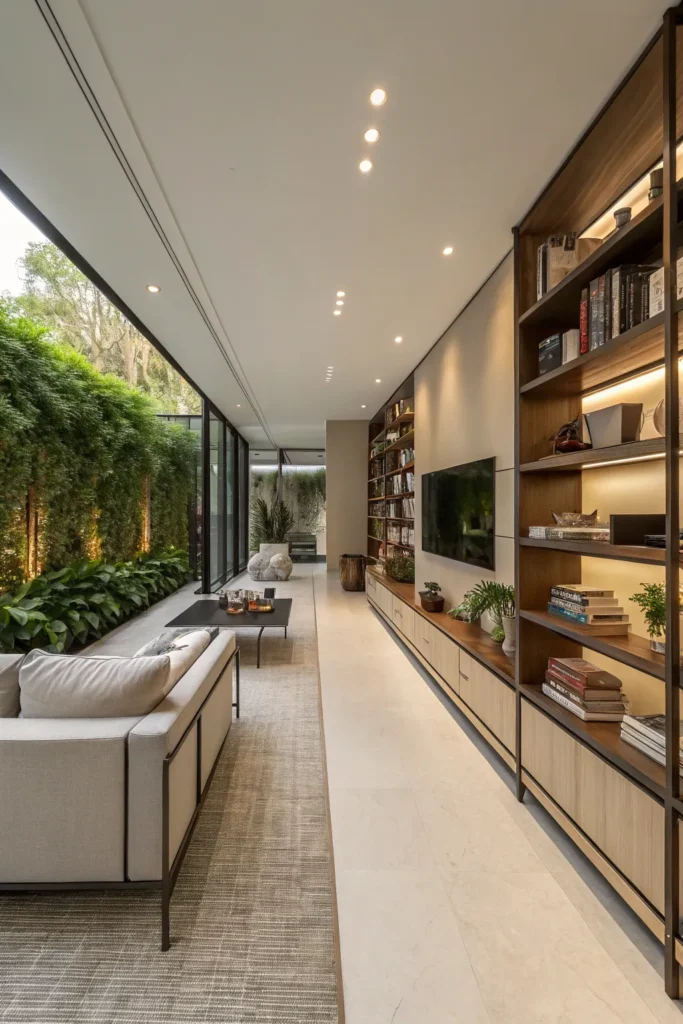
If your rectangular living room is extra narrow, focus on using furniture with thin legs, low profiles, or compact dimensions. Choose slim console tables, narrow sofas, or floating shelves. Avoid bulky armchairs that eat up floor space. Slimline furniture preserves walkways and makes the room feel more breathable.
9. Try a Diagonal Layout
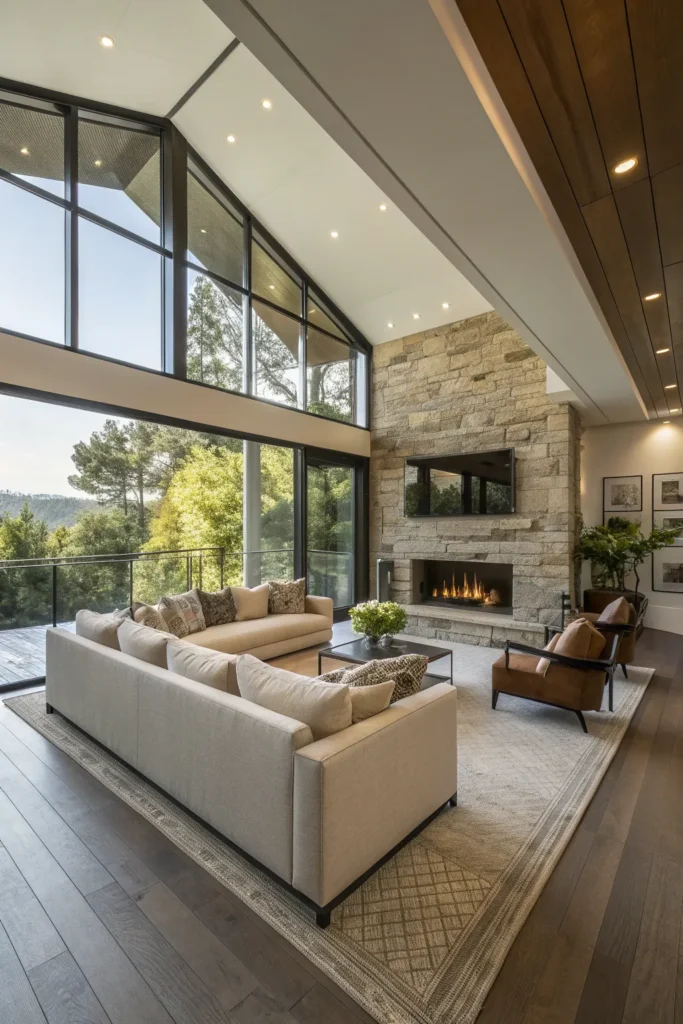
Placing the sofa at a diagonal angle breaks up the straight lines of a rectangular room and adds movement. This works especially well when your room feels overly rigid or boxy. Angle the seating toward a fireplace or a TV positioned in the corner. The diagonal layout softens the room and feels instantly more dynamic.
10. Use Vertical Elements to Shorten the Look
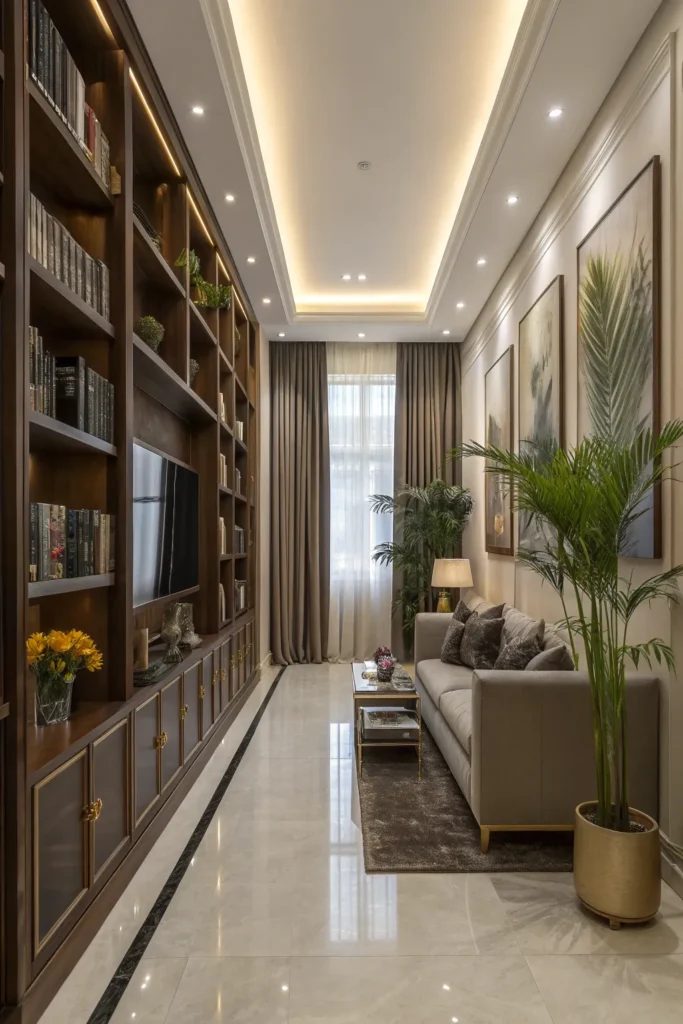
Because rectangular living rooms can look long and stretched, adding vertical lines helps visually shorten the space. Tall bookshelves, floor-to-ceiling curtains, vertical artwork, or tall plants can minimize the tunnel effect. This technique helps the room feel more proportionate and grounded on both sides.
11. Create a Focal Point on Each End
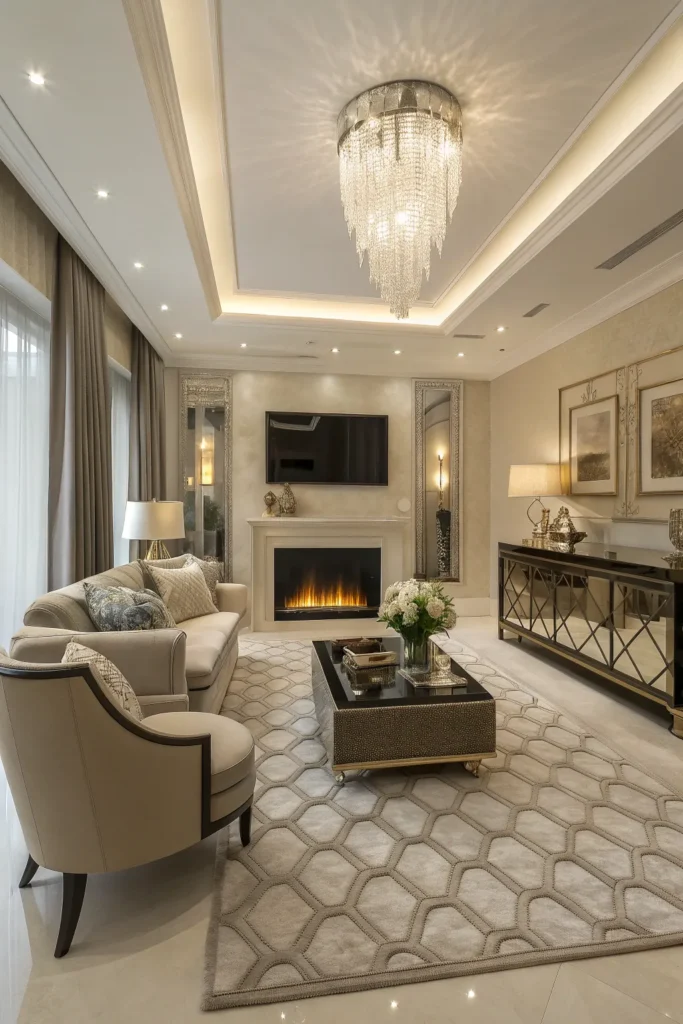
Balance is key. Give each end of the room its own focal point—such as a fireplace on one side and an accent chair vignette or console table on the other. This distributes visual interest evenly across the room, preventing one side from feeling bare or forgotten.
12. Use Lighting to Highlight Different Areas
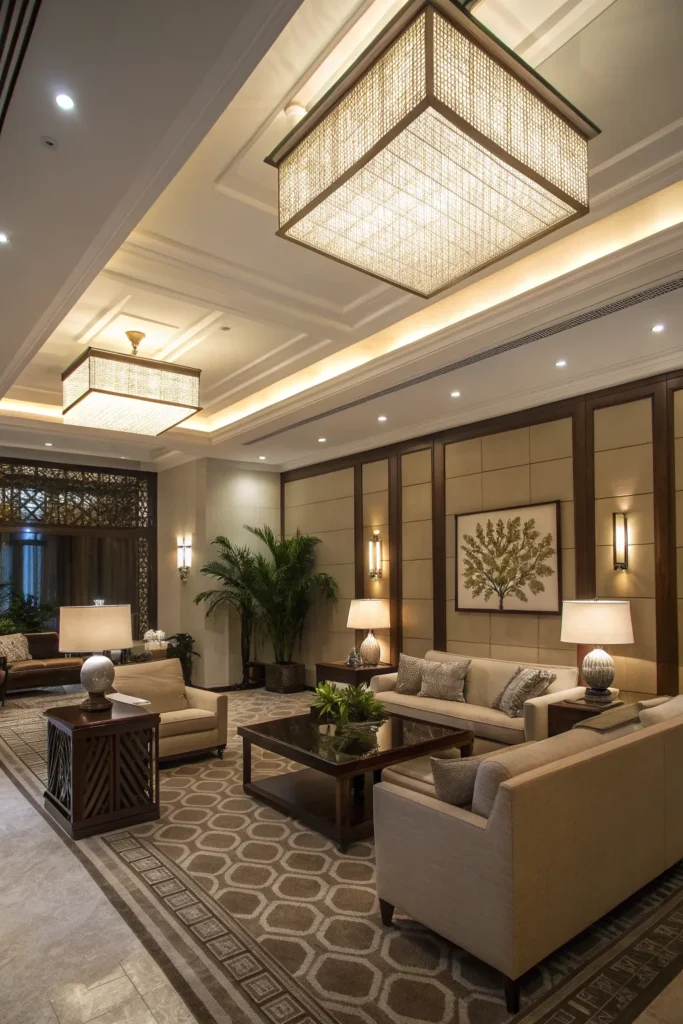
Rectangle living rooms benefit from layered lighting. Use a combination of overhead lights, floor lamps, table lamps, and sconces to break the room into illuminated zones. Good lighting maintains balance, prevents dark corners, and draws attention to the layout’s most functional areas.
13. Add a Sofa Table Behind the Couch
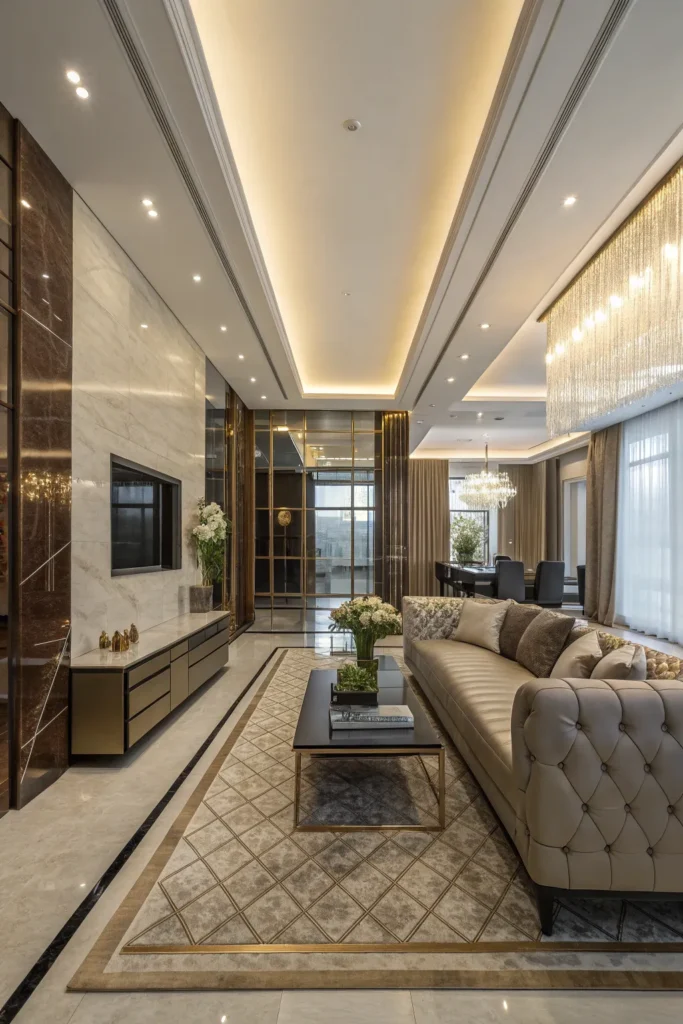
When the sofa floats in the middle of the room, a sofa table behind it helps define the layout and adds extra storage. Place lamps, baskets, books, or decorative accents on the table. It turns the back of the sofa into a polished design feature and improves visual balance.
14. Try a Back-to-Back Seating Layout
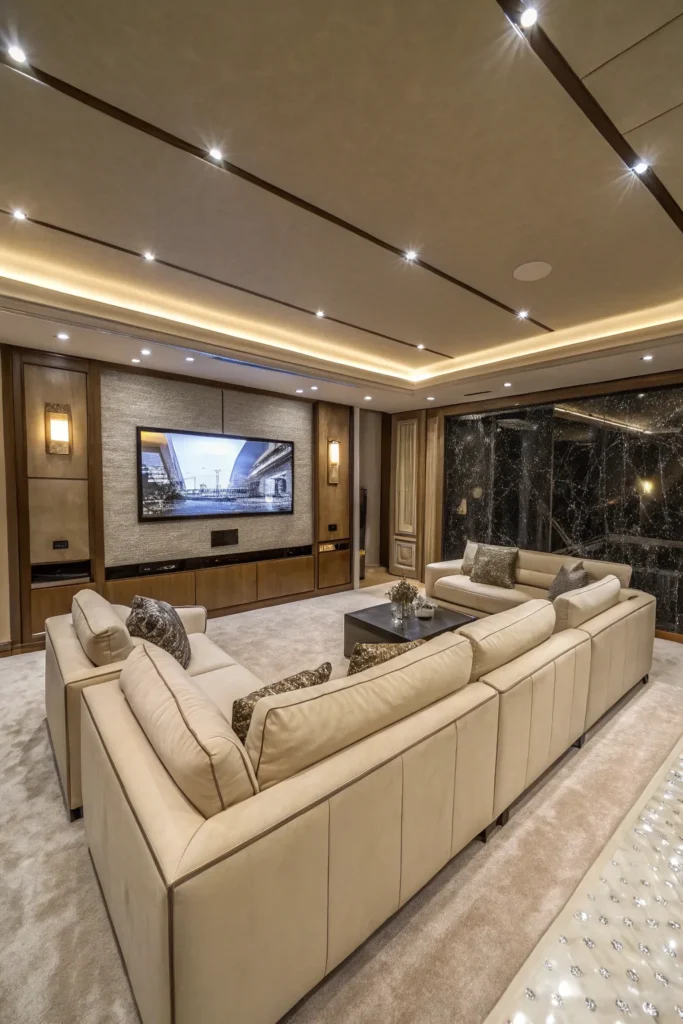
If you have an extra-long rectangular area, place two sofas back-to-back. One faces the main focal point (like a TV or fireplace), while the other faces a secondary zone (reading, games, or conversation). This layout effectively splits the room into sections without blocking natural flow.
15. Use Mirrors to Widen the Space
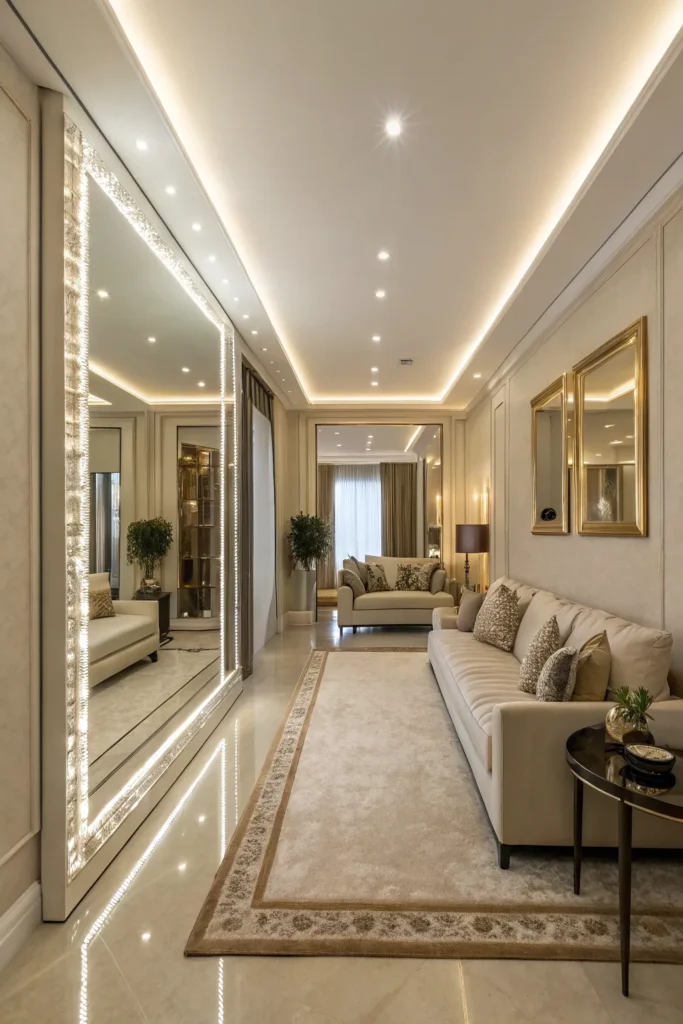
Mirrors are powerful tools in rectangular living rooms, especially if they’re narrow. Place a large mirror on one long wall to reflect light and visually widen the space. Mirrors also soften harsh lines and add brightness, giving the room a more open, proportional feel.
Final Thoughts
Rectangle living rooms may seem tricky to design at first, but their elongated shape actually offers endless creative possibilities. Whether you divide the space, float furniture, build symmetry, or introduce vertical elements, you can transform the room into a comfortable, stylish, and balanced environment. By layering textures, choosing smart furniture, and focusing on proportion, your rectangular living room becomes both functional and visually appealing—a beautiful, well-planned space that feels just right.