15 Pantry Organization Ideas That Are Actually Practical
A well-organized pantry isn’t just aesthetically pleasing—it’s a functional game-changer that saves time, reduces food waste, and makes cooking genuinely enjoyable.
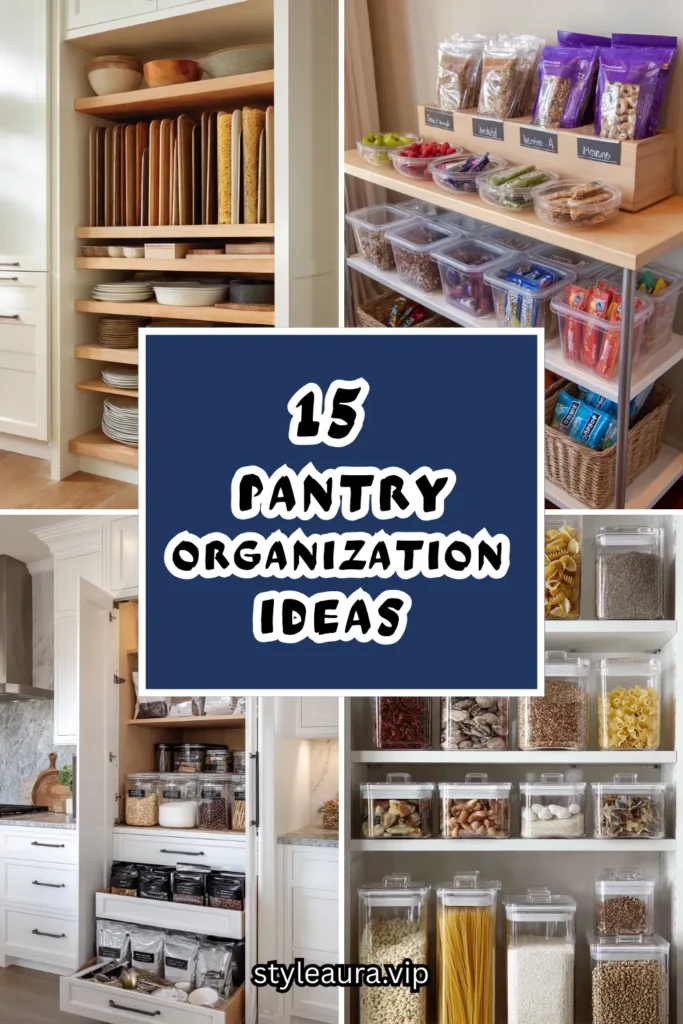
The best pantry systems balance visual appeal with real-world usability, creating spaces that look beautiful in photos but also withstand the chaos of daily life.
These fifteen organization strategies prove you don’t have to choose between Instagram-worthy and genuinely practical.
1. Clear Container Consistency
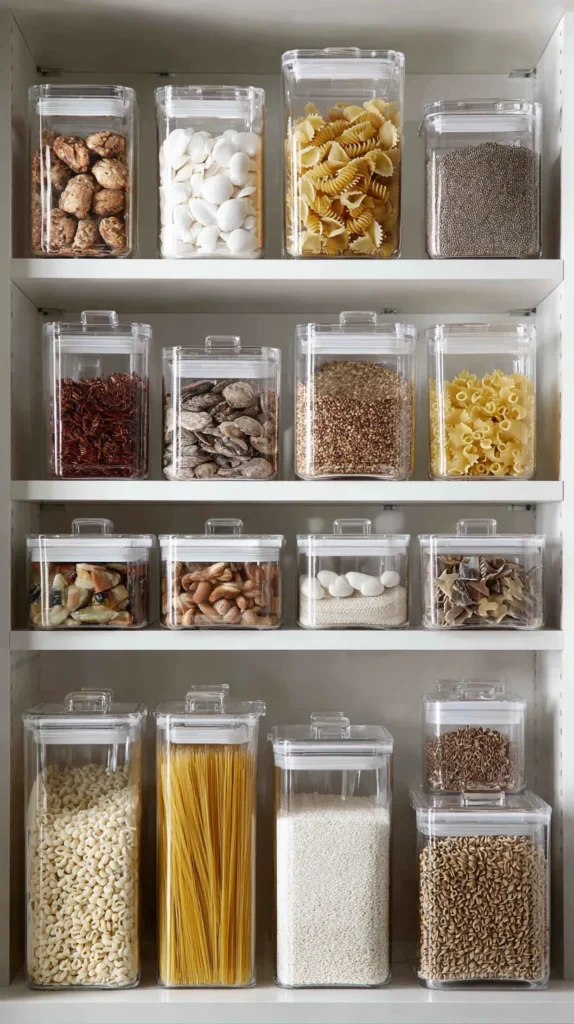
Transferring dry goods into clear, airtight containers remains the gold standard for pantry organization because it actually works. You can see exactly what you have and how much remains at a glance, preventing those frustrating moments when you discover you’re out of flour halfway through a recipe.
Choose containers in a limited range of sizes—perhaps three or four standard heights that stack efficiently and create visual harmony.
Square or rectangular containers maximize shelf space far better than round ones, fitting together without wasted gaps. Invest in quality containers with truly airtight seals to keep food fresh longer.
Label everything clearly with contents and purchase or expiration dates. This system looks beautiful while serving the practical purpose of preserving food quality and preventing pantry moths. Start with your most-used items—flour, sugar, rice, pasta—then expand as budget allows.
2. Zone-Based Organization
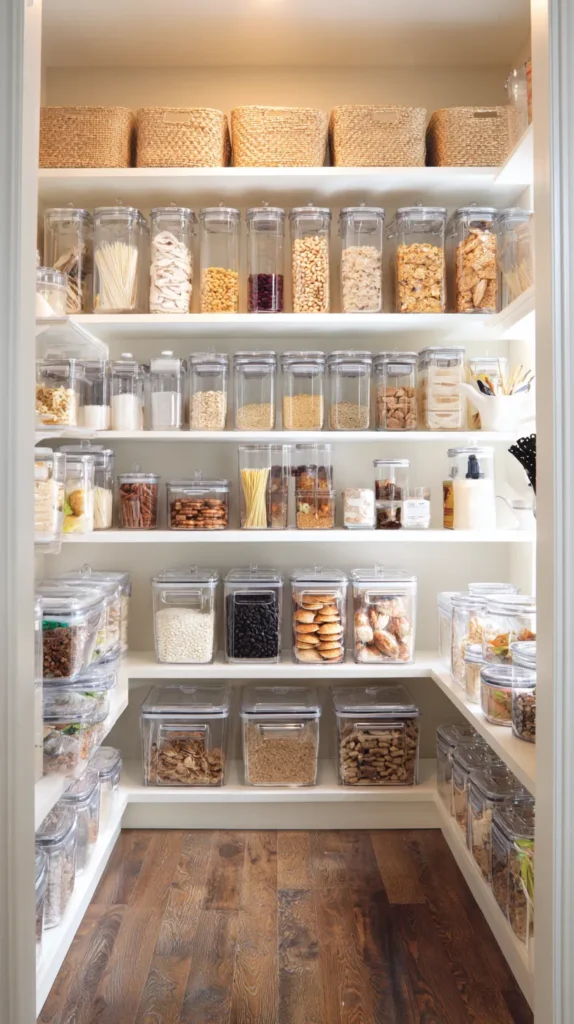
Grouping similar items together creates intuitive organization that everyone in your household can maintain. Designate specific zones for baking supplies, breakfast items, snacks, canned goods, and cooking essentials. This approach means you’ll always know where to find what you need and, more importantly, where to put things away.
Within each zone, arrange items by frequency of use. Daily breakfast items should sit at eye level in easy reach, while specialty baking ingredients you use quarterly can occupy higher or lower shelves.
This practical hierarchy ensures your pantry works with your actual cooking patterns rather than against them. Use bins or baskets to contain each category, making it easy to pull out everything you need for specific tasks.
3. Lazy Susan Solutions
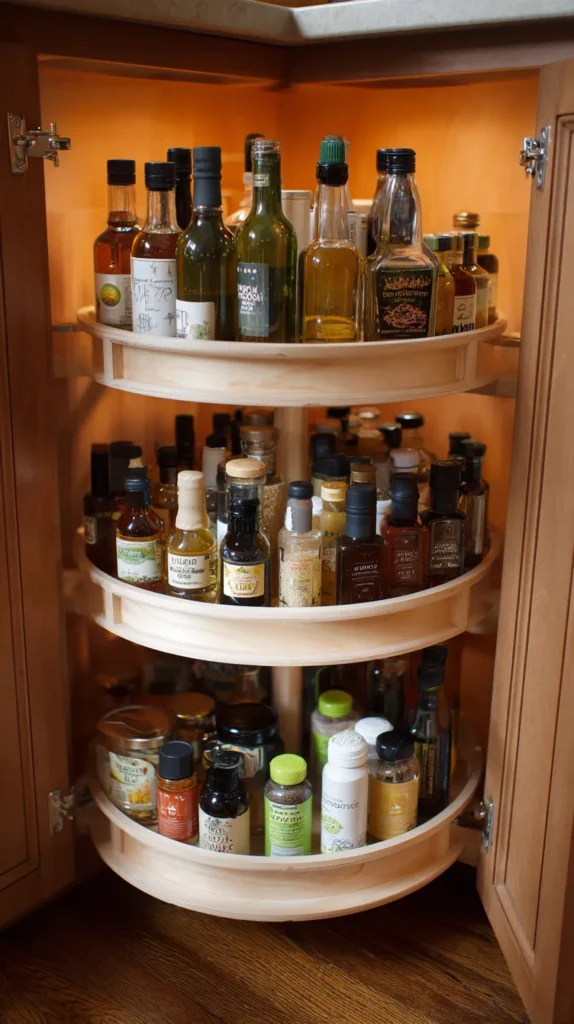
Turntables aren’t just for condiments—they’re problem-solvers for deep shelves and corner spaces where items disappear into darkness. Place lazy Susans in corners or on deep shelves to store oils, vinegars, sauces, and spices. A simple spin brings everything into view and reach, eliminating the black hole effect that plagues most pantries.
Use multiple turntables in varying sizes to accommodate different shelf configurations. On upper shelves, they provide easy access to items that would otherwise require a step stool and risky reaching.
Group similar items together on each turntable—all Asian cooking ingredients on one, all baking extracts on another. This combination of rotation and categorization creates both accessibility and organization.
4. Vertical Divider Systems
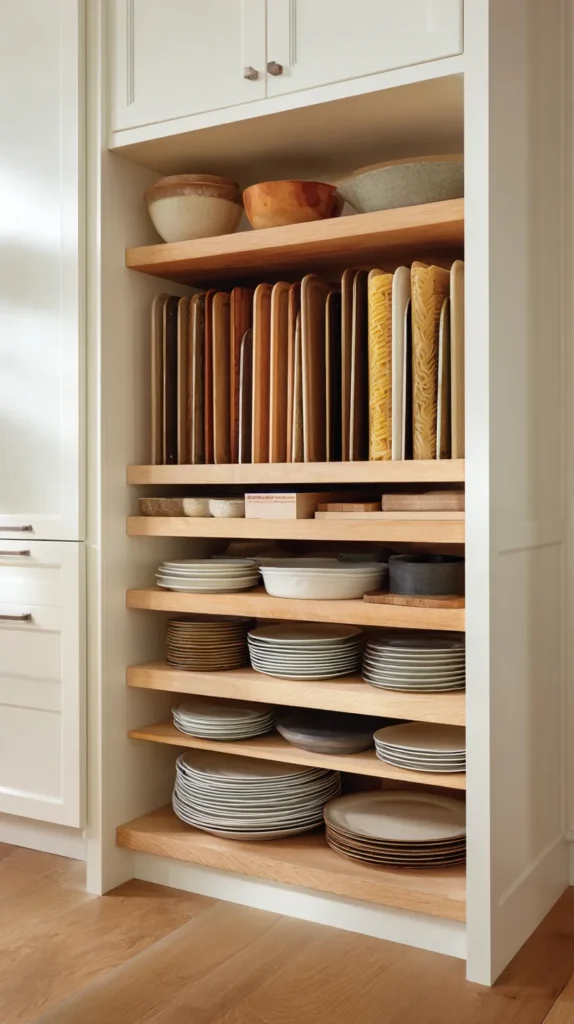
Install vertical dividers or file organizer-style racks to store baking sheets, cutting boards, serving platters, and even packaged goods like boxed pasta or crackers. Storing these items vertically rather than stacked horizontally means you can remove what you need without disturbing everything else—a small change that makes an enormous practical difference.
This approach works brilliantly for items that tend to topple or create avalanches when stacked. Adjustable dividers accommodate items of varying thicknesses, while fixed systems provide structure for standardized items. The vertical orientation also makes it immediately visible what you have, preventing duplicate purchases and reducing frustration.
5. Door-Mounted Storage Maximization
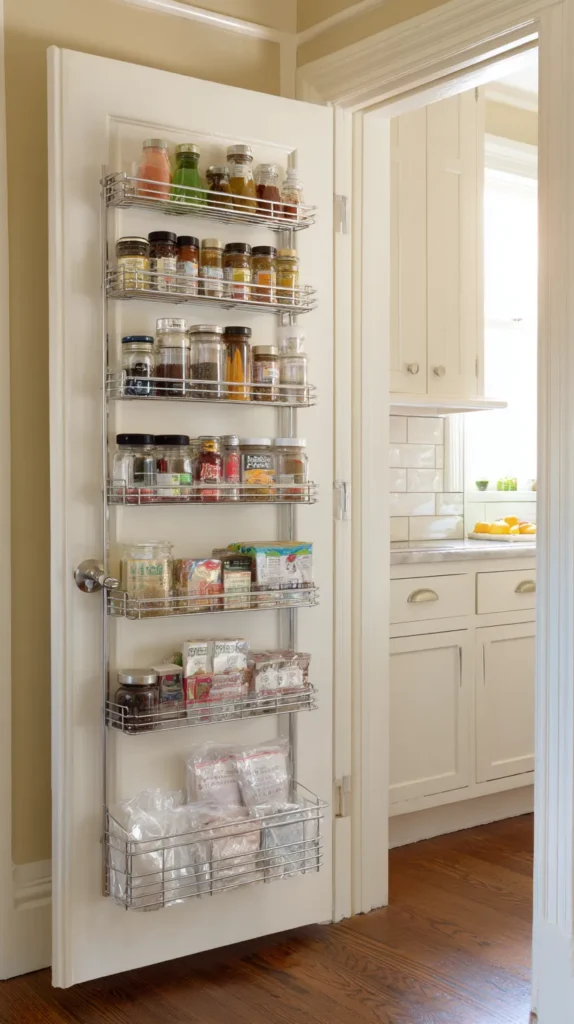
The inside of your pantry door offers valuable real estate that often goes unused. Install over-door organizers or mounted racks to store spices, small packets, snack bags, or cleaning supplies. This keeps frequently used items visible and accessible while freeing up shelf space for larger items.
Choose door systems appropriate to your door’s construction and weight capacity. Avoid overloading—a door sagging under excessive weight becomes a safety hazard and maintenance headache. Reserve door storage for lighter items and things you access frequently. Clear pocket organizers work beautifully for spice packets and seasoning mixes, while wire racks suit small jars and bottles.
6. Pull-Out Drawer Integration
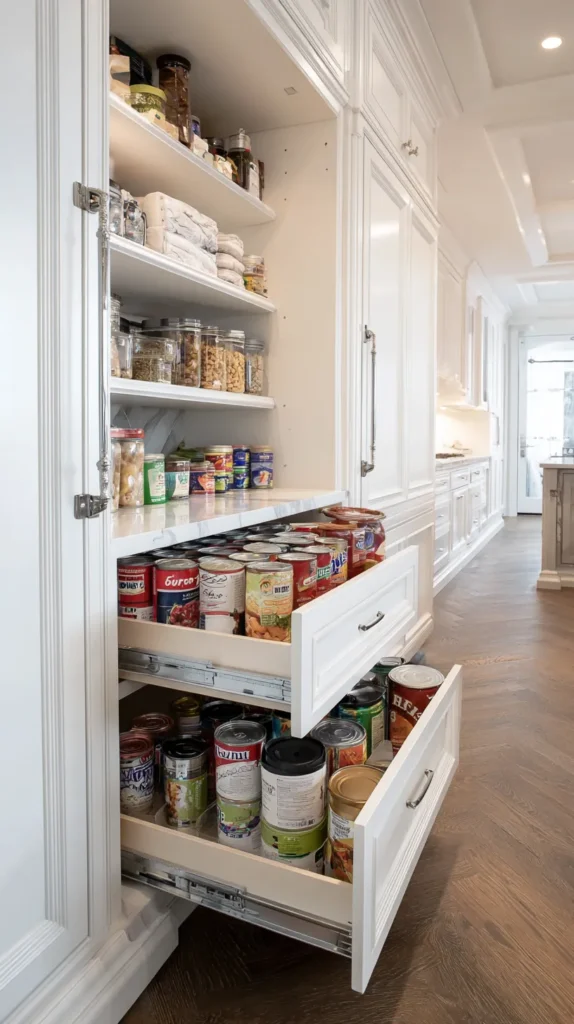
If you’re willing to make a small investment, pull-out drawers or shelves transform accessibility dramatically. These allow you to see and reach items at the back of deep shelves without removing everything in front. Install them at various heights to accommodate different item sizes, from small cans to large boxes.
Pull-out systems work especially well in lower cabinets where bending and reaching becomes physically challenging. A pull-out drawer for heavy items like bulk rice, flour, or canned goods saves your back and makes rotating stock much simpler. While this solution requires more initial investment and installation, the daily convenience and improved accessibility justify the expense.
7. Basket and Bin Categorization
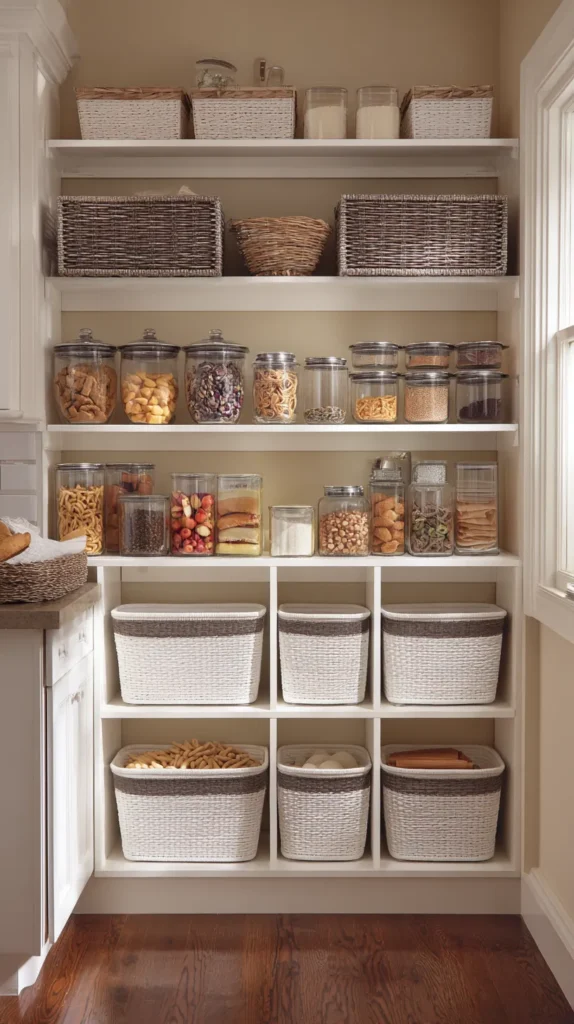
Open baskets and bins create flexible storage that adapts as your needs change. Use them to corral loose items like snack bars, small bags of chips, packets of instant oatmeal, or tea bags. Label each basket clearly so family members know where things belong, increasing the likelihood they’ll actually put items away correctly.
Choose bins in consistent colors or materials for visual cohesion—all natural woven baskets, all white plastic bins, or all wire baskets. This uniformity creates a collected, intentional look even when bins contain varied contents.
Opt for bins with handles for easy removal and cleaning. The ability to pull out an entire category, take it to your counter, and return it maintains organization far better than loose items on shelves.
8. Adjustable Shelving Optimization
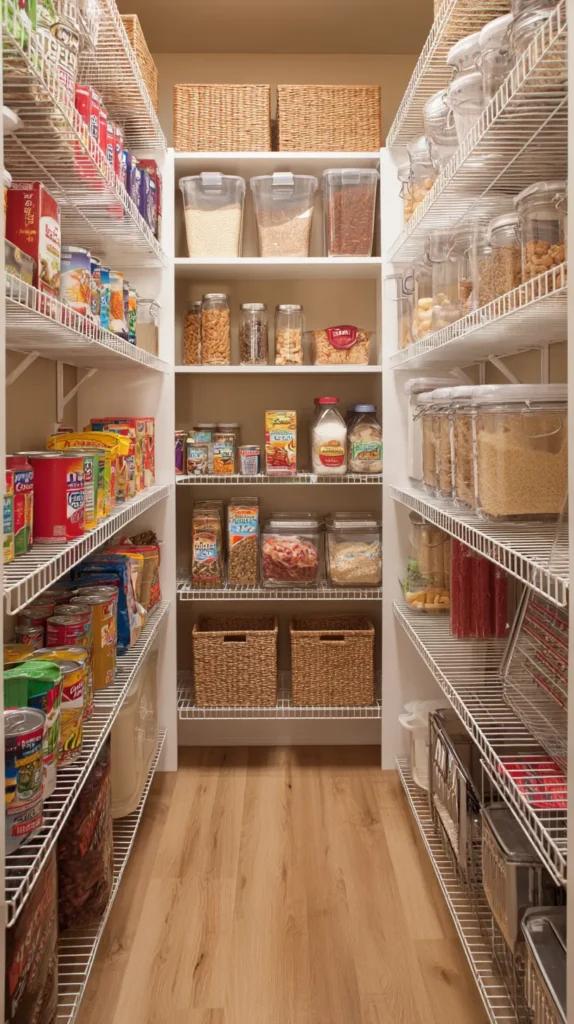
Most pantries come with fixed shelves spaced for average items, creating wasted vertical space above shorter items. If possible, install adjustable shelving that you can reconfigure as your needs change. Position shelves to minimize wasted space—shorter spacing for canned goods, taller gaps for cereal boxes or bulk containers.
This flexibility means your pantry grows and adapts with your household. When you discover bulk shopping at warehouse stores, you can adjust shelves to accommodate larger quantities. When kids grow and snack preferences change, shelving adapts accordingly. Even simple clip-in shelf systems from home improvement stores provide this valuable flexibility without permanent installation.
9. Tiered Shelf Risers
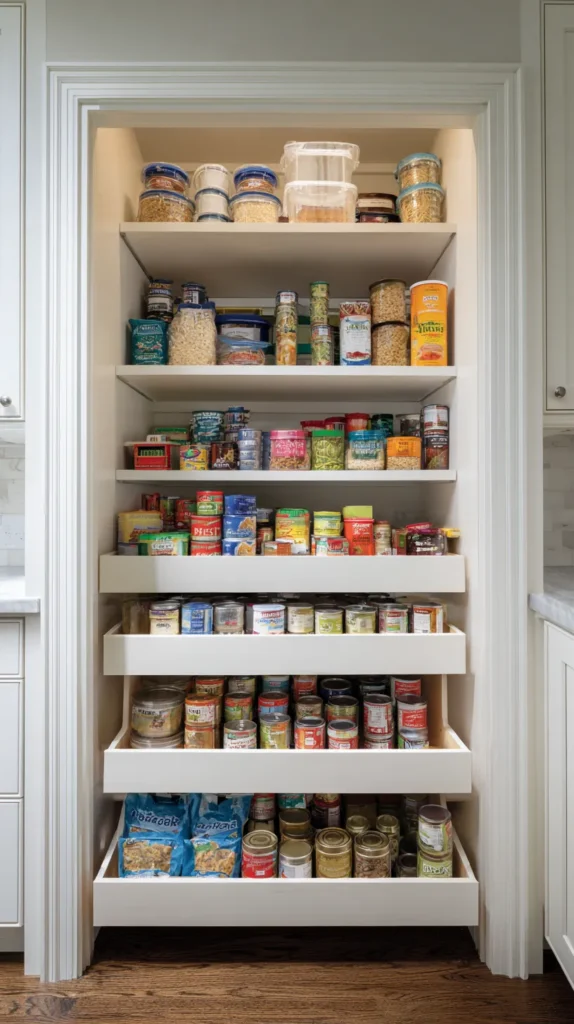
Simple shelf risers or stadium-style organizers create visible tiers on single shelves, allowing you to see cans, jars, and bottles at the back without moving items in front. This seemingly simple addition dramatically improves functionality, especially for shorter items that disappear behind taller ones.
Use risers specifically designed for pantry use with appropriate weight capacity. Arrange items by height, with taller items on the back tier and shorter ones in front. This works beautifully for canned goods, allowing you to see your entire inventory at once. The improved visibility reduces forgotten items and makes meal planning more efficient.
10. Snack Station Central
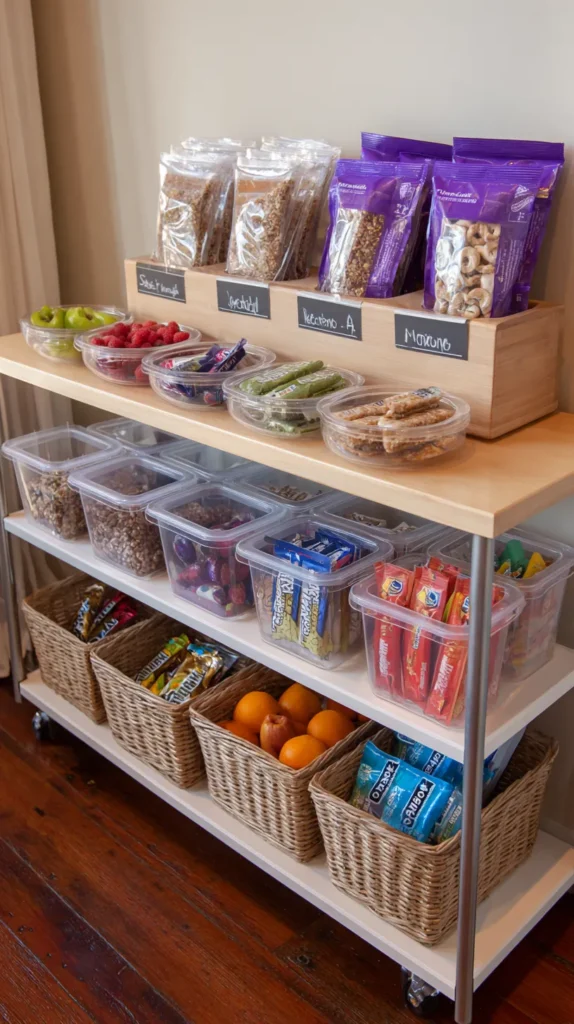
Create a dedicated, kid-accessible snack zone at an appropriate height for your children. Use clear bins or baskets to hold pre-portioned snacks, individual bags, and healthy options. This empowers kids to help themselves while maintaining portion control and organization.
Include a variety of options but limit quantity—too many choices overwhelm while too few lead to complaints. Rotate options weekly to maintain interest. This system reduces constant snack requests while teaching children organizational skills and independence. Position it low enough that kids can reach safely but high enough that toddlers can’t access it unsupervised.
11. Expiration Date System
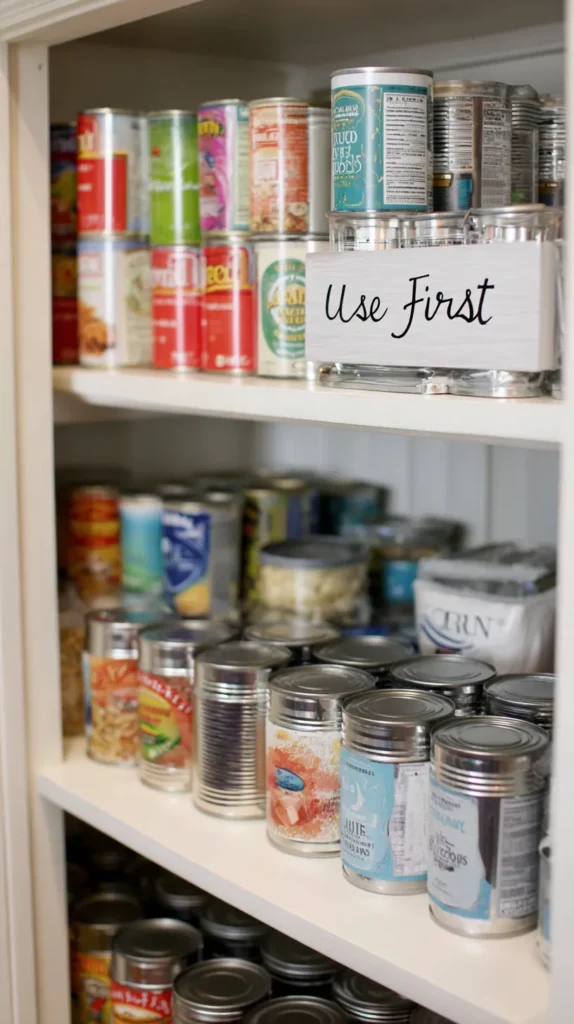
Implement a rotation system that places newest purchases behind older ones, ensuring you use items before expiration. Add dated labels to containers when you fill them, making rotation foolproof. Create a “use first” bin for items approaching expiration, positioned prominently so you remember to incorporate them into meals.
This practical approach reduces waste significantly while ensuring food safety. Check dates monthly and move approaching-expiration items to your priority bin. This system pays for itself through reduced waste and prevents the unpleasant discovery of expired items buried at the back of shelves. It transforms your pantry from a storage space into a managed inventory system.
12. Baking Supply Hub
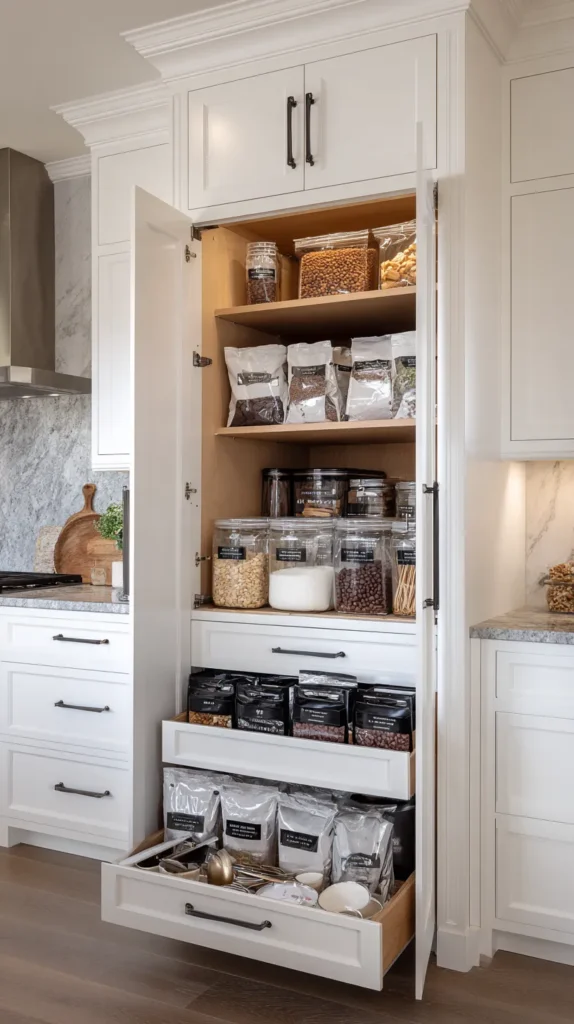
Consolidate all baking supplies—flour, sugar, baking powder, chocolate chips, extracts, food coloring—in one dedicated area. Use a large bin or basket that you can pull out entirely when baking, bringing everything to your counter at once. This eliminates multiple trips back to the pantry during preparation.
Within this zone, store baking tools like measuring cups, cookie cutters, and piping bags if space allows. The complete baking station concept means you grab one container and have everything needed for most recipes.
Return the entire bin when finished, maintaining organization effortlessly. This approach works for any activity-based grouping—coffee station, smoothie supplies, lunch-packing essentials.
13. Inventory List Management
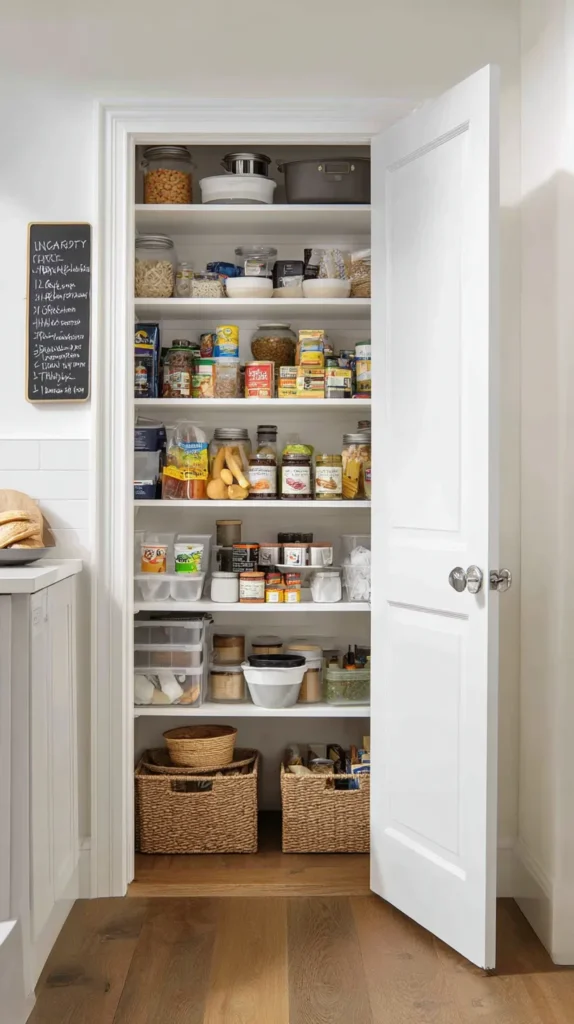
Keep a running inventory list on the inside of your pantry door or in a digital app. Update it when you remove the last of something, creating an automatic shopping list. This prevents mid-recipe discoveries that you’re missing essential ingredients and reduces duplicate purchases.
Use a simple whiteboard, chalkboard, or printed checklist in a plastic sleeve you can mark with dry-erase marker. Alternatively, use smartphone apps designed for pantry inventory that allow multiple household members to add items. The key is choosing a system simple enough that you’ll actually maintain it. Even an imperfect inventory beats no system at all.
14. Bulk Storage Solutions
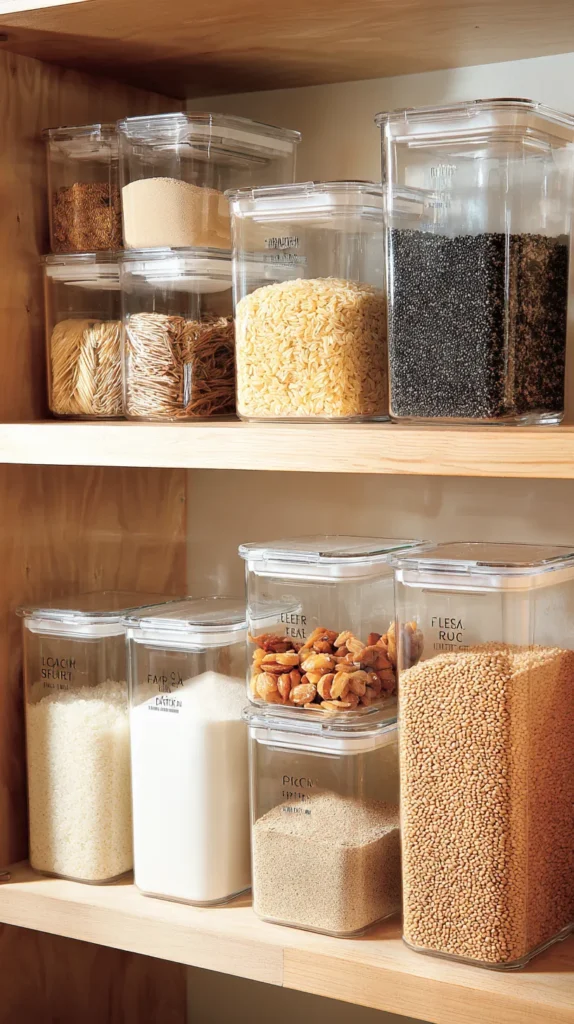
Large items like bulk rice, flour, pet food, or warehouse club purchases need appropriate containers that protect from pests while remaining accessible. Use large airtight containers with secure lids, preferably with wheels if they’re heavy. Store these on lower shelves or on the floor where their weight won’t stress shelving.
Label clearly with contents and purchase dates. Consider decanting smaller amounts into more accessible containers for daily use while keeping bulk storage separate. This two-tier system balances the economy of bulk purchasing with the practicality of everyday access. Use scoops or measuring cups stored inside bulk containers for convenient portioning.
15. Lighting Enhancement
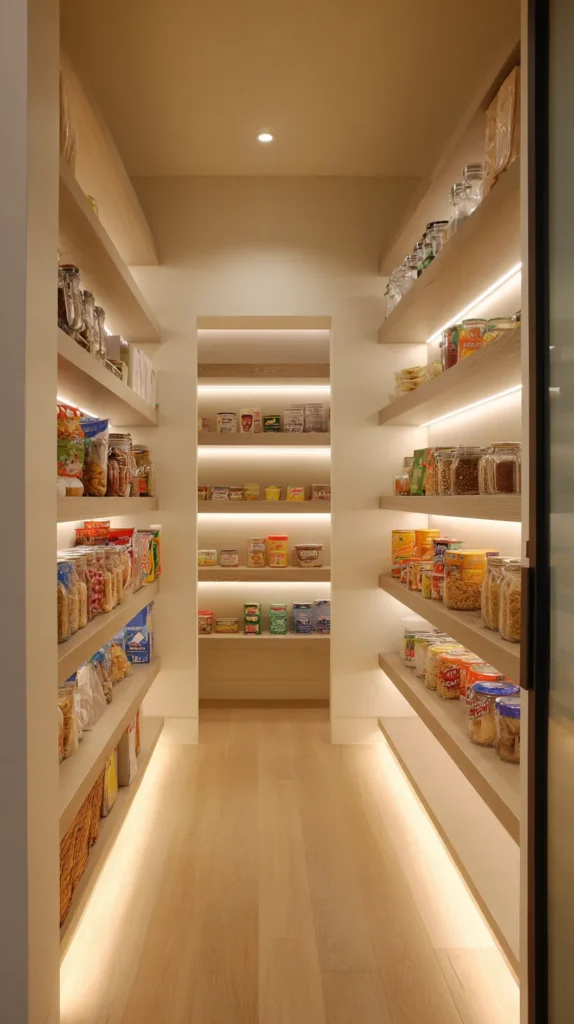
Adequate lighting transforms pantry functionality dramatically. If your pantry lacks proper illumination, add battery-operated LED strips under shelves or motion-activated lights. Being able to see clearly prevents grabbing the wrong item, helps you identify what you have, and makes the space genuinely pleasant to use.
Focus lighting on areas where you need to read labels—middle shelves at eye level and lower shelves where shadows fall. Motion activation means lights turn on automatically when you open the door and off when you leave, conserving battery while providing convenience. Good lighting also helps you maintain organization because you can actually see when things are out of place.
Maintaining Your System
The most beautifully organized pantry fails if you can’t maintain it. Choose systems that match your actual habits rather than aspirational ones. If you realistically won’t transfer every single item to containers, don’t build a system dependent on that. If labels peel off and you never replace them, find a better labeling solution.
Involve everyone who uses the pantry in the organizational system. Clear labels, logical groupings, and accessible placement mean family members can maintain organization without your constant intervention. Schedule quarterly reviews to declutter expired items, assess what’s working, and adjust what isn’t.
The goal isn’t magazine-perfect aesthetics requiring hours of maintenance—it’s a functional system that makes your daily life easier while looking good enough to make you happy when you open the door.
Start with the strategies that address your biggest frustrations, implement them fully, then expand. A partially organized pantry that actually functions beats a Pinterest-perfect system that collapses after two weeks.
Your pantry should work for you, not create additional stress. These practical strategies prove that organization can be both beautiful and sustainable, creating a space that genuinely improves how you cook, shop, and live.