15 Spacious and Balanced Open Concept Layout Ideas
The open concept layout is one of residential architecture’s most genuinely consequential design decisions — a choice that affects every aspect of daily life in the home, from the acoustic quality of the kitchen to the social dynamics of cooking while hosting to the visual coherence of the main living space to the management of cooking smells and heat in a room that extends directly into the sitting area.
Its appeal is obvious and well-documented: the feeling of spatial generosity that a single large volume creates, the visual connection between the kitchen’s activity and the living room’s comfort, the ease of supervision that open plan affords to families with young children, and the specific quality of light that a single uninterrupted space can achieve when windows on multiple sides distribute daylight through the volume without the interruption of walls.
Its challenges are equally real: the acoustic exposure of every noise to every activity zone simultaneously, the visual exposure of kitchen clutter and cooking mess to the living and dining areas, the loss of the acoustic intimacy that enclosed rooms provide for specific activities, and the spatial and organizational challenge of making a single large volume feel like multiple distinct and purposeful areas rather than one large, undifferentiated room.
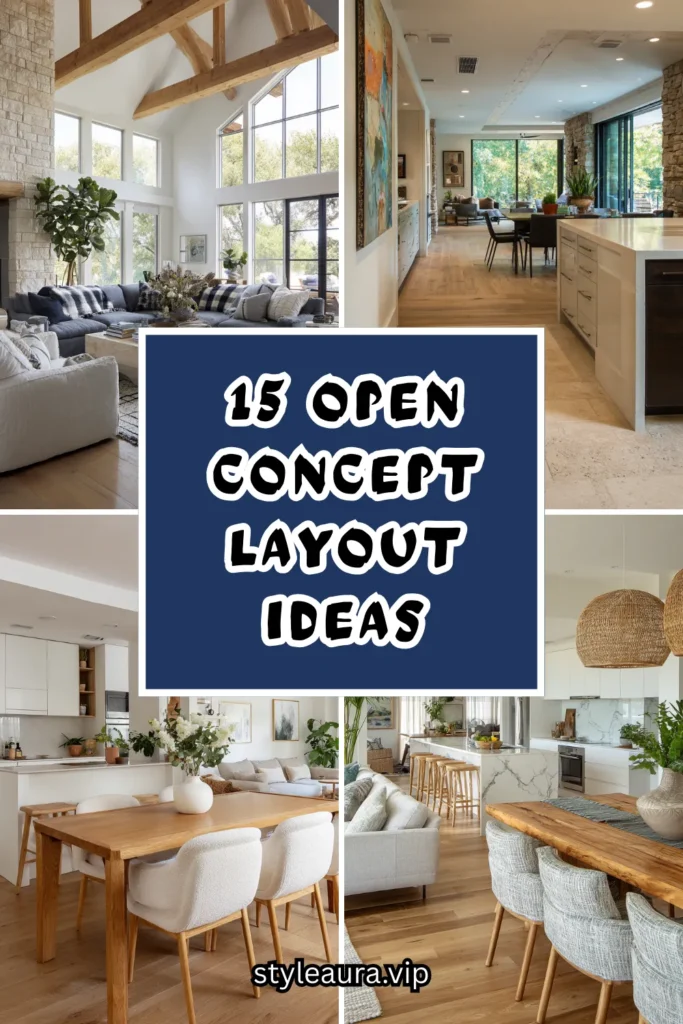
The open concept layout that genuinely works — that delivers the spatial generosity and the social connectivity that its advocates promise while managing the acoustic, visual, and organizational challenges that its critics identify — is the product of genuine design intelligence applied at the planning stage rather than the spatial consequence of simply removing the walls between rooms. Here are fifteen ideas for achieving exactly that.
1. Define Zones with Flooring Transitions
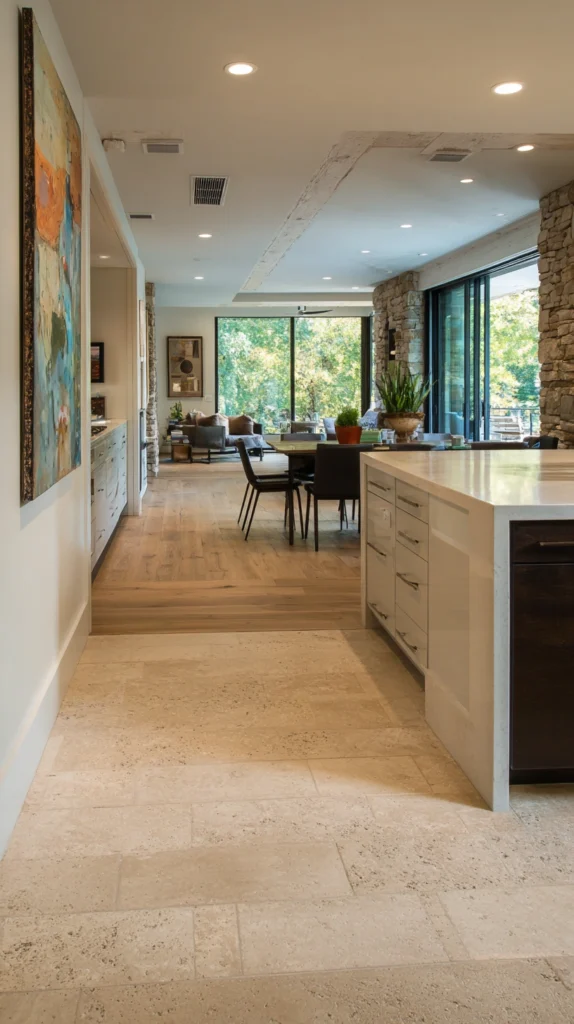
The most fundamental spatial challenge of the open concept layout is the creation of distinct, perceptible zones — the kitchen zone, the dining zone, the living zone — within a single, undivided floor area, and the change of floor material between zones is the most architecturally credible and most spatially effective way to create this distinction without building the walls that the open plan’s design premise removes.
A floor material change marks a zone boundary with the authority of an architectural line — the transition from the kitchen’s stone or tile to the living area’s timber or carpet creates a boundary that the eye reads as a room division and that the foot registers as a genuine spatial transition.
The flooring transition should be at the logical boundary between zones — the point where the kitchen’s working character ends and the living area’s comfortable character begins — and the materials on either side should relate to each other in tone and character while being sufficiently distinct to create the zone definition the open plan requires.
A stone kitchen floor transitioning to a warm timber living area floor, or a tiled kitchen and dining area transitioning to a carpeted or rugged living zone, creates the practical zone differentiation of a floored transition that is both durable and beautiful.
2. Use Furniture Arrangement to Create Spatial Boundaries
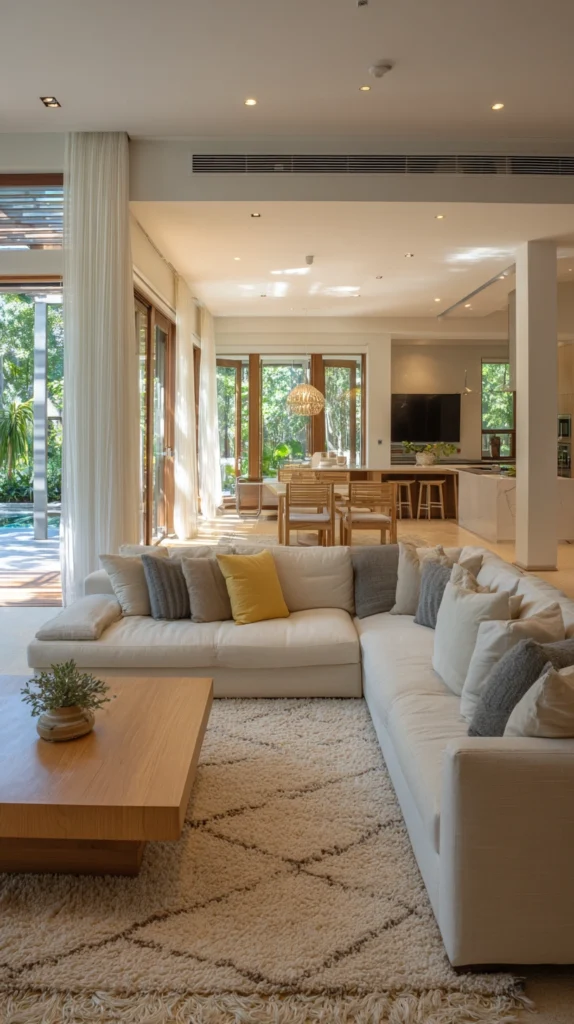
The furniture arrangement in an open concept layout does work that walls do in a conventionally planned home — it creates the spatial boundaries, the circulation paths, and the zone definitions that the absence of walls cannot provide through architectural means.
A sofa positioned with its back to the kitchen-dining area, facing away from the cooking zone toward the living room’s primary visual focus — the fireplace, the television wall, the garden view — creates a physical and visual boundary between the living and dining zones without any structural element.
The back of the sofa communicates to the kitchen-side viewer that the living zone begins here, and to the living-side occupant that the world behind the sofa is the kitchen and dining area rather than the continuation of the same space.
A large dining table positioned centrally in the dining zone creates the zone’s organizing furniture piece — the object around which the dining area’s chairs are arranged and whose scale creates a visual anchor that the empty floor around it cannot.
These furniture-created boundaries are the open plan’s primary spatial organization tool, and their positioning should be as carefully considered as the wall positions in a conventionally planned layout.
3. Create a Kitchen Island That Divides Without Enclosing
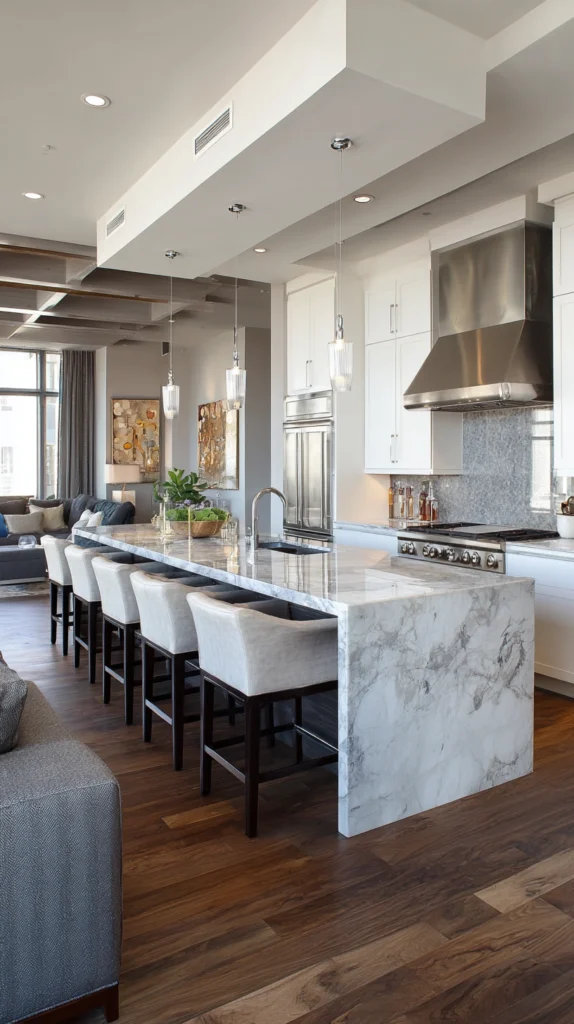
The kitchen island in an open plan layout is not simply a piece of kitchen furniture — it is the spatial element that most efficiently creates the kitchen zone’s boundary with the adjacent dining and living areas while maintaining the visual and social connection that the open plan’s design premise values.
A kitchen island of appropriate scale — large enough to create a perceptible spatial boundary, with seating on the living-space side that allows social engagement during cooking — divides the kitchen from the adjacent zone without the visual closure of a wall, maintaining the open plan’s transparency while creating the kitchen zone’s clear definition.
The island’s height is a critical design decision: a standard counter-height island at ninety centimeters provides the working surface the kitchen requires but allows the mess of food preparation to be visible from the adjacent living and dining areas; a raised section on the living-space side of the island — at one hundred to one hundred and ten centimeters, creating a bar-height counter with bar stools.
It provides a visual screen for the counter-level clutter while maintaining the social connection between the kitchen and the adjacent spaces.
4. Align Lighting Zones with Spatial Zones
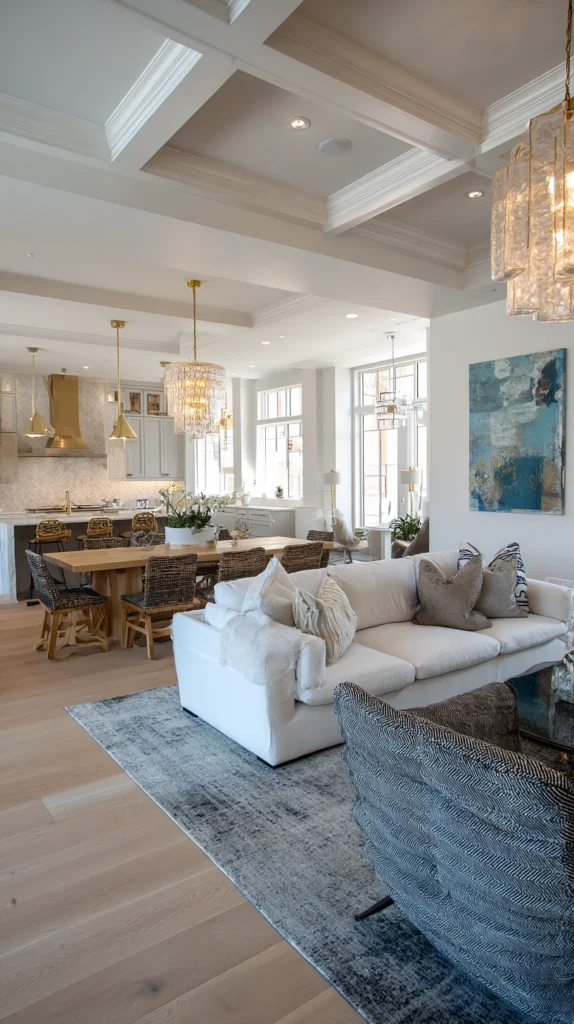
The lighting design of an open concept layout is one of the most powerful tools available for creating the zone differentiation that the space’s single-volume character requires, and the alignment of distinct lighting zones — each with its own circuit, its own fixture type, and its own dimming capability — with the spatial zones of the open plan creates the ability to visually reinforce or dissolve zone boundaries through the manipulation of light.
Kitchen lighting on a separate circuit with practical task illumination above the island and the perimeter counters. Dining lighting on a separate circuit with a pendant or chandelier above the table as the zone’s defining fixture.
Living room lighting on a separate circuit with table lamps, floor lamps, and the low, atmospheric illumination that relaxed evening use requires. When the kitchen zone’s bright task lighting is on while the living room’s lamps are dimmed, the zones are visually separated by their different light levels.
When the entire space is brought to a consistent, lower level for evening entertaining, the zones dissolve and the full spatial volume of the open plan is experienced as a single, unified room. This lighting flexibility is the open plan’s primary atmospheric tool.
5. Choose a Cohesive Palette Across All Zones
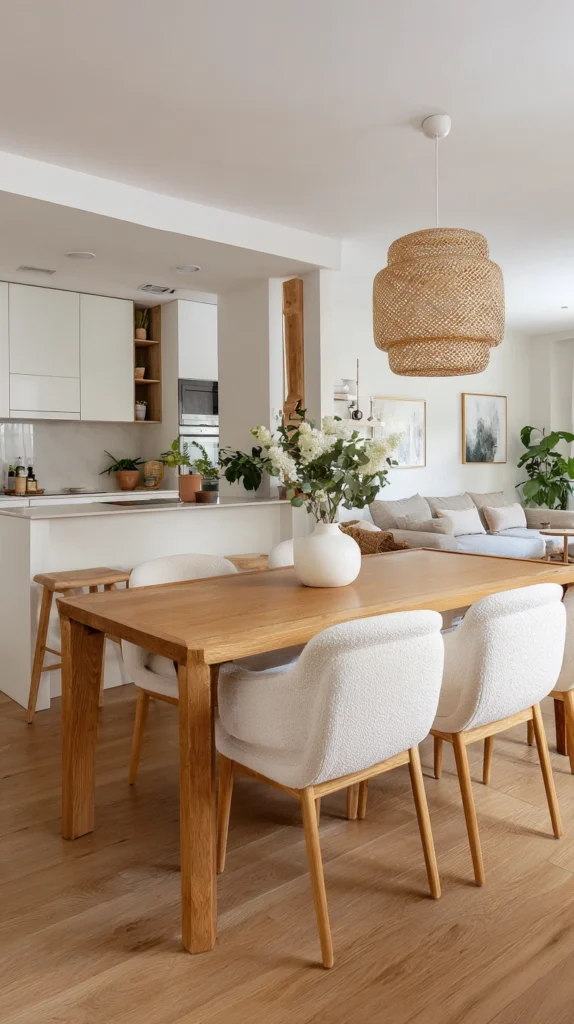
The visual coherence of an open concept layout — its quality of reading as a designed, unified interior rather than a collection of separately decorated rooms that happen to share a continuous floor area — depends more on the consistency of the color palette across all zones than on any other single design decision.
Because the entire open plan is visible from most positions within it, any color inconsistency between zones is immediately apparent and disrupts the visual unity that the single-volume character of the space makes essential.
A cohesive palette for an open plan does not mean that every zone is in the same color — it means that the colors of different zones are selected from the same tonal family and share the same undertones, creating a visual progression from zone to zone that the eye reads as continuous and related rather than divided and competing. The kitchen’s cabinet color should relate to the dining area’s furniture finish.
The living room’s wall color should share the palette’s undertone with the dining area’s. The floor and ceiling materials should be consistent throughout to maintain the horizontal continuity that the open plan’s spatial logic requires.
6. Position the Dining Table as the Layout’s Pivot Point
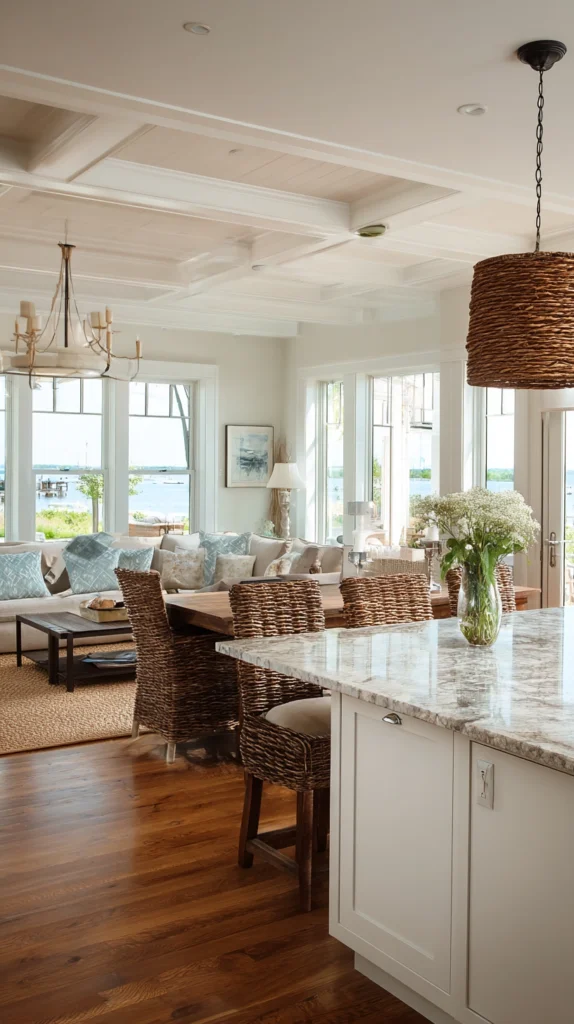
The dining table occupies the most spatially strategic position in a well-designed open concept layout — it sits at the intersection of the kitchen zone and the living zone, accessible from both and defining the spatial relationship between them, and its positioning therefore determines the proportional balance of the entire open plan.
A dining table positioned too close to the kitchen creates a kitchen-heavy layout that reduces the living zone’s spatial generosity. A dining table positioned too far into the living zone creates a living-heavy layout that reduces the dining zone’s definition and functionality.
The ideal dining table position creates an equidistant relationship between the kitchen island and the living room seating — a position that the dining table can be reached from the kitchen’s serving position without crossing into the living zone, and that the living room’s occupants can reach from their seating without crossing through the kitchen area.
This equidistant positioning creates the pivot point around which the open plan’s social dynamics naturally organize themselves during a gathering.
7. Design for Acoustic Management
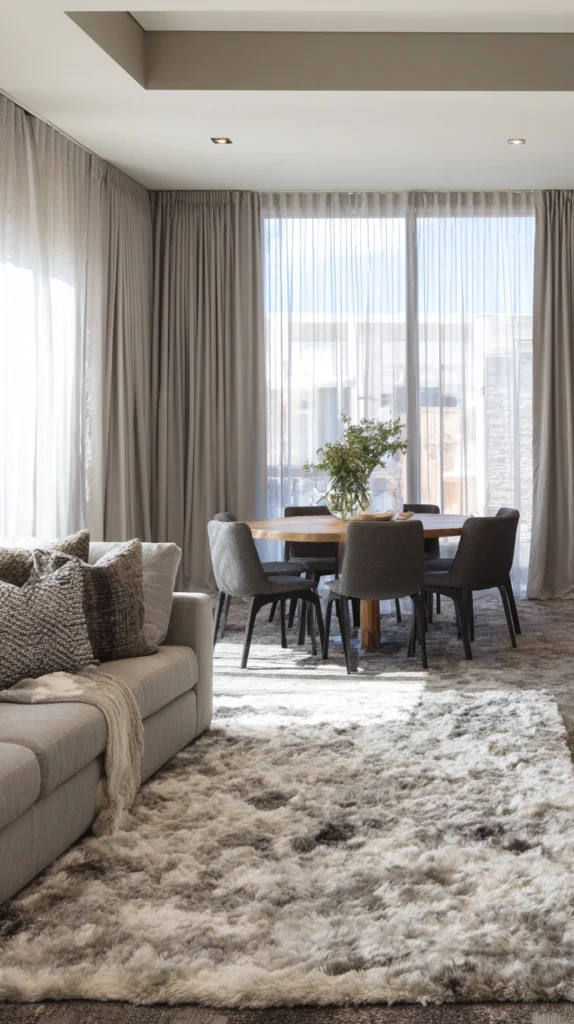
The open concept layout’s most consistently underestimated practical challenge is acoustic management — the management of the noise that cooking, washing up, music, conversation, and television produce simultaneously in a space that provides no acoustic separation between these competing sound sources.
The open plan with hard surfaces throughout — stone floors, plaster walls, glass, concrete — has a reverberation quality that amplifies every noise source and creates a sonic environment of considerable difficulty that the conventionally planned house never experiences.
Acoustic management in the open plan begins with soft surface provision: a large rug under the living area seating group that absorbs sound at floor level, upholstered furniture that absorbs the sound energy that hard furniture surfaces reflect, heavy curtains that manage the acoustic quality of the glass surfaces that open plan homes favor for their visual transparency.
Kitchen cabinetry with soft-close mechanisms, appliances with low noise ratings, and the physical separation of the noisiest kitchen equipment — the dishwasher, the washing machine — from the living zone all contribute to the acoustic comfort of the open plan’s daily experience.
8. Create a Visual Focal Point in Each Zone
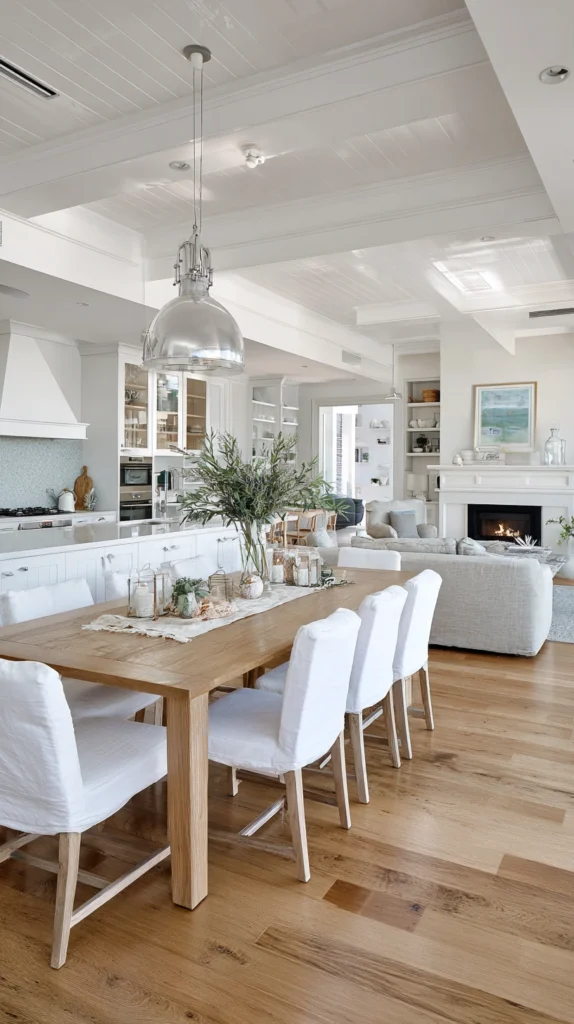
Each zone in a well-designed open concept layout requires its own visual focal point — a primary visual element that anchors the zone and gives its occupants a designed destination for their attention rather than the visual drift that an undifferentiated large space can produce.
The kitchen zone’s focal point is typically the island or the cooking wall — the run of cabinetry that contains the range, the hood, and the primary cooking equipment, dressed with open shelving or a tile backsplash of sufficient visual interest to command the attention from across the room.
The dining zone’s focal point is the pendant light above the dining table — the fixture whose hanging presence directly above the table creates the zone’s vertical anchor and its social center. The living room’s focal point is the fireplace, the artwork wall, or the carefully dressed television wall that anchors the seating arrangement and gives the living zone’s principal views its most compelling visual destination.
Each focal point should be visible from the other zones — creating the visual interest that makes the open plan’s full depth engaging — without competing with the other zones’ focal points for primacy within the unified visual field.
9. Allow Adequate Circulation Paths
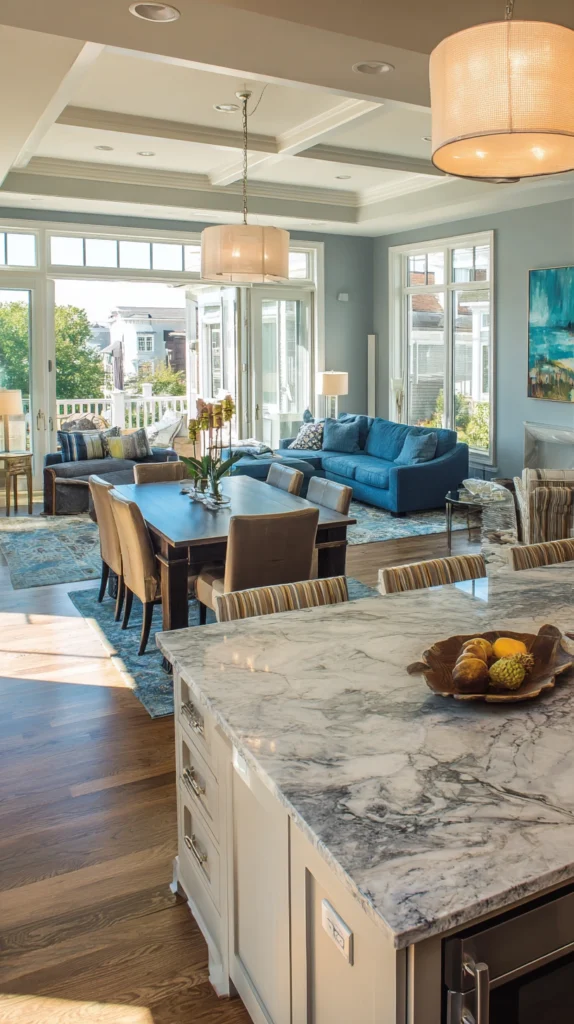
The open concept layout that fills its floor area with furniture and zone definitions without adequate attention to circulation paths creates a space that feels cluttered and dysfunctional despite its theoretical spatial generosity — the rooms are visually open but physically difficult to navigate, particularly during the social gatherings that the open plan is specifically designed to serve.
Circulation paths in an open plan should be a minimum of ninety centimeters wide for primary paths — the route from the kitchen to the dining table, the path from the entry to the living room — and ideally one hundred and twenty centimeters for paths that will be used by multiple people simultaneously during gathering events.
The kitchen’s work triangle — the circulation path between the refrigerator, the cooking surface, and the sink — should be free of furniture and clear of the main living-to-kitchen circulation path, so that the cook’s work movement and the guests’ social movement through the space do not conflict during the hosting events that the open plan was designed to facilitate.
10. Use Rugs to Anchor Each Zone
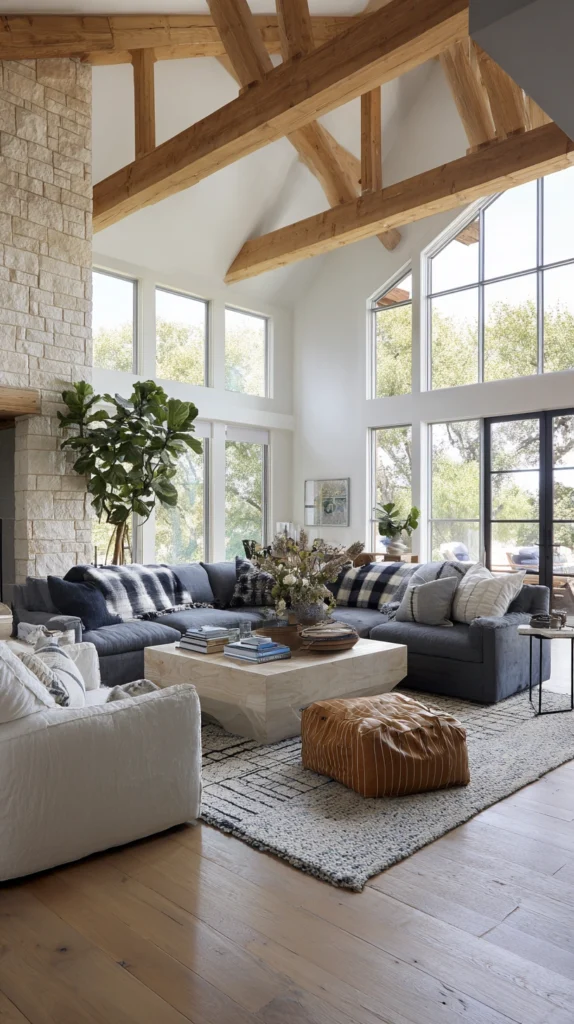
The rug is the open concept layout’s most powerful zoning tool after the flooring transition — a horizontal element that creates a zone definition at floor level without any vertical intrusion into the open plan’s visual transparency. A large rug under the living area seating group, its edges defining the living zone’s spatial boundary and its surface anchoring the furniture arrangement above it, creates the living zone’s primary spatial definition element.
The absence of a rug from the kitchen and dining zones — or a smaller, different rug in the dining zone beneath the dining table — creates the material distinction between the zones that the consistent floor surface running through all areas cannot provide on its own.
The rug’s scale is critical: too small, and it fails to anchor the furniture arrangement and creates the floating-furniture effect that undermines the living zone’s spatial coherence; too large, and it extends into the adjacent zones and dissolves the boundary it was placed to create. The living zone rug should be large enough that all the primary seating pieces have their front legs on its surface.
11. Design the Kitchen for Visual Tidiness
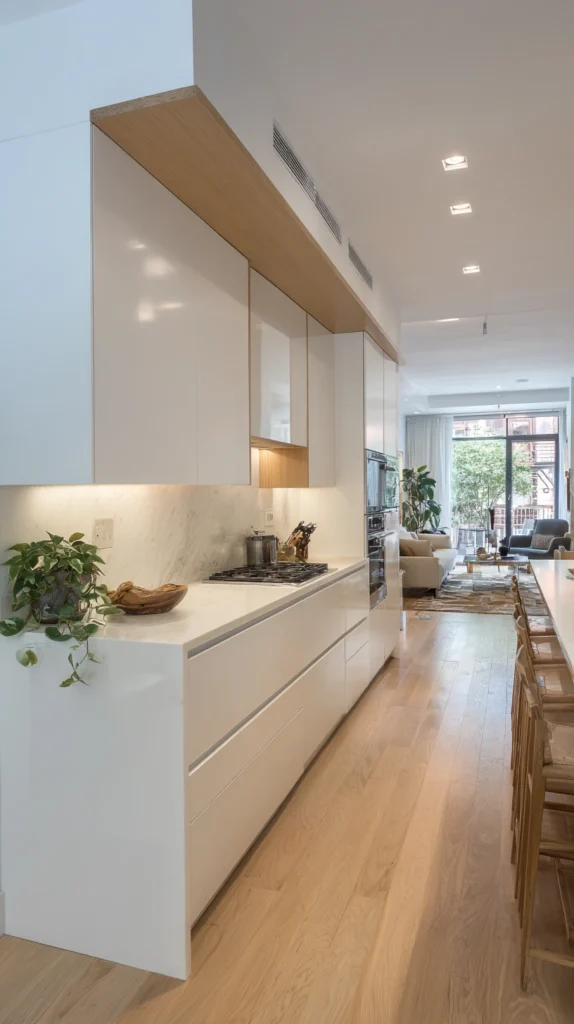
The kitchen in an open concept layout is permanently on display — visible from the dining area, from the living room, and from the entry in most open plan configurations — and its visual tidiness at the end of each cooking session is a daily requirement that the enclosed kitchen’s closed door can excuse.
The open plan kitchen should be designed for visual tidiness as a primary specification rather than a secondary consideration: ample storage for every appliance, tool, and food item so that the counter can be completely clear between cooking sessions; a range hood of sufficient extraction power that cooking smells do not permeate the living areas; a dishwasher positioned close to the kitchen’s primary use area so that the clearing-up routine is completed quickly and the dirty dishes do not accumulate on visible surfaces; and a scullery or back kitchen if the budget and the floor plan allow, where the genuine mess of food preparation can occur out of sight of the open plan’s main visual field.
12. Consider a Partial Wall or Half-Height Divider
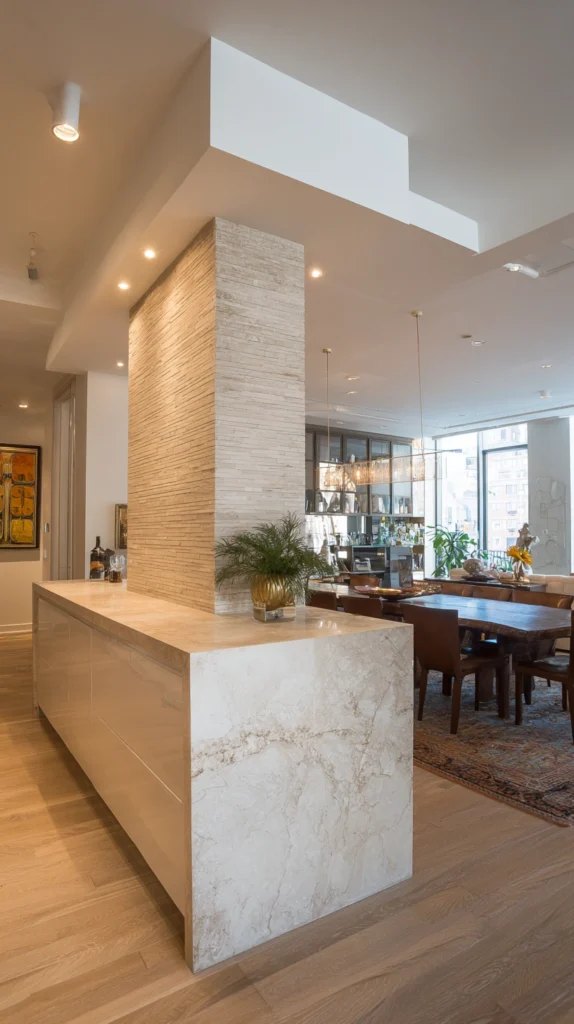
The open concept layout’s most common failure mode is the commitment to total openness at the expense of the functional and acoustic separation that specific activities require — the television sound that disrupts the dinner table conversation, the cooking mess that undermines the living room’s visual quality, the kitchen noise that prevents the quiet of the reading chair.
A partial wall or half-height divider — a wall that extends from the floor to counter height or to approximately one and a half meters, without reaching the ceiling — provides the acoustic and visual separation of a full wall at lower register while maintaining the open plan’s visual connection at the upper level. The partial wall creates the functional separation the space needs while preserving the light transmission and the feeling of spatial connection that make the open plan worth choosing over the conventionally planned alternative.
A partial wall with a wide opening between kitchen and living area is not a compromise between open plan and enclosed room — it is a more spatially intelligent solution than either in many practical domestic situations.
13. Maximize Natural Light Through Strategic Window Placement
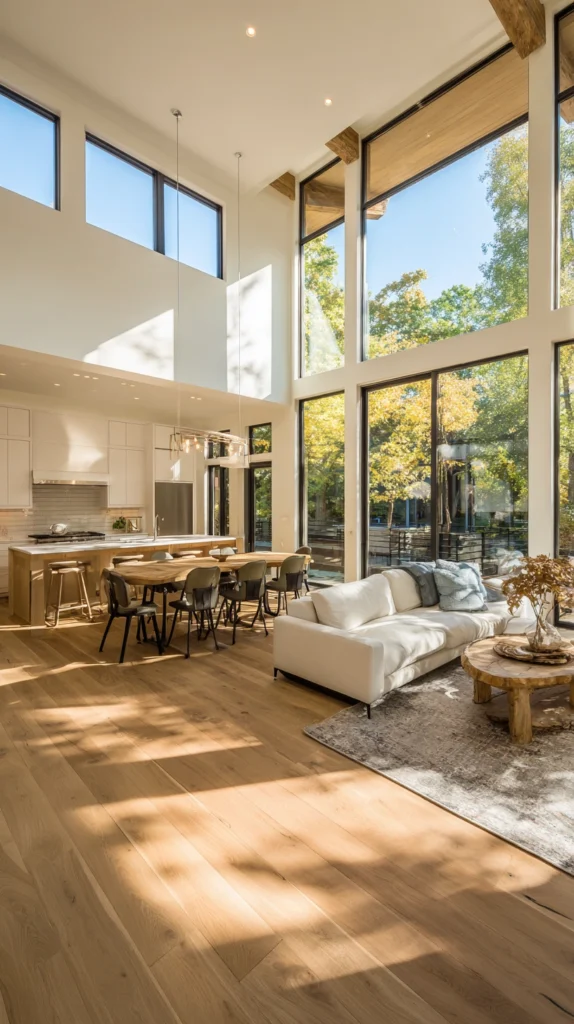
The open concept layout’s spatial generosity is amplified most powerfully by the generous provision of natural light through windows positioned to illuminate the full depth of the open plan from multiple directions simultaneously.
A single window wall on one side of the open plan creates a gradient of light — bright near the windows, progressively darker toward the room’s depth — that undermines the visual quality of the zones furthest from the light source. Windows on two opposite walls of the open plan — the cross-lighting that bilateral fenestration creates — distribute light evenly through the full depth of the space and create the quality of illumination that the open plan’s spatial generosity most deserves.
Roof lights or skylights above the kitchen zone or the dining zone provide the overhead light that supplements the wall windows and creates the specific quality of even, diffuse illumination at the open plan’s central sections where wall-mounted windows cannot reach effectively.
14. Plan for Storage Beyond the Kitchen
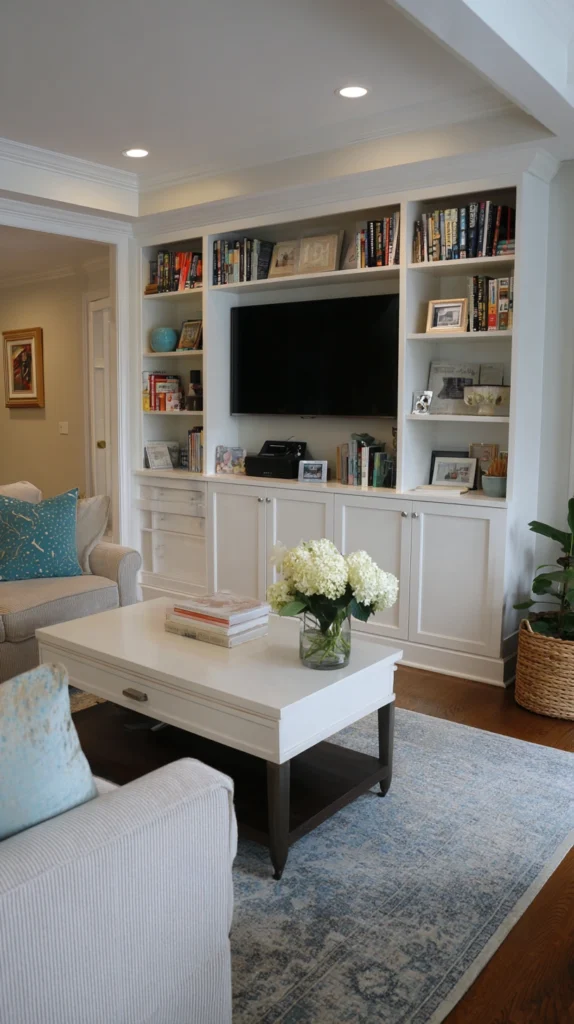
The open concept layout’s visual quality depends on the management of the household’s accumulated domestic objects — the books, the toys, the seasonal items, the personal possessions that every household generates and that the open plan’s visual transparency puts permanently on display.
A generous storage provision beyond the kitchen’s cabinetry — built-in storage in the living zone’s walls, a utility room adjacent to the open plan that absorbs the household’s operational infrastructure, a dedicated storage alcove that removes the visual clutter of daily life from the open plan’s primary visual field — is the practical infrastructure that makes the open plan’s visual quality sustainable on a daily basis rather than achievable only for a photographic session.
The storage planning should be completed before the open plan’s zone dimensions are finalized, ensuring that the storage provision is adequate for the specific household’s actual storage requirements rather than a notional allowance that proves insufficient within months of occupation.
15. Design for the Specific Way Your Household Lives
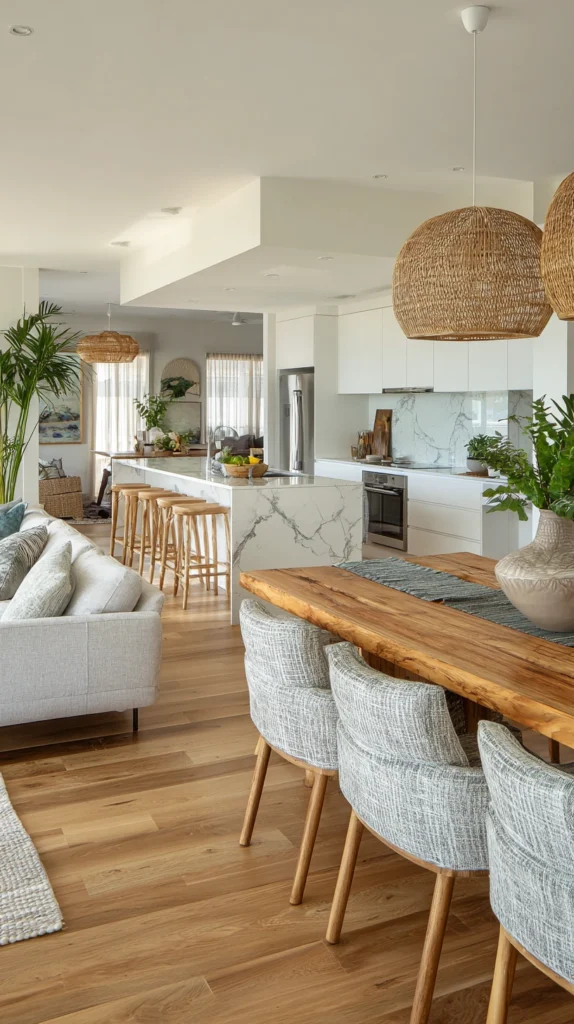
The final open concept layout idea is the most important and the most frequently overridden by the generic appeal of the open plan aesthetic: the commitment to designing the layout for the specific, genuine daily life of the specific household that will inhabit it rather than for the ideal of the open plan as a social and architectural concept. A household with young children who need supervision while cooking benefits from the maximum visual connection between the kitchen and the play area that the open plan provides. A household with teenagers who need acoustic separation for music, gaming, and socializing benefits from a layout that includes some degree of zone definition and acoustic management.
A household where one person works from home needs the visual and acoustic separation that an enclosed study provides — and if the open plan cannot accommodate this through a separate room, its design should address the workspace’s separation from the main social area through the partial wall, the acoustic treatment, or the zone definition that the specific working requirement demands.
The open plan designed for the life that is actually lived in it is always more successful — more functional, more beautiful, and more genuinely livable — than the open plan designed for the life that appears in the architect’s presentation.