15 Narrow Laundry Room Ideas That Maximize Every Inch
The narrow laundry room presents one of home design’s most persistent challenges. Squeezed into former closets, tucked behind kitchens, or carved from hallway space, these slender rooms demand creativity and precision.
Yet some of the most impressive laundry spaces are born from these constraints, proving that limitation often breeds innovation. The key is approaching your narrow laundry room not as a problem to solve but as an opportunity to create something exceptionally functional and surprisingly beautiful.
Modern laundry room design has evolved far beyond the utilitarian afterthought it once was. Today’s approach recognizes that a well-designed laundry space, regardless of size, can actually make the chore of doing laundry less burdensome.
When every inch serves a purpose, when storage is intuitive, and when the space feels pleasant to inhabit, laundry transforms from dreaded task to manageable routine. These fifteen ideas will help you maximize your narrow laundry room’s potential while creating a space that’s as stylish as it is hardworking.
1. Stack Your Appliances Vertically
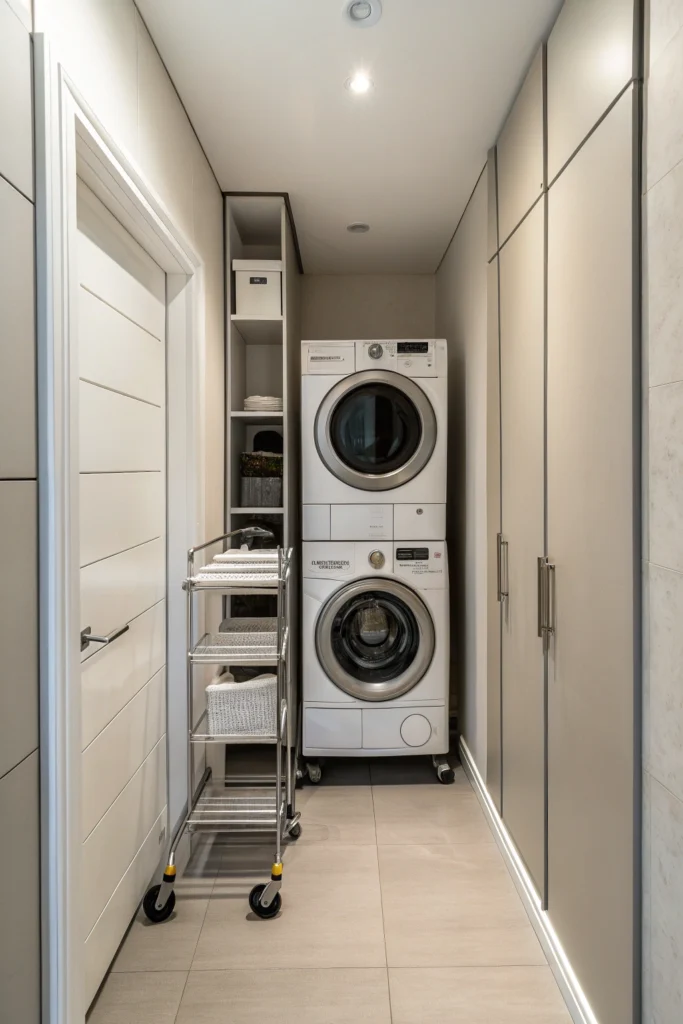
The most obvious solution for narrow laundry rooms is also the most effective: go vertical. Stacking your washer and dryer immediately frees up valuable floor space that can be repurposed for storage, folding areas, or simply creating breathing room.
Modern stacking kits are stable and straightforward to install, and many newer machines are specifically designed with stacking in mind. This configuration works particularly well in spaces that are six feet wide or less, where side-by-side machines would consume the entire width. The freed floor space can accommodate a narrow rolling cart, a small hamper, or even a compact folding station that makes the room significantly more functional.
2. Install Floor-to-Ceiling Cabinets
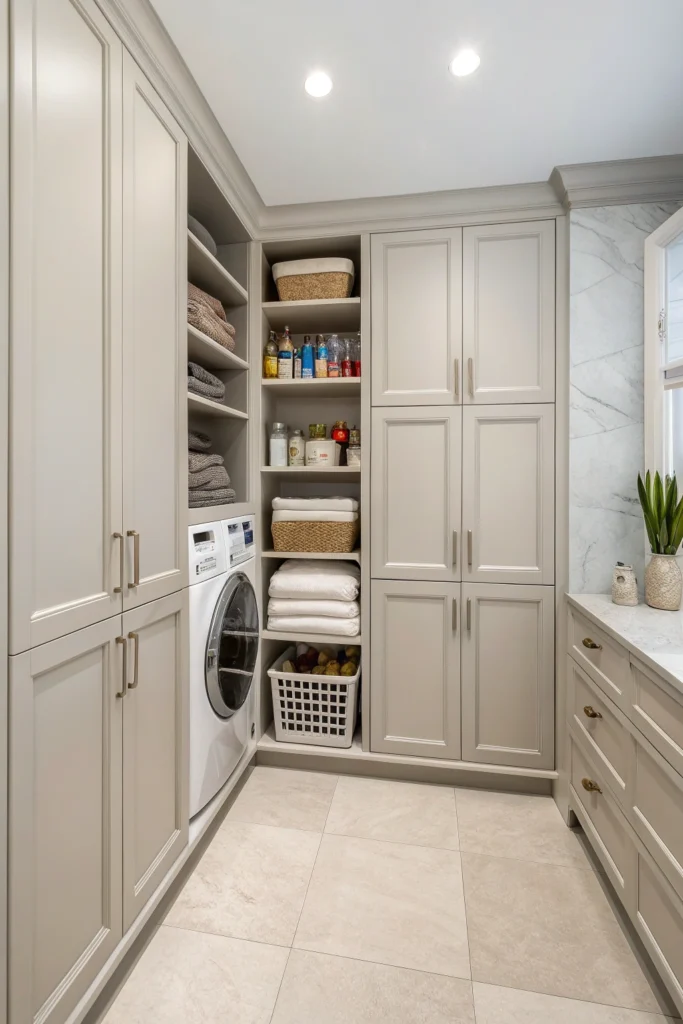
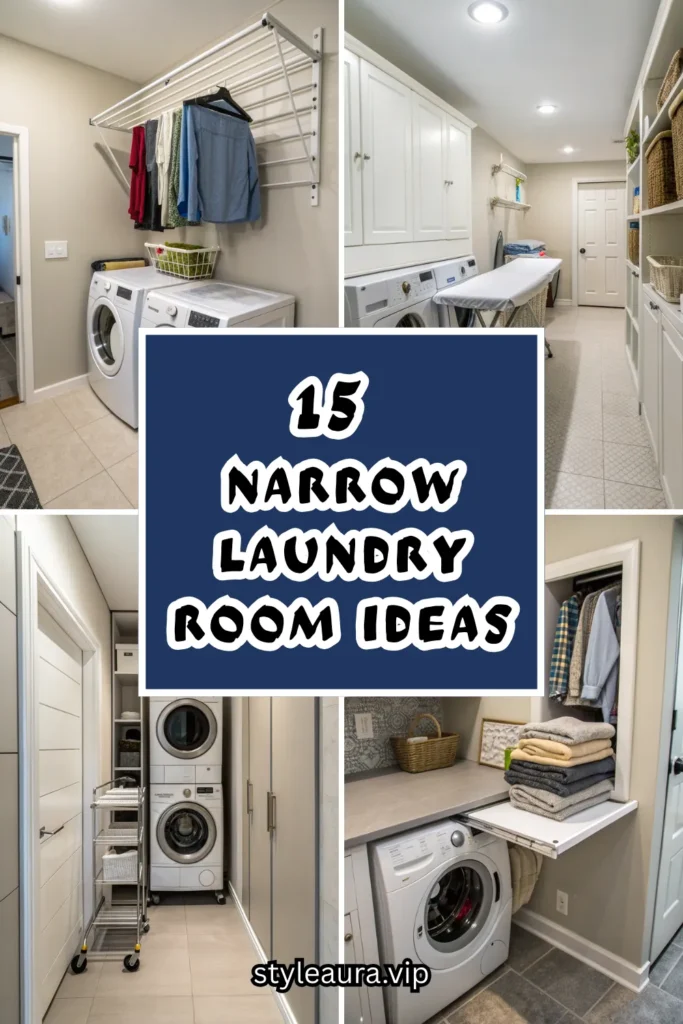
In narrow spaces, vertical storage becomes non-negotiable. Floor-to-ceiling cabinets maximize every available inch while keeping supplies organized and out of sight. The key is choosing cabinets with a shallow depth, typically twelve to fifteen inches, that won’t make the room feel claustrophobic. White or light-colored cabinets help maintain an airy feel, while glass-front uppers can add visual interest without weight.
Include a mix of open shelving for frequently used items and closed cabinets for less attractive necessities. This vertical approach transforms walls from wasted space into hardworking storage that can hold detergents, cleaning supplies, linens, and all the miscellaneous items that tend to clutter laundry areas.
3. Create a Folding Station That Folds Away
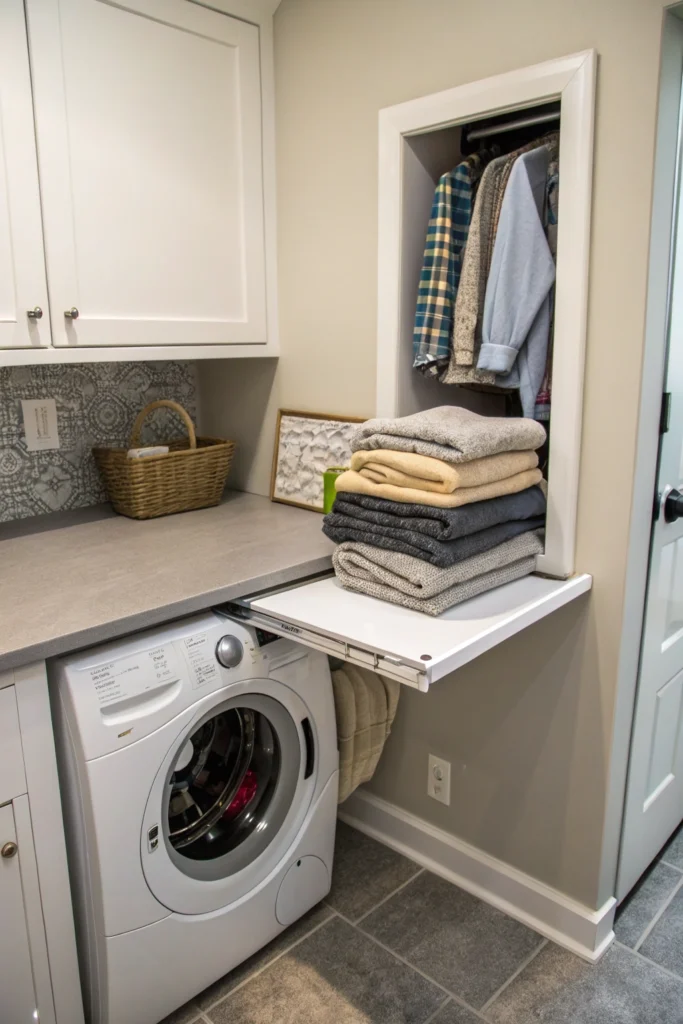
A dedicated folding surface is laundry room luxury, but in narrow spaces, it needs to disappear when not in use. Wall-mounted drop-down tables or fold-out countertops attached to the wall provide a generous folding surface that tucks away completely when you’re finished.
These can be installed above front-loading machines or along any available wall space. When closed, they occupy mere inches of depth; when open, they provide the workspace that makes laundry manageable. Finish the surface in the same material as your countertops for a cohesive look, or opt for butcher block for warmth and durability. This single addition can transform how you interact with your laundry space.
4. Use Sliding Barn Doors to Save Space
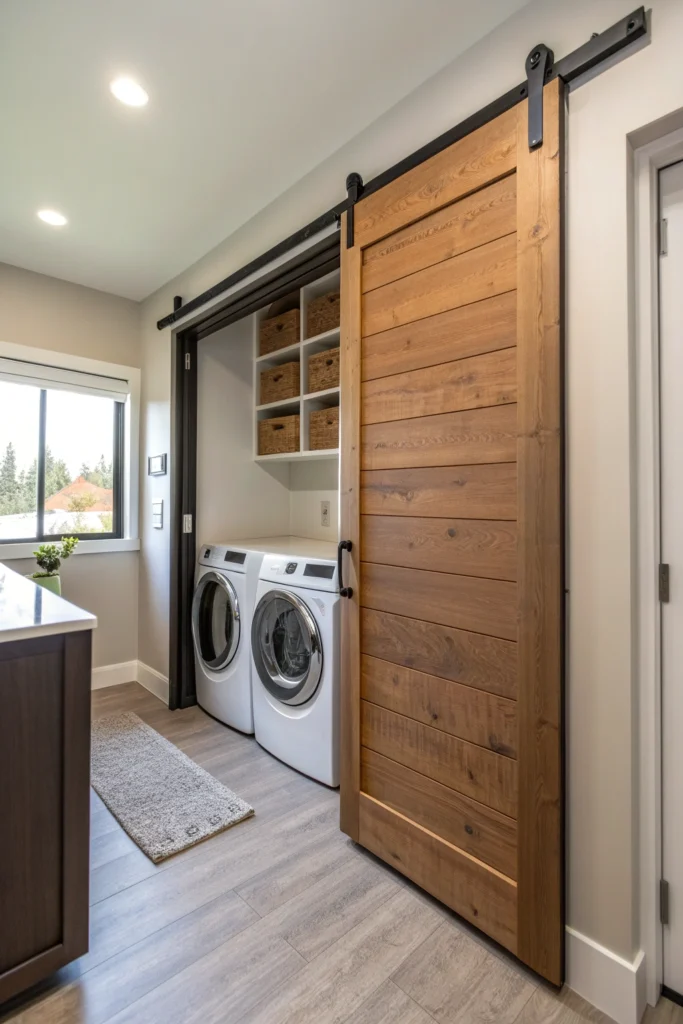
Traditional swinging doors consume precious square footage in narrow laundry rooms. Sliding barn doors, whether classic wood styles or modern glass panels, glide along the wall instead of into the room, preserving every inch of usable space.
This single change can mean the difference between a cramped room and one with adequate circulation. Barn doors also add significant style, providing an opportunity to introduce texture, color, or architectural interest. Choose hardware that complements your home’s aesthetic, from industrial black metal to brushed brass, and consider whether you want the door to make a statement or blend quietly into your design scheme.
5. Incorporate Narrow Pull-Out Storage
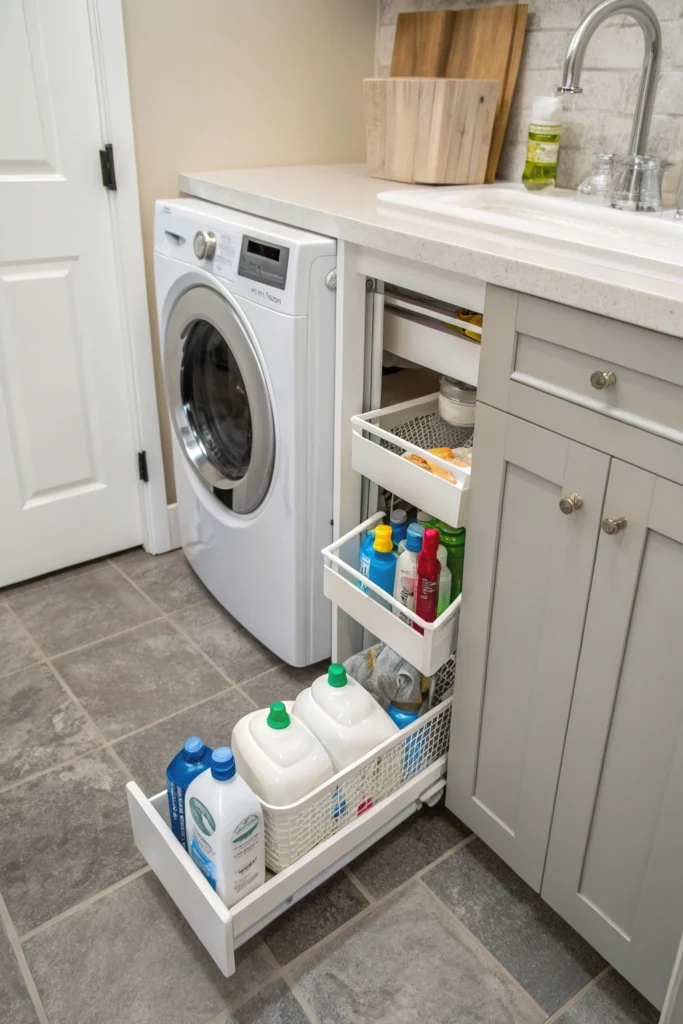
The gaps beside appliances or between cabinets are often considered dead space, but narrow pull-out organizers transform these slivers into useful storage. Slim rolling carts or custom pull-outs that are just six to eight inches wide can hold an impressive amount of supplies when designed thoughtfully.
These work particularly well for storing tall items like brooms, mops, spray bottles, and laundry detergent. The vertical orientation maximizes capacity while the pull-out mechanism ensures everything remains accessible. This approach captures storage potential that would otherwise go completely unused in narrow configurations.
6. Mount a Drying Rack on the Wall
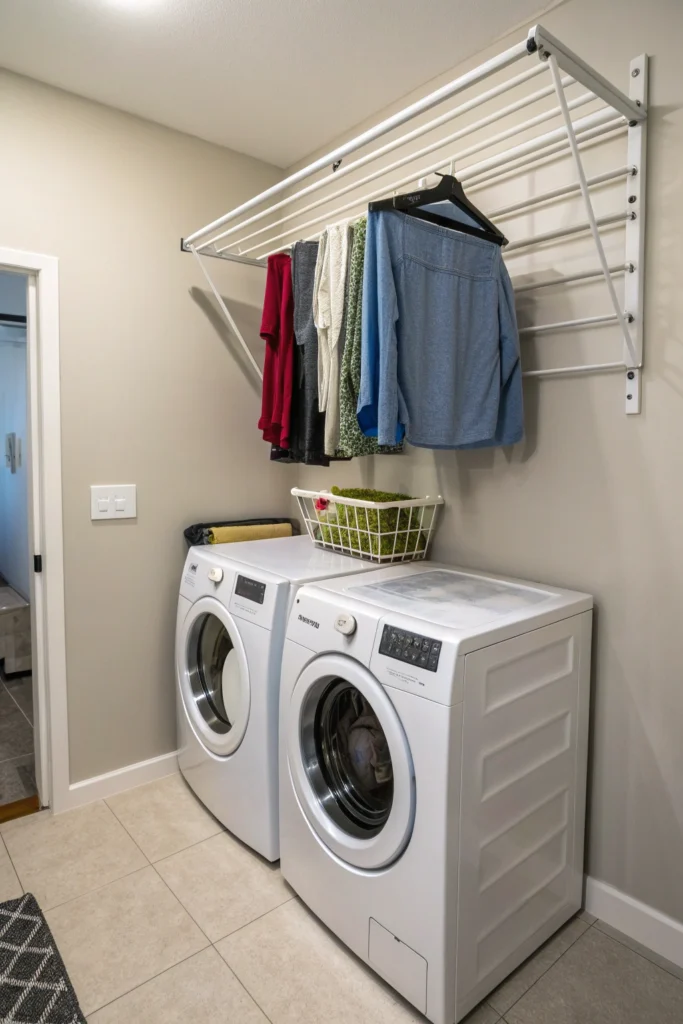
Air-drying delicates is essential, but drying racks are notoriously space-consuming. Wall-mounted accordion-style drying racks solve this beautifully, extending when needed and folding flat against the wall when not in use. Install these above your machines, on side walls, or even on the back of your laundry room door.
Modern versions come in various finishes from chrome to matte black and can support significant weight while maintaining a streamlined profile. Some sophisticated options include heating elements that speed drying time, making them even more functional. This simple addition prevents wet clothes from draping over furniture throughout your home.
7. Choose a Narrow Utility Sink
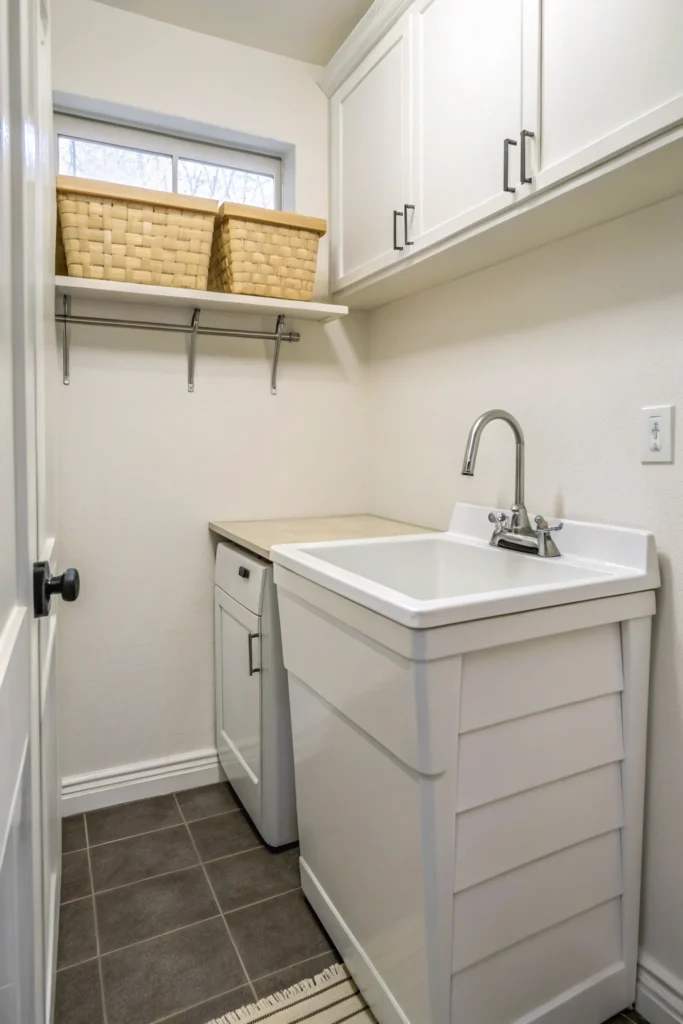
A sink in your laundry room is invaluable for pre-treating stains, hand-washing delicates, and cleaning tasks, but standard laundry sinks consume significant space. Narrow utility sinks, often around eighteen inches wide, provide full functionality without overwhelming the room.
Wall-mounted options free up floor space entirely, while slim cabinet-integrated versions provide both a sink and storage. Pair with a pull-out or wall-mounted faucet to maximize flexibility. Even in the narrowest laundry rooms, a compact sink proves its worth repeatedly, making tasks easier while keeping mess contained.
8. Install Hooks and Rods Strategically
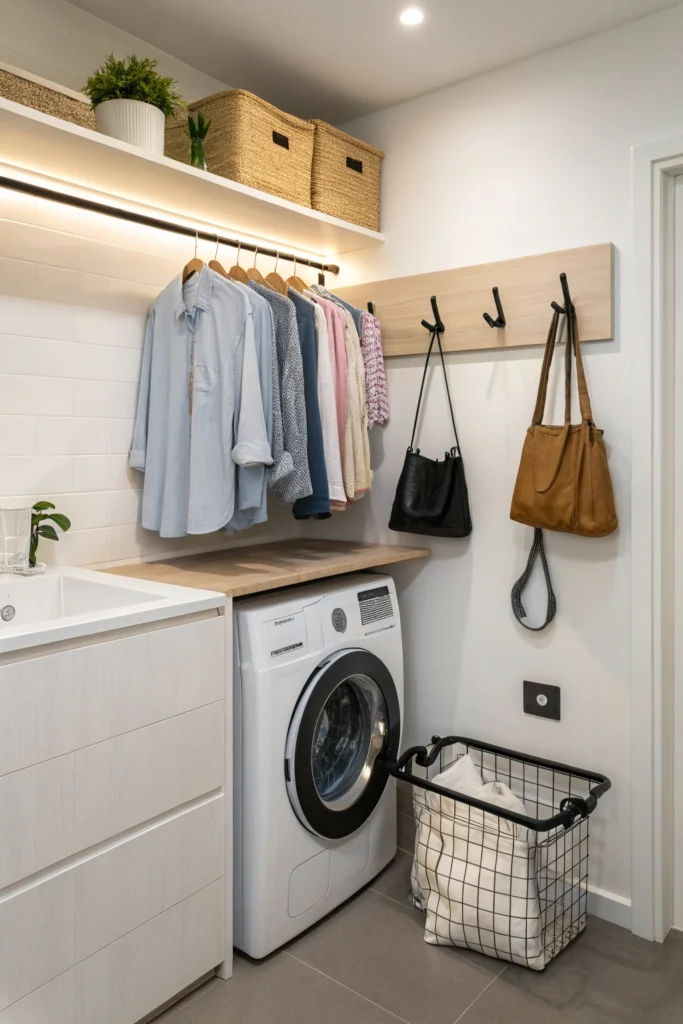
Sometimes the simplest solutions are the most effective. Strategically placed hooks and rods add functionality without consuming floor space or requiring elaborate installation. Mount a rod above your machines for hanging clothes straight from the dryer to minimize wrinkles.
Install heavy-duty hooks on any available wall space for hanging laundry bags, aprons, or cleaning tools. Consider a fold-down drying rod that extends when needed and tucks away when not in use. These small additions cost little but contribute significantly to the room’s overall functionality, ensuring everything has a designated spot.
9. Embrace Light Colors and Reflective Surfaces
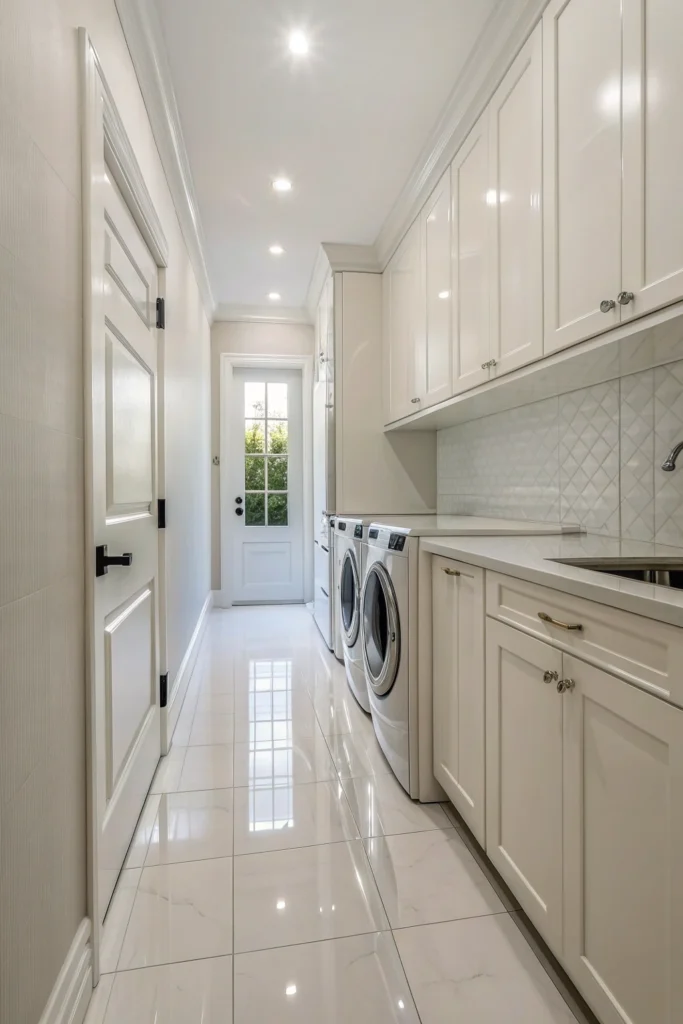
Narrow spaces can feel claustrophobic if designed poorly, but strategic color and material choices open them up visually. White or light-colored walls reflect light and create an airy atmosphere, while glossy tile or glass-front cabinets bounce light around the space.
If all-white feels too clinical, introduce warmth through wood tones or soft grays that maintain brightness without sterility. Large-format tiles or vertical patterns draw the eye upward, emphasizing height over the room’s narrow width. Adequate lighting is crucial; consider under-cabinet LED strips that illuminate work surfaces without requiring valuable space for fixtures.
10. Create Zones for Different Tasks
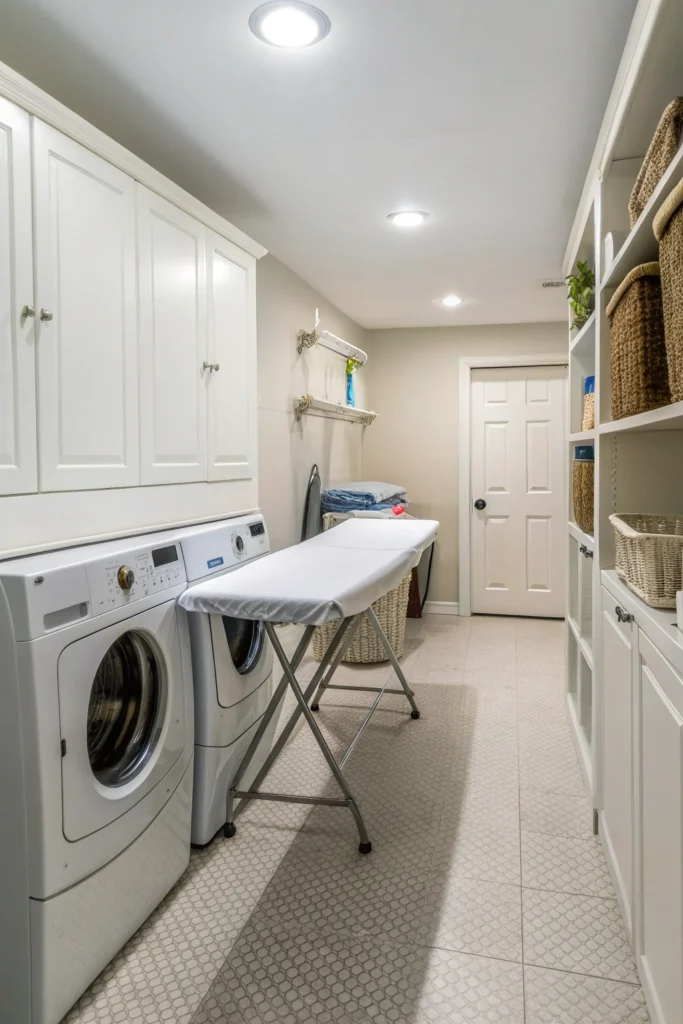
Even in narrow laundry rooms, creating distinct zones for washing, drying, folding, and storage makes the space more intuitive and efficient. This doesn’t require physical separation, just thoughtful organization.
Position your hamper near the entrance for easy loading, create your folding station near the dryer, and keep frequently used supplies within arm’s reach of the machines. Storing items where you’ll use them reduces unnecessary movement in an already tight space. This zoning approach, borrowed from professional kitchen design, ensures your workflow moves logically from one task to the next.
11. Utilize the Back of the Door
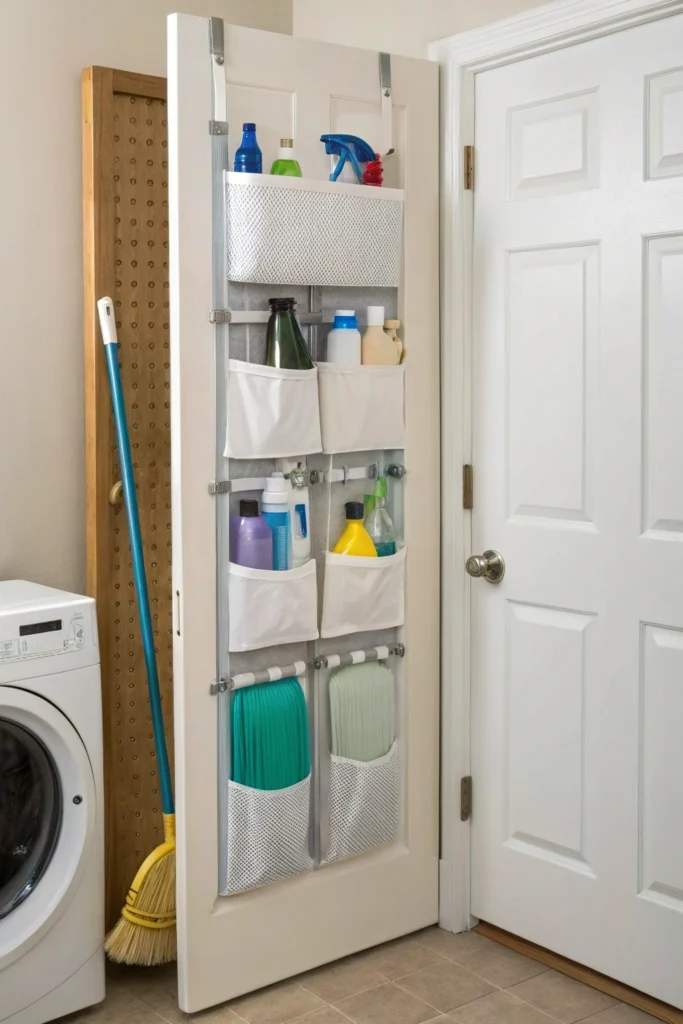
Every surface in a narrow laundry room needs to earn its keep, including the back of the door. Over-the-door organizers, hanging racks, or mounted baskets can store cleaning supplies, dryer sheets, stain removers, and other frequently needed items.
Choose organizers with a slim profile to ensure the door still closes properly. This often-overlooked space can hold a surprising amount while keeping items easily accessible. Consider clear pockets or open wire baskets that allow you to see contents at a glance, reducing the time spent searching for supplies.
12. Invest in Compact, Multi-Function Appliances
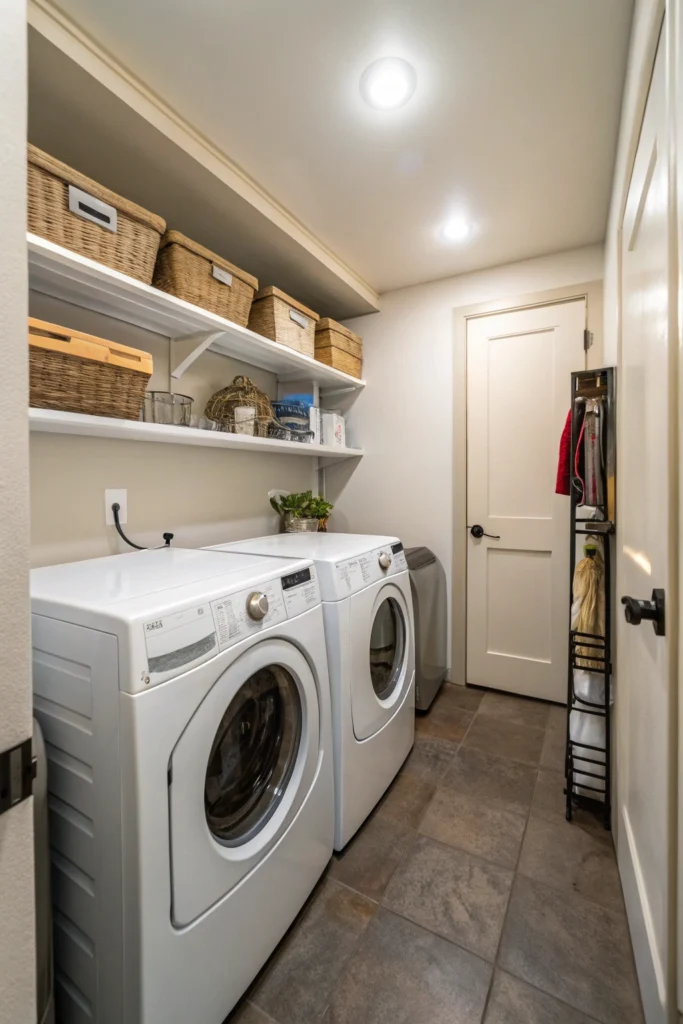
Modern appliance manufacturers increasingly recognize that not everyone has expansive laundry rooms. Compact washers and dryers designed for smaller spaces deliver full functionality in reduced footprints. Combination washer-dryer units eliminate the need for two separate machines entirely, though they require longer cycle times.
Ventless dryers offer installation flexibility that can be crucial in narrow spaces without exterior wall access. When selecting appliances for narrow rooms, prioritize depth over width; machines that extend further into the room rather than along the wall consume less of your limited width while often offering greater capacity.
13. Add a Counter Over Front-Loading Machines
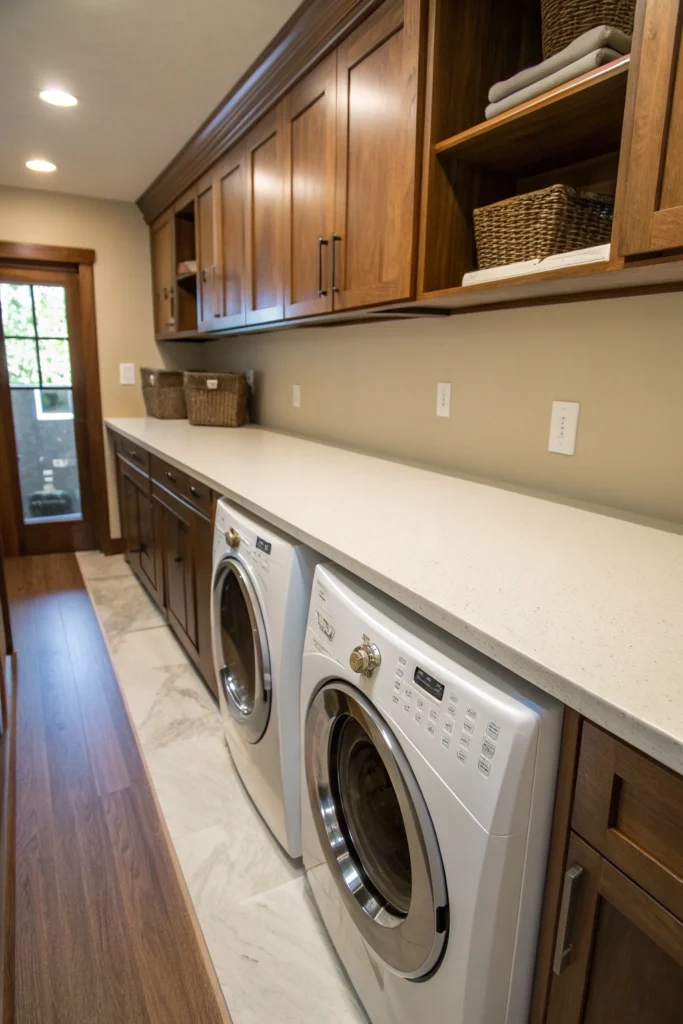
If you’ve opted for side-by-side front-loading machines, adding a countertop over them creates valuable workspace without requiring additional floor space. This surface becomes ideal for folding, sorting, or temporarily setting down baskets. Choose a durable, easy-to-clean material like quartz or butcher block that can handle daily wear.
Extend the counter along the wall if space allows, creating even more workspace. The continuous surface makes the room feel more finished and intentional while dramatically increasing functionality. Underneath, the space between machines can accommodate narrow storage baskets or cleaning supplies.
14. Incorporate Open Shelving Strategically
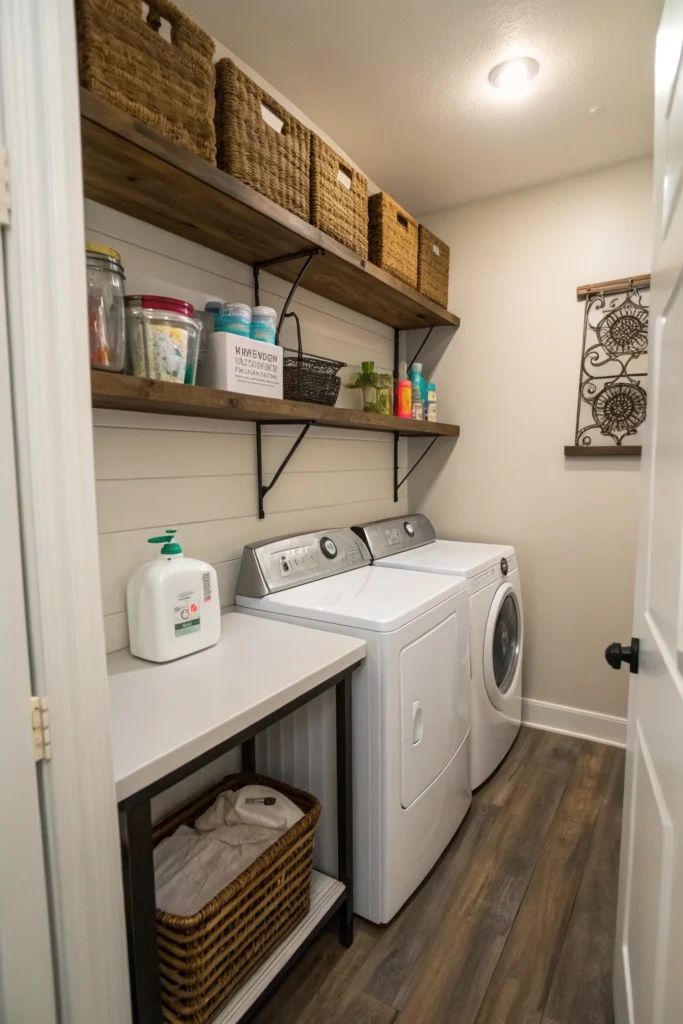
While closed cabinets hide clutter, strategic open shelving adds functionality and visual interest without the visual weight of solid doors. In narrow rooms, this breathing room is valuable. Use open shelves for attractively packaged supplies, decorative baskets that conceal less attractive items, or even small plants that bring life to the space.
Floating shelves maintain an airy feel better than brackets or heavy hardware. Install them at varying heights to create visual rhythm and accommodate items of different sizes. The key is maintaining organization on open shelves; they enhance the space only when kept tidy.
15. Design for Vertical Sorting and Storage
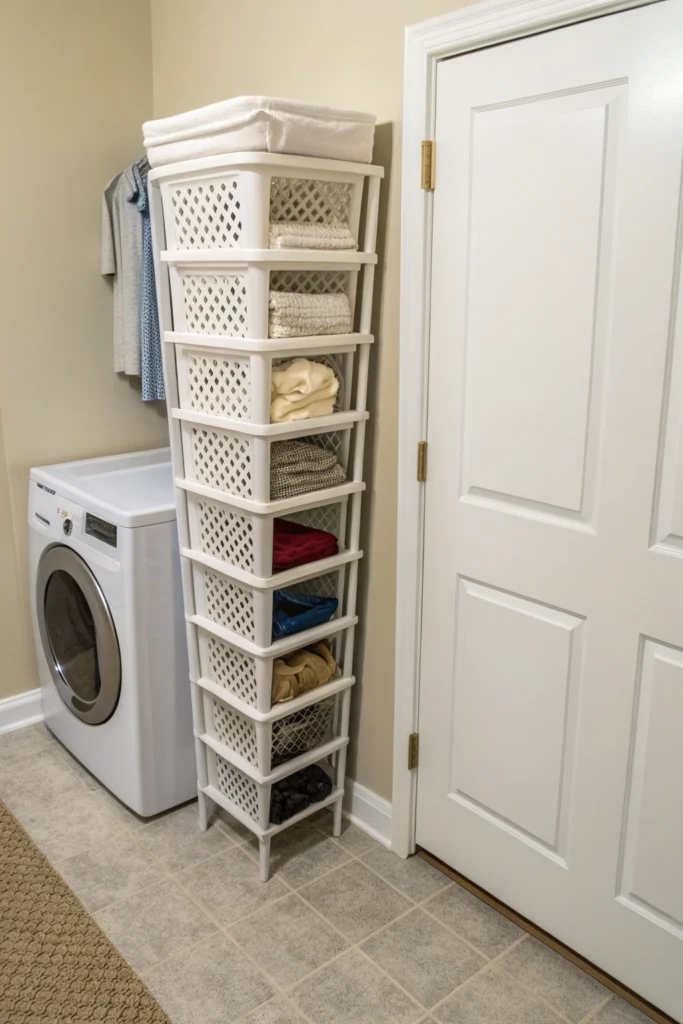
Traditional horizontal laundry sorting with multiple side-by-side hampers simply doesn’t work in narrow spaces. Instead, think vertically with stacked sorting bins or tall narrow hampers that separate lights, darks, and colors without consuming excessive floor space. Wall-mounted canvas bags or pull-out hamper systems integrated into cabinetry keep sorting organized while maintaining a streamlined footprint. Some clever solutions include tilting hamper bins that pull out from cabinets or vertical dividers within a single tall hamper. This vertical approach to sorting maintains organization without the sprawl of traditional systems.
The narrow laundry room will never offer the generous proportions many of us crave, but with thoughtful design, it can function beautifully while looking far better than its modest dimensions might suggest. The secret lies in recognizing that narrow doesn’t mean nonfunctional.
Every design decision should serve multiple purposes: aesthetic choices that also expand the sense of space, storage solutions that keep supplies accessible while maintaining clean lines, and layouts that facilitate smooth workflow despite spatial constraints.
What separates mediocre narrow laundry rooms from exceptional ones is attention to detail and a willingness to customize solutions for your specific space and needs. Off-the-shelf products rarely fit narrow rooms perfectly, but combining ready-made elements with custom touches creates spaces that feel intentionally designed rather than awkwardly squeezed in.
This might mean having a countertop cut to precise dimensions, installing custom shelving that uses every inch of wall space, or selecting appliances based on exact measurements rather than what’s most popular.
The most successful narrow laundry rooms also embrace their limitations with creativity rather than fighting against them. A six-foot-wide space will never accommodate side-by-side machines with room to spare, but it can house beautifully stacked units with gorgeous floor-to-ceiling storage and a fold-down work surface that rivals the functionality of much larger rooms.
The narrow galley-style layout can actually create an efficient workflow where everything needed is within easy reach, eliminating the excessive back-and-forth movement that characterizes poorly planned larger spaces.
Consider too the sensory experience of your laundry room. In narrow spaces where you’ll be working in close quarters, pleasant finishes, good lighting, and even small luxuries like a Bluetooth speaker or artwork make the space more enjoyable to inhabit. Laundry is already a chore; your space shouldn’t compound the burden. Light colors, natural materials, organized storage, and thoughtful details transform obligation into something far more palatable.
These fifteen ideas provide starting points, but your narrow laundry room’s ultimate design should reflect your specific needs, aesthetic preferences, and the particular challenges your space presents.
Whether you implement one idea or combine several, the goal remains the same: creating a hardworking, beautifully organized space that makes the most of every single inch while proving that great design isn’t about square footage but about smart thinking and creative problem-solving.