15 Montessori-Inspired Nursery Layouts for Tiny Homes
Designing a nursery in a tiny home comes with unique challenges, but a Montessori-inspired approach makes the process both practical and meaningful. Montessori nurseries focus on independence, simplicity, and respect for a child’s natural development.

In small spaces, these principles are especially valuable because they encourage intentional layouts, multi-use elements, and clutter-free environments. A Montessori-inspired nursery doesn’t need to be expensive or large to be effective. With thoughtful planning, even the smallest corner can become a calm, nurturing space that grows with your child.
1. Floor-Level Bed for Freedom of Movement
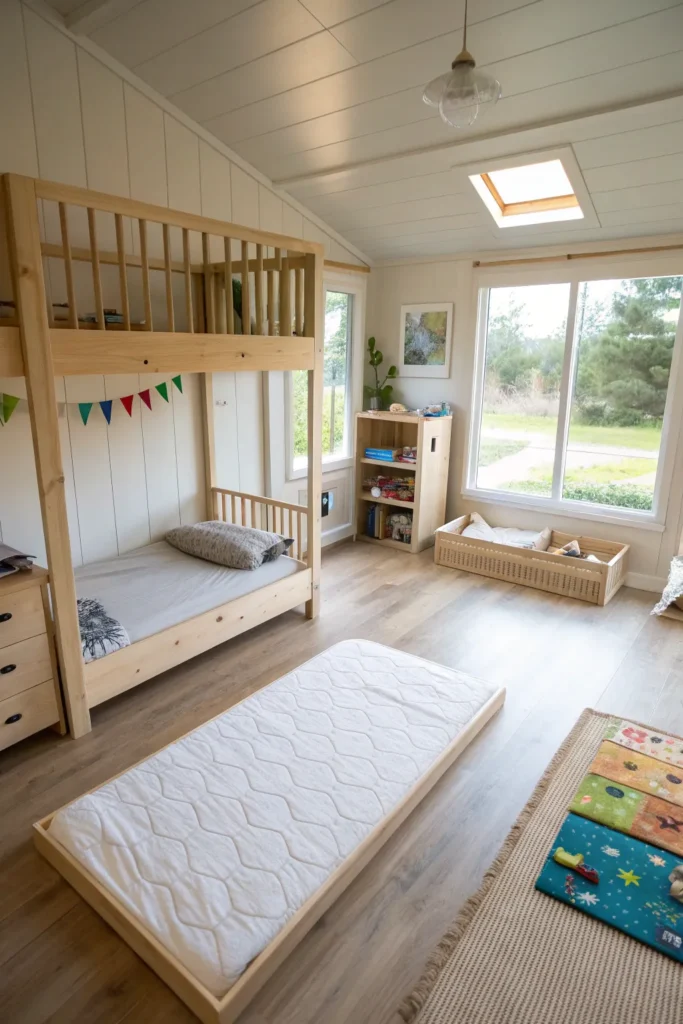
One of the most recognizable Montessori elements is the floor bed. In tiny homes, a low mattress or floor bed eliminates the visual bulk of a crib and makes the room feel more open. This layout encourages independence by allowing the child to get in and out of bed safely. Placing the bed against a wall or in a cozy nook helps define the sleeping area without taking up unnecessary space, while soft rugs or mats nearby add warmth and comfort.
2. Minimalist Layout With Open Floor Space
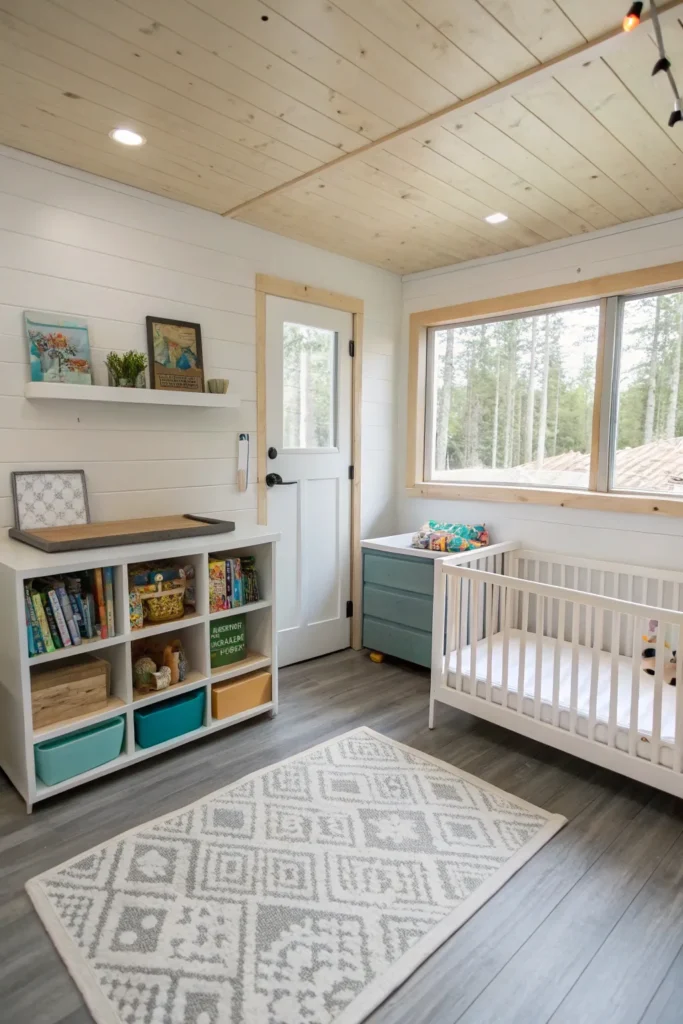
Montessori design values movement and exploration, making open floor space essential. In a tiny home nursery, this means choosing fewer furniture pieces and arranging them thoughtfully. Keeping the center of the room clear allows the child to crawl, walk, and play freely. This layout also makes the nursery feel less cramped and more peaceful, supporting both the child’s development and the overall flow of the home.
3. Low Shelving for Easy Access

Low, open shelves are a cornerstone of Montessori nurseries and work perfectly in small spaces. Instead of tall bookcases or bulky storage units, low shelving keeps toys and books within reach while maintaining an airy feel. Limiting the number of items displayed helps prevent overstimulation and clutter. Rotating toys regularly keeps the space fresh without needing additional storage.
4. Corner Nursery Layouts for Tiny Homes

When a tiny home doesn’t allow for a dedicated nursery room, a corner layout can be an ideal solution. A small section of a bedroom or living area can be transformed into a Montessori-inspired nursery using a rug, low shelves, and a floor bed or bassinet. This approach creates a defined yet flexible space that blends seamlessly with the rest of the home while still meeting the child’s developmental needs.
5. Neutral and Natural Color Palette

Soft, neutral colors help tiny nurseries feel larger and calmer. Montessori-inspired layouts often rely on whites, beiges, soft greys, and muted earth tones to create a soothing environment. In a small space, this palette prevents visual clutter and allows natural materials to stand out. Wooden furniture, cotton textiles, and wool rugs add warmth without overwhelming the room.
6. Child-Sized Furniture for Scale and Function

Choosing furniture that matches a child’s scale is both a Montessori principle and a space-saving strategy. Small chairs, low tables, and compact storage pieces fit naturally into tiny nurseries and encourage independence. These items take up less visual and physical space than standard furniture, making the room feel more balanced and intentional.
7. Vertical Storage Without Visual Overload

In tiny homes, vertical space is valuable, but Montessori design emphasizes accessibility. The solution lies in combining low-access storage with simple vertical elements. A small wall-mounted book ledge or a few hooks at child height can add function without clutter. Keeping wall decor minimal ensures the room remains calm and developmentally appropriate.
8. Simple Toy Rotation Zones

A Montessori nursery doesn’t need a large toy collection on display. Creating a small rotation zone, such as a basket or shelf section, helps manage space and keeps the environment focused. In tiny homes, this layout prevents toys from taking over the room and makes cleanup easier. Fewer toys also encourage deeper, more meaningful play.
9. Multi-Functional Furniture Layouts

Multi-functional furniture is essential in tiny homes, and Montessori-inspired nurseries can benefit greatly from it. A low shelf that doubles as a room divider, a bench with hidden storage, or a changing surface that converts into a dresser can all save space. These layouts reduce the need for extra furniture while maintaining a child-centered design.
10. Window-Focused Learning Areas
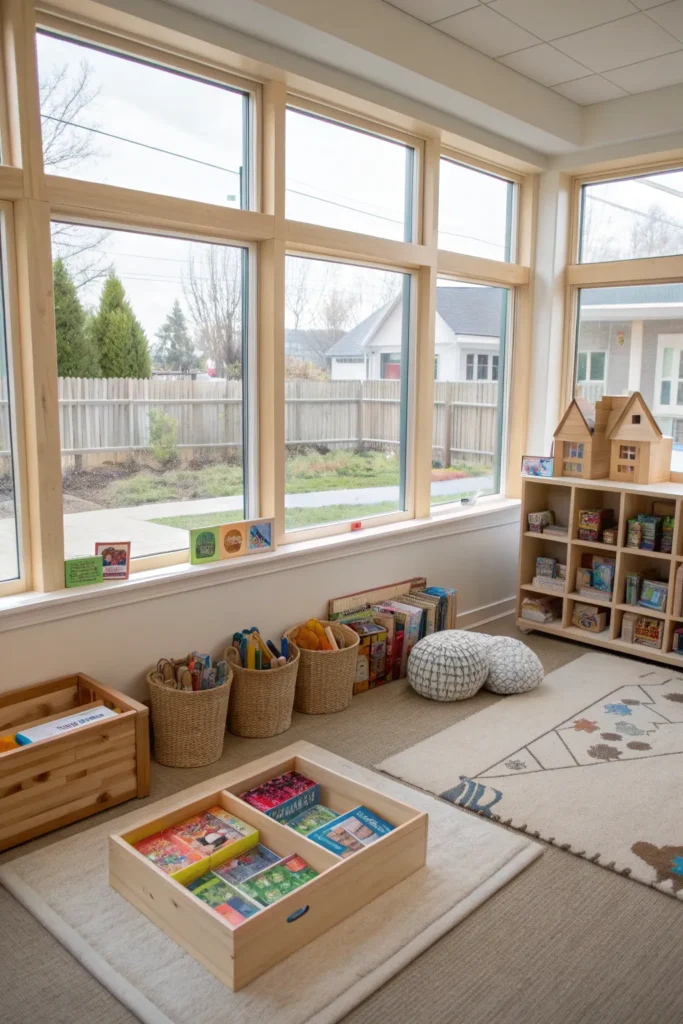
Natural light plays an important role in Montessori environments. Placing a small activity mat, mirror, or book shelf near a window creates a peaceful learning area that feels open and connected to nature. In tiny homes, this layout maximizes light and makes the nursery feel larger and more inviting without adding extra elements.
11. Montessori Mirror for Body Awareness
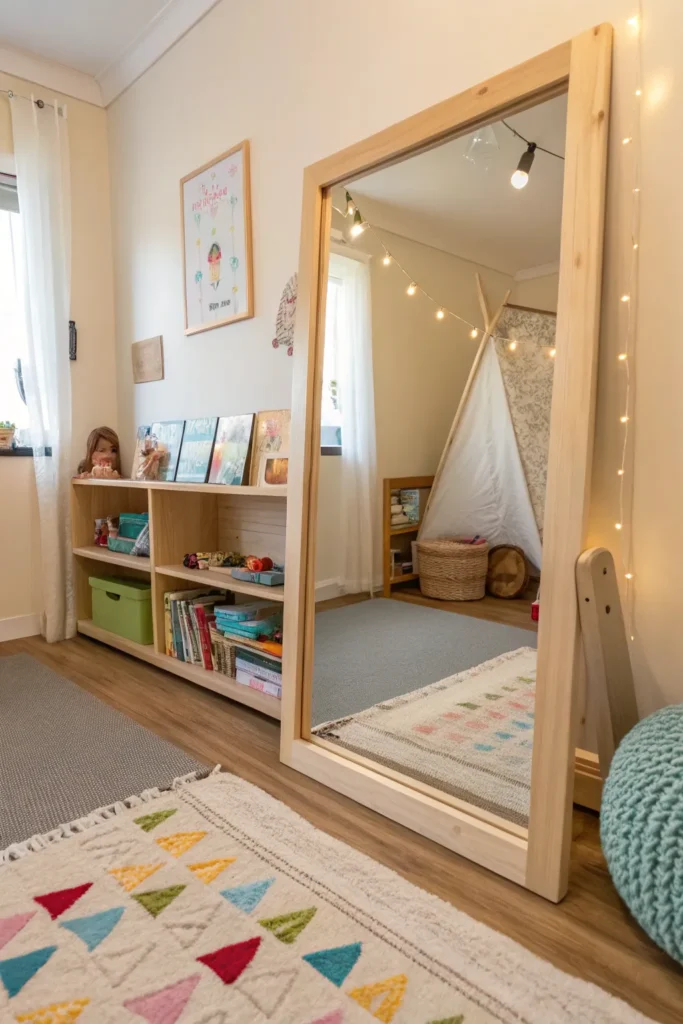
A low-mounted mirror is a simple yet powerful Montessori tool. In small nurseries, it adds depth and reflects light, making the room feel more spacious. Positioned near a movement mat or shelf, the mirror encourages self-awareness and exploration while doubling as a visual enhancer for the space.
12. Calm Sleep-Focused Layouts

In tiny homes, sleep areas often need to be especially intentional. A Montessori-inspired sleep-focused layout minimizes distractions near the bed. Keeping toys and active elements separate from the sleeping area helps the child associate the space with rest. Soft lighting, neutral bedding, and minimal decor support healthy sleep habits in a compact environment.
13. Shared Nursery and Parent Space Layouts
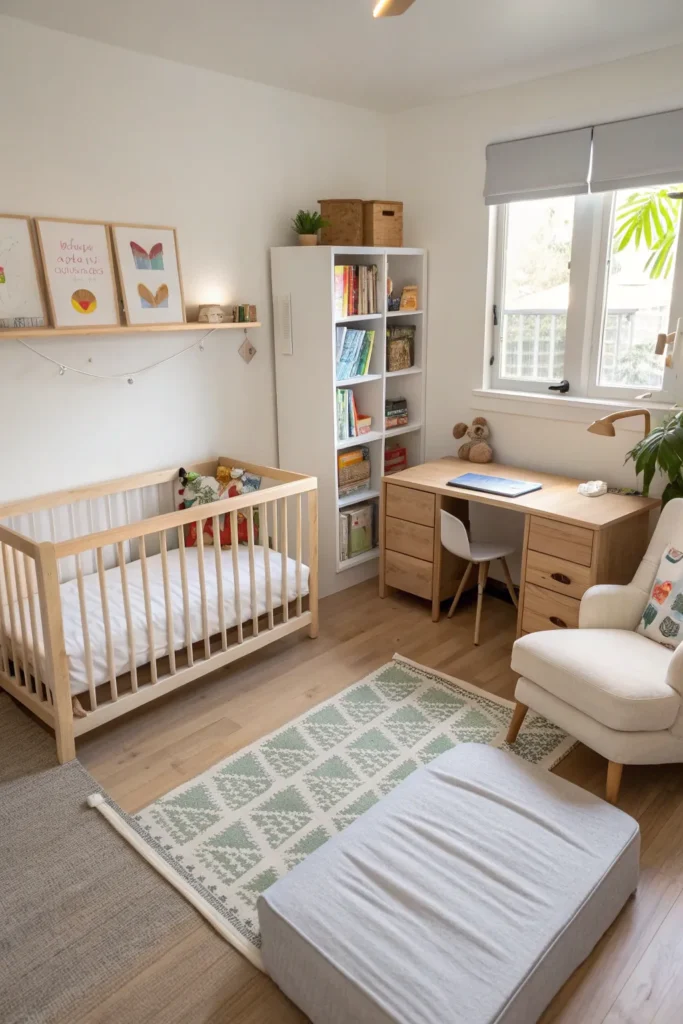
Many tiny homes require shared rooms, and Montessori principles adapt well to this setup. A shared nursery layout can include a clearly defined child zone with low furniture and a parent zone with taller storage. Visual boundaries, such as rugs or shelving, help maintain balance while respecting the child’s independence within a shared space.
14. Nature-Inspired Sensory Corners
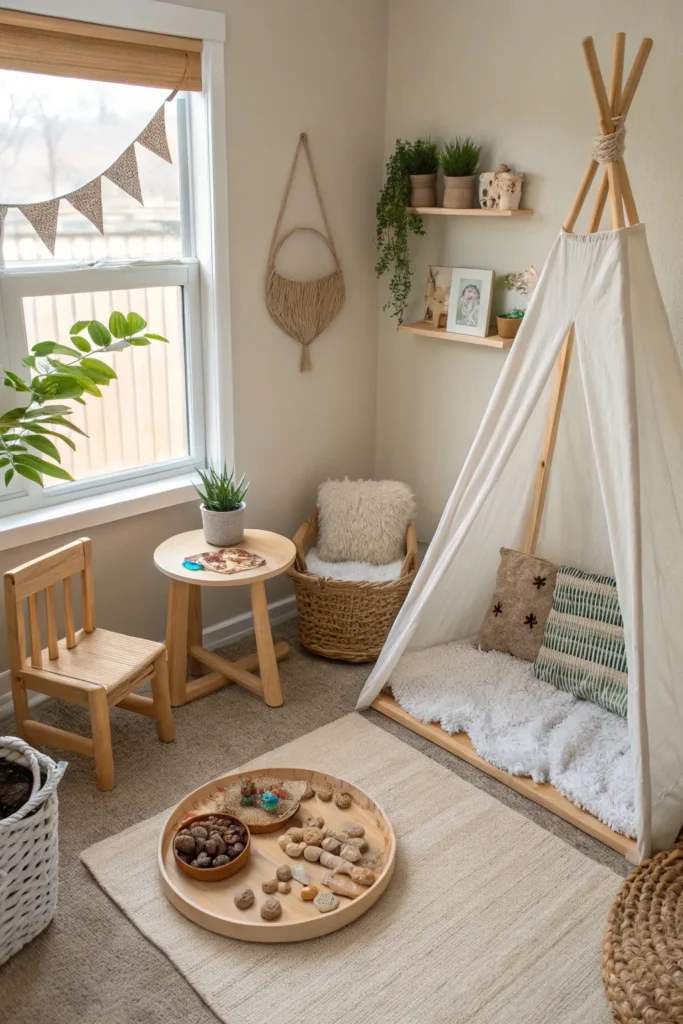
A small sensory corner adds depth to a Montessori nursery without taking up much room. Natural textures like wood, fabric, and woven elements engage the senses in a gentle way. In tiny homes, keeping this area compact and intentional ensures it enhances the room rather than overwhelming it.
15. Flexible Layouts That Grow With the Child
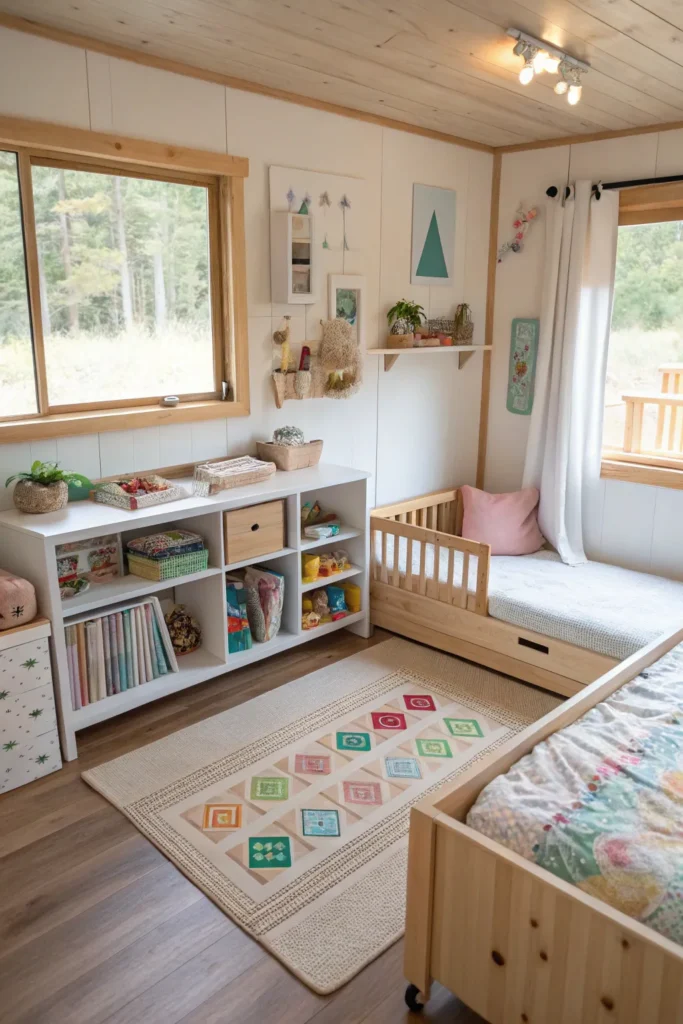
Perhaps the most important aspect of a Montessori-inspired nursery in a tiny home is flexibility. Layouts that can adapt over time reduce the need for constant changes. As the child grows, shelves can be rearranged, toys can evolve, and furniture can be repurposed. This long-term approach saves space, money, and effort while supporting the child’s development at every stage.
Designing a Montessori-inspired nursery for a tiny home is about thoughtful choices, simplicity, and respect for the child’s independence. By focusing on low, accessible furniture, calm layouts, and intentional use of space, even the smallest nursery can feel nurturing, functional, and beautifully designed.