15 Montessori Forest Nursery Designs for Small Spaces
A Montessori forest nursery blends child-led learning with the calming presence of nature. Rooted in simplicity, accessibility, and natural materials, this design style is especially well suited for small spaces.
Forest-inspired elements create a sense of wonder without overwhelming the room, while Montessori principles ensure that everything is purposeful and child-centered. In compact homes, these nurseries focus on warmth, flexibility, and connection to nature, proving that size doesn’t limit thoughtful design.
1. Ground-Level Sleeping Nooks With Woodland Warmth
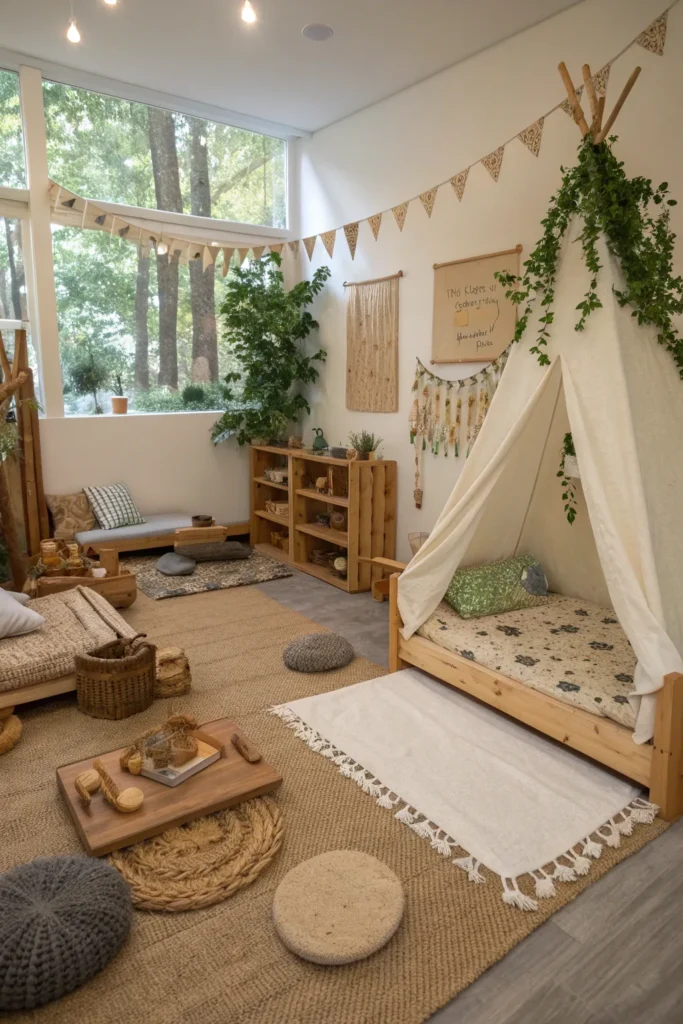
In a Montessori forest nursery, floor-level sleeping arrangements support independence while maintaining a cozy, nature-inspired feel. In small spaces, a simple mattress or low bed framed with soft textiles and earthy tones keeps the room open and uncluttered. Neutral bedding paired with forest-themed textures, such as linen or cotton, creates a calming sleep zone that feels grounded and secure.
2. Natural Wood Furniture for a Calming Foundation
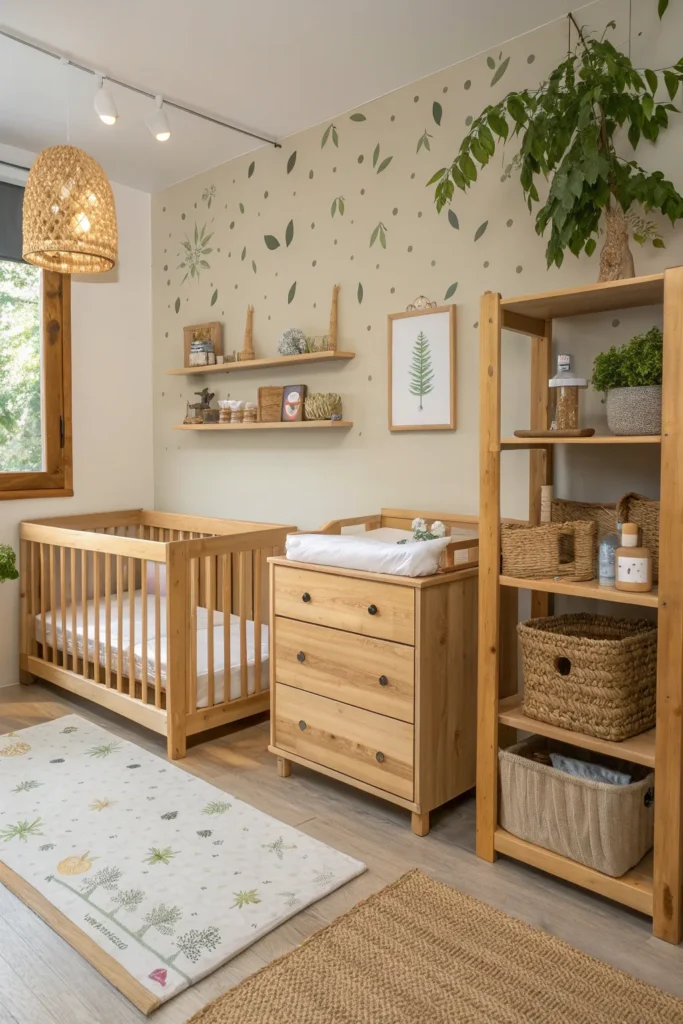
Wooden furniture is central to forest-inspired design and aligns naturally with Montessori principles. In compact nurseries, choosing light or medium-toned wood helps keep the space airy while adding warmth. Low wooden shelves, simple beds, and child-sized tables create a cohesive look that feels intentional rather than crowded.
3. Earth-Toned Color Palettes That Feel Expansive
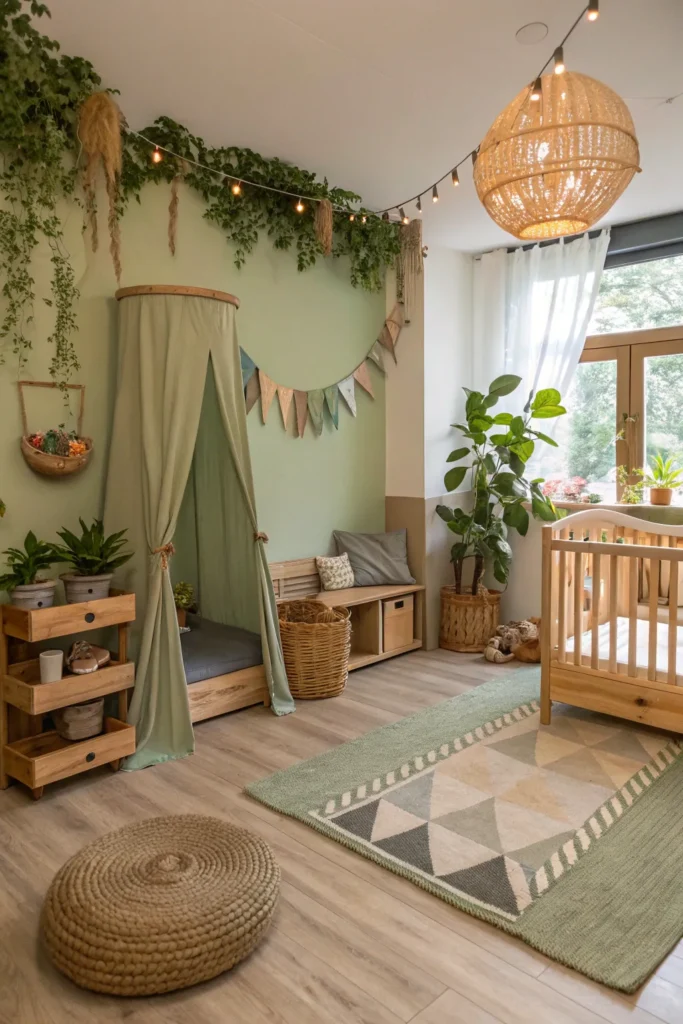
Soft greens, warm browns, muted beiges, and gentle greys form the backbone of a Montessori forest nursery. These colors echo the natural world and help small spaces feel calm and expansive. Limiting the palette prevents visual clutter and allows textures and natural materials to become the focal point.
4. Low Open Shelving With Nature-Based Toys
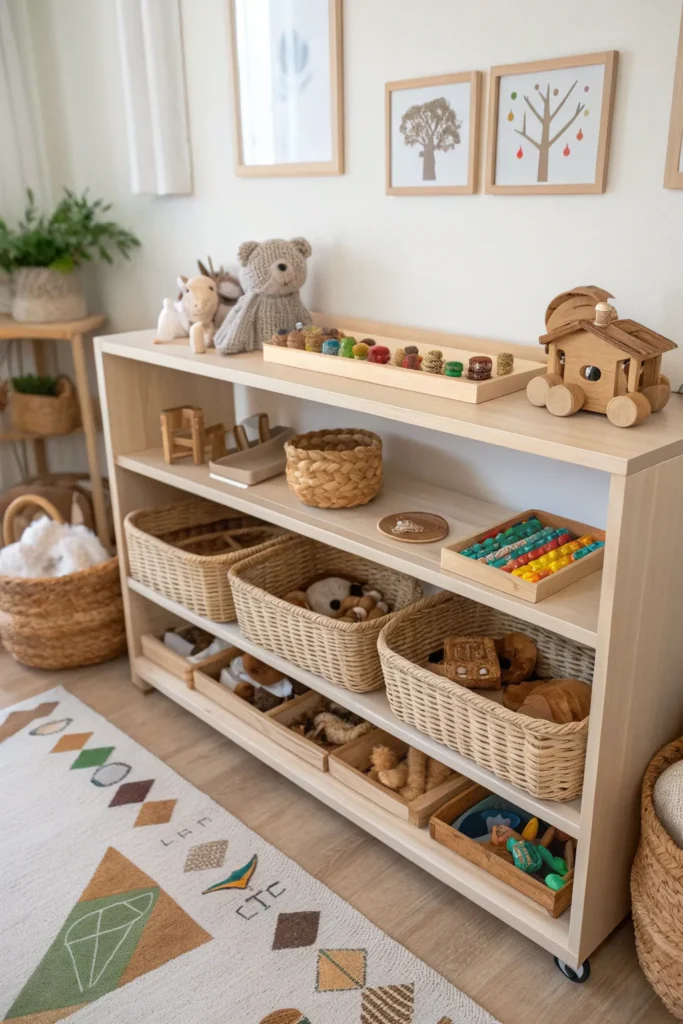
Low, open shelving keeps toys accessible and organized while maintaining a minimalist look. In forest nurseries, toys made from wood, felt, and natural fibers reinforce the theme without overwhelming the room. Displaying fewer items encourages focused play and makes the nursery feel spacious and serene.
5. Forest-Inspired Wall Details Without Overcrowding
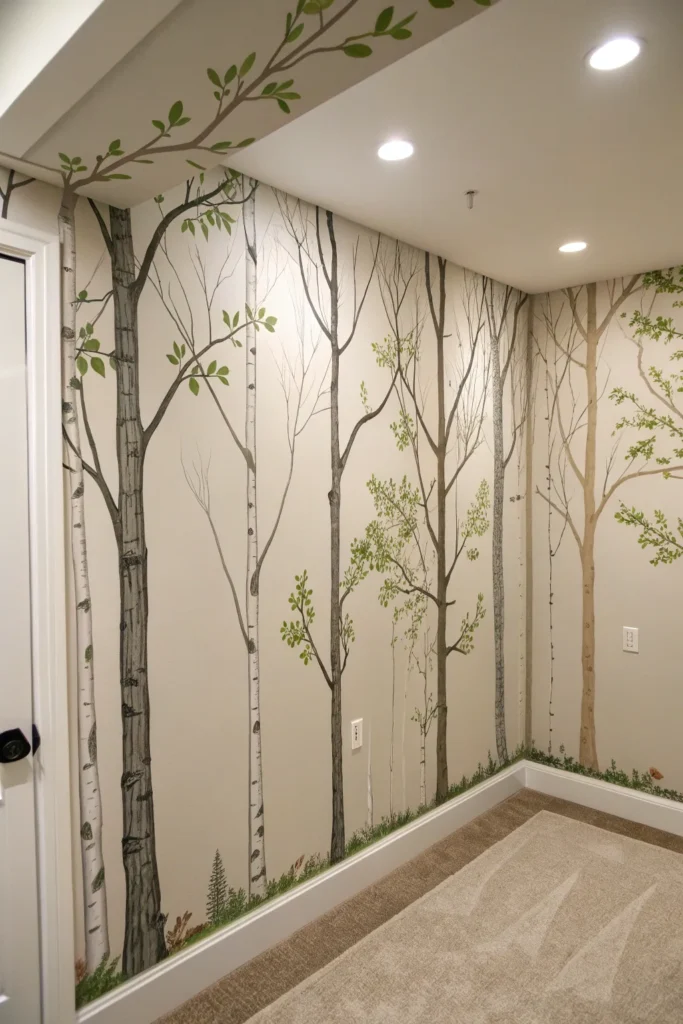
In small spaces, wall decor should be subtle and intentional. Simple forest-themed decals, hand-painted trees, or framed botanical prints add character without clutter. Keeping wall art at the child’s eye level supports Montessori values while making the space feel personal and engaging.
6. Soft Natural Textiles for Comfort and Sensory Balance
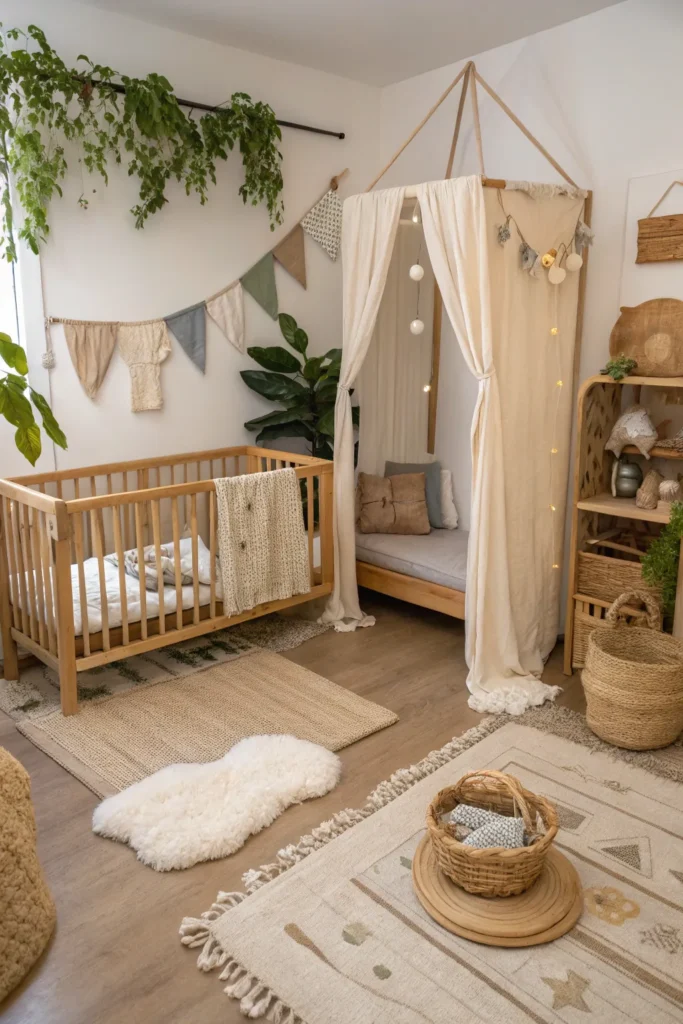
Natural textiles such as cotton, wool, and linen add warmth and softness to compact nurseries. Rugs, floor mats, and curtains in earthy hues enhance the forest aesthetic while providing sensory comfort. These materials help soften the space visually and physically without taking up extra room.
7. Window-Centered Nature Connection
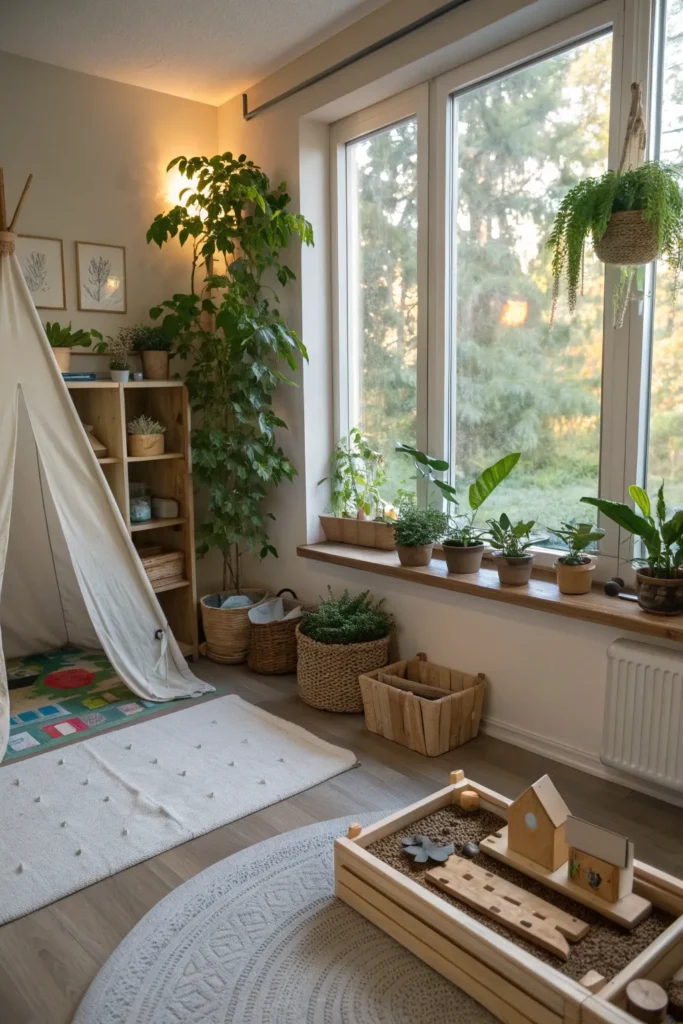
Positioning play or reading areas near a window strengthens the child’s connection to nature. In small nurseries, this layout maximizes natural light and creates a peaceful atmosphere. A simple floor mat, low shelf, or basket near the window allows the child to observe outdoor changes and feel more connected to the natural world.
8. Montessori Mirrors to Expand Visual Space
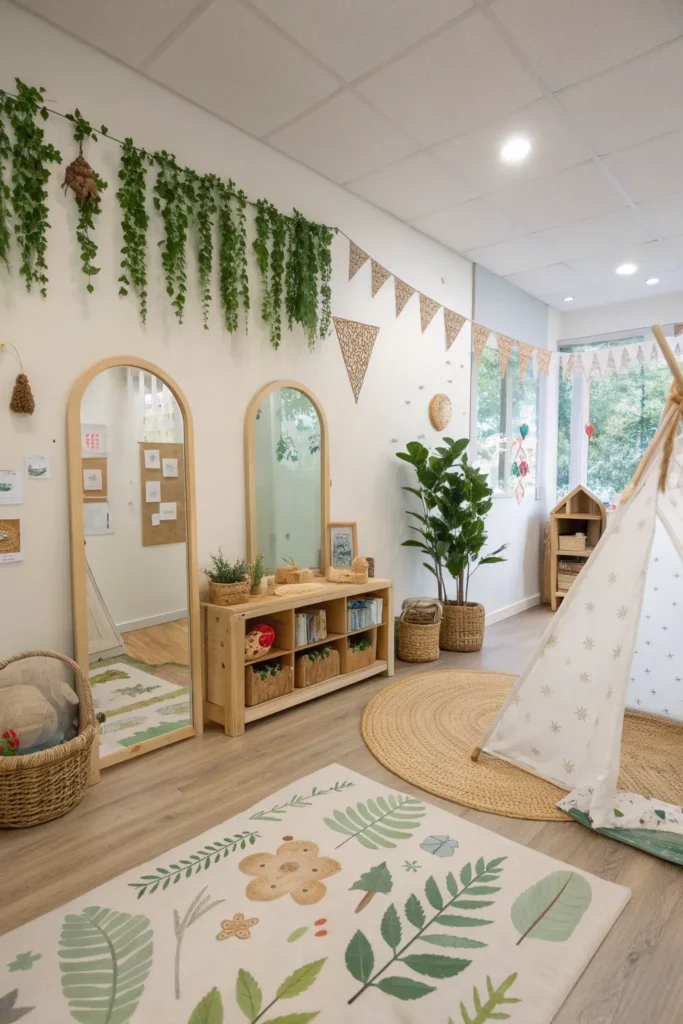
A low-mounted mirror is both functional and visually beneficial in small nurseries. It encourages self-awareness and movement while reflecting light to make the room feel larger. In forest-themed spaces, wooden-framed mirrors or softly rounded edges maintain the organic aesthetic.
9. Simple Nature-Based Sensory Corners
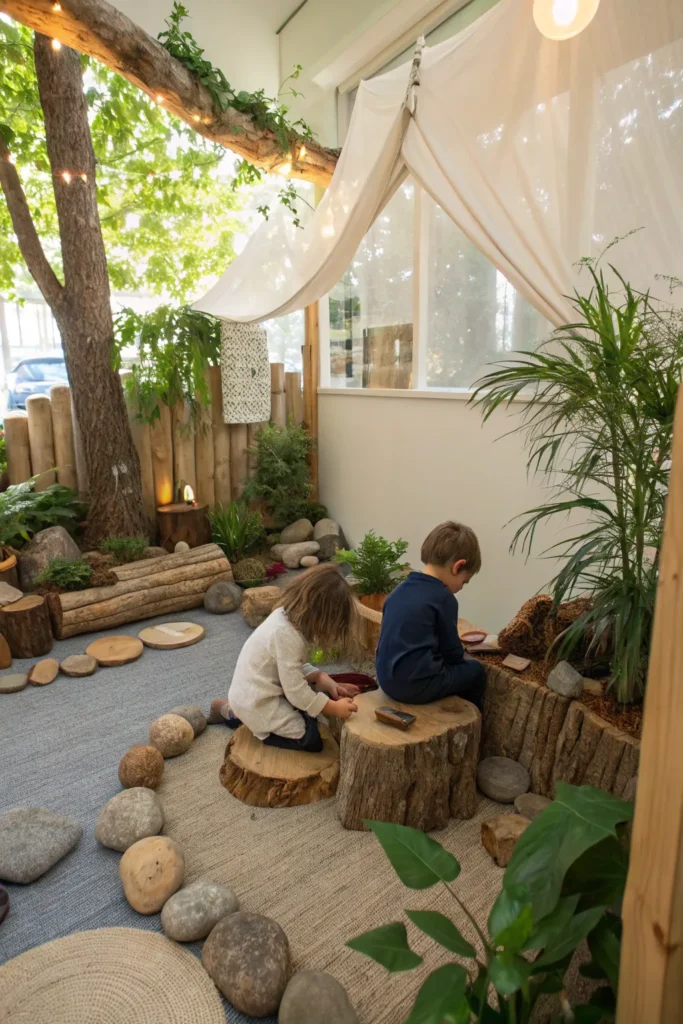
A forest nursery thrives on sensory exploration, even in limited space. A small corner with pinecones, smooth stones, wooden blocks, or textured fabrics can provide rich sensory experiences. Keeping this area compact ensures the nursery remains calm and uncluttered while supporting development.
10. Flexible Furniture Layouts for Growing Needs
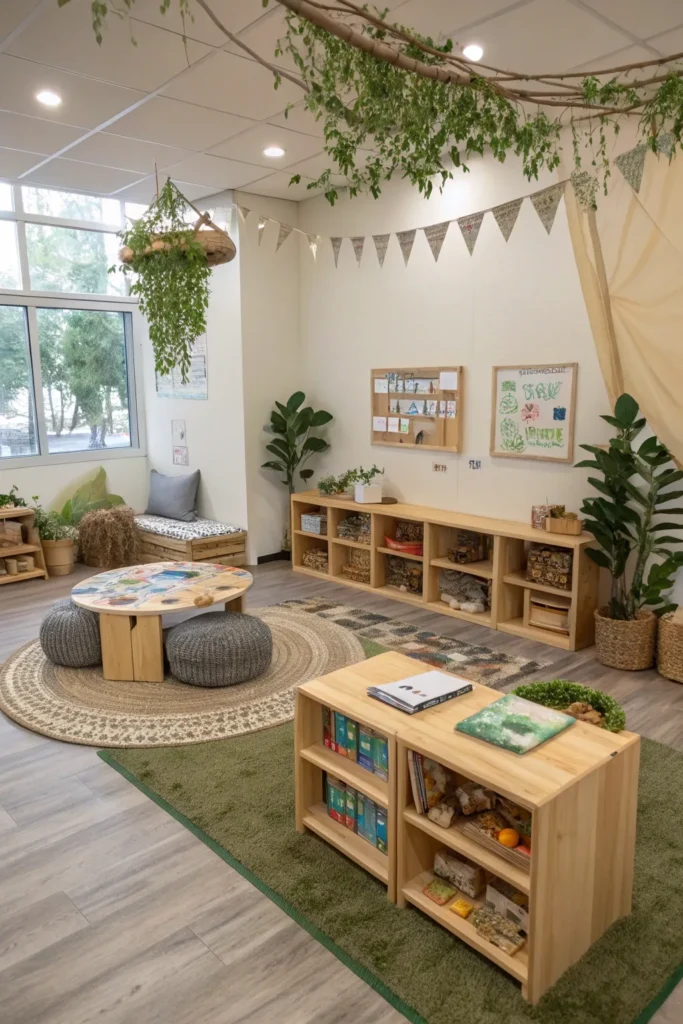
Flexibility is essential in small Montessori nurseries. Furniture that can be rearranged or repurposed allows the room to evolve as the child grows. A low shelf might later hold books instead of toys, or a floor mat may become a reading area. This adaptability keeps the space functional without constant redesign.
11. Floor Play Zones That Encourage Exploration
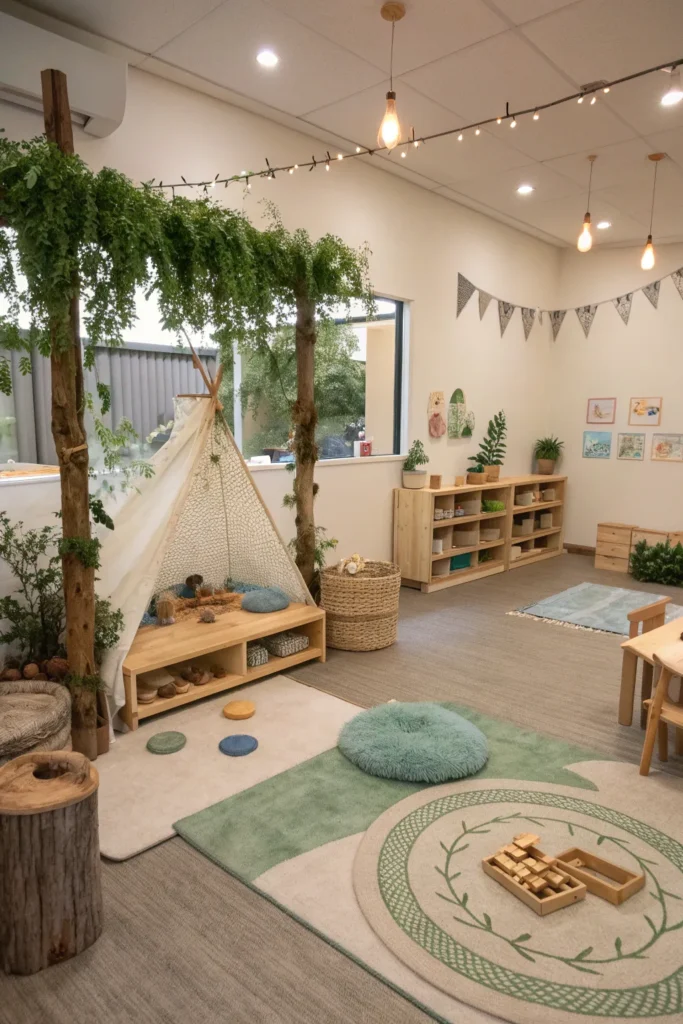
Open floor play areas are central to Montessori design and work beautifully in forest-themed nurseries. In small rooms, a simple rug or mat defines the play zone without adding bulk. Keeping furniture along the walls preserves open space and supports free movement and exploration.
12. Minimal Decor With Storybook Charm
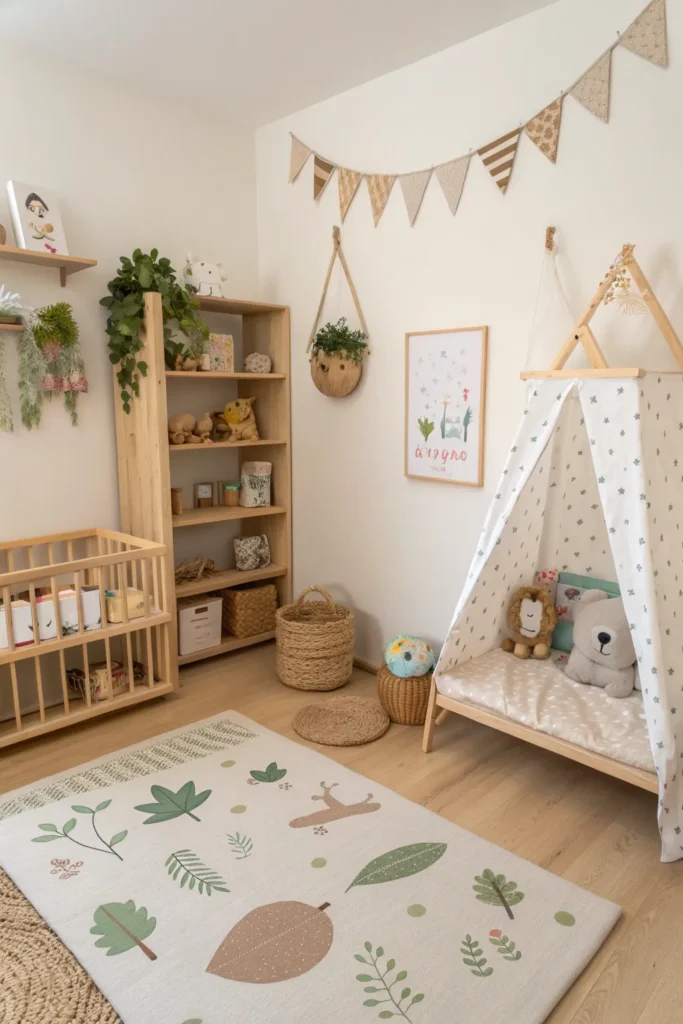
Forest nurseries often feel whimsical, but restraint is key in small spaces. A few thoughtfully chosen elements, such as a wooden animal figure or a nature-themed mobile, add charm without overwhelming the room. This minimalist approach keeps the focus on the child and the environment rather than excessive decoration.
13. Hidden Storage for Visual Calm
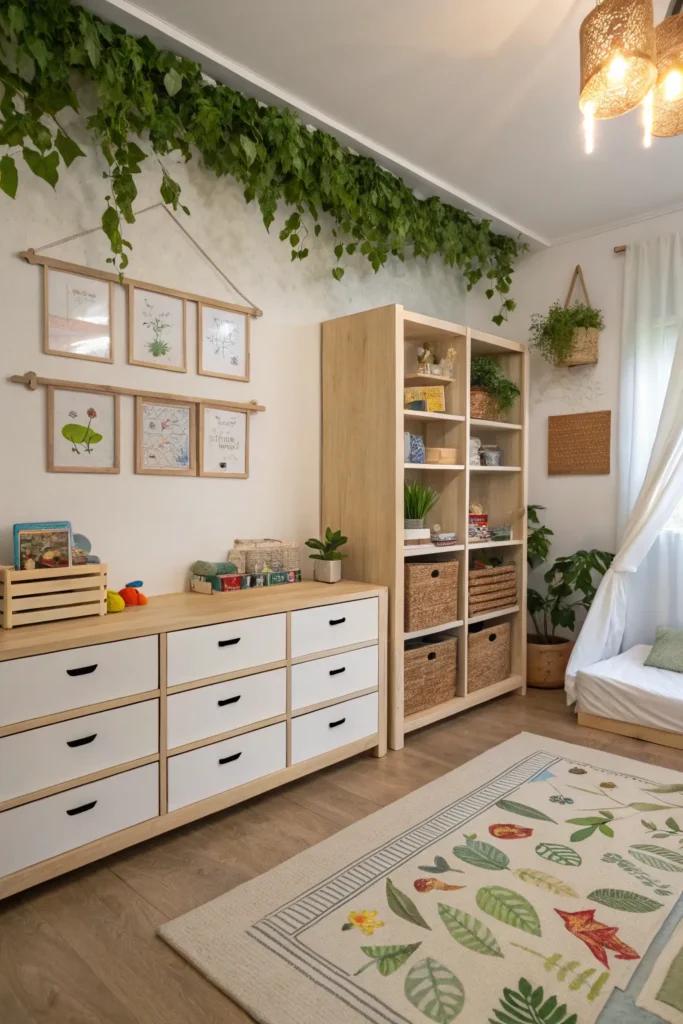
Maintaining visual calm is essential in Montessori design, especially in compact rooms. Baskets made from natural fibers can store extra toys or supplies while blending seamlessly into the forest aesthetic. Keeping storage simple and accessible supports independence while preventing clutter.
14. Shared Spaces With Clear Child Zones
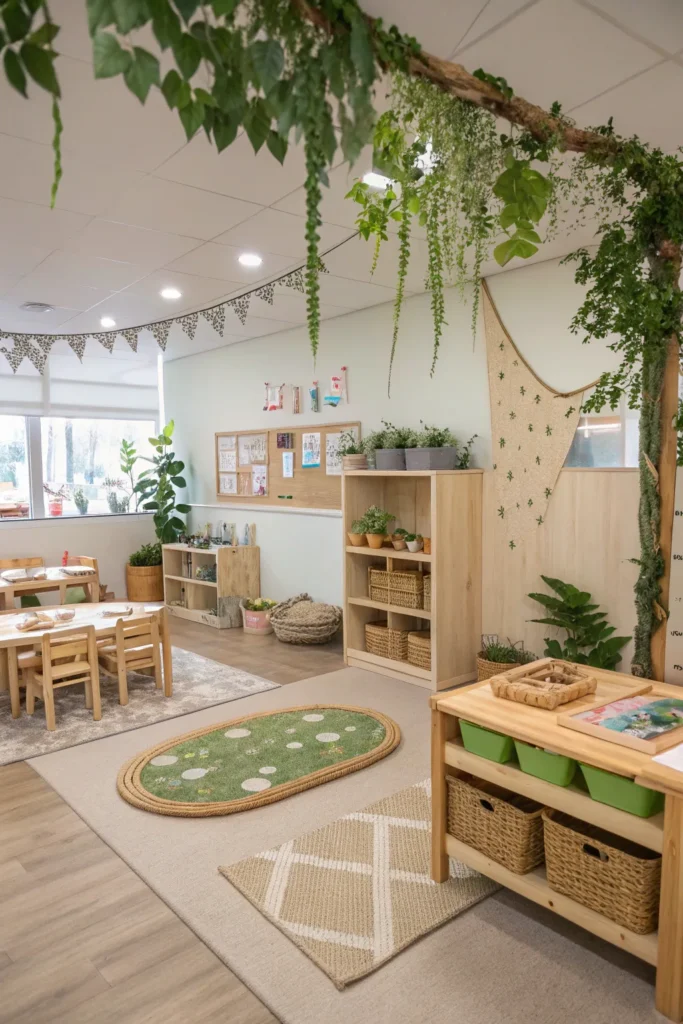
In small homes, forest nurseries are often part of shared spaces. Defining the child’s area with a rug, low furniture, or shelving helps create a sense of ownership and security. This clear zoning respects the child’s independence while maintaining harmony within the shared environment.
15. Nature-Led Designs That Grow With the Child
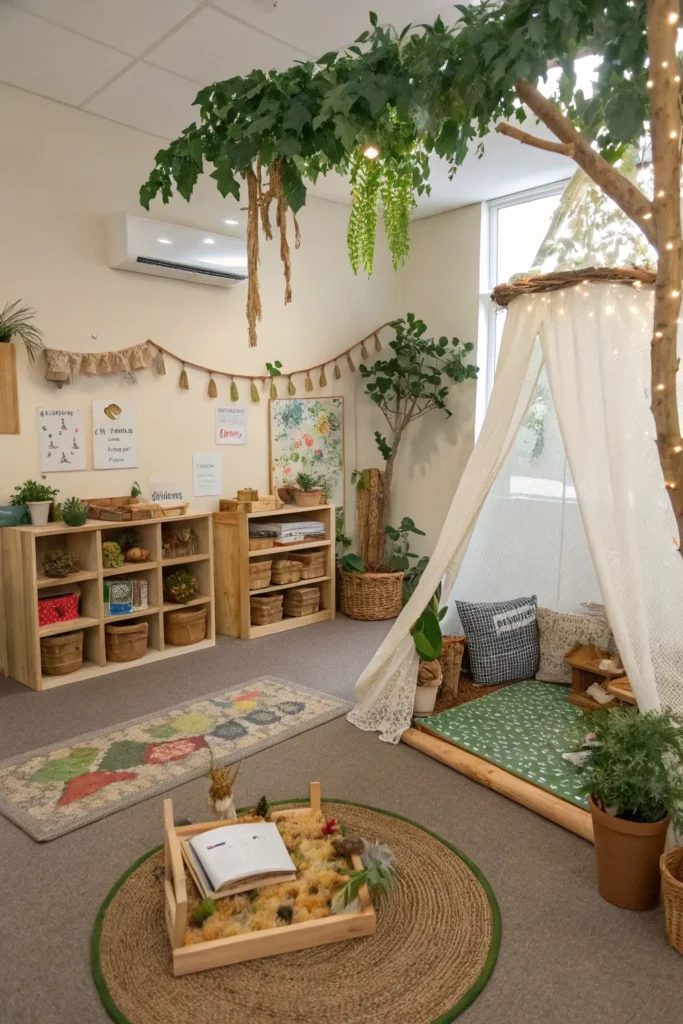
A Montessori forest nursery is designed to evolve. Forest themes are timeless and easily adaptable as the child grows, transitioning from nursery to toddler space without major changes. By focusing on natural materials, simple layouts, and child-led design, small spaces can remain functional, beautiful, and developmentally supportive for years.
A Montessori forest nursery in a small space is proof that thoughtful design matters more than square footage. With intentional layouts, natural materials, and a calm, child-centered approach, even the tiniest nursery can become a nurturing environment that fosters independence, creativity, and a lifelong connection to nature.