15 Modern Loft-Style Home Ideas
The loft aesthetic began as a practical solution to a specific urban problem — the conversion of redundant industrial buildings into habitable spaces by artists and creative workers who needed large, affordable floor areas and found them in the warehouses, factories, and light industrial premises that post-industrial urban economies were discarding at scale. The aesthetic that emerged from these early conversions was not designed — it was discovered.
The exposed brick was there because removing it would have cost money no one had. The concrete floor was there because laying another floor would have cost money no one had. The ductwork was visible because concealing it would have cost money no one had. The large windows were there because the building was designed to admit maximum light for the manufacturing processes it originally served.
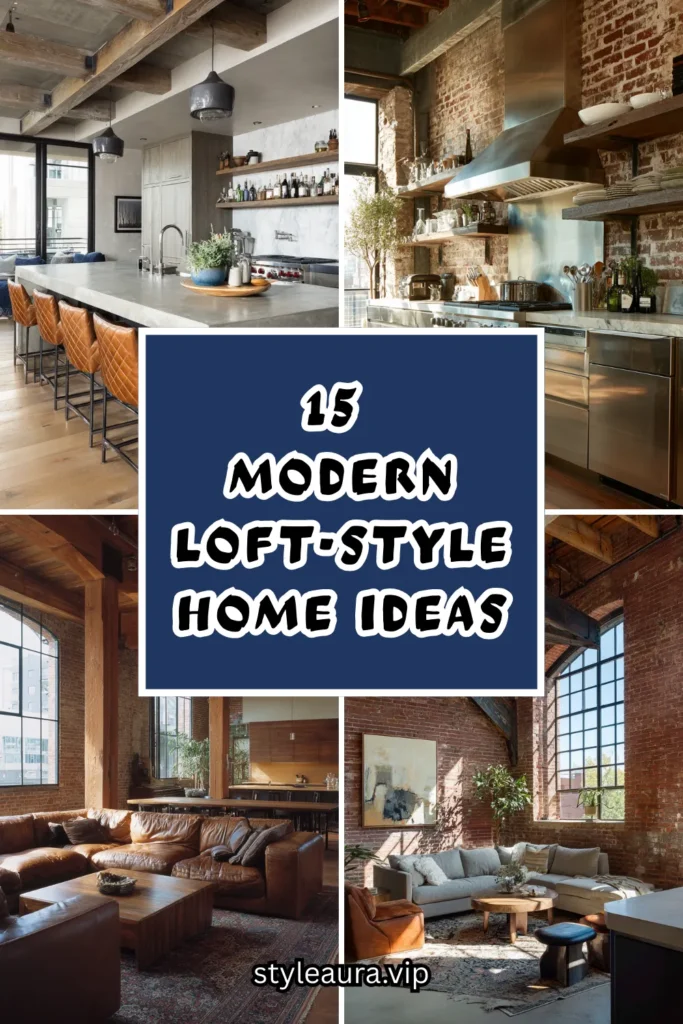
The high ceilings were there because the building’s industrial function demanded them. The aesthetic that has become one of contemporary interior design’s most consistently admired and most widely emulated styles was, in its origins, simply the honest expression of an existing building stripped of all unnecessary additions.
The contemporary application of the loft aesthetic in both converted industrial spaces and purpose-built residential architecture takes these discovered qualities — the exposed materials, the double-height volumes, the open plan organization, the industrial fixtures — and applies them with genuine design intelligence to create homes of considerable beauty and genuine livability. Here are fifteen ideas for achieving the modern loft aesthetic with intelligence and authenticity.
1. Embrace Exposed Structural Elements
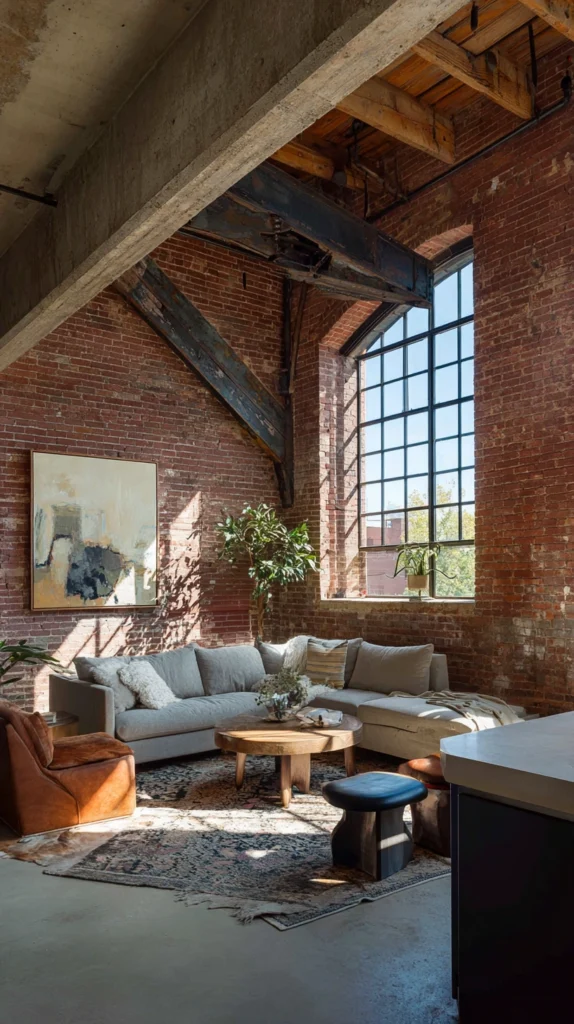
The most fundamental principle of the loft aesthetic is the exposure of the building’s structural elements — the bricks, the concrete, the steel beams, the timber joists — that conventional residential construction conceals behind layers of plaster, drywall, and paint.
These structural elements, when honestly exposed, create surfaces of considerable material richness and authenticity that no applied finish can replicate, because they carry the evidence of their construction and their age in ways that manufactured finishes are designed to eliminate.
An exposed brick wall in a loft interior creates a surface whose slight irregularities of surface and color — the variation in the brick’s texture, the depth of the mortar joints, the patina of age on the surface — provide the visual complexity that a flat painted wall entirely lacks.
An exposed concrete ceiling with the marks of the formwork visible in its surface creates an overhead plane of raw materiality that is simultaneously industrial and beautiful. Exposed steel RSJ beams spanning the ceiling create the structural poetry of a building showing its engineering honestly.
These elements should be celebrated rather than hidden — cleaned, treated if necessary for surface stability, but otherwise left to read as the genuine material they are.
2. Maximize Ceiling Height with Double-Height Volumes
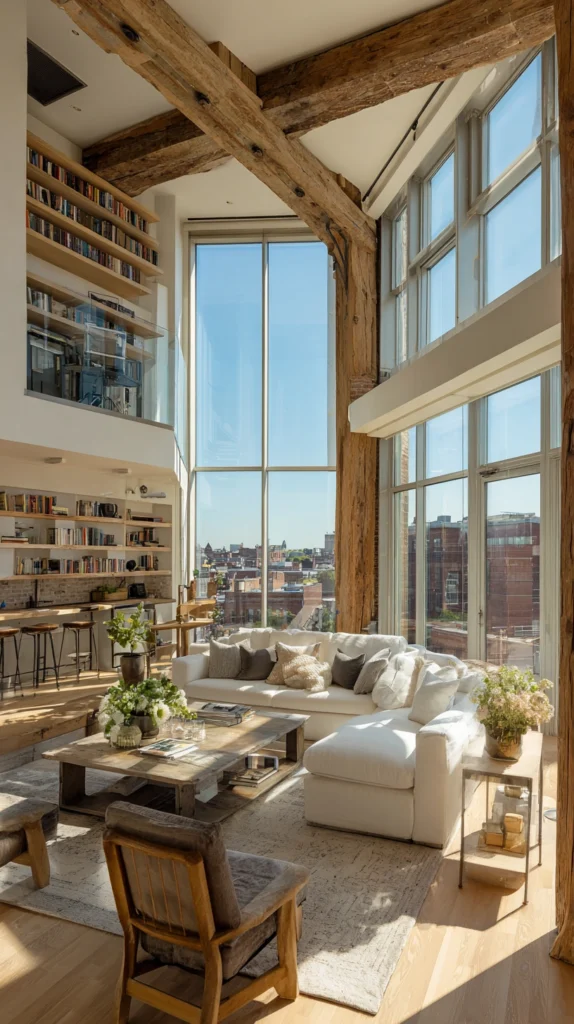
The ceiling height of a true loft — the former warehouse or factory whose structural requirements created internal volumes of four, five, or six meters — is the spatial quality most impossible to replicate in conventional residential construction and most transformative of the experience of living in a loft space.
A double-height volume, even when only a portion of the total floor plan rather than the entire space, creates a quality of spatial generosity and visual drama that no single-height room, however well-designed and however well-furnished, can approach.
In purpose-built loft-style homes that achieve the aesthetic without the genuine industrial structure, the ceiling height ambition should be maximized within the constraints of the site and the planning framework — every additional centimeter of ceiling height contributes disproportionately to the loft aesthetic’s most fundamental spatial quality.
Use the double-height volume to accommodate the mezzanine sleeping or working level that is one of the loft aesthetic’s most characteristic spatial solutions, creating a vertical organization of the home that the conventional single-height residential plan cannot achieve.
3. Install Polished Concrete or Large-Format Stone Flooring
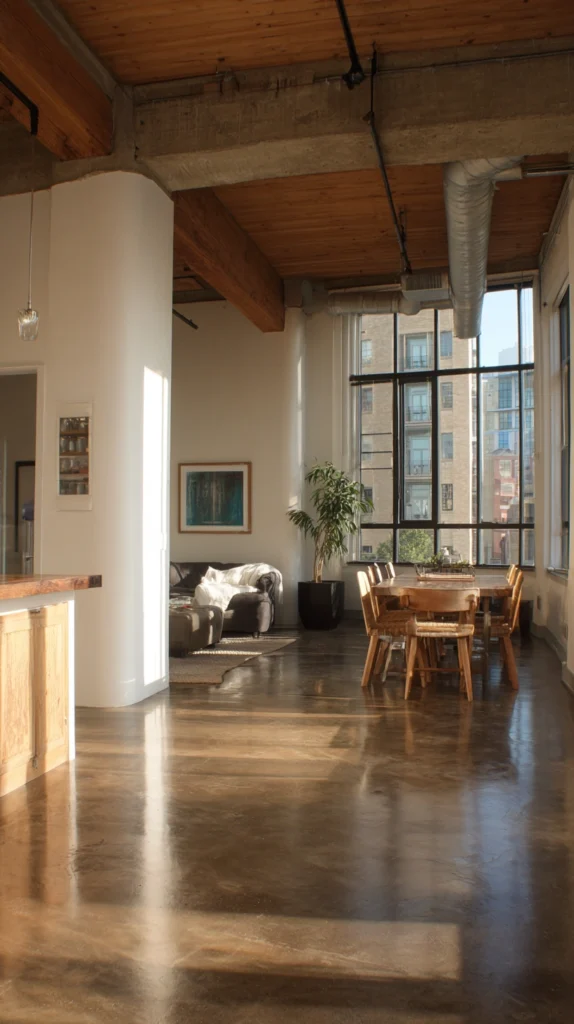
The floor is the loft interior’s most important surface — the material that covers the largest visible area of the interior and that establishes the foundation of the room’s material character — and the loft aesthetic’s characteristic floor choices reflect its industrial origins.
Polished concrete — the existing concrete slab of a converted industrial building, ground and polished to a smooth, reflective surface that reveals the aggregate within the slab — is the loft floor in its most historically authentic form. In purpose-built construction, a poured concrete topping over a structural slab, ground and polished after curing, creates the same surface with slightly greater control over the final result’s color and finish quality.
Large-format porcelain tile in a concrete effect — some of which now achieves a visual similarity to polished concrete that is difficult to distinguish at normal viewing distance — provides the loft aesthetic’s floor character with the easier maintenance and the consistent quality control that poured concrete cannot guarantee.
The floor should be as uniform and as uninterrupted as possible — the loft aesthetic’s spatial generosity depends in part on the continuous expanse of a single floor material running through the open plan without the divisions of different floor treatments for different zones.
4. Use Steel and Glass Partitions for Zone Definition
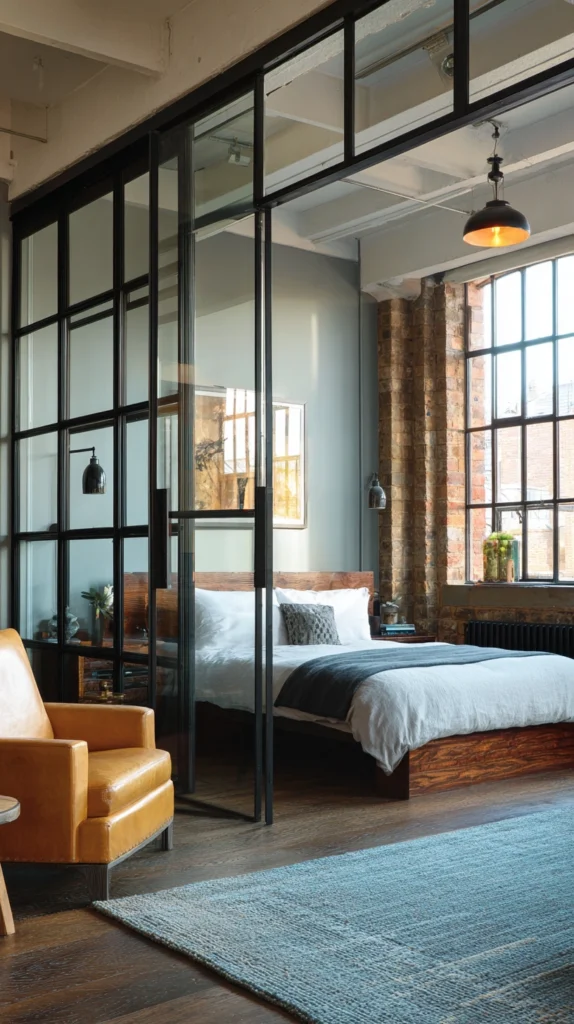
The open plan loft space that requires some degree of spatial division — between the sleeping zone and the living zone, between the workspace and the social area, between the kitchen and the living room — achieves that division most authentically through the Crittal-style steel and glass partition that has become one of the loft aesthetic’s most iconic architectural details.
The steel and glass partition’s slim black steel profile and large glass panels define spatial zones while maintaining the visual continuity that the loft’s open plan character depends on — you can see from one zone to the other, and the light travels freely through the glass from window to interior space, but the steel frame creates a clear spatial boundary that the eye reads as a wall without the visual closure of a solid partition. In bedrooms, bathroom enclosures, and office alcoves, the steel and glass partition creates the specific combination of privacy and visual connection that the genuine loft interior requires — you are in a defined space, but the larger volume surrounds you on all sides in glass.
5. Choose Industrial Lighting Fixtures Throughout
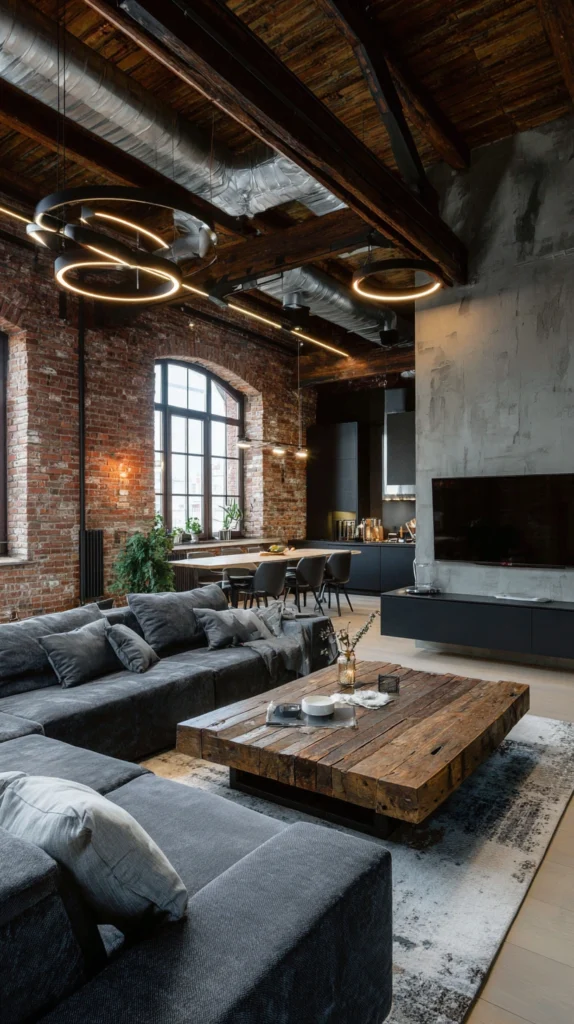
The lighting fixtures in a loft interior are one of the most immediately impactful and most practically accessible aesthetic elements available — the replacement of conventional domestic light fittings with industrial-style alternatives transforms the ceiling plane’s visual character significantly and reinforces the loft aesthetic at the precise point where the eye travels most readily.
Factory-style pendant lights — the Holophane glass diffusers, the enamel factory shades, the exposed bulb pendants on fabric-covered cables — in the kitchen over the island and the dining table.
Track lighting systems in black powder-coated steel that allow multiple directional spotlights on a single circuit, providing the flexible, directional illumination that the gallery-like loft interior benefits from. Vintage-style Edison bulbs in clear glass globes suspended at different heights on individual cables, creating the industrial chandelier effect that loft living rooms and dining areas favor.
Wall-mounted steel arm lights with enamel shades creating the task illumination of the workshop translated to the domestic environment. Each of these industrial-referenced lighting choices reinforces the loft aesthetic while providing the practical illumination the space requires.
6. Build a Kitchen Island as the Social Hub
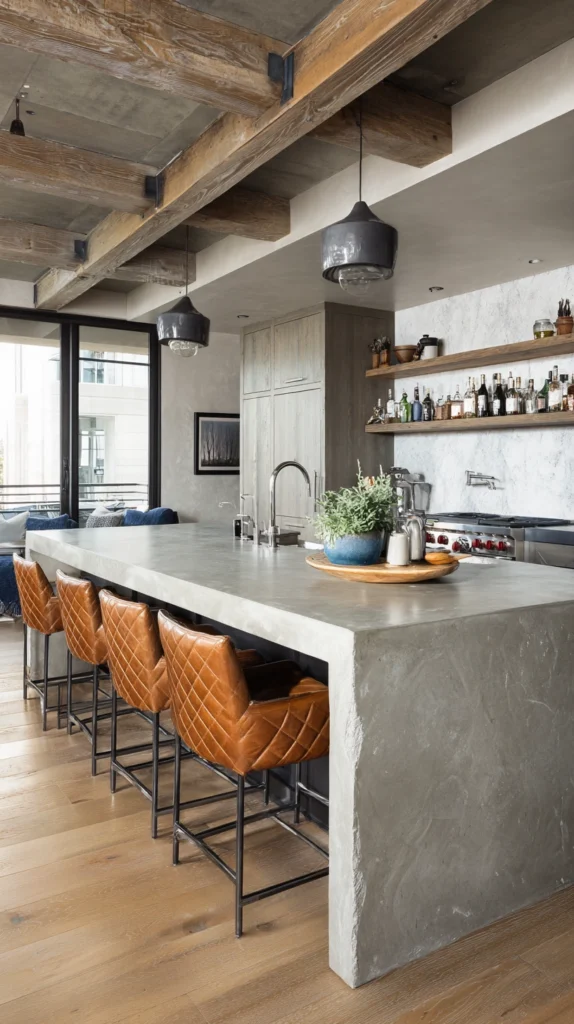
The kitchen in the loft interior is not separated from the living and dining areas — it is part of the single, undivided open plan social space — and the kitchen island is the piece of furniture that defines this integration most clearly, serving simultaneously as a food preparation surface, a social gathering point, a dining counter, and the visual anchor of the open plan’s cooking zone.
A loft kitchen island of appropriate scale — generous in its dimensions, with seating on the living-space side that allows casual dining and social engagement while cooking on the opposite side — creates the social dynamics of a professional kitchen that the loft lifestyle’s integration of food, gathering, and entertaining most naturally supports.
The island’s material should relate to the loft’s wider material palette: a concrete or stone countertop, a base in dark painted timber or in a powder-coated steel frame, and bar stools in leather and steel that suit the industrial aesthetic.
The kitchen zone’s cabinetry should be as minimal as possible — open shelving rather than upper cabinets, base cabinetry with simple flat-front doors in a dark tone — to maintain the spatial openness that the loft aesthetic requires.
7. Incorporate a Mezzanine Level
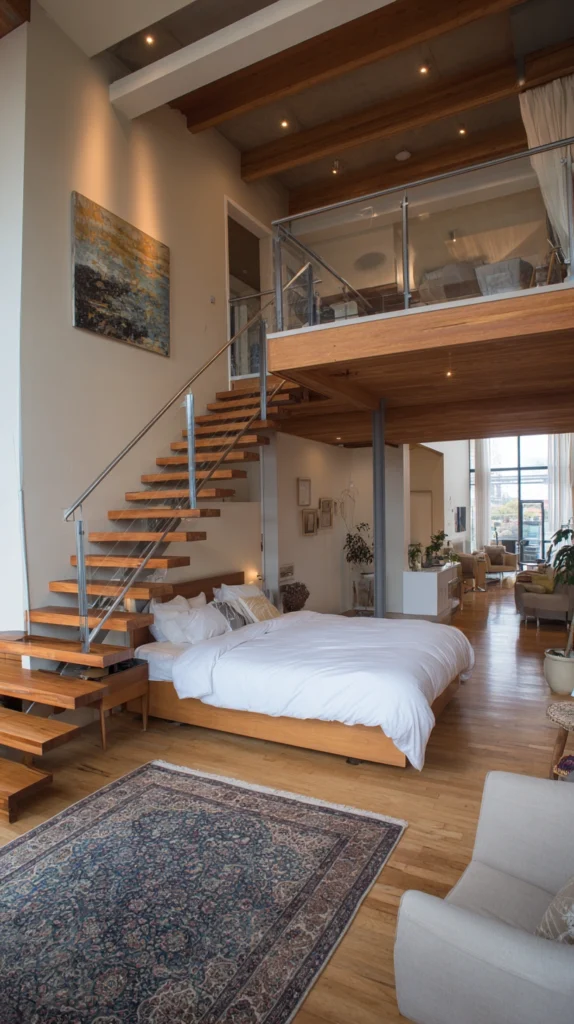
The mezzanine — a partial upper level inserted into the loft’s double-height volume, typically accommodating the sleeping zone or a workspace, accessed by a steel staircase or a floating timber stair, with an open balustrade that maintains the visual connection between levels — is the loft interior’s most characteristically spatial solution and the one that most completely distinguishes the loft from conventional residential organization.
The mezzanine creates a home with two distinct spatial experiences within a single structural volume: the lower level’s generous, high-ceilinged openness, and the upper level’s intimate, lower-ceilinged enclosure that suits sleeping and concentrated work.
The transition between the two experiences — the moment of ascending to the mezzanine and the ceiling height dropping from the full loft volume to the mezzanine’s more intimate overhead — is one of the most satisfying spatial moments available in residential architecture, and it is available only in a space of sufficient height to accommodate the mezzanine insertion without creating a claustrophobic condition on either level.
8. Use a Monochromatic Neutral Palette
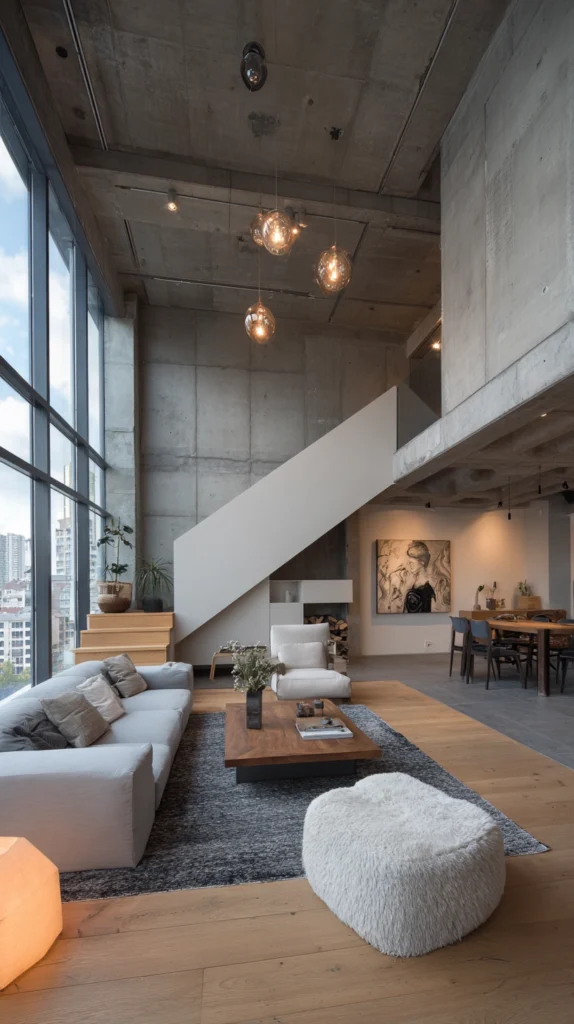
The loft aesthetic’s natural material palette — exposed brick, concrete, steel, timber — creates a color environment of warm neutrality in which the distinction between different materials is carried primarily by texture and tonal variation rather than color contrast.
The designed loft interior should work with this natural palette rather than against it, choosing a color scheme of monochromatic neutrality — all warm grays, warm whites, and natural material tones — that allows the existing material richness of the exposed structure to provide all the visual variety the room requires.
Color in the loft interior is introduced through accents — a deep velvet sofa in charcoal, a single artwork whose color provides the room’s only chromatic departure from the neutral ground, a leather chair in a warm tan — rather than through wall color or large-scale furniture.
The restraint of the loft’s neutral palette amplifies the visual impact of the structural materials and creates the specific quality of sophisticated austerity that the genuine loft interior is most celebrated for.
9. Install Floor-to-Ceiling Steel Windows
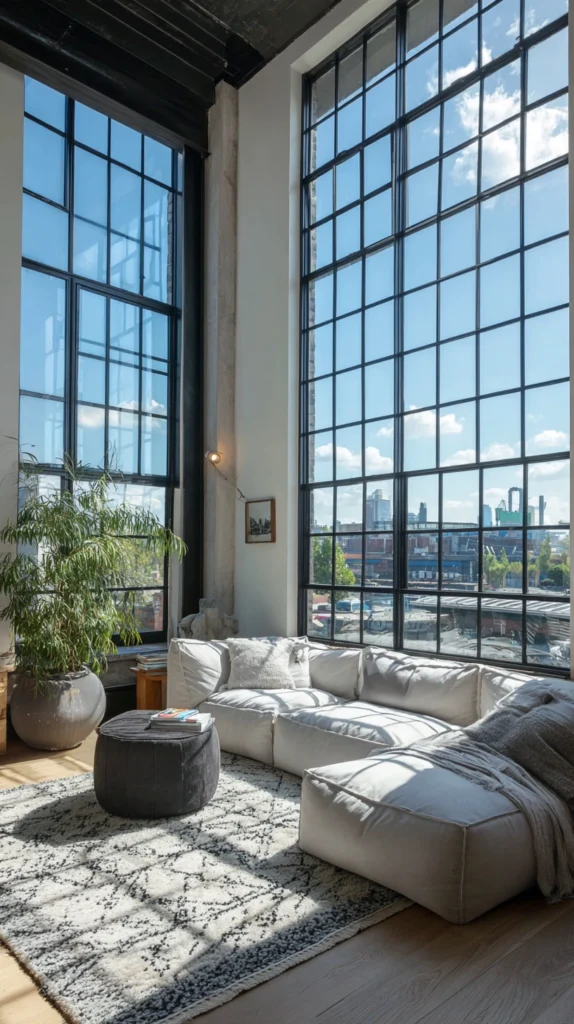
The floor-to-ceiling steel-framed window — the Crittal window, the factory glazing system that admits maximum light through minimum frame — is the loft aesthetic’s most architecturally significant element and the one that most directly recalls the industrial building type from which the aesthetic derives. In a converted industrial building, the existing factory windows may already possess this quality and require only cleaning and resealing.
In purpose-built loft-style construction, the specification of large, minimal steel-framed windows or sliding glass doors that maximize the glazed area and minimize the frame mass creates the visual transparency and the quality of inside-outside connection that the loft interior requires.
The window’s orientation and the quality of light it admits are as important as its size — a floor-to-ceiling window admitting north light creates a different atmospheric quality from the same window admitting south or west light, and the loft’s material palette responds to these different light qualities in ways that make the orientation decision a significant factor in the final interior’s character.
10. Create a Gallery-Like Art Display
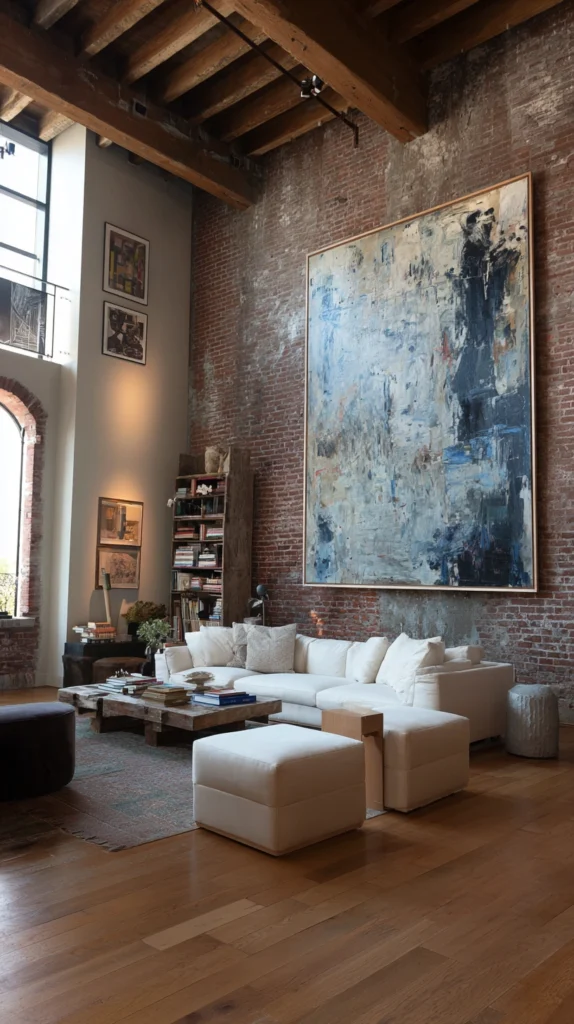
The loft’s large, relatively uninterrupted wall surfaces — the exposed brick walls, the plastered surfaces that exist between the structural elements — create the ideal gallery conditions for the display of significant art, and the loft interior whose walls are used as gallery space creates a residential environment of genuine cultural ambition that the conventional room, with its smaller walls divided by doorways and windows into limited display panels, cannot approach.
A single large artwork on a significant exposed brick or plastered wall — positioned with the same deliberate care that a gallery would apply to its hanging — creates a loft interior whose cultural quality and whose visual power reflect the genuine relationship between the loft aesthetic and the creative and artistic community that originated it.
The art should be genuinely significant — either significant in financial terms or significant in personal meaning — because the loft’s spare, uncluttered environment places every displayed object under more intense scrutiny than the conventionally decorated room, where accumulated objects distribute the viewer’s attention across many simultaneous stimuli.
11. Furnish with Large-Scale, Confident Pieces
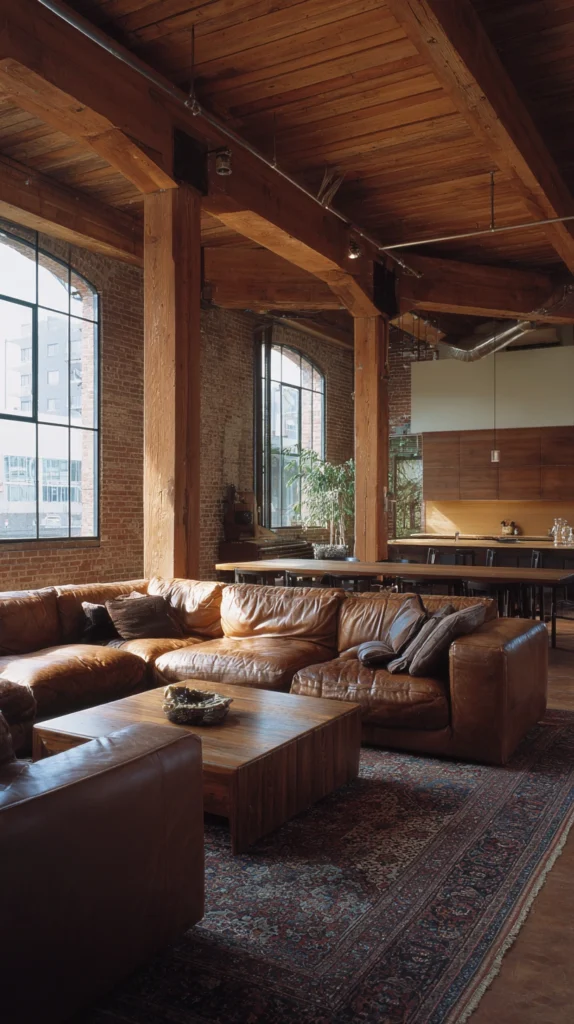
The loft interior’s generous floor area and double-height volume create a spatial context that small-scale domestic furniture does not fill or suit — the delicate side table, the compact armchair, the modest dining table that fits comfortably in a conventional room reads as undersized and inadequate in the scale of a genuine loft space.
Loft furniture should be large-scale and confident in its presence — a deep, generously proportioned sofa of substantial dimensions, a dining table of sufficient length to seat ten or twelve, a bed of generous size on a platform of appropriate visual weight.
The furniture’s material should relate to the loft’s industrial palette: leather, dark timber, steel, concrete, and the natural fabrics — wool, linen, canvas — that the industrial aesthetic’s material honesty favors over the precious and the decorative.
The furniture arrangement should acknowledge the loft’s scale by creating generous circulation paths between pieces rather than grouping furniture in the tight clusters that conventional room-scale arrangements create.
12. Design a Bathroom That Maintains the Industrial Aesthetic
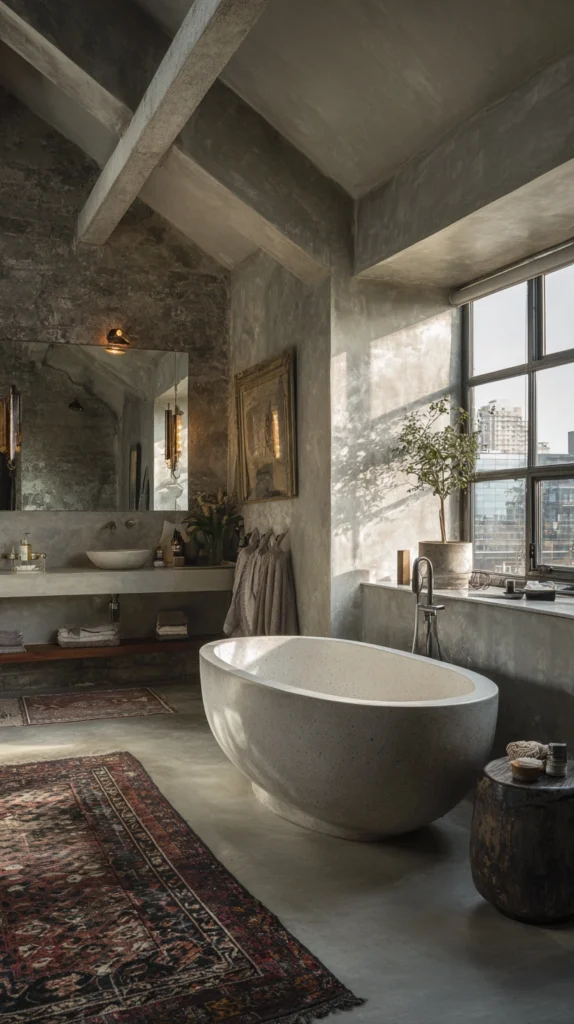
The loft bathroom — one of the rooms most frequently where the industrial aesthetic is abandoned in favor of conventional domestic finishes — represents an opportunity to extend the loft’s material character into the most private space of the home, creating a bathroom of genuine cohesion with the surrounding interior rather than a conventional bathroom inserted into an industrial shell.
Concrete walls or large-format concrete-effect tile, a vessel basin on a concrete or timber counter, a walk-in shower with a black steel frame and a simple rainfall head, black or aged brass fixtures throughout, and exposed pipework treated as a design feature rather than concealed behind boxing — these choices create a bathroom of deliberate industrial character that relates to the loft interior’s surrounding aesthetic with genuine coherence.
The loft bathroom’s most powerful single element is the freestanding bath positioned in the open floor area — a cast iron or stone resin bath whose sculptural form is visible from the bedroom zone through the steel and glass partition that defines the bathroom’s boundary without completely enclosing it.
13. Incorporate Raw Timber Elements for Warmth
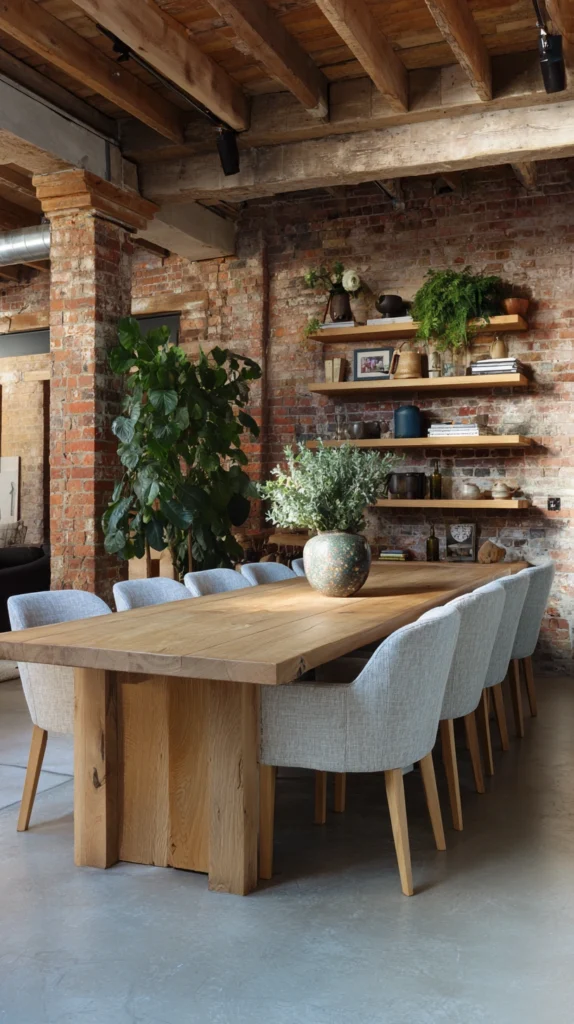
The loft aesthetic’s industrial palette — the concrete, the steel, the exposed brick — creates a material environment of considerable coolness that risks feeling harsh or unwelcoming without the introduction of natural, organic materials that provide the warmth the industrial materials lack.
Raw or reclaimed timber is the most effective warming material available in the loft context — its natural grain, warmth, and organic variation providing the precise counterpoint to the industrial materials’ cool precision that the loft interior needs to feel genuinely livable.
A raw timber dining table — solid oak or elm in a simple plank form, its surface finished with an oil that reveals the grain without concealing it — brings the specific warmth of natural wood into the industrial kitchen-dining zone.
Reclaimed timber shelving against an exposed brick wall creates a warm, layered display surface. A timber clad wall in a bathroom or sleeping zone creates a sauna-like warmth that the surrounding concrete and steel cannot provide.
14. Design the Kitchen in Professional Style
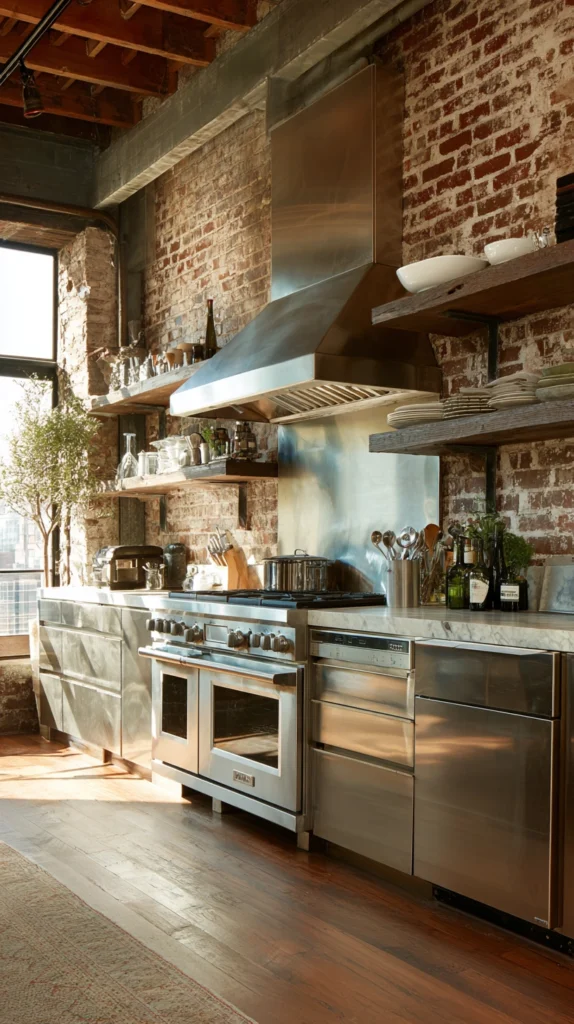
The loft kitchen’s professional-style aesthetic — stainless steel appliances, open shelving rather than upper cabinets, pendant lights over the island, a large-format professional range or freestanding cooker — relates the domestic cooking environment to the professional kitchen with a directness that the conventional fitted kitchen’s decorative approach cannot achieve.
The professional kitchen aesthetic suits the loft’s industrial character because both derive from the same design tradition of honest material expression and functional efficiency, and the combination of a genuinely professional-quality cooking environment with the loft’s open plan social space creates the food-and-gathering culture that the loft lifestyle most authentically expresses.
The kitchen’s integration into the open plan means that its aesthetic must be considered in relationship to the living and dining areas — the stainless steel and black of the professional kitchen should be calibrated to the surrounding palette so that the kitchen reads as the same design language as the rest of the loft rather than as a separate, mismatched room.
15. Let the Space’s Existing Character Lead the Design
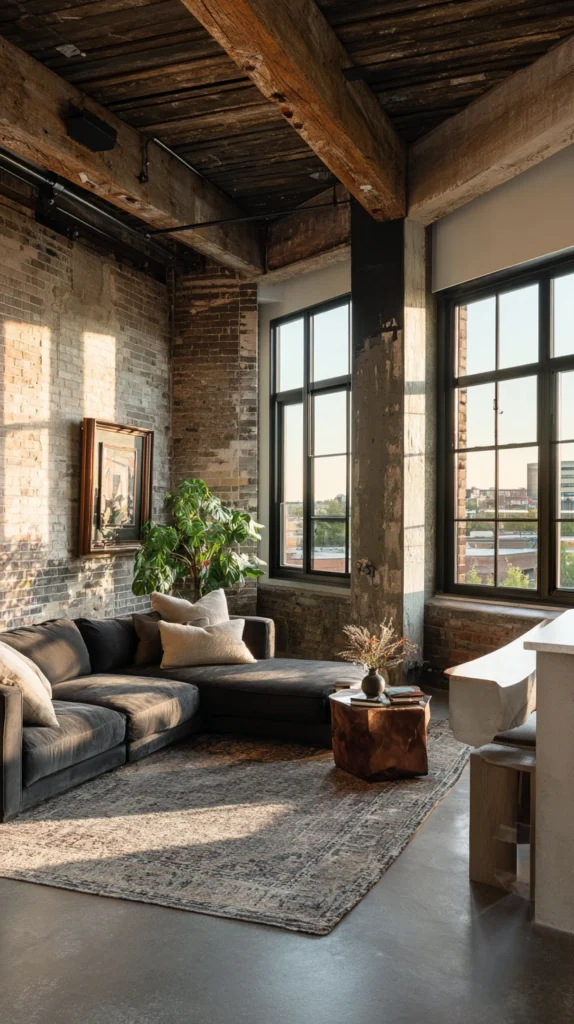
The final and most important principle of modern loft-style home design is the one that distinguishes the loft interior that feels genuinely authentic from the one that feels like a theme-park recreation of an aesthetic: the commitment to letting the space’s existing character — its actual structural elements, its genuine light quality, its real proportions and spatial relationships — lead the design rather than imposing a predetermined aesthetic vision onto a space that may not share the industrial building’s genuine qualities.
The converted warehouse that is allowed to express its existing materiality honestly — its actual brick, its actual concrete, its actual structural steel — and furnished and lit to complement those existing qualities creates a loft interior of genuine authenticity.
The purpose-built apartment that simulates loft qualities through the application of brick cladding and faux-industrial fixtures creates a different and less authentic result, and the design approach that acknowledges this distinction — that works with what is genuinely present rather than applying a cosmetic overlay — produces the most satisfying and most enduring version of the loft aesthetic available in any residential context.