15 Warm Minimal Living Room Ideas That Feel Inviting
Minimalism doesn’t have to feel cold, stark, or unwelcoming. When done thoughtfully, a minimal living room can feel warm, lived-in, and deeply inviting while still maintaining clean lines and visual calm. The key lies in balancing simplicity with texture, natural elements, and intentional warmth that makes the space feel human rather than empty.
Warm minimal living rooms focus on quality over quantity, soothing color palettes, and thoughtful layering. Instead of filling the space with decor, each element is chosen for comfort, function, and emotional impact.

Below are fifteen warm minimal living room ideas that prove simplicity and coziness can beautifully coexist.
1. Soft Neutral Color Palettes for Instant Warmth
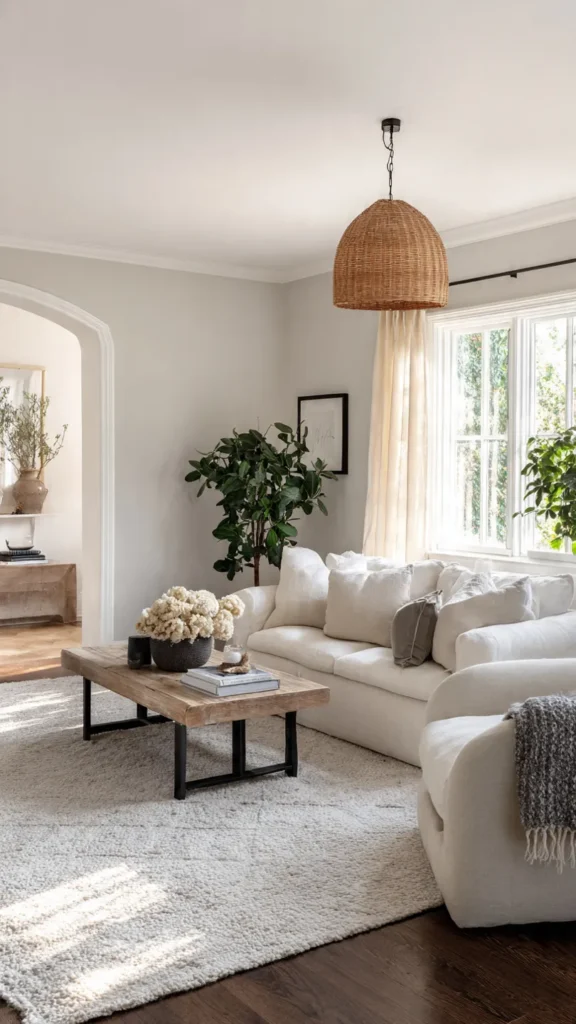
A warm minimal living room often starts with a carefully selected neutral palette that leans toward softness rather than stark contrast. Shades like creamy whites, warm beige, greige, soft taupe, and muted sand tones create a calm foundation that feels inviting rather than sterile. These hues reflect light gently and help the room feel airy without appearing cold.
Layering similar warm neutrals adds depth while keeping the minimalist aesthetic intact. Walls, sofas, rugs, and curtains can stay within the same tonal family, allowing subtle variations to create visual interest. This cohesive approach makes the room feel calm, welcoming, and intentionally designed.
2. Natural Wood Accents to Ground the Space
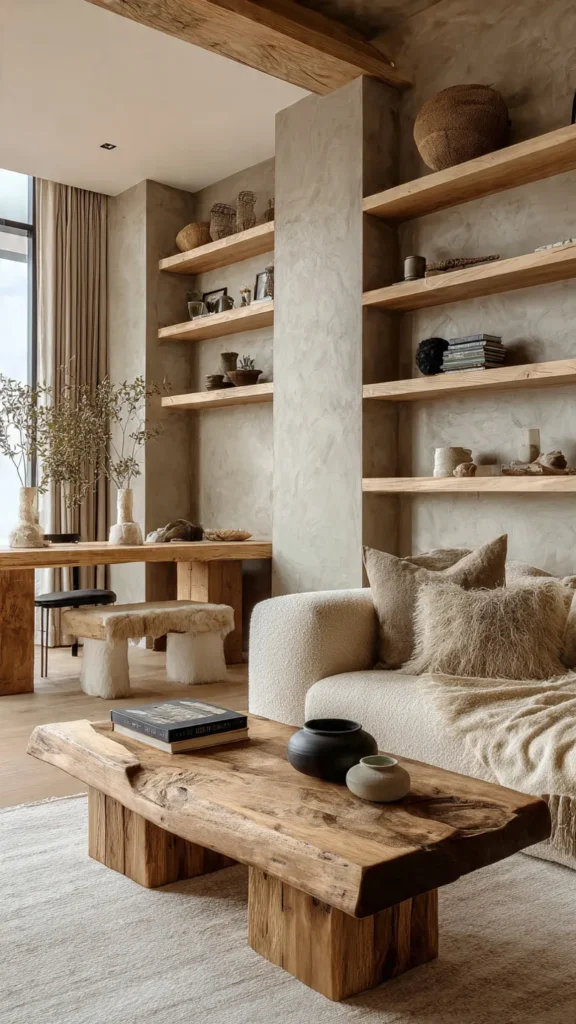
Wood is one of the most effective ways to add warmth to a minimalist living room. Light oak, maple, walnut, or ash introduce organic texture while maintaining a clean, modern feel. A wooden coffee table, console, or shelving unit can instantly soften the look of a minimal space.
The beauty of natural wood lies in its imperfections and grain patterns, which bring a sense of life into an otherwise pared-back room. Keeping wood finishes natural or lightly treated enhances warmth without overwhelming the minimalist aesthetic.
3. Cozy Textiles That Add Softness Without Clutter
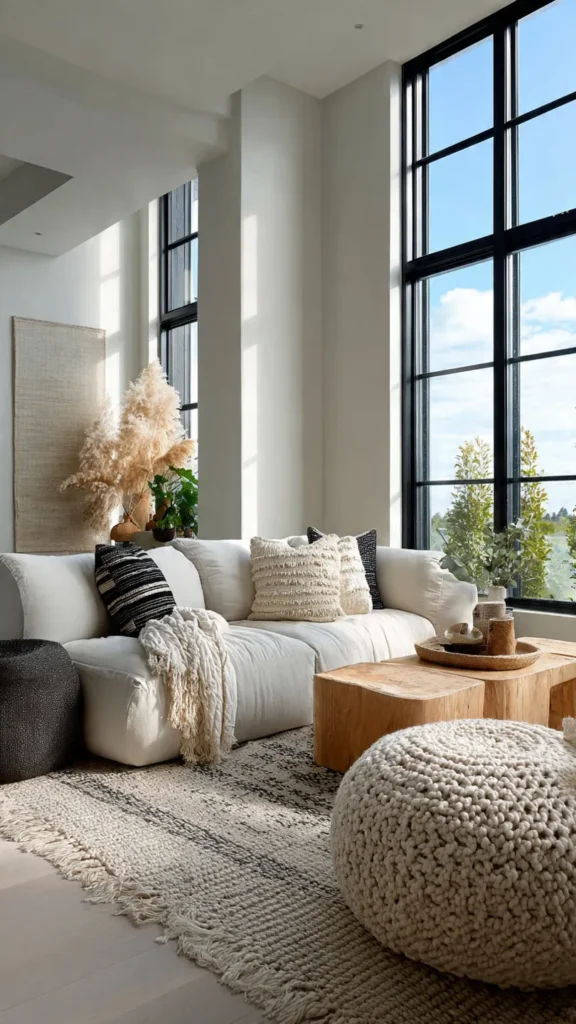
Minimalism doesn’t mean eliminating comfort, and textiles play a crucial role in making a living room feel inviting. Linen sofas, wool throws, cotton cushions, and woven rugs introduce softness and tactile appeal while remaining visually simple. Choosing neutral or earthy tones ensures cohesion with the overall design.
The key is restraint and intentional layering. A single throw draped casually over the sofa or two textured cushions can make the space feel lived-in without appearing busy. These subtle additions invite relaxation while preserving a clean look.
4. Warm Lighting That Creates a Relaxing Mood

Lighting has a profound impact on how warm and inviting a minimalist living room feels. Harsh overhead lighting can make even the most beautiful space feel unwelcoming. Instead, opt for layered lighting with warm bulbs that cast a soft glow throughout the room.
Table lamps, floor lamps, and wall sconces with warm-toned light create pockets of coziness. Choosing fixtures with simple forms and natural materials like ceramic, fabric, or wood maintains the minimalist vibe while enhancing warmth.
5. Low-Profile Furniture for Calm and Balance
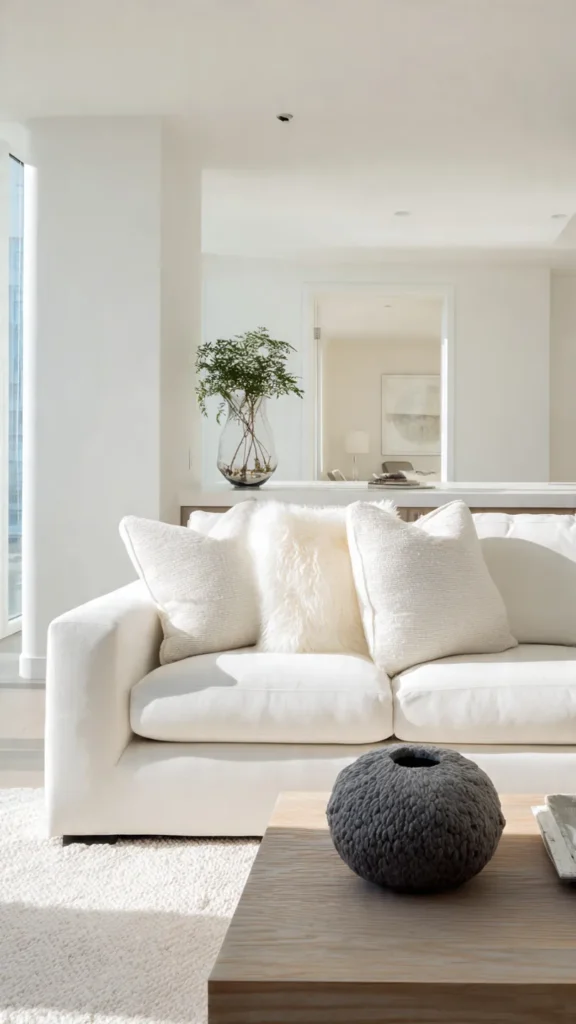
Low-profile furniture is a hallmark of minimalist design, and it also contributes to a welcoming atmosphere. Sofas with clean lines, low backs, and simple silhouettes keep the room feeling open and relaxed. When paired with plush cushions or soft upholstery, they balance comfort with simplicity.
This type of furniture encourages a grounded, serene feeling, making the living room a place to unwind. Keeping furniture arrangements open and uncluttered allows the space to breathe while remaining functional and cozy.
6. Earthy Accent Colors for Subtle Interest

While warm minimal living rooms often rely on neutrals, subtle earthy accents can add depth and personality. Tones like terracotta, clay, olive, rust, and muted caramel work beautifully within a minimalist palette. These colors feel grounded and natural, enhancing warmth without overpowering the room.
Incorporating these shades through cushions, art, ceramics, or a single accent chair keeps the design restrained. The result is a space that feels thoughtfully curated rather than overly styled.
7. Textured Walls That Add Quiet Character

Texture is essential in minimal interiors to prevent the space from feeling flat. Textured walls, such as limewash, plaster, or subtle stucco finishes, add visual interest without introducing clutter. These finishes reflect light softly, creating a warm and organic atmosphere.
Even a simple painted wall can feel richer with the right finish. The understated texture adds depth and character, making the living room feel more inviting while maintaining a minimalist approach.
8. Simple Art That Feels Personal and Calm
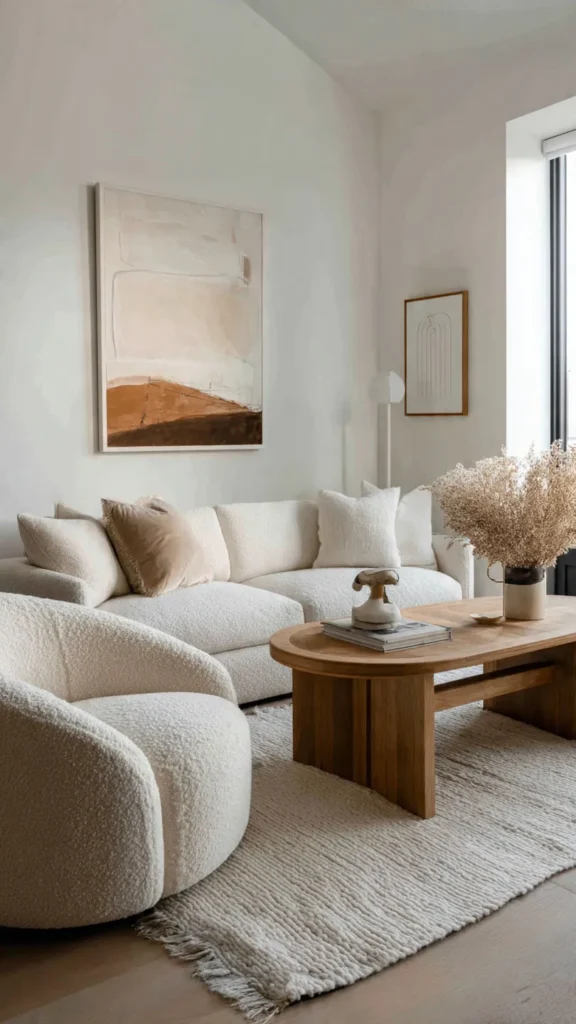
Art in a warm minimal living room should feel intentional and emotionally resonant rather than decorative. Abstract pieces, soft landscapes, line drawings, or monochromatic artwork complement minimalist spaces beautifully. Choosing warm tones or natural subjects reinforces the cozy atmosphere.
One large statement piece or a small curated selection often works better than a busy gallery wall. This keeps the space visually calm while allowing the art to contribute warmth and personality.
9. Natural Fiber Rugs for Comfort Underfoot

A well-chosen rug can transform a minimalist living room from bare to inviting. Natural fiber rugs made from wool, jute, sisal, or cotton add texture and warmth while remaining visually understated. Neutral shades with subtle patterns or weaves enhance depth without distraction.
Rugs also help define the seating area and add comfort underfoot, making the room feel more livable. The tactile quality of natural fibers reinforces the cozy, grounded feel of warm minimal design.
10. Thoughtful Negative Space That Feels Intentional

One of the defining characteristics of minimalism is negative space, but in warm minimal interiors, this emptiness feels intentional rather than cold. Allowing areas of the room to remain uncluttered gives the eye a place to rest and enhances the impact of the chosen elements.
This sense of breathing room contributes to emotional comfort. When each piece has space around it, the living room feels calm, balanced, and welcoming rather than sparse.
11. Soft Window Treatments That Filter Light Gently
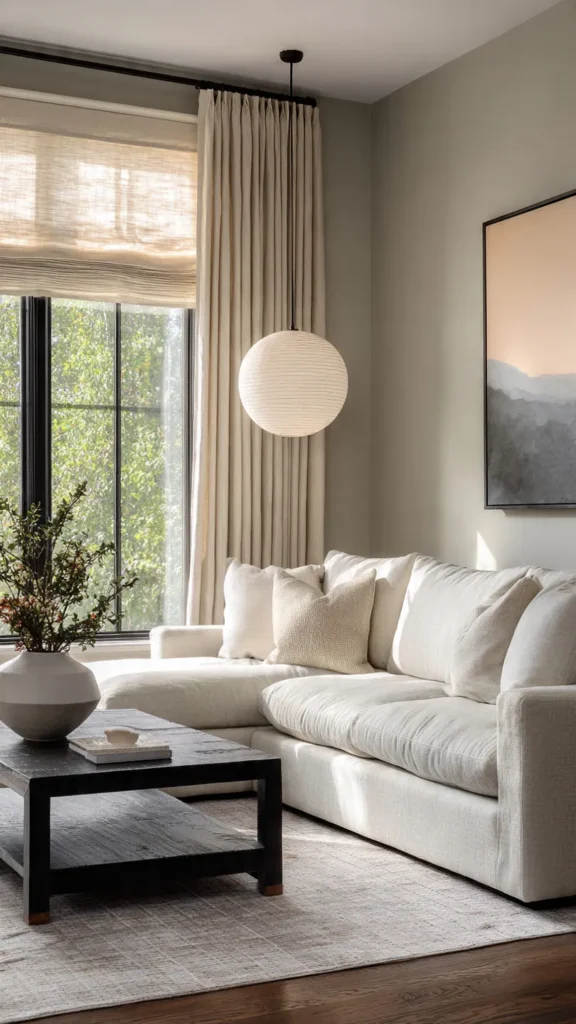
Windows play a major role in how warm a living room feels. Instead of heavy drapes or bare windows, opt for light, airy curtains in linen or cotton. These materials filter natural light gently, creating a soft glow throughout the space.
Neutral-colored curtains that blend with the walls maintain a seamless look. They add privacy and warmth without interrupting the minimalist aesthetic, making the room feel serene and inviting.
12. Curved Shapes to Soften Clean Lines
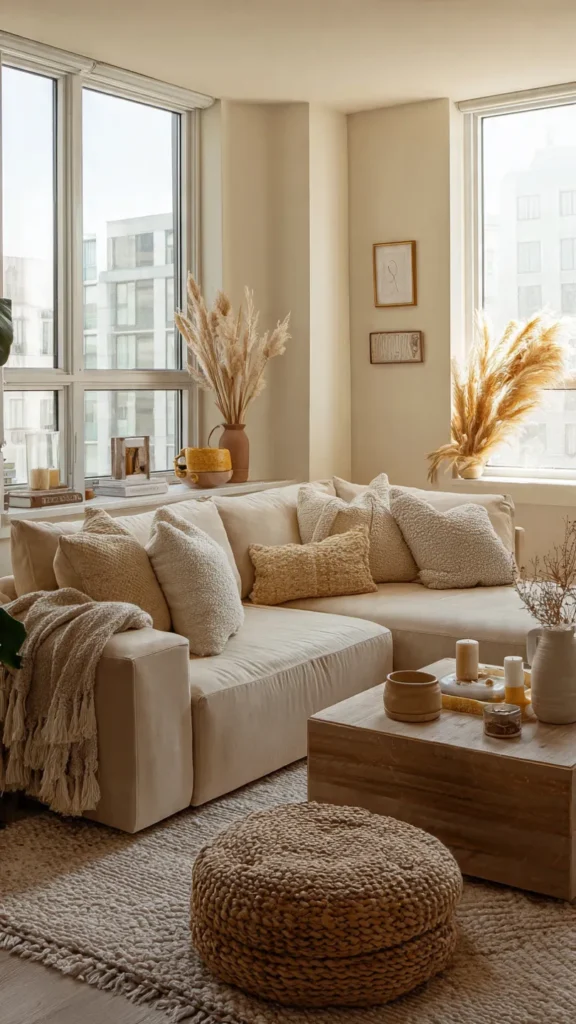
Minimalist spaces often rely on straight lines and geometric forms, but introducing subtle curves can make the room feel warmer and more approachable. Rounded coffee tables, curved sofas, or arched floor lamps soften the overall look.
These gentle shapes balance the structure of minimal design and create a sense of flow. The result is a living room that feels modern yet comforting and easy to relax in.
13. Greenery Used Sparingly but Effectively

Plants bring life and warmth into any space, and in a minimalist living room, less is more. A single statement plant, such as a fiddle-leaf fig, olive tree, or snake plant, can add organic beauty without cluttering the room.
Choosing simple planters in neutral or natural materials keeps the look cohesive. Greenery adds freshness, texture, and a subtle connection to nature that enhances the inviting atmosphere.
14. Functional Decor That Serves a Purpose
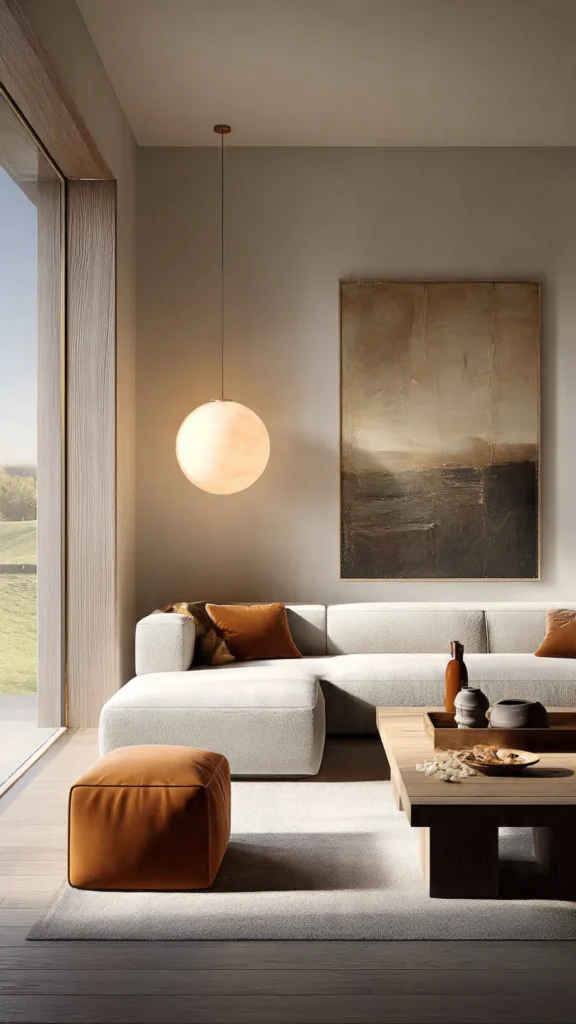
In warm minimal living rooms, decor should feel purposeful rather than purely decorative. Items like ceramic bowls, wooden trays, or sculptural lamps can serve a function while adding warmth and interest. This approach aligns with minimalist principles and keeps the space practical.
Each decorative object should earn its place, contributing either to comfort or utility. This intentionality makes the room feel curated, calm, and welcoming.
15. A Focus on Comfort and Everyday Living

Ultimately, a warm minimal living room should support daily life and relaxation. Comfortable seating, practical layouts, and a sense of ease are more important than rigid design rules. Minimalism becomes inviting when it adapts to how you live rather than restricting it.
By prioritizing comfort, warmth, and thoughtful simplicity, the living room becomes a space where people naturally want to gather and unwind. This balance of calm design and cozy atmosphere defines truly inviting warm minimal living rooms.
A warm minimal living room is not about having less for the sake of it, but about choosing better, more meaningful elements. Through soft colors, natural materials, intentional textures, and thoughtful lighting, minimalism transforms into a comforting and welcoming style. When warmth and simplicity work together, the living room becomes both beautiful and deeply livable.