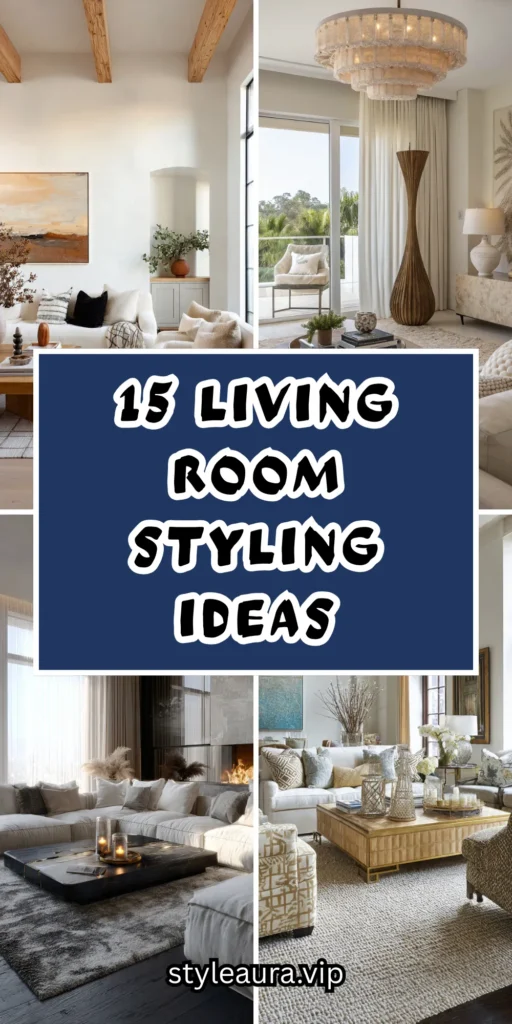
15 Living Room Styling Ideas That Look Designer-Curated
A designer-curated living room doesn’t feel decorated — it feels composed. Every element appears chosen with intention, balanced with care, and layered to create depth, comfort, and visual harmony. The ideas below focus on how designers build that feeling through layout, proportion, material selection, and subtle refinement.
1. Start With a Cohesive Visual Story

Instead of selecting furniture piece by piece, designers build a narrative for the room. This story might be calm and neutral, bold and artistic, or warm and earthy, but it always has a clear direction.
When the room follows one consistent visual language, every piece feels like it belongs. This avoids the “collected over time” look that can feel disjointed rather than curated.
Styling tip: define your mood first using three words like “soft, warm, modern” or “bold, structured, elegant,” then only choose pieces that match that description.
2. Design Around a Central Focal Point
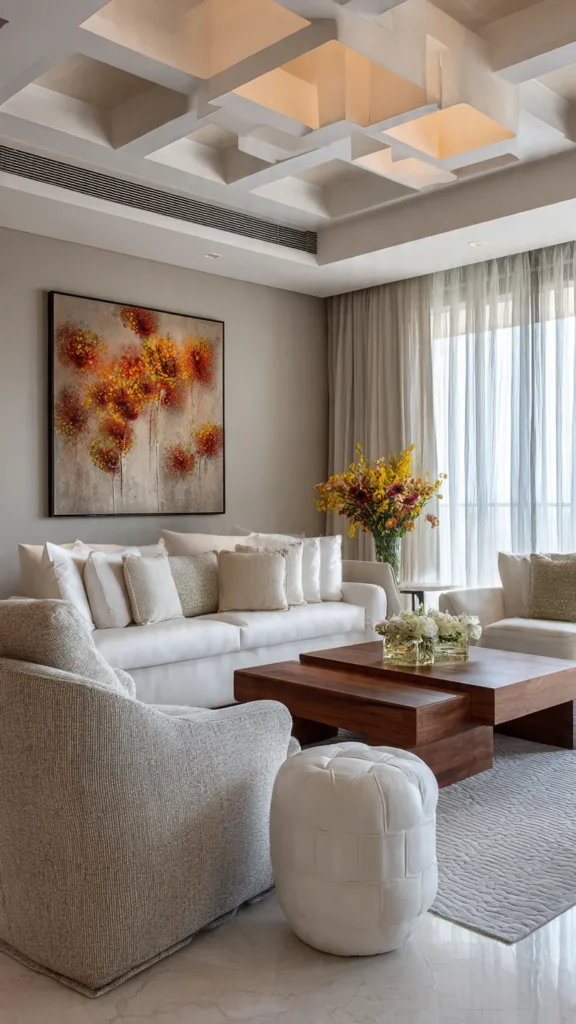
A curated living room always has a visual anchor such as a fireplace, a large window, a sculptural sofa, or a striking piece of art. Everything else in the room supports and frames this focal point.
This gives the space clarity and prevents the eye from feeling scattered. Without a focal point, rooms often feel visually noisy or unfinished.
Styling tip: arrange seating to face or frame the focal point so it naturally draws attention without forcing it.
3. Balance Structure With Softness
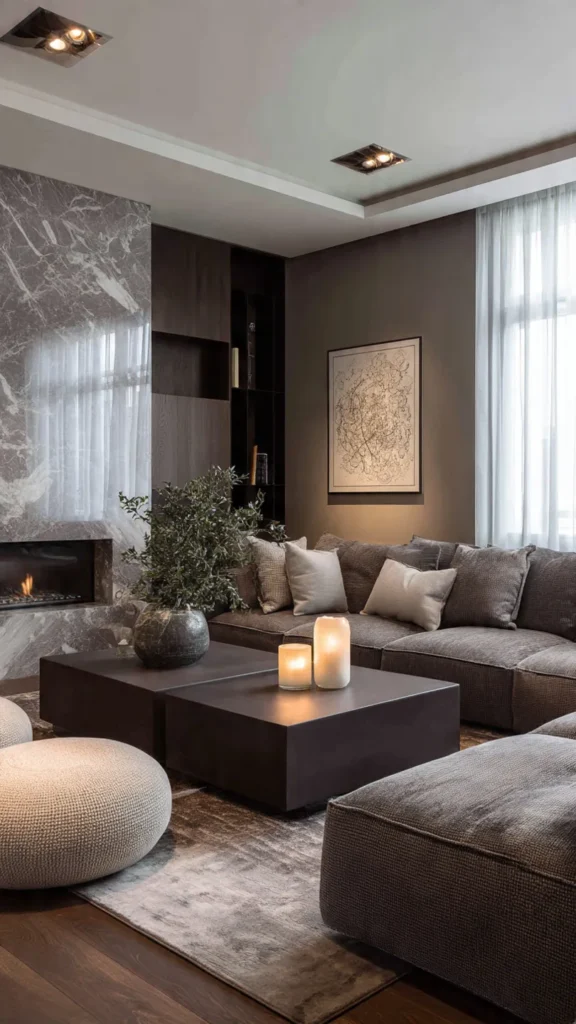
Designers combine structured elements like clean-lined furniture, architectural lighting, and defined layouts with softer details such as pillows, textiles, curves, and layered textures.
This balance keeps the room from feeling either too rigid or too casual. The mix creates a sense of comfort wrapped in elegance.
Styling tip: if your furniture is mostly boxy, add softness through rounded accessories, draped throws, or organic shapes.
4. Use Color With Restraint
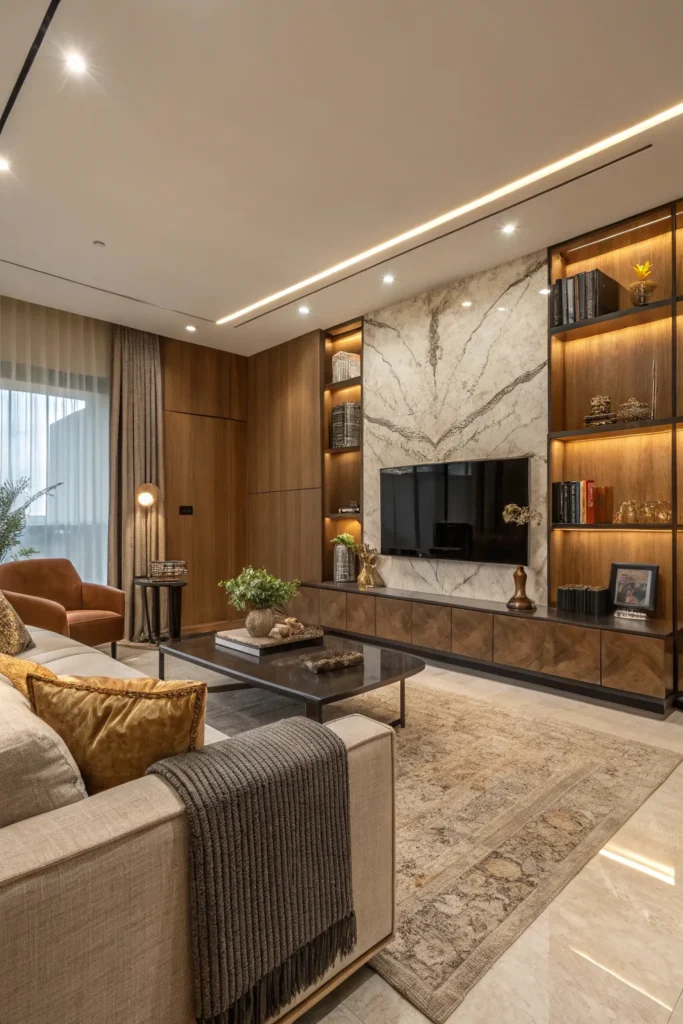
Designer rooms rarely use too many colors. Instead, they rely on subtle variation within a limited palette to create richness without clutter.
Different shades of the same color, or gentle shifts in tone, build depth while maintaining visual calm.
Styling tip: repeat each main color at least three times around the room so it feels intentional rather than accidental.
5. Layer Textures for Visual Depth

Texture is what makes a neutral or minimal room feel luxurious rather than flat. Designers layer smooth, rough, soft, and reflective surfaces together.
This could include linen upholstery, wood tables, ceramic accents, metal lighting, and woven rugs, all working together to create a tactile experience.
Styling tip: aim for at least five different textures in the room to prevent it from feeling one-dimensional.
6. Create Thoughtful Furniture Groupings

Instead of lining furniture against walls, designers create zones that encourage conversation and movement. Sofas, chairs, and tables are placed in relationship to one another rather than to the room’s perimeter.
This makes the room feel intentional and livable rather than like a showroom display.
Styling tip: keep walking paths clear and allow furniture groupings to feel centered and grounded rather than pushed outward.
7. Let Negative Space Work for You

A designer-curated space always leaves room for the eye to rest. Not every surface needs to be filled, and not every corner needs decor.
This restraint makes the room feel confident and refined, and it allows standout pieces to shine.
Styling tip: after finishing the room, remove one accessory from each area and observe whether the space feels calmer and more polished.
8. Invest in One Standout Piece

Instead of many average items, designers often invest in one extraordinary element such as a statement sofa, an artistic light fixture, or a sculptural coffee table.
This single piece elevates the entire room and gives it a sense of uniqueness.
Styling tip: keep surrounding items quieter so the standout piece remains the hero of the space.
9. Use Lighting as a Design Element

Lighting is treated as decor, not just function. Designers use multiple light sources at different heights to create atmosphere and highlight textures.
The interplay of light and shadow adds dimension and warmth, especially in the evening.
Styling tip: include at least one floor lamp, one table lamp, and one accent or wall light for balanced illumination.
10. Style Surfaces With Intention

Coffee tables, sideboards, and consoles are styled with small groupings rather than scattered objects. Each arrangement feels curated like a still-life composition.
Designers use varying heights, shapes, and materials to create interest while keeping harmony.
Styling tip: use the “triangle rule” by grouping three items of different heights to create balanced compositions.
11. Choose Art That Feels Personal Yet Refined

Art in a designer room feels meaningful but not overwhelming. It reflects taste and personality while still fitting into the overall aesthetic.
Large-scale art often works better than many small pieces because it creates a strong visual impact without clutter.
Styling tip: choose artwork that complements your palette but does not exactly match it, allowing it to stand out subtly.
12. Incorporate Organic and Natural Elements

Plants, wood, stone, and natural fibers bring warmth and life to a living room. Designers use these elements to soften modern lines and add authenticity.
These materials also help spaces feel timeless rather than trend-driven.
Styling tip: use a mix of real greenery and high-quality dried or preserved elements for a layered natural look.
13. Focus on Proportion and Scale

A curated room feels balanced because everything is sized appropriately for the space and for each other. Oversized furniture in small rooms or tiny decor in large rooms disrupts harmony.
Designers constantly evaluate how pieces relate in height, width, and visual weight.
Styling tip: choose fewer large-scale pieces instead of many small ones for a more composed feel.
14. Add Subtle Contrast for Interest

Without contrast, rooms feel flat. Designers add contrast through color, texture, shape, or material rather than through bold patterns or loud elements.
This keeps the room visually engaging while remaining elegant.
Styling tip: if your palette is light, add depth through darker woods, matte black accents, or deep-toned textiles.
15. Edit Ruthlessly for a Polished Finish
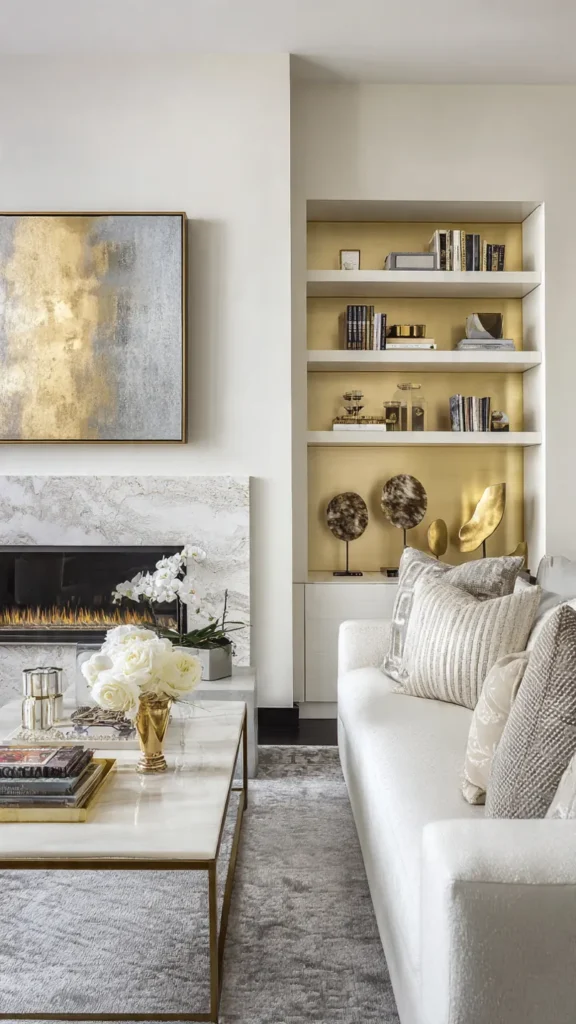
The final step in designer styling is editing. Removing excess decor, unnecessary furniture, or visually distracting items is what creates that high-end, curated feeling.
Less truly becomes more when every remaining element feels purposeful.
Styling tip: ask yourself if each item adds beauty, function, or meaning, and remove anything that does not serve at least one of those roles.
A living room that looks designer-curated is not about perfection but about intention. It’s built through thoughtful choices, balanced proportions, layered textures, and careful editing. When every element supports a unified vision, the room feels calm, elegant, and complete — not because it follows rules, but because it reflects clarity, harmony, and refined taste.