15 Combined Living Room Office Ideas for Dual Purpose Spaces
Designing a shared living room and office can feel challenging, especially in small apartments where every inch matters. But with smart layout strategies, multifunctional furniture, and thoughtful styling, you can create a dual-purpose space that is both productive and inviting.
These combined living room office ideas help you blend comfort with efficiency, ensuring your workspace feels intentional without sacrificing the cozy vibe of your living room.
1. Choose a Compact Desk That Fits Seamlessly into the Room

A slim, compact desk can fit into almost any corner of your living room without overwhelming the space. Look for narrow writing desks, ladder desks, or floating desks that attach directly to the wall. These options provide a dedicated work surface without making the living room look cluttered. Choose neutral colors to help the desk blend in and maintain a cohesive aesthetic.
2. Use a Bookshelf as a Room Divider
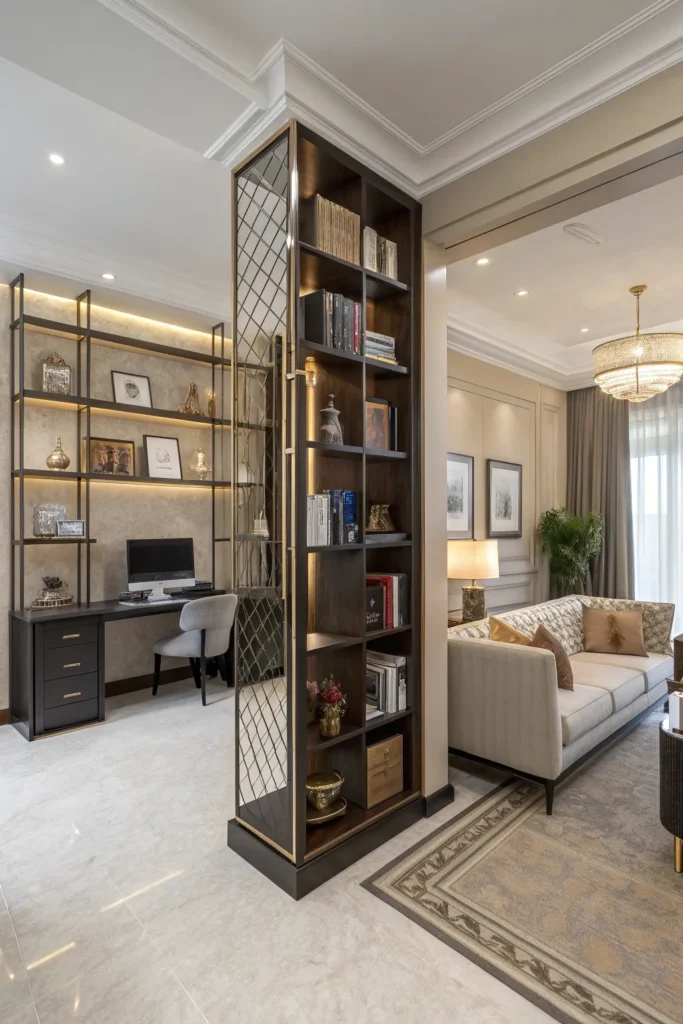
A tall, open bookshelf is a practical and stylish way to separate the living area from your workspace. It creates a visual boundary without blocking natural light and adds valuable storage. Fill the shelves with books, baskets, plants, and office essentials to keep both sides functional and appealing. This separation helps your mind switch between “home mode” and “work mode” more easily.
3. Opt for Multifunctional Furniture
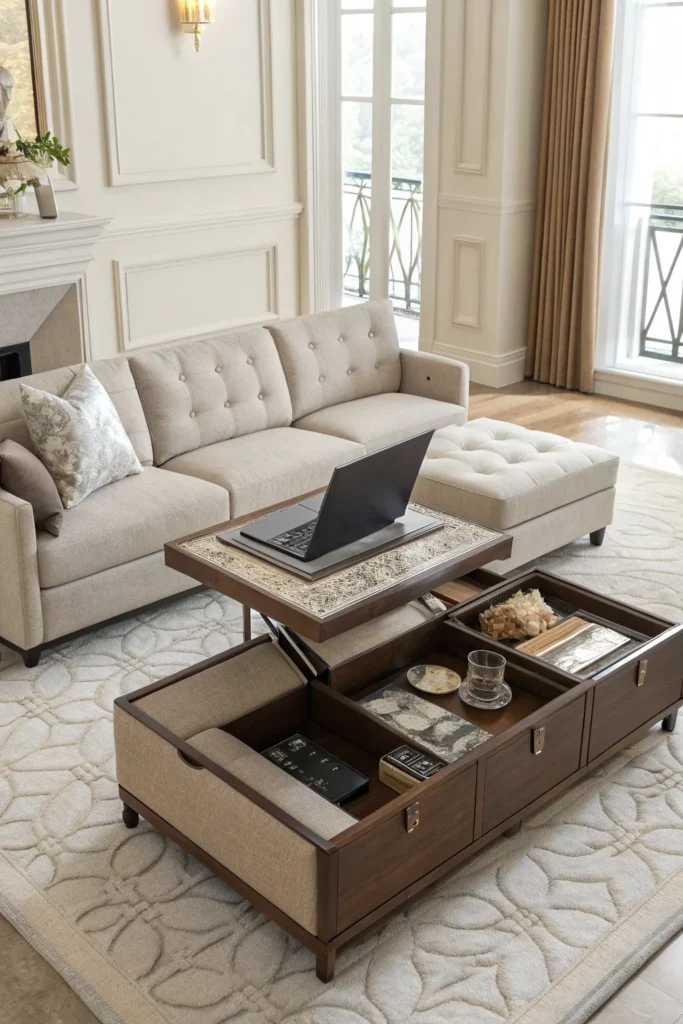
When you’re working with a dual-purpose space, every piece should earn its place. Consider furniture that serves more than one function: ottomans that double as storage, sofa beds for guests, or coffee tables with hidden compartments. A fold-out desk or a console that transforms into a work table can save space while keeping your living room uncluttered and airy.
4. Create a Dedicated Office Nook in an Unused Corner
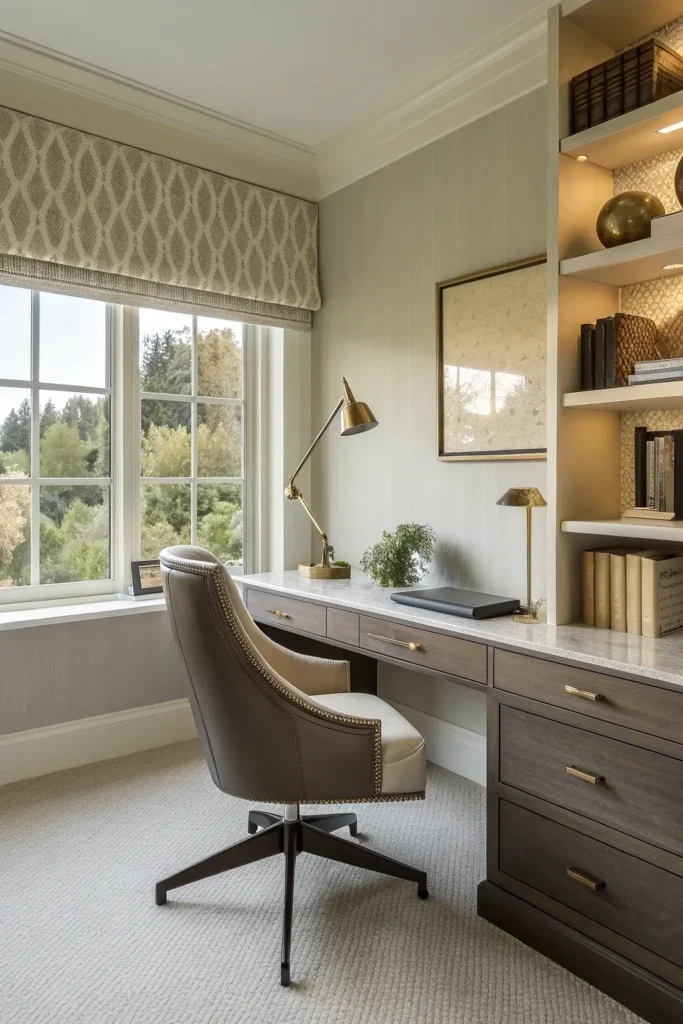
If your living room has an awkward corner, turn it into a productive office nook. Add a small desk, a comfortable chair, and a task light to carve out an efficient workspace. This setup is perfect for people who need a quiet area to focus, and it helps visually separate your office from the rest of the room. Even a corner by a window can become an inspiring spot for work.
5. Use Matching Colors to Blend the Spaces
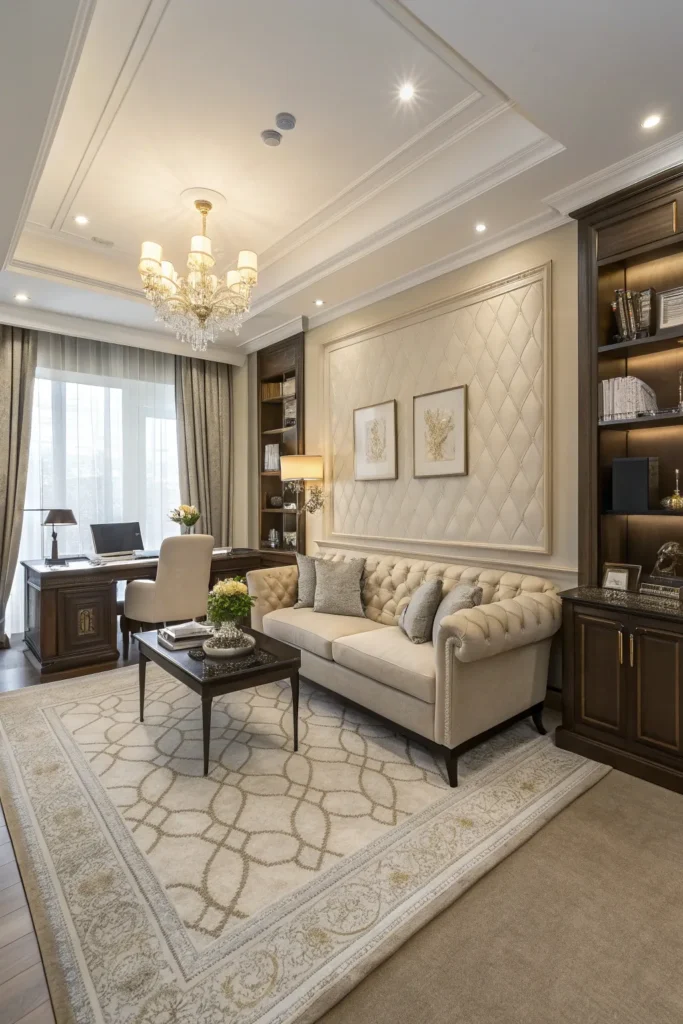
One of the easiest ways to seamlessly combine a living room and an office is by using a cohesive color palette. Choose colors that complement your sofa, rugs, and other living room decor, then apply them to your office accessories. Matching tones help the workspace blend in, making the entire room feel intentionally designed rather than pieced together.
6. Add Floating Shelves for Vertical Storage
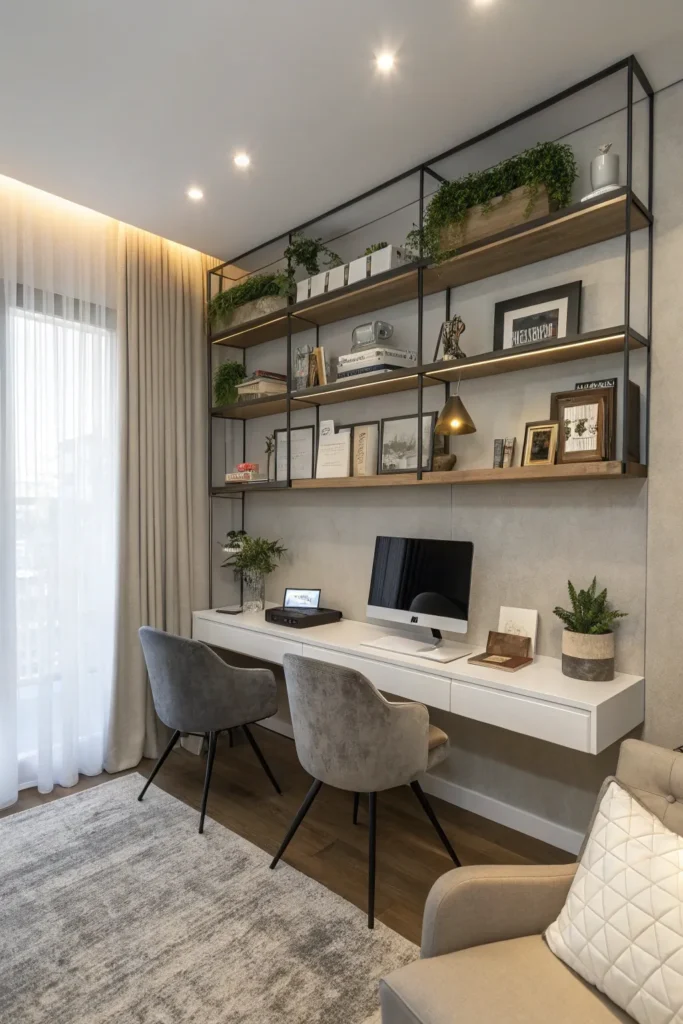
Shelving is essential in a dual-purpose room, but you don’t always have the floor space for cabinets or drawers. Floating shelves are an excellent budget-friendly solution that provide both storage and display opportunities. Use them above your desk to store stationery, decor, or small plants. They keep your workspace organized while maintaining a stylish, modern look.
7. Choose a Desk Chair That Matches Your Living Room Style
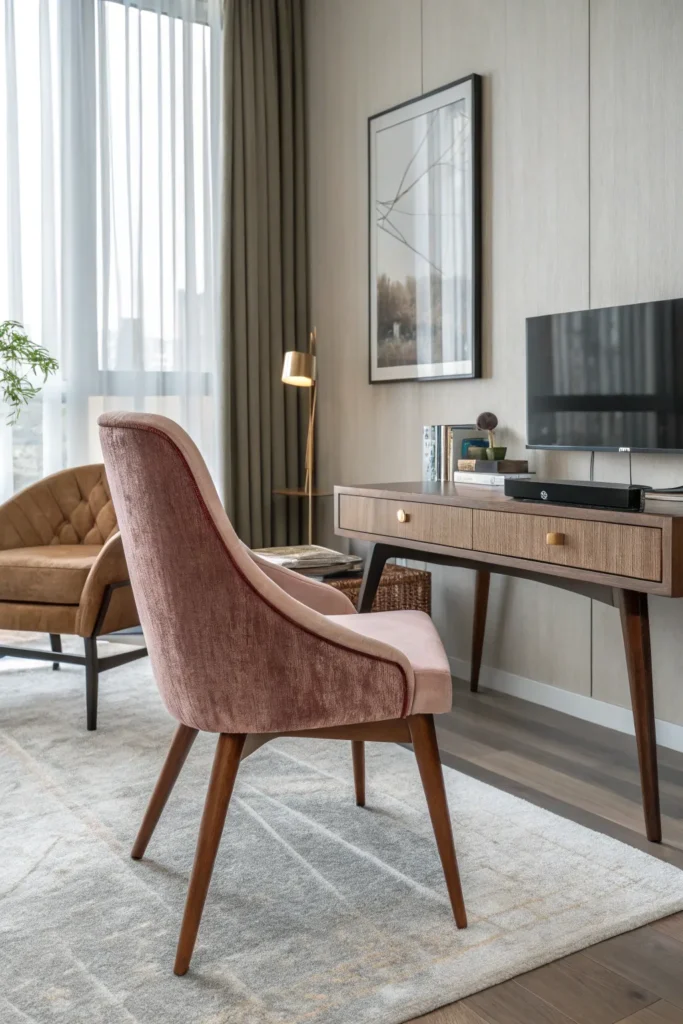
Your desk chair shouldn’t look like it belongs in a corporate office. Opt for a chair that blends in with your living room’s aesthetic—whether that’s modern, rustic, boho, or minimalist. Look for upholstered seats, wooden frames, or sleek designs that complement your existing décor. This small detail makes the overall space feel cohesive and thoughtfully curated.
8. Create a Fold-Away or Hidden Workspace
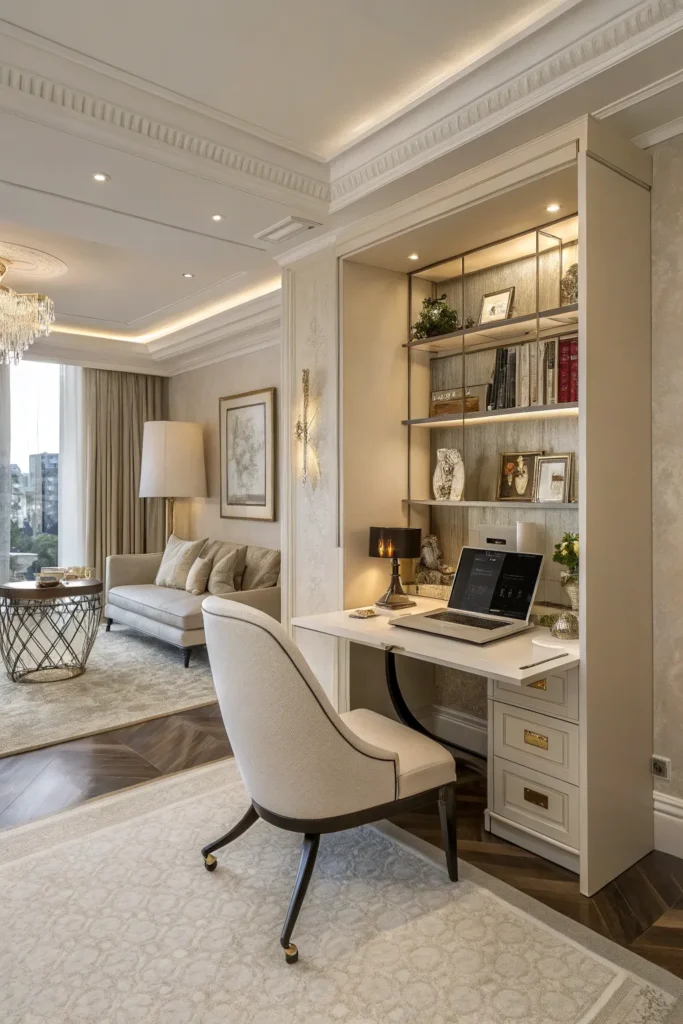
For those who prefer not to see their workspace when they’re off duty, a fold-away desk or hidden workstation is a great option. Wall-mounted desks that fold up when not in use or cabinets with built-in desks allow you to hide your office seamlessly. This idea keeps your living room clutter-free and ensures you can fully relax at the end of your workday.
9. Use Rugs to Define Each Zone
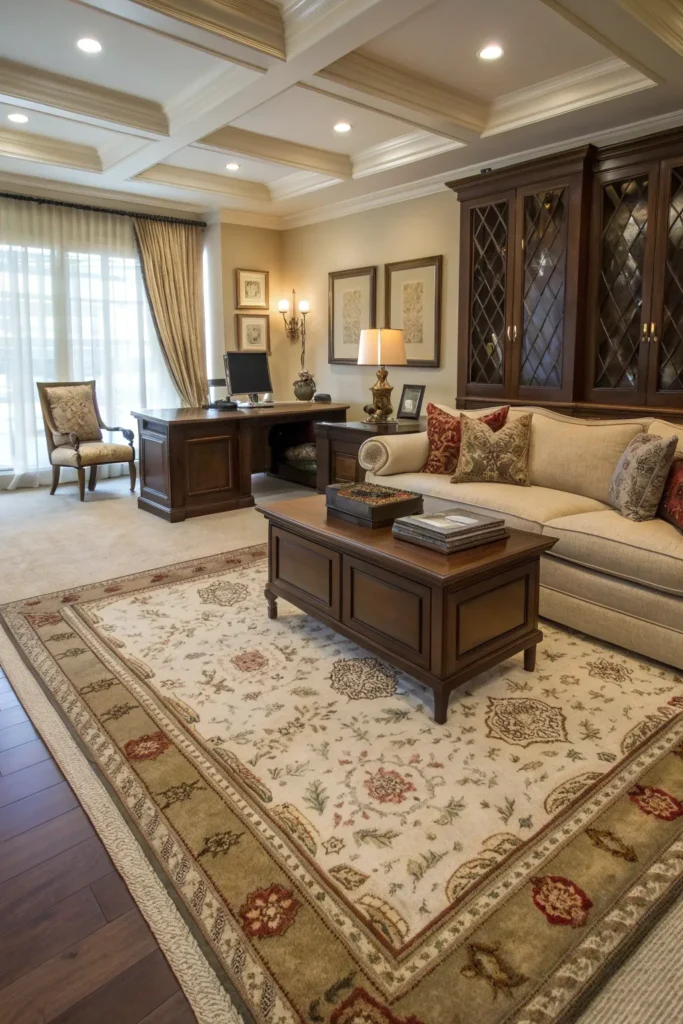
Rugs are a powerful tool for visually separating areas in a combined space. Use one rug for the living area—perhaps under the sofa and coffee table—and another underneath your desk to define your office zone. Complementary colors or patterns help keep the design unified while still marking distinct purposes for each area.
10. Add Plants to Bring Life to Both Spaces
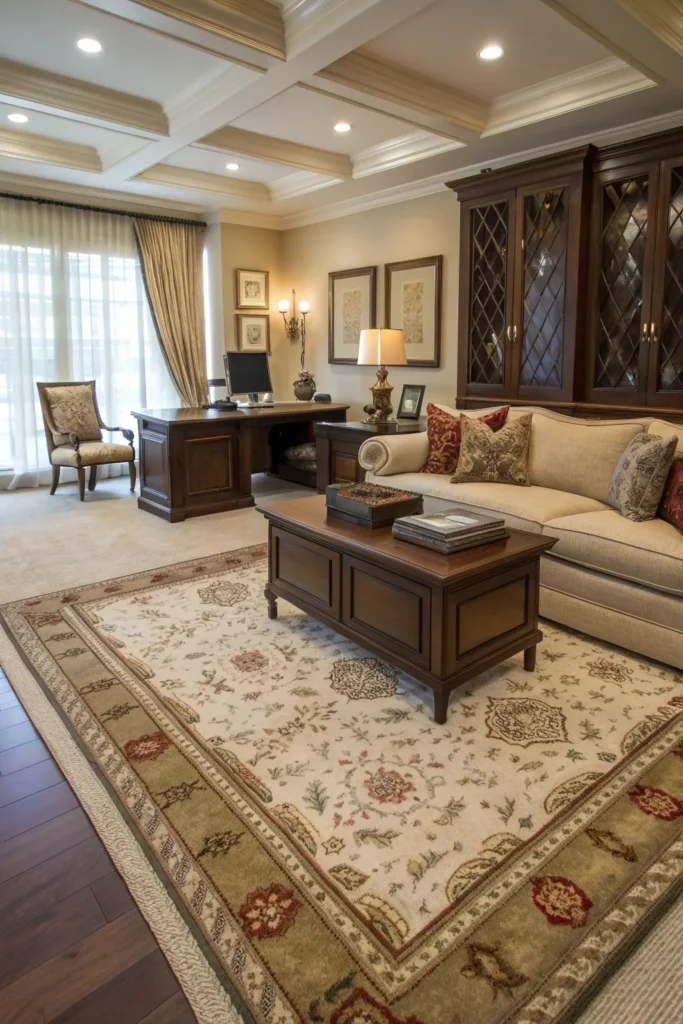
Plants add freshness and warmth to any room and work beautifully in a combined living room office. Place tall plants near your desk to create a natural border or add small potted plants to your shelves for a soothing atmosphere. Greenery improves productivity and mood, making it a win-win for both relaxation and work.
11. Prioritize Good Lighting for Productivity
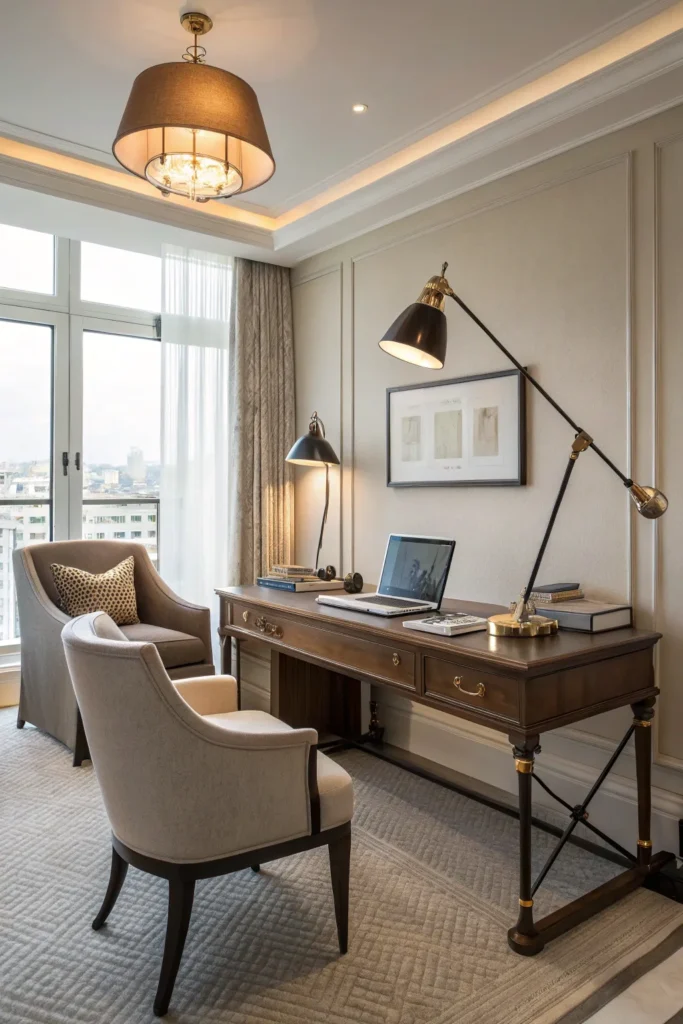
A shared living room and office needs layered lighting to function well. Combine soft ambient lighting for the living area with a dedicated task lamp for your desk. Natural light is ideal, so if possible, position your desk near a window. Adjustable floor lamps also help you control the room’s brightness for both lounging and working.
12. Keep Office Supplies Hidden in Stylish Storage
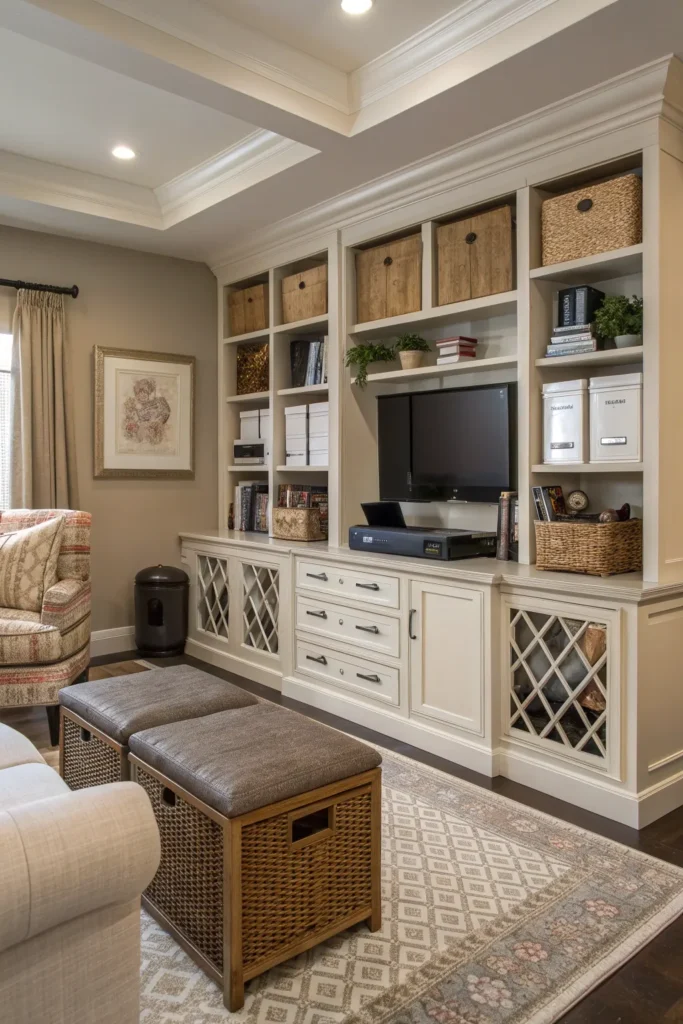
To prevent your living room from looking like an office, choose stylish bins, baskets, or boxes to store your supplies. Use a decorative cabinet or console table to hide items like printers, files, and chargers. Keeping these essentials out of sight helps your living room maintain its cozy, homey feel.
13. Hang Art to Tie the Room Together
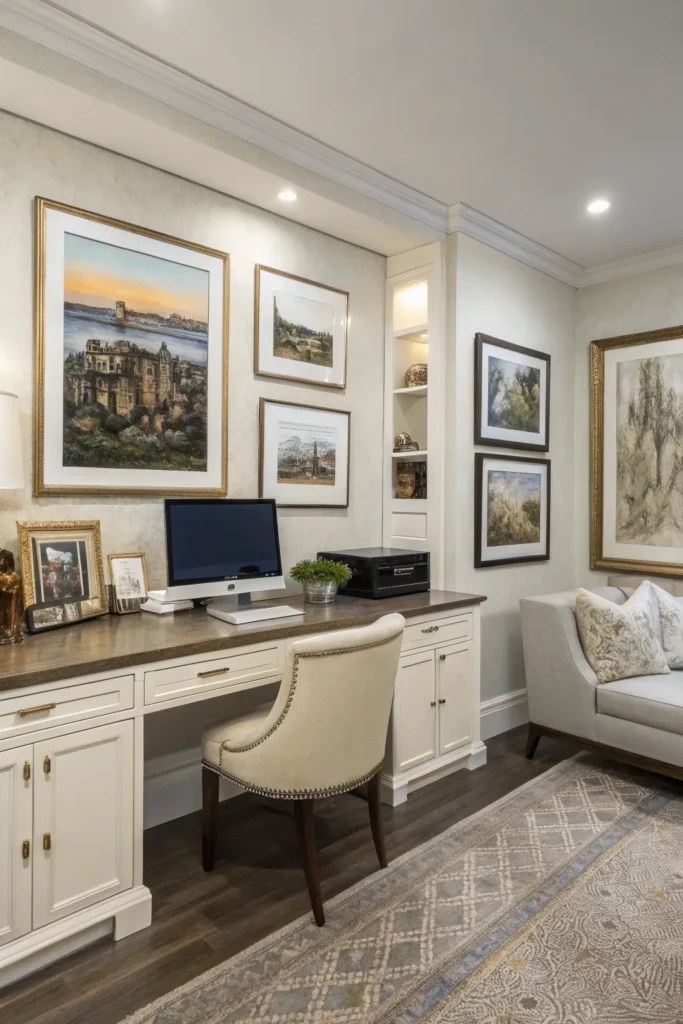
Art can help visually connect your office area with the rest of your living room. Hang framed prints, canvas art, or photos above your desk that complement the style of your living room decor. This creates a cohesive, polished look and makes your workspace feel more inspiring.
14. Add a Compact Filing System
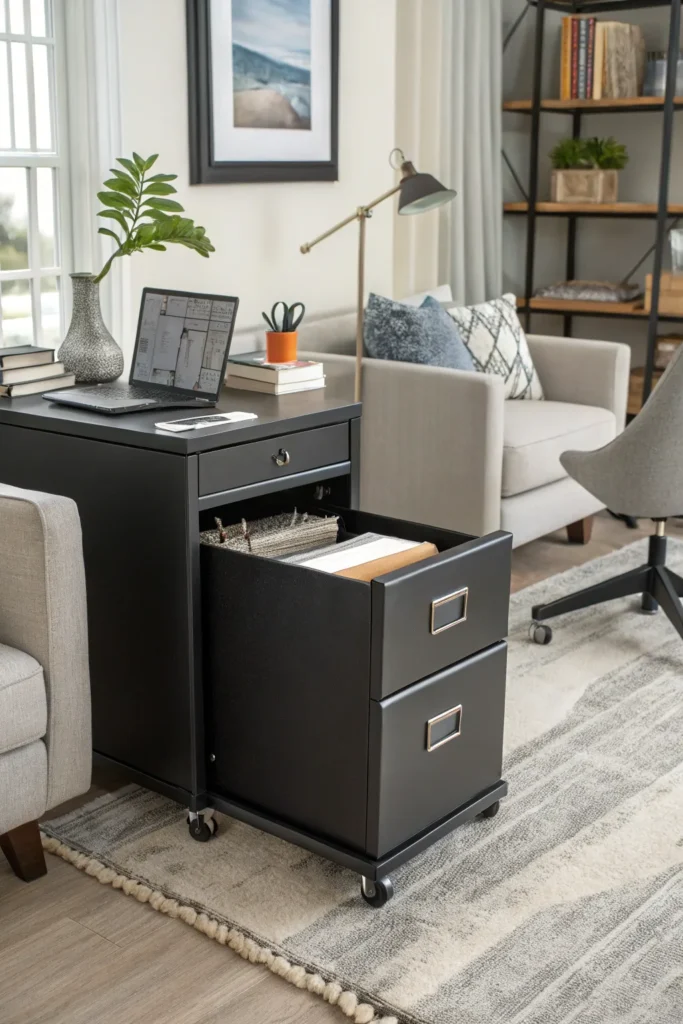
Even in a digital world, paperwork finds a way of piling up. A compact filing cabinet, rolling storage cart, or small drawer set can keep your documents organized without taking up much room. Choose a piece that fits under your desk or doubles as a side table to save space and maintain a clean, streamlined layout.
15. Use Mirrors to Make the Room Feel Larger
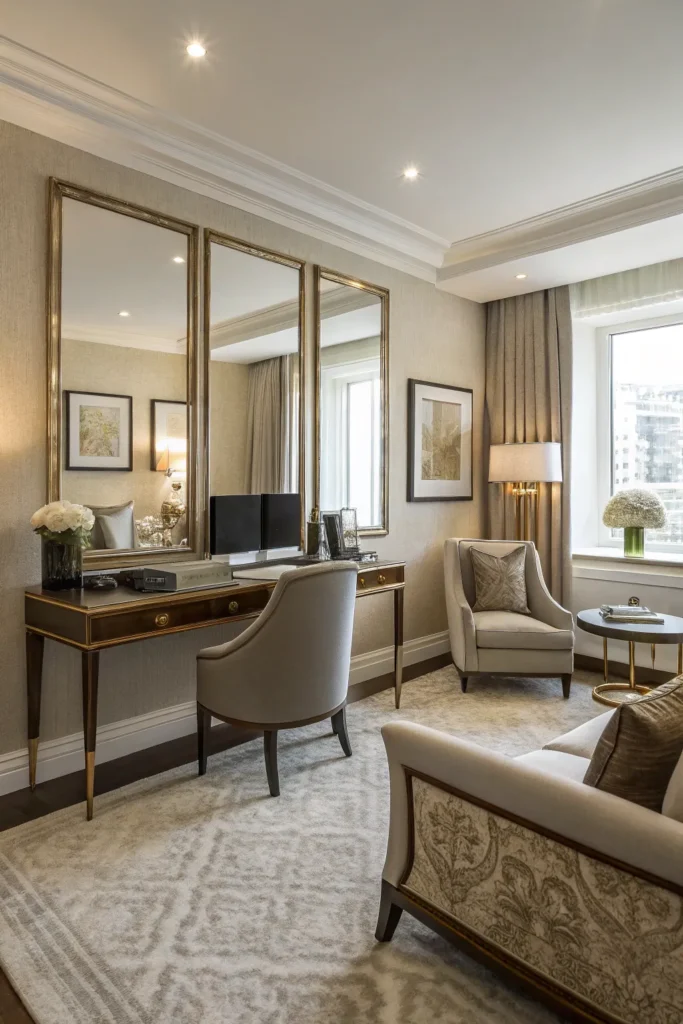
Mirrors reflect both light and space, making a small combined living room office feel more open. Place a mirror opposite a window or behind your desk to add depth and brightness. A strategically placed mirror not only enhances the aesthetics but also helps the area feel more spacious and balanced.