15 Light and Airy Spring Living Room Updates
Winter living rooms are built for comfort and enclosure — dark throws, heavy curtains, warm lamplight, and the kind of layered coziness that makes you want to burrow in and stay put. But as spring arrives, that same heaviness starts to work against you.
The days grow longer, the light shifts from amber to clear and white, and the instinct to open things up, let air in, and strip away the accumulated weight of the cold months becomes almost irresistible.

The good news is that refreshing a living room for spring doesn’t require a renovation or a significant budget. It requires attention — to light, to color, to texture, and to the small details that collectively determine how a room feels to be in.
Here are 15 light and airy spring living room updates that will transform the feel of your space without turning your life upside down.
1. Swap Heavy Curtains for Sheer Linen Panels

Nothing changes the quality of light in a living room more immediately than the window treatment. Heavy velvet or blackout curtains do exactly what they are designed to do in winter — keep warmth in and darkness at bay — but in spring they become obstacles, blocking the clean, white light that the season offers so generously.
Replacing them with sheer linen or cotton voile panels is one of the highest-impact, lowest-effort updates you can make. Sheer panels filter light rather than block it, filling the room with a soft, diffused glow that feels warm and airy simultaneously. Choose panels in white, ivory, or the palest sage for a result that is effortlessly beautiful from both inside and out.
2. Introduce a White or Cream Slipcover
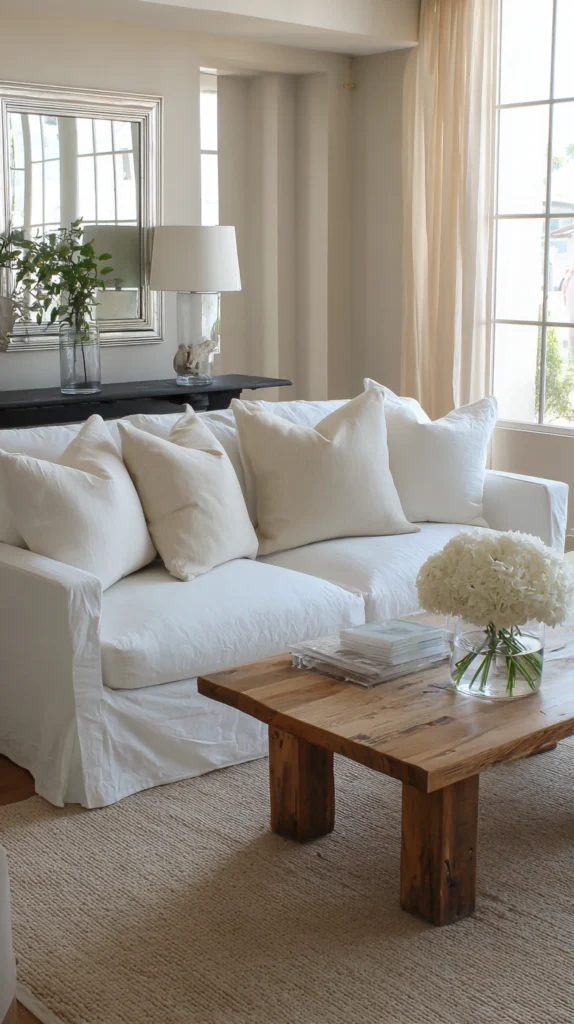
If your sofa is upholstered in a dark or heavy fabric, it may be doing more than you realize to weigh down the room. A fitted or relaxed slipcover in white, warm cream, or natural cotton is a transformative and surprisingly affordable solution.
The change from a charcoal or navy sofa to a cream-covered one can make a living room feel like an entirely different space — lighter, larger, and more open to the season. Slipcovers also have the practical advantage of being washable, which makes them ideal for spring and summer when life tends to move between inside and outside more fluidly.
3. Bring in Fresh Greenery
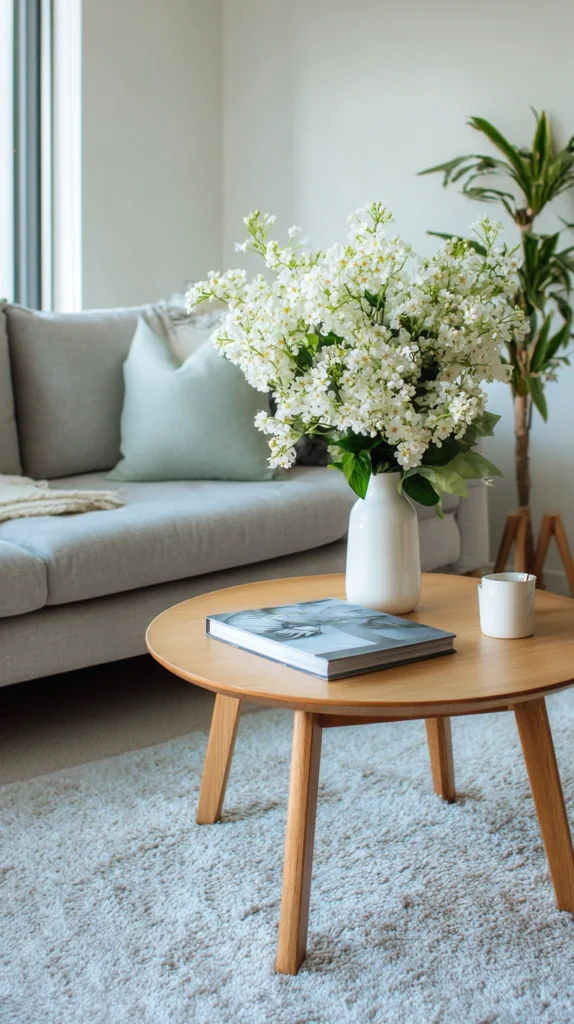
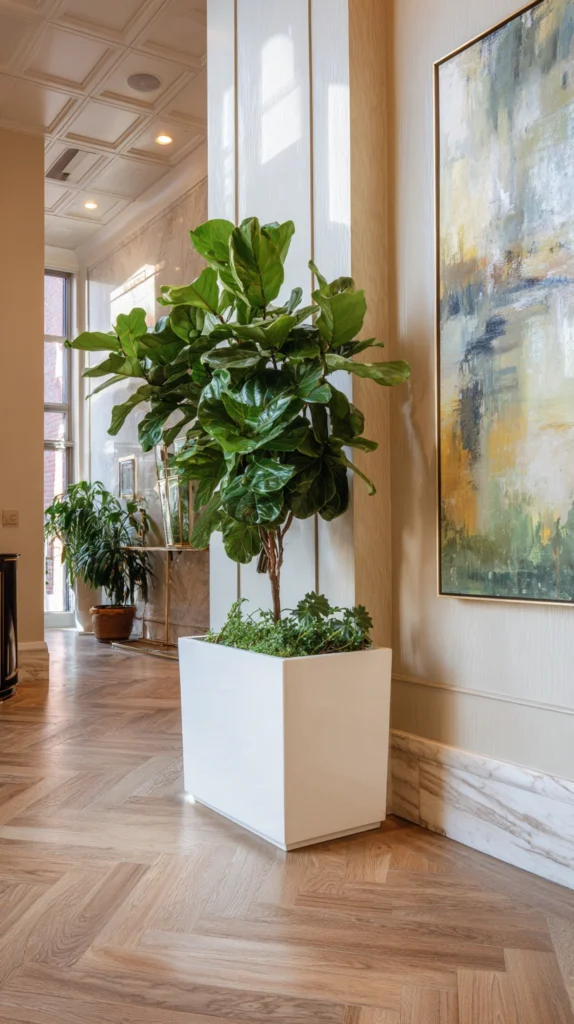
Plants are the fastest and most reliable way to make a living room feel alive and connected to the outside world, and spring is the perfect moment to invest in some new ones. A large fiddle-leaf fig, a trailing pothos, a cluster of ferns, or a sculptural snake plant all bring vertical interest and organic life to a room. Place a large plant in an empty corner to fill it without enclosing it, trail smaller plants along shelves and windowsills, and group a few terracotta pots together on the floor near a light source. The combination of green foliage and spring light is one of the most reliably uplifting things a living room can offer.
4. Edit and Declutter the Space
This one costs nothing and may be the most effective update on the list. Living rooms accumulate objects over winter — extra candles, blankets, books, decorative pieces that were pulled out for the darker months and never put away. Spring is the natural moment to edit ruthlessly. Remove anything that isn’t either beautiful or deeply useful.
Clear surfaces down to one or two considered objects. Take the extra throws back to the bedroom or the cupboard. The breathing room created by editing a living room is remarkable — space itself becomes a design element, and the room feels lighter simply because there is more of it visible.
5. Repaint or Refresh with Soft Warm White
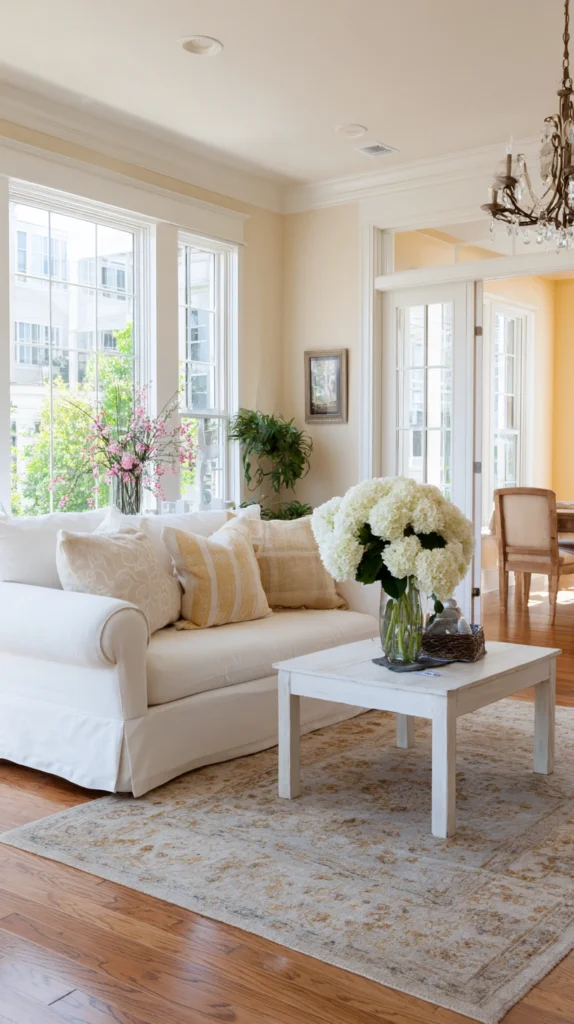
If your living room walls are a deep or saturated color that worked beautifully in winter, spring may reveal it in a less flattering light. This is not always the case — many colors look magnificent year-round — but if the room has been feeling dark and you’ve been unable to identify why, the walls may be the culprit. Repainting in a soft warm white, a barely-there blush, or a pale natural putty can completely open a room up.
These are not stark, cold whites but tones with warmth in them — whites that look like cream in afternoon sun and pale gold in lamplight. They reflect spring light beautifully and make every other element in the room look more considered.
6. Layer Lightweight Textiles in Spring Tones
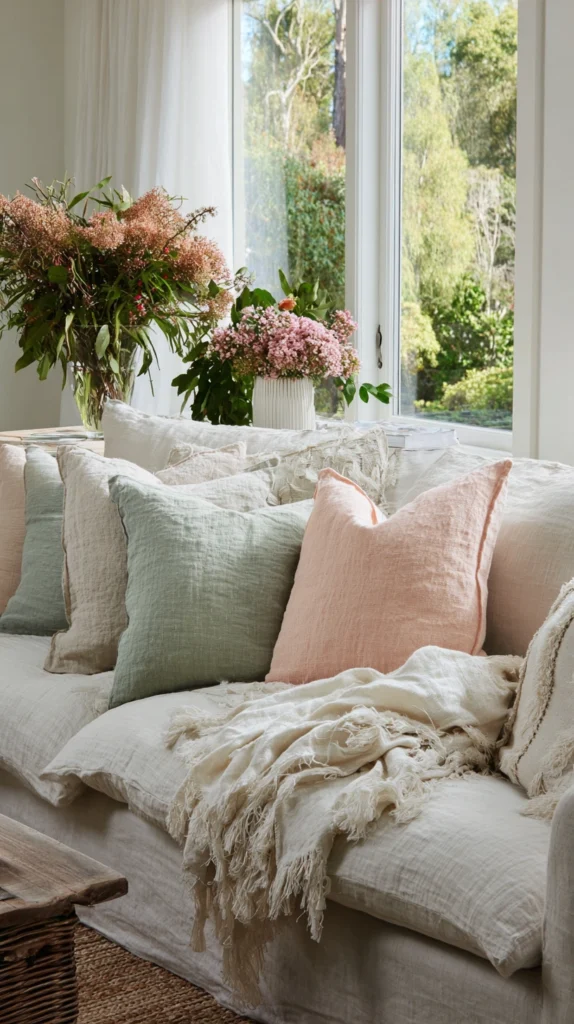
The textile palette of winter — deep burgundy, forest green, charcoal, navy — serves its purpose beautifully but needs refreshing as the season shifts. Swapping out throw blankets, cushion covers, and any decorative fabric in the room for lighter alternatives in spring tones is one of the simplest and most satisfying updates available.
Think dusty pink, soft sage, warm white, lavender, pale terracotta, and buttery yellow. Choose lightweight fabrics — cotton, washed linen, and fine knits — rather than heavy wool or velvet. The combined effect of lighter colors and lighter fabrics is immediate and significant.
7. Add a Large Mirror to Amplify Light
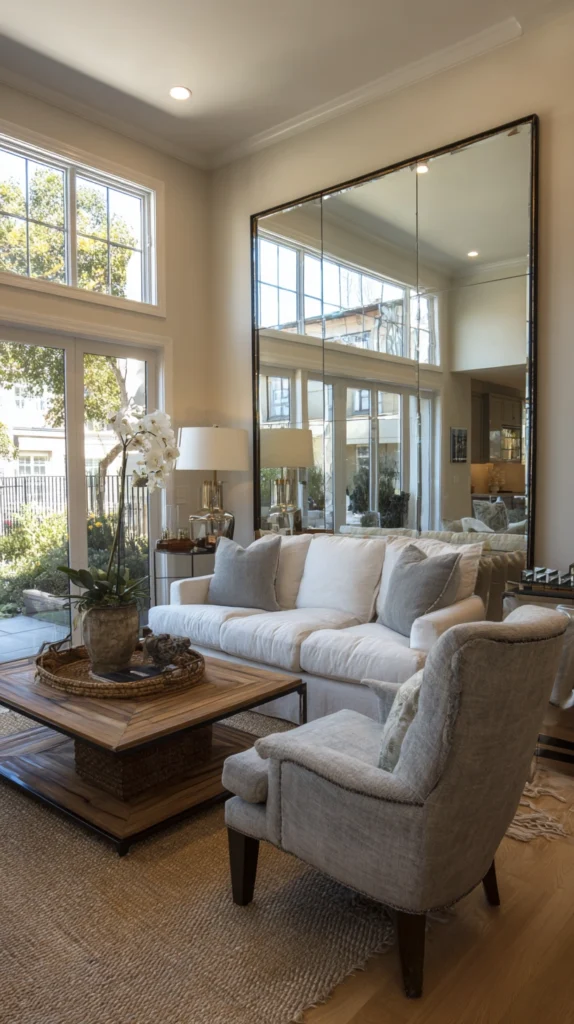
A well-placed mirror is one of the oldest tricks in the interior design playbook, and it works as reliably today as it ever has. A large mirror hung opposite or adjacent to the main window of a living room will bounce natural light deep into the space, making even a north-facing room feel considerably brighter. In spring, when the quality of natural light improves dramatically, a mirror amplifies that improvement to maximum effect. Choose a frame that suits the room’s aesthetic — ornate gilt for something more traditional, simple brass or natural wood for a contemporary space — and position it to capture as much light as possible.
8. Switch to Lower, Softer Artificial Lighting
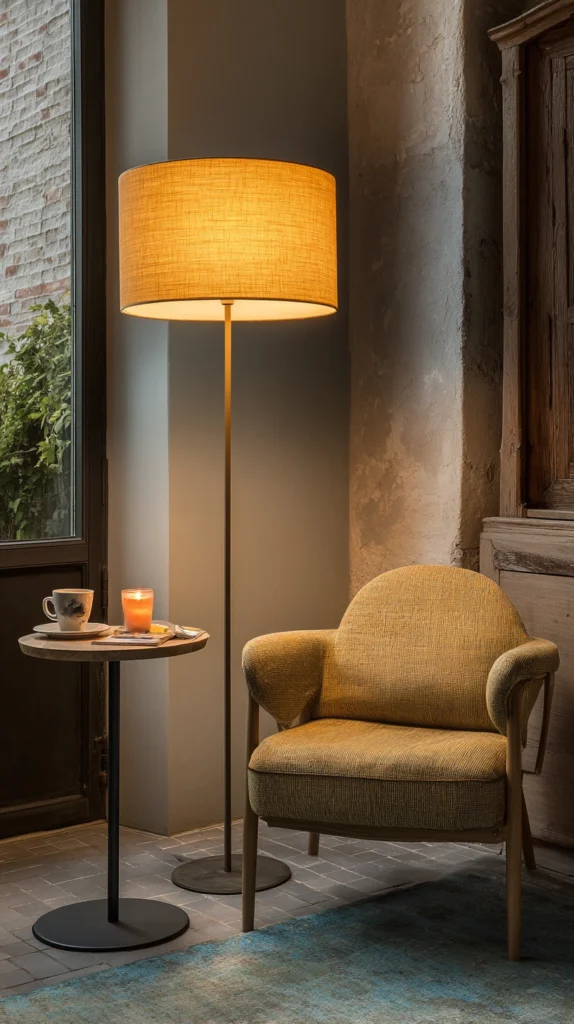
The overhead lighting that serves a living room in winter — bright, functional, and designed to compensate for dark afternoons — is often too harsh for spring evenings when the natural light lasts longer and has a softer quality. Moving to lower, more distributed light sources creates an atmosphere that works with the season rather than against it.
Table lamps with warm-toned shades, a floor lamp tucked beside the sofa, and a few candles on the coffee table create pools of warm light that feel inviting without being heavy. This shift in lighting alone can change the entire mood of a room as the season changes.
9. Introduce Spring Flowers as a Weekly Ritual
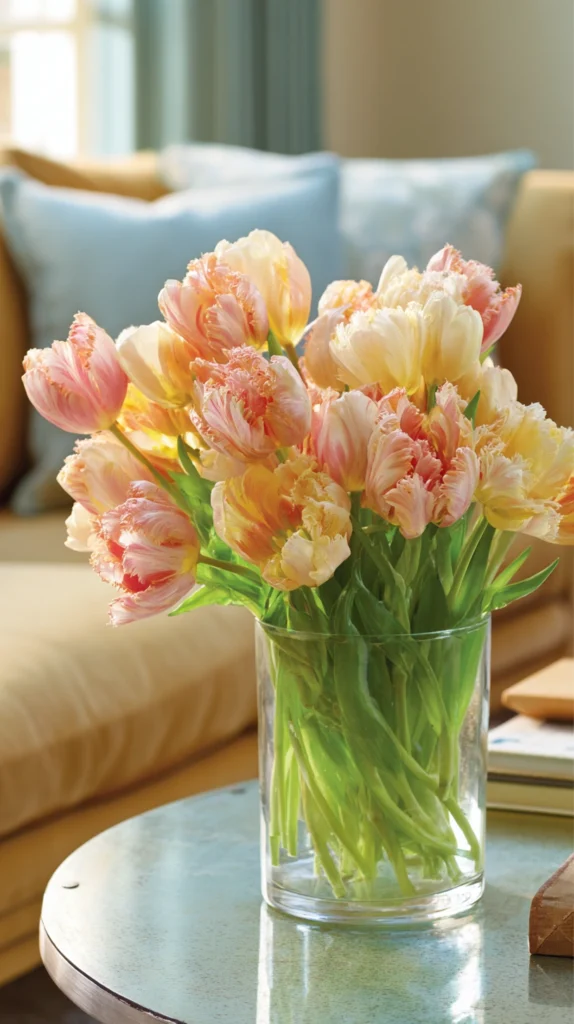
Fresh flowers in a living room are not a decoration so much as a practice — a small weekly commitment to the idea that the room deserves beauty and attention.
In spring, the options available at markets and florists are at their most abundant and their most affordable. Tulips, ranunculus, sweet peas, peonies, anemones, and garden roses are all in season and all bring something distinct to a room.
A simple bunch arranged in a clear glass vase on the coffee table, or a few stems in a terracotta pot on a windowsill, changes the quality of a room in ways that are difficult to quantify but immediately felt. It is one of the most reliable small joys available to a home.
10. Rearrange the Furniture for Better Light

The furniture arrangement that worked in winter — perhaps oriented around a fireplace or positioned to maximize warmth — may not be the arrangement that best serves a spring living room. As the light source shifts and the room becomes something to open up rather than close in, it’s worth experimenting with how the furniture is placed.
Moving the sofa to face a window rather than a wall, pulling chairs closer to natural light sources, or simply angling a reading chair toward the garden can completely change how the room functions and feels. Rearranging furniture costs nothing and can make a room feel new.
11. Incorporate Natural and Organic Materials
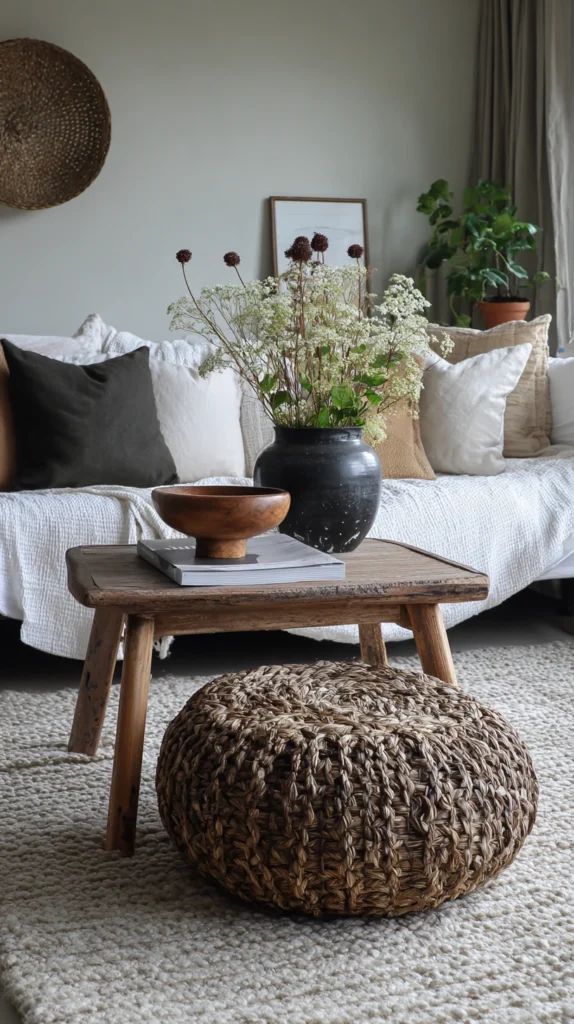
Spring is the season of natural materials — wood, stone, clay, rattan, seagrass, and linen all feel more at home in a spring living room than synthetic or heavily processed alternatives. If your room currently relies heavily on glass, metal, or plastic accessories, introducing some organic texture will immediately warm and soften the space.
A rattan coffee table, a jute rug, a wooden bowl on the shelf, a few woven baskets — these additions bring a tactile richness to a room that resonates with the natural world renewing itself outside the window.
12. Open the Windows and Prioritize Air

This is perhaps the simplest update of all, and yet it is one that many people neglect through habit. Opening the living room windows fully — not just leaving them ajar but genuinely committing to fresh air circulating through the space — changes a room in a way that no decoration can replicate.
The smell of spring air, the sound of birds, the feeling of a light breeze moving through linen curtains: these sensory experiences make a living room feel inhabited by the season rather than merely decorated for it. Make a habit of opening the windows every morning and the room will reward you for it.
13. Refresh the Coffee Table Styling
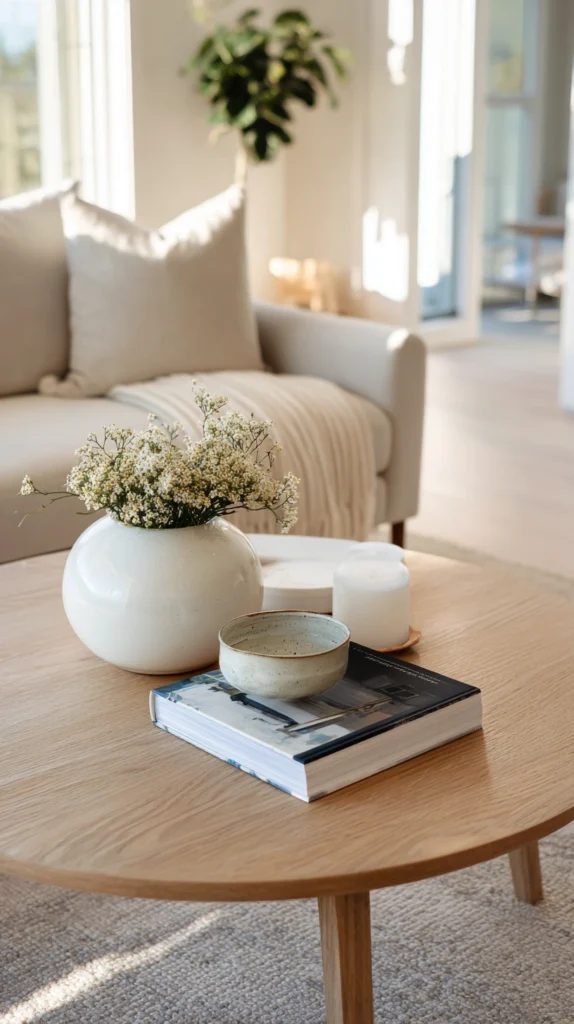
The coffee table is the living room’s most visible surface and the one that most directly communicates the mood and intention of the space. A winter coffee table might hold heavy candles, dark books, and a collection of warm, cozy objects.
For spring, clear it back and rebuild it with lightness in mind. A small bunch of flowers in a simple vessel, one or two books with beautiful covers, a small ceramic bowl, and perhaps a candle in a pale spring tone. Less is more on a coffee table, and the restraint of a well-edited surface contributes significantly to the airy, uncluttered feeling the season calls for.
14. Add a Pale or Natural Fiber Area Rug
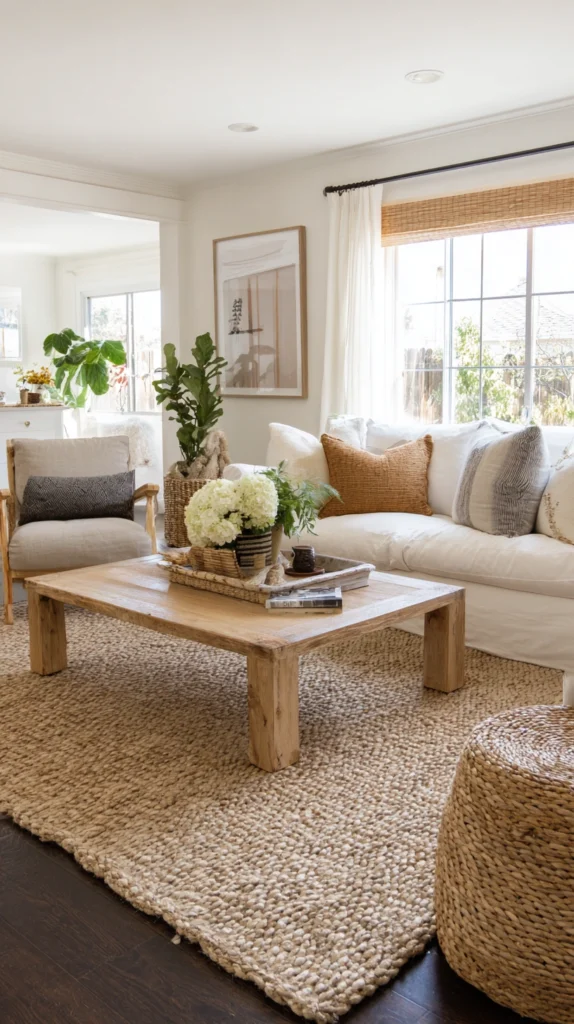
If your living room currently has a dark or heavily patterned rug, swapping it for something lighter can open the floor up considerably and make the room feel larger and brighter. Natural fiber rugs in jute, seagrass, or sisal bring an organic warmth to the floor without adding visual weight.
Alternatively, a flatweave cotton rug in warm white, pale stripe, or natural undyed tones achieves a similar effect. The floor is a significant proportion of the room’s visual space, and lightening it has an effect on the room’s overall atmosphere that is out of proportion to the simplicity of the change.
15. Style the Windowsill as a Feature
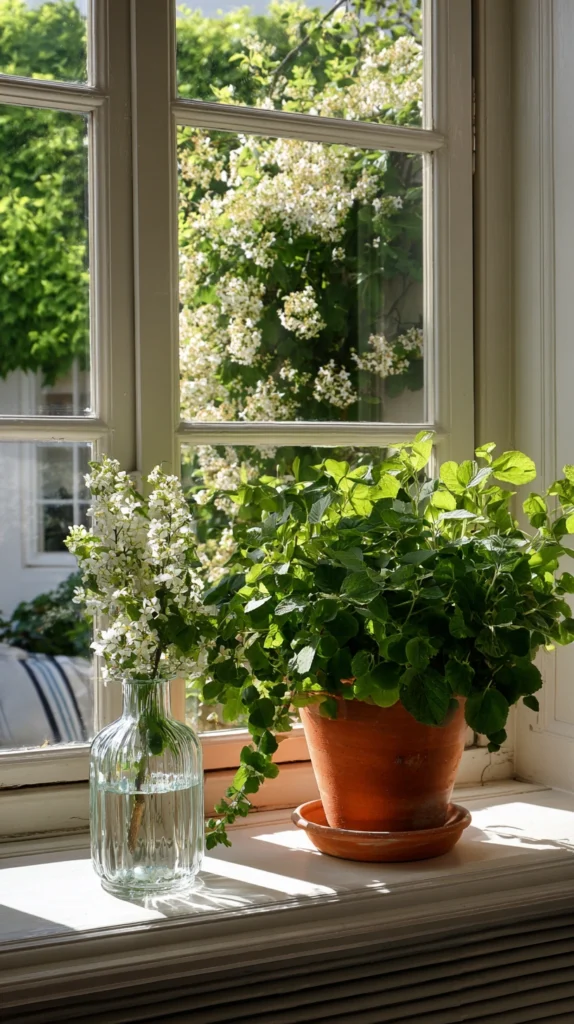
The windowsill is one of the most underused surfaces in a living room, and in spring — when it becomes a place where sunlight collects and the view beyond it turns green and alive — it deserves particular attention.
A row of small terracotta pots with herbs or trailing plants, a few glass bottles catching the light, a single beautiful ceramic object: a styled windowsill creates a moment of beauty that is framed by the window like a picture.
It also connects the interior of the room to the world outside, which is precisely the relationship that spring living rooms should be cultivating. The windowsill, more than any other surface, is where inside and outside meet.
Making the Updates Work Together
The most important thing to understand about refreshing a living room for spring is that these updates are cumulative. One change is noticeable. Three or four working together are transformative.
You don’t need to do all fifteen at once — in fact, approaching them gradually, one or two at a time over the course of a few weeks, allows you to see how each change affects the room and to enjoy the process of the room becoming something new.
Start with light — the curtains, the mirror, the windows — because light is the foundation on which everything else rests. Then address color and texture, then greenery and flowers, then the small details of styling and arrangement. By the time the season is fully underway, you will have a living room that doesn’t just look like spring. It will feel like it.