15 Layered Landscape Ideas for a Garden With Depth and Beauty
A layered landscape is the difference between a garden that looks planted and a garden that looks alive.
When plants are arranged at different heights — tall trees providing the canopy, mid-height shrubs creating the understory, perennials filling the middle layer, low ground covers spreading at the base — the garden acquires a quality of natural depth and visual complexity that no flat single-level planting can replicate. It is the way the natural world organizes plant communities and the reason the most beautiful gardens are always layered ones.
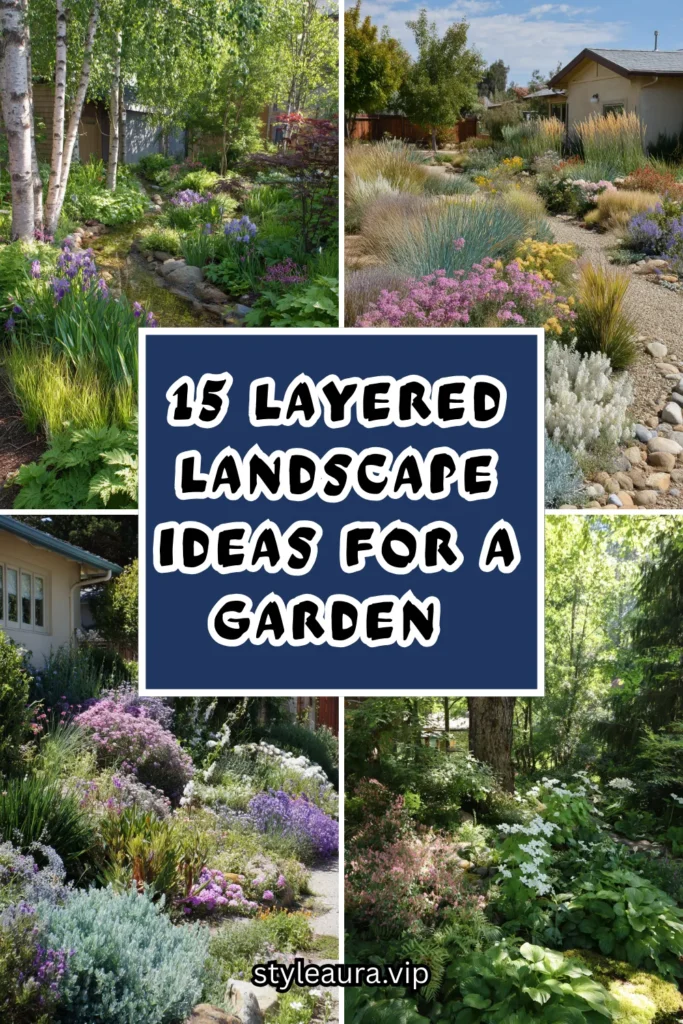
Layered planting is also the most resilient and most low-maintenance approach to garden design available. Each layer suppresses weeds in the layer below, and each plant is positioned in its natural relationship to light, moisture, and competition — creating genuine health and vigor rather than the constant intervention that single-layer planting demands.
Here are 15 layered landscape ideas that create a garden of genuine depth, beauty, and ecological richness.
1. Woodland Edge Layering
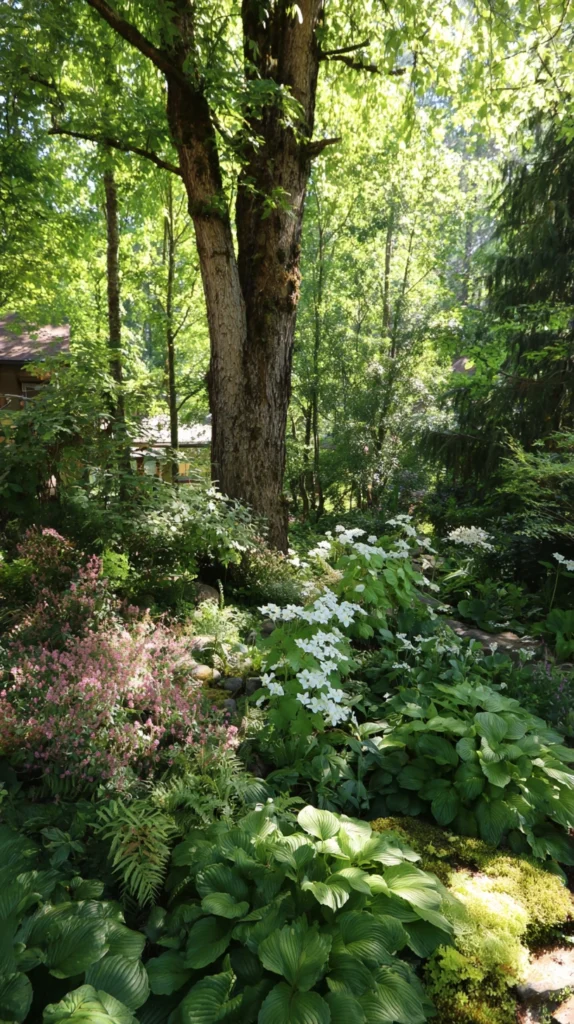
The woodland edge — the transition zone between open meadow and mature forest — is the most biodiverse and most visually beautiful of all natural plant communities. Plant a single large native tree as the canopy anchor. Beneath it establish flowering shrubs like viburnum, cornus, and native roses. Below them plant woodland perennials — hellebores, foxgloves, ferns, and wild garlic — and allow native ground covers to spread through the base layer.
Pro Tip: Plant the layers in reverse order — establish canopy trees first, then understory shrubs, then perennials, then ground covers — allowing each layer a full growing season to establish before introducing the next. Planting all layers simultaneously creates competition for water and light at the most vulnerable establishment stage.
2. Prairie-Inspired Grass and Perennial Layers
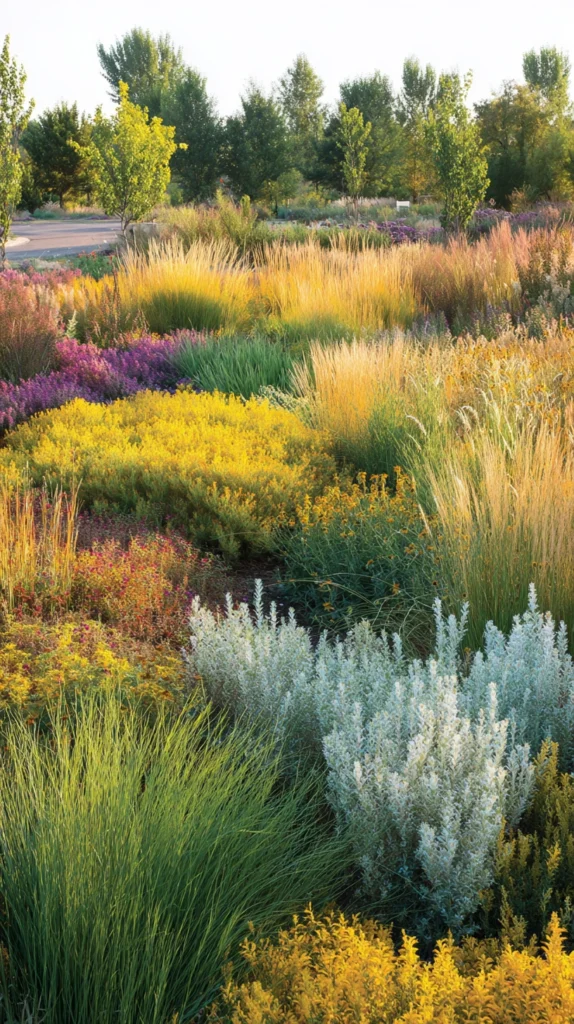
Tall ornamental grasses creating the upper layer, mid-height prairie perennials filling the middle, and low spreading prairie plants covering the base creates a garden of extraordinary seasonal beauty and remarkable ecological value. The prairie palette changes dramatically through the seasons — spring bulbs emerging through the dormant grass base, summer perennials rising above them, autumn grasses in full golden color, winter seed heads providing structure and bird food.
Pro Tip: Plant prairie layers at high density — significantly higher than conventional border recommendations — for a planting that suppresses weeds through sheer plant coverage. High-density prairie planting creates a genuinely self-sustaining plant community that requires minimal weeding within two seasons of establishment.
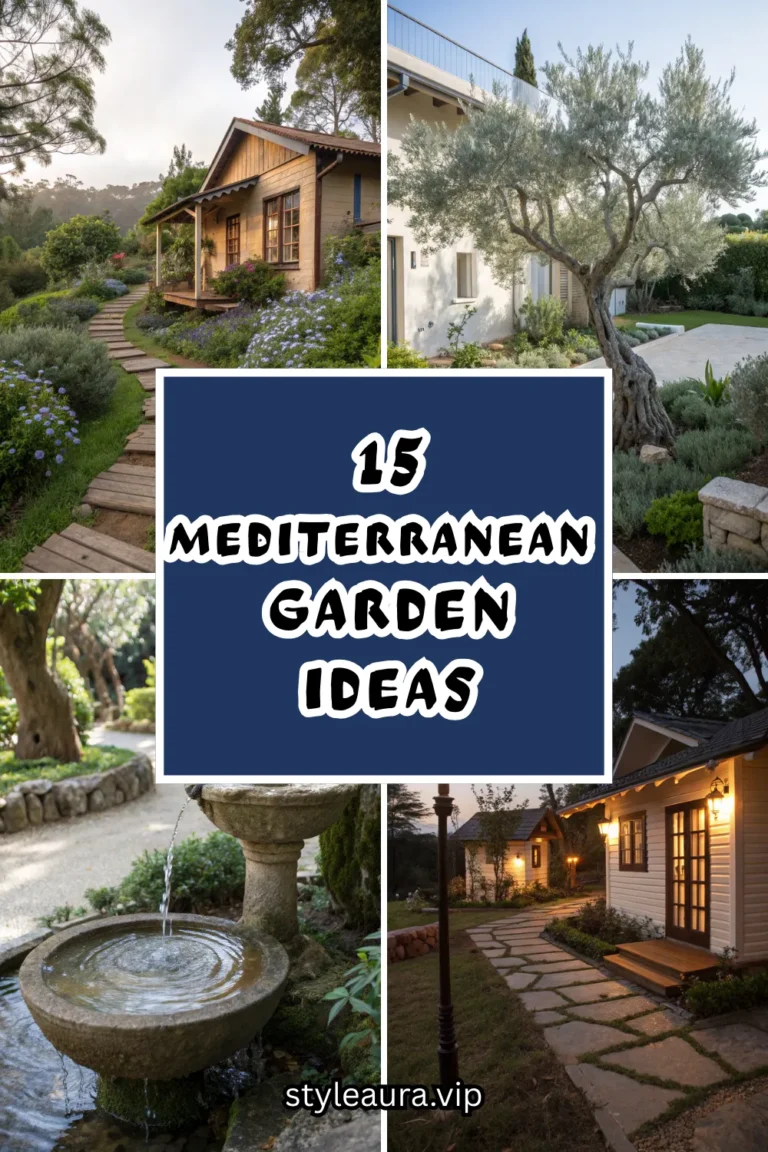
3. Mediterranean Hillside Layering
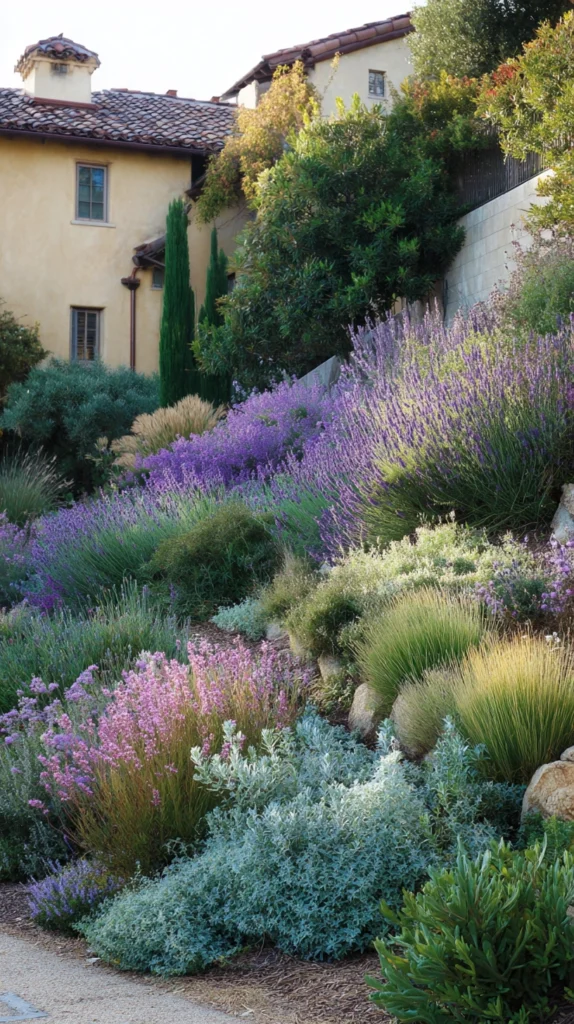
Tall aromatic shrubs like rosemary, lavender, and cistus creating the upper layer, silver-leaved perennials and herbs filling the middle, and low spreading thymes and sedums covering the base creates a garden of extraordinary fragrance and exceptional drought tolerance. The Mediterranean layered garden is the most low-maintenance of all layered styles — the plants require no irrigation once established, no supplementary feeding, and minimal pruning.
Pro Tip: Mulch Mediterranean layered planting with a 5 to 7 centimetre layer of fine gravel rather than organic mulch. Gravel maintains the sharp drainage conditions that Mediterranean plants require, reflects heat upward, and prevents the crown rot that organic mulch creates around drought-adapted plants by retaining moisture at the root crown.
4. Tropical-Inspired Bold Foliage Layering
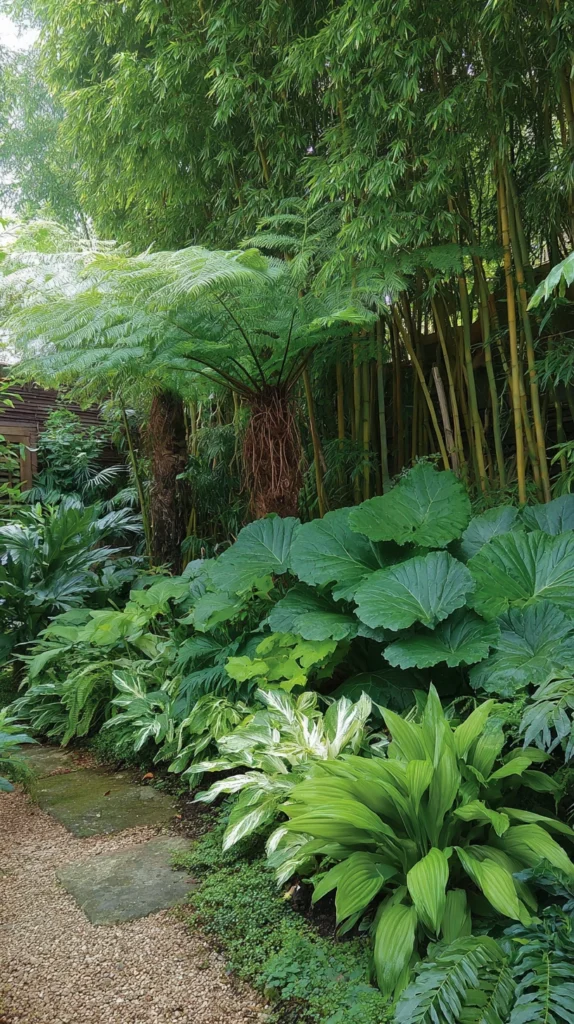
Tall architectural plants like phormium, tree ferns, and bamboo providing the upper layer, large-leaved perennials like hostas and rodgersias filling the middle, and low spreading ground covers completing the base creates a garden of extraordinary dramatic visual impact achievable in temperate climates using hardy plants. The key to convincing tropical layering is scale — using the largest possible specimens and planting at sufficient density to create genuine visual mass.
Pro Tip: Position tropical-inspired layered planting in the most sheltered warmest microclimate of the garden — typically a south-facing position against a warm wall or in a courtyard enclosed on three sides. The warm wall radiates stored solar heat on cold nights and reduces frost damage to borderline-hardy architectural plants by two or three hardiness zones compared to an exposed garden position.
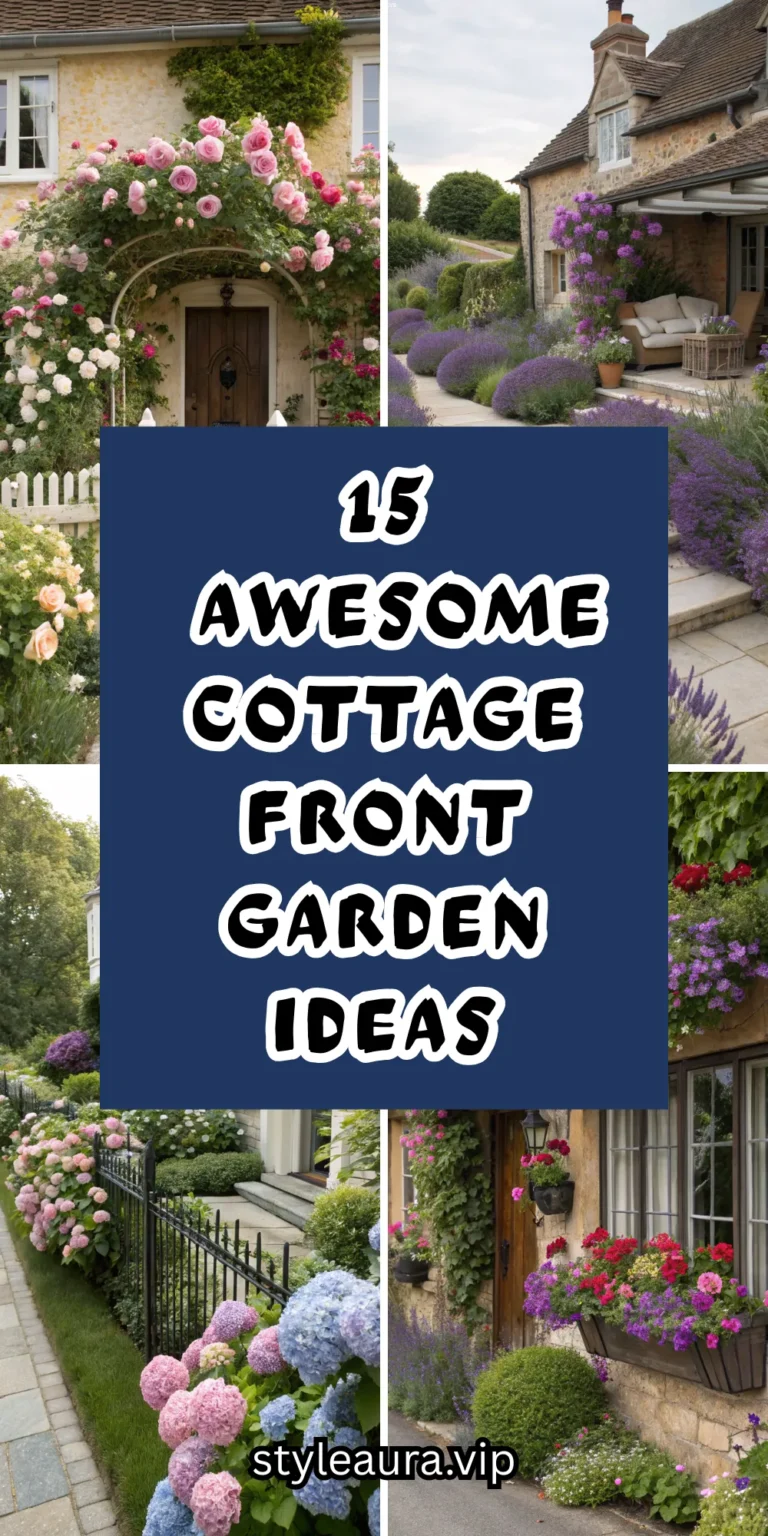
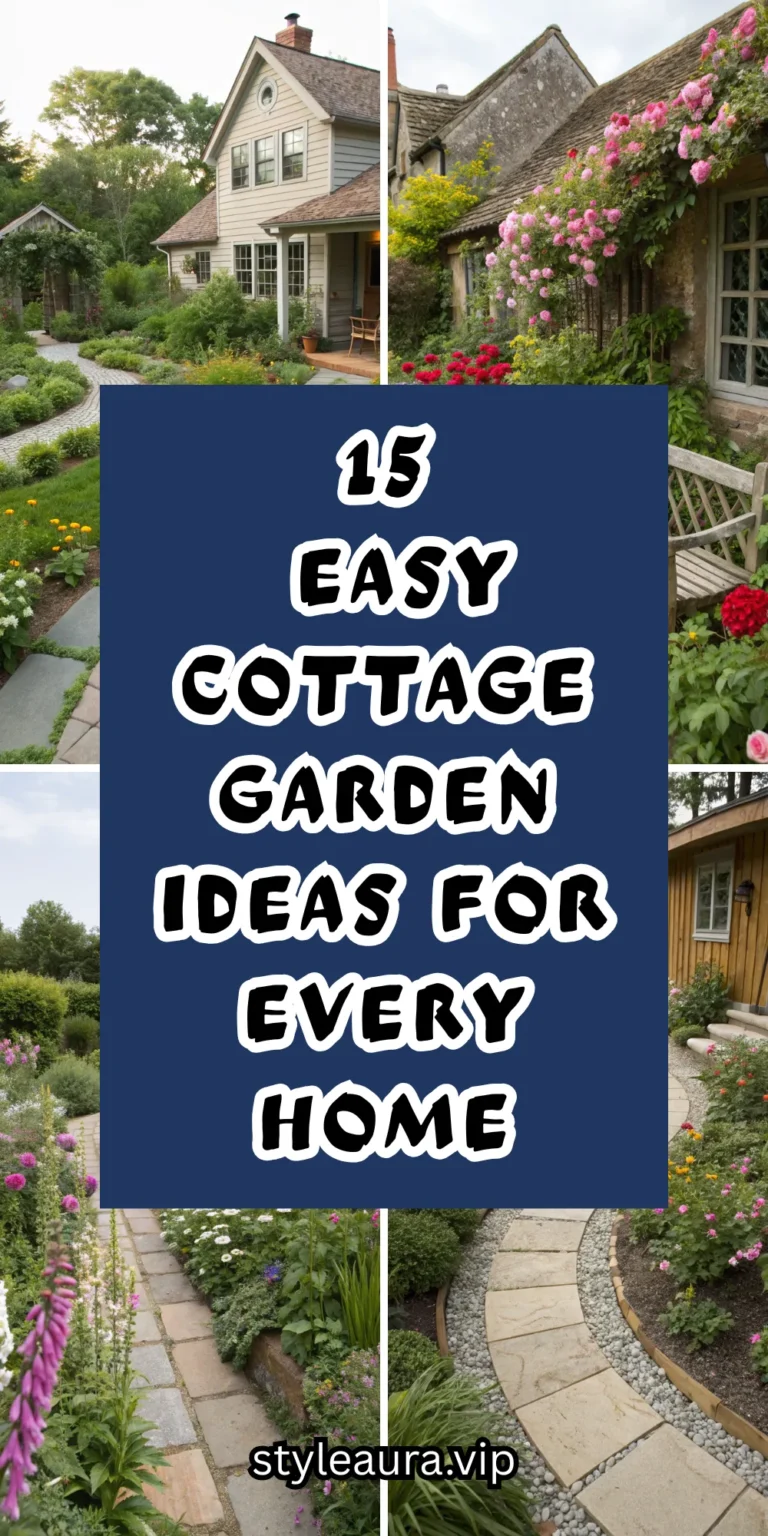
5. Cottage Garden Layering
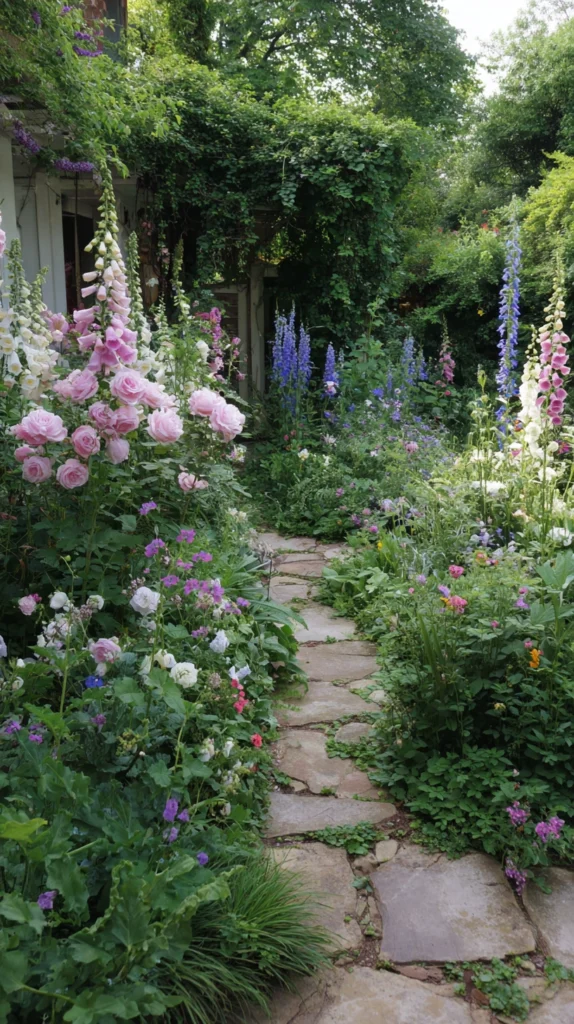
Tall climbing roses and wall shrubs providing the upper layer, mid-height traditional cottage perennials filling the middle, and low-growing edging plants completing the base creates the most universally loved of all layered garden styles.
Allow self-seeding plants — foxgloves, aquilegias, verbascums — to establish throughout the layered composition and resist the urge to remove seedlings from positions that appear at first to be wrong. The most beautiful cottage garden moments are almost always the accidental combinations.
Pro Tip: Support the tallest perennials using natural twiggy pea sticks pushed in around young plants in early spring before they reach the height at which they begin to flop. Natural pea sticks disappear within the growing plant and create no visible support structure — the plants appear to stand naturally upright in a way that wire cages and bamboo stakes never achieve.
6. Edible Food Forest Layering
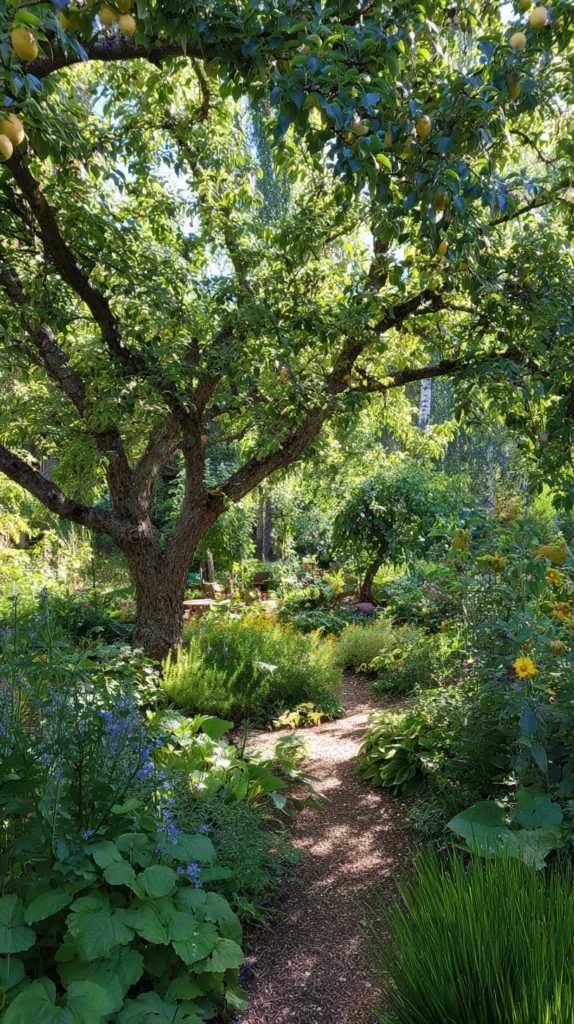
A food forest — a layered planting modeled on the structure of natural woodland but using edible plants at every layer — creates genuine food production capacity, extraordinary biodiversity, and remarkable visual beauty simultaneously.
Fruit trees provide the canopy, soft fruit shrubs create the understory, culinary herbs and edible perennials fill the middle layer, and edible ground covers spread through the base. The layered structure creates natural fertility cycling and pest balance that eliminates the need for most conventional garden inputs.
Pro Tip: Include comfrey as a dedicated layer plant at the drip line of each fruit tree. Its deep taproots mine nutrients from below the tree root zone and its high-potassium leaves can be cut and composted around the tree base multiple times per season — providing more fertility input per square metre than any other non-leguminous garden plant.
7. Dry Garden Layering
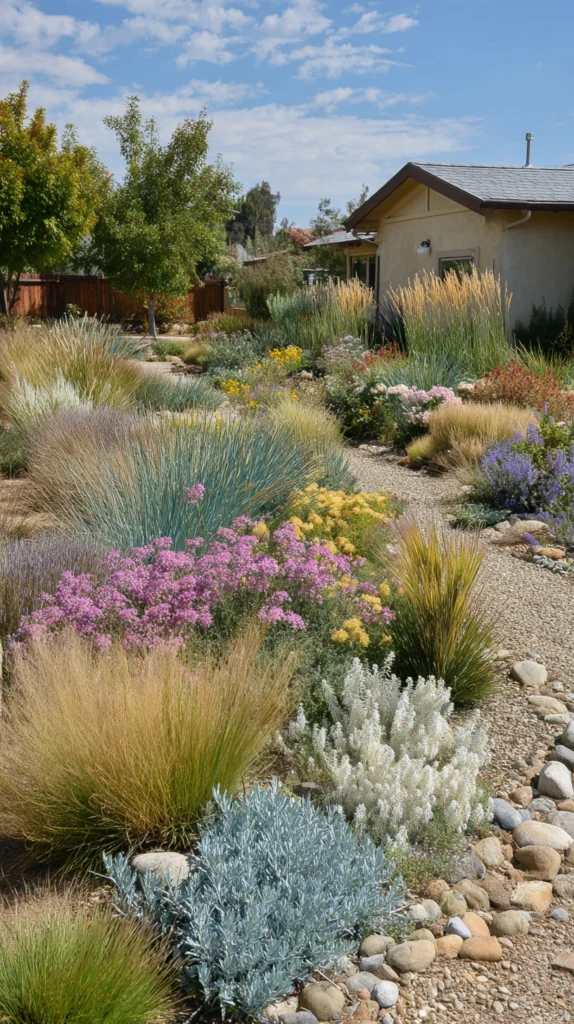
Tall drought-tolerant shrubs and sub-shrubs creating the upper layer, ornamental grasses and drought-tolerant perennials filling the middle, and spreading succulents and sedums covering the base creates a garden of extraordinary resilience and remarkable visual beauty.
The dry garden layered palette — the silver and blue-grey tones of drought-tolerant foliage, the vivid purples and yellows of drought-tolerant flowers, the warm amber of ornamental grasses in autumn — creates a planting of genuine chromatic sophistication.
Pro Tip: Establish dry garden plants during autumn rather than spring. Autumn planting allows plants to develop a deep root system during the cooler wetter months before facing their first summer drought. Spring-planted dry garden species enter their most stressful season immediately after transplanting — requiring irrigation that undermines their natural drought adaptation.
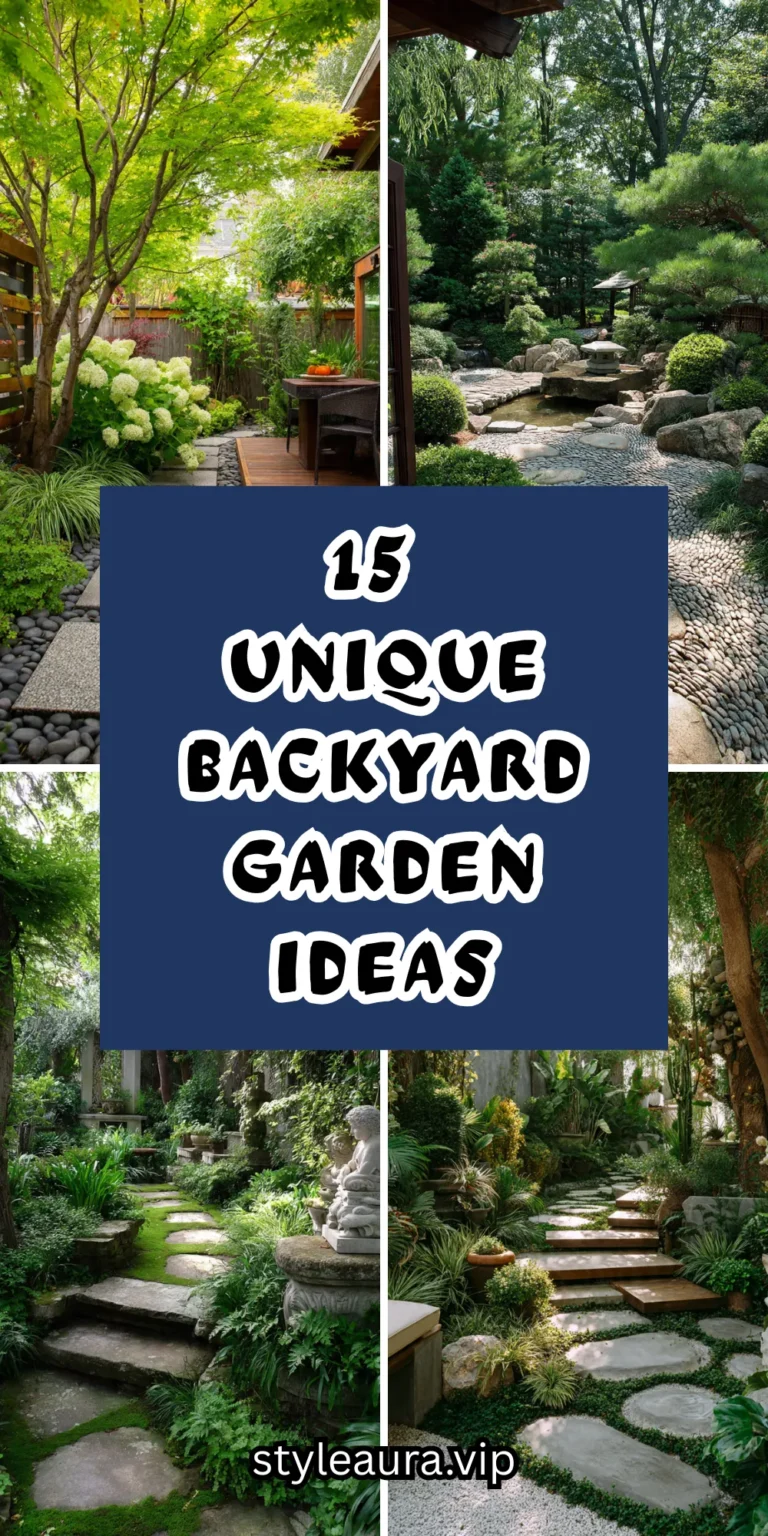
8. Shaded Urban Garden Layering
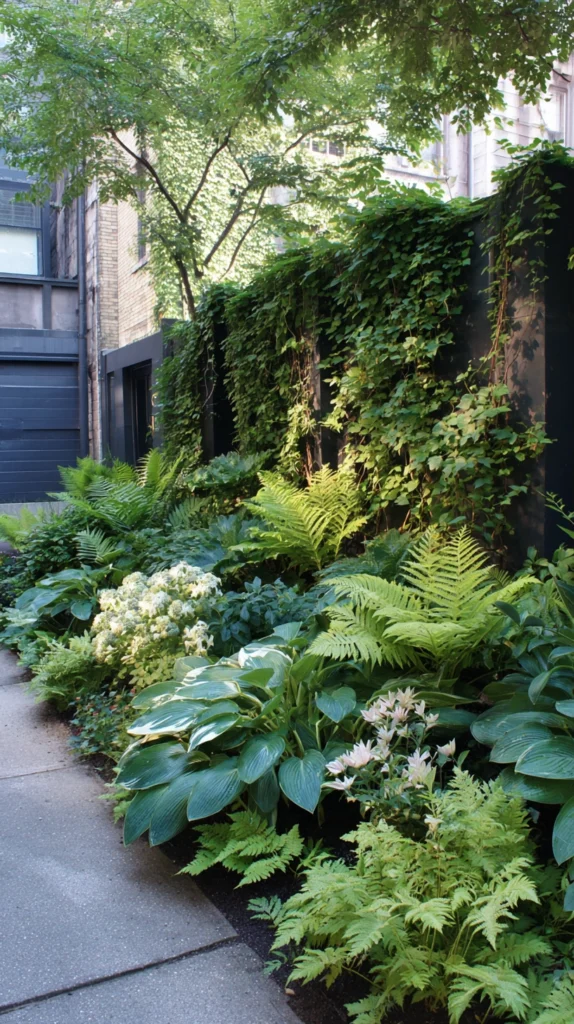
Shade-tolerant climbers filling the vertical wall space, medium-height shade perennials — hostas, ferns, astilbes, and epimediums — filling the middle layer, and low spreading woodland ground covers completing the base creates a garden of surprising richness in what most gardeners initially regard as an almost impossible planting situation. Accept the existing canopy layer rather than fighting it and work entirely with the shade conditions it creates.
Pro Tip: Use leaf color variation as the primary design tool in a shaded layered garden where flowering opportunity is limited. The enormous variation in hosta leaf color and texture — from pale lime yellow through gold and blue-grey to deep green — combined with the fine texture of ferns creates a garden of extraordinary visual interest using foliage rather than flowers as the primary aesthetic medium.
9. Naturalistic Meadow Layering
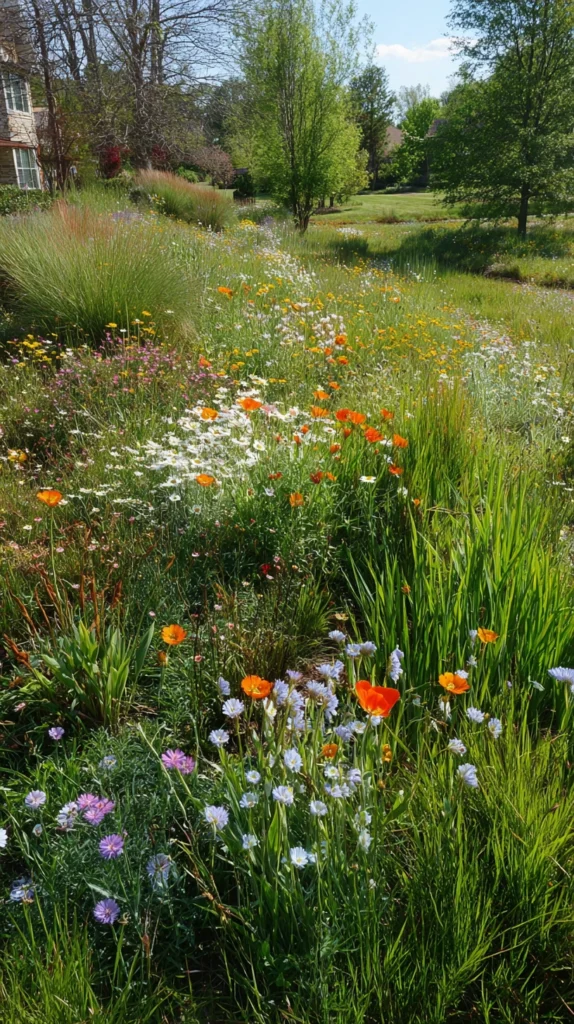
Spring bulbs in the lowest layer, short native grasses in the next, mid-height wildflowers in the middle, and taller perennial species in the upper layer creates a garden feature of extraordinary seasonal beauty and remarkable biodiversity. Plant spring bulbs at the base layer in autumn. Allow the bulb foliage to die back naturally in spring, providing the mulch and fertility that feeds the next layer of grass and wildflower growth above it.
Pro Tip: Mow the naturalistic meadow only once per year — in late September or October after all flowering has completed and all seed has set and dispersed. A single annual cut maintains the meadow character, prevents natural succession toward scrub, and provides the short grass base from which the spring bulb layer can emerge cleanly the following season.
10. Vertical Garden Wall Layering
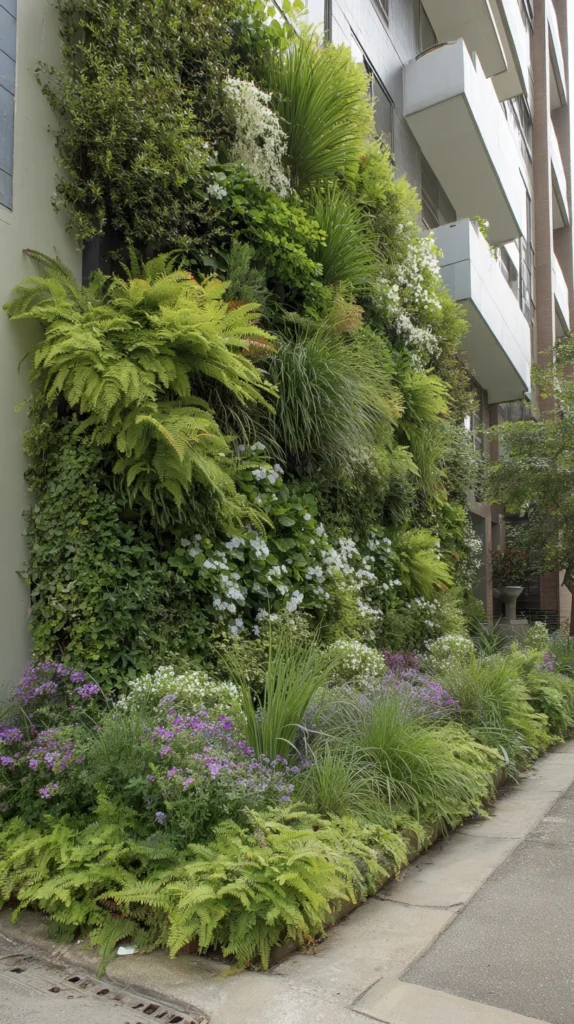
A wall-mounted planting system creating multiple planting layers on a vertical surface creates a layered landscape in the most space-efficient format available — making layered planting possible in even the most spatially constrained urban garden. A lower layer of shade-tolerant ferns and trailing plants, a middle layer of flowering perennials and herbs, and an upper layer of climbing plants creates a vertical garden of considerable plant diversity occupying no ground area whatsoever.
Pro Tip: Install an automatic drip irrigation system within a wall-mounted vertical garden before planting. Accessing the plumbing of a fully planted vertical garden for retrofitting is practically impossible without damaging established plant root systems. A properly designed drip irrigation system eliminates the daily irrigation that an unirrigated vertical garden demands and maintains consistent moisture through the most challenging summer conditions.
11. Coastal Garden Layering
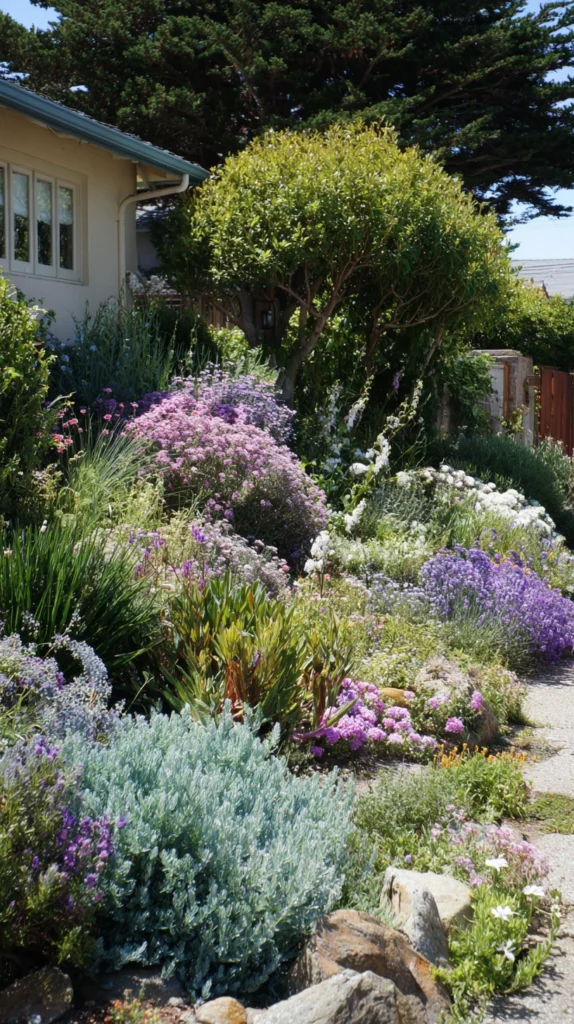
Tall wind-tolerant shrubs and trees creating a windbreak canopy, salt-tolerant perennials filling the middle zone, and low spreading coastal ground covers completing the base creates a garden of extraordinary beauty and genuine resilience.
Escallonia, tamarisk, and sea buckthorn at the windbreak canopy, sea thrift and sea lavender in the middle layer, and creeping phlox and coastal sedums at the base create the most appropriate and most visually beautiful coastal layered planting.
Pro Tip: Establish the windbreak canopy layer before any other planting in a coastal garden — allowing it to develop sufficient height and density to provide genuine wind and salt spray protection before the more vulnerable middle and base layers are introduced. A windbreak still developing when interior layers are planted creates chronic wind damage that undermines the establishment of the complete layered composition.
12. Water Garden Marginal Layering
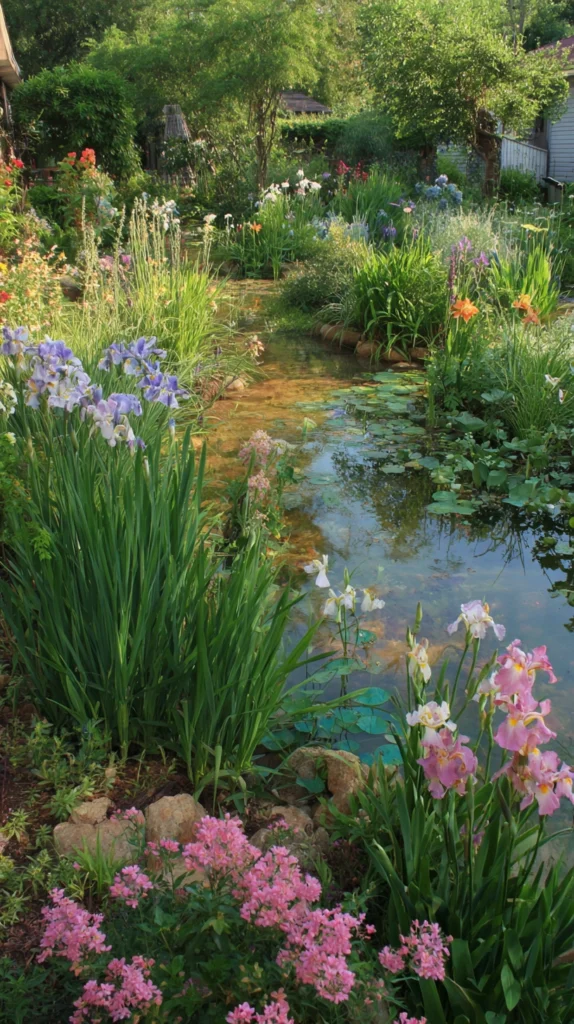
Tall emergent plants at the water’s edge, medium-height marginal plants in the shallow water zone, and submerged aquatic plants below the surface creates a water feature of extraordinary ecological richness.
Tall iris, phragmites, and bulrush at the water margin, yellow flag and water mint in the shallow water zone, and water lily and oxygenating plants in the deeper water create the complete layered aquatic planting that supports maximum biodiversity and maintains water clarity throughout the growing season.
Pro Tip: Oxygenate the submerged layer with a combination of fast-growing oxygenating plants — hornwort, water starwort, and curly pondweed — planted at one plant per square metre of pond surface area. A well-oxygenated pond with sufficient submerged plant coverage maintains clear water without any mechanical filtration — the plants provide all the water quality management needed for a genuinely natural beautiful garden pond.
13. Fragrant Garden Layering
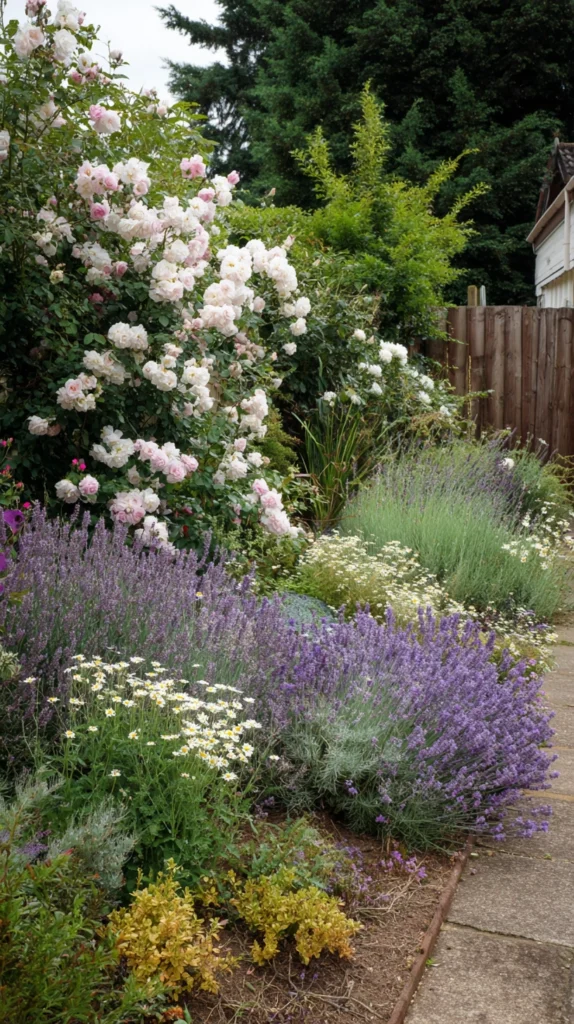
Tall scented trees and large flowering shrubs creating the upper fragrant layer, scented climbing plants filling the vertical space, fragrant perennials and herbs in the middle, and low spreading thymes and chamomile at the base creates a sensory garden experience of extraordinary pleasure. Position the fragrant layered garden adjacent to an outdoor seating area where the accumulated fragrances of multiple scented plant layers reach the seated visitor simultaneously.
Pro Tip: Choose scented plants that flower at different times of day for continuous fragrance interest throughout waking hours. Night-scented plants — Nicotiana and evening primrose — release their fragrance in the evening. Day-scented plants — lavender, roses, and herbs — are most intensely fragrant in the warmth of the afternoon. A well-designed fragrant layered garden has scent available from dawn to midnight throughout the flowering season.
14. Rain Garden Layering
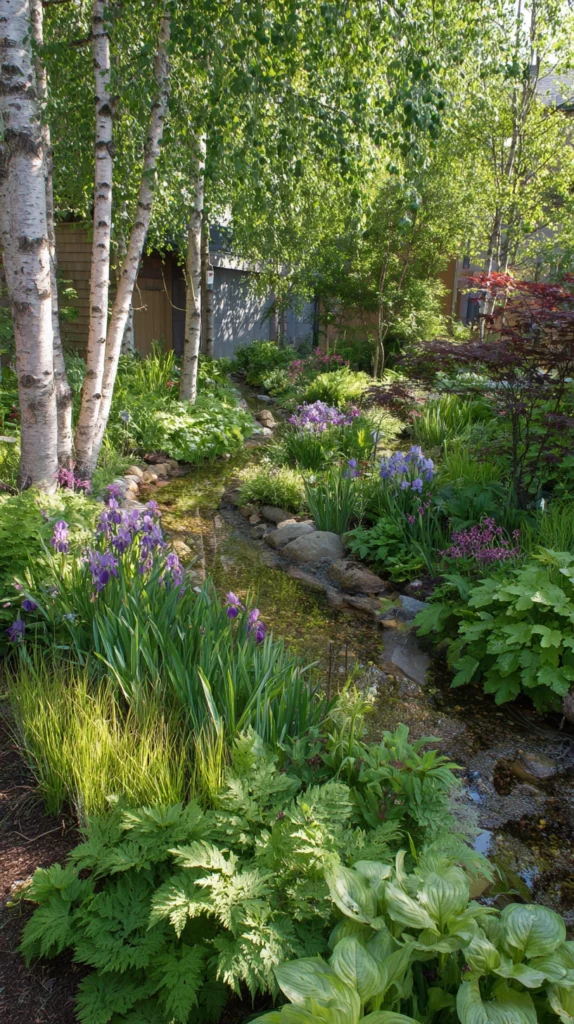
A shallow planted depression designed to capture surface water runoff layered with moisture-tolerant plants creates a functional landscape feature of genuine ecological value and considerable visual beauty.
Betula, cornus, and alder at the edges, iris, ligularia, and osmunda fern in the middle zone, and creeping jenny and native sedges at the lowest wettest central zone create the most ecologically appropriate and most visually beautiful rain garden plant community.
Pro Tip: Design the rain garden as a shallow bowl with a maximum depth of 15 to 20 centimetres at its lowest point. A shallow bowl drains completely within 24 to 48 hours of rainfall — returning to dry conditions that the edge plants require between rain events. A deeper depression retains standing water for longer periods — creating waterlogged conditions that only the most moisture-tolerant plants can survive.
15. Four-Season Layered Landscape
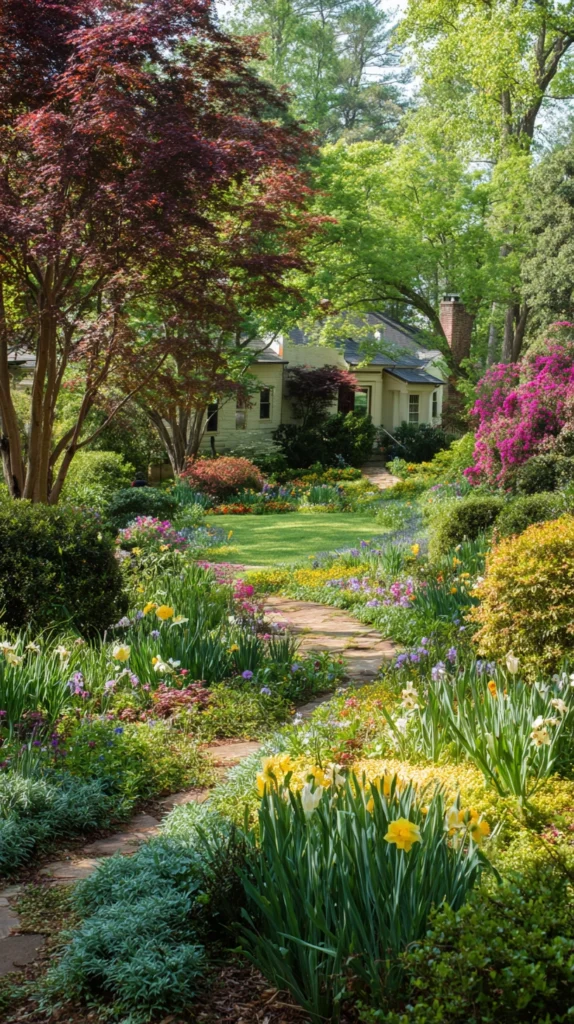
A four-season layered landscape designed with conscious attention to each layer’s visual contribution in each season — spring bulbs in the base, summer perennials in the middle, autumn-fruiting shrubs in the understory, and winter-structural trees in the canopy — creates a garden of continuous year-round beauty that single-season planting schemes entirely fail to achieve.
Pro Tip: Include at least one plant of genuine winter interest at every layer level — a paper-bark maple in the canopy, a witch hazel in the understory, a hellebore in the middle layer, and a snowdrop in the base. A layered landscape that is genuinely beautiful in February is the most valuable and most sophisticated garden design achievement available.
Layer Deeply and Plant for Time
A layered landscape is not a project — it is a process. The most beautiful layered gardens were not installed in a single season but developed and deepened over years of observation, addition, and occasional editing. Plant the first layer with intention. Allow the subsequent layers to develop with patience. And trust the process of natural layering to produce, over time, a garden of depth and beauty that no amount of annual replanting can ever approach.