15 Kitchen Wall Styling Ideas Beyond Cabinets and Shelves
Kitchen walls are often treated as purely functional zones, filled edge to edge with cabinets or left completely bare once storage needs are met. But when you look at the kitchen as a lived-in, expressive space rather than just a workroom, those walls become an opportunity. Styling kitchen walls beyond cabinets and shelves allows personality, texture, and creativity to come forward without sacrificing practicality.
These ideas focus on visual interest, atmosphere, and subtle function rather than traditional storage.
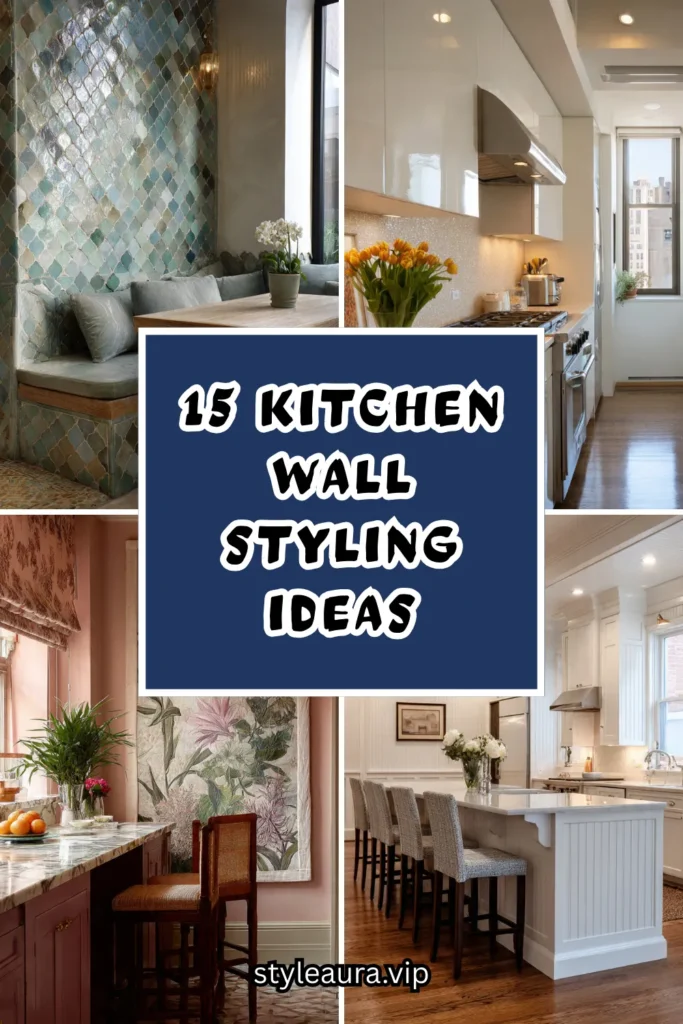
They’re especially useful for kitchens that already feel heavy with cabinetry, small kitchens that need visual breathing room, or modern homes that want character without clutter.
1. Statement Wall Panels That Add Texture, Not Storage
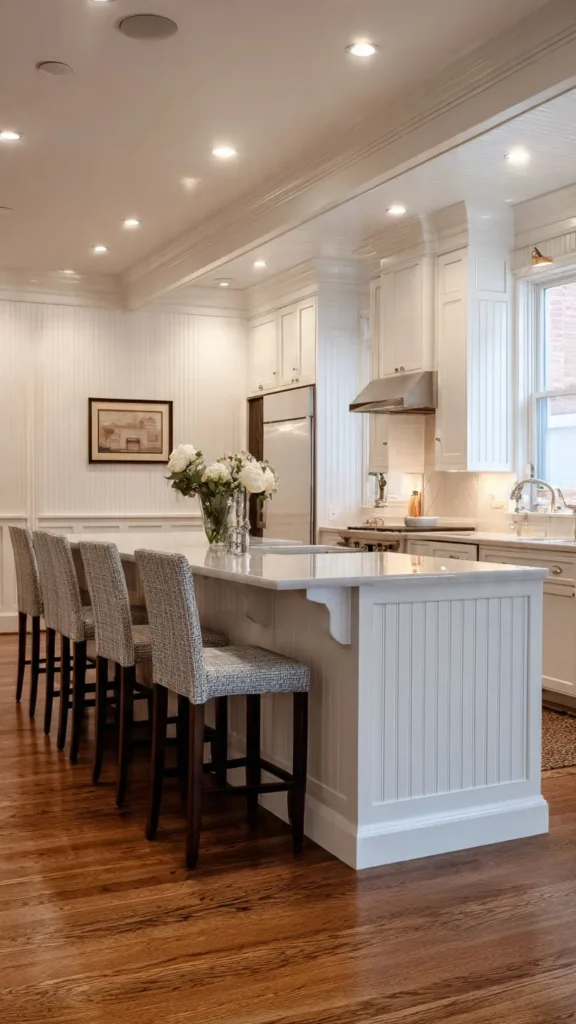
Wall paneling can completely transform a kitchen without adding a single shelf or cabinet. Materials like fluted wood, reeded panels, beadboard, or micro-slatted designs bring depth and architectural interest to blank walls.
Unlike cabinets, panels don’t visually close in the space. They create rhythm and shadow, especially when paired with directional lighting. In kitchens with minimal upper storage, paneling adds richness without competing with functionality.
Painted panels can blend seamlessly into the wall, while natural wood panels bring warmth and contrast to stone or tile-heavy kitchens.
2. Oversized Art as a Kitchen Focal Point
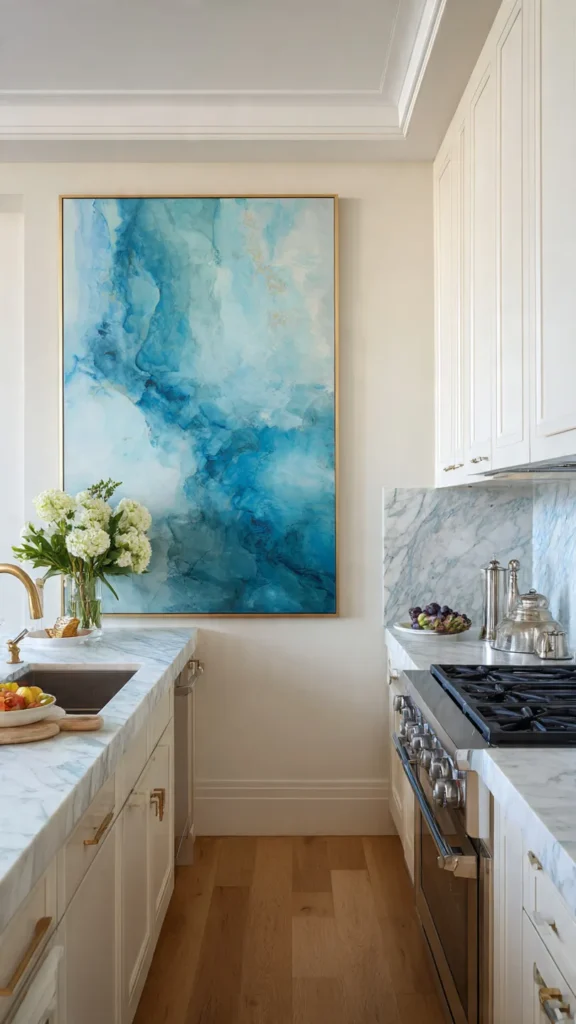
Large-scale art isn’t just for living rooms. A single oversized artwork on a kitchen wall can anchor the entire space and instantly elevate it beyond a purely functional room.
Choose art that can handle humidity and temperature shifts, such as framed prints behind glass, sealed canvases, or metal artwork. Abstracts, food-inspired illustrations, or soft landscapes work particularly well.
One bold piece is often more impactful than multiple small ones, keeping the wall clean, intentional, and visually calm.
3. Integrated Wall Niches With Architectural Presence
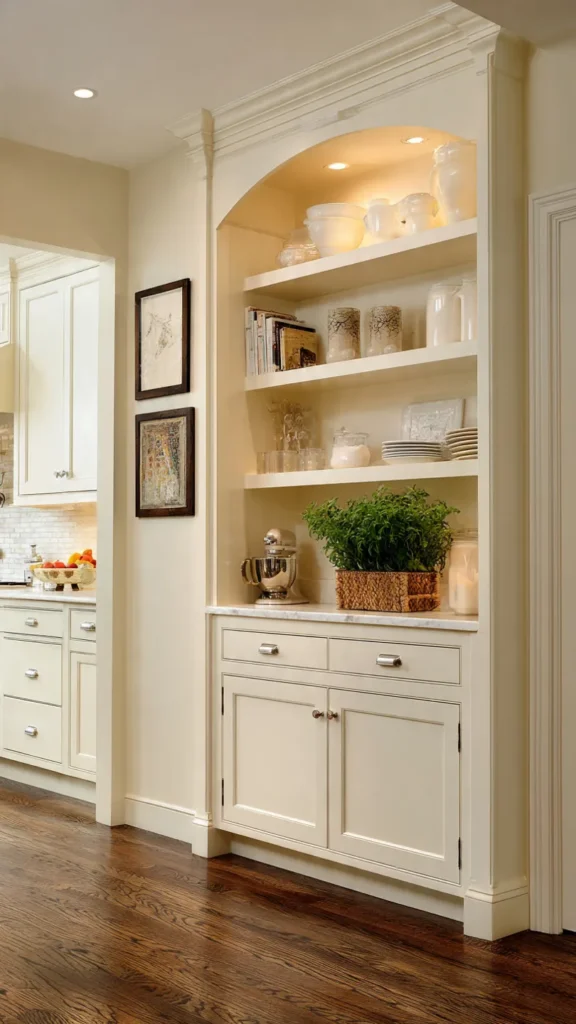
Instead of shelves that project outward, recessed wall niches offer depth without bulk. These built-in cutouts feel architectural rather than decorative and are ideal for displaying a few curated objects.
Niches can be styled with pottery, cookbooks laid flat, or sculptural kitchen tools. Because they’re recessed, they don’t interrupt sightlines or make kitchens feel crowded.
Adding a contrasting interior finish or subtle lighting inside the niche gives the wall a gallery-like quality.
4. Textured Plaster or Limewash Walls
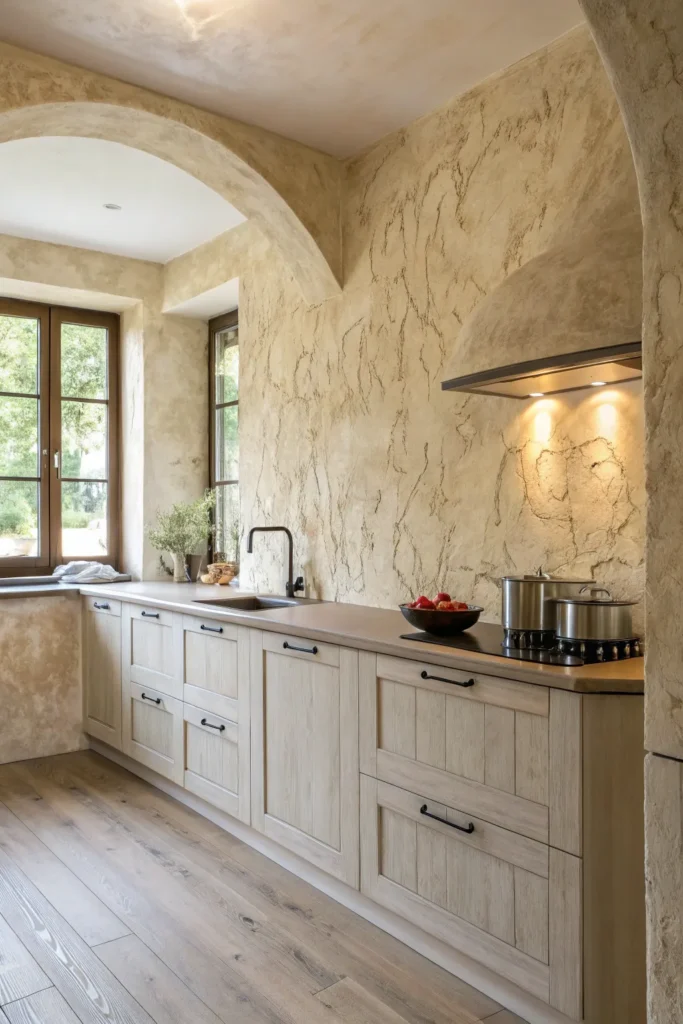
Walls themselves can be the statement. Textured finishes like limewash, Venetian plaster, or clay-based coatings add movement and softness without adding objects.
These finishes catch light differently throughout the day, giving kitchens a dynamic, lived-in feel. They’re especially effective in neutral kitchens where cabinetry and counters are understated.
A textured wall brings depth while remaining extremely practical, as there’s nothing to dust, rearrange, or clean around.
5. Wall-Mounted Sculptural Lighting
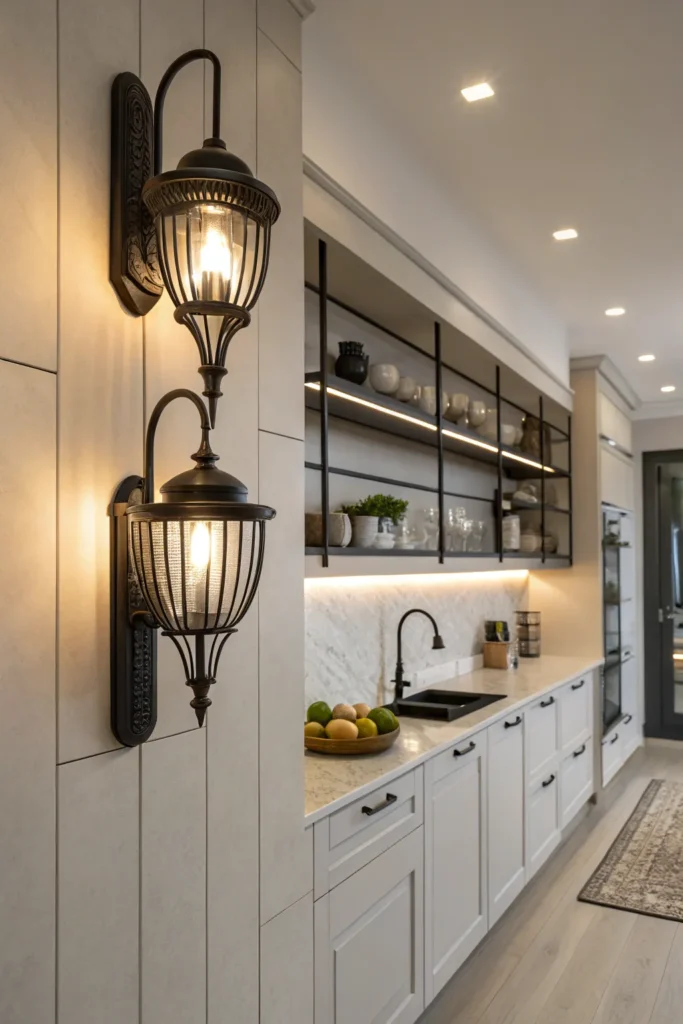
Lighting is one of the most overlooked wall-styling tools in kitchens. Sculptural sconces or articulated wall lamps can act as functional art while improving task lighting.
Placed above prep zones, dining corners, or blank walls, lighting fixtures add form, scale, and personality. They draw the eye upward and break up flat wall expanses without storage elements.
Choosing warm-toned lighting enhances comfort and makes the kitchen feel more welcoming and layered.
6. Handcrafted Tile Feature Walls
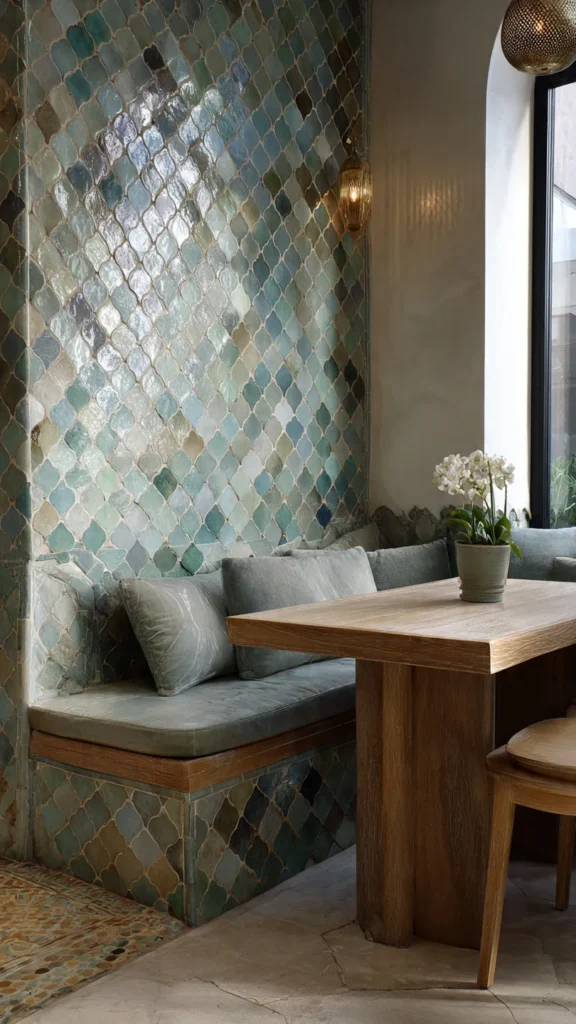
Tile doesn’t have to stop at the backsplash. Extending tile up a wall or across a single feature zone creates a tactile, artistic surface that’s both durable and expressive.
Handmade tiles, zellige, or irregular ceramics add organic variation that feels intentional rather than decorative. This works beautifully behind dining nooks or on walls adjacent to cooking zones.
The wall becomes the feature, eliminating the need for shelves or accessories entirely.
7. Vintage or Architectural Salvage Pieces
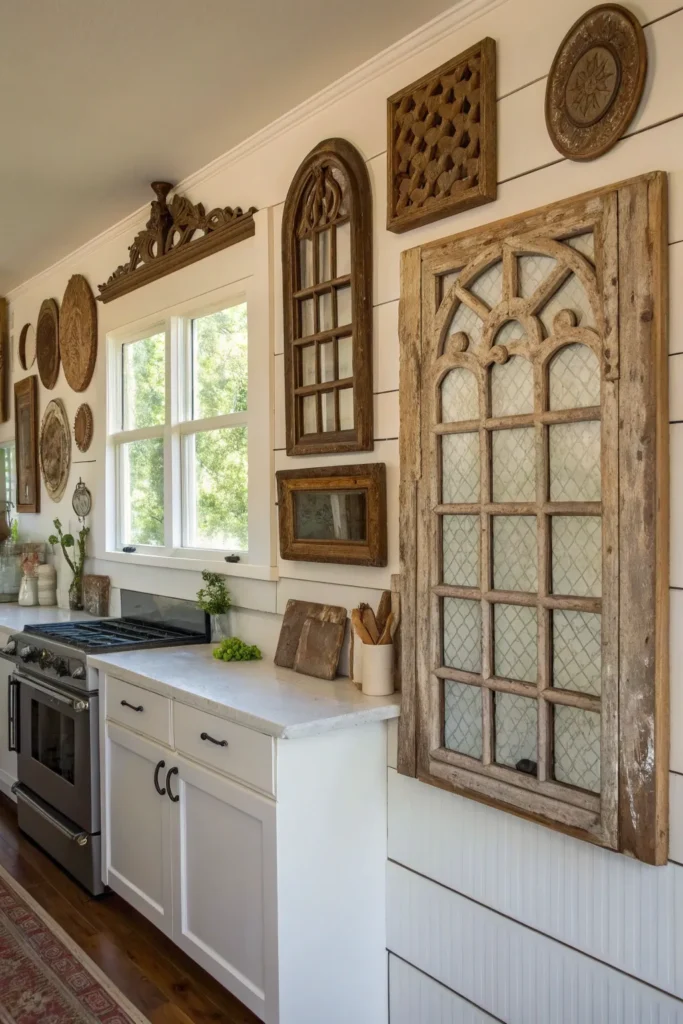
Incorporating architectural salvage like antique window frames, carved panels, or old signage brings history and soul into the kitchen.
Mounted flat against the wall, these pieces add character without interfering with daily use. They work particularly well in rustic, eclectic, or farmhouse-inspired kitchens.
Because these items are static and sturdy, they’re more practical than decorative shelves while offering far more personality.
8. Painted Wall Murals or Graphic Blocks
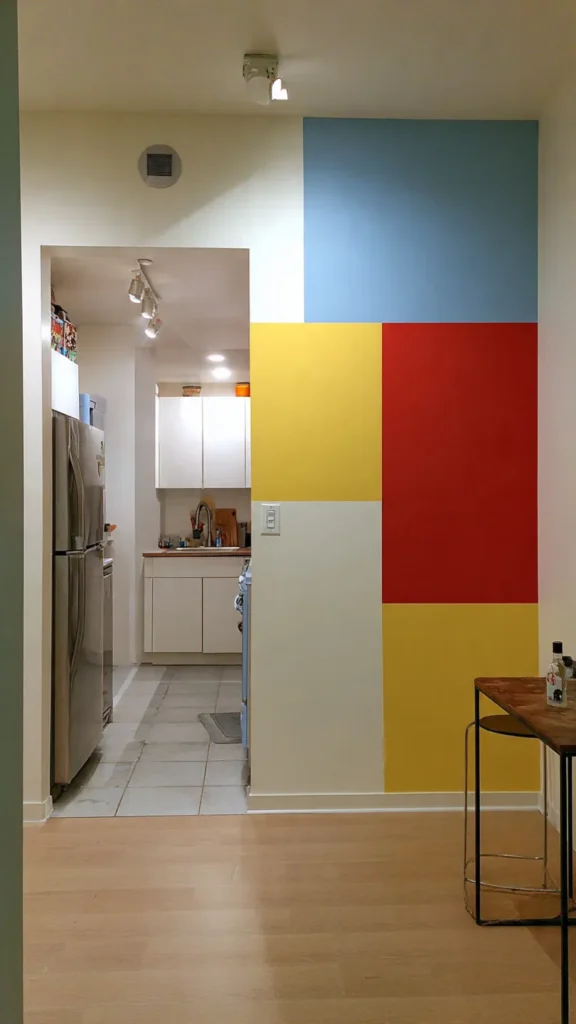
A painted mural or graphic color block can turn a kitchen wall into a work of art. This could be a soft abstract shape, a color gradient, or a hand-painted motif that complements the kitchen’s palette.
Murals work especially well in modern or creative homes where cabinetry is minimal and walls need visual grounding. They add style without taking up any physical space.
This approach allows full creative freedom while keeping walls easy to maintain and clutter-free.
9. Vertical Wood Accents or Battens
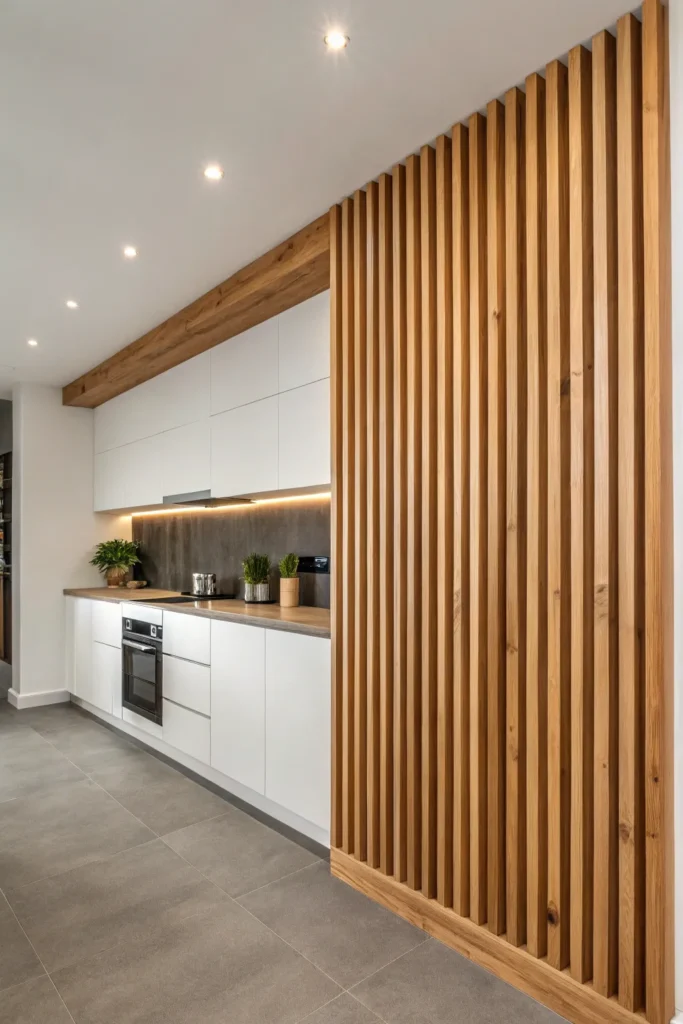
Vertical wood battens or slim wood strips add height and rhythm to kitchen walls, making ceilings feel taller and spaces more architectural.
These accents work well behind dining areas or along transition walls where cabinets would feel too heavy. Painted battens can feel modern and subtle, while natural wood introduces warmth.
Because the design is flat and structured, it enhances walls without impacting kitchen workflow.
10. Framed Fabric or Textiles
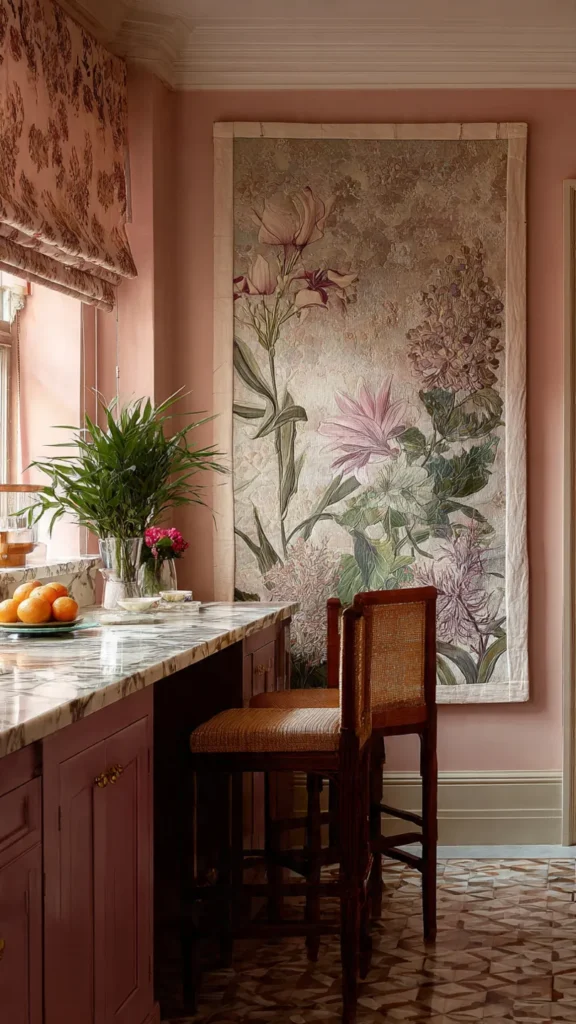
Fabric isn’t an obvious choice for kitchens, but when framed properly, it becomes a beautiful wall feature. Think vintage grain sacks, linen prints, or textile art sealed behind glass.
This introduces softness and pattern in a controlled, practical way. Framing protects the fabric from moisture and stains while keeping the look refined.
Textiles work especially well in kitchens that feel cold or overly modern and need warmth.
11. Chalk or Mineral Paint Feature Walls
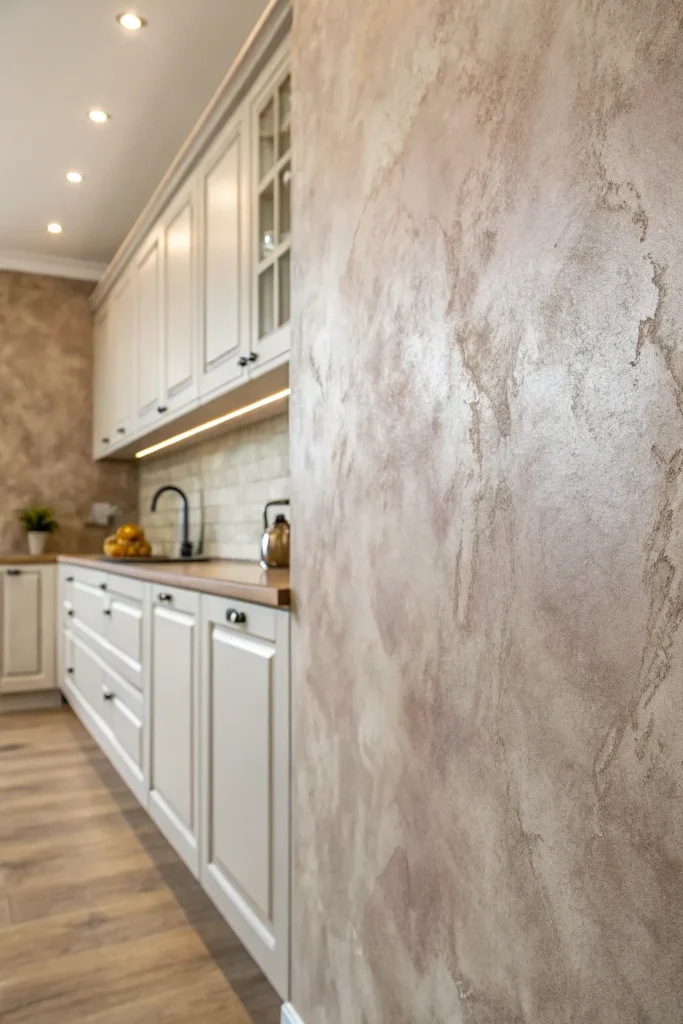
A chalk-painted or mineral-painted wall adds both texture and subtle function without becoming a chalkboard cliché. These finishes absorb light slightly, creating depth and softness.
In muted tones, they make walls feel tactile and grounded. In darker shades, they add drama without visual clutter.
This type of wall works as a backdrop that enhances everything else in the kitchen without competing for attention.
12. Gallery-Style Rail Systems
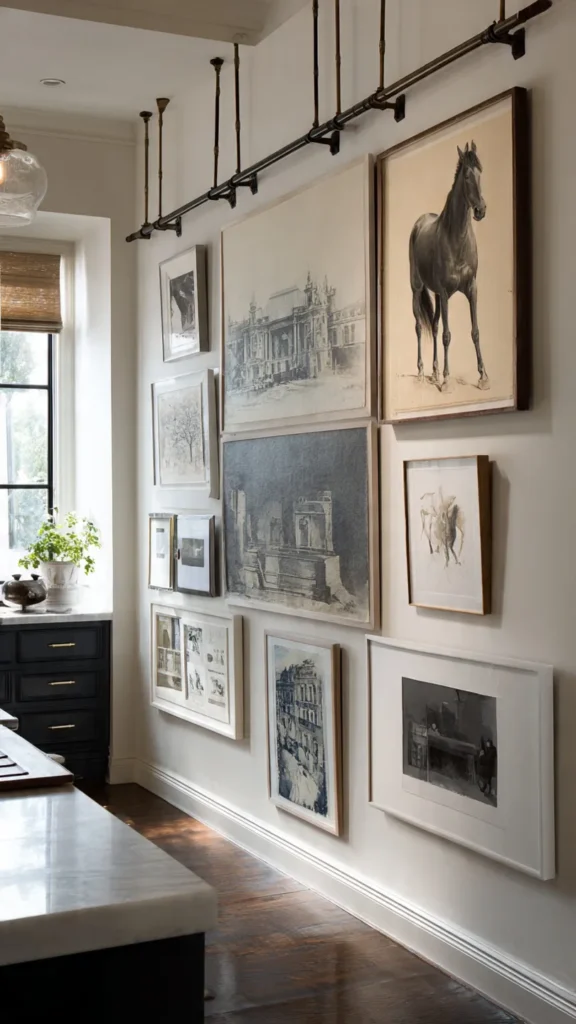
Instead of shelves, a slim gallery rail mounted high on the wall allows art, boards, or framed prints to be swapped easily. This system adds flexibility without bulk.
The rail becomes a design feature itself, especially when paired with oversized pieces leaning casually rather than hung traditionally.
It’s an excellent option for kitchens that evolve over time or homeowners who enjoy rotating visuals without permanent installations.
13. Large Mirrors to Expand Visual Space
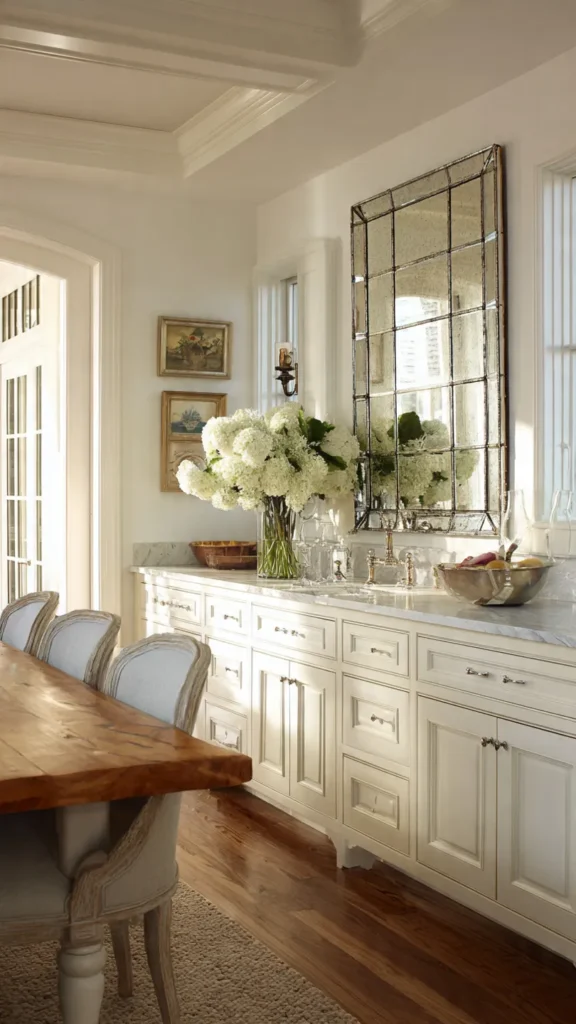
Mirrors aren’t just for entryways and bathrooms. A well-placed mirror on a kitchen wall can reflect light, amplify space, and add elegance.
Antique or softly aged mirrors work best, as they add character rather than a stark reflective surface. Positioned opposite a window or light source, mirrors make kitchens feel brighter and more open.
They also reduce the need for decorative objects by becoming the focal point themselves.
14. Monochrome Wall Treatments for Quiet Drama
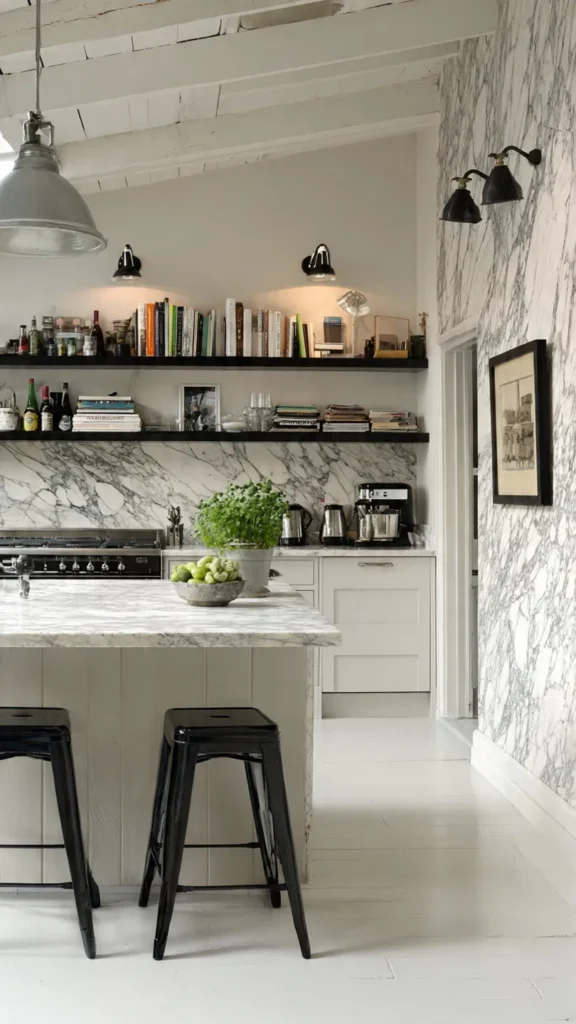
Using a single color across walls, trim, and architectural features creates a cocooning effect that feels intentional and high-end.
This approach works beautifully in kitchens where cabinetry already dominates visually. By simplifying the wall color story, the space feels calmer and more cohesive.
Monochrome walls allow texture, light, and material to take center stage without adding clutter.
15. Let the Wall Be Empty on Purpose
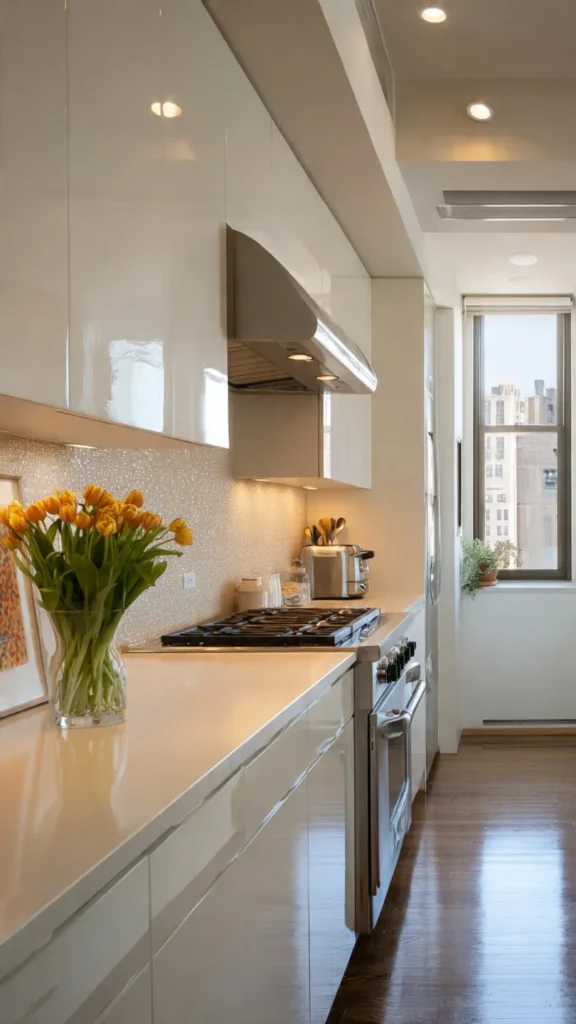
Sometimes the most creative styling choice is restraint. A deliberately empty wall can create balance, highlight architecture, and give the eye a place to rest.
In kitchens filled with cabinets, appliances, and surfaces, one clean wall can feel refreshing and modern. It allows light to bounce freely and keeps the space from feeling overdesigned.
Intentional emptiness is not a lack of style. It’s a confident design decision that prioritizes function and clarity.
Kitchen wall styling beyond cabinets and shelves is about rethinking what walls are allowed to be. They don’t have to store things to be useful, and they don’t have to be filled to feel finished. Through texture, light, art, material, and thoughtful restraint, kitchen walls can add depth and personality while keeping the space practical, open, and deeply livable.