15 Kid-Friendly Living Room Decor Ideas for Stylish and Practical Spaces
Creating a living room that accommodates both adult aesthetics and the realities of family life with children can feel like an impossible balancing act. You want a space that looks sophisticated and welcoming for guests, but also one that can withstand spills, scratches, and the general chaos that comes with raising kids.

The good news is that kid-friendly doesn’t have to mean sacrificing style. With thoughtful choices in furniture, materials, and layout, you can design a living room that’s both beautiful and functional for the whole family. These fifteen ideas will help you create a space that works for everyone while maintaining the aesthetic you love.
1. Choose Performance Fabrics

Performance fabrics have revolutionized family-friendly decorating by offering materials that look luxurious but resist stains, spills, and wear far better than traditional upholstery. Fabrics treated with stain-resistant technology or those made from synthetic fibers like microfiber can handle juice spills, muddy hands, and sticky fingers while still looking elegant.
Many high-end furniture brands now offer performance fabrics in sophisticated patterns and colors that don’t scream “kid-proof.” These fabrics can be cleaned easily with soap and water, making maintenance simple when accidents inevitably happen.
2. Opt for Slipcovered Furniture

Slipcover sofas and chairs offer the ultimate in practicality for families with young children. When spills occur or fabrics become worn, you can simply remove the covers and wash them rather than attempting to spot-clean or calling professional upholstery cleaners.
White or light-colored slipcovered furniture might seem counterintuitive with kids, but because the covers are removable and washable, they can actually be more practical than darker fabrics that show every crumb. The casual, relaxed aesthetic of slipcovered pieces also creates a welcoming atmosphere where kids feel comfortable and parents don’t stress about perfection.
3. Create a Designated Play Zone
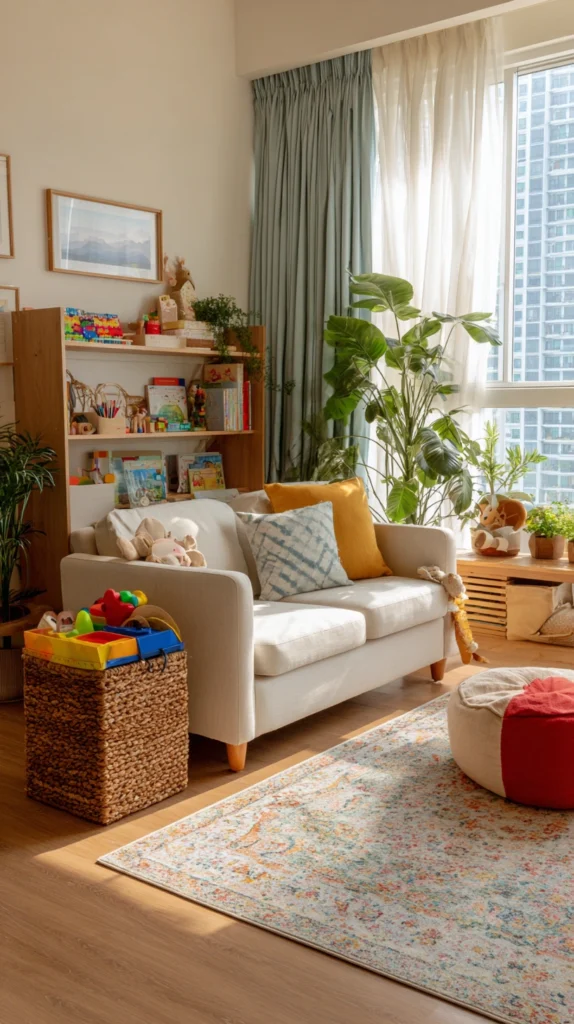
Rather than trying to keep toys completely out of your living room, designate a specific area for play and contain it with intentional design choices. Use a large, washable rug to define the play space, and incorporate storage solutions like attractive baskets, ottomans with hidden storage, or a low bookshelf that doubles as a toy library.
When play items have a designated home within the living room, kids learn to respect the space while parents maintain some control over the spread of toys. This approach acknowledges that the living room is a family space while still maintaining boundaries.
4. Incorporate Washable Rugs
Area rugs add warmth, define spaces, and absorb sound, but they’re also magnets for spills and stains in homes with children. Investing in washable rugs or indoor-outdoor rugs that can be hosed down outside solves this problem beautifully.
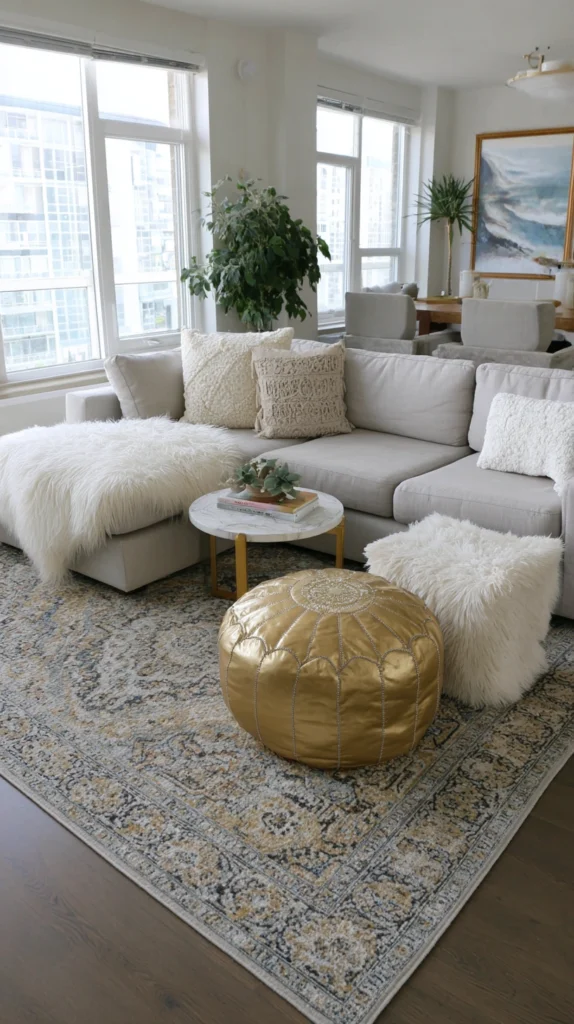
Many companies now make machine-washable rugs in stylish patterns and neutral colors that work with adult design sensibilities. Alternatively, layering smaller washable rugs over a larger jute or sisal base rug allows you to remove and clean just the affected area when accidents happen.
5. Choose Round or Oval Coffee Tables

Sharp corners on coffee tables pose safety risks for toddlers learning to walk and active children racing through the house. Round or oval coffee tables eliminate this concern while often providing better traffic flow in family rooms.
Upholstered ottoman-style coffee tables offer an even softer option and can double as extra seating when friends visit. If you love the look of a traditional rectangular coffee table, consider models with rounded corners or add corner protectors as a safety measure during the years when falls are most common.
6. Select Durable, Easy-Clean Flooring

Flooring choices significantly impact how well your living room functions with kids. Hardwood floors are classic and timeless, but luxury vinyl plank flooring offers a nearly identical look while being completely waterproof and more scratch-resistant. Sealed concrete or tile floors work well in modern spaces and clean up effortlessly.
If you prefer carpet, choose low-pile options in medium tones or patterns that camouflage stains, and ensure it has stain-resistant treatment. Whatever you choose, prioritize materials that can handle heavy traffic and frequent cleaning without showing excessive wear.
7. Use Storage Ottomans and Benches
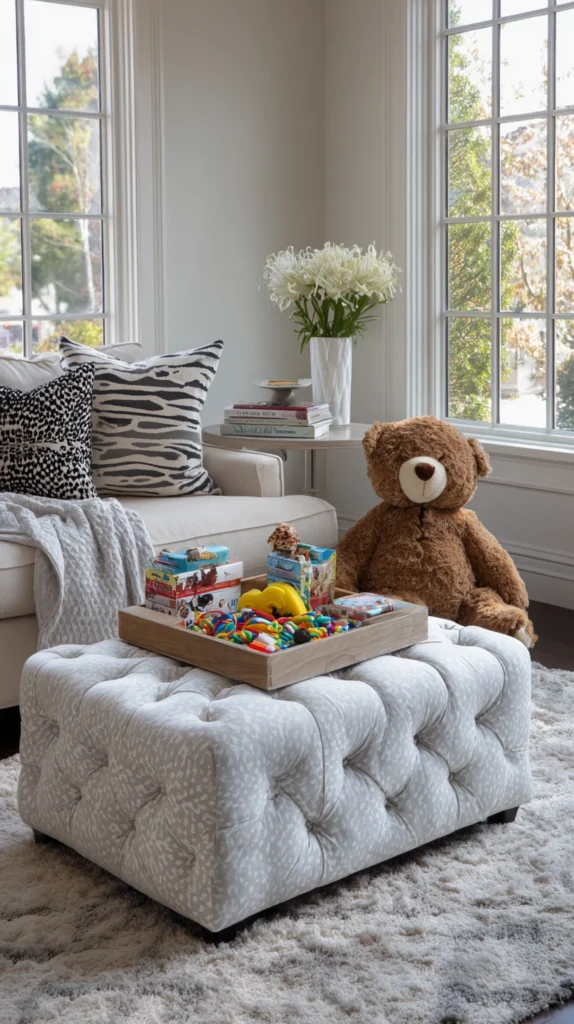
Furniture that serves multiple purposes is essential in kid-friendly spaces. Storage ottomans and benches provide seating, can function as coffee tables when topped with a tray, and hide toys, blankets, or games inside. Place them strategically around the room to encourage quick cleanups before guests arrive.
The concealed storage maintains a tidy appearance while keeping frequently used items accessible. Choose ottomans with removable lids rather than hinged tops for easier access and to prevent pinched fingers.
8. Hang Artwork Safely and Strategically
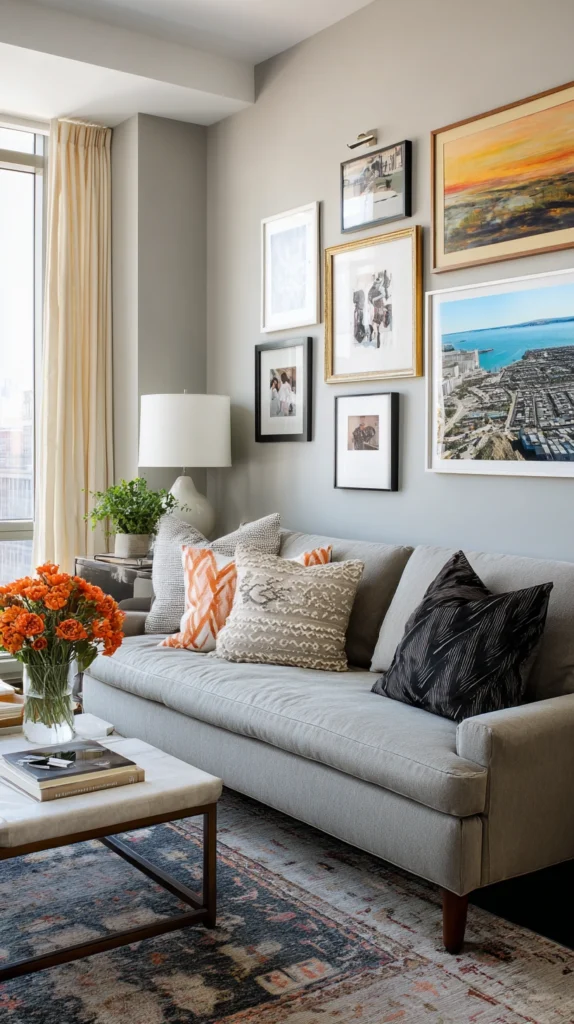
Displaying art in a home with children requires some strategic thinking. Hang pieces securely with appropriate hardware to prevent them from falling if bumped. Consider positioning valuable or fragile art higher on walls, above the reach of curious hands and thrown toys.
Gallery walls can incorporate a mix of meaningful family photos and affordable prints that won’t devastate you if they’re damaged. Frame children’s artwork alongside professional pieces to create a personal, collected look that celebrates your family while maintaining style.
9. Embrace Open Shelving with Intention

Open shelving can work beautifully in kid-friendly living rooms when thoughtfully arranged. Place decorative items and breakables on higher shelves beyond children’s reach, while lower shelves can hold books, toys, and items kids are allowed to access independently. Use attractive baskets and bins on lower shelves to contain smaller items while maintaining a cohesive look.
This approach teaches children which items are hands-off while giving them ownership over their belongings in shared spaces. Anchoring shelving units securely to walls is essential for safety.
10. Choose Leather or Faux Leather Upholstery

Leather furniture is surprisingly kid-friendly because it wipes clean easily and develops a characterful patina over time rather than looking ruined by wear. Spills sit on the surface rather than soaking in, giving you time to clean them up before staining occurs.
High-quality faux leather offers similar benefits at a lower price point and with vegan-friendly materials. Distressed or vintage-look leather naturally camouflages the scratches and marks that come with family life. While it may not be suitable for homes with infants or toddlers who might scratch it with toys, leather becomes increasingly practical as children grow.
11. Incorporate Built-In Storage Solutions
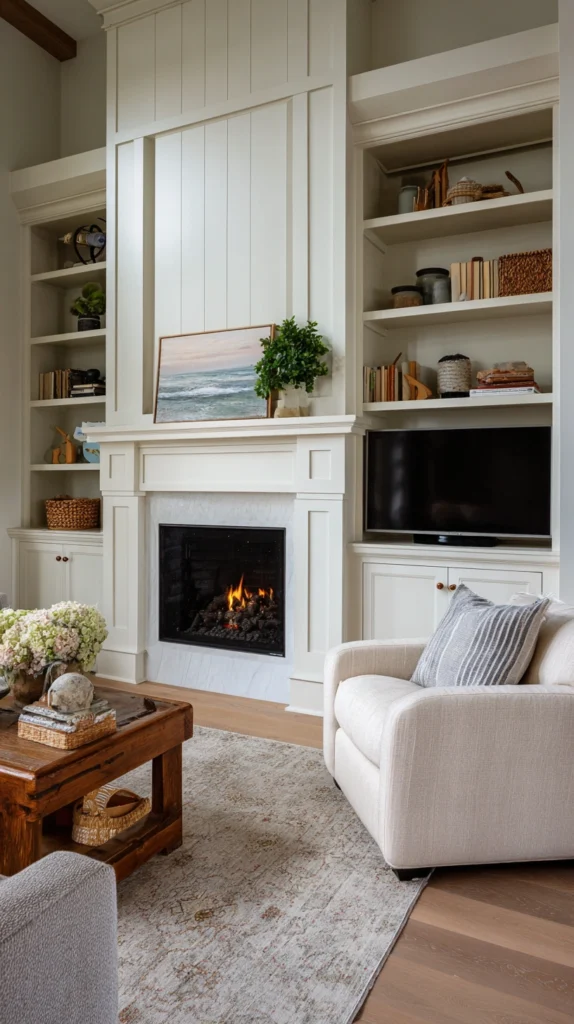
Built-in cabinets, window seats with storage, or custom shelving units maximize space while keeping clutter contained. These permanent fixtures add value to your home and can be designed to match your aesthetic perfectly while serving practical family needs.
Built-ins flanking a fireplace or television can house toys, games, books, and media equipment behind closed doors, maintaining a clean appearance even when the contents are jumbled. The investment in custom storage pays dividends in daily functionality and long-term home value.
12. Use Slipcovers on Throw Pillows
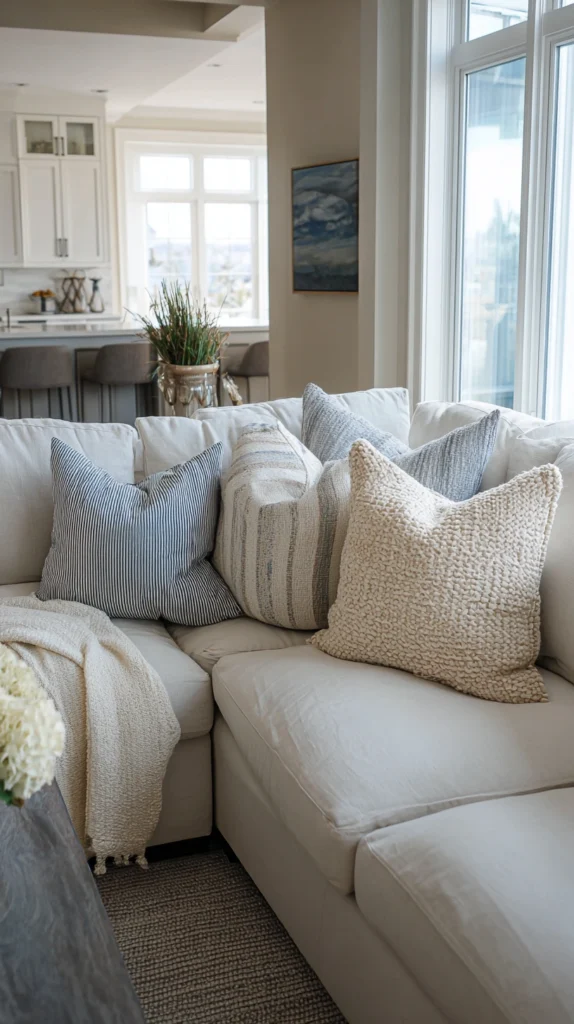
Decorative throw pillows add color, pattern, and comfort to living rooms, but they’re also vulnerable to spills and sticky hands. Using pillows with removable, washable covers allows you to maintain a styled look without worrying about permanent damage. Keep pillow covers in neutral or patterned fabrics that hide minor stains, and wash them regularly along with other household linens. Having extra pillow covers in different colors or patterns lets you refresh your room’s look seasonally while always having clean options available.
13. Create a Family Command Center
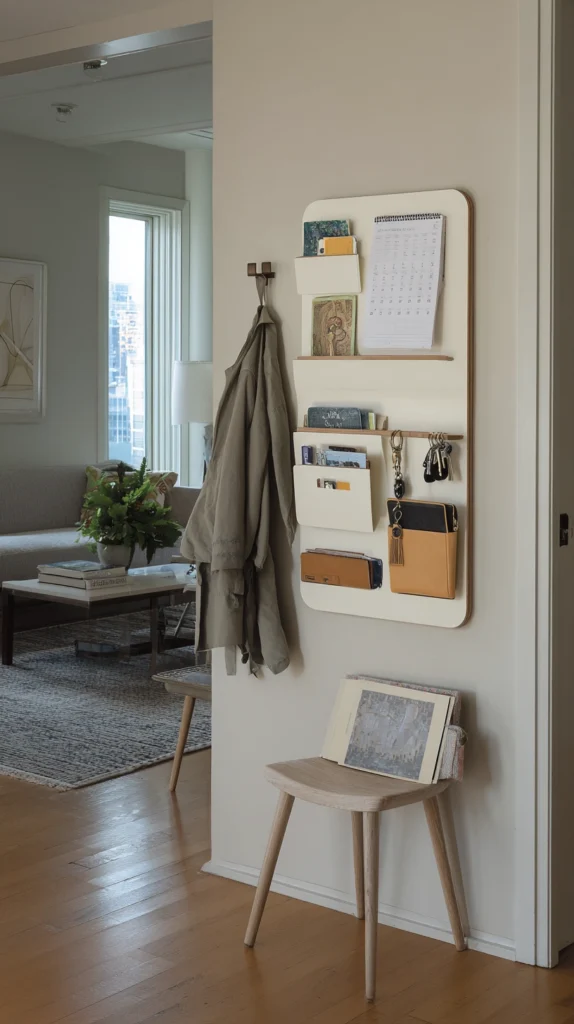
Incorporating a small command center into your living room design helps manage the papers, schedules, and daily items that accumulate with children. A dedicated spot for mail, school papers, calendars, and keys prevents these items from spreading across coffee tables and counters.
This might be as simple as a decorative wall-mounted organizer or as elaborate as a built-in desk area. When family logistics have a designated place, the rest of your living room can remain a relaxing, clutter-free zone.
14. Install Dimmable Lighting
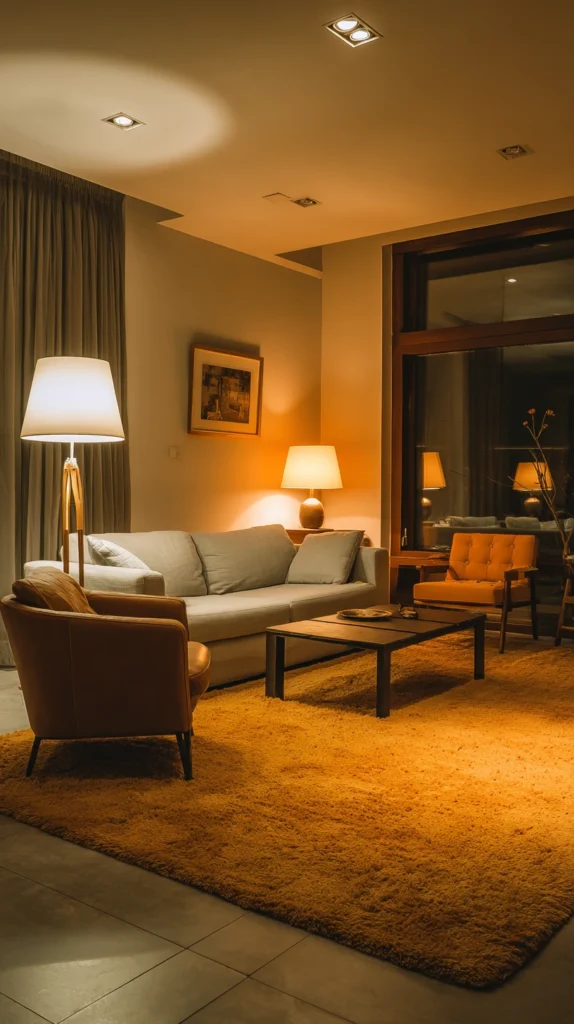
Lighting dramatically affects how a room functions throughout the day and evening. Dimmable overhead lights allow you to create bright, energetic lighting for active play during the day and softer, calming ambiance for evening movie time or wind-down before bed.
Layer in table lamps, floor lamps, and wall sconces to provide flexibility in lighting different zones of the room. Good lighting makes the space functional for various activities while contributing to the overall atmosphere and mood you want to create.
15. Choose Dark or Patterned Walls
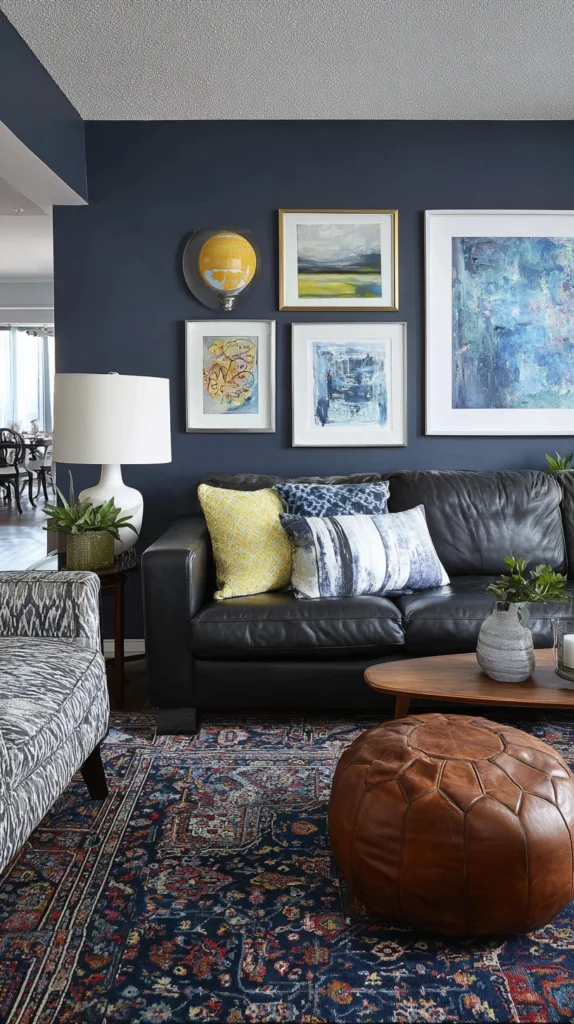
While light, neutral walls are a popular choice, darker paint colors or wallpaper with patterns can actually be more forgiving in homes with children. Smudges, fingerprints, and minor marks show dramatically on white or cream walls but disappear into darker or busier surfaces.
Navy, charcoal, forest green, or patterned wallpaper creates a sophisticated backdrop while hiding the inevitable wear that comes with family life. These bolder choices also add personality and style, making your living room feel intentional and designed rather than playing it safe.
Balancing Style and Function
The key to successful kid-friendly living room design is recognizing that family-friendly and stylish are not mutually exclusive concepts. By selecting durable materials, incorporating smart storage, and making intentional design choices, you can create a space that serves your family’s needs while reflecting your personal aesthetic.
The most important consideration is creating a room where both adults and children feel comfortable, where life happens without constant stress about potential damage, and where memories are made without sacrificing the beauty and comfort you deserve in your home.