14 Japanese Zen Garden Ideas for Peaceful Outdoor Living
A Japanese zen garden is one of the most intentional and most quietly transformative outdoor spaces a property can contain. Rooted in centuries of Buddhist philosophy, Shinto sensibility, and the Japanese aesthetic principles of wabi-sabi and ma. the beauty of imperfection and the power of empty space. a zen garden does not simply look peaceful.
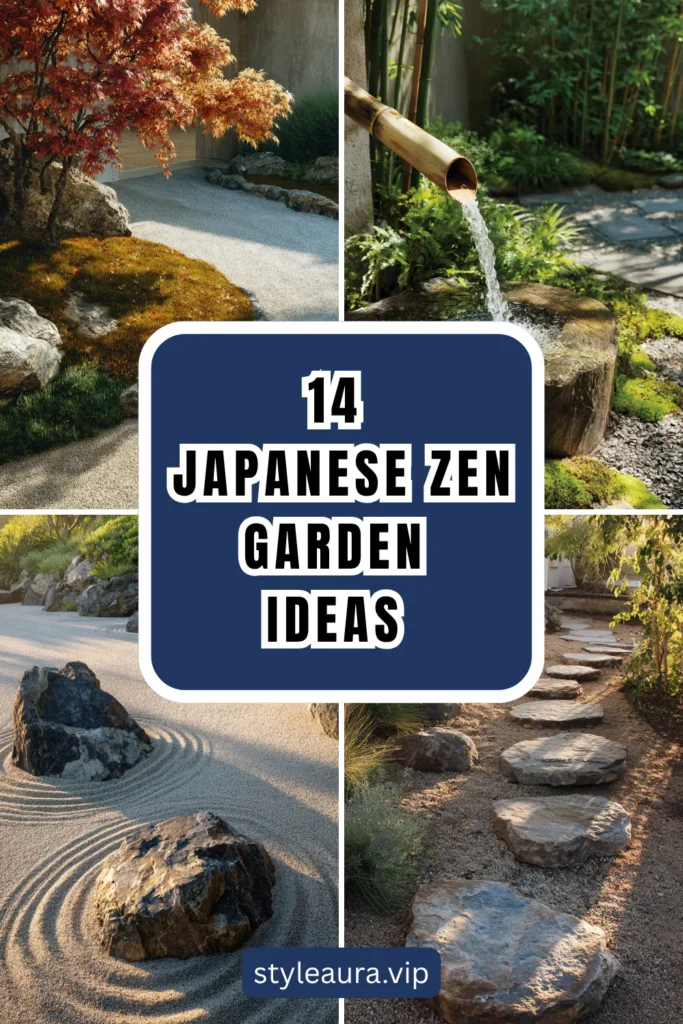
It creates the conditions for genuine peace in the person who inhabits it. Every element is chosen with purpose, every stone is placed with deliberate intention, and every raked line in the gravel carries meaning. Here are 14 Japanese zen garden ideas for peaceful outdoor living that are authentic, considered, and genuinely inspiring.
1. Raked Gravel as the Garden’s Foundation
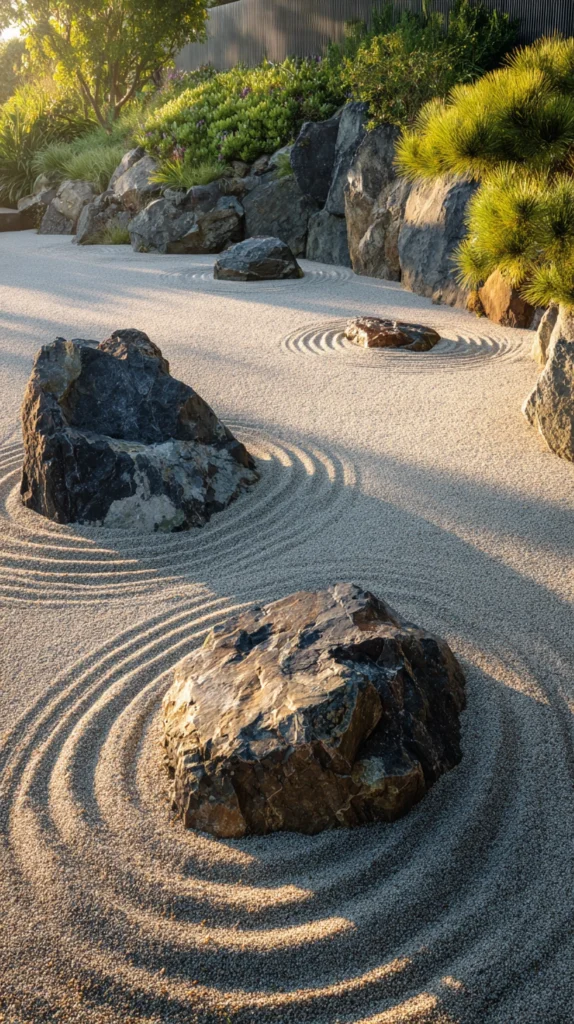
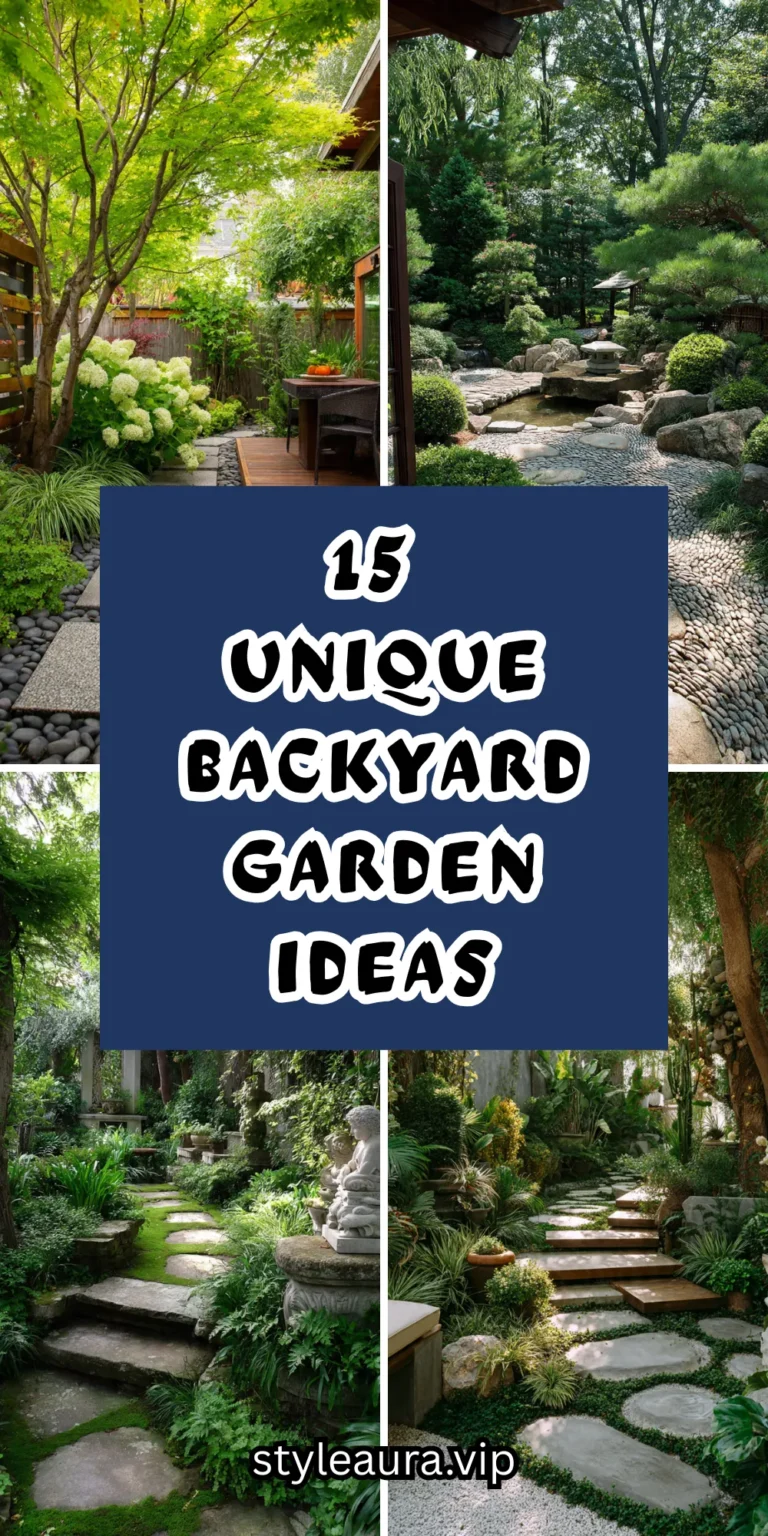
Raked gravel is the defining element of the Japanese zen garden and the one that most immediately communicates the aesthetic philosophy of the style to anyone who encounters it. The gravel represents water. a river, a lake, the ocean. and the raking patterns represent the movement of water across its surface.
Concentric circles around a placed rock represent ripples. parallel lines represent flowing current. a chevron pattern represents waves. Use fine grey or white granite gravel raked to a consistent depth of approximately 75mm over a weed-suppressing membrane for the most authentic and most practically manageable result.
2. Place Rocks with Intention and Restraint
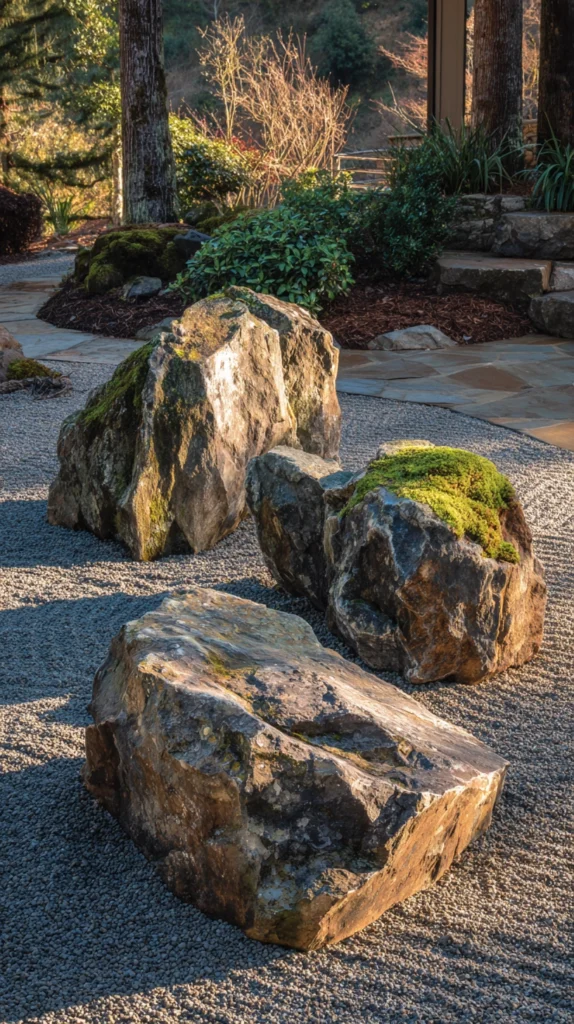
Rocks are the most important structural elements of a Japanese zen garden and their placement is the garden’s primary act of composition. In the zen tradition, rocks represent islands, mountains, and the permanent, unchanging qualities of the natural world. Place rocks in odd numbers. one, three, or five. as even numbers are considered inauspicious in Japanese garden philosophy.
Choose rocks with interesting natural forms, visible surface texture, and a sense of age and permanence. Position each rock so that its most beautiful face is visible and its base appears firmly embedded in the gravel rather than simply resting on the surface.
3. Include a Stone Lantern
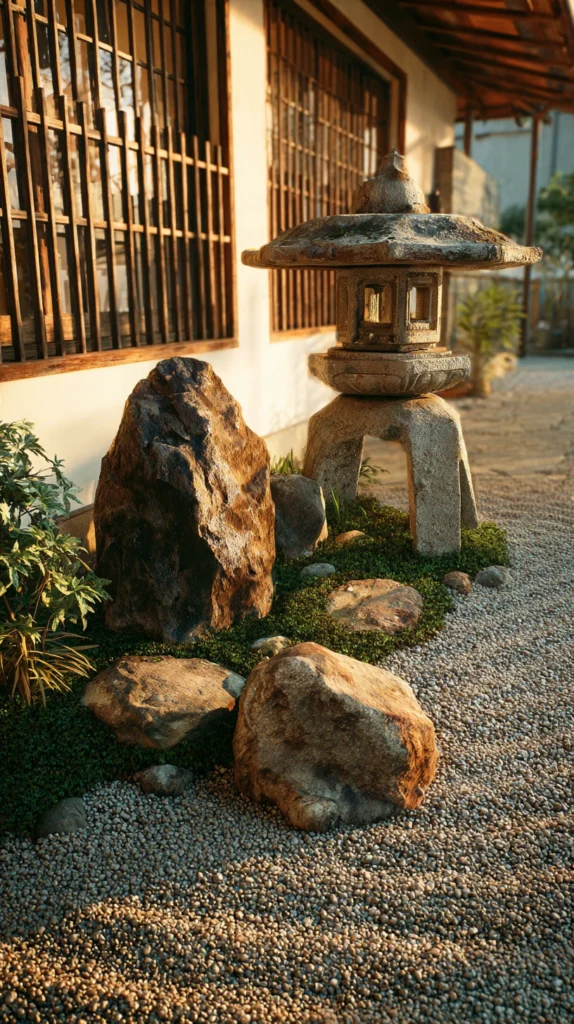
A traditional Japanese stone lantern. The kasuga or yukimi style, carved from granite or basalt in the characteristic tiered, pagoda-like form. is one of the most culturally resonant and most practically beautiful accessories available for a zen garden.
The stone lantern provides gentle illumination within the garden at night, creating a warm, meditative pool of light that makes the garden as beautiful after dark as it is in daylight. Position the lantern beside a water feature, at a path junction, or beside a significant rock placement for the most authentically Japanese result.
4. Add a Bamboo Water Feature
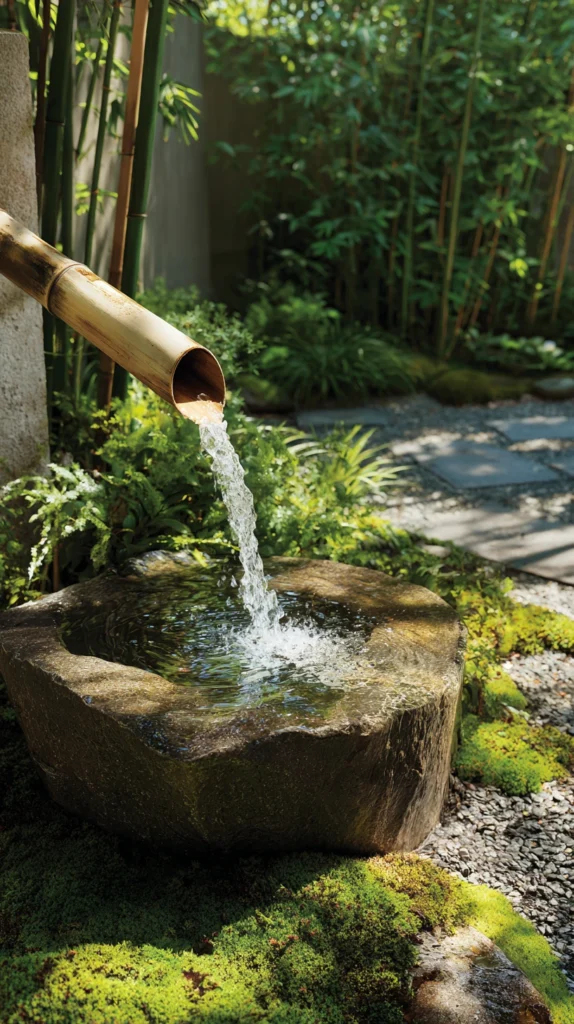
A shishi-odoshi. the traditional Japanese bamboo water feature in which water fills a pivoting bamboo tube that tips and empties with a rhythmic clacking sound against a stone. It is one of the most characterful and most sensory zen garden additions available.
The sound of the bamboo striking the stone at regular intervals is deeply calming and deeply Japanese. creating an acoustic rhythm that marks the passage of time in the garden with a gentleness and precision that no other water feature can replicate. Install beside a small recirculating pump system for a self-contained, low-maintenance version of this traditional feature.
5. Plant Moss Generously
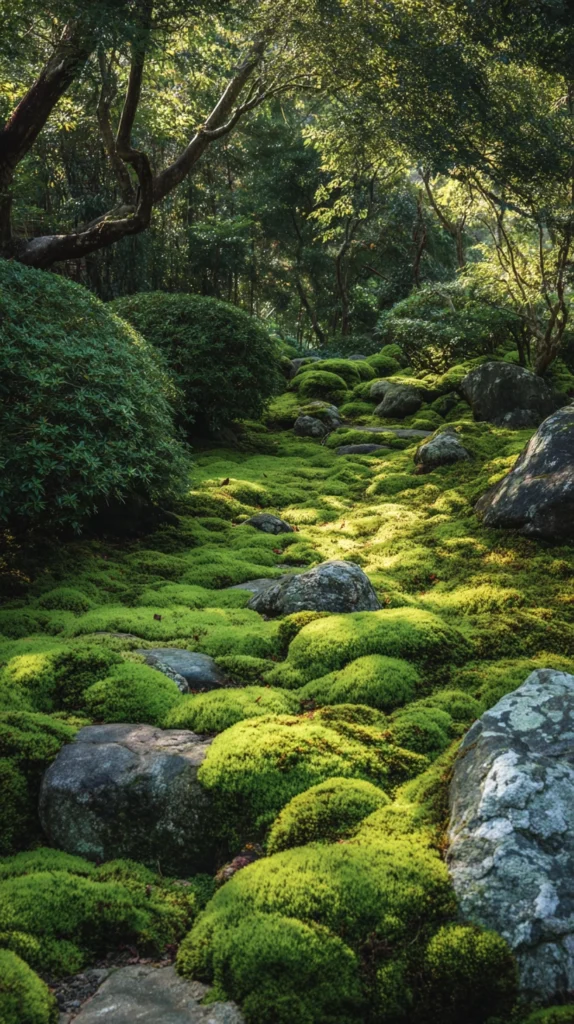
Moss is one of the most important and most beautiful plants in the Japanese garden tradition. Its deep, velvety green surface, its preference for shade and moisture, and its association with age and permanence make it the ideal ground cover for the areas of a zen garden that are not covered with raked gravel.
Encourage moss growth by maintaining consistent moisture and shade in the relevant areas, removing competing weeds carefully, and inoculating bare soil with a moss slurry made from blended fresh moss and buttermilk. A moss-covered stone or a moss-carpeted area beneath a Japanese maple creates one of the most quintessentially zen garden moments available.
6. Use a Japanese Maple as a Focal Point
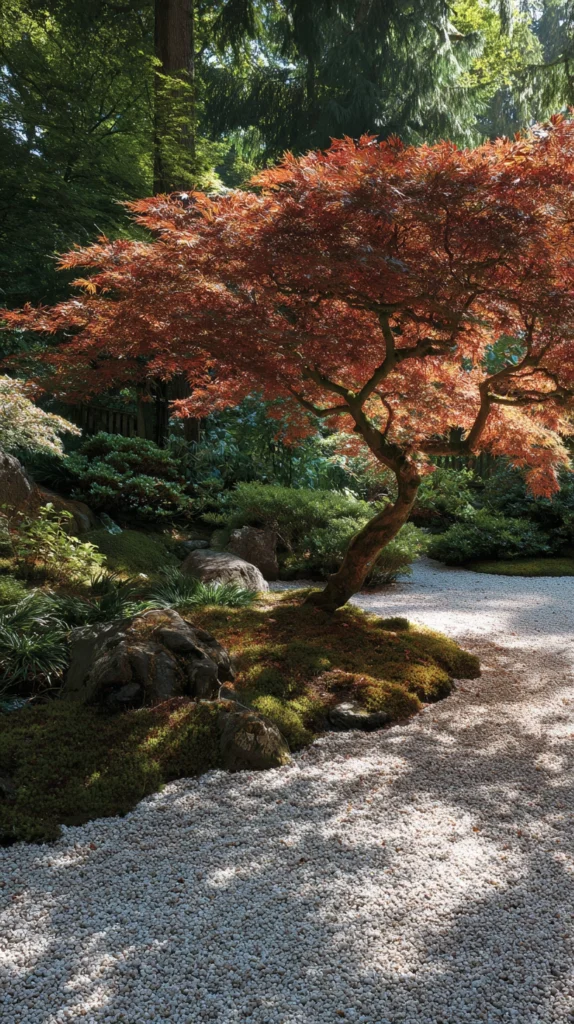
A Japanese maple. acer palmatum. is the most beautiful and most culturally appropriate tree available for a zen garden. Its delicate, deeply lobed leaves in shades ranging from fresh spring green through deep summer burgundy to the incandescent oranges and reds of autumn create a living focal point that changes with every season and is never anything less than extraordinary.
Position the Japanese maple as the garden’s primary living element. a single specimen given sufficient space to express its natural form without competition. and allow the raked gravel or moss beneath it to create a clean, uncluttered setting that allows the tree’s beauty to be fully appreciated.
7. Create a Stepping Stone Path
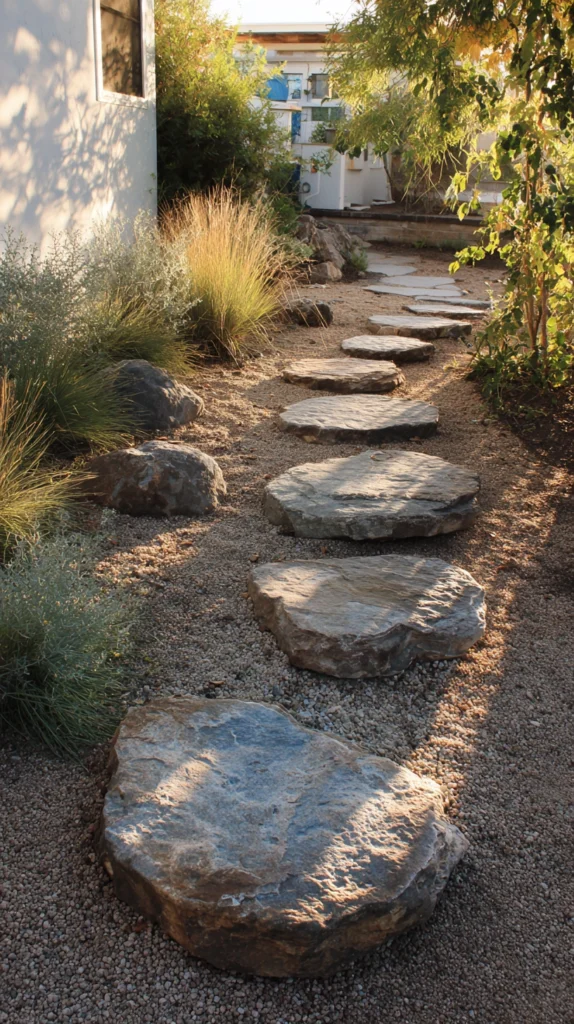
A stepping stone path of large, flat natural stones laid across the raked gravel surface of a zen garden creates a human-scaled route through the garden that invites slow, deliberate movement and focused attention on each step.
In the Japanese garden tradition, stepping stones slow the visitor’s pace and direct attention toward specific views and compositions within the garden. Space the stones at a comfortable walking pace, ensuring each stone is stable and level with its surface sitting just above the surrounding gravel surface for safe footing in all weather conditions.
8. Incorporate a Tsukubai Water Basin
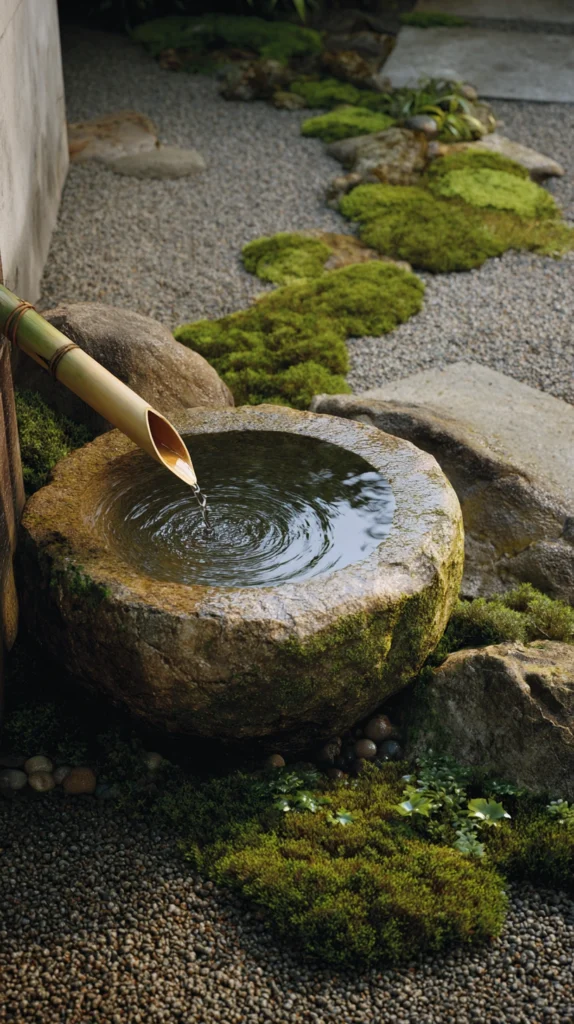
A tsukubai. a low stone water basin traditionally used for ritual hand washing at the entrance to a Japanese tea house. is one of the most elegantly functional and most authentic accessories available for a domestic zen garden.
The tsukubai provides the sound and visual quality of still water in a compact, self-contained format that suits even the smallest garden. Fill it with fresh water regularly and add a simple bamboo or copper spout fed from a small recirculating pump for a continuously replenished basin of exceptional stillness and beauty.
9. Maintain Strict Simplicity in Planting
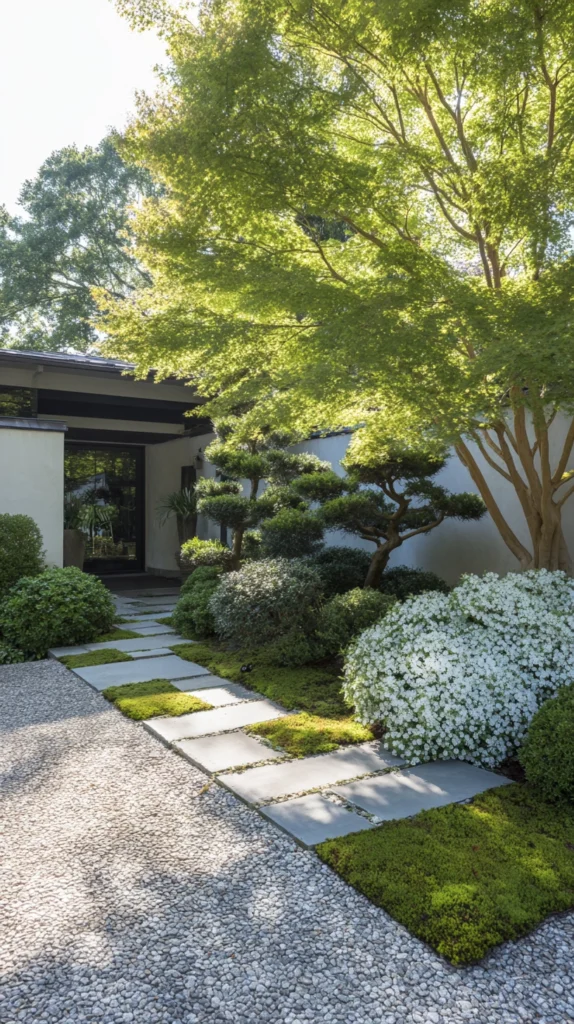
The planting palette of a Japanese zen garden is deliberately restricted to a small number of carefully chosen species that provide structure, seasonal interest, and cultural resonance without the visual complexity that a western perennial border would introduce.
Black pine, bamboo in a contained planter, Japanese maple, moss, mondo grass, and clipped azalea or box provide the complete planting vocabulary of most authentic zen gardens. Each plant is chosen for its relationship to the Japanese garden tradition and for its ability to contribute to the garden’s atmosphere of calm, focused simplicity throughout every season of the year.
10. Use Bamboo Fencing as a Garden Boundary
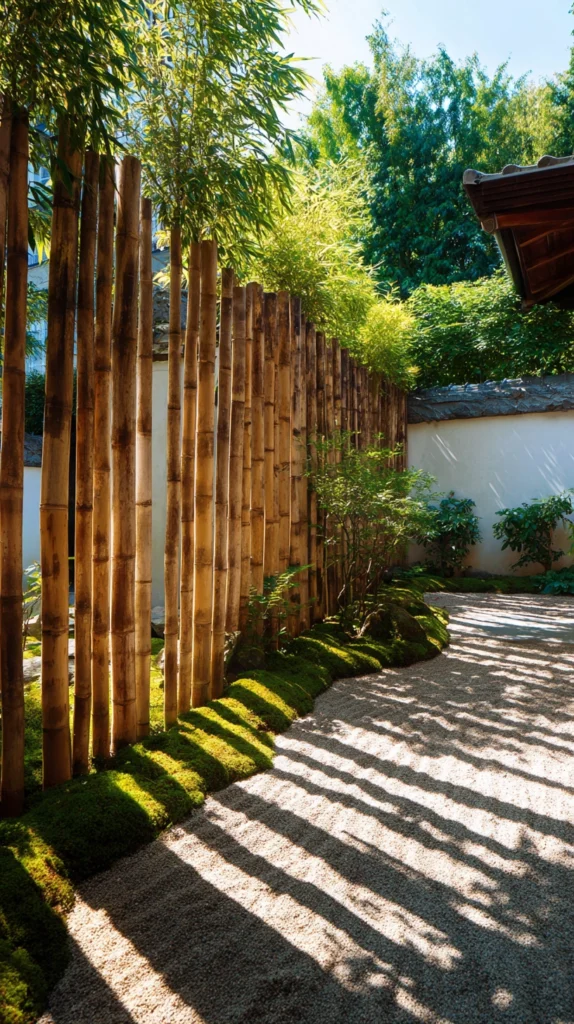
A bamboo fence. either the traditional kenninji style of vertically bound bamboo poles or the more open yotsume style of bamboo poles in a square grid pattern. creates a zen garden boundary of warm, natural character that suits the aesthetic of the garden it encloses with far greater authenticity than a brick wall or a timber panel fence.
Bamboo fencing filters rather than blocks the view beyond the garden, creating a sense of the garden existing within a larger natural context rather than being completely enclosed and isolated from the world surrounding it.
11. Create a Dry Waterfall with Rocks
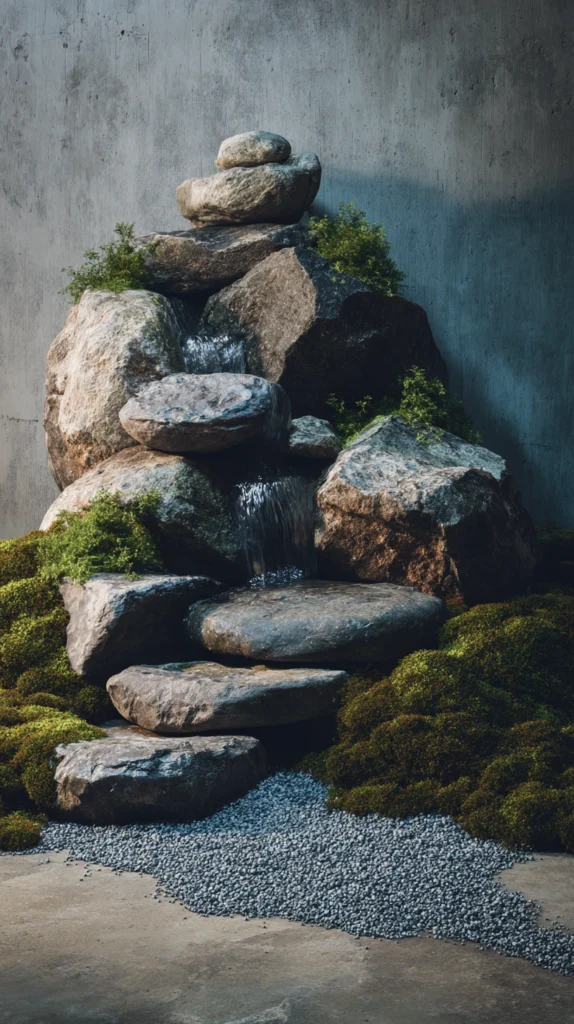
A dry waterfall. a composition of rocks arranged to suggest the form and movement of a waterfall without any actual water. is one of the most sophisticated and most distinctively Japanese compositional elements available for a zen garden.
Larger rocks at the upper level represent the waterfall source, medium rocks in a flowing arrangement suggest the cascade, and flat rocks at the base represent the pool at the waterfall’s foot. The composition is entirely static but the arrangement of the rocks carries the eye upward and downward in a movement that convincingly evokes the experience of flowing water.
12. Add a Wooden Tea House or Pavilion
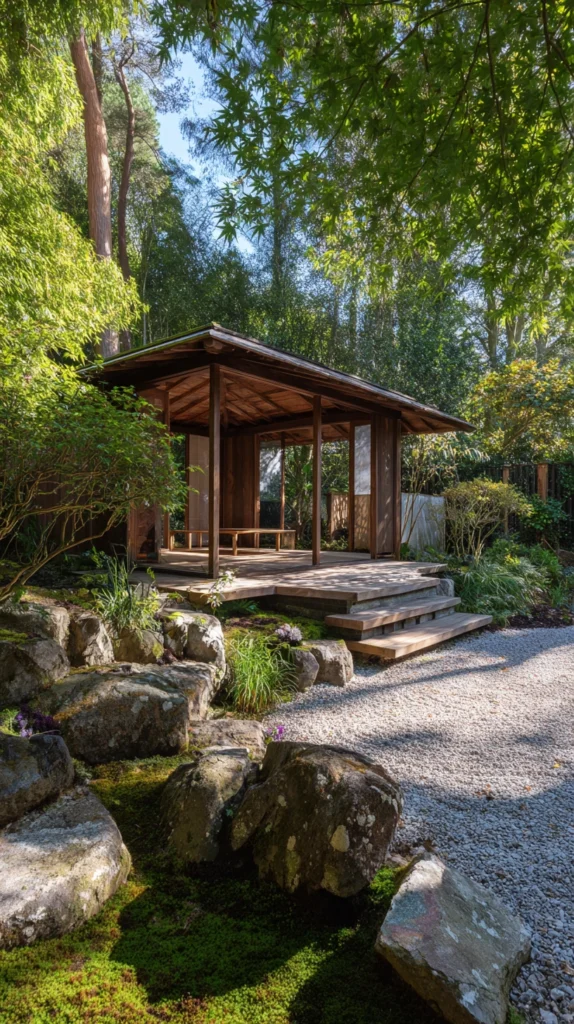
A small wooden tea house or garden pavilion. a simple timber structure with a low-pitched roof, open sides, and a raised timber floor. creates a human-scaled shelter within the zen garden from which the garden can be contemplated in comfort and in the spirit of the Japanese tea ceremony tradition.
The tea house does not need to be elaborate or large. A simple four-post structure with a roof of natural materials and a raised platform for seated contemplation is sufficient to create a genuine destination within the garden and a vantage point from which the entire composition can be appreciated as intended.
13. Introduce Carefully Clipped Topiary
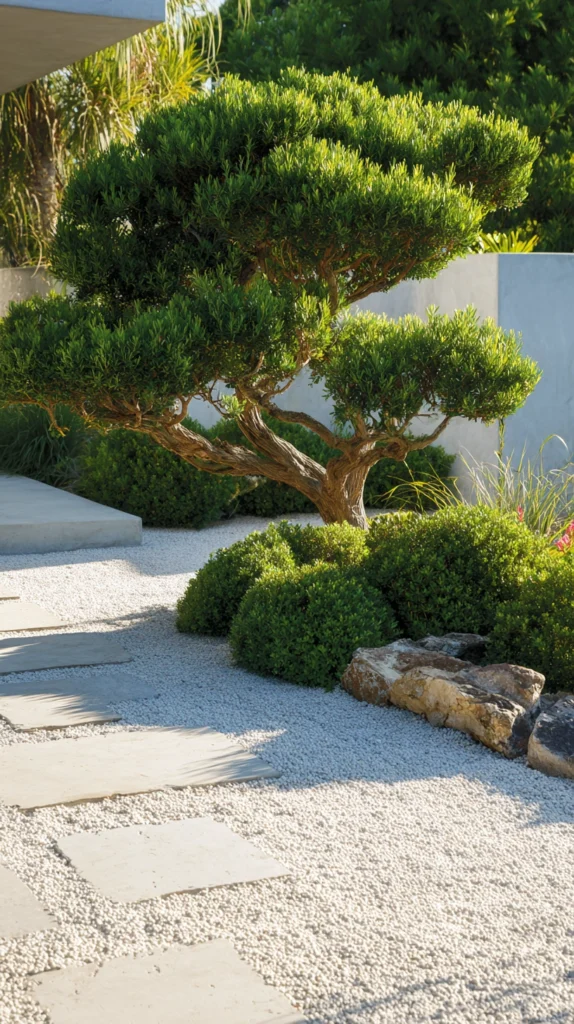
Carefully clipped azalea, box, or yew in rounded, cloud-pruned forms. the karikomi style of Japanese garden topiary. creates an organic counterpoint to the linear, geometric quality of raked gravel and straight stone pathways in a zen garden.
The rounded, slightly irregular forms of cloud-pruned shrubs reference the forms of clouds, rocks, and mountains in a way that softened plant forms achieve more convincingly than the perfectly geometric spheres of Western topiary tradition. Clip twice yearly to maintain the form without over-formalizing the slightly organic quality that gives this style its characteristic gentle beauty.
14. Design for Seasonal Change and Impermanence
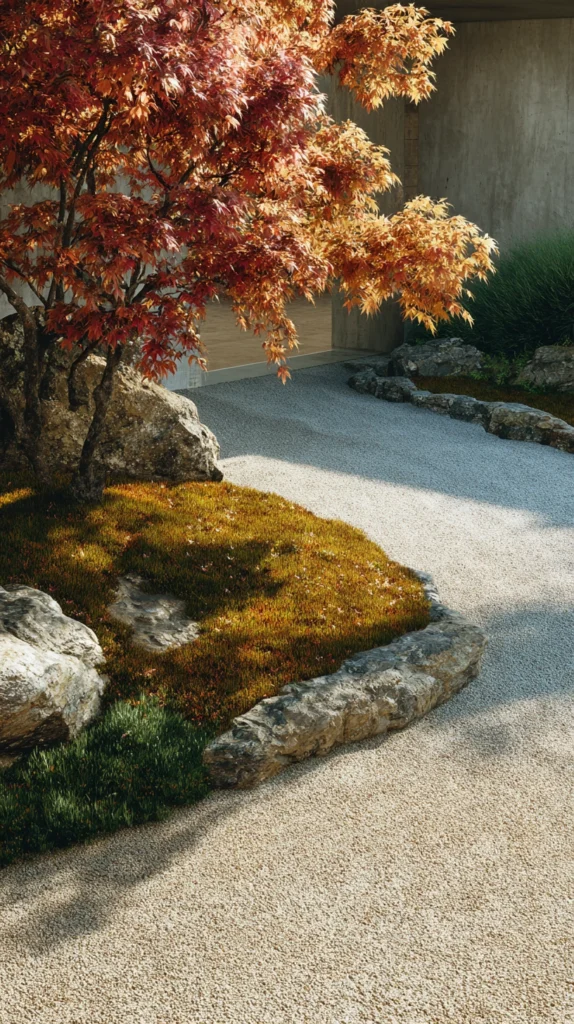
The final and most philosophically essential zen garden idea is to design the garden explicitly for seasonal change rather than attempting to create a static, unchanging composition that looks identical in every month of the year. The Japanese aesthetic of mono is not known. the bittersweet awareness of the impermanence of beautiful things. is expressed most powerfully in a garden that visibly changes with every season.
The Japanese maple’s spring emergence, summer fullness, autumn fire, and winter skeleton. the moss’s deepening green through the wet months and its slight browning in summer heat. The raked gravel patterns renewed after every rainfall. These seasonal changes are not imperfections to be managed but qualities to be celebrated as the garden’s most profound and most authentically Japanese characteristic.
The Zen Garden as Daily Practice
A Japanese zen garden is not a destination to be visited occasionally. It is a daily practice. a space that rewards regular, unhurried attention with a quality of peace and clarity that accumulates over time. Design it with restraint, maintain it with care, and inhabit it with the slow, deliberate presence that its philosophy invites. The garden will return that attention many times over.