15 Japanese Garden Ideas for a Calm, Balanced Outdoor Space
Japanese gardens are not about filling space—they’re about creating feeling. Every stone, plant, and pathway is chosen with intention, designed to evoke calm, balance, and a deep connection to nature.
Whether you have a sprawling backyard or a compact courtyard, Japanese garden principles can be adapted to suit almost any space and lifestyle.
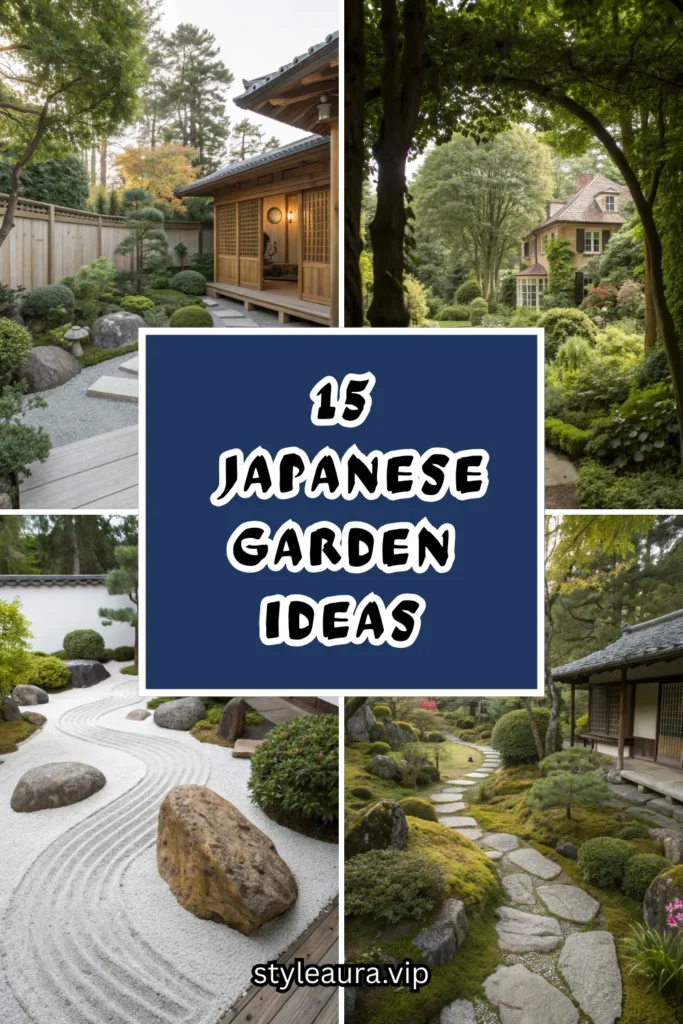
Below are 15 Japanese garden ideas that blend tradition with modern living. Each idea focuses on simplicity, symbolism, and harmony, helping you create an outdoor space that feels peaceful, timeless, and restorative.
1. Create a Minimalist Zen Rock Garden
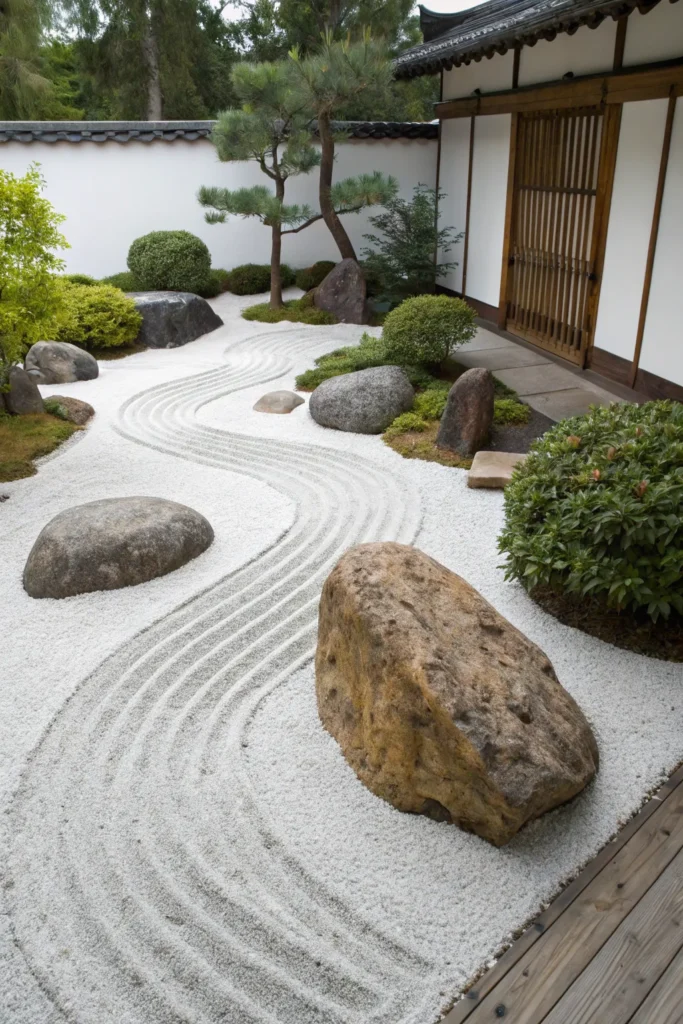
A Zen rock garden, also known as a karesansui garden, is one of the most iconic elements of Japanese landscape design. Instead of lush planting, this style relies on carefully placed stones and raked gravel to represent water, islands, and movement.
White or pale gravel is typically raked into flowing patterns that suggest ripples or waves. Large stones are positioned asymmetrically, creating focal points that encourage contemplation. This type of garden is ideal for small yards, courtyards, or even a corner of a larger garden where you want a quiet, meditative zone.
The beauty of a Zen garden lies in restraint. Avoid overcrowding the space, and allow negative space to play just as important a role as the physical elements.
2. Incorporate Natural Stone Pathways
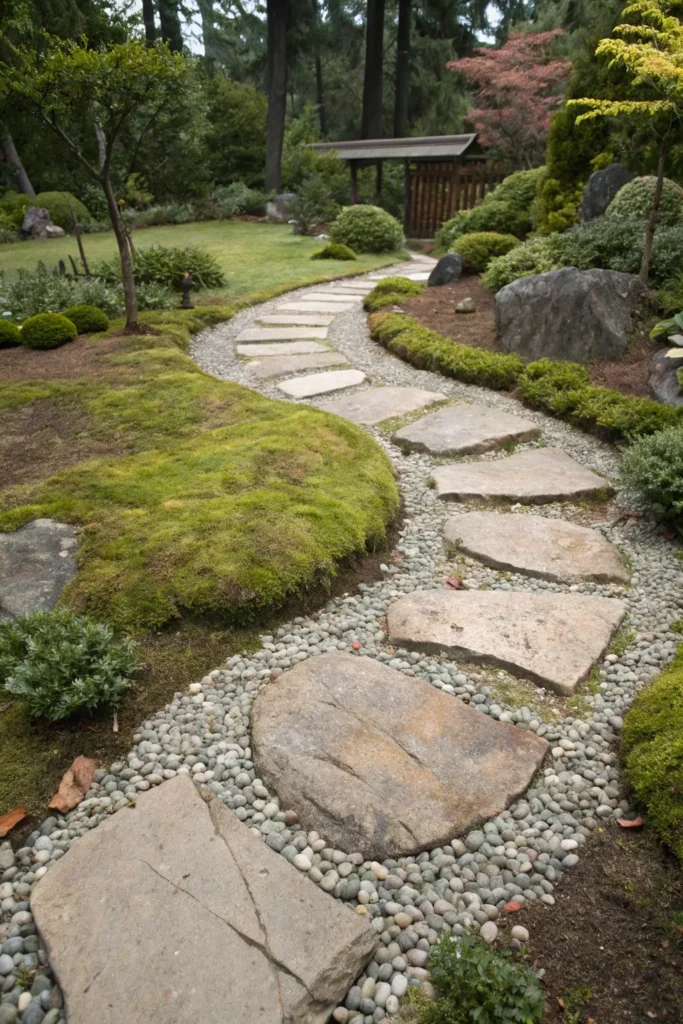
Stone pathways guide both the body and the mind through a Japanese garden. Rather than straight, formal paths, opt for stepping stones that move gently through the landscape, encouraging slow, mindful walking.
Irregularly shaped stones set into gravel, moss, or ground cover feel organic and intentional. The slight variation in height and spacing naturally slows your pace, making the journey through the garden just as meaningful as the destination.
Stone paths also serve a practical purpose, protecting plants while adding structure and rhythm to the overall design.
3. Use Water Features to Symbolize Flow and Life
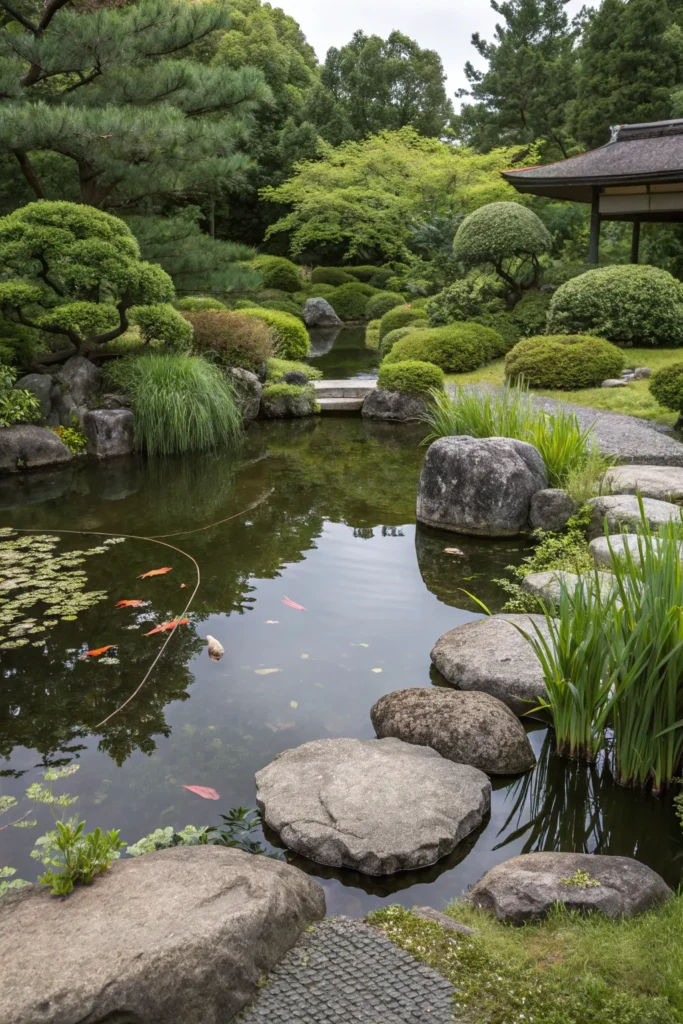
Water is a powerful symbol in Japanese gardens, representing renewal, purity, and the passage of time. Even a small water feature can transform the atmosphere of your outdoor space.
A shallow pond with koi fish, a gently flowing stream, or a simple stone basin can all work beautifully. The sound of moving water adds a soothing sensory layer, masking urban noise and enhancing relaxation.
If space or maintenance is a concern, consider a bamboo water spout or a minimalist recirculating fountain for a subtle yet impactful effect.
4. Add a Traditional Stone Lantern
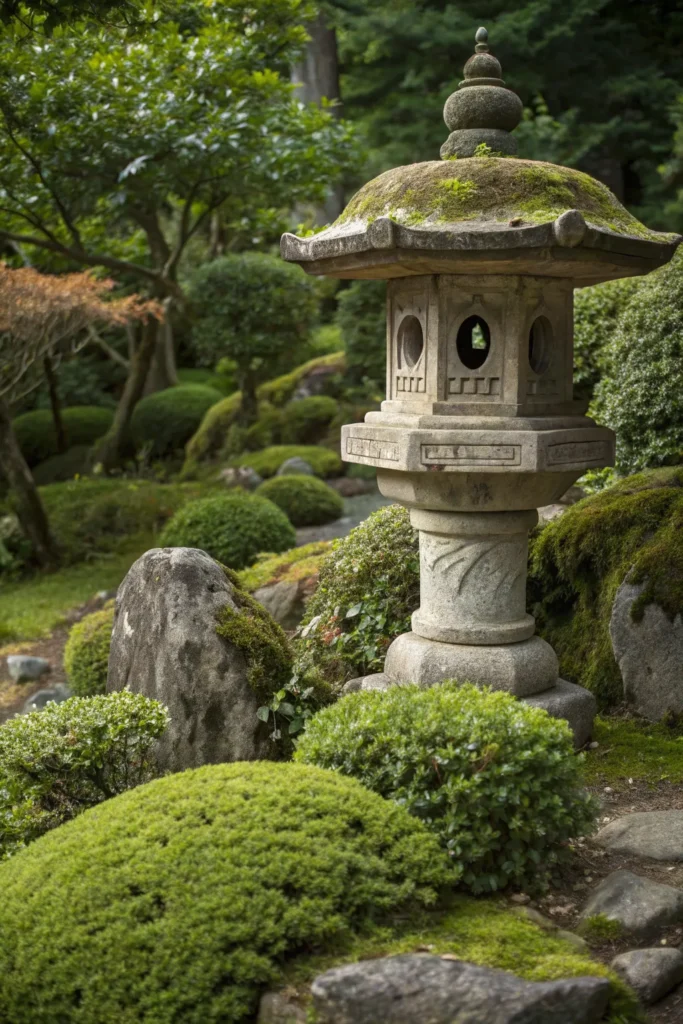
Stone lanterns, or toro, are classic Japanese garden elements that add both visual interest and symbolic meaning. Traditionally used to light temple grounds, they now serve as decorative focal points in residential gardens.
Place a stone lantern near a path, beside a water feature, or partially hidden among plants for a natural, aged look. Avoid placing lanterns symmetrically; asymmetry is key to maintaining a natural flow.
Even when unlit, stone lanterns bring a sense of history and quiet elegance to the garden.
5. Embrace Moss for a Soft, Aged Look
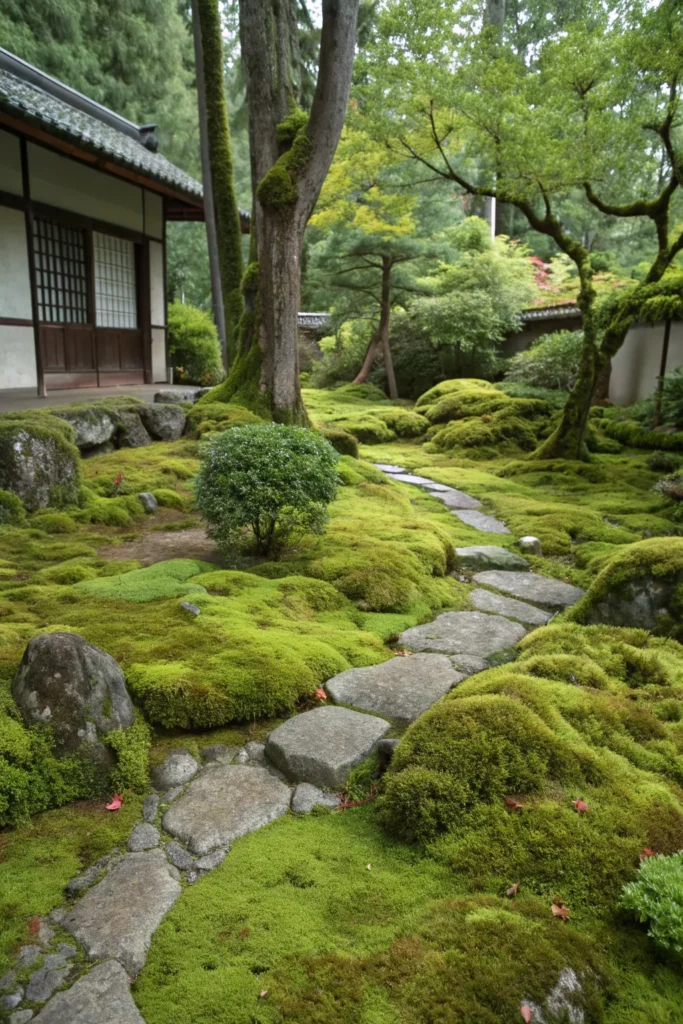
Moss is often considered a weed in Western gardens, but in Japanese design, it is celebrated for its softness and sense of age. Moss-covered stones and ground surfaces create a lush, serene atmosphere that feels deeply connected to nature.
Moss thrives in shaded, moist environments, making it perfect for areas under trees or along stone paths. It softens hard edges and adds a velvety texture that contrasts beautifully with stone and wood.
If natural moss is difficult to maintain, low-growing ground covers can offer a similar visual effect.
6. Design with Asymmetry and Imperfection
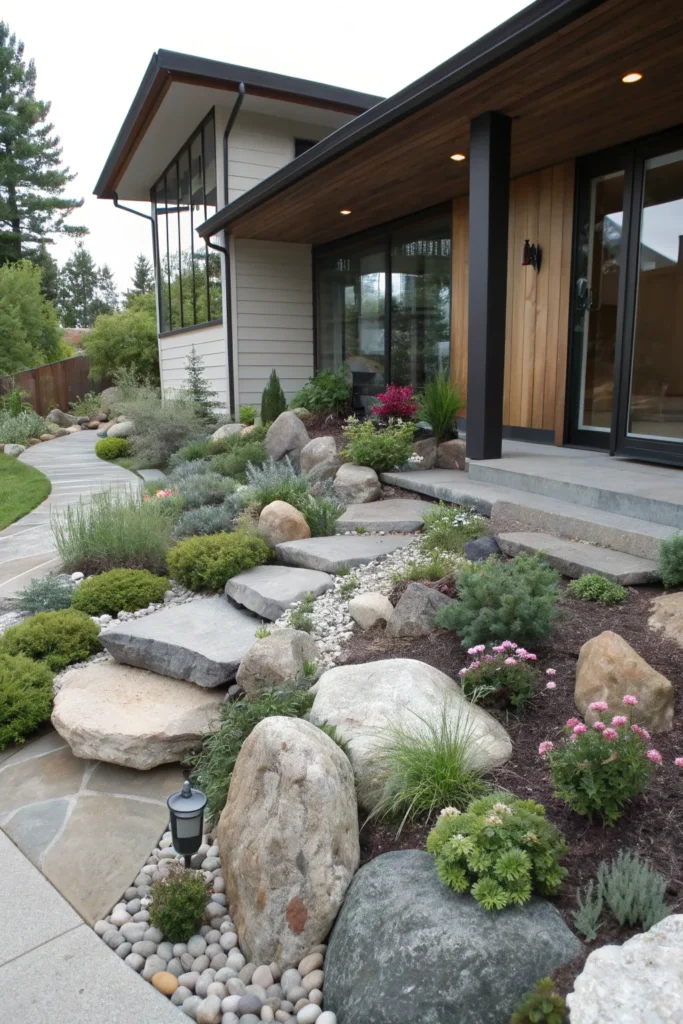
One of the core philosophies behind Japanese gardens is wabi-sabi—the beauty of imperfection and impermanence. This concept encourages designs that feel natural rather than forced or overly polished.
Avoid symmetry and straight lines. Instead, arrange elements in uneven groupings and allow plants to grow in slightly irregular forms. Weathered materials, natural patina, and subtle signs of age all enhance the garden’s character.
This approach creates a space that feels alive, evolving, and deeply calming.
7. Frame Views with Strategic Planting
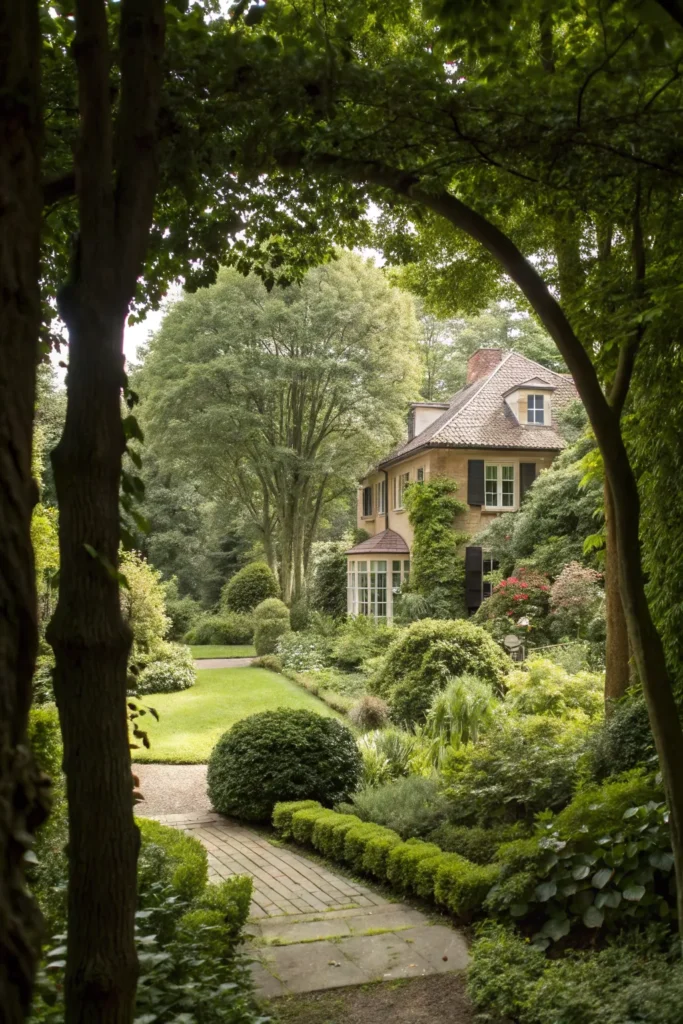
Japanese gardens are often designed to reveal views gradually. Trees, shrubs, and structures are placed to frame specific scenes, guiding the eye and creating moments of surprise.
Use taller plants or bamboo screens to partially obscure certain areas, then open up sightlines to focal points like a pond, stone arrangement, or lantern. This technique makes even small gardens feel larger and more immersive.
Every angle becomes intentional, encouraging exploration and quiet observation.
8. Introduce a Tea Garden Atmosphere
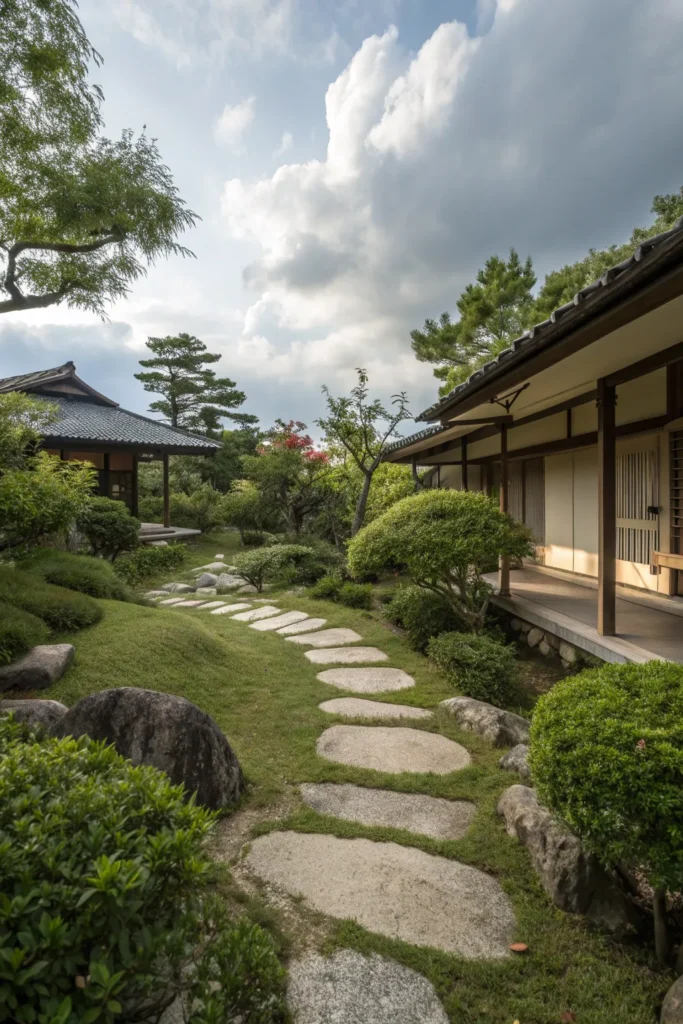
Tea gardens, or roji, are designed as transitional spaces that prepare the mind for the tea ceremony. Even if you don’t practice tea rituals, the principles behind tea gardens can inspire a deeply peaceful outdoor setting.
Focus on simplicity, natural materials, and subdued colors. Stepping stones, stone basins, and evergreen plants create a calm, grounded feel. Seating areas should feel intimate and sheltered, inviting quiet reflection.
This style works especially well for shaded gardens or spaces meant for slow, mindful moments.
9. Choose Plants with Seasonal Interest
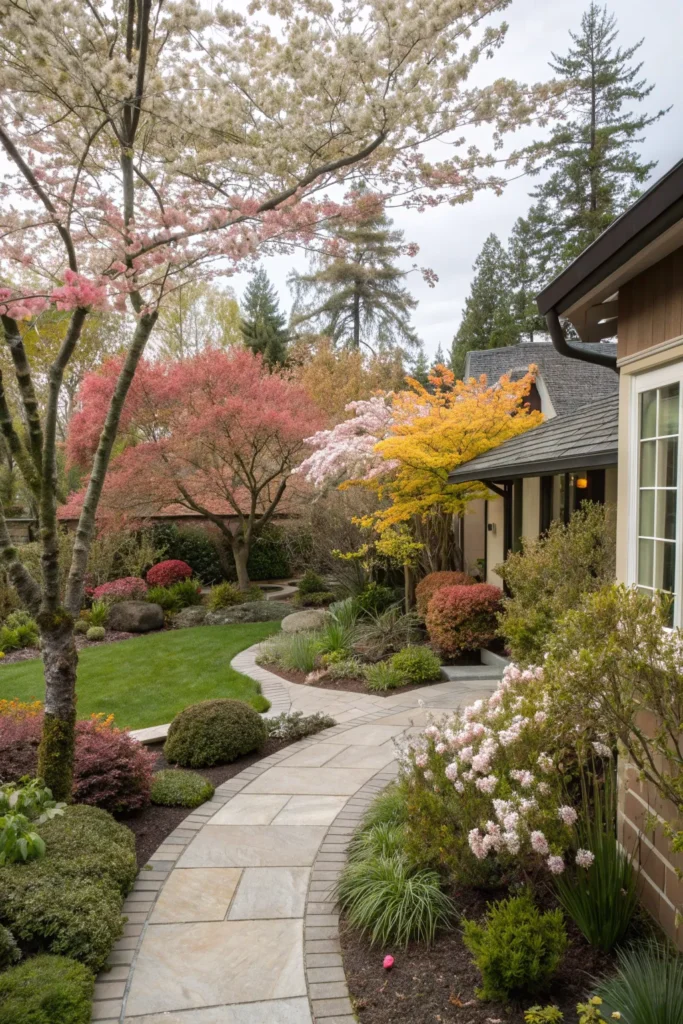
Japanese gardens celebrate the changing seasons. Instead of relying on constant blooms, choose plants that offer beauty throughout the year.
Cherry blossoms and magnolias bring spring drama, while maples provide fiery autumn color. Evergreens maintain structure in winter, and ornamental grasses add movement in summer breezes.
By designing with seasonality in mind, your garden will feel dynamic and alive, offering something new to appreciate throughout the year.
10. Use Bamboo for Privacy and Texture
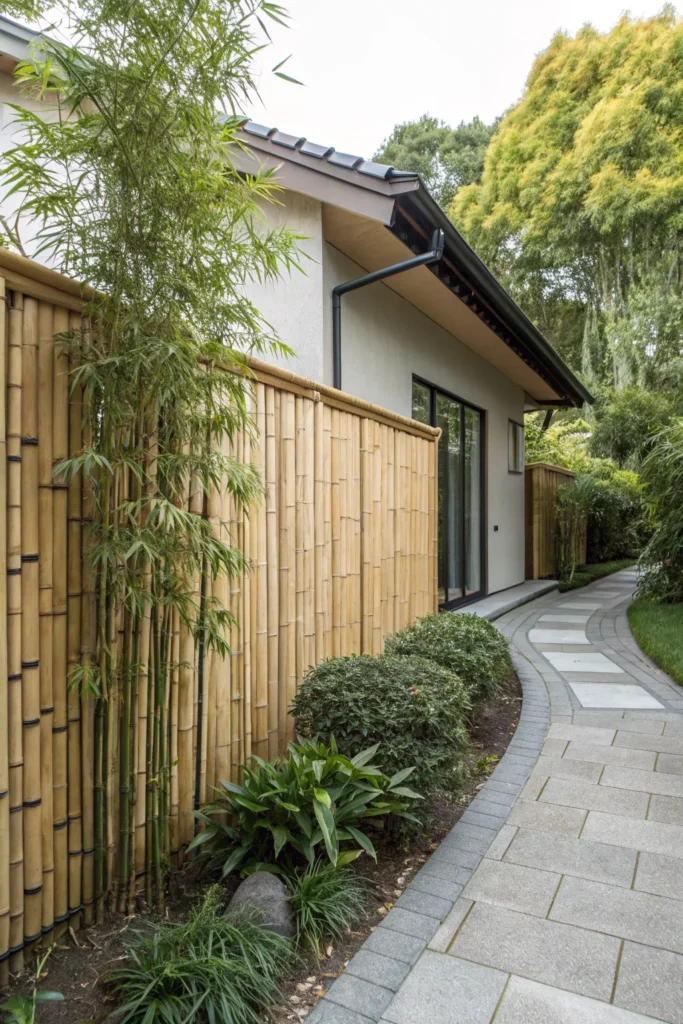
Bamboo is a versatile material in Japanese gardens, valued for its natural beauty and symbolic strength. Living bamboo plants can create lush screens, while bamboo fencing offers privacy without feeling heavy or enclosed.
The vertical lines of bamboo add rhythm and contrast to softer planting. Its gentle rustling sound in the wind enhances the sensory experience of the garden.
When using bamboo, keep maintenance in mind and choose varieties appropriate for your climate and space.
11. Create a Quiet Seating Area for Reflection
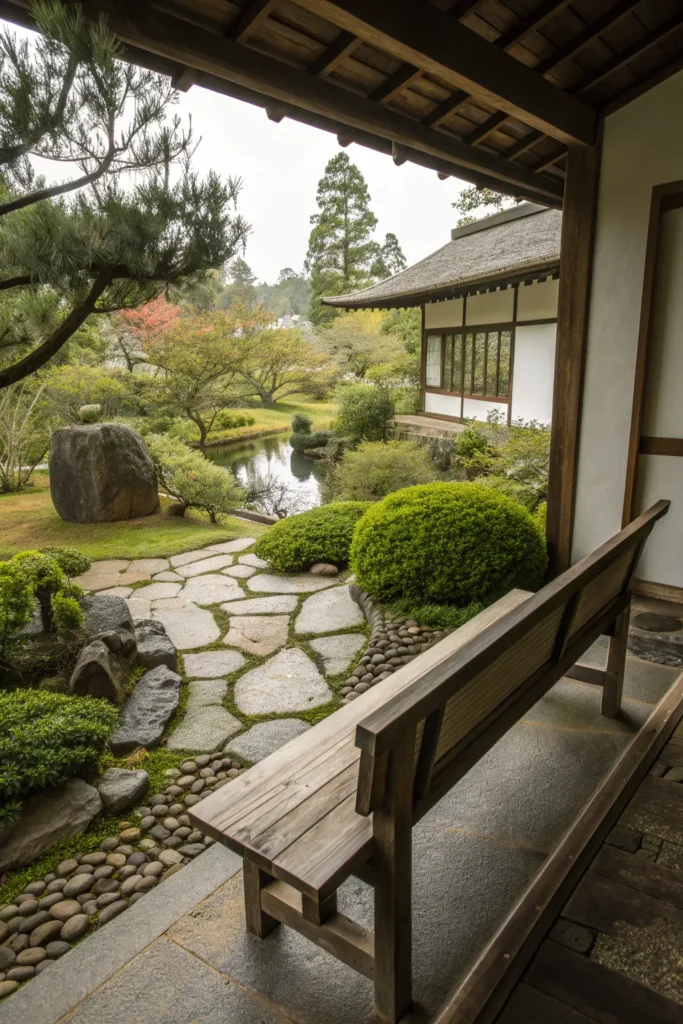
A Japanese garden is meant to be experienced slowly. Incorporating a simple seating area encourages pause and contemplation.
Choose natural materials like wood or stone, and keep the design understated. A bench tucked beneath a tree or overlooking a water feature feels intentional without dominating the space.
Position seating where you can enjoy the most balanced view, allowing your eyes to rest on harmonious combinations of stone, plant, and water.
12. Balance Hardscape and Softscape Elements
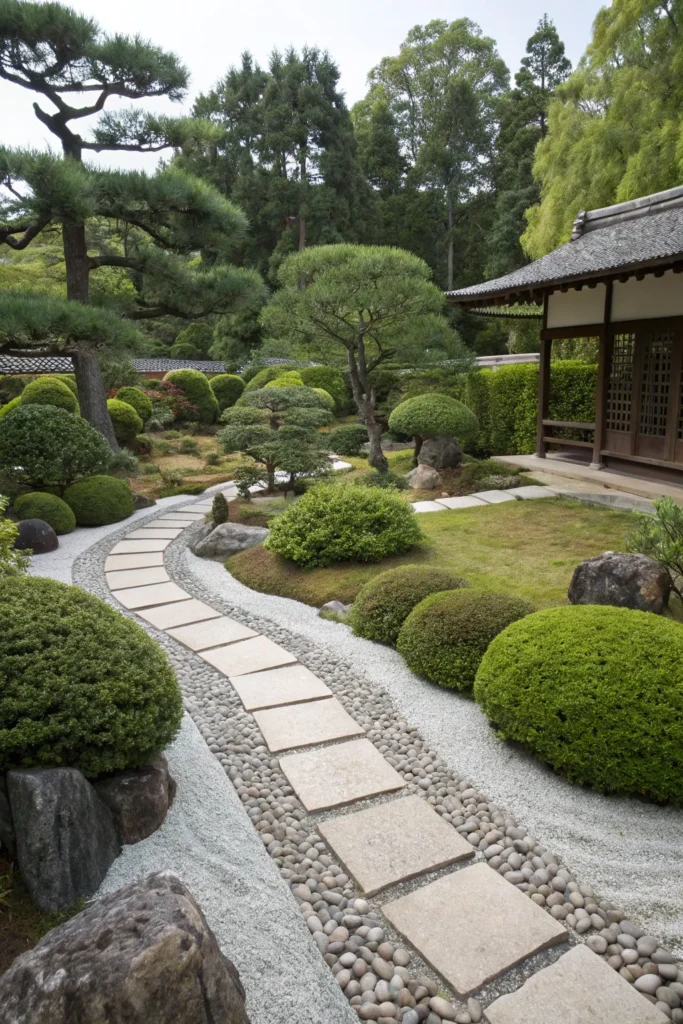
Japanese gardens achieve harmony by carefully balancing hard elements like stone and wood with soft elements like plants and moss. Neither should overpower the other.
Too much hardscape can feel cold, while too much planting can feel chaotic. Aim for a thoughtful mix, using stones to anchor the design and plants to soften and animate it.
This balance creates a garden that feels structured yet organic, refined yet welcoming.
13. Keep the Color Palette Subtle and Natural
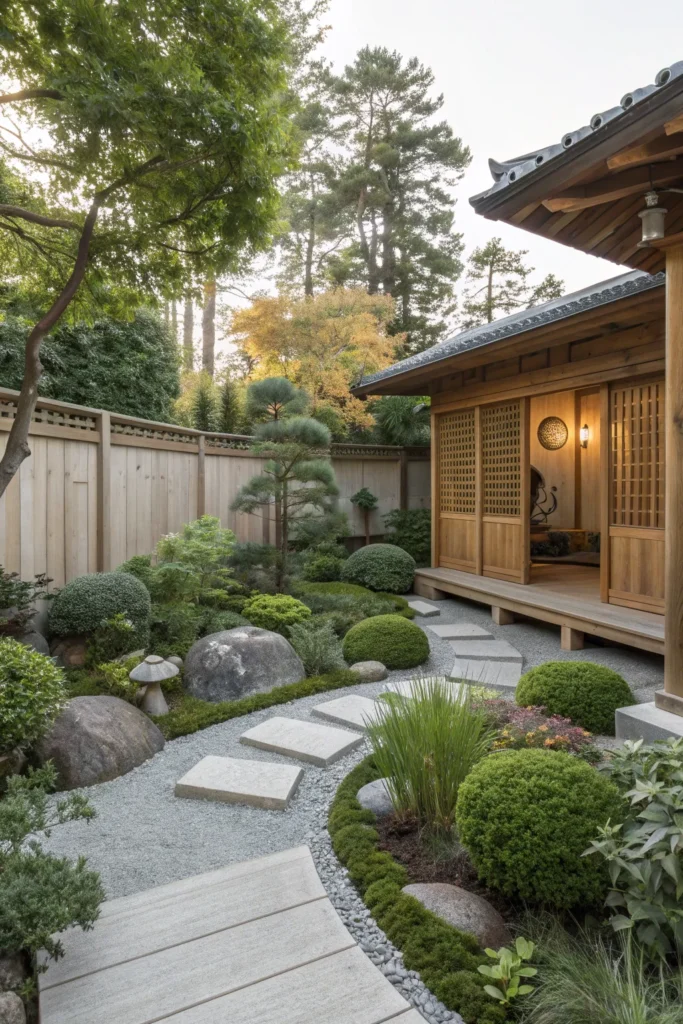
Bold, bright colors are rare in traditional Japanese gardens. Instead, the palette leans toward greens, grays, browns, and muted seasonal tones.
Flowers, when used, are often limited in number and chosen for their elegance rather than vibrancy. This restrained approach keeps the focus on form, texture, and light.
A subtle color palette enhances the sense of calm and allows the garden to blend seamlessly with its surroundings.
14. Design for Sound and Silence
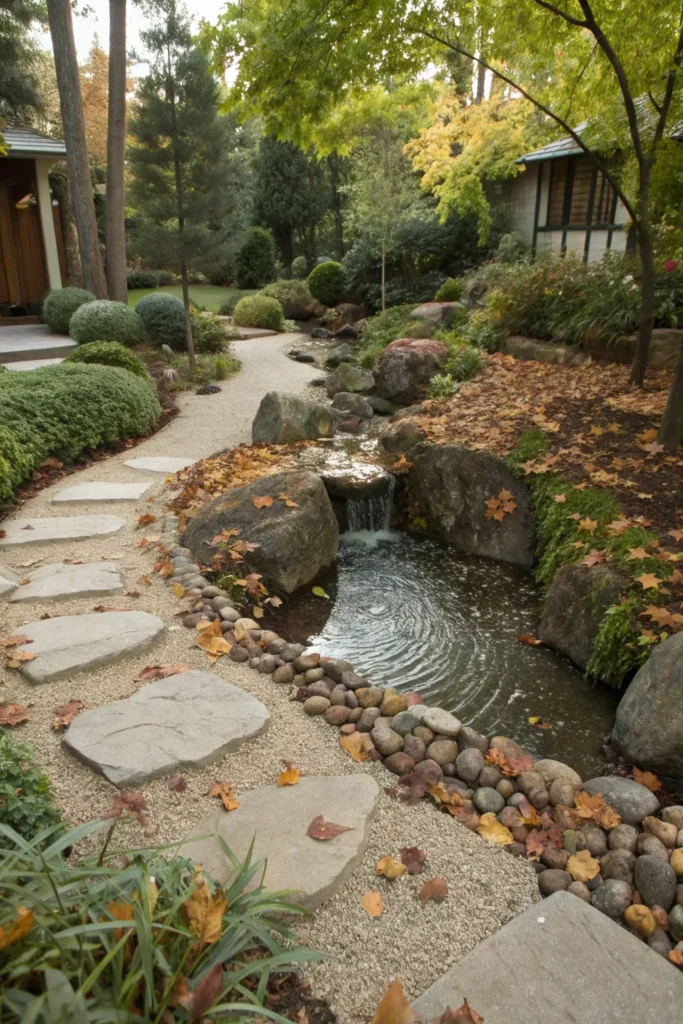
Japanese garden design considers all senses, including sound. The gentle trickle of water, the crunch of gravel underfoot, and the rustle of leaves all contribute to the experience.
Avoid noisy features or materials that clash with the tranquil atmosphere. Even the placement of stepping stones can influence sound, encouraging soft, deliberate movement.
Moments of silence are just as important, allowing the mind to rest and reset.
15. Let Nature Take the Lead
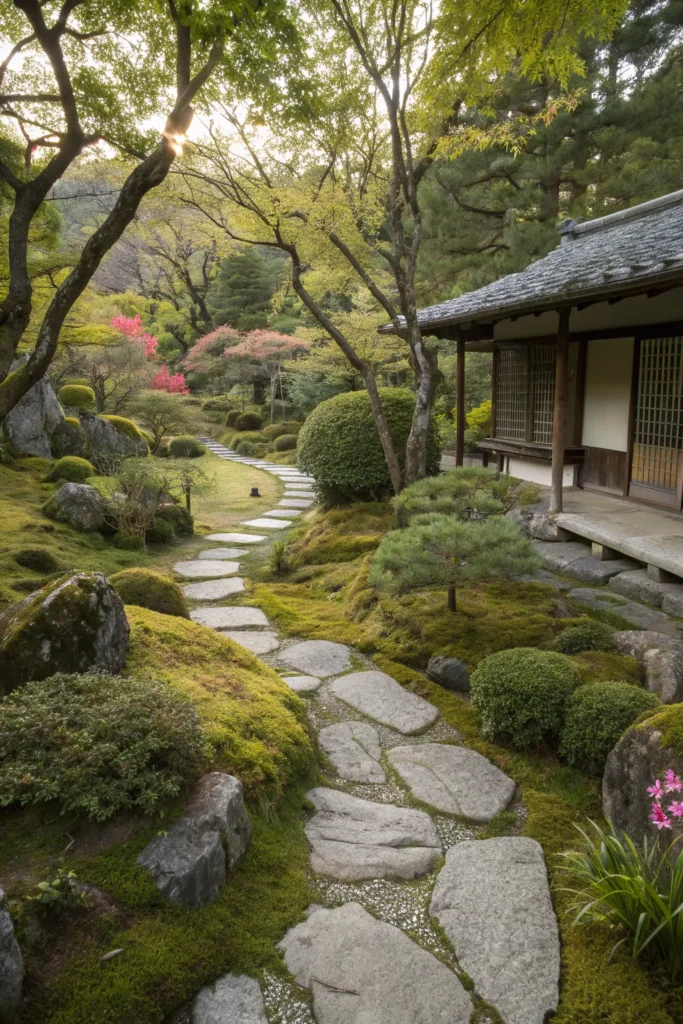
Perhaps the most important Japanese garden idea is knowing when to step back. Rather than constantly controlling and reshaping the space, allow nature to play its role.
Let plants grow into their natural forms, allow moss to spread, and embrace subtle changes over time. A Japanese garden is never truly finished—it evolves with the seasons and years.
This ongoing relationship with nature is what gives Japanese gardens their timeless beauty and emotional depth.
Bringing Japanese Garden Principles into Modern Life
You don’t need a large plot of land or traditional architecture to enjoy a Japanese-inspired garden. By focusing on intention, balance, and simplicity, you can adapt these ideas to balconies, patios, and urban yards.
Start small, choose meaningful elements, and let the space develop gradually. Over time, your garden will become more than just an outdoor area—it will be a personal retreat, a place to slow down, breathe deeply, and reconnect with the natural world.
A Japanese garden is not about perfection. It’s about presence, peace, and the quiet beauty found in thoughtful design.