14 Japandi-Inspired Home Yoga Studios
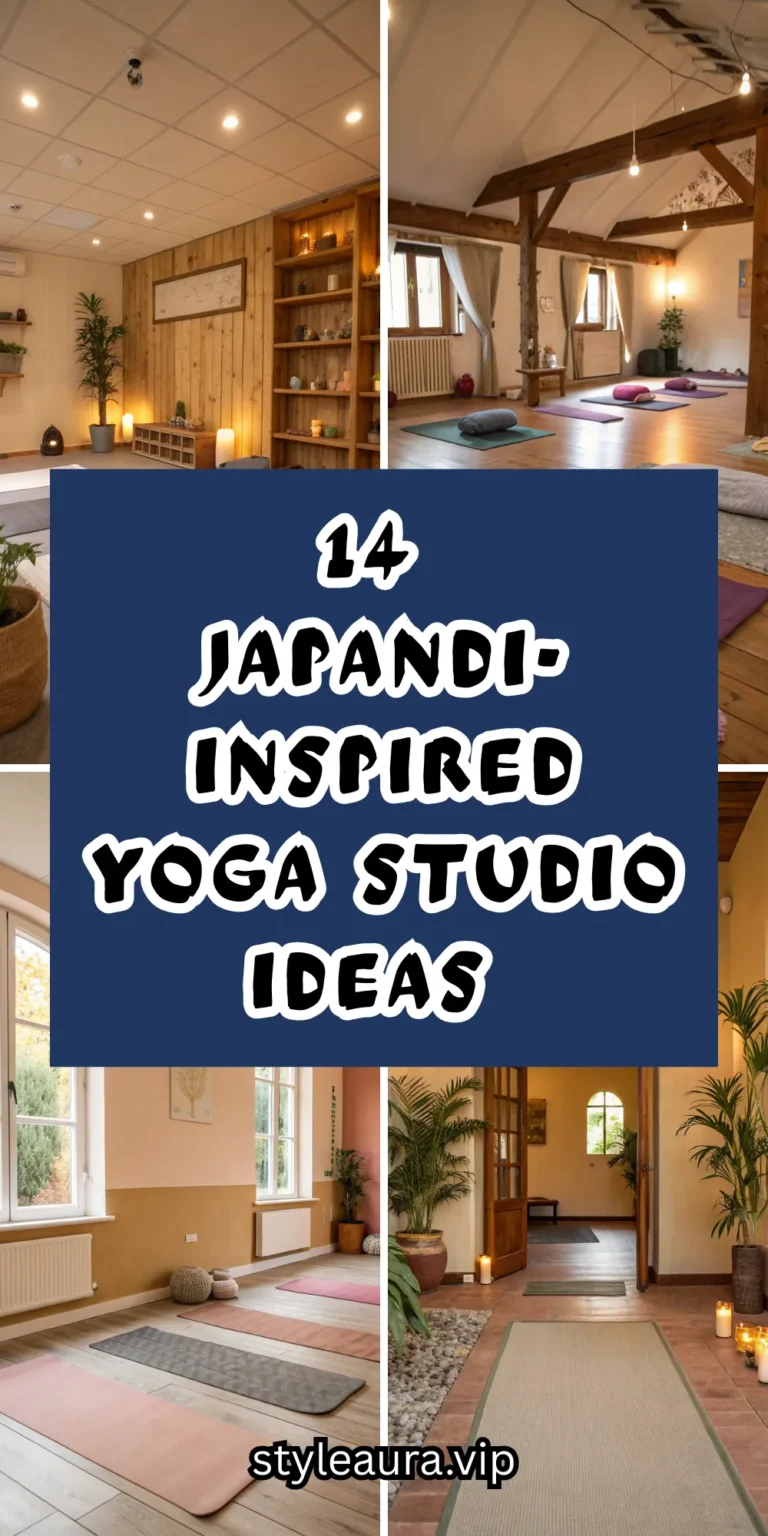
Japandi design—a harmonious blend of Japanese minimalism and Scandinavian warmth—is perfectly suited for a home yoga studio. This style focuses on simplicity, natural materials, muted tones, and purposeful living, all of which align beautifully with the principles of yoga and mindfulness.

A Japandi-inspired yoga space feels calm, uncluttered, and deeply restorative, helping you disconnect from daily noise and reconnect with your breath and body. These Japandi home yoga studio ideas will guide you in creating a serene sanctuary that supports balance, focus, and inner peace.
1. Neutral Color Palettes for Mental Clarity

Japandi interiors rely on soft, neutral colors to create a sense of calm. Shades like warm white, greige, stone, beige, and muted taupe form the perfect foundation for a home yoga studio. These colors reduce visual noise and allow the mind to settle more easily during practice. Accents in soft charcoal, clay, or sage can add depth without disrupting the tranquil atmosphere.
2. Minimalist Layouts That Encourage Flow
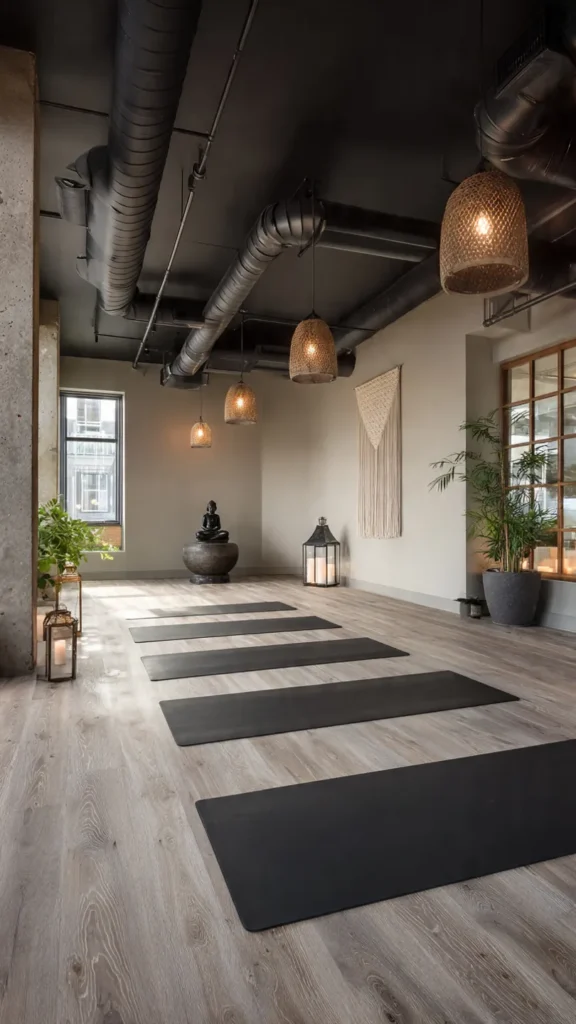
A Japandi-inspired yoga studio prioritizes open space and simplicity. Keep the layout minimal, leaving ample room for movement and transitions between poses. Avoid unnecessary furniture and decor so energy can flow freely. This uncluttered approach not only looks peaceful but also supports a focused and distraction-free yoga practice.
3. Natural Wood for Warmth and Balance
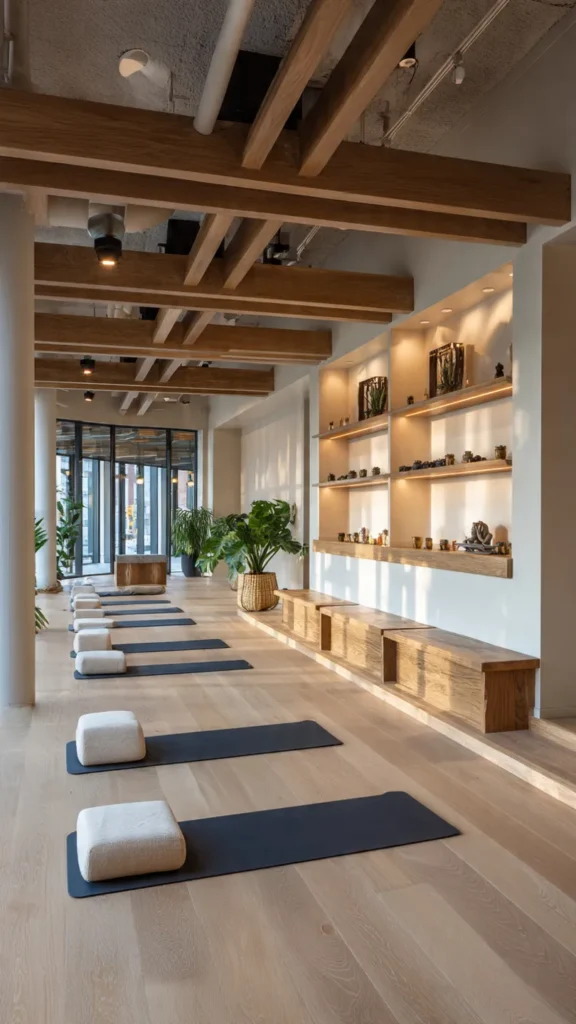
Wood is a core element of Japandi design, bringing warmth to minimalist spaces. Light oak, ash, or birch floors work beautifully in home yoga studios, while low wooden benches or shelves add functionality without visual heaviness. The natural grain of wood introduces subtle texture, balancing the clean lines of minimalist design with organic softness.
4. Soft Natural Light as a Design Feature

Natural light plays a key role in creating a calming Japandi yoga space. Large windows, sliding doors, or sheer curtains allow daylight to gently fill the room. This soft illumination enhances mood, supports mindfulness, and creates a natural rhythm for your practice. If possible, position your mat near a window to deepen your connection with the outdoors.
5. Floor-Focused Design for Grounding Energy
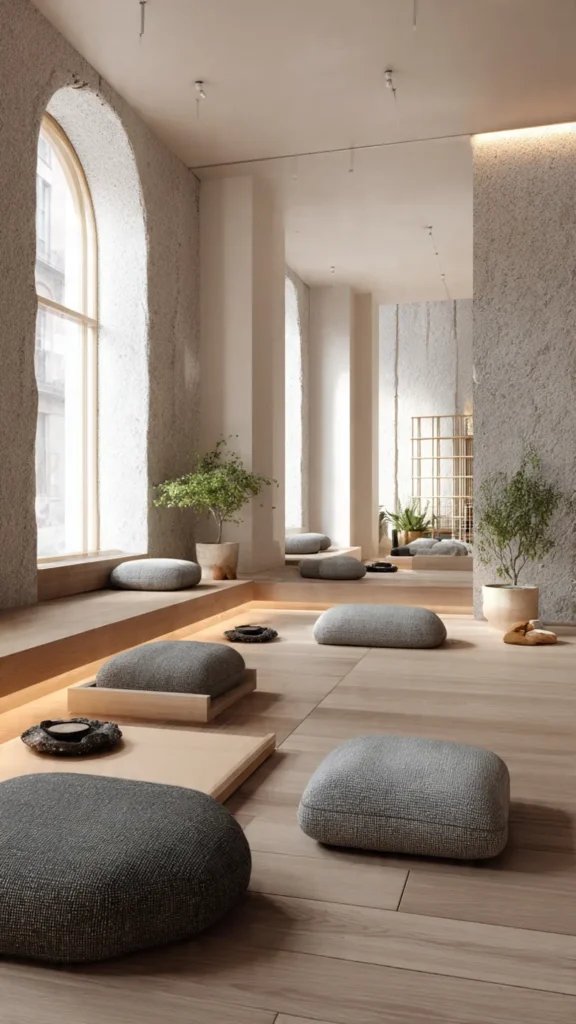
Japandi spaces often emphasize closeness to the ground. In a home yoga studio, this can be reflected through floor seating, meditation cushions, and low platforms instead of traditional furniture. This grounded design encourages stability, humility, and presence, reinforcing the grounding aspects of yoga and meditation.
6. Natural Textiles for Subtle Comfort

Choose natural fabrics like cotton, linen, and wool to add comfort without clutter. A simple linen curtain, a neutral-toned yoga mat, or a soft wool throw for savasana introduces warmth while staying true to Japandi minimalism. These textiles should feel tactile and breathable, enhancing the sensory experience without overwhelming the space.
7. Muted Contrast for Visual Harmony
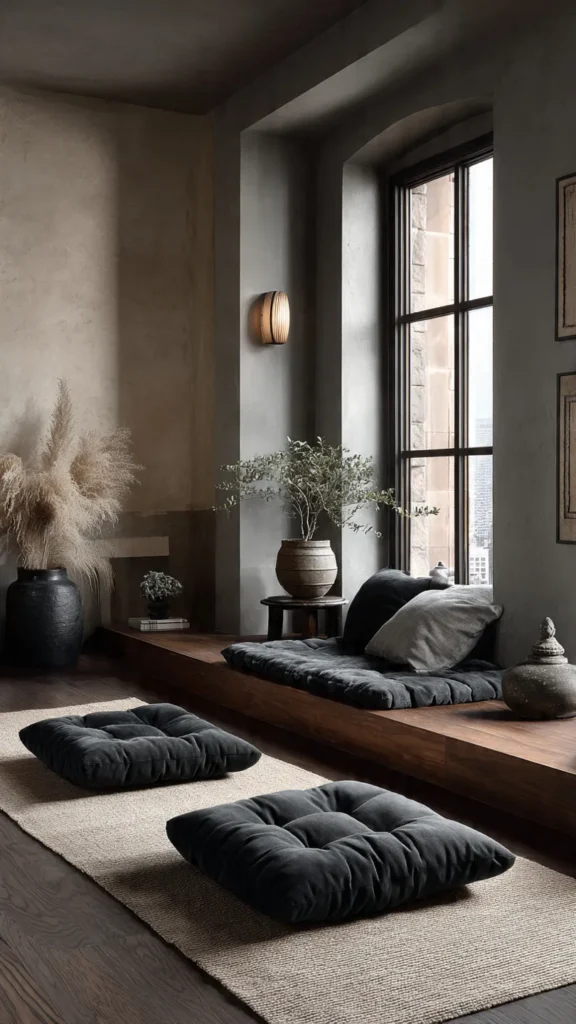
While Japandi spaces are light and neutral, subtle contrast adds depth and sophistication. Incorporate darker accents through charcoal cushions, black ceramic vases, or deep wood tones. These elements create visual balance and definition, preventing the studio from feeling flat while maintaining a calm, cohesive look.
8. Purposeful Decor with Meaning
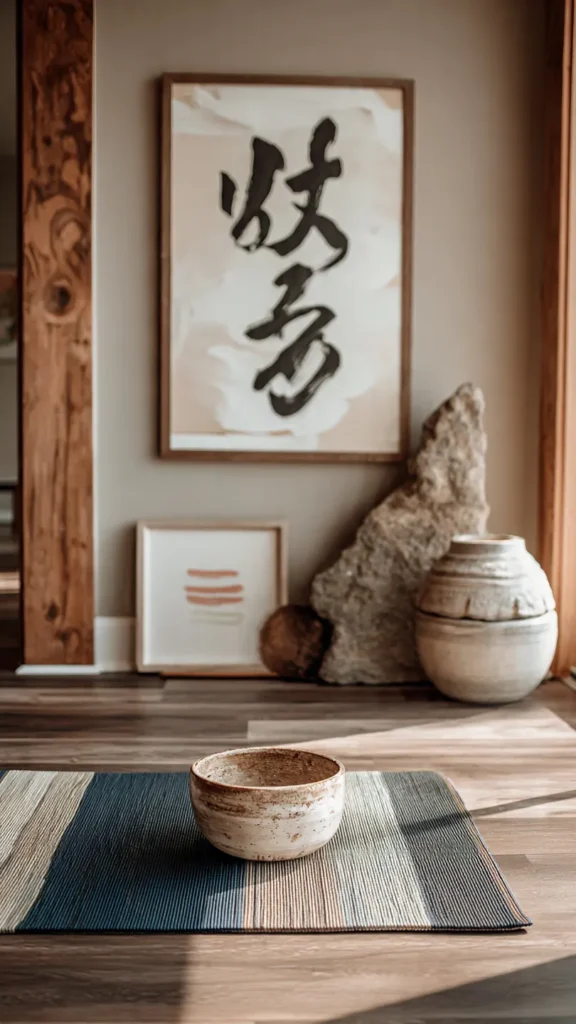
In Japandi design, every object serves a purpose. Decor in a home yoga studio should be intentional and meaningful rather than purely decorative. A simple ceramic bowl, a stone sculpture, or a framed calligraphy piece can add character without excess. This approach aligns perfectly with yoga’s philosophy of mindfulness and conscious living.
9. Indoor Plants for Quiet Vitality

Plants introduce life and freshness into a Japandi yoga studio without disrupting its serenity. Choose simple, sculptural greenery such as bonsai, fiddle leaf fig, snake plant, or olive trees. Keep planters neutral and understated. These natural elements soften the minimalist aesthetic and subtly reconnect the space with nature.
10. Calm Storage Solutions to Reduce Visual Noise

A peaceful yoga space depends on visual order. Japandi-style storage focuses on clean lines and hidden functionality. Use low cabinets, wooden boxes, or built-in shelving to store yoga props neatly out of sight. When everything has its place, the mind feels more at ease, allowing deeper focus during practice.
11. Soft, Diffused Lighting for Evening Practice
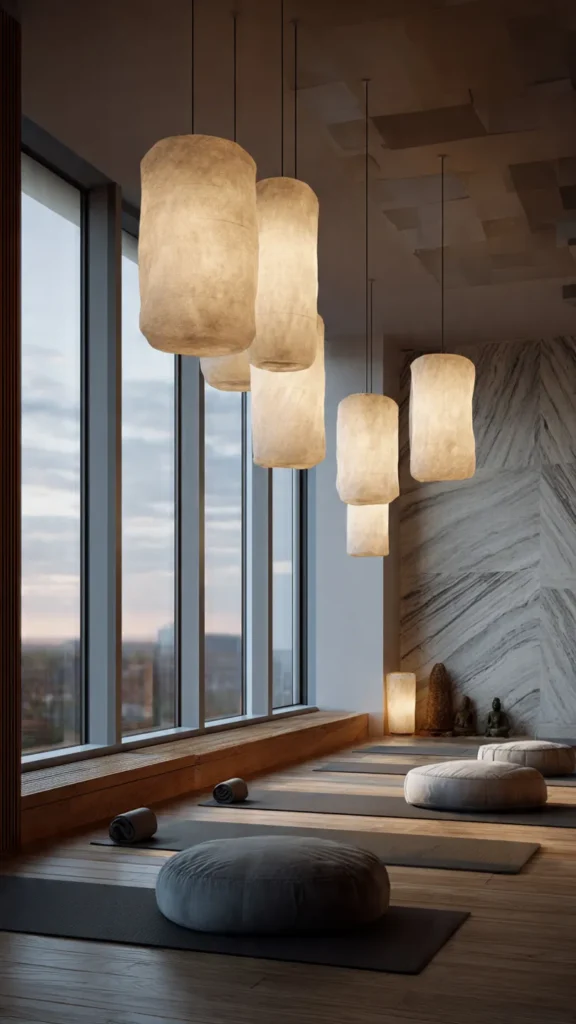
For evening or early-morning yoga sessions, lighting should be gentle and soothing. Paper lanterns, wall sconces, or minimalist pendant lights with warm bulbs create a calming glow. Avoid harsh overhead lighting, opting instead for layered light sources that support relaxation and introspection.
12. Quiet Corners for Meditation and Breathwork

A Japandi-inspired home yoga studio feels complete with a dedicated meditation corner. This can be a small area with a cushion, a low wooden tray, and one or two meaningful objects. Keeping this corner simple reinforces stillness and makes it easier to transition from physical movement into quiet meditation.
13. Clean Lines and Architectural Simplicity

Japandi design celebrates clean lines and understated architecture. Sliding doors, uncluttered walls, and simple shelving enhance the sense of order and calm. In a yoga studio, this architectural simplicity helps reduce distractions, allowing attention to turn inward rather than outward.
14. A Sense of Wabi-Sabi Calm
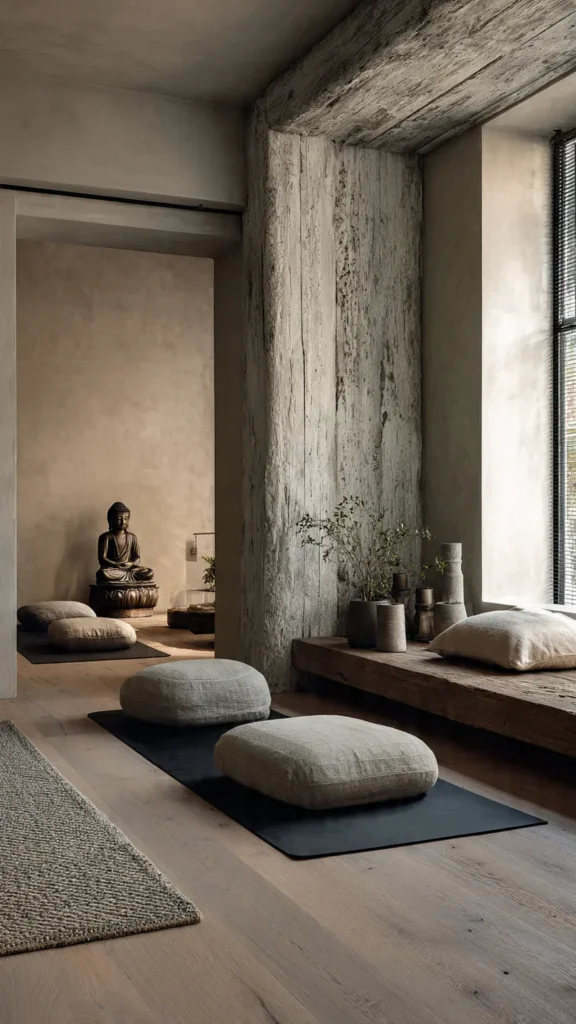
At its heart, Japandi embraces the Japanese concept of wabi-sabi—the beauty of imperfection and simplicity. In a home yoga studio, this might mean embracing natural textures, subtle irregularities, and a sense of quiet authenticity. A slightly imperfect ceramic piece or a weathered wooden surface adds soul, reminding you to accept imperfection both on and off the mat.
A Japandi-inspired home yoga studio is more than a design choice—it’s a lifestyle reflection. By combining minimalist Scandinavian comfort with Japanese serenity, you create a space that feels calm, balanced, and deeply intentional. This thoughtful environment supports not only your yoga practice but also a more mindful way of living, where peace is built into every detail of your home.