15 Ideas to Decorate Above the Sofa
The wall above the sofa is the living room’s most prominent and most consistently underused decorating opportunity. It is the surface that receives the most sustained visual attention from every seating position in the room, the backdrop against which the sofa and its occupants are seen, and the wall whose treatment most powerfully determines whether the living room reads as a considered, designed space or simply a room with furniture arranged in it.
Most people approach the wall above the sofa with a combination of good intentions and genuine uncertainty. They know the wall needs something. They are less certain about what that something should be, how large it should be, how high it should hang, or how it should relate to the sofa below and the room around it.

The mistakes made above the sofa are remarkably consistent across every style and every budget of the living room. The artwork hung too high, creating a floating composition with no visual relationship to the sofa below it. The artwork hung too small, creating the specific inadequacy of a composition that acknowledges the wall’s scale without addressing it.
The gallery wall was arranged without a clear organizational logic, creating visual noise rather than visual interest. These mistakes are not failures of taste but failures of understanding the specific spatial and compositional requirements of the wall above the sofa, which is a different design problem from the decoration of any other wall in the home.
The wall above the sofa should be treated as the room’s primary decorating canvas, its most important surface, and the one whose quality of treatment most directly determines the overall quality of the living room’s visual environment. Here are fifteen ideas for treating it with the intelligence, the confidence, and the specific compositional understanding it deserves.
1. A Single Large Statement Artwork
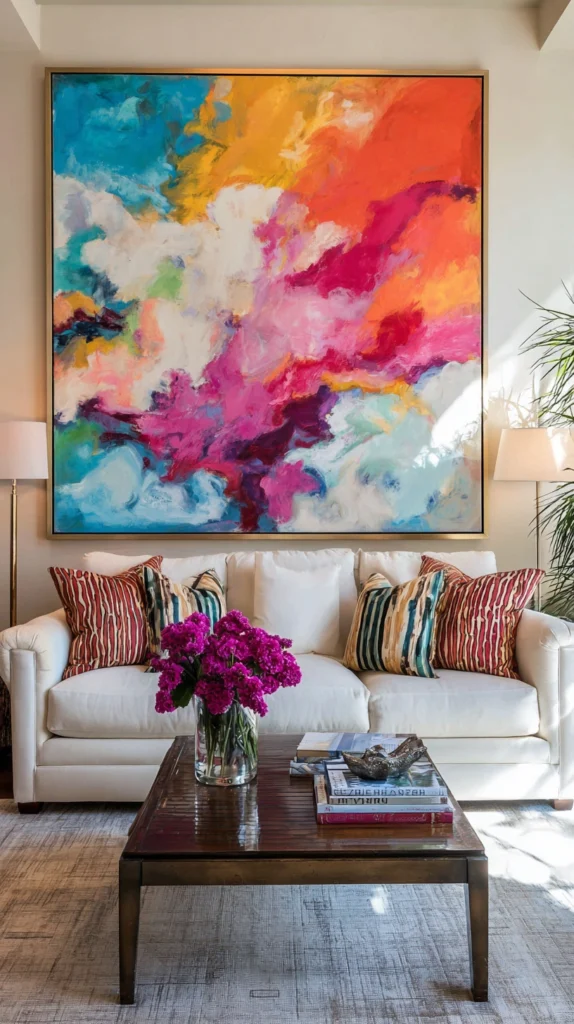
The single large artwork, a painting, a print, a photograph, or a textile work of genuine scale, hung centered above the sofa at the correct height, is the simplest and most powerfully effective solution available for the wall above the sofa. Its simplicity is not a compromise. It is the expression of the compositional confidence that knows when one well-chosen element is worth more than many smaller ones.
The artwork’s width should be approximately two thirds to three quarters of the sofa’s total width. An artwork narrower than this floats above the sofa without connecting to it visually. An artwork wider than the sofa creates an imbalance of proportions that draws the eye to the discrepancy rather than to the work itself.
The hanging height should place the artwork’s center at approximately one hundred and forty-five centimeters from the floor, which positions the work at the correct eye level for both the standing viewer approaching the sofa and the seated viewer looking across the room. The bottom edge of the artwork should sit approximately twenty to thirty centimeters above the sofa’s back.
The artwork’s subject, palette, and scale should be chosen in relationship to the room’s existing color scheme and the sofa’s specific tone. A work that introduces one or two colors not present in the surrounding room creates the chromatic interest that the room needs without the disruption of a work whose palette is entirely disconnected from its context.
2. A Carefully Composed Gallery Wall
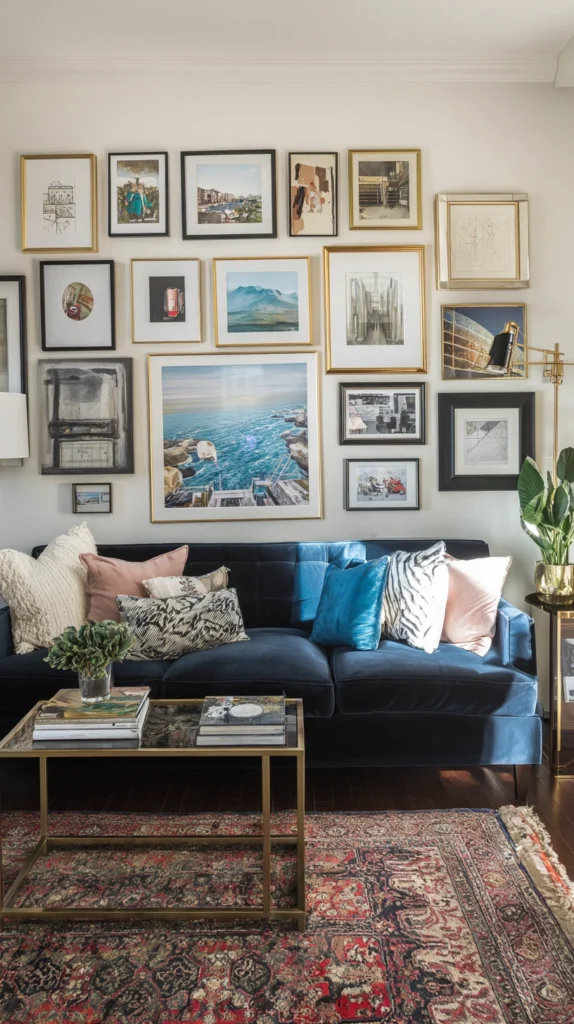
A gallery wall above the sofa, a composition of multiple artworks and objects arranged as a unified visual field on the wall’s surface, creates a decorating statement of considerable complexity and personal expression when it is organized with genuine compositional intelligence. The gallery wall that works is not the one with the most pieces but the one with the most considered arrangement.
Plan the gallery wall composition on the floor before hanging a single piece. Lay out every element of the intended composition on the floor in front of the sofa wall, arranging and rearranging until the proportional relationships, the spacing, and the visual balance of the composition are resolved. Photograph the floor composition as a reference before transferring it to the wall.
The overall shape of the gallery wall composition should be defined and intentional. A rectangular composition of consistent outer edges creates the most architectural and most formal result. An organic composition that expands and contracts along its edges creates a more casual, more personal result. Both are valid. A composition without a defined overall shape creates the visual incoherence that gives poorly executed gallery walls their bad reputation.
Frame sizes, colors, and styles within the gallery wall should be varied enough to create visual interest but unified enough to create visual coherence. A consistent frame color across varied frame sizes creates unity through color while allowing variety in scale.
A mix of both frame colors and frame styles creates a composition whose unity must come from the artwork’s subject matter or palette rather than from the frames themselves.
3. A Set of Three Prints in Matching Frames
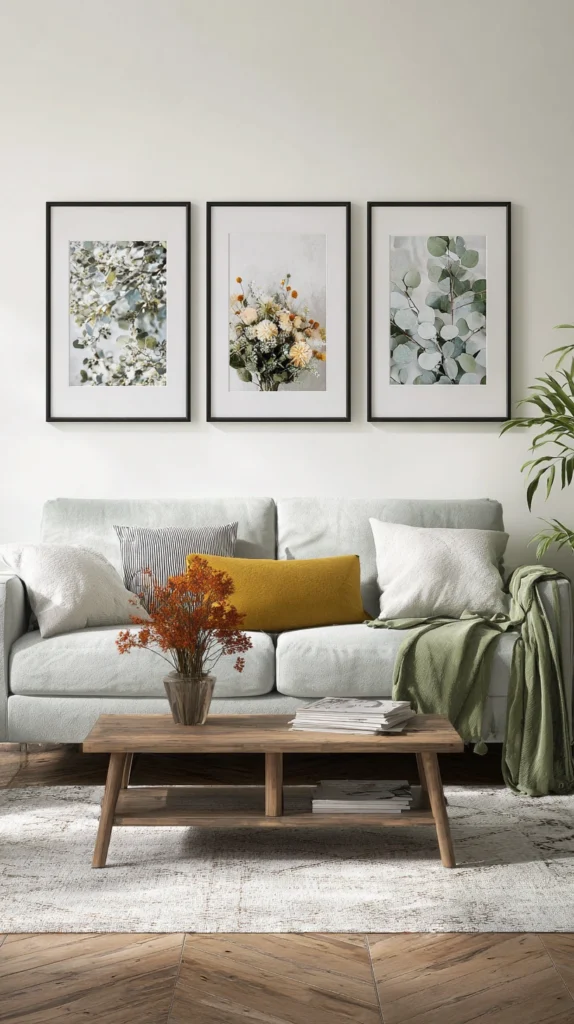
Three prints in matching frames, hung in a horizontal row centered above the sofa, creates a decorating solution of clean, graphic simplicity that suits the contemporary living room with particular elegance. The matching frames create the visual unity that makes the three prints read as a single composed element rather than three separate artworks placed in proximity.
The three prints should be related in subject, palette, or style without being identical. Three botanical illustrations from the same series, three architectural drawings of related subjects, or three abstract prints in the same color palette all create the visual relationship that makes the triptych format work. Three entirely unrelated prints in matching frames creates the discord of a format whose visual promise is unfulfilled by its content.
The spacing between the three frames should be consistent and relatively tight, approximately five to eight centimeters between adjacent frames. Wider spacing weakens the visual connection between the prints and allows the triptych to read as three separate artworks rather than as the unified horizontal composition that the format is designed to create above the sofa.
The overall width of the three-print composition should follow the same proportional rule as the single large artwork. The combined width of the three frames and the two gaps between them should be approximately two thirds to three quarters of the sofa’s total width, creating the proportional relationship between the wall composition and the furniture below it that the above-sofa decorating solution requires.
4. A Large Textile or Woven Wall Hanging
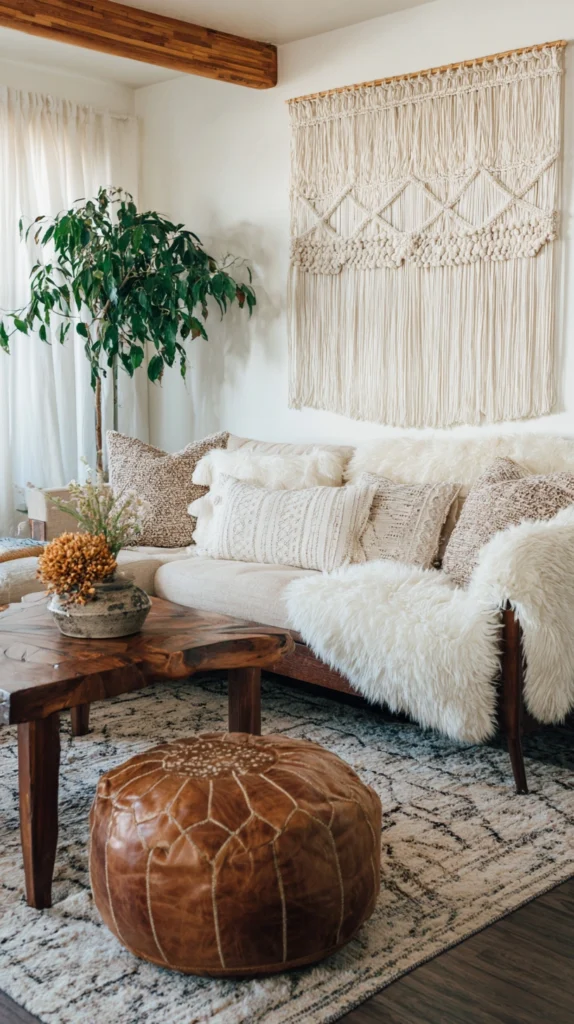
A textile wall hanging, a woven tapestry, a macrame piece, a vintage kilim, or a contemporary fiber art work, hung above the sofa creates a decorating statement of exceptional textural richness and tactile warmth that no framed artwork can replicate. The textile’s surface catches and returns the room’s light differently at every viewing angle, creating a surface of continuous, subtle visual interest.
The textile hanging should be generous. A small textile above a large sofa creates the inadequacy of any undersized above-sofa element. A textile of adequate width, filling two thirds or more of the sofa’s width, and of adequate height to create a significant visual presence on the wall above the sofa, creates the impact that the format’s textural quality deserves.
The hanging method should suit the textile’s weight and character. A simple timber dowel threaded through a fabric sleeve at the textile’s top edge creates the most authentic and most visually appropriate hanging for a woven or macrame piece.
A concealed hanging system fixed to the wall behind the textile’s top edge creates the most architectural and most refined hanging for a tapestry or a flat woven work.
The textile’s color palette should be chosen to introduce warmth and organic variation into the room’s color scheme. The natural, slightly irregular tones of a handwoven textile, whether in the warm ochres and terracottas of a traditional weave or the more muted, contemporary palette of a natural fiber piece, create a color presence above the sofa of exceptional subtlety and warmth.
5. A Series of Framed Mirrors
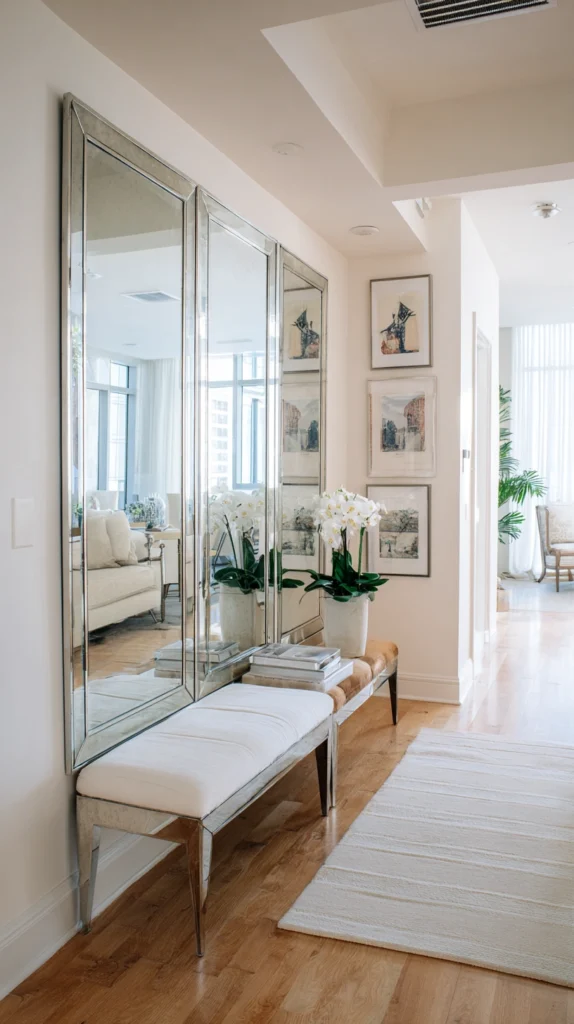
A composition of framed mirrors above the sofa, whether a single large mirror or a group of smaller mirrors in varied or matching frames, creates a decorating solution that simultaneously addresses the aesthetic of the wall above the sofa and the functional requirement of any room that benefits from increased light and spatial depth.
A single large mirror in a frame of genuine quality and visual character, hung centered above the sofa at the correct height, creates a living room focal point of maximum spatial impact. The mirror’s reflection amplifies the room’s natural light, creates the visual suggestion of depth beyond the wall’s actual surface, and reflects the room back at its occupants from the most prominent wall.
A composition of smaller mirrors in varied frame styles and sizes, arranged with the same compositional intelligence as a gallery wall of artworks, creates a more complex and more personally expressive above-sofa treatment. The varied frames should be chosen from a consistent material family, all gilt, all dark timber, or all simple black metal, to create the visual unity that a mixed mirror composition requires.
The mirror composition above the sofa should be positioned to reflect the most visually interesting element of the opposite wall or the room beyond. A mirror that reflects a window creates a secondary light source of considerable atmospheric quality.
A mirror that reflects another artwork creates a visual dialogue across the room. A mirror that reflects a blank wall creates nothing of interest regardless of the mirror’s own quality.
6. Floating Shelves with Curated Styling
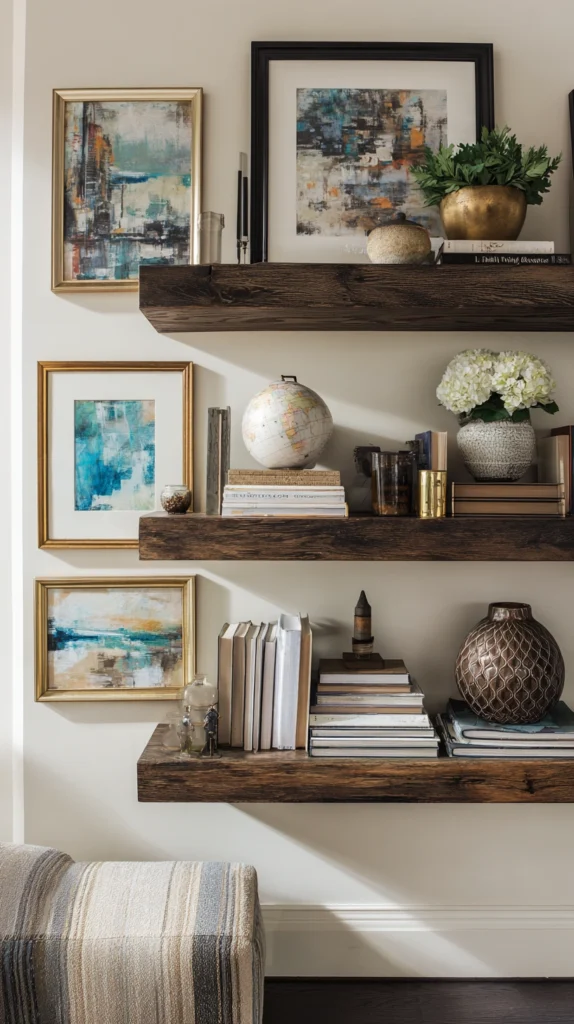
Floating shelves above the sofa, two or three shelves of adequate depth and generous length, styled with a carefully curated combination of books, plants, ceramics, and personal objects, create an above-sofa treatment of functional beauty that serves both the storage and the decorating requirements of the living room simultaneously.
The shelves should be of adequate depth, at least twenty-five centimeters, to hold books upright and to accommodate the varied depths of the objects arranged on them. Shallower shelves create the constraint of a display-only surface that cannot hold the books and objects of genuine domestic life in a stable and visually generous arrangement.
The shelf styling should follow the principles of considered surface curation rather than the accumulation of available objects. Each shelf should be styled as an individual composition with a consistent eye level and a varied height profile, some objects standing tall, some medium, some low, creating the landscape-like variation of height that makes a well-styled shelf visually engaging from across the room.
The shelves’ material and finish should relate to the room’s existing material palette. A white painted shelf suits the neutral contemporary living room. A natural oak shelf suits the warm, Scandinavian-influenced living room. A dark stained shelf suits the more dramatically decorated living room with a deeper, richer color scheme throughout its wider surface palette.
7. Wallpaper Applied to a Defined Panel
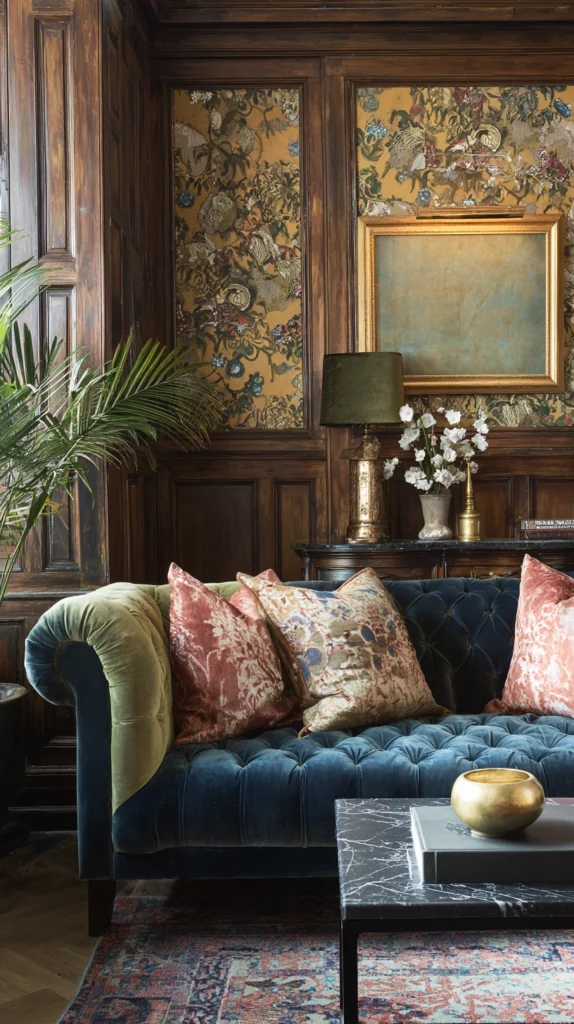
A panel of wallpaper applied to the wall above the sofa within a defined border, creating a framed section of pattern or texture on an otherwise plain wall, creates an above-sofa treatment of considerable decorative richness without the commitment of papering the entire wall. The defined panel creates the impact of a large artwork with the material richness of the wallpaper’s pattern.
The panel’s dimensions should be proportional to the sofa’s scale. A panel width of two thirds to three quarters of the sofa’s width, and a height from approximately thirty centimeters above the sofa back to within thirty centimeters of the ceiling, creates the scale of visual presence that the wall above the sofa requires without extending to a full feature wall.
The border defining the panel can be created with a simple painted line, with timber molding applied to the wall in a rectangular frame, or with the wallpaper itself if its pattern creates a natural visual boundary. The timber molding border creates the most architectural and most finished result, particularly in a room with existing cornice molding or other period architectural details.
The wallpaper pattern should be chosen for its specific quality at the scale of the defined panel rather than for its appearance in a sample. A pattern that reads beautifully across a full-width feature wall may read very differently in the more contained format of the above-sofa panel, where the repeat’s relationship to the panel’s edges requires specific attention.
8. A Large Framed Botanical or Map Print
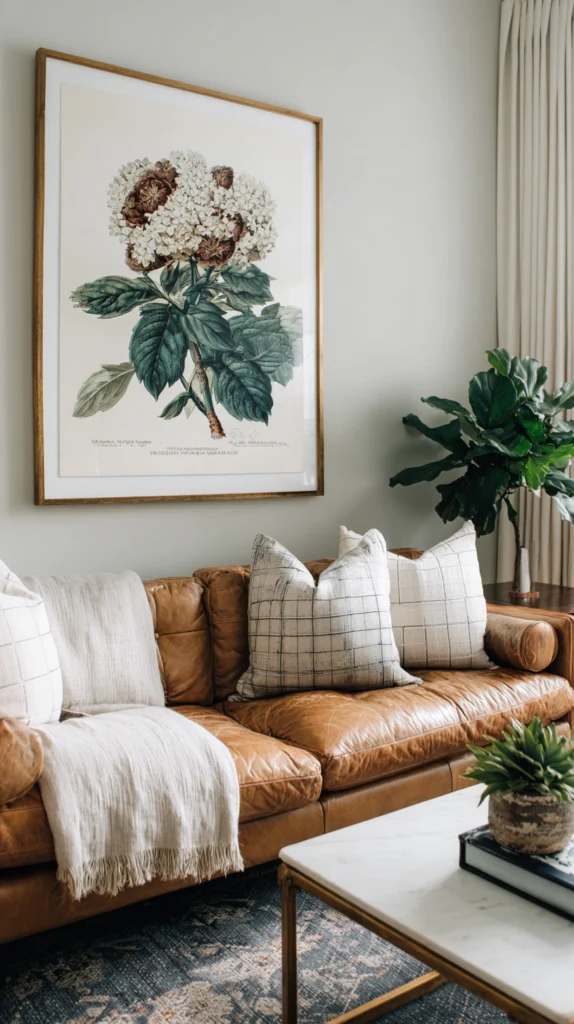
A large framed botanical illustration or a vintage-style map print, hung above the sofa as a single statement piece, creates a living room backdrop of intellectual warmth and visual detail that rewards sustained attention from the sofa below. The botanical or map format provides the visual complexity of a highly detailed surface within the clean format of a single framed work.
The print’s scale should be chosen for maximum visual impact at the wall’s specific dimensions. A print that is too small to be read from the sofa’s seating distance loses the detail that makes the botanical or map format most interesting.
A print of adequate scale, whose individual botanical elements or geographical details are legible from the sofa, creates a visual surface of continuous interest that the abstract work cannot provide.
Frame the botanical or map print in a simple, quality frame that does not compete with the print’s own visual complexity. A thin black or natural timber frame with a generous white or cream mat creates the clean, considered presentation that the detailed print requires.
An elaborate or heavily ornate frame competes with the print’s detail and creates a visual conflict at the room’s primary focal point.
Position additional small objects on a console table or a shelf below the print, if the sofa’s arrangement allows, that relate to the print’s subject matter.
Specimen bottles with botanical samples below a botanical illustration, or a collection of globes and navigation instruments below a map print, create a composed vignette of narrative coherence that extends the print’s visual world into the three-dimensional space of the room.
9. A Sculptural Wall Installation
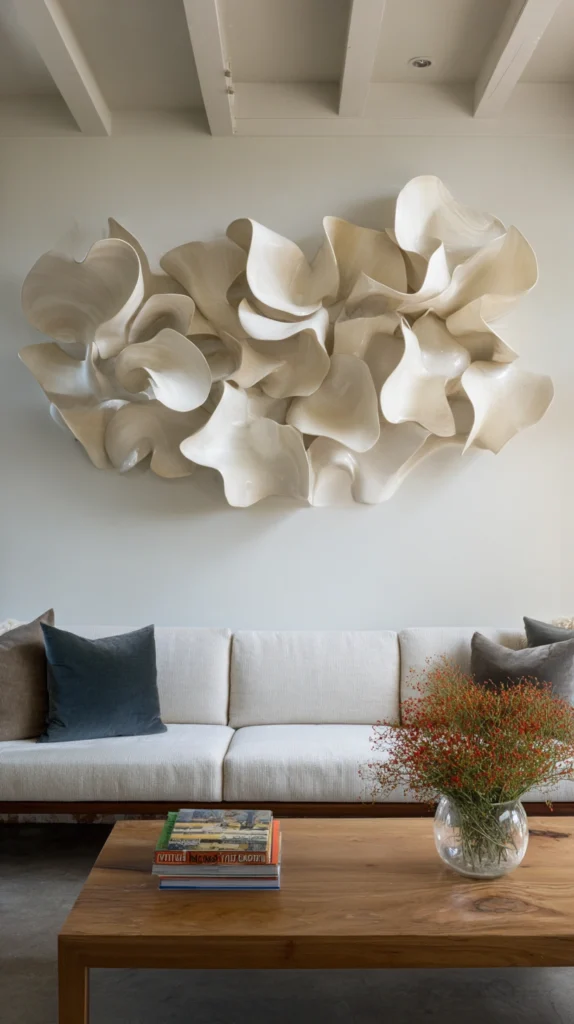
A sculptural wall installation above the sofa, a three-dimensional work in ceramic, metal, timber, or woven fiber that projects from the wall surface and creates depth, shadow, and physical presence beyond the purely flat surface of framed artwork, creates a living room focal point of genuine artistic ambition and material sophistication.
The sculptural installation can be a single commissioned or purchased work of adequate scale, or an arrangement of multiple smaller sculptural elements composed across the wall surface as a unified installation.
Individual ceramic wall pieces arranged in an organic composition, a series of carved timber forms in a horizontal arrangement, or a metal work of sufficient physical presence all create the sculptural above-sofa treatment.
The sculptural installation’s relationship to the room’s lighting is critical. A sculptural work that is not lit creates a flat, undifferentiated surface presence that fails to communicate the depth and physical reality of the three-dimensional form. A picture light, a directional spotlight on an adjustable track, or a dedicated wall-mounted light positioned to rake across the sculptural surface creates the shadow and highlight that communicates the work’s physical dimensionality.
Choose the sculptural installation’s material to relate to the room’s wider material palette. A ceramic wall installation in tones drawn from the room’s color scheme creates a sculptural presence that is integrated rather than imposed.
A metal work in a finish that relates to the room’s hardware and fixture finish creates the material consistency that the most resolved living room interiors achieve across every element from large to small.
10. A Dramatic Oversized Clock
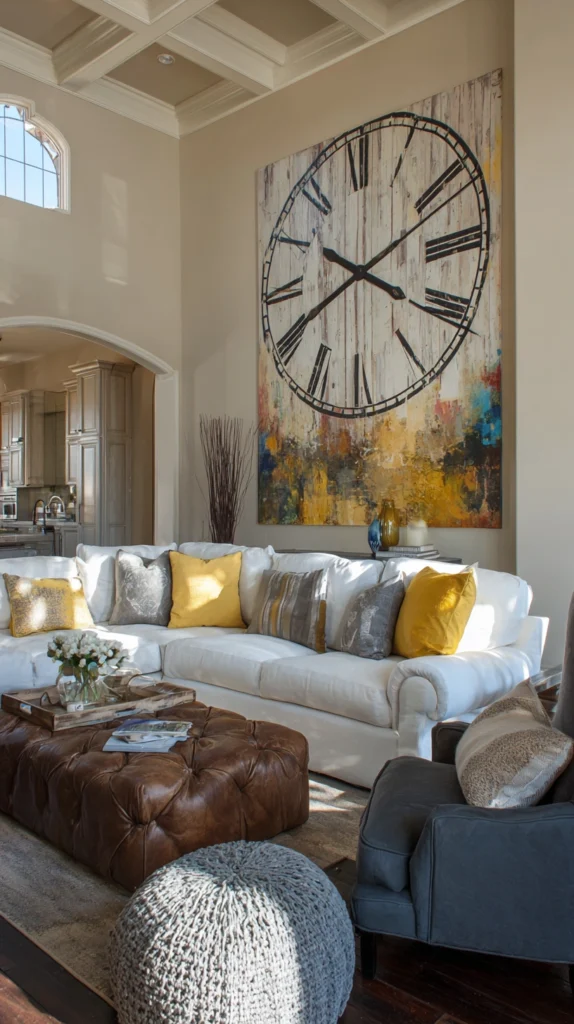
A large wall clock of genuine scale, hung centered above the sofa as the wall’s primary decorating element, creates a living room focal point that combines the functional with the decorative in a single, confident statement. The oversized clock’s scale and graphic character create an immediate visual impact that announces the design intention of the wall without ambiguity.
The clock’s diameter should be a minimum of sixty centimeters for the standard sofa wall and ideally seventy-five to ninety centimeters for a wall of generous width. A clock of smaller dimensions reads as a standard wall clock placed above the sofa rather than as the oversized decorative statement that the format requires for visual authority above a large piece of furniture.
The clock’s design should be chosen for its specific graphic quality at the intended scale. A Roman numeral face in a classic format, an industrial-style clock with exposed numerals and hands of significant visual weight, or a minimal face with simple indices and fine hands all create different atmospheric qualities that should be chosen in relationship to the room’s overall aesthetic direction.
The oversized clock works best above the sofa when it is the wall’s only significant decorating element. Surrounding the large clock with additional artworks or objects creates a visual competition that reduces the clock’s commanding presence and creates the cluttered quality that the single bold statement is specifically designed to avoid. Let the clock occupy the wall alone and with complete authority.
11. A Macrame or Fiber Art Panel
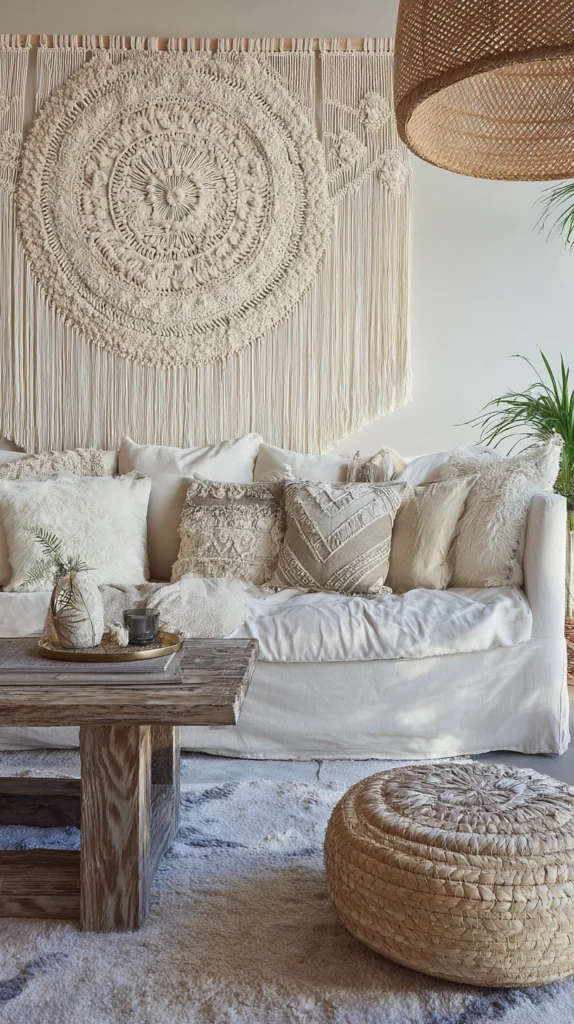
A large macrame panel or a contemporary fiber art work in natural materials, hung above the sofa on a timber dowel or a simple wall-mounted rod, creates an above-sofa treatment of organic warmth and handcraft quality that brings the tactile richness of the maker’s tradition to the living room’s most prominent wall.
The macrame or fiber art panel should be of a scale generous enough to create genuine visual presence above the sofa.
A panel that is too small reads as a craft object placed on the wall rather than as a considered decorating choice made for the specific scale of the above-sofa wall. A panel of appropriate width, filling the two thirds proportion of the sofa’s width, creates the visual authority that the format requires.
Natural fiber materials, undyed cotton cord, jute, linen, and raw wool, create the warmest and most texturally rich results for the above-sofa fiber art treatment.
Colored fibers introduce a more deliberate chromatic note that should be chosen with specific reference to the room’s existing palette. Naturally dyed fibers in botanical tones of ochre, terracotta, and sage create the most contextually appropriate color introduction for most living room palettes.
The fiber art panel’s hanging hardware should be considered as a visible design element rather than a purely functional fixing. A beautiful timber dowel of an appropriate species and diameter, or a simple blackened steel rod of minimal profile, creates the hanging detail that communicates the same design attention to the work’s presentation that the work itself communicates in its making.
12. Architectural Molding as a Decorative Frame
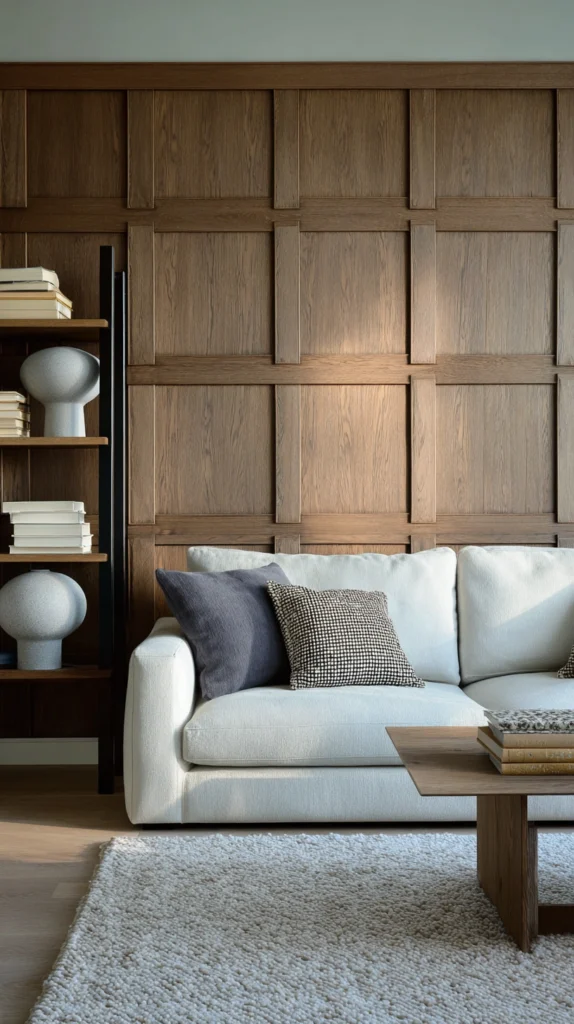
Architectural molding applied to the wall above the sofa in a rectangular panel composition, painted in the same color as the surrounding wall for a tone-on-tone effect or in a contrasting tone for a more graphic result, creates an above-sofa treatment of genuine architectural character that addresses the wall’s scale through the quality of its construction rather than through added objects or artwork.
The molding panel can be created from standard timber picture frame molding, from prefabricated plaster molding sections, or from simple square-section timber applied flat to the wall surface. The profile chosen should relate to the room’s existing architectural details.
A room with period cornicing and door architraves suits a molding of compatible profile. A room without existing period details suits a simpler, more minimal molding application.
A composition of multiple nested panels within the overall rectangular frame creates a more elaborate and more dramatically architectural result than the single-panel application.
Three progressively smaller panels nested within each other, each in the same molding profile, create the depth and complexity of a genuinely architectural wall treatment that the single-panel application cannot approach in terms of visual richness.
Paint the molding panel in a tone two to three shades deeper than the surrounding wall color for the tone-on-tone effect that is the most sophisticated and the most contemporary application of the architectural molding panel.
The slight tonal variation creates the shadow and depth of a genuinely three-dimensional treatment while maintaining the monochromatic restraint that the contemporary interior most consistently values.
13. A Collection of Ceramic Wall Plates
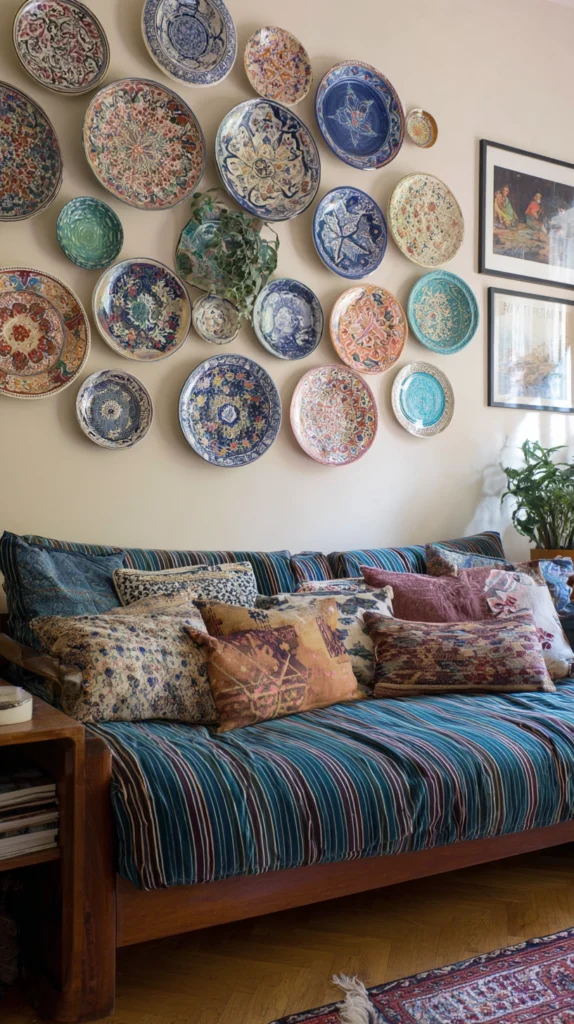
A composition of decorative ceramic plates, hung on the wall above the sofa in an arranged grouping, creates an above-sofa treatment of considerable warmth, color, and cultural richness that references the long domestic tradition of the plate display with a contemporary curatorial sensibility that distinguishes it from its more casual antecedents.
The plate collection should be chosen with a unifying principle that gives the composition its visual coherence. A collection of plates from a single maker or a single tradition, Portuguese hand-painted plates, Japanese blue and white ceramics, or English transferware in a consistent pattern, creates a composition whose unity comes from the material’s cultural identity.
A collection of plates chosen for a consistent color palette creates a composition whose unity comes from the chromatic relationship between individual pieces.
The hanging system for the ceramic plates should be invisible from the front and secure enough for the plate’s weight and the wall fixing’s specific conditions. Plate hangers of the appropriate size for each plate’s diameter, fixed to the wall with picture hooks of adequate weight rating, create the individual hanging positions for each plate in the composition.
The spacing between plates in the composition should be tight enough to create the visual connection of a unified grouping, approximately five to eight centimeters between adjacent plates, without the plates touching or overlapping. The overall shape of the plate composition, like the gallery wall composition, should be defined and intentional, a rectangle, a circle, or an organic form of consistent outer boundary.
14. Neon or LED Sign as a Statement Piece
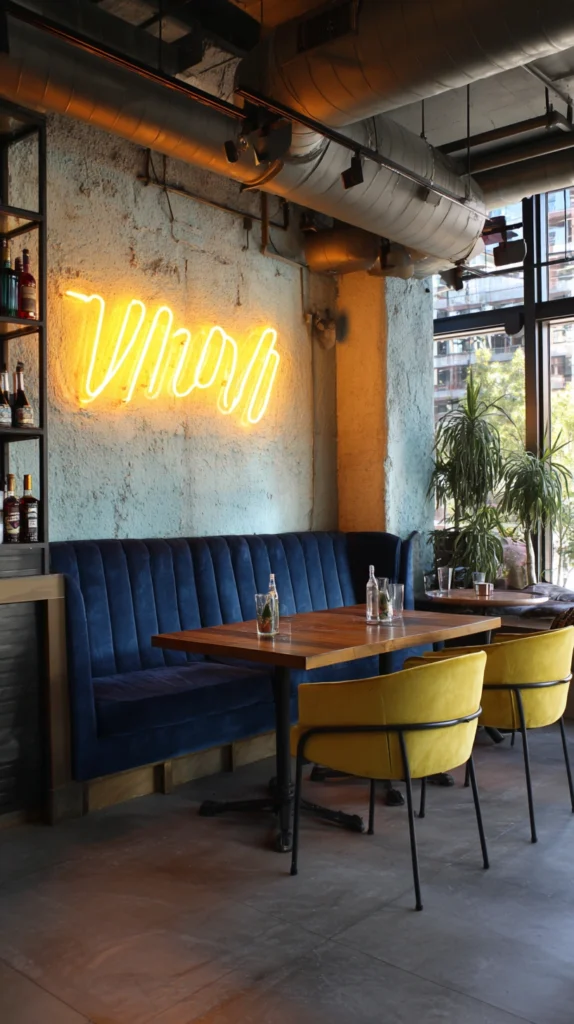
A neon or LED sign above the sofa, a word, a phrase, a symbol, or an abstract form in warm-toned neon light, creates an above-sofa treatment of contemporary graphic confidence and atmospheric lighting quality that no other decorating approach can replicate. The neon sign combines the decorative function of the artwork with the atmospheric function of a warm light source.
The text or symbol chosen for the neon sign should be personally meaningful rather than generically inspirational. The mass-produced neon sign with a generic motivational phrase creates a living room with the ambiance of a commercial premises rather than a personal domestic space.
A sign whose text references something specific to the household’s life, culture, or values creates a personal statement of genuine authenticity.
The neon sign’s color should be chosen for its specific atmospheric quality in the room’s lighting context. Warm white neon creates the most universally flattering and most atmospherically versatile light quality.
Pink neon creates warmth and the specific quality of the vintage diner translated to the domestic interior. Deep red neon creates the most dramatically atmospheric and the most intensity-specific quality of any neon color.
Mount the neon sign on the wall above the sofa at the correct compositional height without surrounding it with additional decorating elements that compete with its light and its graphic statement.
The neon sign works best as a singular, commanding element on an otherwise simply treated wall, its warm light creating the above-sofa atmosphere that no combination of static decorating elements can achieve in the same way.
15. Design the Above-Sofa Wall as the Room’s Defining Statement
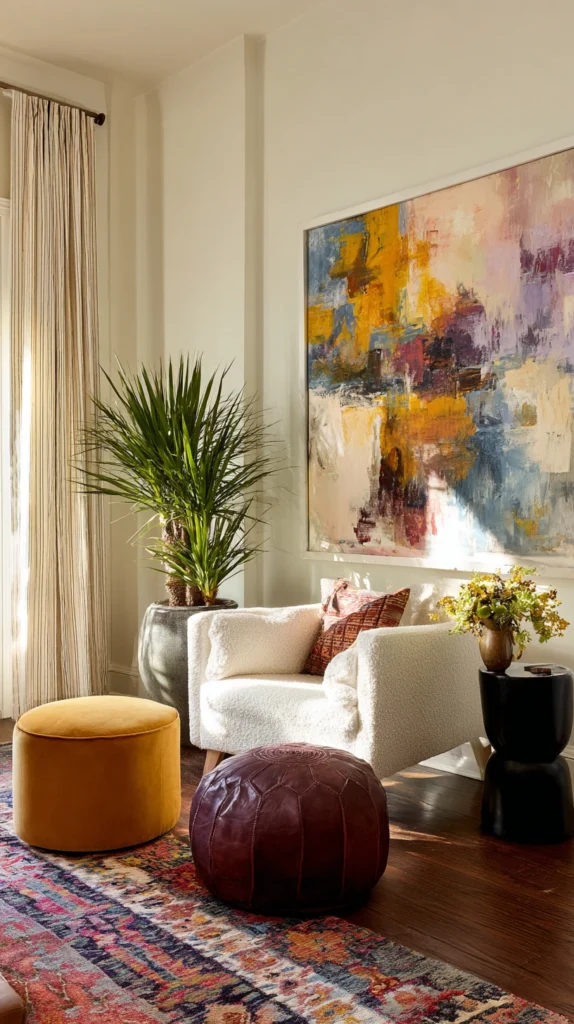
The final above-sofa decorating idea is the most important design principle of all. It is the commitment to treating the wall above the sofa not as a space that needs to be filled but as the living room’s primary decorating canvas, the surface whose quality of treatment most powerfully defines the room’s overall character and the one that deserves the most careful consideration of any surface in the living room.
The above-sofa wall that is treated as the room’s defining statement rather than an afterthought creates a living room of genuine design ambition and genuine personal expression. The artwork chosen with real care for its specific quality and its specific relationship to the room’s palette. The gallery wall is organized with genuine compositional intelligence. The textile was chosen for its specific warmth and material richness.
Every decorating decision made for the wall above the sofa should begin with the question of what quality the living room most needs at its primary focal point. Warmth, depth, color, pattern, texture, light, personal narrative. The answer to this question determines the format of the above-sofa treatment more reliably than any prescriptive design rule.
The wall above the sofa, treated with the intelligence, the confidence, and the genuine decorating ambition it deserves, transforms the living room from a room with a sofa in it to a room organized around a complete, considered, and deeply personal decorating vision. It is the difference between a room that is furnished and a room that is genuinely, completely, and unmistakably designed.