15 Home Office Styling Ideas That Boost Focus
There is a meaningful difference between a space where you work and a space that helps you work. Most people settle for the former — a desk pushed against a wall, a chair that was chosen for price rather than posture, a tangle of cables that never quite disappears — and then wonder why focus feels like something they have to fight for rather than something the environment naturally supports.

The truth is that your surroundings are in constant, quiet conversation with your brain. Light levels, color temperature, the presence or absence of clutter, the ratio of hard surfaces to soft materials — all of it shapes your cognitive state in ways that are measurable and real.
A well-styled home office isn’t an indulgence. It’s infrastructure. Here are 15 ideas for building a workspace that actively works with you rather than passively against you.
1. Commit to a Dedicated Zone, Even in a Small Space
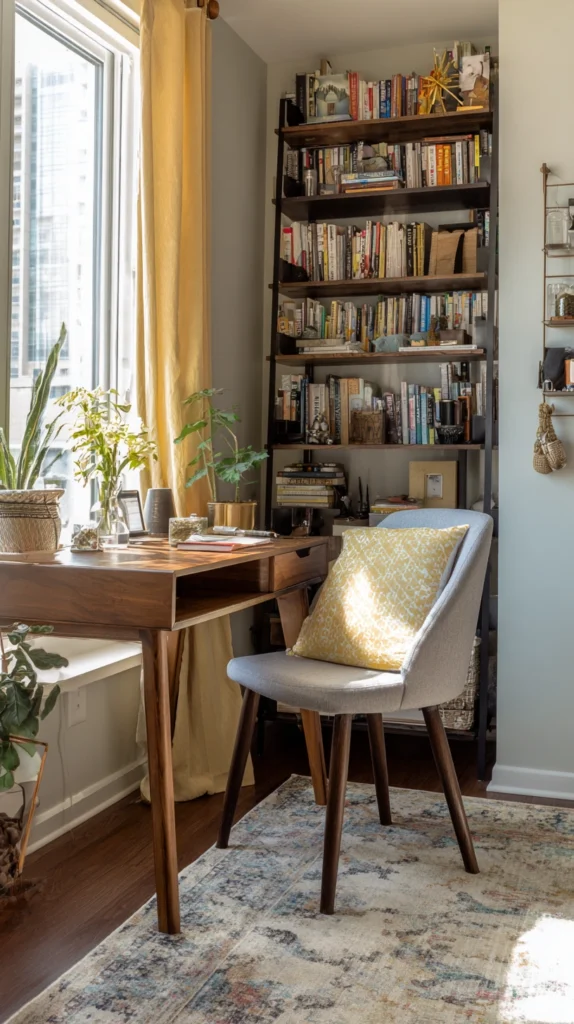
Before any styling decision can do its job, the foundational principle must be in place: your workspace needs to be its own defined zone, separate — even if only symbolically — from the spaces where you rest, eat, and decompress. The brain is powerfully associative. It learns to shift into work mode when you sit at the desk and out of it when you leave, but only if those two states are reliably associated with different locations.
This doesn’t require a dedicated room. A corner defined by a rug, a bookcase used as a room divider, or even a consistent arrangement of furniture within a shared space is enough. What matters is that when you sit down, your brain recognizes this as the place where focused work happens, and when you stand up and walk away, that signal is cleanly broken.
2. Get the Desk Placement Right Before Anything Else
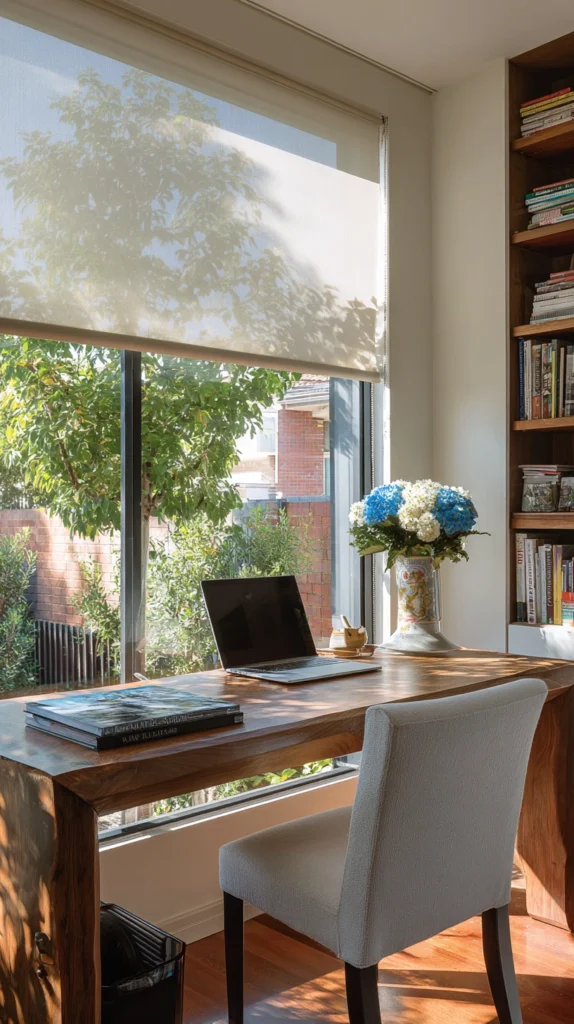
Desk placement is the single most consequential decision in home office design, and it’s almost always made too quickly and changed too rarely. The conventional wisdom is to face a window for natural light, and while this is often excellent advice, it needs qualification.
Facing a window directly can introduce glare on screens and pull the eye toward movement outside — birds, passing cars, a neighbor’s activity — all of which are focus disruptors. The superior solution for most people is to position the desk perpendicular to the window, so that natural light falls across the workspace from the side.
This maximizes brightness while minimizing glare and visual distraction. If your room’s layout doesn’t allow for this, a well-chosen window treatment — a light-filtering roller blind that can be adjusted precisely throughout the day — solves the problem elegantly.
3. Invest in Task Lighting That Actually Does Its Job
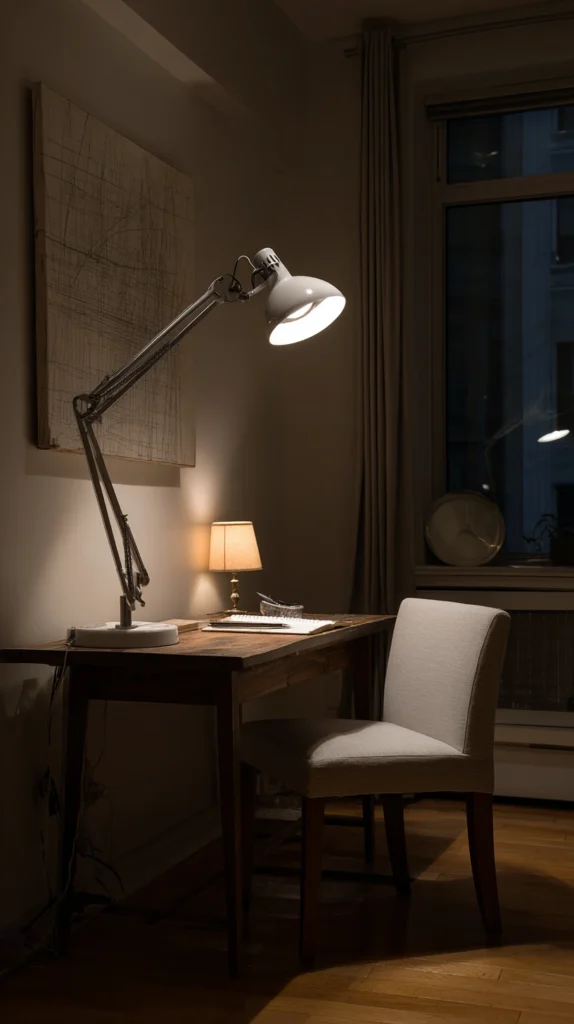
Overhead lighting is one of the great enemies of focused work. A single ceiling fixture casting flat, even light across a room provides neither the warmth nor the directionality that a productive workspace needs. Good task lighting does two things simultaneously: it illuminates your immediate work surface with enough intensity to reduce eye strain, and it creates a pool of focused light that psychologically narrows your attention to the task at hand.
An adjustable arm desk lamp in a warm-to-neutral color temperature — around 3000K to 4000K — placed to the left if you’re right-handed, to the right if you’re left-handed, is the baseline. Pair it with a secondary ambient light source such as a small floor lamp in the corner to reduce the harsh contrast between your bright desk and a dark surrounding room. That contrast is what causes the low-grade headaches that people often attribute to screen time.
4. Choose a Chair as Seriously as You’d Choose a Mattress
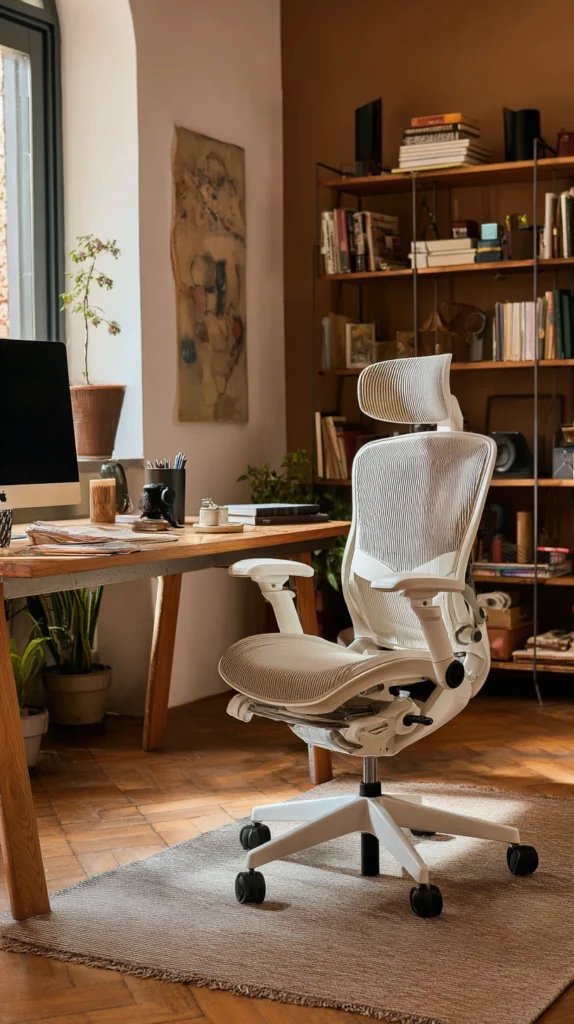
You will spend more cumulative hours in your office chair than in almost any other piece of furniture you own, and yet most people spend more time choosing a coffee table. Ergonomic support is the non-negotiable foundation — lumbar support that actually contacts your lower back, seat height that allows your feet to rest flat on the floor, and armrests that let your shoulders drop rather than hunch. But ergonomics and aesthetics are no longer mutually exclusive.
Chairs like the Herman Miller Aeron, the Steelcase Leap, and a growing range of mid-market alternatives now offer genuine postural support in designs that don’t look like they’ve been imported from a corporate cubicle farm. If budget is a constraint, a well-chosen secondhand ergonomic chair from a quality manufacturer will outperform a brand-new budget chair on every relevant metric.
5. Use Color Psychology Deliberately
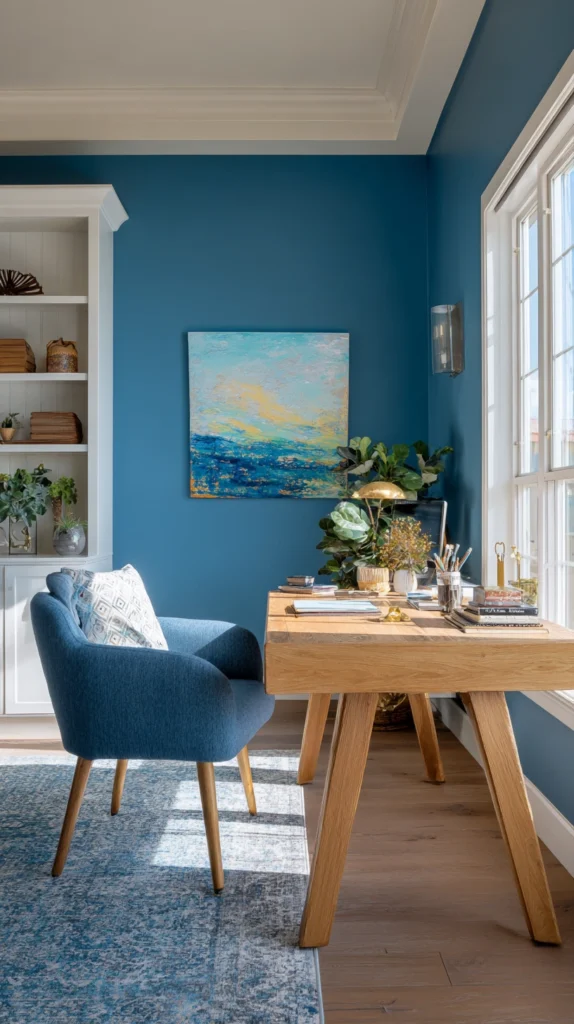
Color is one of the most powerful and most casually treated tools in workspace design. Research consistently suggests that blue tones support analytical thinking and sustained concentration, making them a reliable choice for primary wall colors in a home office.
Green has a restorative quality that reduces mental fatigue over long work sessions, which is partly why proximity to plants has such a well-documented effect on productivity. Warm whites and soft creams create an open, unhurried environment that works well for creative work but can feel slightly unfocused for highly analytical tasks.
What to avoid is anything too saturated or visually stimulating on the walls directly in your sightline — red, bright orange, and intense yellow all increase arousal and heart rate in ways that are counterproductive to sustained, deep focus work. Choose your wall color the way you’d choose background music: supportive, present, and never louder than the work itself.
6. Control Clutter with Systems That Are Actually Usable
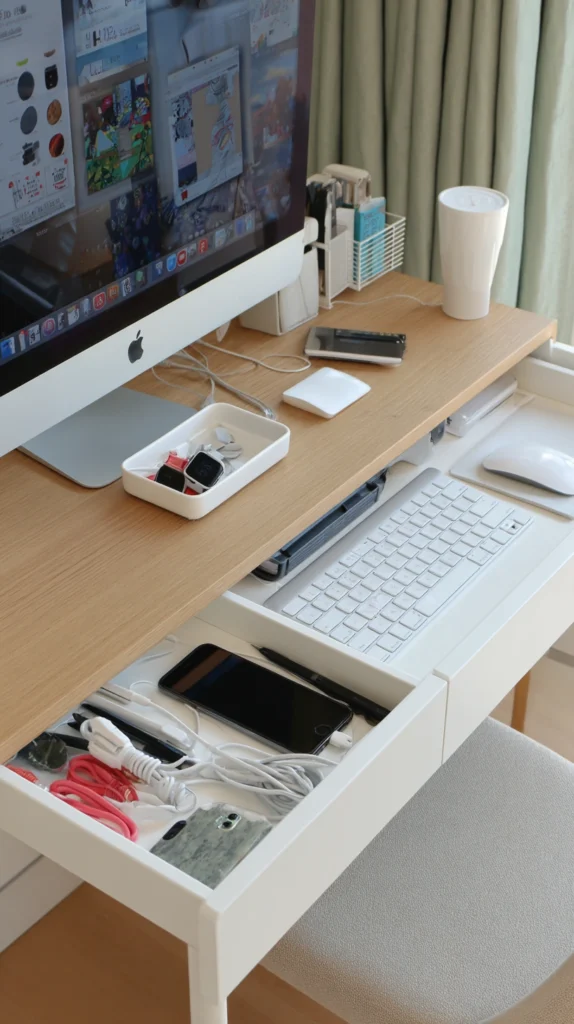
Clutter on a desk is not a minor aesthetic issue — it is a documented cognitive burden. Every object in your visual field that is not directly related to the task you’re working on competes for a small fraction of your attention. Individually, each object costs almost nothing. Collectively, they create the low-level mental noise that makes focus feel effortful and work feel draining even before it has properly begun.
The solution is not minimalism for its own sake but organization systems that you will actually maintain. Closed storage — drawers, cabinets, boxes with lids — beats open shelving for keeping the desk environment clean.
A single tray or small dish for the objects you genuinely need on the desktop corrals them without banishing them. And a cable management solution — even a simple adhesive cable channel along the desk’s edge — eliminates the visual chaos of tangled cords in a way that has an immediate and surprisingly significant effect on how the space feels.
7. Bring in Plants Strategically
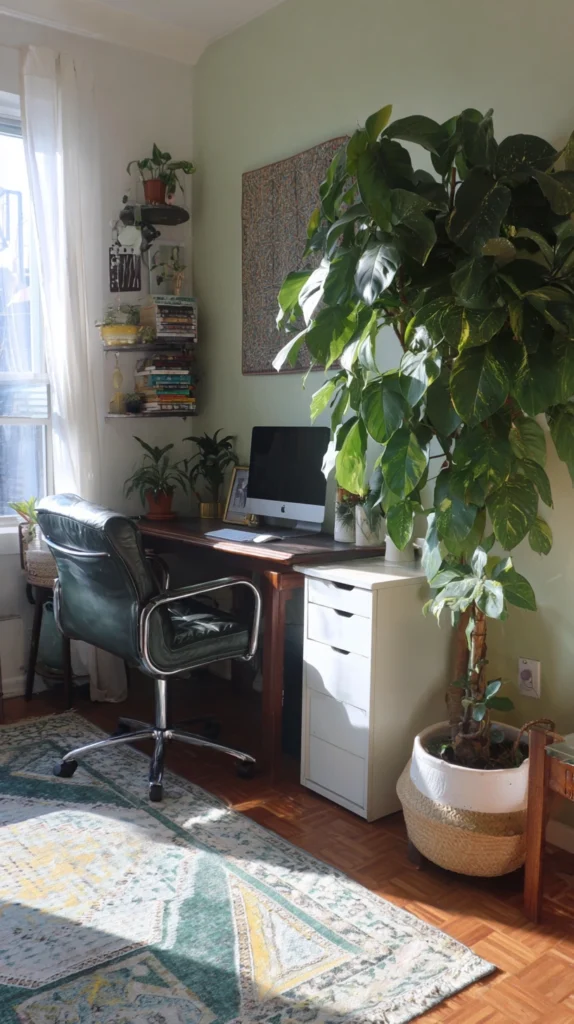
The productivity benefits of living plants in a workspace are backed by enough research at this point to be taken seriously rather than dismissed as lifestyle advice. Plants reduce stress markers, improve air quality in enclosed spaces, and provide the kind of gentle, non-demanding visual interest that rests the eyes during breaks from screen work without triggering the distraction cascade that a phone or window view can cause.
The best plants for a home office are those that thrive in indoor light conditions without requiring daily attention — pothos, ZZ plants, snake plants, and peace lilies all qualify. Place one at eye level to your side for ambient visual relief, and if space allows, a larger floor plant in the corner adds a sense of life and scale to the room without taking any functional space from the desk area.
8. Design Your Desk Surface Like a Professional
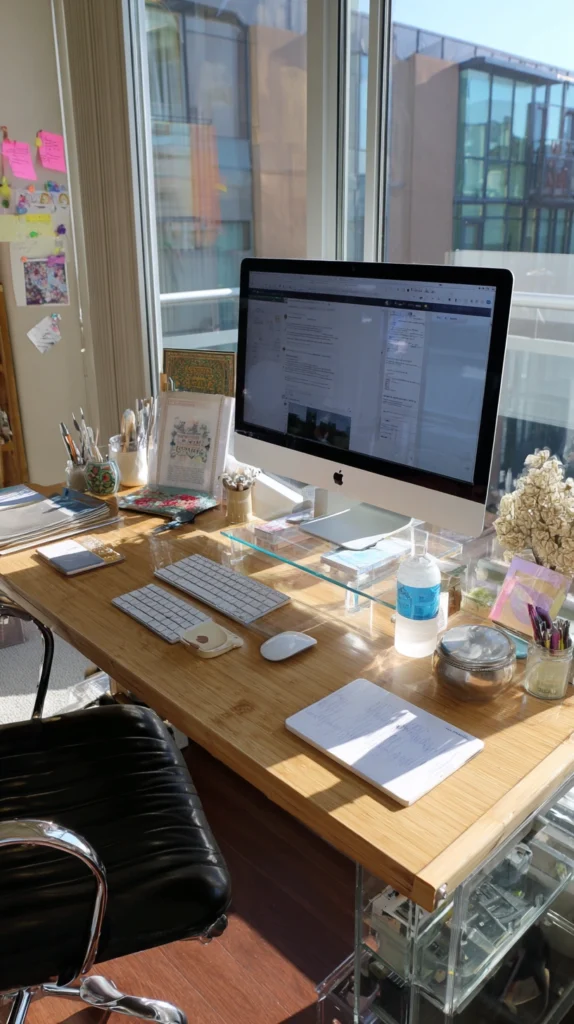
The surface of your desk is your primary tool, and how it’s arranged determines the quality of your working experience in ways that are easy to underestimate. The monitor — or laptop on a stand — should sit at eye level so that your neck maintains a neutral position throughout the workday. Keyboard and mouse should be close enough that your elbows rest at approximately ninety degrees without your shoulders rising toward your ears.
Beyond the functional essentials, keep the desk surface intentionally spare. One good pen in a small vessel, a notepad for hand-written notes, perhaps a small object of personal meaning — a stone, a small sculpture, a photograph in a simple frame — that anchors the space emotionally without cluttering it visually. Everything else lives in a drawer until it is needed.
9. Use a Large Format Desk Mat to Unify the Surface
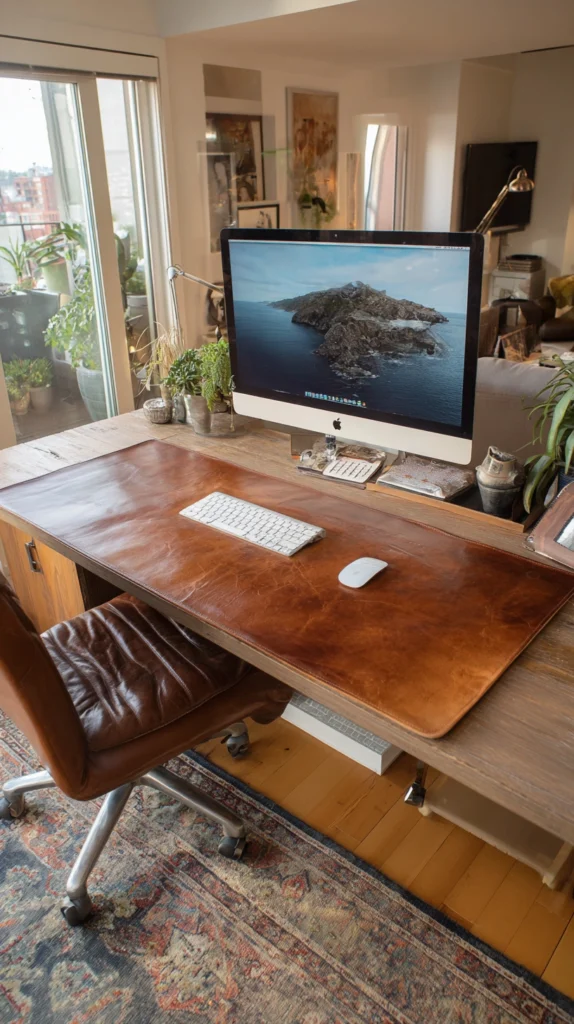
A desk mat — a large piece of leather, felt, or cork that covers the majority of the desk surface — is one of those small investments that has an effect well beyond its price. Practically, it protects the desk surface, provides a smooth and consistent writing and mousing surface, and reduces the noise of keyboard typing and object placement.
Aesthetically, it gives the desk a finished, intentional quality that bare wood or laminate rarely achieves on its own. In a natural leather or muted wool felt, a desk mat also introduces a warmth and materiality to the workspace that makes it feel considered rather than assembled. It’s a detail that professional designers consistently include in workspace styling because it works every time.
10. Create a Dedicated Display Wall for Inspiration
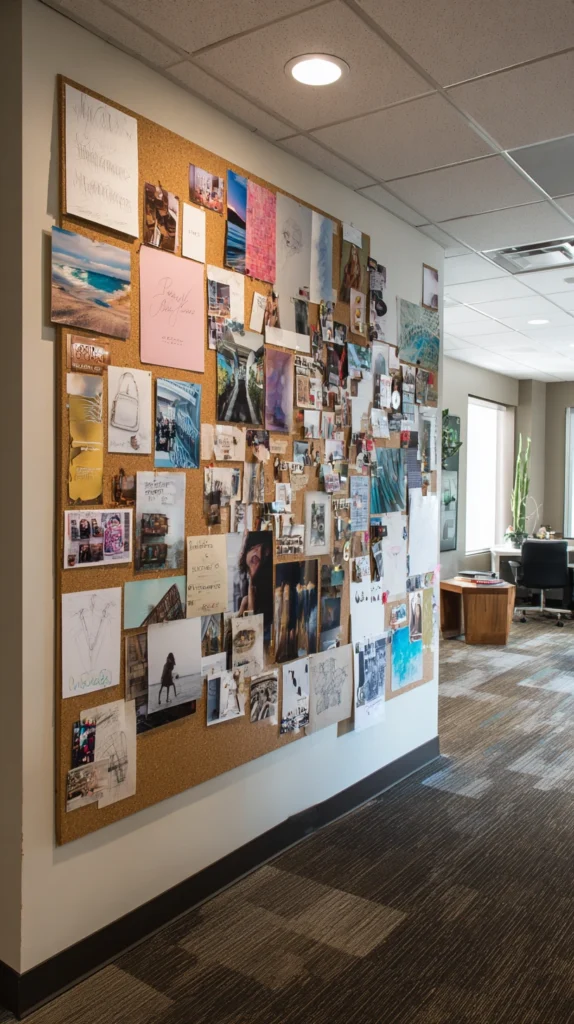
Cognitive focus doesn’t mean visual sterility. Some of the most productive minds in history have surrounded themselves with images, maps, diagrams, and references that feed their thinking — not because visual clutter helps them, but because a curated wall of meaningful material is fundamentally different from random disorder.
A dedicated inspiration wall or corkboard in a consistent area of the office — not behind your monitor where it competes for attention, but to the side or on an adjacent wall where you can turn to it deliberately — gives your mind a place to wander productively during the pauses that every creative and analytical process requires.
Pin up references, sketches, goals, quotes that actually mean something to you, printed images that capture the quality of work you’re reaching toward. Refresh it seasonally to prevent it from becoming wallpaper your eyes pass over without registering.
11. Layer Rugs and Textiles to Reduce Acoustic Distraction
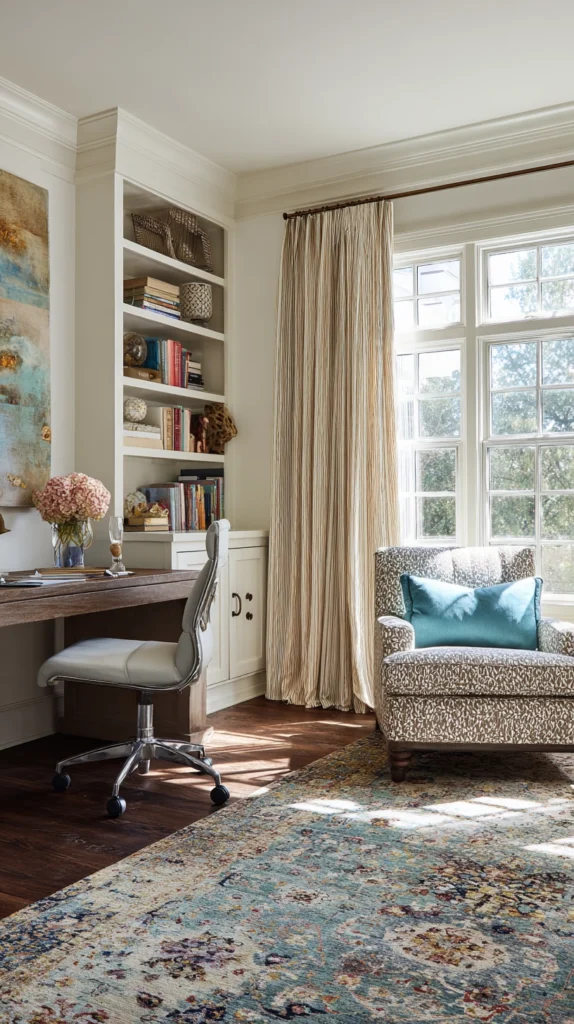
Hard floors and bare walls create echo. Echo creates a subtle but persistent audio environment that the brain must work to filter, and that filtering work draws from the same cognitive resources you need for focused thinking.
Layering a rug beneath the desk and chair — large enough that the chair legs remain on it even when pulled back — absorbs sound and reduces acoustic reverberation in the space. A bookcase filled with books along one wall serves a similar acoustic function while also providing storage and visual warmth.
Curtains in a medium-weight fabric rather than bare windows, a cushioned chair rather than a hard one — each of these soft elements contributes to an acoustic environment that is quieter, warmer, and less cognitively demanding to inhabit for hours at a time.
12. Introduce a Secondary Seating Option for Different Work Modes
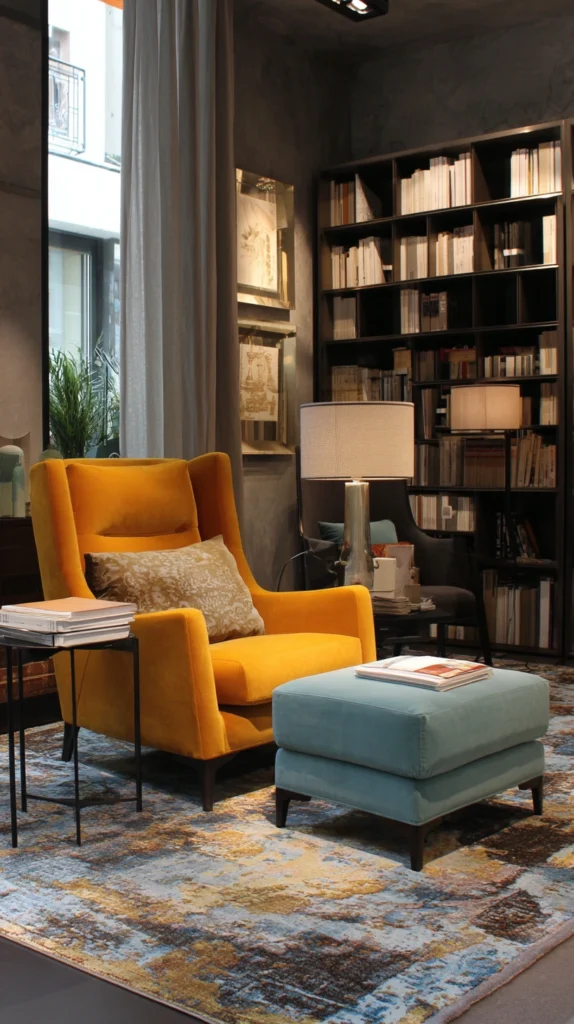
Not all work happens at a desk, and designing your office as if it does creates an environment that serves only one mode of thinking. Reading, planning, brainstorming, and reflection often happen better in a more relaxed posture — seated in a comfortable chair with a notebook, feet on a small ottoman, body at ease rather than at attention.
A well-chosen reading chair in the corner of the office — a simple armchair in a fabric that complements the room’s palette, with a small side table and a good lamp beside it — expands the workspace’s range without adding significant footprint. Moving between the desk and the chair throughout the day also introduces the light physical movement that research consistently links with improved cognitive performance and sustained attention.
13. Manage Natural and Artificial Light Throughout the Day
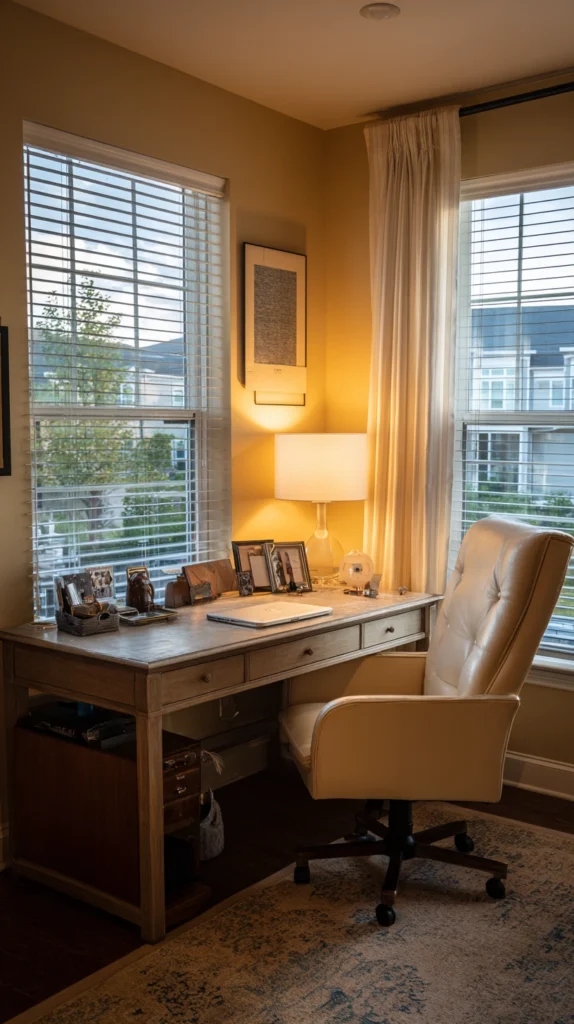
Light is not a static element in a workspace — it changes constantly throughout the day, and your lighting setup needs to change with it. Morning light is generally cool and energizing, excellent for focused analytical work.
By midafternoon, direct sunlight may be creating glare that strains your eyes without you fully registering the cause. Evening work often happens under lighting conditions that are far too cool and bright, suppressing melatonin in ways that affect sleep quality hours later.
Smart bulbs that allow you to shift color temperature throughout the day — cooler and brighter in the morning, warmer and dimmer by evening — give you meaningful control over your cognitive and biological state without requiring any significant effort once the system is established. This is one of those investments where the daily quality-of-life improvement genuinely compounds over time.
14. Keep Personal Items Meaningful but Minimal
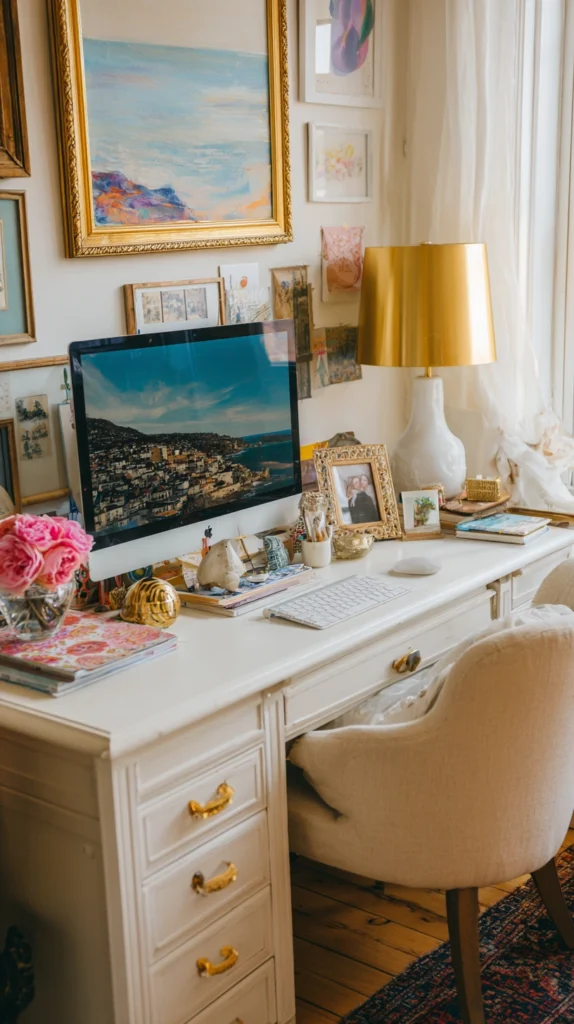
The home office exists in a particular tension between professional function and personal expression, and getting the balance right matters more than most styling guides acknowledge.
Too few personal items and the space feels cold, corporate, and motivationally flat — the environment sends no signal about who you are or what you value, which makes it hard to access the sense of purpose that sustains long work sessions.
Too many personal items and the space becomes a domestic environment with a desk in it, which makes psychological separation from home life difficult and focus harder to access.
The sweet spot is three to five objects of genuine personal significance: a photograph, an object from a meaningful trip, a small piece of art, a book that shaped your thinking. These items should earn their place on the desk or shelf not by sentiment alone but by the specific way they make you feel when you look at them during the working day.
15. End Every Day by Resetting the Space
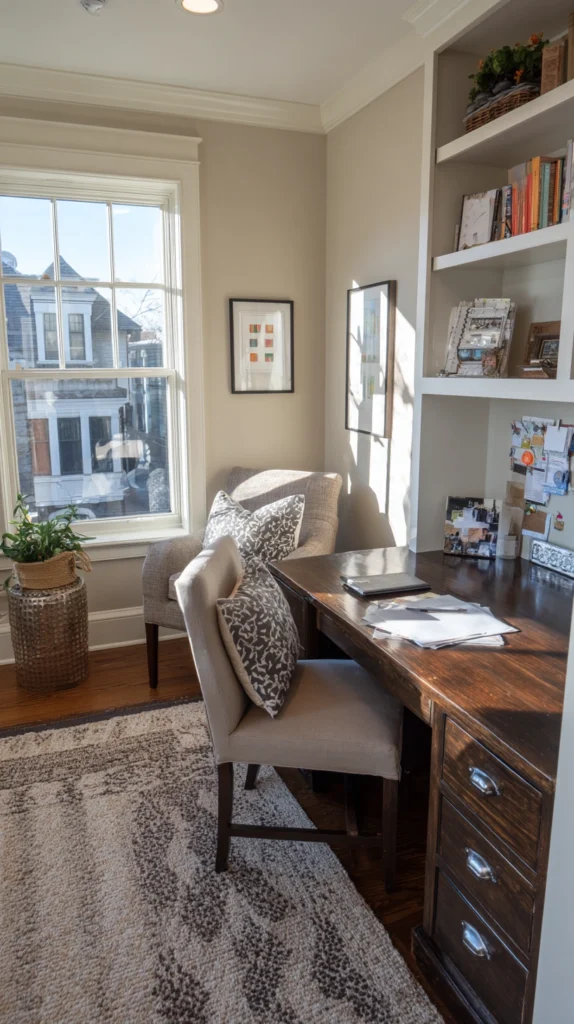
The final and perhaps most underestimated home office idea is not a styling choice at all but a ritual that protects every styling choice you’ve made.
Ending each working day with a five-minute reset — clearing the desk surface back to its baseline, filing or discarding papers that accumulated during the day, putting away anything that doesn’t live on the desk, and closing any notebooks or planners — means that you begin every morning in an environment that is ready to receive focused work rather than one that is carrying the visual and psychological residue of the day before.
The desk you sit down at in the morning shapes your first hour of work more than almost any other single factor. Make it clean, make it intentional, and let it tell you clearly, from the moment you sit down, that this is a place where good work happens.