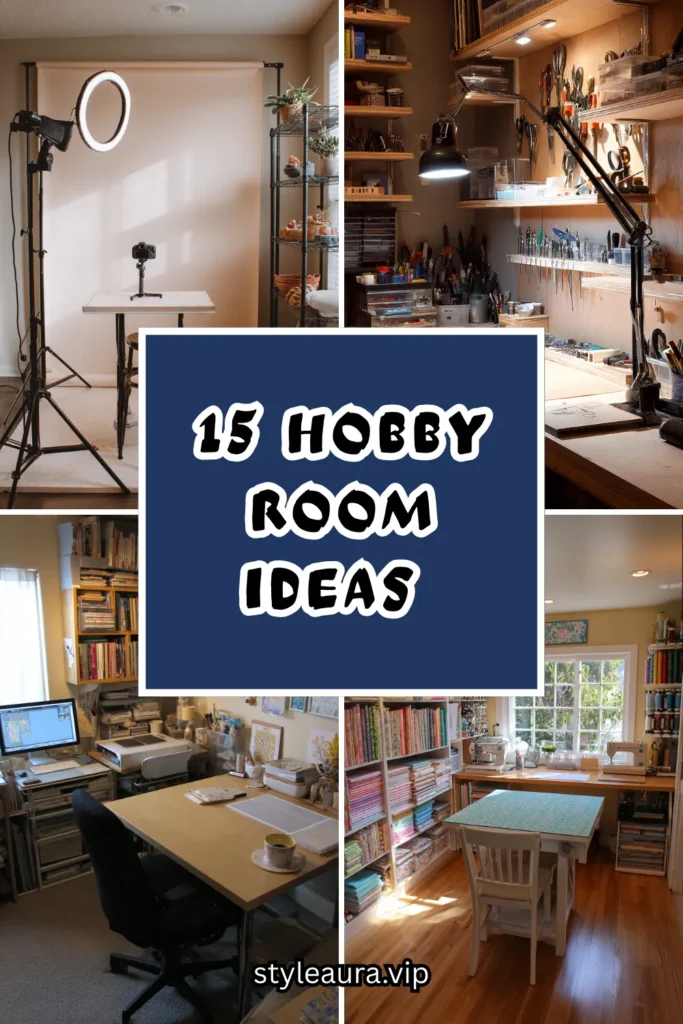
15 Hobby Room Ideas for a Creative and Organized Space
The hobby room is one of the domestic interior’s most personal and most consistently underinvested spaces. It is personal because it is organized entirely around the specific creative interests of its occupant — the quilter’s hobby room looks nothing like the model railway enthusiast’s, and neither resembles the watercolorist’s or the ceramicist’s — and this specificity is both its greatest strength and the reason it so often fails to receive the design attention that more public rooms in the home command.
The hobby room is rarely seen by guests, rarely photographed for social media, and rarely described to friends as a source of domestic pride in the way that a renovated kitchen or a beautifully decorated living room is.
This is a mistake. The hobby room is the room in which the most personally meaningful activity in the home takes place — the creative practice that provides the specific pleasure of making, the restorative quality of focused attention on something chosen entirely for love rather than obligation.
A hobby room that is well designed, properly organized, and genuinely comfortable for the specific creative practice it serves produces better creative work, longer and more satisfying creative sessions, and a daily quality of life that the same hobby practiced in a poorly organized space cannot approach. Here are fifteen ideas for creating a hobby room that earns every bit of the attention invested in it.
1. Define the Room’s Primary Function Before Designing Anything
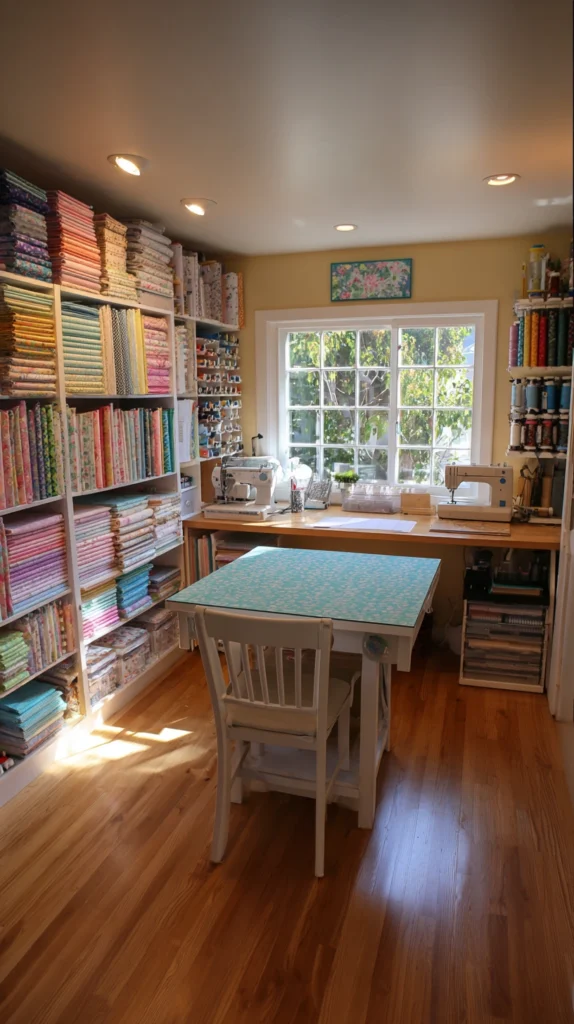
The most important and most frequently skipped step in hobby room design is the honest identification of what the room will actually be used for — not the aspirational list of hobbies that might be practiced there someday, but the specific creative practice that will occupy the room for the majority of its use hours.
The hobby room designed for a single, clearly defined practice — quilting, watercolor painting, model making, photography editing — can be optimized for that practice with a precision and completeness that the multi-purpose hobby room, attempting to serve several practices simultaneously, cannot achieve.
A single primary function determines the room’s spatial organization, its storage requirements, its lighting needs, its surface requirements, and its ergonomic priorities with a clarity that makes every subsequent design decision straightforward. Define the primary function first, design the room around it completely, and add provision for secondary activities only after the primary function is fully served.
The room that does one thing excellently is always more satisfying to work in than the room that attempts several things adequately.
2. Invest in Purpose-Specific Work Surfaces
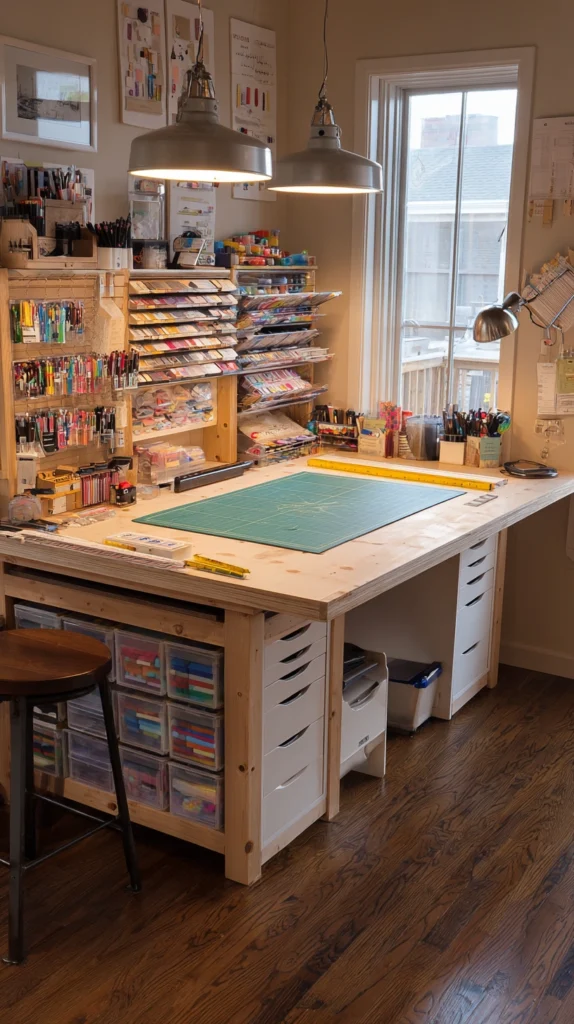
The work surface is the hobby room’s most critical physical element — the surface on which the primary creative practice happens — and its specification must be determined by the specific requirements of that practice rather than by the generic dimensions and materials of standard desk furniture.
A quilter needs a large, flat cutting surface at standing height — typically ninety centimeters — that can accommodate the full width of quilting fabric without folding. A watercolorist needs a tilted drawing board at seated height with a smooth, stable surface and proximity to water.
A model maker needs a surface that is easy to clean, resistant to adhesive and paint, and at the precise height that allows close detail work without neck strain. A jeweler needs a bench peg and a robust surface that can withstand the hammering and filing that metalwork requires.
Identify the specific surface requirements of your practice — the height, the size, the material, the tilt, the proximity to other surfaces — and source or build accordingly rather than accepting a standard desk that partially but not completely serves the function.
3. Design a Wall Storage System That Is Specific to Your Materials
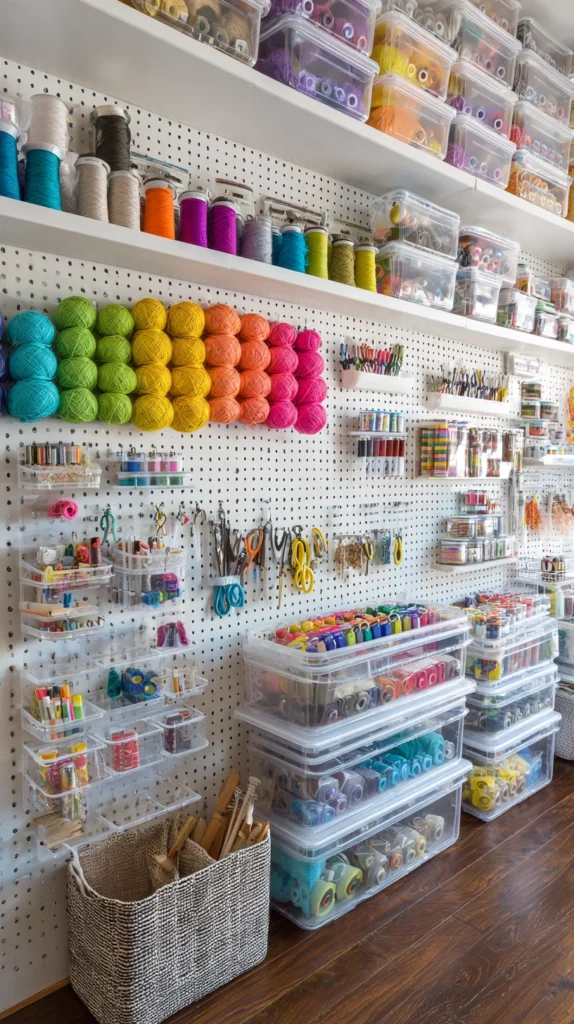
The storage of creative materials is the hobby room’s most extensive organizational challenge and the area where the most significant quality-of-life improvement is available through genuinely thoughtful design.
Generic storage solutions — the standard shelving unit, the plastic drawers from a hardware store — accommodate creative materials adequately but never optimally, because the specific forms, quantities, and access requirements of creative materials vary so dramatically between practices that only storage designed for specific materials can serve them well.
A thread and fabric wall — a pegboard or slatwall system fitted with purpose-made holders for thread spools, fabric rolls, and sewing accessories — is a completely different storage proposition from a paper and ink wall for a printmaker, or a yarn wall for a knitter, or a tool wall for a woodworker.
Research the specific storage solutions that practitioners of your hobby have developed, invest in the materials-specific organizers rather than adapting generic alternatives, and design the wall storage system around your actual inventory rather than around an idealized version of it.
4. Create a Dedicated Inspiration Display Area
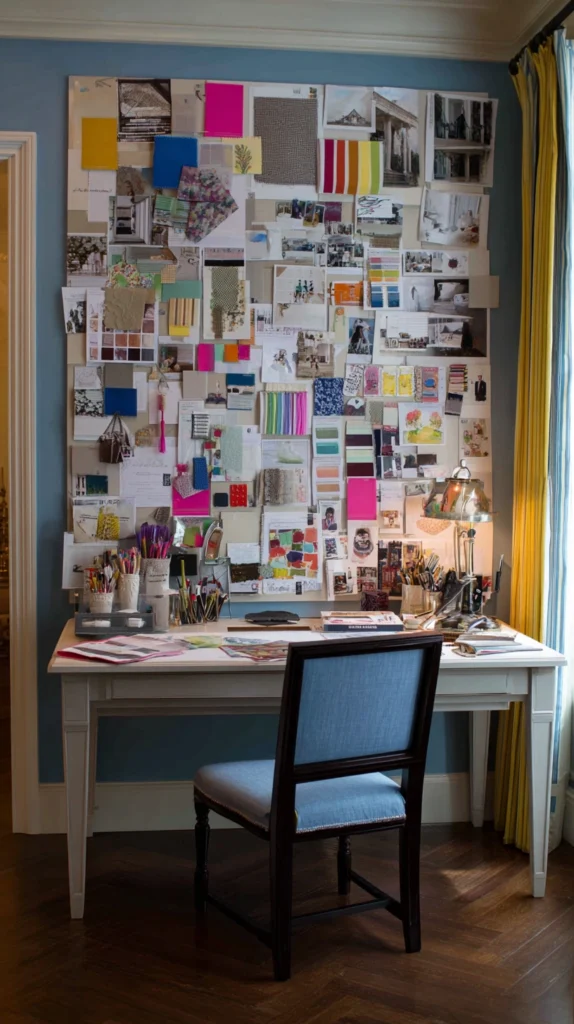
The creative practice benefits from a visual environment that stimulates and sustains the specific kind of creative attention the practice requires, and a dedicated inspiration display area — a pinboard, a wall-mounted grid, a gallery wall, or simply a section of wall designated for images, samples, color references, and visual material related to the current creative project — provides this environment in a form that is immediately accessible and continuously present during the creative session.
The inspiration wall is not the same as general decoration — it is a working tool that changes with each project, that holds the specific visual references and material samples relevant to the current creative focus, and that should be cleared and rebuilt as each project concludes and the next begins.
The display surface should be large enough to accommodate the full visual field of a complex project — at minimum one meter by one meter, ideally larger — and should be positioned within the natural eye line of the primary work position so that reference material can be consulted without turning away from the work.
5. Resolve the Lighting for Your Specific Practice
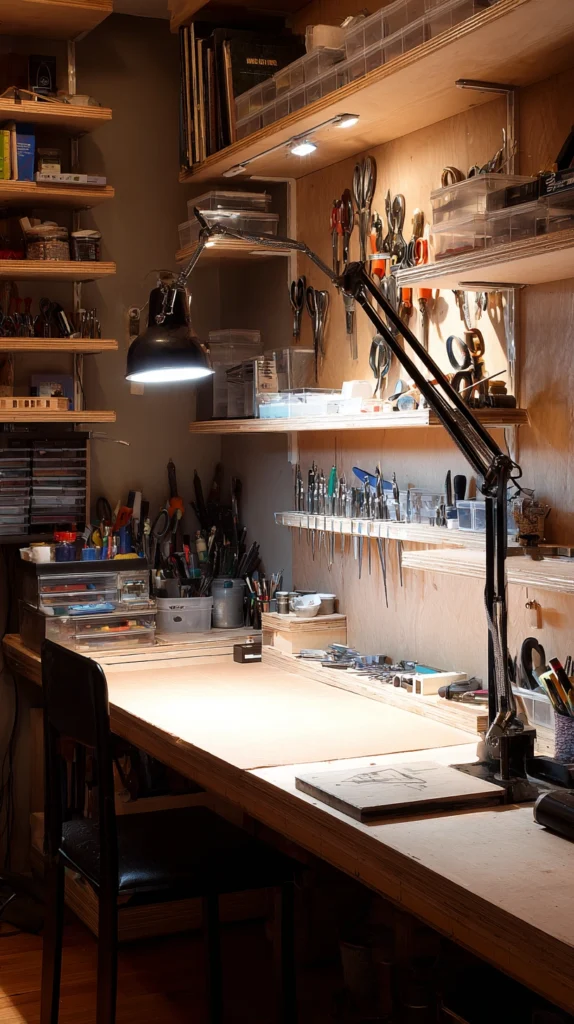
The lighting of a hobby room is a technical requirement as much as an aesthetic one, and the specific quality of light needed varies dramatically between creative practices in ways that a single overhead light source cannot satisfy.
Jewelry making and model building require intense, directed task lighting at very close range — a high-lumen, daylight-balanced lamp positioned directly above the work surface, with a magnifying element for the finest detail work.
Watercolor painting and drawing require even, shadow-free illumination of the work surface that replicates the quality of natural north light — an artist’s daylight lamp or a full-spectrum LED panel positioned to illuminate the work from above and slightly to the side without casting the hand’s shadow across the work. Photography and digital editing require precise color-accurate lighting and a monitor-compatible ambient light level.
Sewing requires bright, even illumination of the fabric surface with additional focused light at the machine needle. Identify the specific lighting requirement of your practice and invest in dedicated task lighting that meets it precisely rather than accepting the generic illumination of a ceiling fixture.
6. Build in a Cutting, Measuring, and Preparation Zone
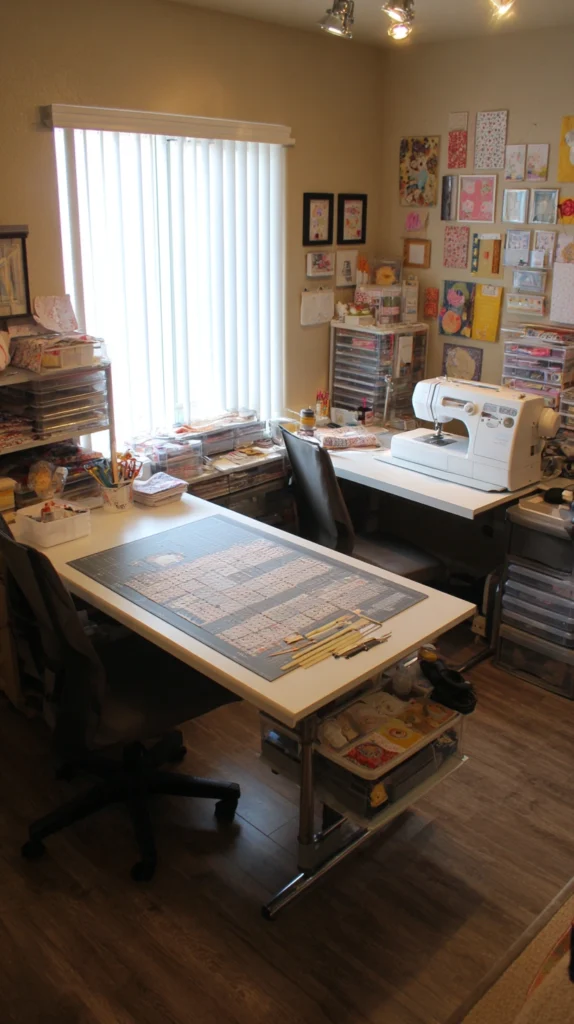
Most creative practices have a preparation phase — the cutting, measuring, mixing, preparing, and organizing of materials before the primary creative activity begins — that has distinct spatial and surface requirements from the main creative work itself.
A dedicated preparation zone — a separate surface or a defined section of the main work surface equipped with the tools, guides, and storage specific to the preparation phase — separates this preliminary activity from the primary creative work in a way that improves both.
The cutting mat, the ruler collection, the rotary cutters, and the fabric shears of the quilter’s preparation zone sit separately from the sewing machine and ironing board of the primary work zone.
The palette, the water containers, and the brush washing station of the watercolorist’s preparation zone sit separately from the drawing board and the paper storage of the primary painting zone.
This separation reduces the interference between preparation and creation, maintains the cleanliness and organization of both zones, and allows the preparation phase to proceed in parallel with the creative phase when the practice permits it.
7. Create a Comfortable Seating Area for Planning and Reflection
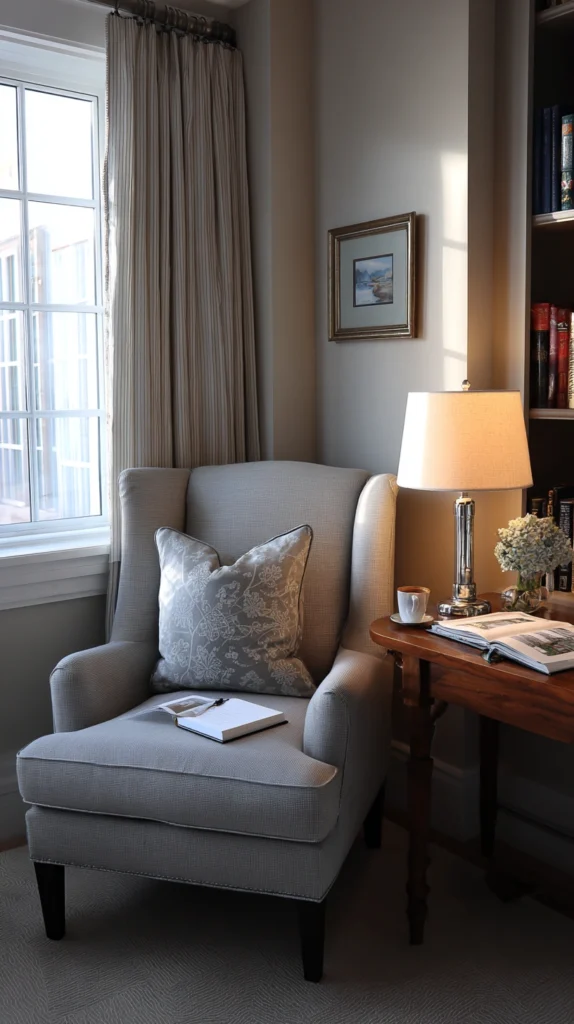
The creative session is not continuous active making — it includes periods of planning, reviewing, reflecting on work in progress, and making the conceptual decisions that determine the direction of the next phase of making. A comfortable seating area within the hobby room — an armchair or a small sofa positioned away from the work surface but within view of the work in progress — provides the specific physical position that this reflective phase of the creative process benefits from.
The ability to sit back, at a distance from the work, and look at it with the slightly detached perspective that physical distance enables is one of the most valuable tools available to any creative practitioner, and the room that provides only a work chair — fixed in position at the work surface, too close for objective assessment — does not support this phase of the creative process adequately.
Even a simple folding chair positioned at the room’s opposite wall serves this function, though a genuinely comfortable armchair with good light for reading and a side table for a cup of tea is considerably more inviting.
8. Design a Finishing and Photography Station
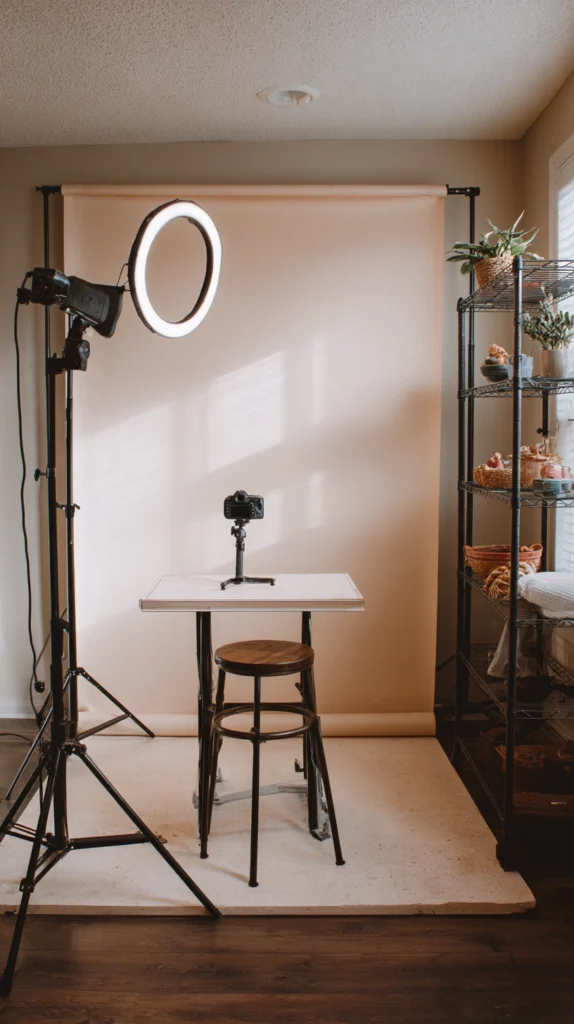
The creative practitioner who shares their work — on social media, in a portfolio, with clients, or in an online shop — needs a dedicated finishing and photography station: a surface with a clean, appropriate background, good overhead and directional lighting, and the camera or phone mounting solution that allows consistent, quality photography of finished work without the time-consuming setup that an improvised photography station requires.
A simple finishing station might be a section of clean, clear wall with a white or neutral backdrop panel that can be removed when not in use, a daylight-balanced ring light on a stand positioned to illuminate the work without harsh shadows, and a small tripod or wall-mounted phone holder at the appropriate distance and height for the scale of work being photographed.
More committed practitioners might invest in a dedicated light box for small work, a proper studio strobe setup for larger pieces, or a turntable for three-dimensional objects. The finishing station’s investment pays its return in the quality of the work’s presentation, which in the contemporary creative economy is inseparable from the quality of the work itself.
9. Implement a Project Management System on the Wall
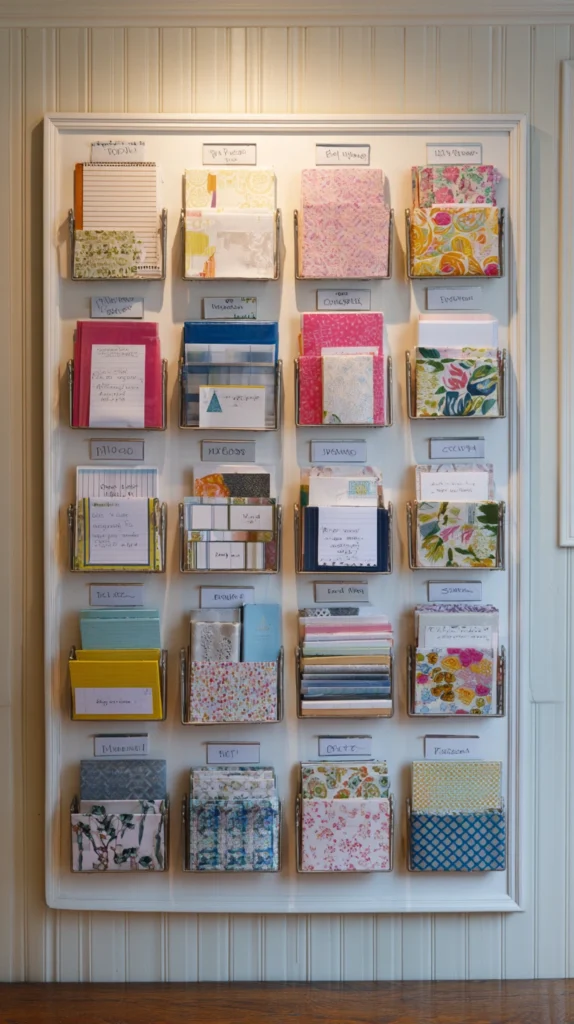
The creative practice that involves multiple projects in different stages of completion — which describes most serious creative hobbies — benefits from a wall-mounted project management system that makes the status of every current project visible at a glance without requiring the practitioner to consult notes, check a digital system, or recall from memory where each project stands.
A simple system of labeled hooks or bins — one for each project, with a project card indicating the next action required — provides the project management function at minimal cost and complexity.
A more elaborate system might include a kanban-style board with cards moving between columns representing different project stages, or a wall calendar with project milestones marked in a color system.
The specific format matters less than the principle: the creative practitioner who can see all their current projects and their status at a glance at the beginning of each creative session starts that session with clarity and purpose rather than the low-level anxiety of an uncertain creative inventory.
10. Include a Drying, Curing, or Setting Area
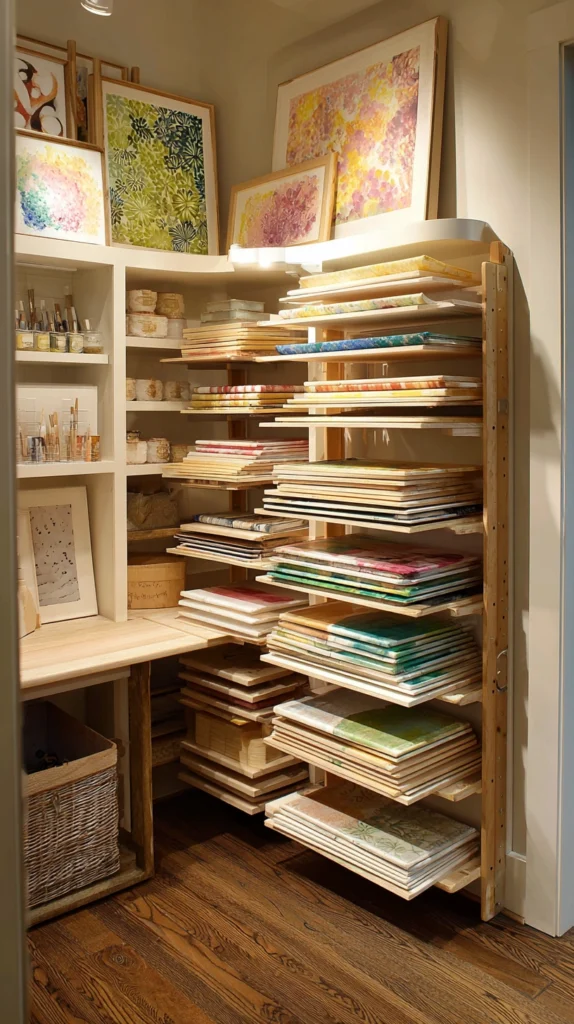
Many creative practices require time for completed work to dry, cure, set, or rest before the next phase of work can begin, and the absence of an appropriate drying or curing area within the hobby room creates the persistent problem of work in progress occupying the primary work surface — preventing new work from beginning until the previous work has dried — or being moved to inappropriate locations around the house where it is at risk of damage.
A dedicated drying area — wall-mounted drying racks for paintings and printed textiles, a shelved curing station for polymer clay and resin work, a hanging system for wet garments in progress, or a warm, ventilated shelf system for ceramics in various stages of drying — keeps the work in progress organized, protected, and out of the way of the next creative session.
The drying area should be positioned to make efficient use of the room’s less functionally valuable space — above the primary work surface, in a corner that cannot accommodate work surface or storage — while maintaining the environmental conditions the specific material requires.
11. Design the Room Around Your Natural Creative Rhythm
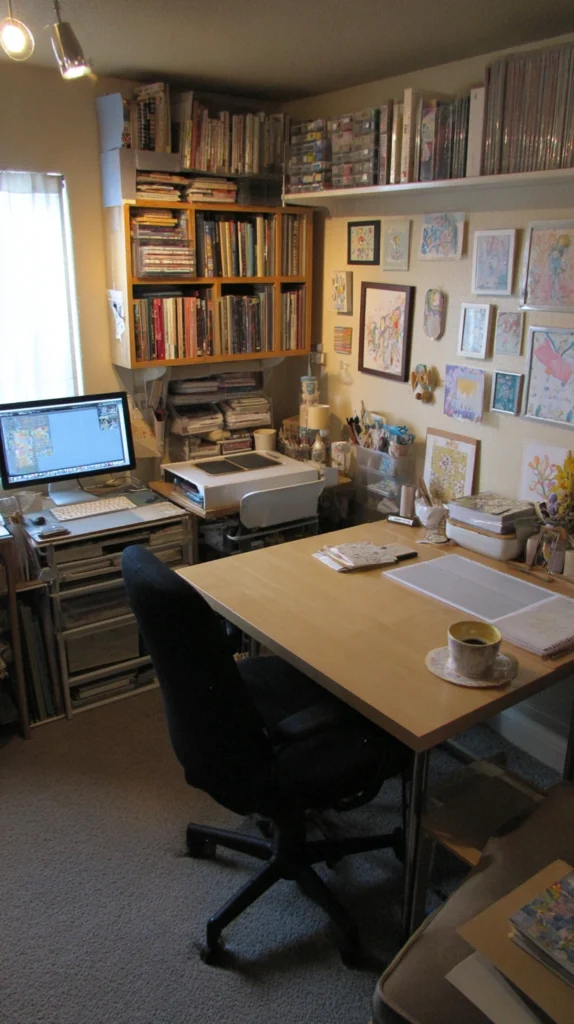
The most practically useful insight available for hobby room design is the recognition that different creative practitioners have fundamentally different natural rhythms of creative work — different session lengths, different organization styles, different relationships between the preparation, creation, and cleanup phases of a creative session — and that the room should be designed to support the practitioner’s specific rhythm rather than an idealized notion of creative practice.
A practitioner who works in short, frequent bursts needs a room that can be entered, engaged with immediately, and left without a lengthy setup or cleanup routine — the room organized for instant accessibility at every point.
A practitioner who works in long, immersive sessions needs a room that can sustain hours of continuous use — the comfortable chair, the good music system, the proper ventilation, the proximity to the kettle.
Understanding your own creative rhythm and designing explicitly for it produces a room that you actually use rather than a room that represents an aspiration toward a creative practice style that is not your natural one.
12. Create a Supply Shopping and Inventory System
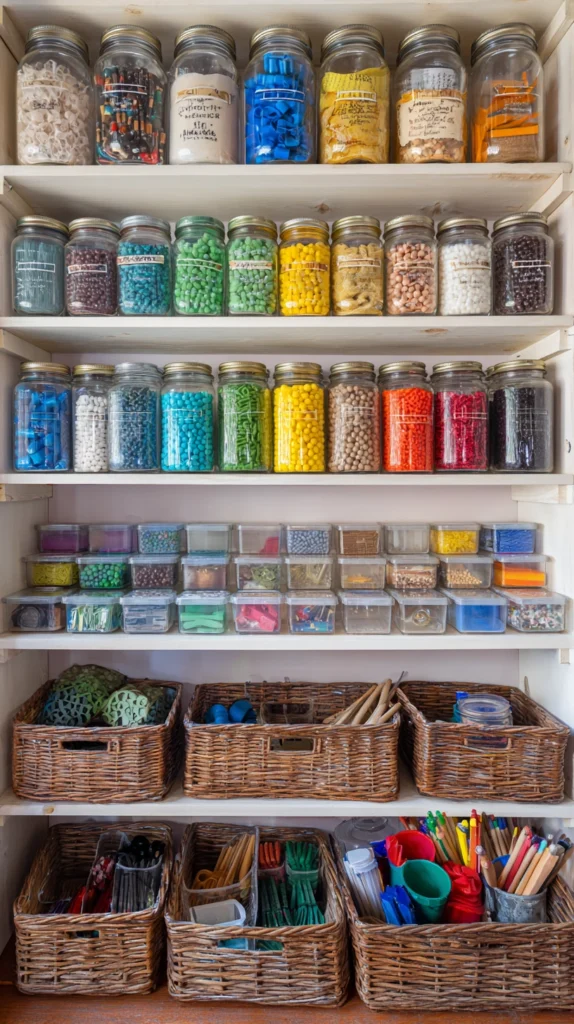
The creative practitioner who runs out of a critical supply in the middle of a productive session — who has the motivation, the time, and the creative energy to work but lacks a specific material that the next stage of the work requires — experiences one of the most frustrating and most easily preventable disruptions available to any creative practice.
A supply inventory system — a simple list of critical supplies with minimum stock levels, reviewed before each resupply shopping trip, and updated whenever a supply falls below the minimum — prevents this disruption by maintaining adequate stock of every critical material at all times.
The inventory list can be as simple as a handwritten card pinned near the supply storage, or as organized as a shared digital list that can be added to from a phone during a session when a low-stock level is noticed. The specific format matters less than the habit of maintaining it — a supply system that is set up once and then not maintained quickly becomes irrelevant, while one that is updated consistently becomes an invisible infrastructure of creative reliability.
13. Address Ventilation for Material Safety
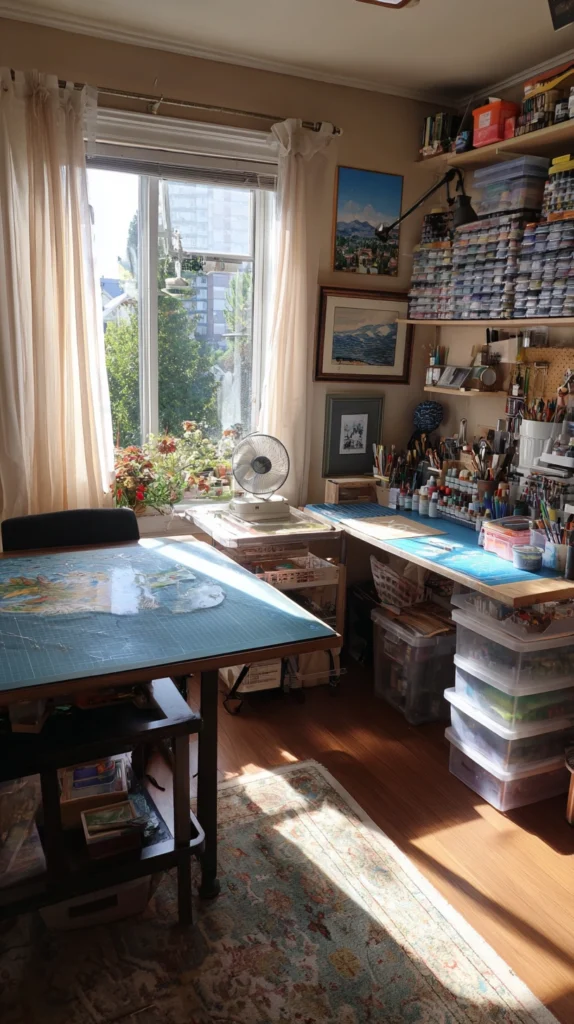
Many creative practices involve materials whose safe use requires adequate ventilation — paint thinners, adhesives, resin, spray finishes, soldering flux, and numerous other hobby materials produce fumes that are irritating or harmful in concentrated indoor environments.
The hobby room’s ventilation is therefore not simply a comfort consideration but a health and safety requirement for any practice involving chemical materials, and it should be resolved at the room design stage rather than managed through opened windows and fans that provide inadequate dilution of concentrated fumes.
A dedicated extraction fan installed in the room’s window or wall — ideally positioned to draw air away from the practitioner’s breathing zone and toward the outside — provides the minimum adequate ventilation for most light material use.
More intensive chemical use — airbrushing, resin casting, solvent-based finishing — may require a dedicated spray booth with filtered extraction, a respirator, or the relocation of the most chemical-intensive phases of the practice to an outdoor or industrial ventilated space.
14. Make the Room Genuinely Beautiful
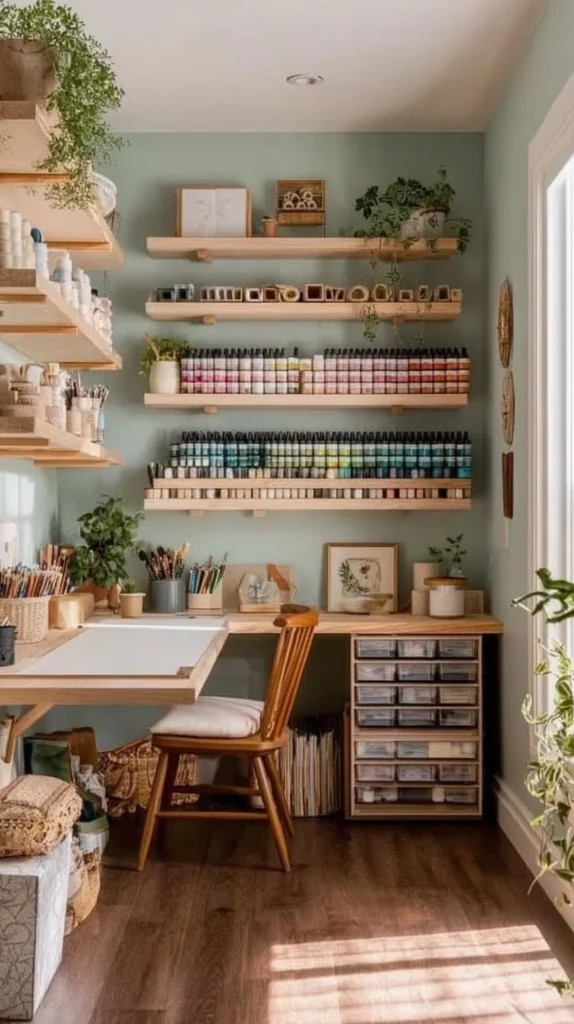
The hobby room is often treated as a purely functional space whose aesthetic quality is secondary to its organizational efficiency, and this treatment is a mistake — not an ethical one but a practical one, because the aesthetic quality of the creative environment directly influences the quality and duration of the creative sessions that take place within it.
A hobby room that is genuinely beautiful to spend time in — whose wall color, its material choices, its lighting quality, and its overall visual character are designed with the same care as any other room in the home — generates longer, more productive, and more pleasurable creative sessions than the same room organized identically but decorated without aesthetic attention.
Choose a wall color that relates to the specific emotional quality of your creative practice — a warm, enveloping tone for practices that benefit from intimate concentration, a bright, energizing tone for practices that benefit from stimulation and energy.
Invest in storage and organizational tools that are beautiful enough to contribute to the room’s aesthetic rather than simply adequate enough to serve their organizational function.
15. Design for the Creative Practice You Actually Have
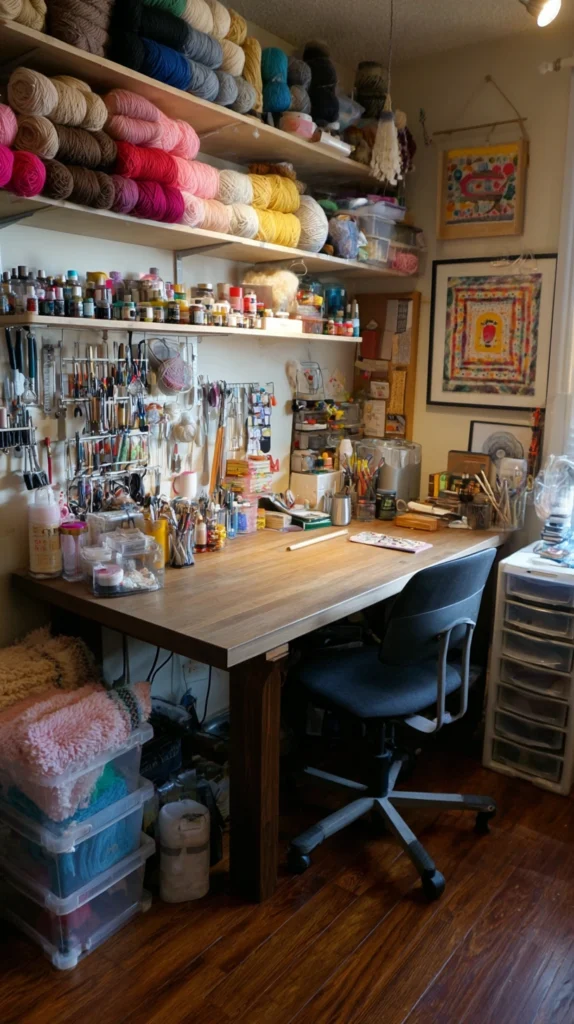
The final hobby room idea is the most important and the most consistently violated principle in creative space design: design the room for the creative practice you actually have, not the creative practice you aspire to have or the one you feel you should have.
The yarn stash that fills three large bags rather than the photogenic organized basket of a social media hobbyist’s studio. The reference book collection that has grown beyond any bookcase’s capacity to contain it elegantly. The works in progress that span months rather than weeks. The tool collection that exceeds any standard pegboard’s capacity to display it in an organized arrangement.
These are the realities of a genuine creative practice, and the hobby room designed for them — with genuinely adequate storage for the actual yarn quantity, genuinely adequate reference book capacity, genuinely adequate work-in-progress storage — is the hobby room that genuinely serves the creative practice it was built for, rather than the beautiful room that never quite fits the actual creative life lived within it.