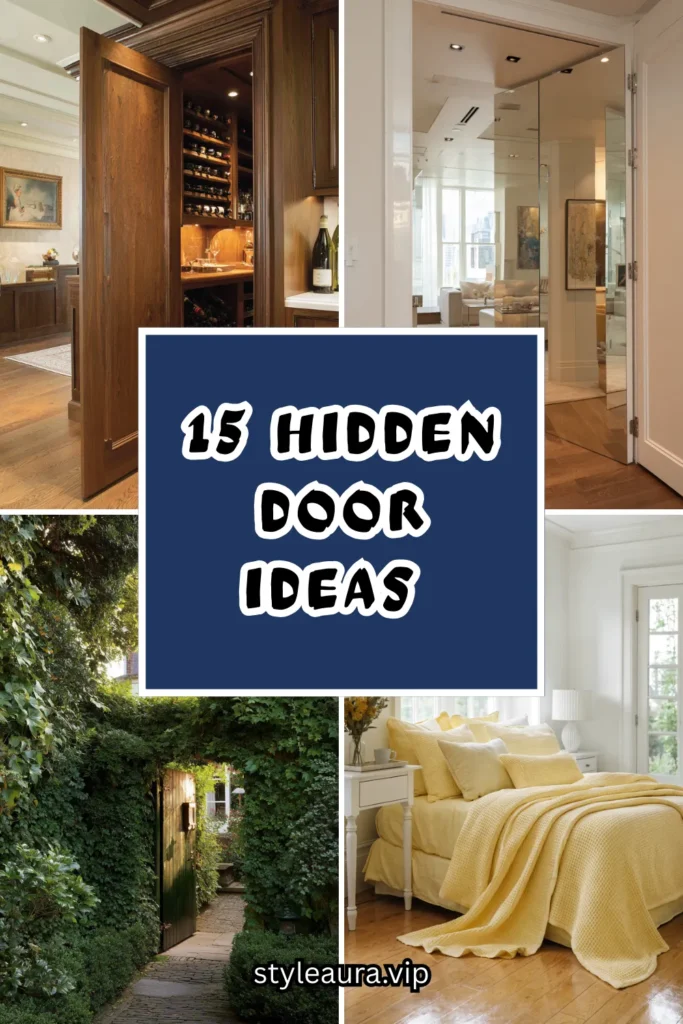
15 Hidden Door Ideas That Are Equal Parts Smart and Stunning
There is something undeniably captivating about a hidden door. It adds an element of surprise, intrigue, and genuine cleverness to a home that no ordinary door can match. Whether it conceals a secret room, a home office, a wine cellar, or simply a storage cupboard, a hidden door transforms a functional necessity into something that feels almost magical.
The best hidden doors do not just conceal — they enhance. They blend so seamlessly into their surroundings that guests walk past them without a second glance, yet reveal themselves as one of the most talked-about features in the home the moment someone discovers them. Good design and clever engineering make this possible in virtually any home and at almost any budget.
Here are 15 hidden door ideas that prove secret passages are not just for castles and mystery novels anymore.
1. Bookcase Hidden Door — The Classic for Good Reason
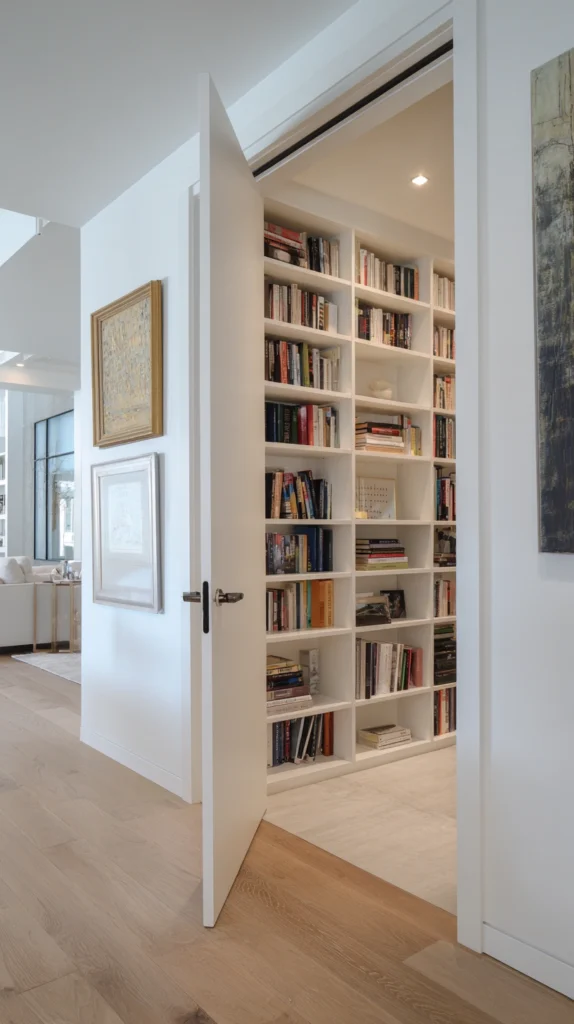
The bookcase hidden door is the most iconic of all hidden door designs and it remains the most popular for one simple reason — it works beautifully every single time. A floor-to-ceiling bookcase filled with books, objects, and decorative pieces that pivots or slides open to reveal a room beyond is genuinely breathtaking the first time you see it in action.
The key to making it look authentic is treating the bookcase exactly as you would any other bookcase in the home. Fill it with real books arranged naturally, add a few framed photographs and decorative objects, and make sure the shelving style matches the rest of the room. The more it looks like an ordinary bookcase, the more magical the reveal.
Pro Tip: Use a push-to-open mechanism rather than a visible handle on a bookcase hidden door. A handle immediately signals that something opens — removing it entirely and using a gentle push release keeps the secret completely intact and makes the reveal far more dramatic for anyone discovering it for the first time.
2. Wallpapered Hidden Door That Disappears Completely
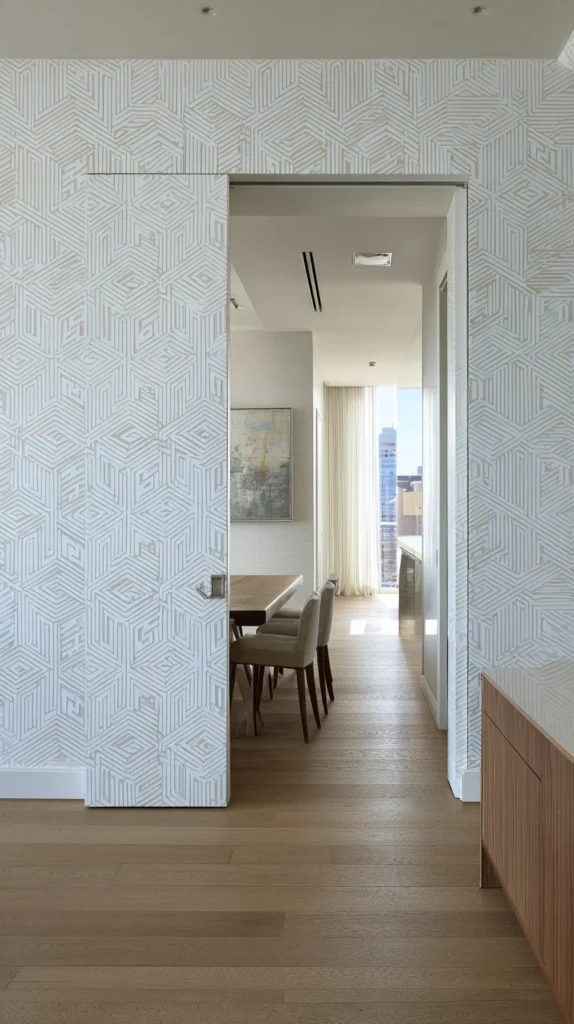
Wallpaper is one of the most effective tools for concealing a door in plain sight. When the same wallpaper pattern runs continuously across both the wall and the door surface — with no interruption, no frame, and no visible handle — the door becomes completely invisible to the untrained eye.
This works particularly well with bold, busy patterns like maximalist florals, geometric prints, or dense abstract designs. The pattern complexity makes the door edge almost impossible to detect even when you are actively looking for it. In a more minimal room, precise pattern matching and flush fitting achieve the same effect with a cleaner, more architectural result.
Pro Tip: The door frame is the biggest giveaway of a wallpapered hidden door. Remove the architrave completely and use a flush-fit door set into the wall with hairline precision gaps on all sides. Even the tiniest shadow line from a protruding frame will draw the eye straight to the door and immediately break the illusion.
3. Panelled Wall Hidden Door
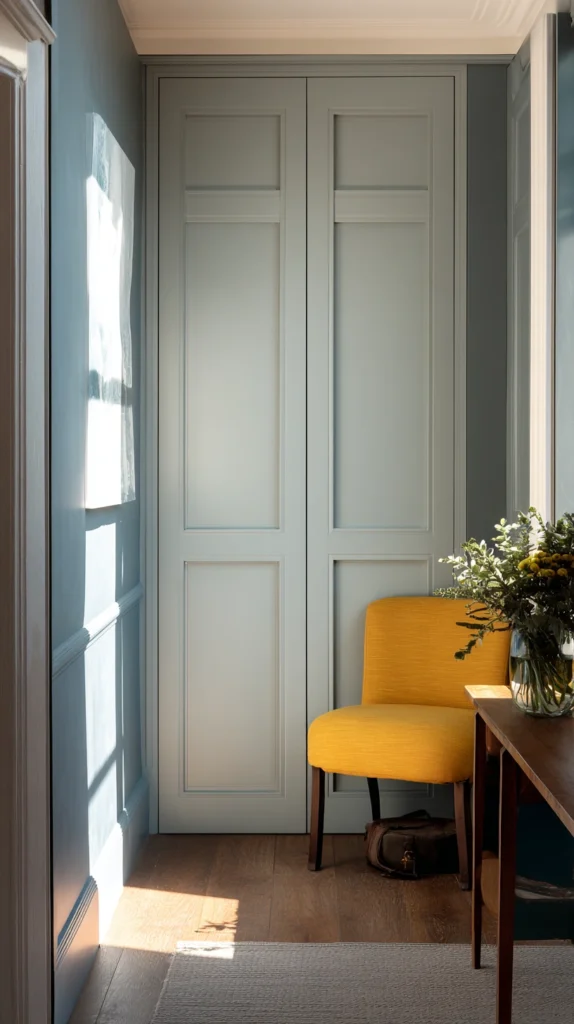
In a room with wall panelling — whether classic raised-and-fielded panels, modern flat Shaker-style panels, or simple painted board and batten — a hidden door can be designed to look like just another panel in the sequence. When done well, it is completely undetectable.
The proportions of the door panel simply need to match the proportions of the surrounding wall panels, and the shadow lines and reveals must be perfectly consistent throughout. A finger pull or push-to-open mechanism hidden within the panel detail keeps the surface clean and uninterrupted.
Pro Tip: Paint the entire panelled wall — door included — in the same finish and sheen level. Any variation in paint sheen between the door surface and the surrounding wall panels will catch light differently and immediately reveal the door’s location to anyone looking carefully. One consistent finish across the entire wall is essential.
4. Mirror Hidden Door for Glamorous Concealment
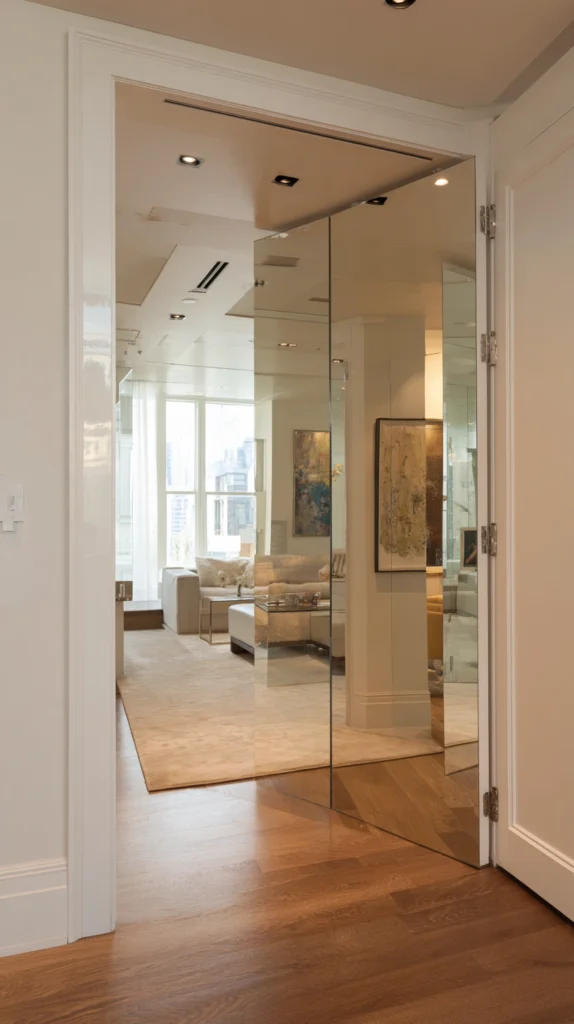
A full-length mirror that doubles as a hidden door is one of the most glamorous and practical concealment solutions available. The mirror serves a genuine decorative and functional purpose — reflecting light, making the room feel larger, and acting as a dressing mirror — while simultaneously hiding whatever lies behind it.
In a bedroom, a mirrored hidden door leading to a walk-in wardrobe or dressing room is an especially elegant solution. In a living room or hallway, a large ornate mirror frame concealing a door to a study or utility room adds a theatrical, boutique-hotel quality to the space.
Pro Tip: Mount the mirror door on a pivot hinge rather than a standard side hinge for the smoothest, most elegant operation. A pivot hinge distributes the weight of the heavy mirror evenly and allows the door to swing open with a single, effortless push — an important consideration when you are dealing with the significant weight of a full-length mirror.
5. Under-Stair Hidden Door
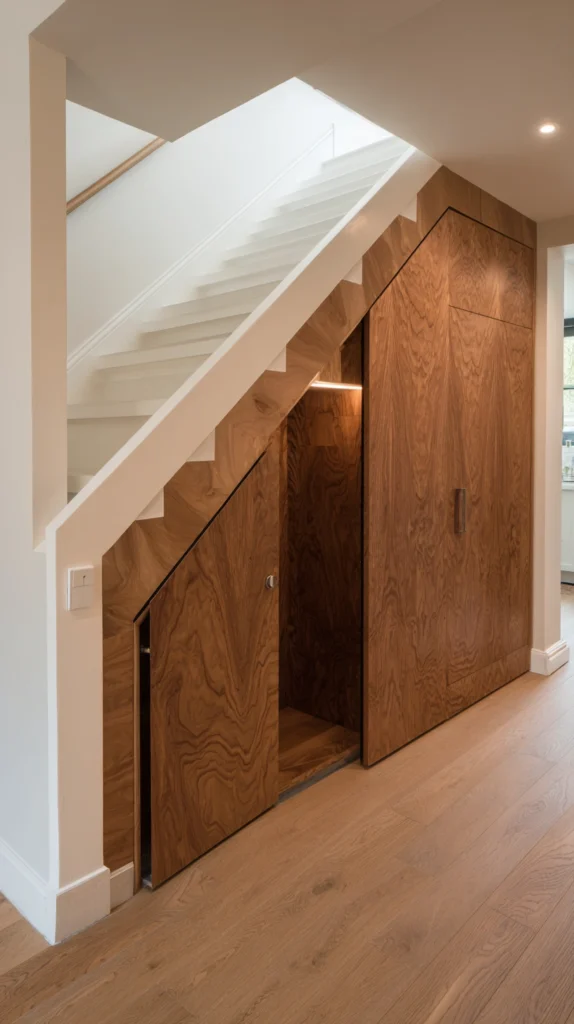
The space beneath a staircase is one of the most underutilised areas in any home — and it is also one of the most naturally suited to a hidden door. The angled geometry of the staircase itself provides a ready-made visual distraction that makes a door beneath it exceptionally easy to conceal.
Clad the entire under-stair area in the same material — painted timber, panelling, or plastered wall — and set the hidden door flush within this surface. Behind it could be a wine cellar, a reading nook, a home office, a utility cupboard, or simply excellent storage. The staircase does the visual work of concealing it almost automatically.
Pro Tip: Use LED strip lighting inside an under-stair hidden room or storage space. The space beneath stairs tends to be deep and awkward, and good lighting transforms it from a cramped dark cupboard into something genuinely usable and inviting. Motion-activated LED strips that illuminate automatically when the door opens are a particularly satisfying and practical detail.
6. Fireplace Hidden Door
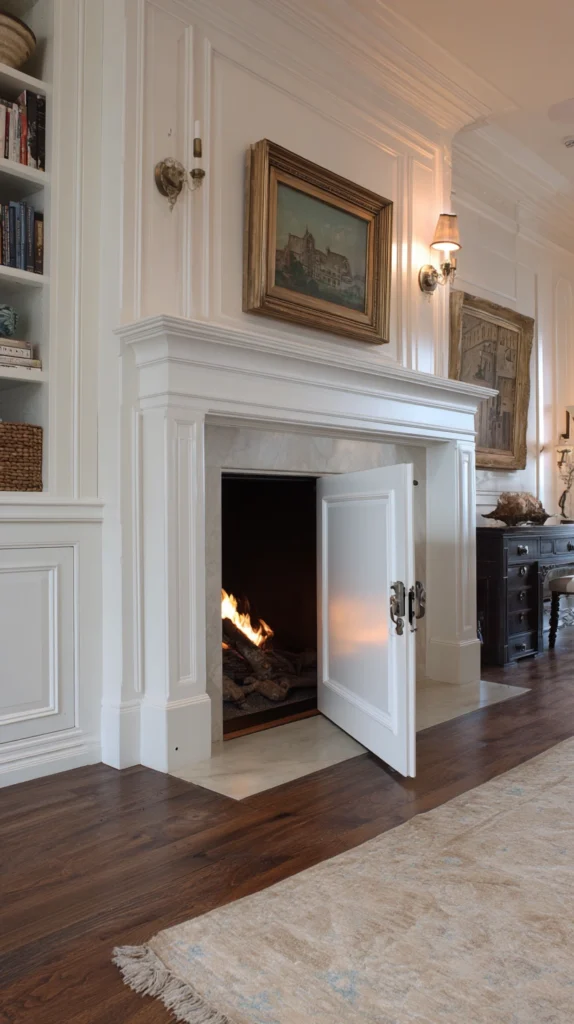
A hidden door built into a fireplace surround or chimney breast is one of the most dramatic and theatrical design moves possible in residential interiors. The fireplace is already a natural focal point in any room — building a hidden door into the structure around it turns it into something truly extraordinary.
The door can be concealed within the panelling on either side of the chimney breast, within a bookcase built around the fireplace, or — most dramatically of all — as part of the fireplace surround itself, swinging open from the mantel or the overmantel section above it.
Pro Tip: Commission this type of hidden door from a specialist joiner rather than attempting it as a DIY project. The precision required to make a fireplace hidden door look seamless — particularly around the decorative mouldings and carved details of a period fireplace surround — demands a level of craftsmanship that genuinely rewards professional expertise.
7. Sliding Barn Door Hidden as Art Wall
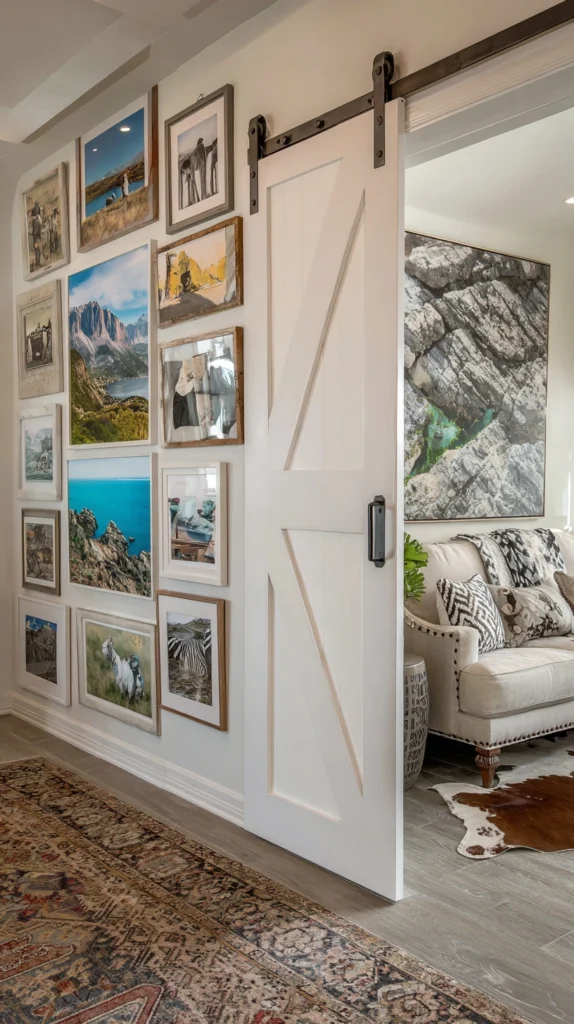
A sliding barn door mechanism can be used to create a hidden door that slides behind a section of wall rather than swinging open — making it ideal in rooms where swing space is limited. When the door face is treated as a display surface — covered in artwork, a gallery wall, or a decorative panel — it becomes a design feature rather than a door.
A large-scale art print mounted on the sliding panel, or a grid of framed photographs arranged gallery-style across its face, creates a feature wall that slides effortlessly to one side when needed. Nobody questions a gallery wall — which makes it a surprisingly effective concealment strategy.
Pro Tip: Make sure the sliding track hardware is completely hidden above the door opening, either recessed into a ceiling slot or concealed behind a fascia board. Exposed barn door hardware immediately identifies the panel as a sliding door. Concealing the track removes the visual cue entirely and preserves the illusion of a solid gallery wall.
8. Hidden Door Behind a Large Painting
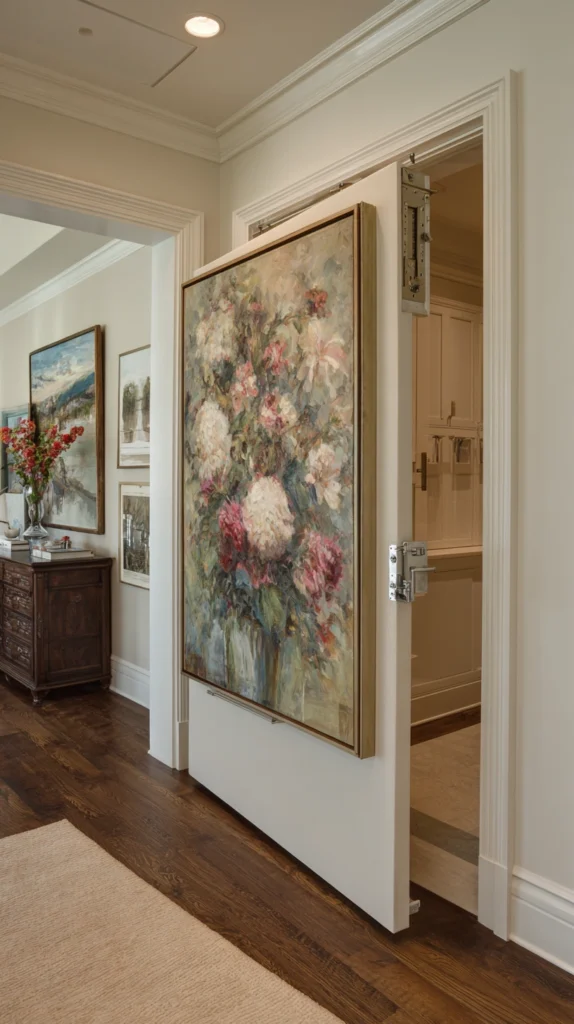
A painting that swings open to reveal a hidden safe, a passage, or a secret room is one of the most classically cinematic hidden door ideas — and in real life, executed well, it is every bit as satisfying as it looks on screen. The painting acts as a decorative door face, hanging on the wall exactly like any other piece of art.
The mechanism involves mounting the painting on a frame that is hinged to the wall or door behind it, with the painting itself effectively becoming the door leaf. Choose a substantial, heavyweight painting in a deep frame for the most convincing result — thin canvas prints do not have enough visual presence to read as a genuine architectural feature.
Pro Tip: Use a magnetic catch to keep the painting-door closed flush against the wall rather than a visible latch or knob. A magnet embedded in the wall behind the frame and a corresponding magnet in the frame itself creates a clean, invisible closure mechanism that releases with a simple firm pull on the frame edge.
9. Kitchen Cabinet Hidden Door
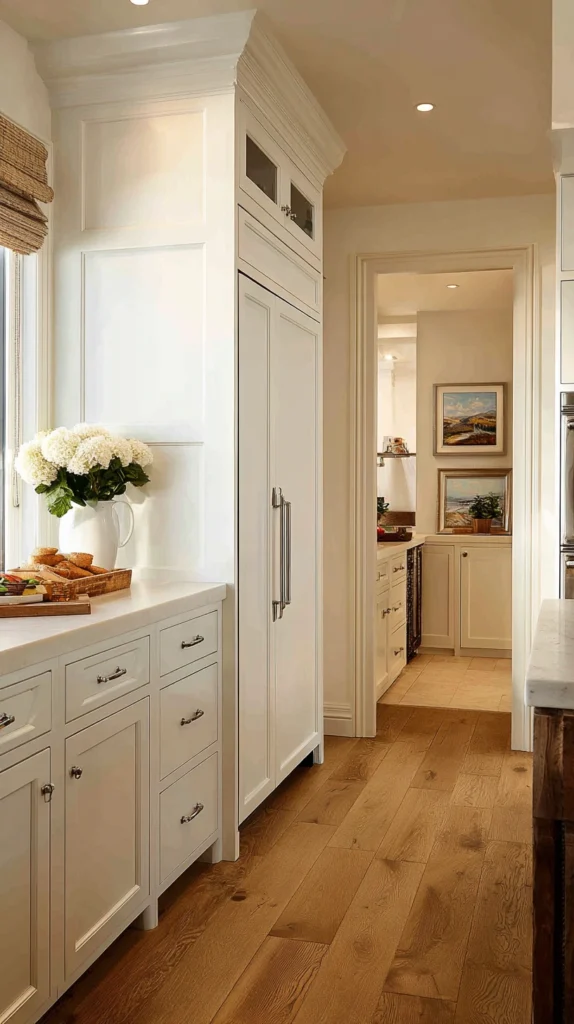
In a kitchen, a run of floor-to-ceiling cabinetry provides the perfect cover for a hidden door. When the door is designed to look exactly like the surrounding cabinet fronts — same door style, same handle hardware, same finish — it disappears completely into the kitchen design.
This approach works particularly well for concealing a pantry, a utility room, a back corridor, or a home office tucked behind the kitchen. The seamless cabinetry run reads as a single, unified wall of storage with no visual indication that one section opens into another room entirely.
Pro Tip: Use continuous handle rails that run the full width of the cabinet run rather than individual handles on each door. A single unbroken horizontal bar across all the cabinet fronts — including the hidden door — makes it completely impossible to identify which section is the door. It is one of the most effective concealment details available in a kitchen setting.
10. Children’s Playroom Hidden Door
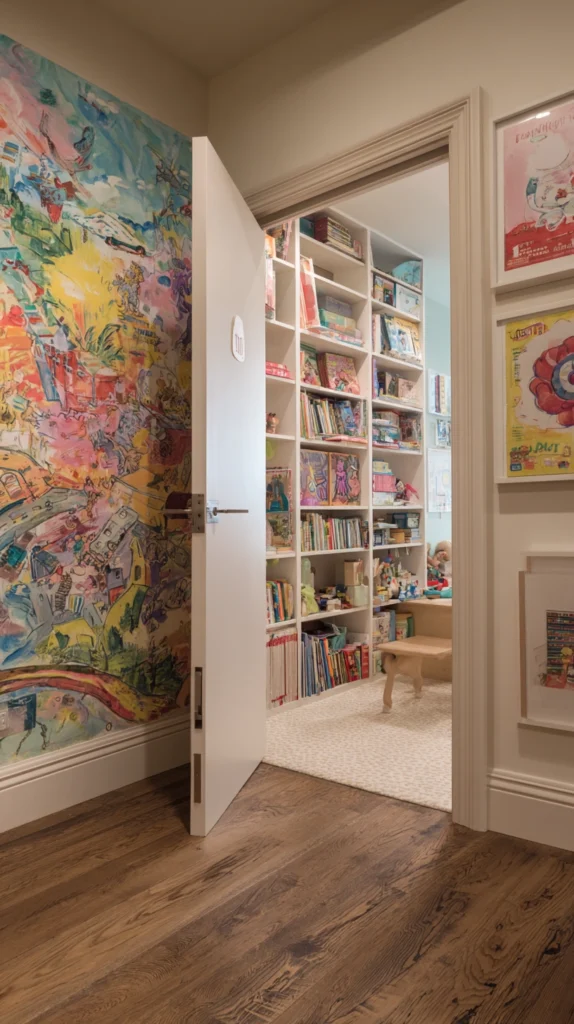
A hidden door leading to a dedicated children’s playroom or bedroom creates a sense of adventure and magic that children absolutely love. It turns getting ready for bed or going to play into a small daily ritual of discovery — and that is genuinely special in a family home.
The hidden door can be built into a bookcase of children’s books and toys, concealed behind a painted mural wall, or disguised as a section of wall panelling in a playroom. Scale it to a child-friendly height — a smaller door at child height that adults have to duck through adds to the magical, Narnia-like quality of the experience enormously.
Pro Tip: If building a child-height hidden door, make sure the opening mechanism is easy enough for small hands to operate independently. A simple push-to-open latch or a large magnetic pull works better than a complex mechanism that requires adult assistance. The joy of a children’s hidden door is entirely in the child being able to discover and use it themselves.
11. Bathroom Hidden Door with Tiled Surface
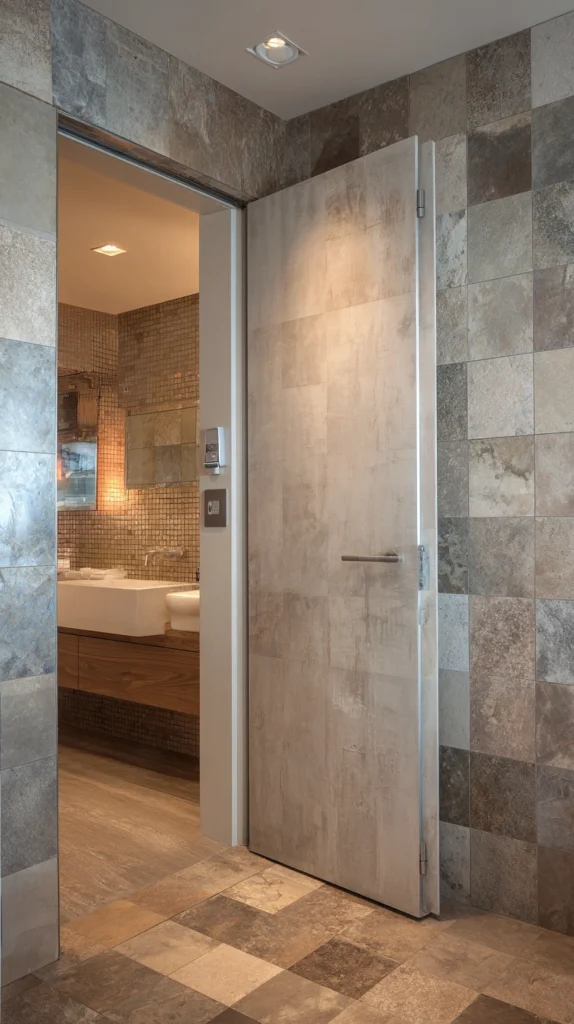
In a bathroom, a hidden door tiled to match the surrounding wall is one of the most sophisticated concealment solutions available. When the same tile runs continuously across the wall and the door surface — with grout lines perfectly aligned — the door becomes entirely invisible within the tiled plane.
This approach works beautifully for concealing a bathroom cabinet, a storage room, a laundry space, or a connecting door between rooms. The tiled surface is completely water-resistant and easy to clean, making it as practical as it is beautiful. In a wet room or spa bathroom, the seamless tiled surface also contributes to the clean, uncluttered aesthetic.
Pro Tip: Use a pivot hinge rather than a standard butt hinge for a tiled hidden door. The weight of a fully tiled door is significantly greater than an ordinary door, and standard hinges are not designed to carry this load reliably over time. A floor-to-ceiling pivot hinge distributes the weight evenly and ensures smooth, reliable operation for years.
12. Home Office Hidden Behind a Murphy Bed
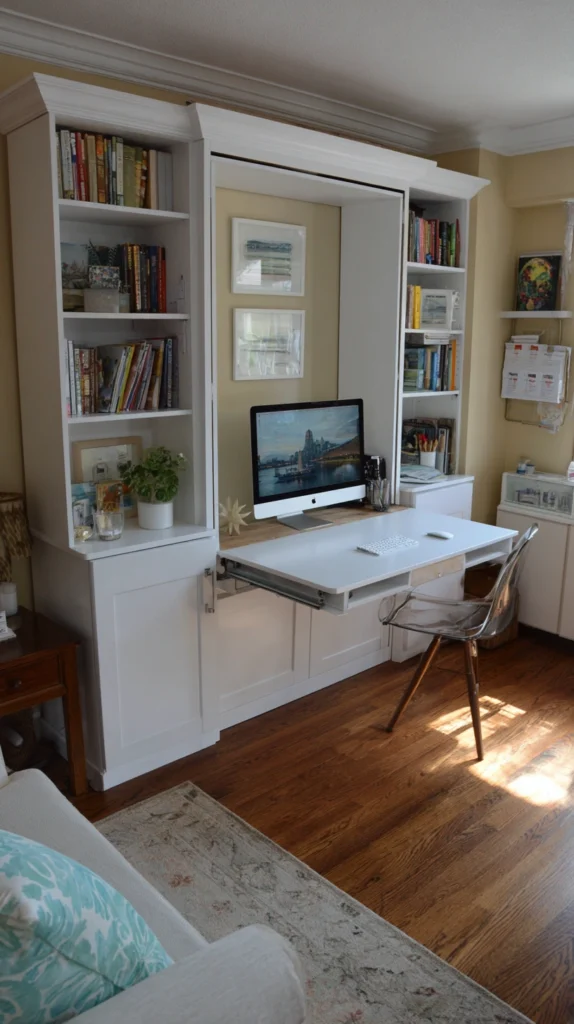
A Murphy bed — a wall bed that folds up into a cabinet when not in use — can be designed to completely conceal a home office setup behind it. When the bed is folded away, a fully equipped desk, shelving, and storage system is revealed. When the bed folds down, the office disappears entirely and the room becomes a comfortable guest bedroom.
This dual-function approach is one of the most space-efficient hidden door concepts available and works brilliantly in apartments, studio spaces, or spare rooms that need to serve multiple purposes. The bed itself acts as the door, concealing the entire workspace behind it with no visible indication of what lies behind.
Pro Tip: Invest in a quality Murphy bed mechanism with gas-assisted lifting rather than a basic spring system. A well-engineered mechanism makes the bed effortless to raise and lower, operates silently, and holds the bed securely in both the open and closed position — an important safety consideration, particularly in a home with young children.
13. Hidden Wine Cellar Door
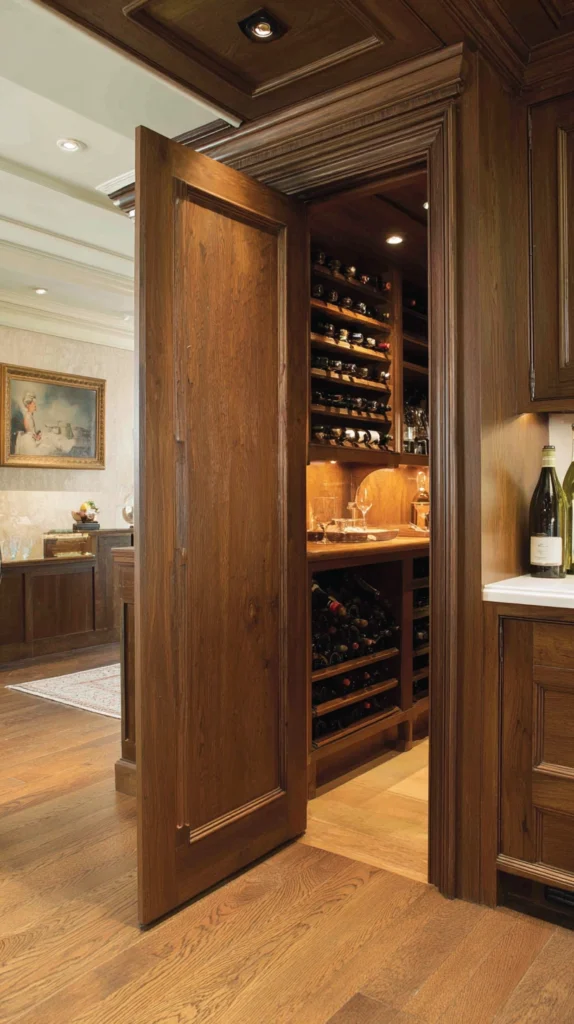
A hidden door leading to a wine cellar or drinks room is one of the most indulgent and satisfying features you can build into a home. Whether the cellar is a full climate-controlled room or simply a cool, well-organised storage space for bottles, the hidden door leading to it turns a functional storage solution into something genuinely theatrical.
The door can be concealed within a kitchen or dining room as a panel in the wall, a section of cabinetry, or — most impressively — a bookcase or bar unit that pivots to reveal the cellar stairs behind it. Dim, warm lighting visible through the crack as the door swings open adds immensely to the drama of the reveal.
Pro Tip: Install a small indicator light or a simple temperature display on the concealed side of the wine cellar door so you can check the cellar conditions without opening the door unnecessarily. Maintaining consistent temperature in a wine cellar is important for the quality of the wine, and minimizing the number of times the door is opened helps preserve the internal climate more effectively.
14. Hidden Door in a Home Library
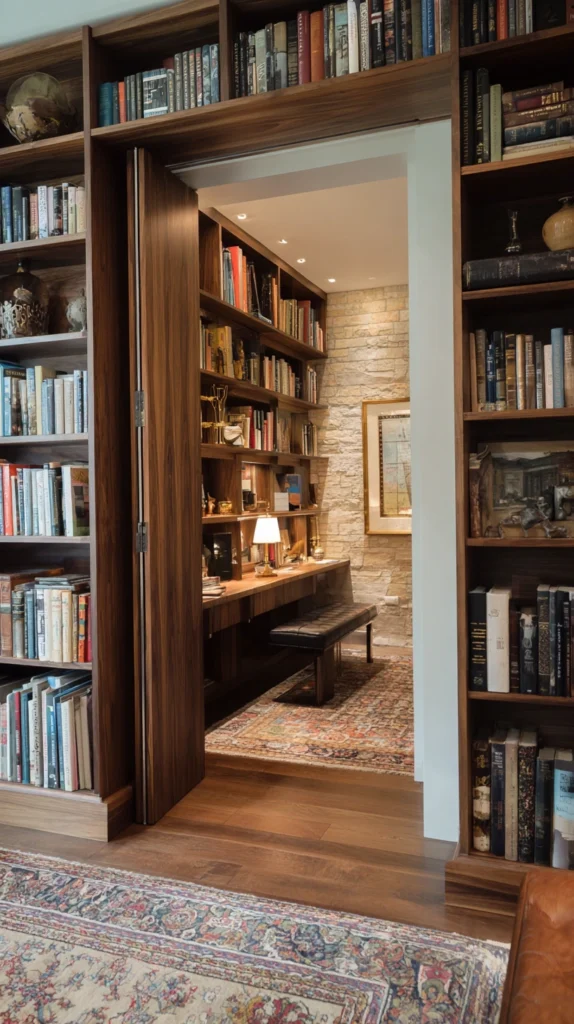
A home library with a hidden door is perhaps the most romantically appealing of all hidden door concepts. The combination of floor-to-ceiling bookshelves, the smell of old books, warm reading lights, and a secret door concealed somewhere within the shelving creates a space that feels like something from a Victorian novel brought to life.
The hidden door can be a full bookcase section that pivots or slides, a panel concealed between two bookcase units, or a section of shelving on a rolling library ladder track that moves aside to reveal the opening. Each approach has its own character and charm, and all of them make a home library into an unforgettable room.
Pro Tip: Arrange the books on the shelves around your hidden door with particular care. Avoid placing very tall or very heavy books directly on the door section — they add unnecessary weight and can make the door harder to operate smoothly over time. Lighter, smaller books and decorative objects on the door section keep the weight manageable and the mechanism working perfectly.
15. Outdoor Hidden Gate in Garden Hedging
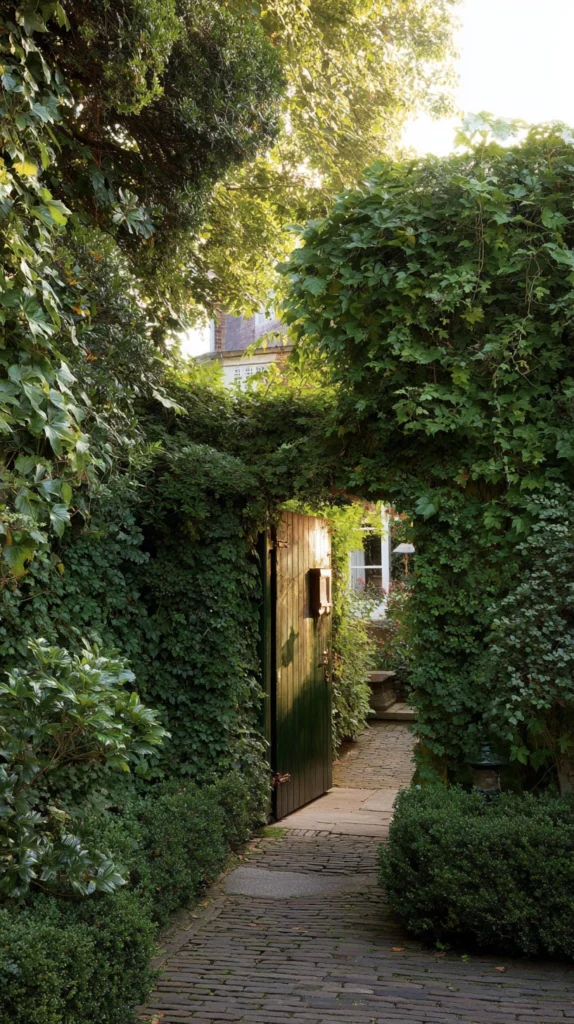
Hidden doors are not exclusively an interior concept. A concealed gate built into a tall garden hedge, a yew or box topiary wall, or a dense climbing plant structure creates a magical transition between different areas of a garden that has genuine storybook quality.
The gate frame and structure are completely overgrown or planted through with the surrounding hedging, making the opening invisible until you know exactly where to look. Behind it could be a kitchen garden, a secret seating area, a swimming pool garden, or simply a quiet corner that feels entirely separate from the rest of the outdoor space.
Pro Tip: Use a gate material that matches or complements the texture of the surrounding hedging for the most seamless result. Dark painted steel or iron disappears into dense dark green hedging beautifully. Timber gates work particularly well within more informal, cottage-garden style plantings. The less the gate material contrasts with its surroundings, the more effectively it disappears.
Make Your Home a Little More Extraordinary
Hidden doors are one of those rare design features that deliver on every level — they are practical, beautiful, space-efficient, and genuinely exciting to live with. They turn ordinary rooms into spaces with personality, mystery, and a sense of narrative that no amount of furniture or decoration alone can create.
Whether you build a full bookcase pivot door into a home library or simply tile over a bathroom door to make it vanish into the wall, the principle is the same — good design should surprise you, delight you, and make you feel something every time you interact with it. A hidden door does exactly that, every single day.