15 Farmhouse Storage Ideas
The farmhouse interior’s relationship with storage is one of its most defining and most practically instructive qualities. The working farmhouse was never a home designed around the concealment of its contents. It was a home designed around the organized, accessible, and honest display of everything it needed to function. The hooks beside the door held the coats because the coats needed to be there.
The open shelves in the kitchen held the crockery because the crockery needed to be accessible. The baskets on the dresser held the miscellaneous items of daily farm life because baskets were the most practical container available.
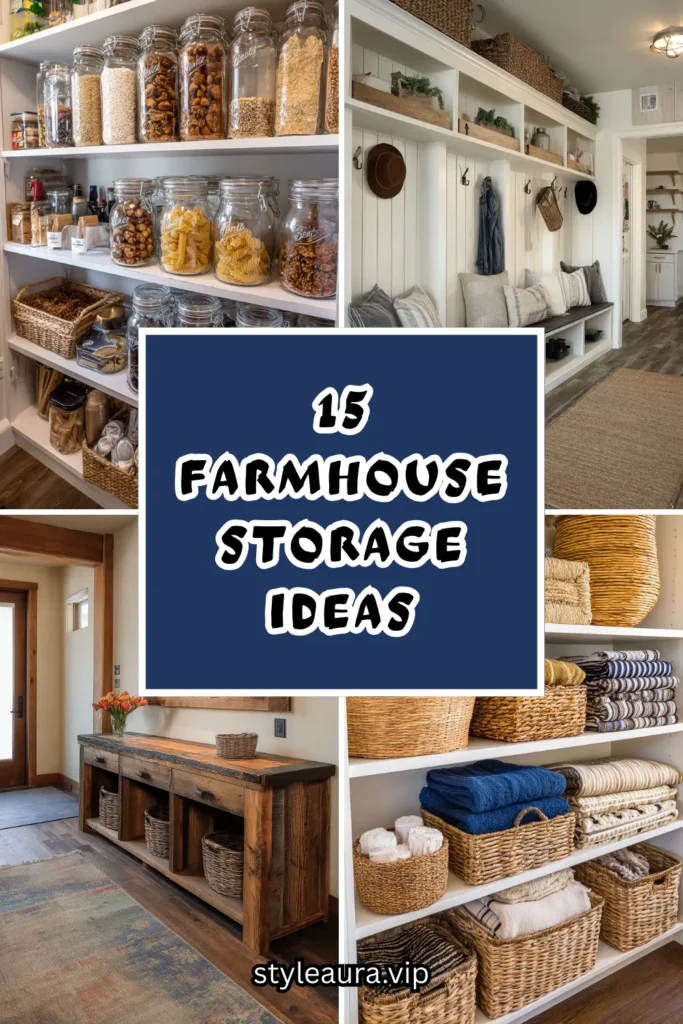
The farmhouse storage aesthetic is not a decorating style applied over a storage solution. It is the storage solution itself, organized with the practical intelligence of a working life and made beautiful by the quality of the materials, the consistency of the organization, and the specific warmth of the aged, natural materials that the farmhouse tradition most characteristically uses.
The contemporary homeowner who brings the farmhouse storage aesthetic into the modern home is not recreating the working farmhouse’s utilitarian organization.
They are applying its underlying philosophy, that storage should be honest, accessible, practically organized, and materially warm, to the contemporary domestic context with the design intelligence that makes the result both more beautiful and more functional than either the purely utilitarian or the purely decorative storage approach alone can achieve.
The farmhouse storage ideas collected here span every room of the home and every scale of storage requirement, from the small daily-use organization of the kitchen counter to the large-scale structural storage of the utility room and the entry hall.
All of them share the farmhouse philosophy of honest, warm, and genuinely practical organization. Here are fifteen farmhouse storage ideas that bring both beauty and function to every corner of the home.
1. The Open Kitchen Dresser
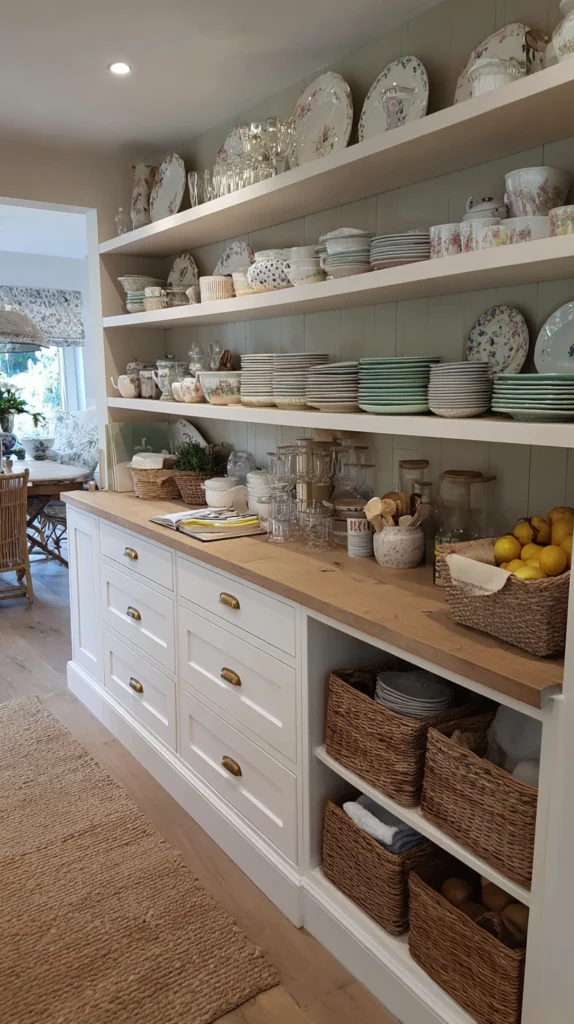
The kitchen dresser, a tall standing unit of two sections with a base of closed cupboards and drawers below and an open shelved upper section above, is the farmhouse kitchen’s defining storage piece and the one whose organized, open display of crockery, glassware, and the various objects of the kitchen creates the specific warmth and material richness of the farmhouse aesthetic most completely.
The dresser’s upper shelves should be organized with genuine visual intention. Plates stacked in consistent sets, glasses arranged in height order, jugs and serving pieces grouped by material and size. The organized display is not simply tidy. It is beautiful, because the consistency and the quality of the arrangement reveals the character of the objects rather than obscuring it.
The base cupboards and drawers hold the kitchen’s less visually appealing storage requirements. The cleaning products, the packaged foods, the accumulated small items of the kitchen routine that the open upper shelves should not display. The division between the open upper display and the closed lower storage is the dresser’s most practically intelligent organizational principle.
Choose a dresser in a painted timber finish whose color suits the kitchen’s specific palette. A warm cream, a soft sage green, or a deep forest green create the farmhouse kitchen’s characteristic palette. The dresser’s hardware should be in a warm brass, an aged iron, or a simple ceramic knob that relates to the farmhouse’s material tradition without the precision of the contemporary furniture fitting.
2. A Shaker Peg Rail Throughout the Home
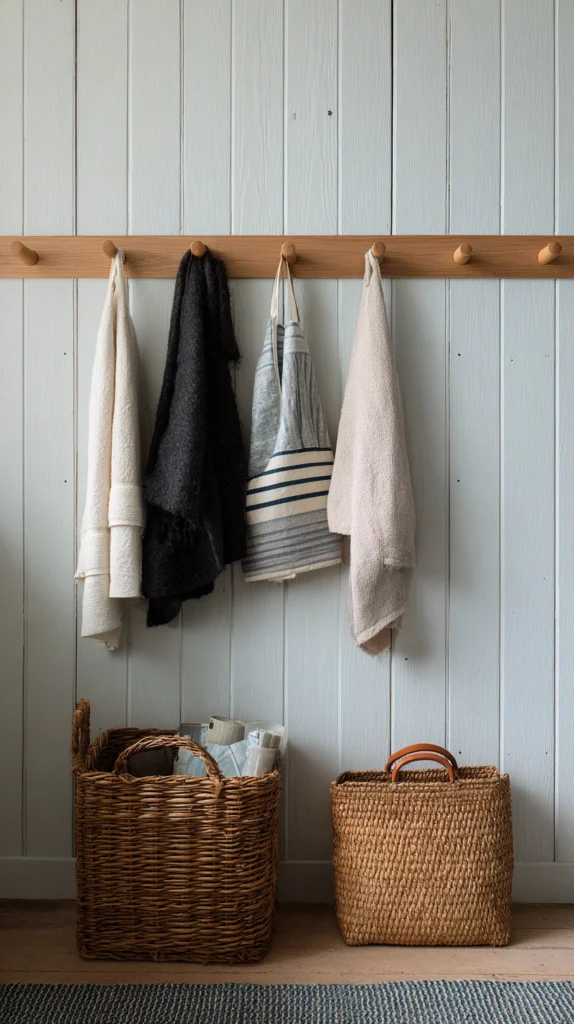
The Shaker peg rail, a simple timber rail of rounded or square section pegs fixed to a flat mounting board at a consistent height around the room’s perimeter, is the farmhouse storage system with the widest range of application and the most immediate impact on the home’s organizational quality. It holds coats, bags, hats, scarves, and the accumulated outerwear of daily life in the entry hall.
In the kitchen the peg rail holds aprons, oven mitts, small baskets of herbs and kitchen tools, hanging bundles of dried herbs and flowers, and the various lightweight items that the kitchen wall would otherwise have no organized position for. The peg rail’s versatility is its most practically valuable quality. It holds anything with a loop, a handle, or a hanging point.
In the bathroom the peg rail holds towels in a warm, organized arrangement that is both more accessible and more visually attractive than the standard towel rail. Individual pegs for each household member’s towel create the simple organizational system that eliminates the bathroom’s chronic towel-management problem with the most minimal possible hardware intervention.
Install the peg rail at a height appropriate to the room’s specific use. Entry hall peg rails at one hundred and seventy centimeters suit adult coat hanging. Kitchen peg rails at one hundred and fifty centimeters suit the shorter items the kitchen holds. Bathroom peg rails at one hundred and forty centimeters suit the full-length towel in a loosely draped arrangement of generous, natural folds.
3. Wicker and Woven Baskets for Every Surface
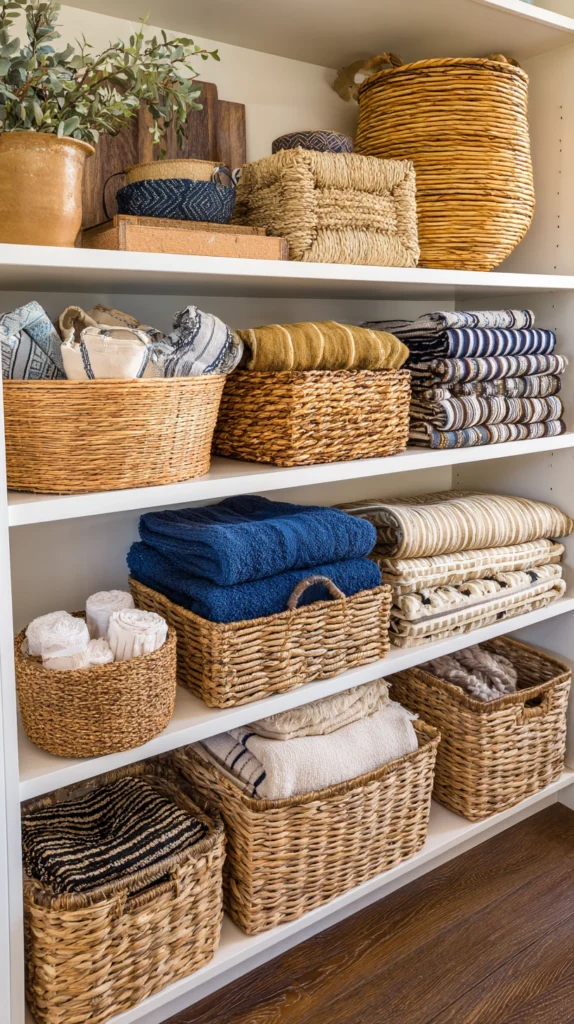
The wicker basket is the farmhouse storage system’s most versatile, most warm, and most consistently available component, and its application throughout the home in a consistent collection of related sizes, shapes, and tones creates the farmhouse storage aesthetic’s characteristic combination of visual warmth and genuine organizational utility.
Baskets on the open kitchen shelves hold the irregular items that the straight-sided shelf cannot organize neatly without containment. Onions and garlic in a wide, flat basket. Bread in a tall, lidded basket. Cleaning clothes in a small basket beside the sink. Each basket gives its irregular contents a defined, visually contained position on the shelf that the items themselves cannot create without the basket’s structure.
Baskets in the living room hold the throws, the cushions, the children’s toys, and the accumulated soft items of daily living room life in contained, visually warm arrangements beside the sofa and at the room’s various activity points. The basket beside the sofa that holds the spare throws creates a living room of complete daily organization without the storage cabinet’s visual weight and formal character.
Choose baskets in natural materials throughout the home, wicker, seagrass, rattan, jute, and water hyacinth, rather than synthetic woven alternatives whose regularity of weave and uniformity of color lacks the organic warmth that the natural material creates.
A collection of natural baskets in slightly varied tones and slightly varied weave patterns creates the visual warmth of a naturally assembled collection rather than a purchased set.
4. A Utility Room with Full-Height Open Shelving
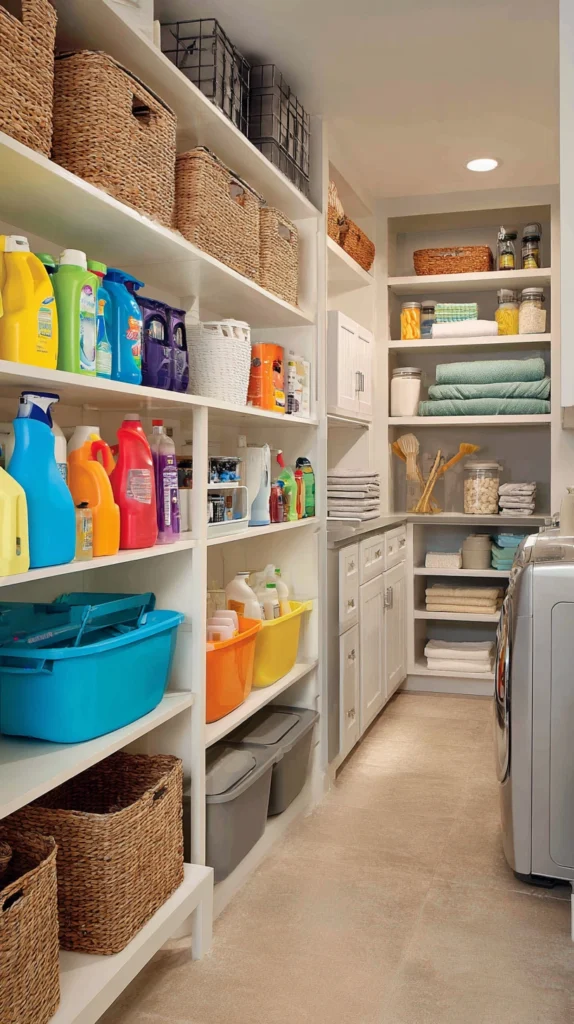
The farmhouse utility room, the working room that holds the laundry, the cleaning equipment, the household’s operational infrastructure, and the bulk storage that the main rooms cannot accommodate, is the space where the farmhouse storage philosophy of honest, organized display delivers its greatest practical benefit. Full-height open shelving on every available wall creates the utility room of maximum organizational capacity.
The shelves should be of sufficient depth for the largest items they will hold. A depth of forty centimeters accommodates most cleaning products, storage containers, and the large items of the utility room’s contents in a stable, single-layer arrangement that allows every item to be seen and reached without moving items in front. Deeper shelving creates dark recesses where items disappear and become unused.
Organize the utility room shelving by category and by frequency of use. Daily use items at the most accessible height between knee and shoulder level. Weekly use items above and below the daily access zone.
Seasonal and occasional items at the highest and lowest shelves where reaching requires a step or a crouch that the infrequent access justifies. The category organization should be labeled simply.
The utility room’s shelving should be in a material that withstands the wet, humid conditions that the laundry function creates. Painted timber of adequate quality with a moisture-resistant paint finish, powder-coated steel shelving of commercial quality, or a composite shelving material of proven moisture resistance creates the shelving infrastructure that the utility room’s specific conditions require for long-term performance.
5. An Antique Armoire for Bedroom Storage
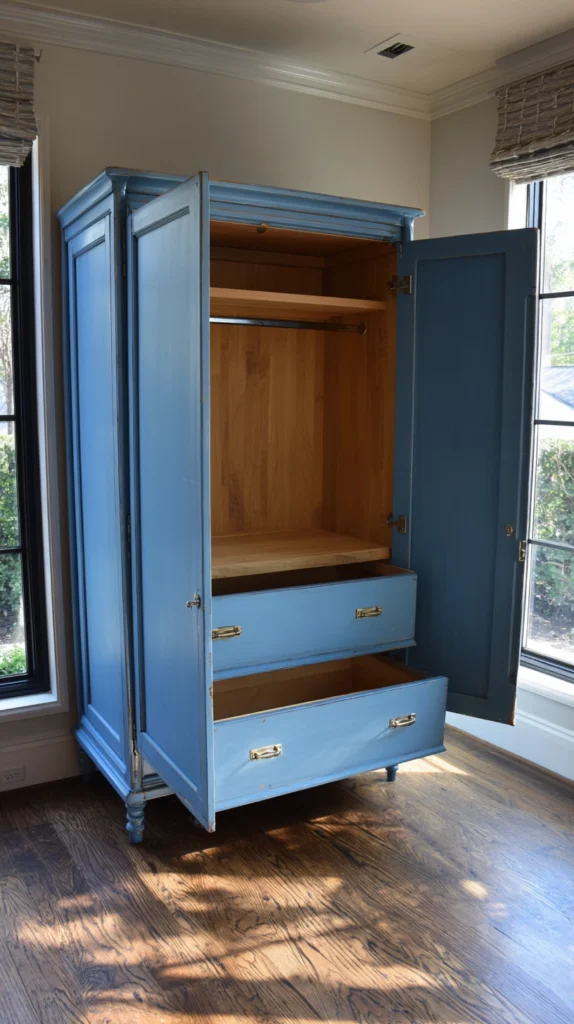
An antique armoire or a vintage-style painted wardrobe, its interior fitted with a rail for hanging clothes, shelves for folded items, and drawers for the smaller clothing categories, creates a bedroom storage piece of genuine farmhouse character and complete organizational functionality. The armoire’s presence in the bedroom creates the specific warmth of a room furnished with a piece of genuine history.
The armoire’s interior organization should be assessed and if necessary improved before the piece is put into service as the bedroom’s primary storage. Additional shelf dividers, drawer organizers, and hanging accessories fitted to the original interior create a storage system of contemporary organizational quality within the antique piece’s traditional exterior form.
The armoire’s exterior condition, including its paint or finish, its hardware, and its door alignment, should be addressed before the piece is positioned in the bedroom. A loose hinge tightened, a paint surface touched up where the original finish has worn, and hardware replaced if the original is missing or damaged creates the specific quality of a well-maintained antique rather than a neglected one.
Position the armoire as a focal point in the bedroom rather than against the most convenient wall without consideration of its visual impact. The antique armoire is a piece of considerable visual presence that deserves to be placed where its form can be appreciated from the bed, from the room’s entry, and from the specific viewpoints that the bedroom’s layout creates.
6. Mason Jar Organization in the Kitchen and Pantry
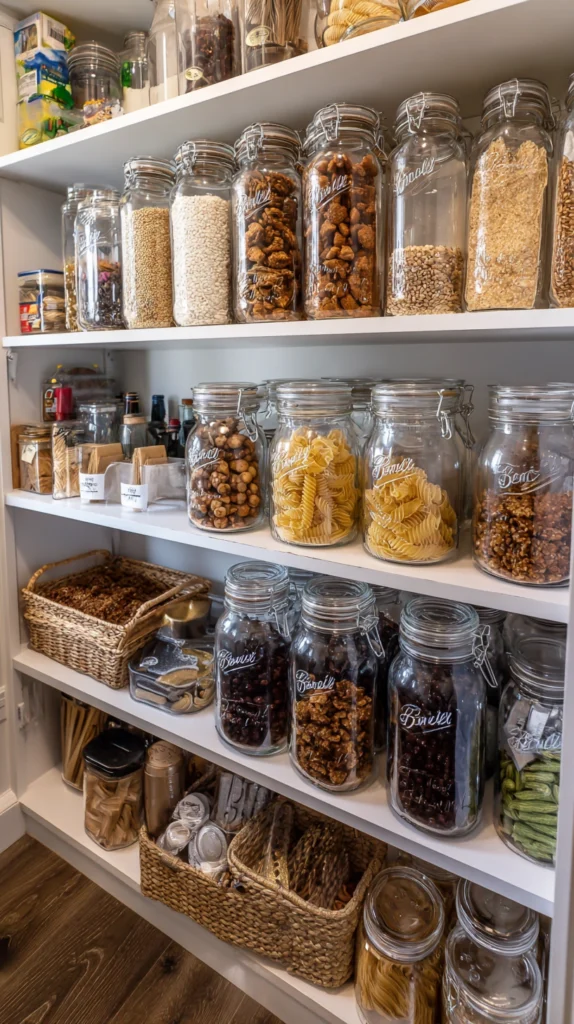
Mason jars, the glass canning jars of the American farm tradition, used as the primary dry goods storage containers in the kitchen and the pantry, create the farmhouse kitchen’s most iconic and most practically effective open storage system. The glass jars’ transparency displays the contents clearly, the consistent format creates the visual uniformity that makes the displayed collection beautiful.
Decant every dry ingredient from its commercial packaging into a mason jar of appropriate size. Flour, sugar, rice, pasta, grains, pulses, nuts, seeds, and every dry ingredient of the daily kitchen routine. The commercial packaging’s varied sizes, materials, and graphic designs create the visual chaos of a pantry that is full but disorganized. The consistent mason jar format creates the visual calm of a pantry that is full and beautifully organized.
Label each mason jar with a simple, consistent label in a clear, readable typeface. Handwritten labels on kraft paper tags tied to the jar neck create the farmhouse aesthetic’s specific combination of practical information and artisanal warmth. Printed labels in a consistent format create a more refined, more contemporary farmhouse pantry aesthetic.
Either is correct. The inconsistent mix of both creates the visual disorganization that the mason jar system is designed to eliminate.
Organize the mason jars on the pantry shelves by category and by size. Large jars at the back, smaller jars at the front of each shelf. The visibility of every jar’s contents from the front of the shelf is the mason jar system’s primary organizational advantage and the one that makes the daily kitchen routine of finding ingredients faster and more visually pleasurable than the commercial packaging alternative.
7. A Mudroom with Built-In Cubbies
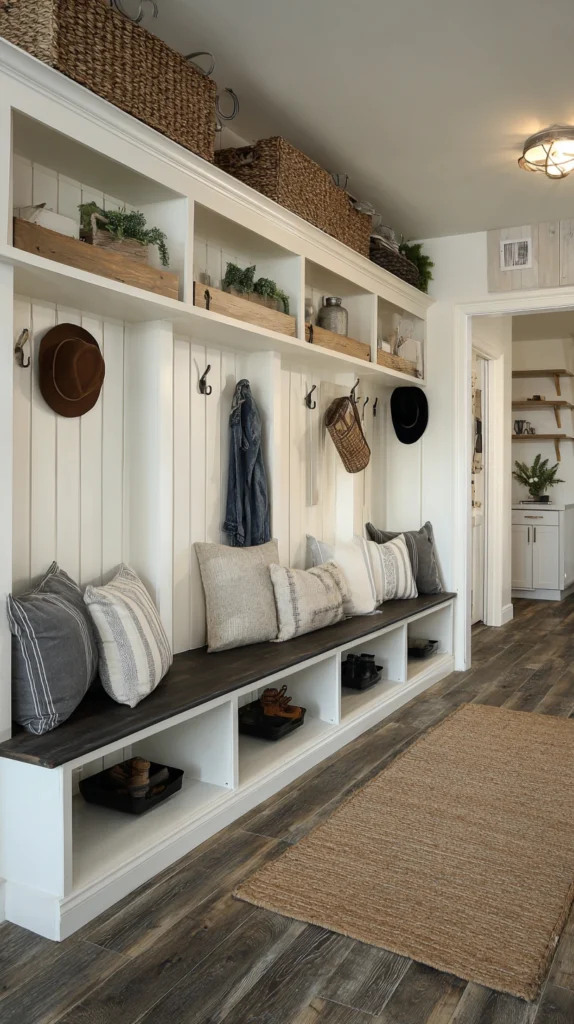
The mudroom, the transitional space between the home’s exterior and its interior, is the farmhouse home’s most practically important organizational zone and the one whose storage provision most directly determines the quality of the daily experience of coming home and leaving home. Built-in cubbies, each assigned to a specific household member or a specific category of outdoor equipment, create the mudroom of complete organizational intelligence.
Each cubby should contain the full organizational provision for the specific person or category it serves. A dedicated hook at the back for the coat, a shelf above for the bag or the hat, a bench seat below for the seating position required to put on and take off footwear, and a boot tray at floor level for the wet or muddy footwear that the outdoor world consistently delivers to the home’s threshold.
The bench seat in the mudroom cubby should be of adequate depth for comfortable seating during the footwear routine, a minimum of forty centimeters from back to front edge, and of adequate height for the seated adult to reach the floor comfortably, approximately forty-five centimeters from the floor. A bench of inadequate depth or height creates the daily awkwardness that makes the mudroom less used than its organizational provision warrants.
The mudroom’s floor material should be the most practical and the most durable in the home. Stone tile, slate, or a sealed concrete creates the mudroom floor of maximum durability and minimum maintenance requirement. The mudroom floor receives the home’s most concentrated mud, water, and outdoor debris, and only the most robust floor materials maintain their appearance under this level of daily assault.
8. A Farmhouse Pantry with Labeled Categories
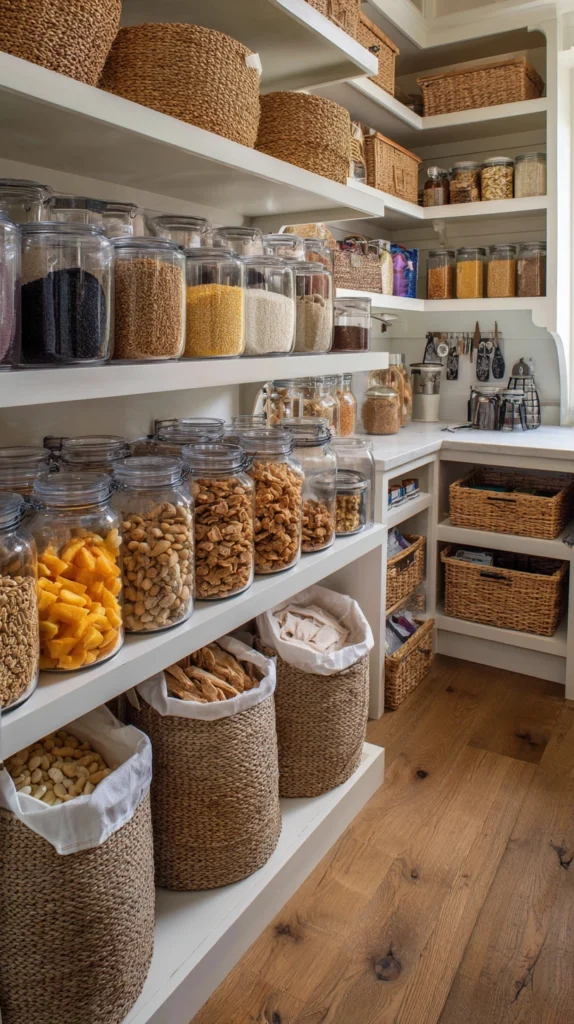
A dedicated pantry, whether a full walk-in room or a large pantry cabinet, organized with labeled categories for every food type and every kitchen supply category, creates the farmhouse kitchen’s most complete and most satisfying organizational achievement. The fully organized farmhouse pantry is one of the domestic interior’s most genuinely pleasurable spaces.
The pantry’s shelving should be of varied depths appropriate to the varied sizes of the items stored. Deep shelves of forty centimeters for bulk items and large containers at the back of the pantry. Shallower shelves of twenty to twenty-five centimeters for the smaller jars, bottles, and packages at the pantry’s most accessible front sections. A single depth of shelving throughout creates the compromise that serves nothing optimally.
Label every shelf, every basket, and every container in the pantry with a clear, consistent labeling system. The category label on the shelf edge tells every household member where every category of item belongs and creates the shared organizational understanding that makes the pantry a genuinely functional system rather than a single person’s private organizational achievement that only its creator can navigate.
Review and reset the pantry organization quarterly, removing expired items, reorganizing categories that have outgrown their allocated space, and restoring the organizational clarity that daily use gradually erodes.
The quarterly pantry reset is the maintenance routine that keeps the organized farmhouse pantry in the condition that its initial organization created, rather than allowing it to gradually revert to the chaos that the organization was designed to replace.
9. A Barn Door Storage Cabinet
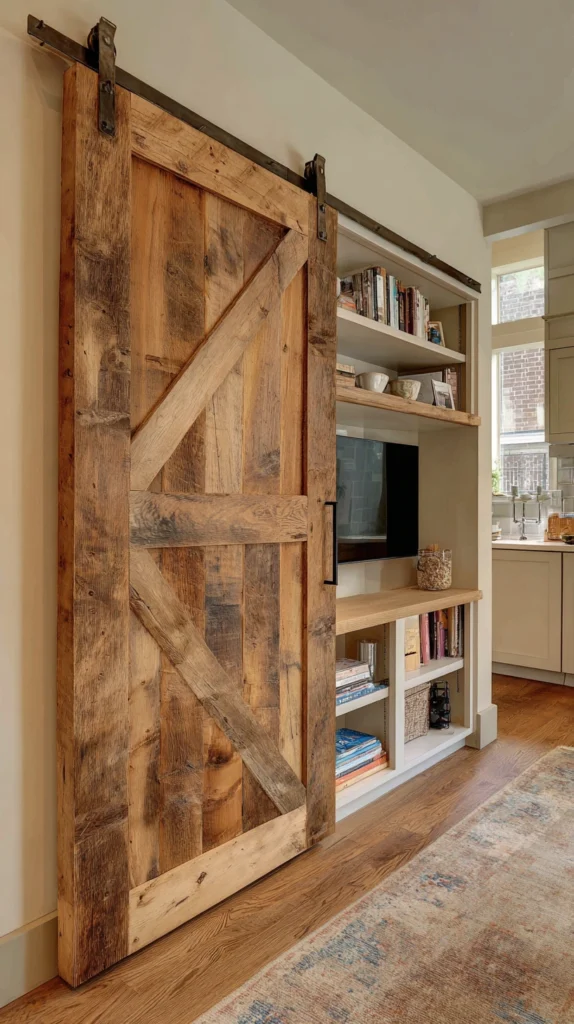
A storage cabinet fitted with sliding barn doors, the timber panels hung on a black steel track and wheel system that allows the doors to slide open along the cabinet’s front face rather than swinging outward into the room, creates a farmhouse storage piece of complete visual character and complete spatial efficiency. The sliding door eliminates the clearance space that a hinged door requires.
The barn door cabinet’s interior organization should be planned for the specific room and the specific storage requirement before the cabinet is built or purchased. A living room barn door cabinet holds the television, the media equipment, the books, and the decorative objects of the living room in a single, organized unit that the sliding doors conceal completely when the cabinet is not in active use.
The barn door’s timber should be chosen for its specific visual character. Reclaimed timber boards with their aged surface and their grain variation create the most authentic farmhouse aesthetic.
New timber in a wide plank format with a wire-brushed finish and a dark stain creates a more contemporary farmhouse aesthetic of deliberate material quality. The door’s timber character communicates the cabinet’s farmhouse identity more directly than any other single design element.
The sliding track and wheel hardware should be of quality sufficient for the daily use the barn door will receive. Cheap barn door hardware develops noise and resistance within months of installation. Quality hardware from a specialist supplier, with smooth-running wheels and a precision-machined track, operates silently and reliably for years of daily sliding use without adjustment or maintenance.
10. Vintage Crates and Wooden Boxes
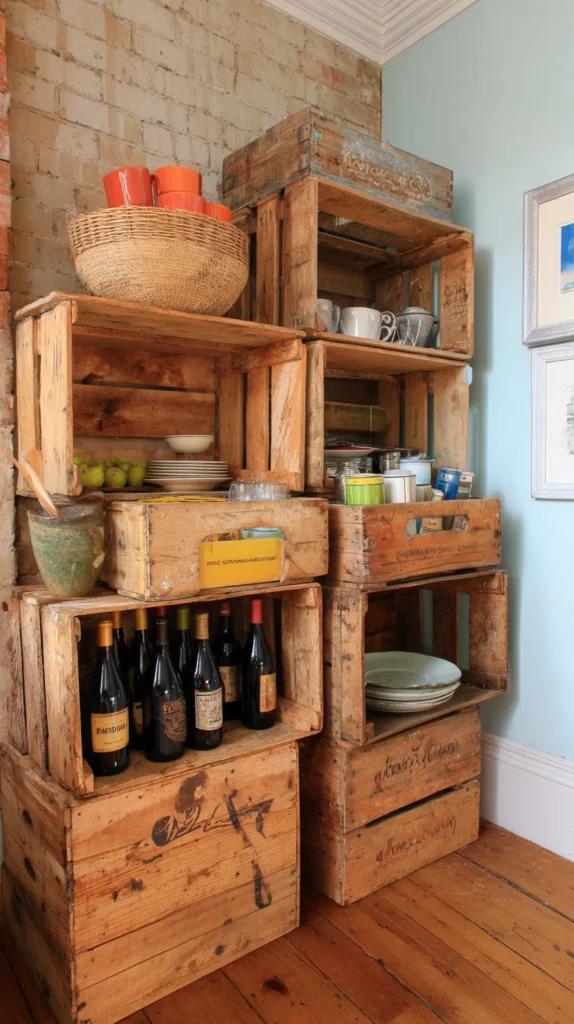
Vintage timber crates, wooden wine boxes, old storage chests, and the various timber containers of agricultural and commercial origin create farmhouse storage pieces of complete material authenticity that can be repurposed throughout the home with minimal preparation and maximum character. The vintage crate’s specific quality is the evidence of its previous use visible on its surface.
Stack vintage crates on their sides to create a simple shelving unit in the living room, the study, or the children’s bedroom. Three crates stacked in a staggered arrangement, their open faces forming the shelf openings, create a storage and display unit of complete farmhouse character in the time it takes to arrange the crates on the floor. No tools, no fixings, no skill required.
Vintage wine boxes, typically constructed from thin timber with the winery’s details stenciled or branded into the surface, create drawer-like storage boxes of specific charm when used to organize the contents of a larger storage unit. A dresser whose lower drawers are replaced with vintage wine box inserts creates a storage system of maximum organization within the farmhouse aesthetic’s characteristic material warmth.
Sand and oil the surfaces of vintage timber crates and boxes before bringing them into the home’s interior, removing any surface splinters that would catch on stored items and treating the timber with a penetrating oil that prevents moisture absorption in humid rooms. The light surface preparation enhances the vintage character of the aged timber rather than disguising it.
11. A Reclaimed Timber Console with Storage
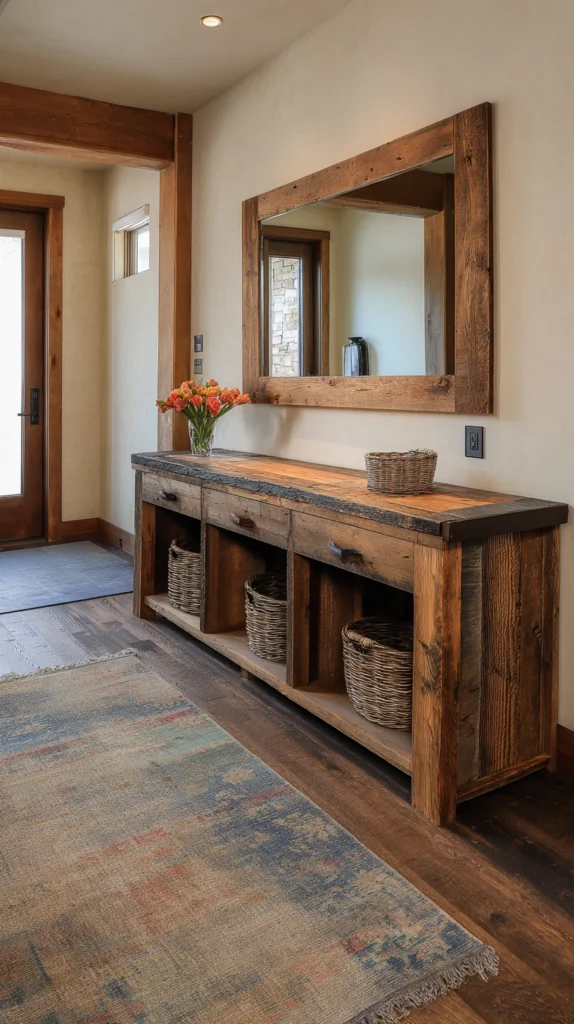
A console table constructed from reclaimed timber, its lower section fitted with shelves, drawers, or baskets that create the organizational provision the entry hall requires, creates a farmhouse entry of complete practical intelligence and genuine material warmth. The reclaimed timber console brings the specific quality of aged, weathered timber to the entry hall’s most prominent furniture position.
The console’s surface should be finished with a penetrating hardwax oil that provides adequate protection for the daily use of an entry hall surface, including the placement of bags, mail, and keys, without the plastic quality of a lacquer finish that obscures the timber’s natural surface character. A hardwax oil finish that enhances the timber’s grain and color while providing a wipeable, durable surface is the appropriate finishing specification.
The lower storage section of the entry hall console should be organized with the specific daily-use items of the entry hall’s organizational function. A basket for gloves and scarves. A small tray for keys and coins.
A shelf for the bags and backpacks that the entry hall accumulates in every household. The organization of these specific items creates the entry hall’s functional quality and its daily-use value.
A mirror above the reclaimed timber console, in a frame of compatible material character, creates the entry hall’s classic composition of console and mirror that combines the practical organizational function of the console’s surface and storage with the functional and decorative quality of the mirror at the entry’s primary wall. The farmhouse entry console and mirror is the domestic interior’s most consistently welcoming arrival composition.
12. Hanging Pot Racks in the Kitchen
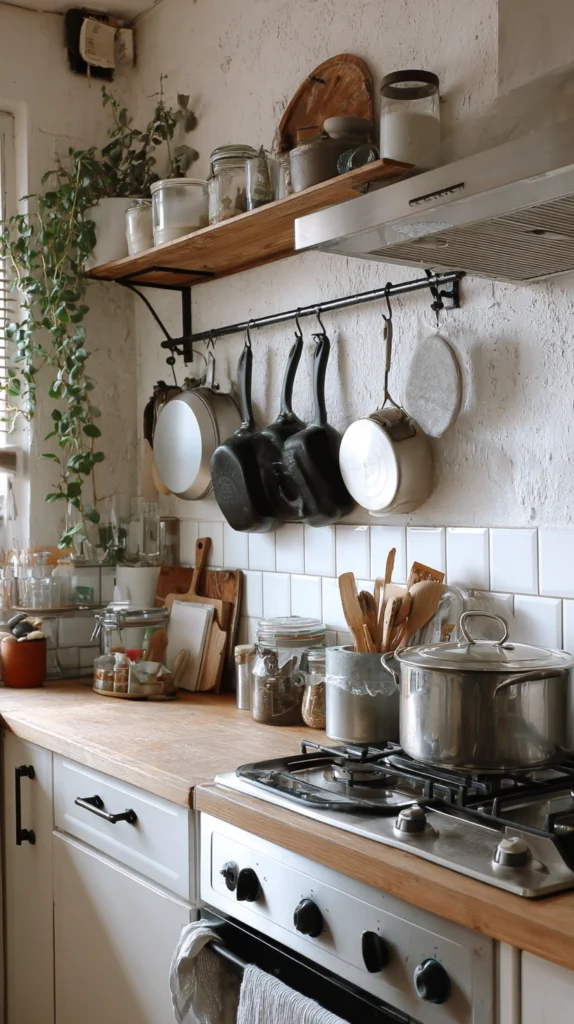
A hanging pot rack, a ceiling-mounted rail or frame of steel or wrought iron from which pots, pans, and cooking utensils hang on individual hooks, creates the farmhouse kitchen’s most characteristically industrial and most practically useful storage solution. The hanging rack removes the kitchen’s largest and most awkward storage items from the cabinets and positions them within immediate reach of the cooking surface.
The rack’s position above the kitchen island or above the cooking range is the most practically useful location, placing the hanging pots and pans within the cook’s reach from the cooking position without any cabinet opening or item retrieval. The pots hang visibly, their bases accessible from below, making the selection of the correct pot for the cooking task immediate and effortless.
The rack’s construction should be of adequate strength for the weight of the pots and pans it will hold. A cast iron pot collection is significantly heavier than a collection of lightweight aluminum pans, and the ceiling fixings for the rack must be specified for the maximum anticipated load with a safety margin of at least two to one. Fix the rack into ceiling joists or structural beams, not into plasterboard alone.
The hanging pots and pans should be maintained in a clean, dry condition that makes their open display a pleasure rather than an embarrassment. Pots and pans that are stored away tend to accumulate surface residues that are acceptable in a closed cabinet but unacceptable when the items are permanently on display in the kitchen’s most visually prominent storage position.
13. A Built-In Banquette with Storage Beneath
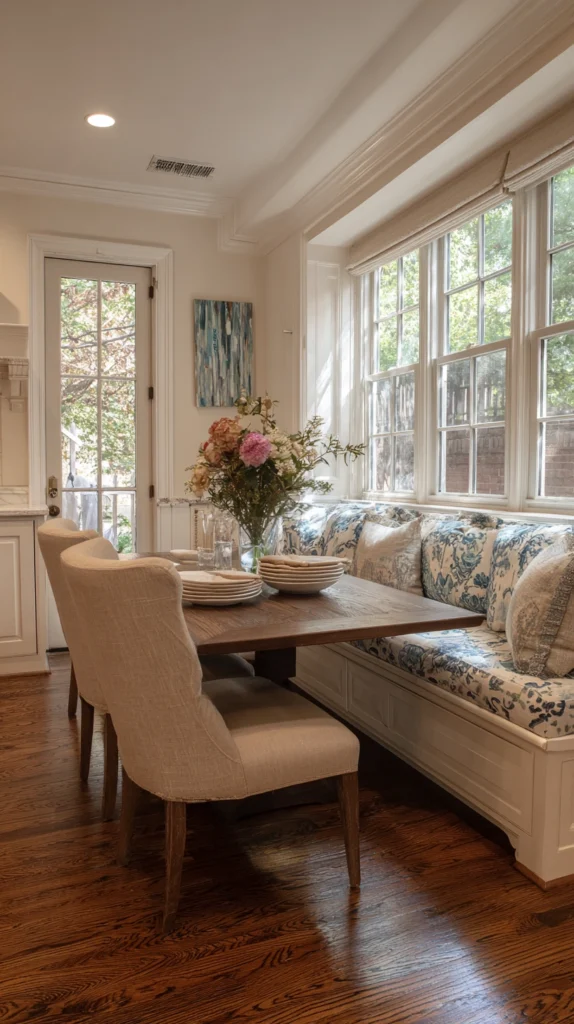
A built-in banquette in the kitchen or dining room, a fixed upholstered bench seat fitted against the wall or into a corner, with the seat’s interior accessed through a hinged seat surface or through drawers in the base, creates a dining area storage solution of complete spatial efficiency that the freestanding dining chair cannot approach in terms of the additional storage value it provides.
The banquette’s storage interior is particularly suited to the bulky, awkward items that the kitchen and dining room accumulate without adequate storage provision. Table linens, large serving pieces, seasonal entertaining equipment, and the various items of the dining function that require storage but resist easy accommodation in standard kitchen cabinetry all find their appropriate home in the banquette’s generous interior volume.
The banquette’s upholstery should be in a fabric of adequate durability for the dining environment’s specific conditions. A wipe-clean performance fabric in a farmhouse-appropriate pattern, a simple stripe, a small check, or a botanical print in tones drawn from the kitchen’s palette, creates the practical durability of a dining seat that can be cleaned between meals without the fabric absorbing food residues permanently.
The table that accompanies the built-in banquette should be of a height and a format that creates a comfortable dining position for the banquette’s seated occupants. A standard table height of seventy-five centimeters suits a banquette seat at forty-five centimeters.
The table’s format, whether rectangular, square, or round, should be chosen for the specific spatial conditions of the banquette’s position and the number of diners the dining area is designed to accommodate.
14. A Farmhouse Linen Cupboard
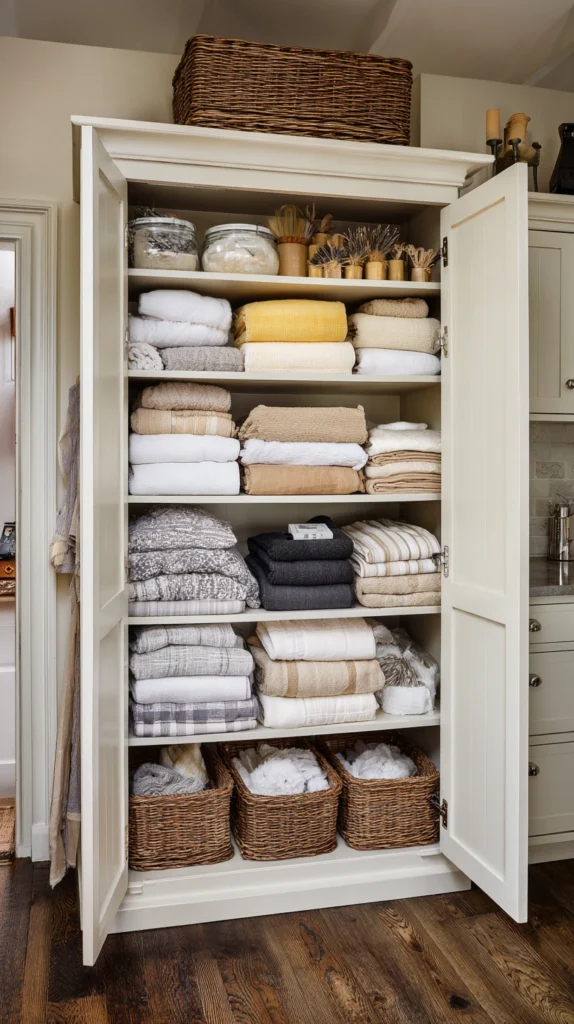
A dedicated linen cupboard, a full-height storage unit fitted with shelves of appropriate spacing for the various categories of household linen, organized by category and by size with a consistency that makes every item immediately findable, is the farmhouse home’s most quietly satisfying organizational achievement. The well-organized linen cupboard is a domestic pleasure of an understated but genuinely consistent quality.
The shelf spacing of the linen cupboard should be calibrated to the specific linen categories stored. Deeper spacing for folded duvets and blankets. Standard spacing for folded sheet sets. Narrower spacing for folded pillowcases and tea towels. The consistent use of a single shelf depth throughout the linen cupboard creates the compromise that serves no category optimally and wastes the available space at every level.
Organize the linen in consistent sets. Each bed’s sheet is folded and stored together within a pillowcase of the set, creating a self-contained bundle that can be removed and replaced in a single action. Each bathroom’s towel allocation is stored together on a dedicated shelf section. The set organization creates the navigational simplicity that makes the linen cupboard genuinely functional rather than merely organized in appearance.
Cedar balls or lavender sachets placed among the stored linen create the traditional farmhouse linen storage’s characteristic scent that communicates the specific quality of a home that takes the care of its household contents seriously. The scent of lavender among clean, folded linen is one of the domestic interior’s most quietly pleasurable sensory details.
15. Design the Farmhouse Storage System as a Whole
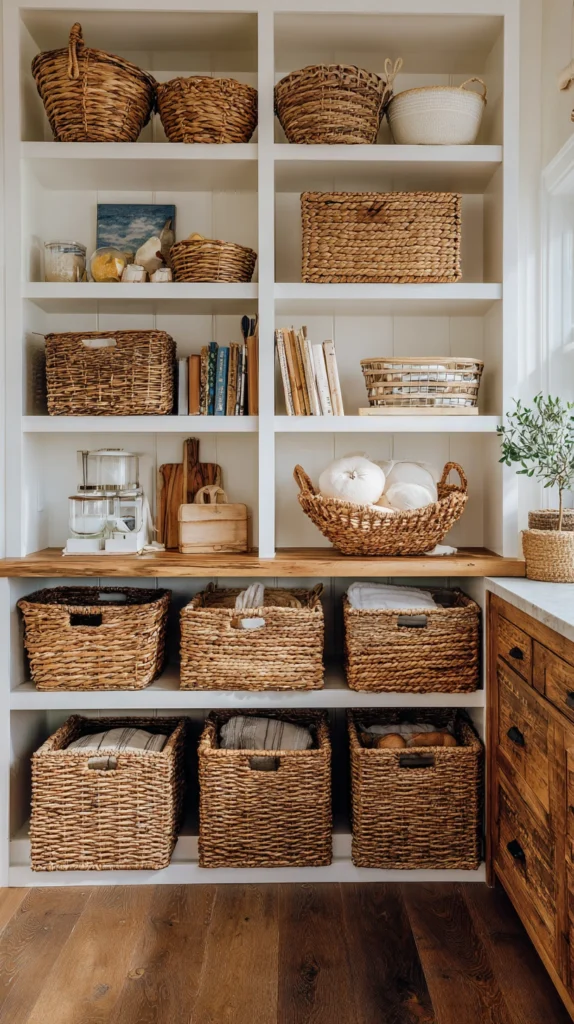
The final farmhouse storage idea is the most important and the most transformative for the household whose individual storage interventions have improved specific rooms without creating the whole-home organizational quality that the farmhouse storage philosophy at its most complete achieves. It is the design of the home’s entire storage provision as a unified system.
The whole-home farmhouse storage system begins with an honest assessment of every room’s specific storage requirement, the objects that need to be stored, the frequency with which they are accessed, and the organizational system that best suits both the objects’ physical characteristics and the household’s daily routine. This assessment precedes any material or aesthetic decision about the storage solution.
The farmhouse aesthetic’s specific qualities, its natural materials, its consistent warm tones, its honest display of organized contents, and its preference for the open shelf, the wicker basket, and the timber container over the closed cabinet and the concealed system, should be applied consistently across all rooms and all scales of storage provision. The consistent aesthetic creates the whole-home visual warmth that individual interventions cannot achieve in isolation.
The farmhouse storage system’s final quality, the one that distinguishes a home where the farmhouse storage philosophy has been genuinely applied from one where individual farmhouse storage pieces have been placed without a unifying organizational intelligence, is the quality of daily ease.
In the home where the farmhouse storage system has been designed as a complete, intelligent whole, every object has a specific place, every place is immediately findable, and every day’s activity of living in the home is made slightly simpler, slightly warmer, and slightly more pleasurable by the quality of the organizational system that supports it.