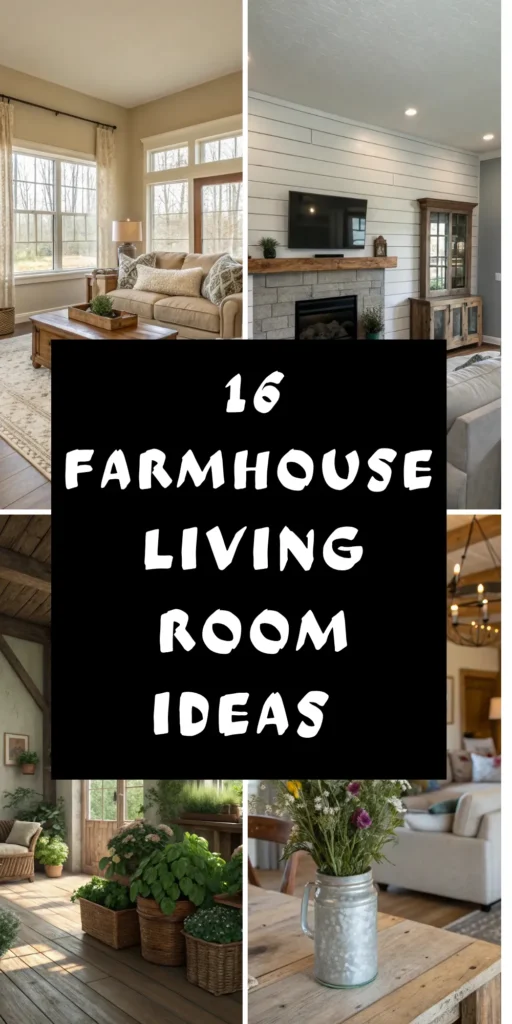
16 Warm Farmhouse Living Room Ideas for Inviting Spaces
Farmhouse style living rooms capture the essence of comfortable, welcoming homes where families gather, stories are shared, and memories are made. This timeless design approach combines rustic charm with modern comfort, creating spaces that feel both sophisticated and refreshingly down-to-earth.
The beauty of farmhouse style lies in its emphasis on natural materials, vintage finds, and lived-in comfort rather than pristine perfection. It’s about creating a space that invites you to kick off your shoes, curl up with a good book, and truly relax. From shiplap walls to cozy textiles and vintage accessories, every element works together to create an atmosphere of warmth and authenticity.
Whether you’re decorating a countryside cottage, updating a suburban home, or adding rustic charm to a city apartment, farmhouse style adapts beautifully to any setting. The key is balancing rustic elements with comfort and functionality to create a space that’s both beautiful and livable.
In this article, we’ll explore 16 warm farmhouse living room ideas that will help you create an inviting space where comfort meets timeless style.
Shiplap Accent Walls for Rustic Texture
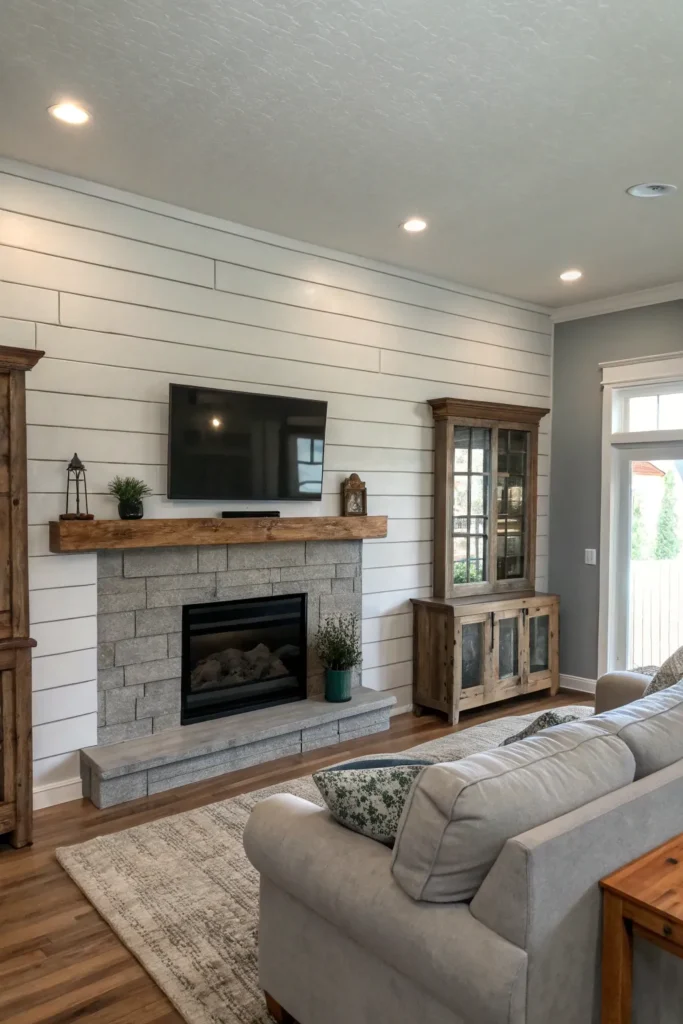
Why try this? Shiplap adds instant farmhouse character and visual texture while being relatively affordable and DIY-friendly.
Implementation: Install horizontal shiplap boards on one accent wall, typically behind the sofa or fireplace. Paint in warm white, soft gray, or natural wood tones. Use proper spacing and level installation for professional appearance.
Who benefits: Homeowners wanting dramatic farmhouse impact with a manageable DIY project that doesn’t require full room renovation.
Pro tip: Use primed MDF boards for painted shiplap or real wood for natural stain finishes—each offers different benefits for durability and cost.
Vintage Leather Furniture with Aged Character
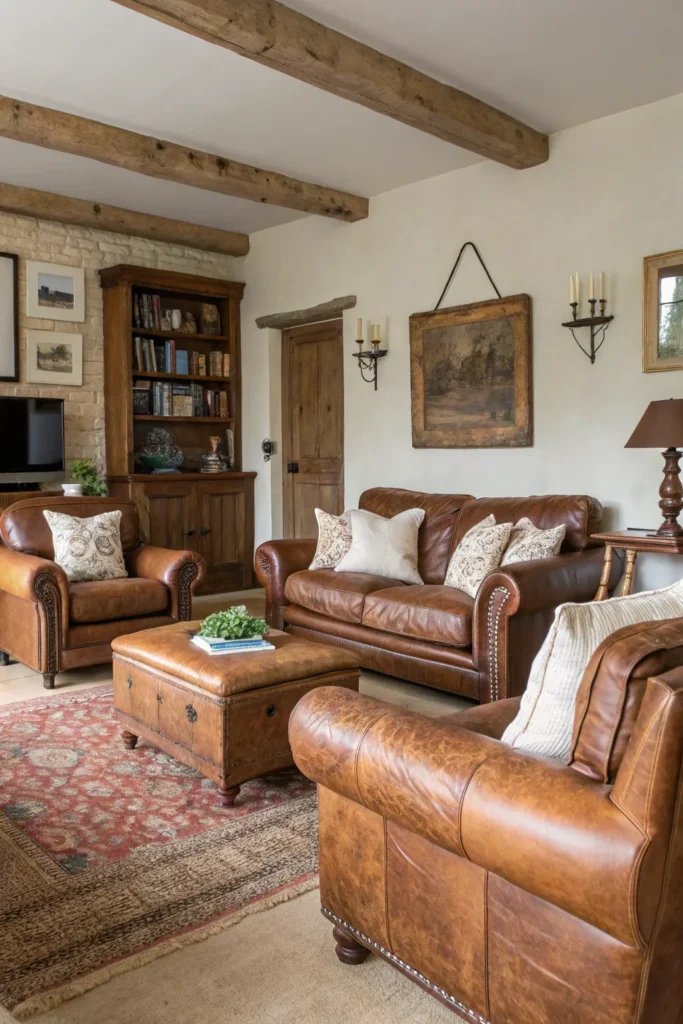
Well-worn leather seating adds warmth and authenticity that improves with age and use.
Implementation: Choose leather sofas or chairs in cognac, brown, or distressed finishes. Look for pieces with natural grain patterns and subtle wear marks. Mix with linen or cotton cushions for comfort and visual interest.
Best for: Families with children or pets who want durable, beautiful furniture that hides wear while developing character over time.
Con: Quality leather furniture requires significant investment upfront—consider vintage or gently used pieces for budget-friendly options.
Reclaimed Wood Coffee Tables and Furniture
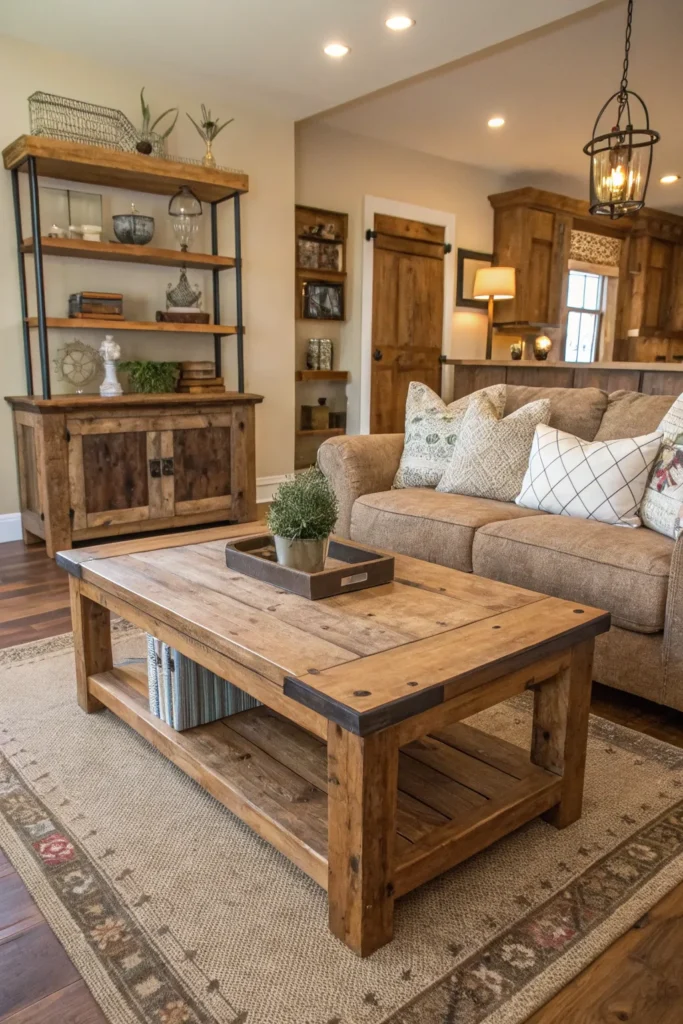
Natural wood elements bring organic warmth and environmental consciousness to your space.
How to: Source coffee tables, side tables, or shelving made from reclaimed barn wood, old fence posts, or salvaged materials. Choose pieces that show natural aging, nail holes, and weathered character.
Why it works: Reclaimed wood tells a story while supporting sustainable decorating practices and adding authentic rustic character.
Pro tip: Seal reclaimed wood properly to prevent splinters and dust while maintaining the natural, weathered appearance.
Cozy Plaid and Gingham Textiles
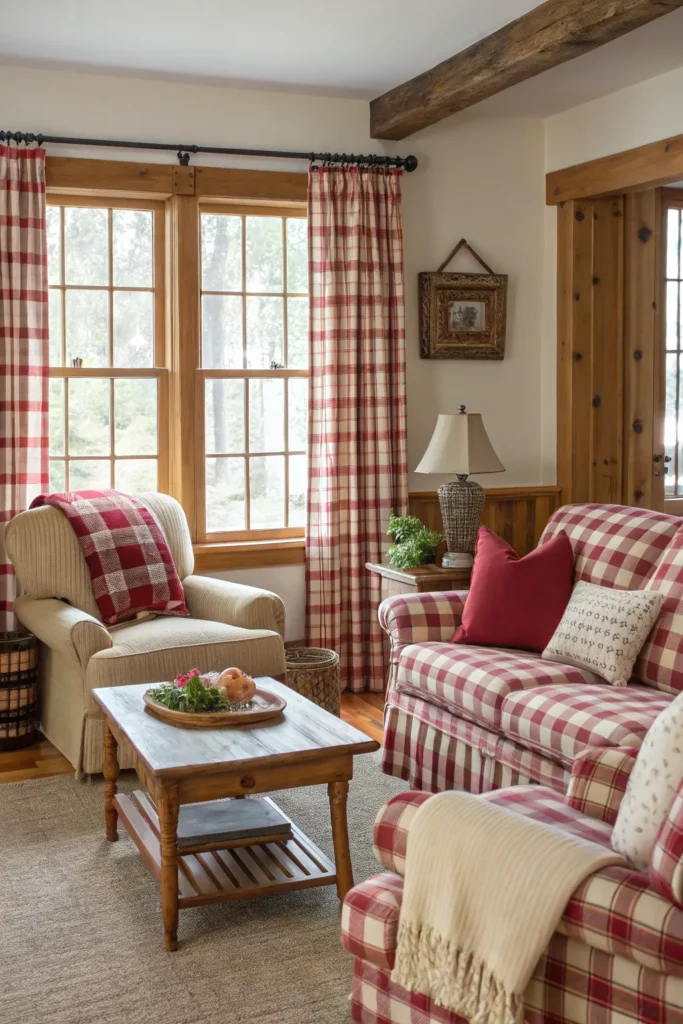
Why try this? Classic farmhouse patterns add visual interest and cozy comfort through pillows, throws, and window treatments.
Steps: Layer plaid throw pillows, gingham curtains, and buffalo check blankets in coordinating colors. Mix different scale patterns for visual depth while maintaining color harmony.
Who benefits: Those wanting to add farmhouse charm through easily changeable accessories rather than permanent architectural changes.
Downside: Too many competing patterns can feel busy—balance patterned textiles with solid colors and natural textures.
Sliding Barn Doors as Functional Decor
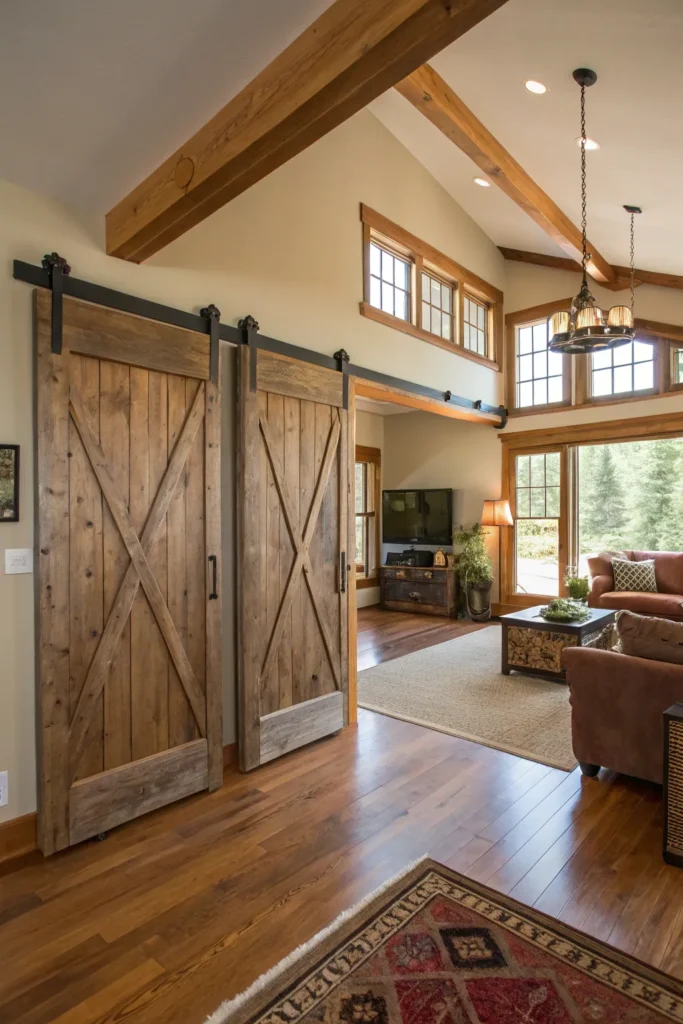
Barn-style sliding doors serve as both functional room dividers and striking design elements.
Implementation: Install sliding barn door hardware to separate living areas from dining rooms, hide entertainment centers, or close off adjoining spaces. Choose weathered wood or painted finishes that complement your color scheme.
Why it matters: Adds authentic farmhouse architectural detail while solving space and privacy needs in open floor plans.
Con: Requires wall space for door to slide—measure carefully and ensure adequate clearance for smooth operation.
Mason Jar and Galvanized Metal Accents
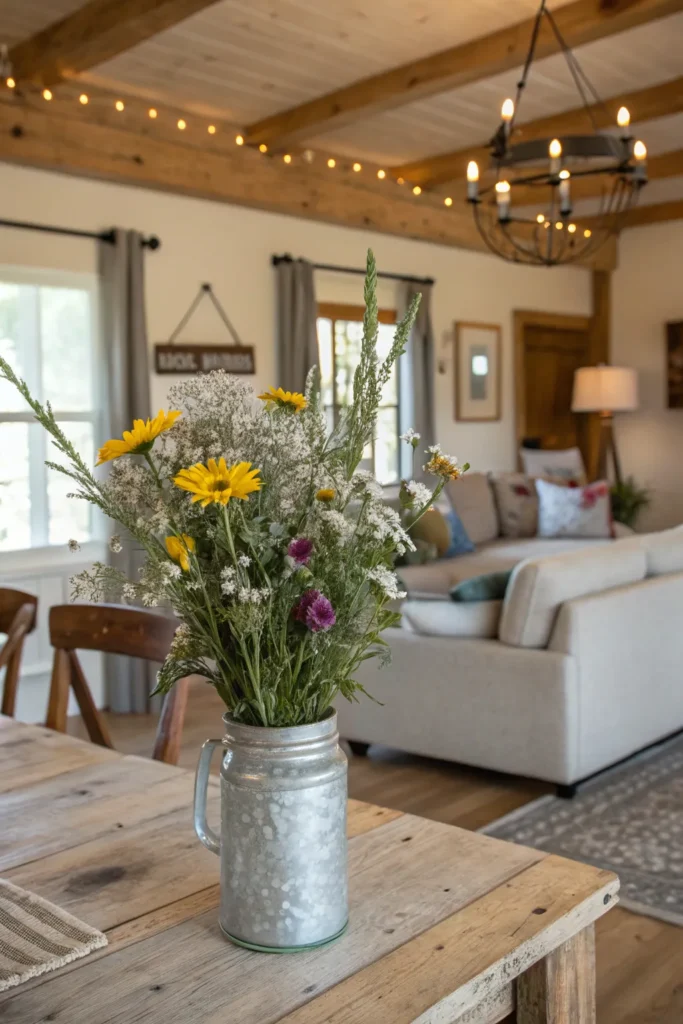
Budget-friendly option that incorporates authentic farmhouse materials as decorative elements.
How to: Use mason jars as vases, candle holders, or storage containers. Add galvanized metal planters, trays, or light fixtures for industrial farmhouse appeal. Group items in odd numbers for visual impact.
Why it works: These affordable materials add instant farmhouse authenticity while being functional and easy to find.
Pro tip: Mix different sizes and finishes of mason jars and metal pieces to avoid a too-matched, artificial appearance.
Neutral Color Palettes with Warm Undertones
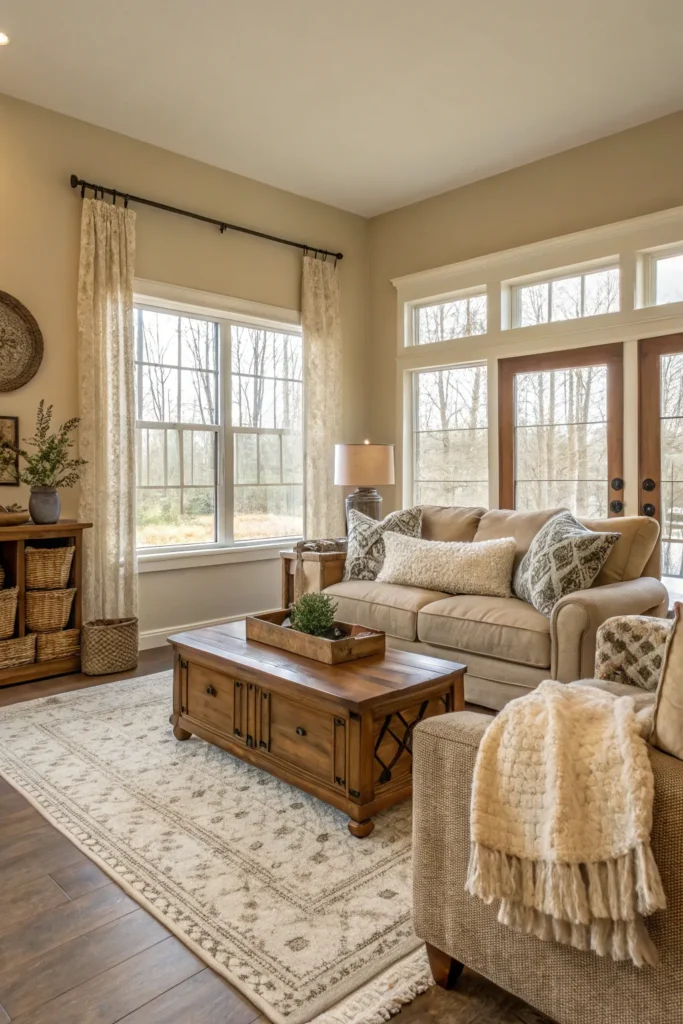
Soft, muted colors create the perfect backdrop for farmhouse furnishings and accessories.
How to: Choose paint colors like cream, soft gray, sage green, or warm white for walls. Add depth with natural wood tones and aged metal finishes. Use deeper accent colors sparingly through textiles and accessories.
Best for: Anyone wanting a calming, timeless color scheme that won’t date quickly and provides flexibility for seasonal decorating changes.
Drawback: Neutral schemes can feel bland without sufficient texture and visual interest—layer materials and finishes carefully.
Vintage and Antique Decorative Accessories
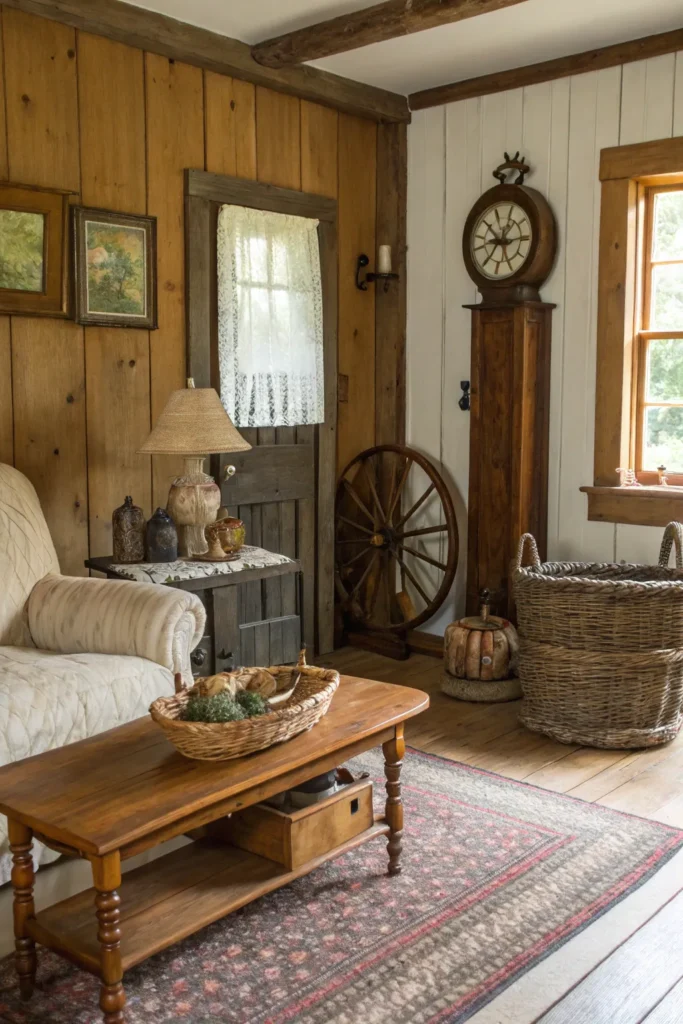
Authentic vintage pieces bring history and personality to your farmhouse living room.
Steps: Hunt for vintage milk jugs, old wooden crates, antique signs, and weathered pottery at flea markets, estate sales, and antique shops. Display items with personal meaning rather than buying random “farmhouse” decor.
Why it’s helpful: Genuine vintage pieces have character and craftsmanship that can’t be replicated in mass-produced items.
Pro tip: Clean and restore vintage finds carefully—sometimes the imperfections and patina are what make pieces special and authentic.
Cozy Fireplace as Central Focal Point
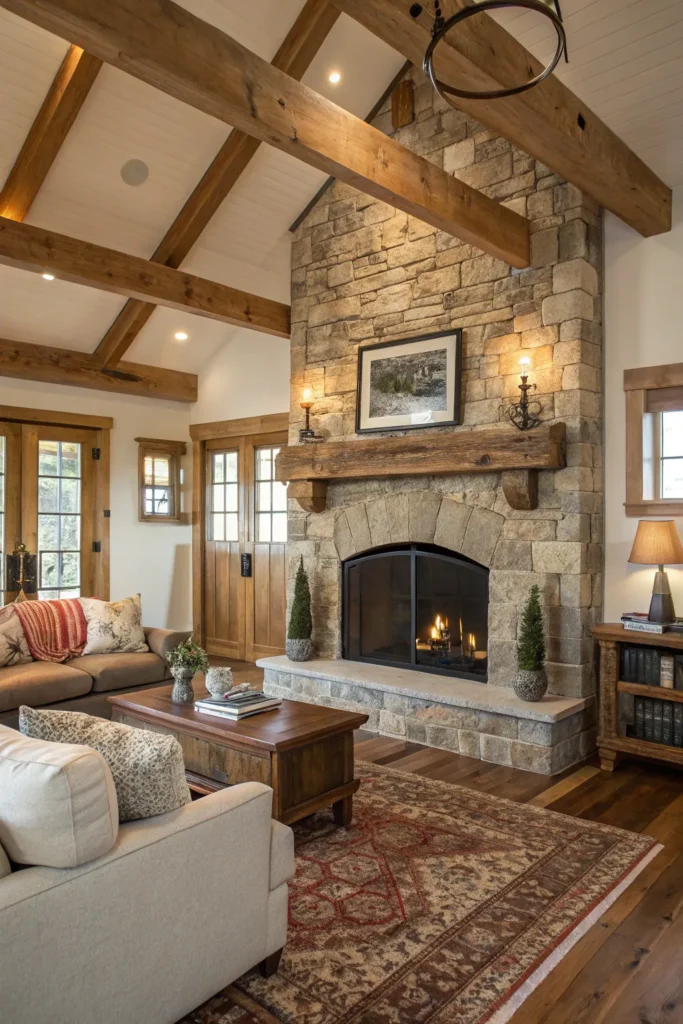
A fireplace creates the ultimate gathering spot and adds warmth both literally and visually.
How-to: Design your furniture arrangement around the fireplace as the room’s focal point. Add a rustic wood mantel, stone or brick surround, and comfortable seating positioned for conversation and fire viewing.
Best for: Homes with existing fireplaces or those willing to invest in installation for the ultimate farmhouse centerpiece.
Con: Fireplace installation is expensive and complex—consider electric or gas alternatives for easier installation.
Open Shelving with Curated Display Items
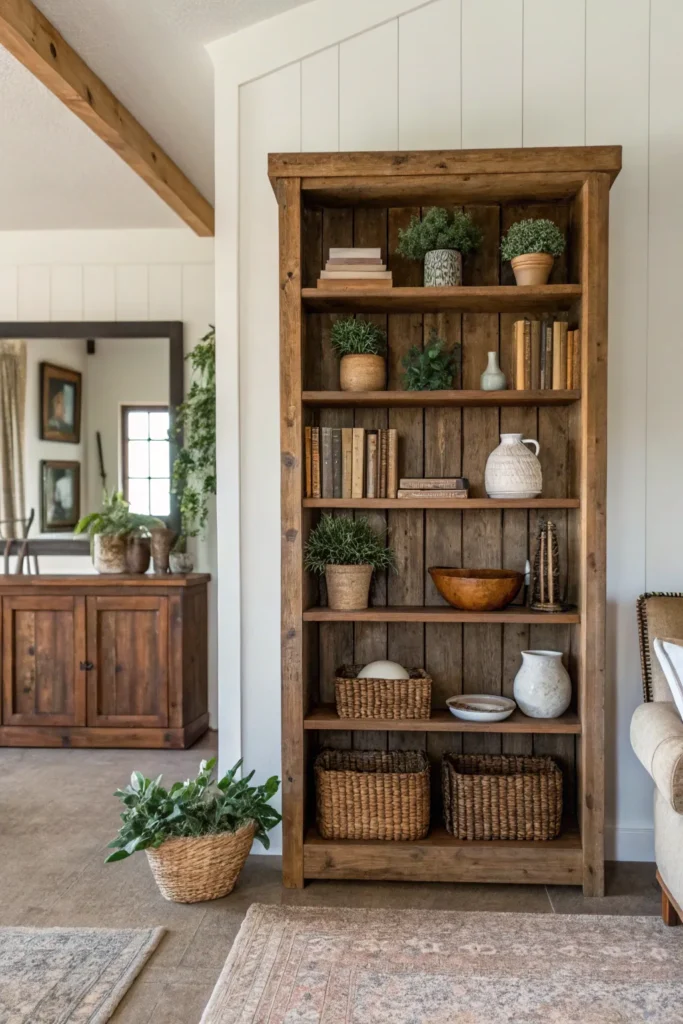
Floating shelves or built-in bookcases showcase collections while maintaining the uncluttered farmhouse aesthetic.
Implementation: Install open shelving using reclaimed wood or painted boards. Display books, vintage pottery, plants, and meaningful objects. Leave some space empty to avoid cluttered appearance.
Who benefits: Those with collections to display who want storage that doubles as decorative element.
Styling tip: Follow the rule of threes when arranging shelf displays and vary heights and textures for visual interest.
Natural Fiber Rugs and Layered Textiles
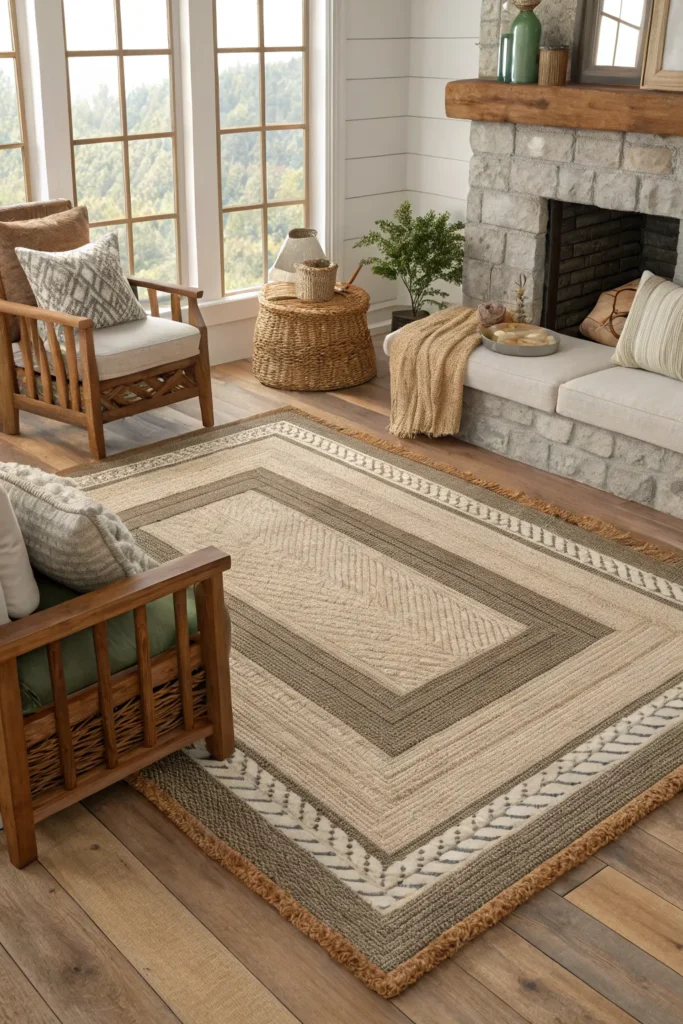
Jute, sisal, and wool rugs add texture and warmth while being practical for high-traffic living areas.
Steps: Choose large area rugs in natural fibers as your foundation layer. Add smaller accent rugs, throws, and pillows in coordinating colors and textures. Mix smooth and textured materials for depth.
Best for: Families wanting durable, natural flooring options that hide dirt and wear while adding comfort underfoot.
Pro tip: Use rug pads to prevent slipping and extend rug life—natural fiber rugs can be slippery on hard floors.
Industrial Lighting with Edison Bulbs
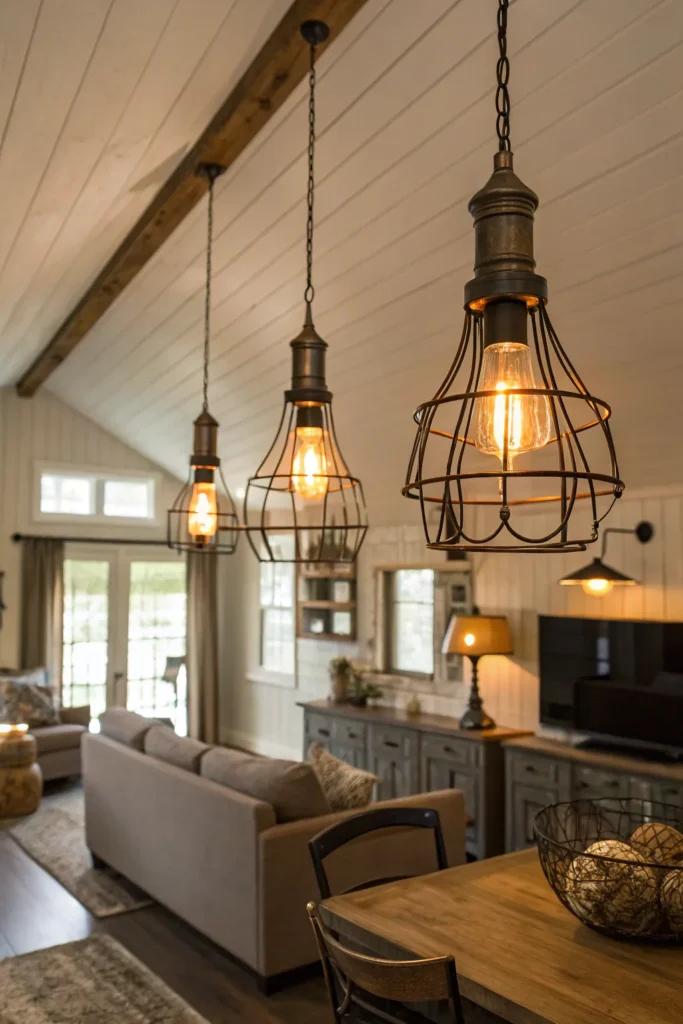
Exposed bulb fixtures and metal finishes add industrial farmhouse character.
How-to: Install pendant lights, chandeliers, or table lamps with metal shades, exposed Edison bulbs, and industrial-style hardware. Choose warm-toned LED bulbs for energy efficiency with vintage appeal.
Why it works: Industrial lighting provides excellent task and ambient lighting while serving as decorative focal points.
Drawback: Exposed bulb fixtures can create glare—use dimmers and position carefully to avoid harsh lighting.
Built-In Window Seats with Storage
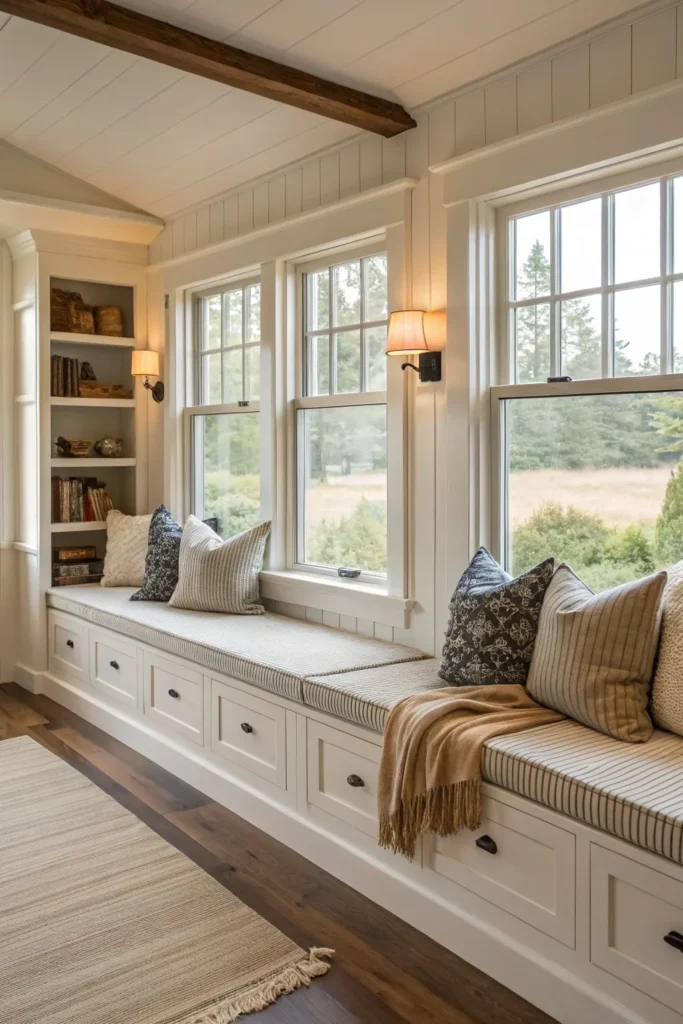
Custom seating creates cozy reading nooks while adding valuable storage space.
Implementation: Build window seat with lift-up storage underneath using farmhouse-style details like beadboard panels and cushioned tops. Add throw pillows and blankets for comfort and style.
Who benefits: Homeowners with suitable window spaces wanting to maximize seating and storage in architectural details.
Con: Custom built-ins require carpentry skills or professional installation—budget accordingly for quality workmanship.
Fresh Greenery and Farmhouse Plants
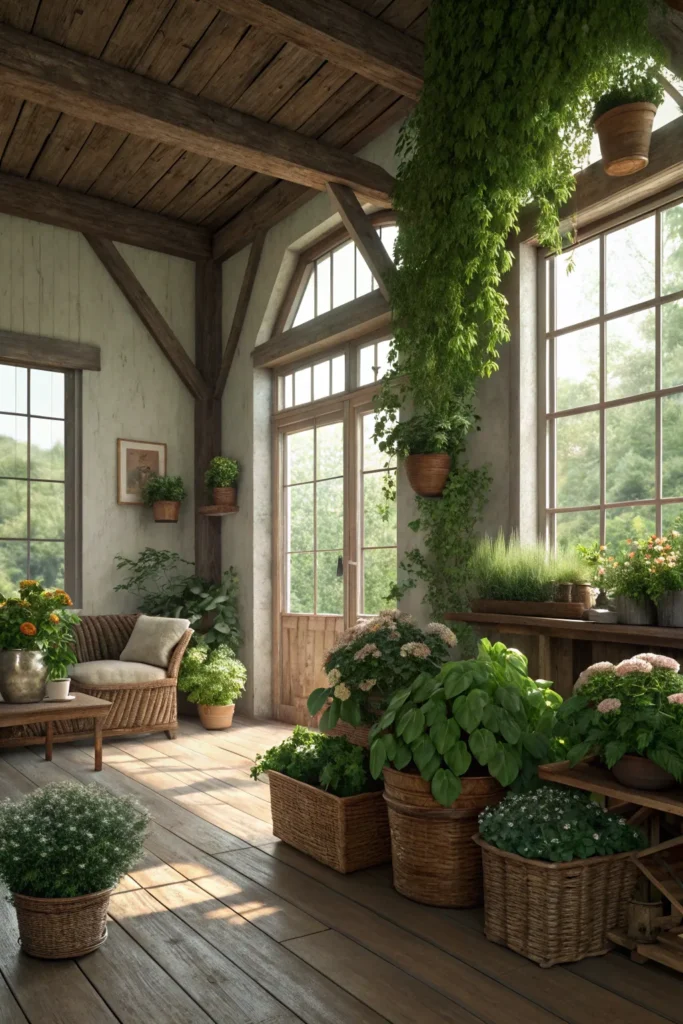
Living plants bring natural beauty and fresh air to complement rustic design elements.
Steps: Choose low-maintenance plants like pothos, snake plants, or fiddle leaf figs in rustic containers. Use galvanized planters, wooden crates, or vintage pottery as unique plant holders.
Why it works: Plants add life, color, and natural elements that soften hard surfaces and rustic materials.
Pro tip: Group plants at different heights and choose varieties with similar care requirements for easier maintenance.
Vintage-Inspired Clocks and Wall Decor
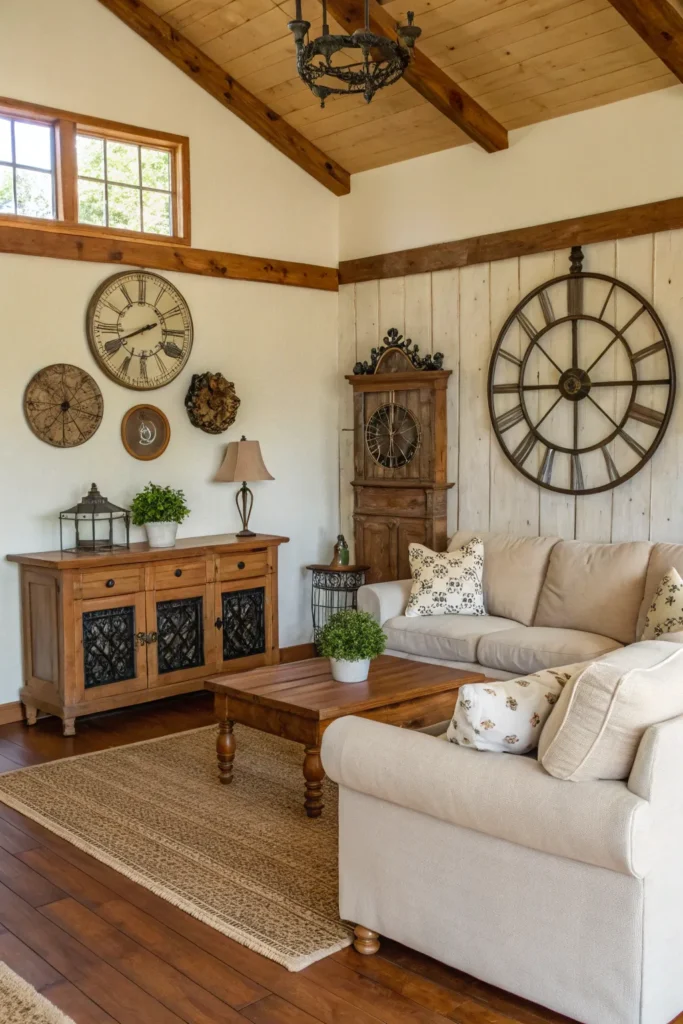
Large wall clocks and weathered signs add visual interest and farmhouse authenticity.
How-to: Install oversized wall clocks with distressed finishes, vintage-style signs with meaningful sayings, or collections of old frames with family photos. Scale pieces appropriately for wall size.
Best for: Those wanting to fill large wall spaces with character pieces that reflect farmhouse values and aesthetics.
Styling tip: Create gallery walls with varied frame sizes and finishes rather than perfectly matched sets for authentic collected-over-time appearance.
Comfortable Sectional Seating for Family Gatherings
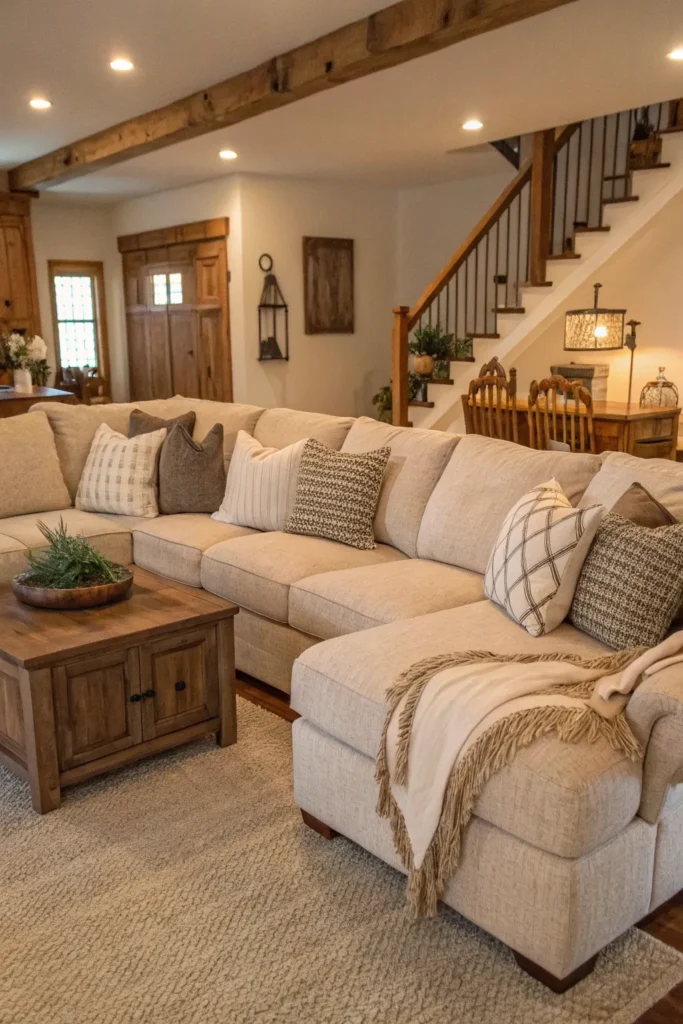
Large, comfortable seating accommodates family gatherings while maintaining farmhouse style.
Implementation: Choose sectional sofas in neutral fabrics like linen, cotton, or performance materials. Add plenty of throw pillows and blankets for comfort and seasonal style changes.
Who benefits: Large families or those who love entertaining and need ample comfortable seating for gatherings.
Drawback: Large sectionals dominate small spaces—measure carefully and consider modular pieces for flexibility.
Creating Your Perfect Farmhouse Living Room
These 16 warm farmhouse living room ideas prove that rustic style doesn’t mean sacrificing comfort or sophistication. The key to successful farmhouse decorating is balancing authentic materials and vintage elements with modern comfort and functionality.
Remember that true farmhouse style is about creating a welcoming space for family and friends rather than achieving magazine-perfect decorating. Choose elements that reflect your family’s lifestyle and values, mixing treasured vintage finds with comfortable, practical furnishings that can handle daily life.
Start with a neutral foundation and add farmhouse character through natural materials, vintage accessories, and cozy textiles. Don’t try to include every farmhouse element at once—the best rooms develop over time as you find pieces that truly speak to your family’s story and style. With patience and thoughtful choices, your living room will become the warm, inviting heart of your home where memories are made and everyone feels welcome.