15 Earthy Zen Bedroom Inspirations for Tiny Homes
In tiny homes, the bedroom carries more emotional weight than in larger houses. It is not just a place to sleep—it becomes a retreat, a pause button, and sometimes the only private space.

An earthy Zen bedroom focuses less on trends and more on how the space supports stillness, grounding, and rest. These inspirations are built around feeling, flow, texture, and intention rather than repeating common design rules.
1. Sleeping Spaces That Feel Like Natural Shelters
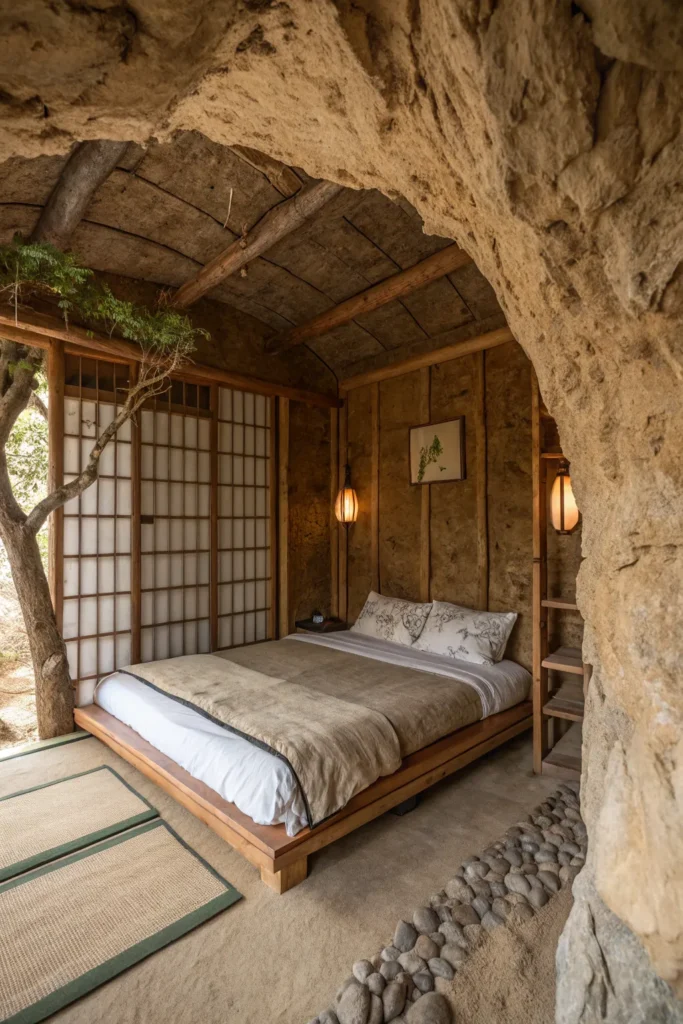
Instead of designing the bedroom as a standard room, imagine it as a natural shelter, similar to a cave, hollow tree, or hillside retreat. The bed feels slightly enclosed, either through recessed walls, wood framing, or subtle side panels. This enclosure gives a sense of safety and calm, which is especially valuable in tiny homes where open layouts can feel exposed. The design quietly signals the body that this is a place to slow down and rest.
2. Walls That Look Grown, Not Installed

Zen-inspired earthy bedrooms avoid surfaces that look factory-made. Walls finished with clay, limewash, or textured plaster feel grown rather than installed. These finishes age beautifully and reflect light softly, creating gentle visual movement. In a small bedroom, such walls add depth without decoration. They make the space feel ancient, grounded, and emotionally steady rather than modern and overstimulating.
3. Beds That Become the Emotional Center

In tiny homes, the bed often becomes the largest object in the room. Instead of hiding this fact, Zen design embraces it. The bed is treated as the emotional center of the space—wide, grounded, and calm. Its presence anchors the room, encouraging stillness. This approach reduces the need for extra furniture and creates a bedroom that feels purposeful instead of crowded.
4. Surfaces That Invite Touch and Pause

Earthy Zen bedrooms are meant to be touched, not just seen. Raw wood edges, stone ledges, linen headboards, and woven mats encourage physical interaction. These textures slow the body down because they ask for attention. In a tiny bedroom, tactile surfaces replace visual decoration, allowing the room to feel rich without becoming visually busy.
5. Design That Encourages Nightly Rituals

Instead of designing the bedroom only for sleep, Zen-inspired spaces support small nightly rituals. Sitting on the bed platform to stretch, placing items mindfully into a ceramic bowl, or opening a window slowly before sleep becomes part of the design experience. The room gently guides behavior toward calm habits, which is especially important in tiny homes where daily stress can feel amplified.
6. Earth Weight Used as Visual Balance

Earthy Zen bedrooms feel grounded because they visually carry weight. This weight comes from solid materials like wood, clay, stone, or thick fabric. In a tiny home, weight must be used carefully—only in a few key elements. A heavy bed base or textured wall provides balance, while the rest of the room remains light. This contrast creates stability without making the space feel closed.
7. Quiet Transitions Between Day and Night

Zen design values transitions. In a tiny home, the bedroom often shifts from daytime use to nighttime rest. Earthy Zen bedrooms handle this change softly. Curtains, sliding panels, or fabric dividers move gently rather than sharply separating spaces. These transitions feel natural, like sunset moving into night, rather than abrupt or mechanical.
8. Furniture That Feels Built-In to the Earth

Rather than movable furniture, Zen bedrooms often feel built-in. Bed platforms, ledges, and seating feel like part of the structure itself. This reduces visual clutter and makes the room feel intentional. In tiny homes, built-in elements also save space and create a seamless look that supports mental calm.
9. Windows Treated as Silent Companions

In an earthy Zen bedroom, windows are not decorative features—they are quiet companions. Their placement, height, and framing encourage gentle awareness of the outside world. Morning light enters slowly, while evening darkness feels natural rather than forced. This relationship with daylight helps regulate rest and wakefulness in a very organic way.
10. Objects Chosen for Presence, Not Decoration

Zen bedrooms avoid decorative clutter. Every object present carries emotional or sensory value. A single handmade bowl, a stone collected from nature, or a piece of aged wood can hold more presence than multiple styled accessories. In tiny homes, this restraint keeps the bedroom feeling open while allowing personal meaning to exist quietly.
11. Floor Spaces That Invite Stillness

Earthy Zen bedrooms often include a small area of open floor, even when space is limited. This floor space is not wasted—it invites stretching, sitting, or simply standing barefoot. Feeling the floor beneath your feet reinforces grounding and presence. In tiny homes, this open area creates emotional spaciousness even when square footage is minimal.
12. Storage That Disappears from the Mind

Rather than visible storage, Zen bedrooms hide belongings out of sight. Storage is integrated under platforms, behind panels, or inside walls. This allows the bedroom to exist mentally as a place of rest, not organization. In tiny homes, this approach is powerful because it separates daily tasks from nightly restoration.
13. Imperfection as a Design Strength

Perfect symmetry and flawless finishes can feel cold. Earthy Zen bedrooms welcome small imperfections—uneven textures, handmade details, natural aging. These imperfections remind us that space is human, not artificial. In a tiny home, this warmth prevents the bedroom from feeling too rigid or overly designed.
14. Sound Softening Through Materials
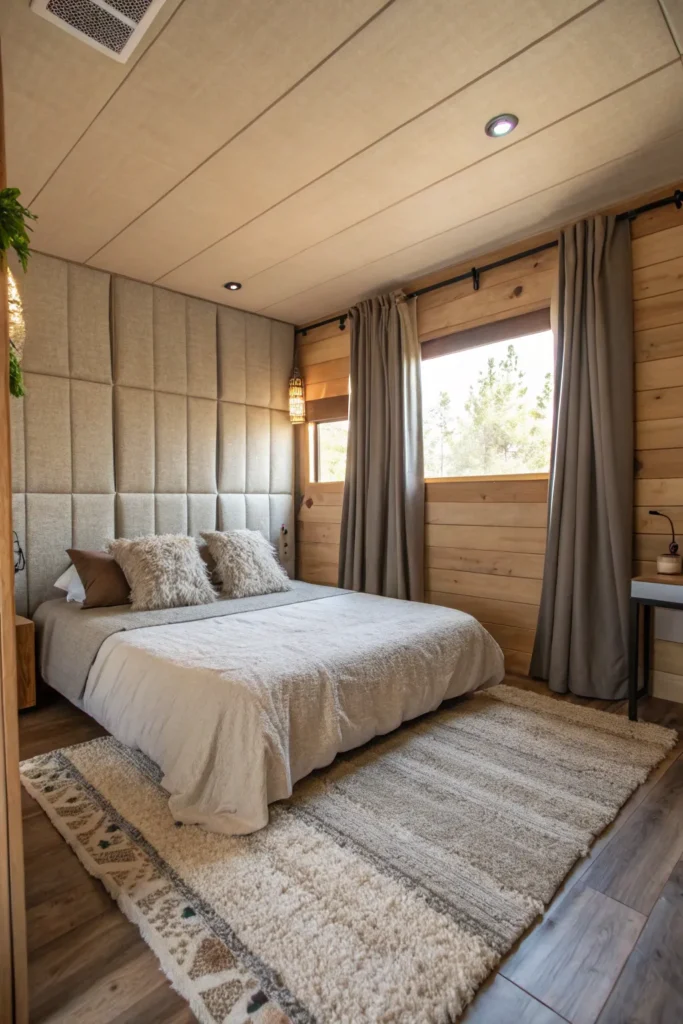
Zen bedrooms think about sound as much as sight. Fabric wall panels, rugs, linen curtains, and textured surfaces absorb noise and soften echoes. In tiny homes, where sound travels easily, this makes a significant difference. A quieter room supports deeper rest and reinforces the peaceful atmosphere.
15. A Bedroom Designed to Slow Time

Above all, an earthy Zen bedroom is designed to slow time. The room does not rush the occupant or demand attention. Its materials, layout, and atmosphere encourage presence. In tiny homes, where life can feel compressed, this slowing effect becomes essential. The bedroom becomes a place where time stretches, allowing true rest and emotional balance.
Final Reflection
An earthy Zen bedroom in a tiny home is not built around trends, checklists, or repeated design formulas. It is shaped by intention, texture, and emotional experience. By focusing on shelter, grounding, touch, and stillness, these inspirations offer a fresh way to design small bedrooms that feel deeply restorative. Even in the smallest space, calm can exist when the room is designed to support the human rhythm rather than fight it.