15 DIY Backyard Ideas for Kids That Create Endless Outdoor Fun
A backyard designed with children in mind is one of the most valuable investments a family can make — not in money, but in the hours of genuine outdoor play, creative exploration, and unstructured childhood adventure it generates.
Children who have an engaging outdoor space use it constantly and the particular quality of outdoor play — physical, imaginative, social, and genuinely free — creates memories and develops capabilities that nothing indoors can replicate.
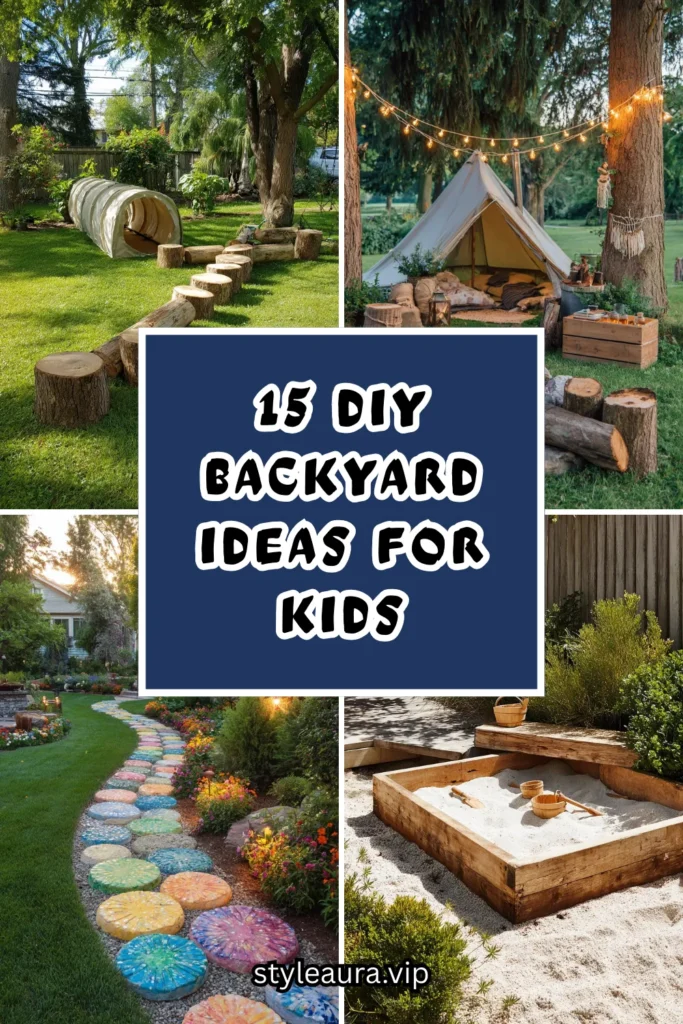
The best DIY backyard ideas for kids invite open-ended play rather than prescribing a single activity. A sandpit is not just a sandpit — it is a construction site, a desert island, a dinosaur excavation, and a bakery depending on the child and the afternoon. The more a backyard feature invites imagination, the more it gets used and the longer it remains genuinely engaging as children grow.
Here are 15 DIY backyard ideas for kids that create the outdoor childhood every family deserves.
1. DIY Sandpit
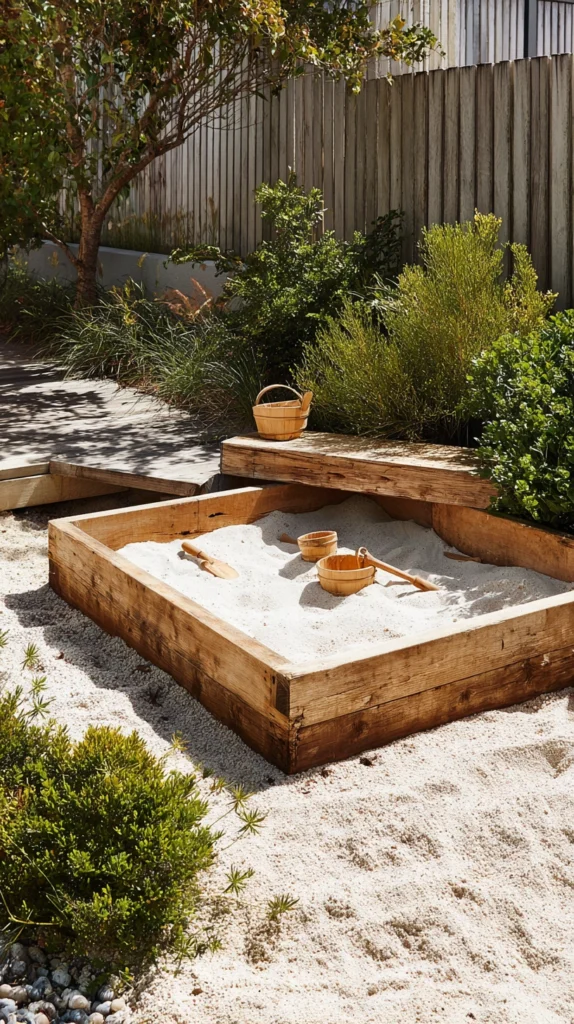
A sandpit is the single most universally loved backyard feature for young children. Build a square timber frame — minimum 1.5 metres square — lined with landscape fabric at the base. Fill with at least 20cm of washed play sand. The sensory quality of sand creates a play material of almost unlimited creative possibility that children return to repeatedly throughout their early years.
Pro Tip: Build a fitted timber lid that covers the sandpit completely when not in use. An uncovered sandpit becomes a cat toilet, a puddle, and a leaf collection point within days. A fitted lid keeps the sand clean, dry, and ready to play in — dramatically extending its usability and the longevity of the sand itself.
2. Mud Kitchen
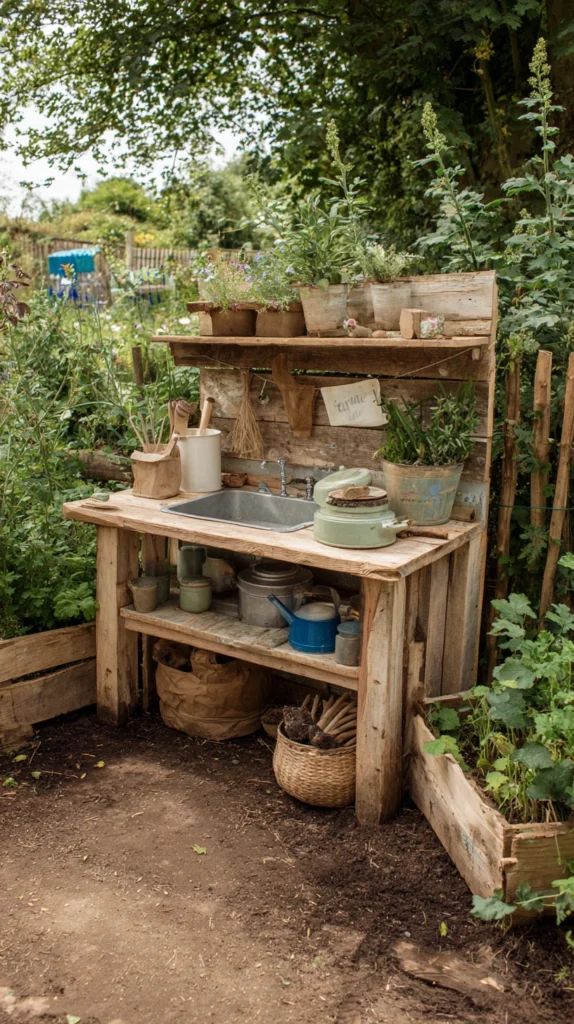
A mud kitchen — a simple outdoor kitchen built from reclaimed timber where children mix soil, water, leaves, and garden materials into elaborate concoctions — generates the highest ratio of creative play hours to construction cost of anything on this list.
Build a counter surface at child height with shelves above, a recessed washing-up bowl as the sink, and a small gravity-fed water container overhead. Source old pots, pans, and spoons from charity shops.
Pro Tip: Position the mud kitchen immediately adjacent to a soil or garden bed. Children play most enthusiastically when the primary ingredient is immediately to hand — a kitchen positioned beside a dedicated mud area creates a completely self-contained creative play zone that operates independently without adult involvement.
3. Backyard Chalkboard
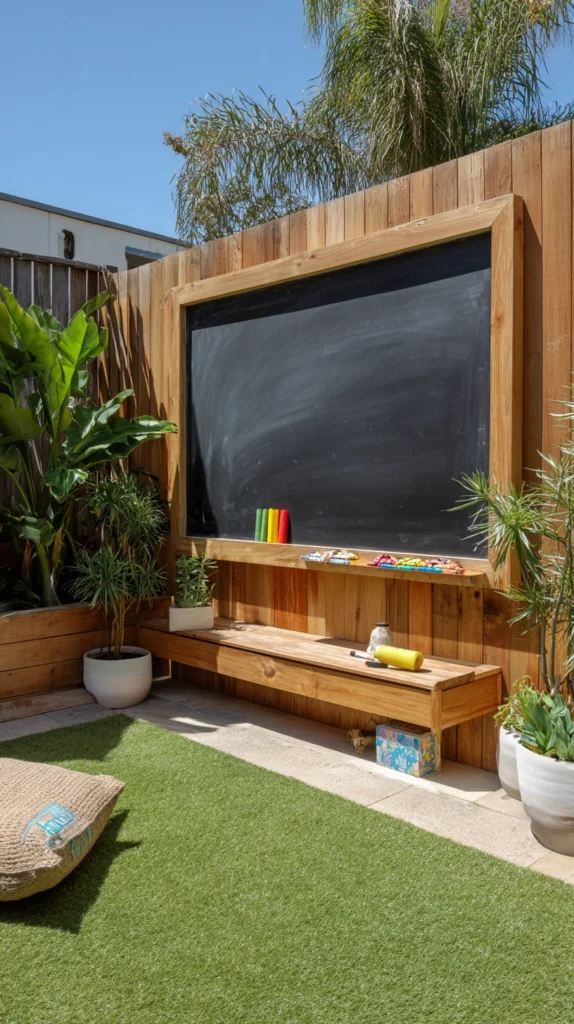
A large outdoor chalkboard — exterior plywood painted with chalkboard paint and mounted on a fence, wall, or freestanding timber frame — creates a drawing and creative play surface of extraordinary everyday value. Mount it at a height accessible to the youngest child who will use it and make it as large as the available surface allows. Store chalk in a weatherproof container fixed immediately beside the board.
Pro Tip: Apply three coats of chalkboard paint rather than the minimum two. Two coats produce a surface too thin to erase cleanly — chalk pigment penetrates into the paint layer and leaves permanent ghost marks. Three full coats create a sufficiently dense surface that erases completely clean and maintains its rich black tone through years of enthusiastic outdoor use.
4. Water Play Station
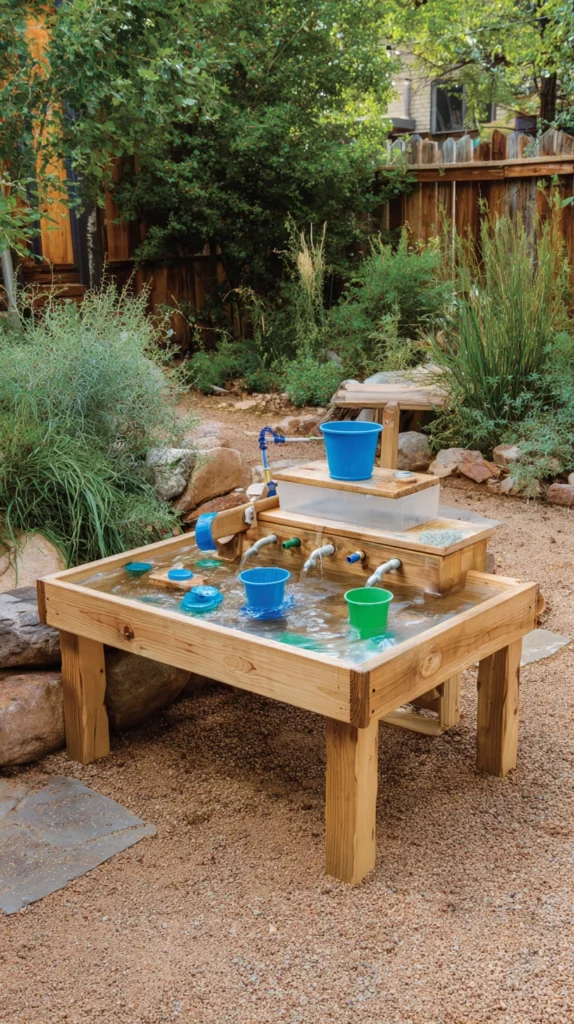
A backyard water play station — a timber table at child height fitted with a recessed water tray and a collection of cups, funnels, tubes, pumps, and water wheels — creates the most popular warm-weather outdoor play feature for young children. Position on a well-drained surface — paving, decking, or gravel — to manage the inevitable spillage that makes water play so genuinely enjoyable.
Pro Tip: Connect the water table to a gravity-fed water supply — a large container elevated on a shelf above the play table, fillable from the garden hose. A table that must be manually refilled every few minutes interrupts the flow of play constantly. A gravity-fed supply maintains continuous water availability and makes the water play experience significantly more enjoyable and more independently usable by children.
5. Backyard Obstacle Course
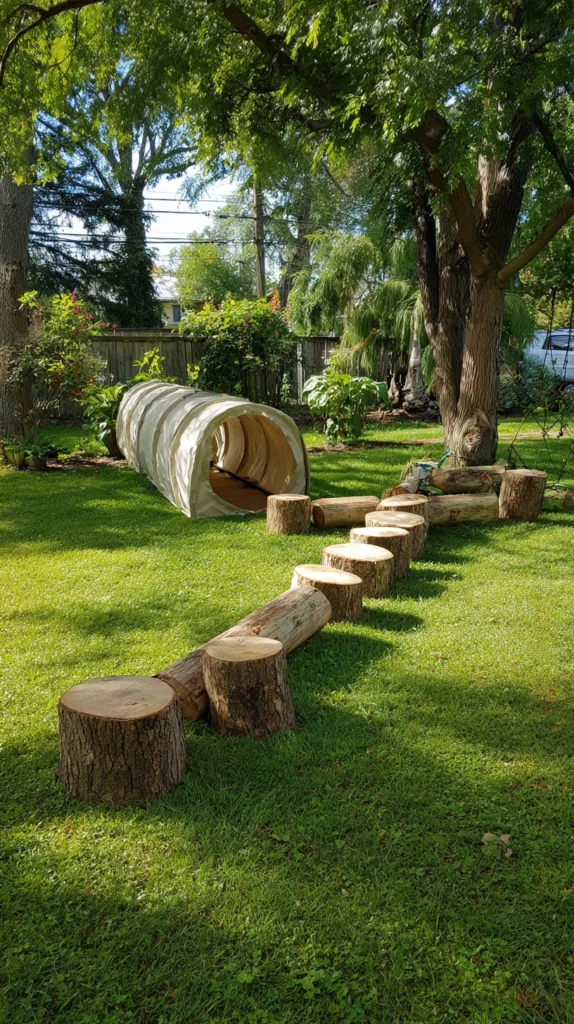
A DIY obstacle course — balance beams from smooth timber planks, stepping stones from flat timber discs, crawl tunnels from large drainage pipes covered in canvas, and rope swings from a sturdy branch — creates a physical play installation of genuine developmental value and enormous daily appeal. Children run obstacle courses repeatedly, timing themselves and improving their performance throughout the season.
Pro Tip: Design with adjustable difficulty elements — balance beams that can be raised or lowered, stepping stones that can be spaced further apart. A static obstacle course loses its challenge within weeks. An adjustable course maintains its developmental value and its appeal as children’s physical capabilities grow and the original configuration becomes too familiar.
6. DIY Treehouse
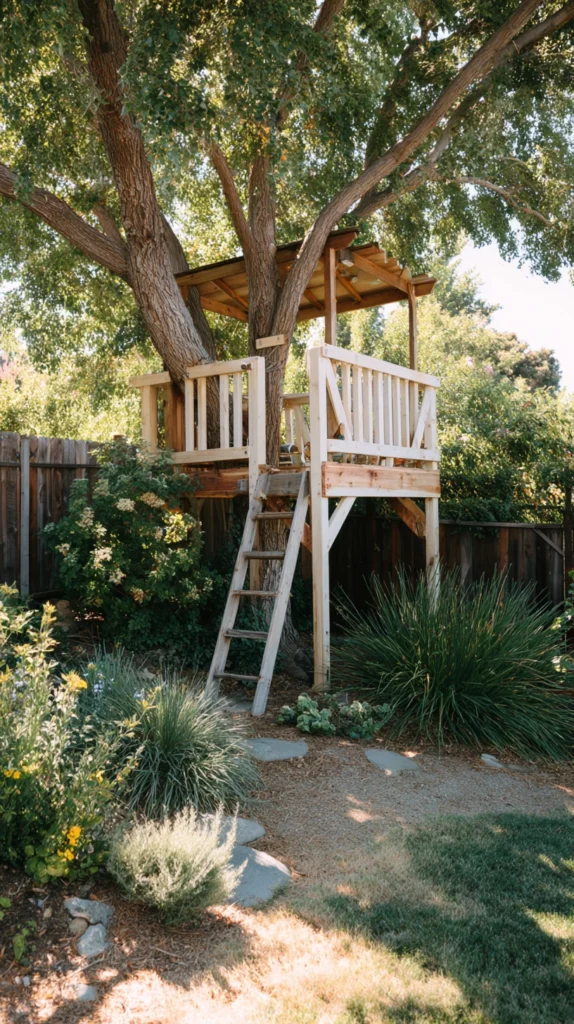
Even a simple low-level timber platform with a railing and a ladder built around a mature garden tree creates a backyard play feature of extraordinary imaginative richness. A treehouse is a private world, a fort, a castle, and a ship depending on the child and the day. The elevation and the privacy from the adult world below creates a play environment of complete childhood magic that no ground-level feature can replicate.
Pro Tip: Consult a qualified arborist before attaching any structure to a mature garden tree. Even apparently minor attachments affect tree health and structural integrity in ways not immediately obvious. An arborist advises on appropriate attachment methods and load-bearing capacity — protecting both the tree and the safety of the children who will use the structure built into it.
7. Backyard Fairy Garden
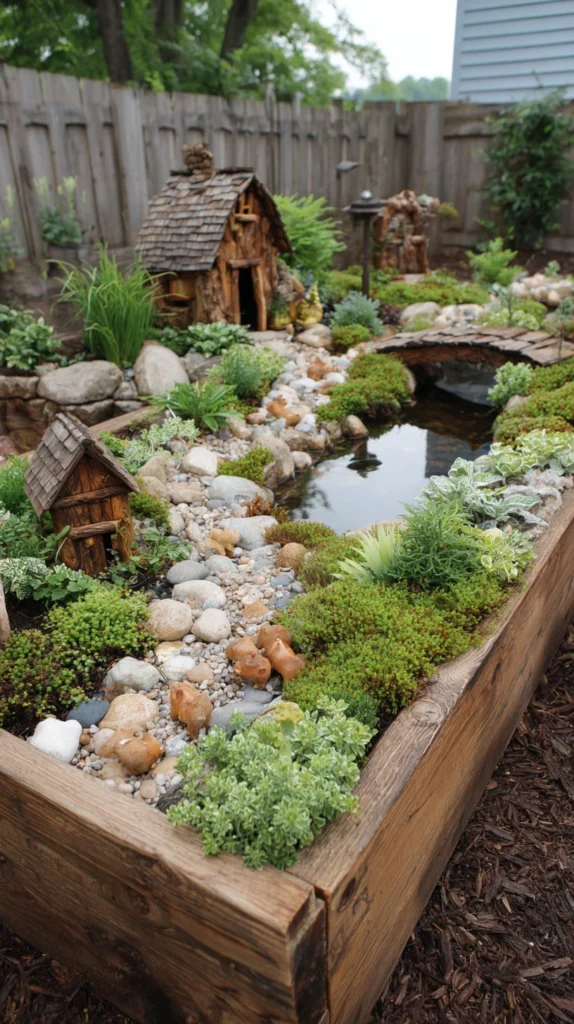
A fairy garden — a miniature landscaped area populated with tiny houses made from bark and stones, small-scale planting of thyme and creeping jenny, and miniature accessories including tiny bridges and a mirror pond — creates a creative play feature of extraordinary imaginative depth. Build fairy houses with children as creative collaborators. The construction process is as engaging as the finished garden itself.
Pro Tip: Build the fairy garden in a raised bed at table height rather than at ground level. A ground-level fairy garden requires children to kneel uncomfortably for extended play. A raised bed brings the miniature world to a natural working height that allows children to engage with every detail comfortably and to make additions and changes to their fairy world with ease and genuine enthusiasm.
8. DIY Backyard Cinema
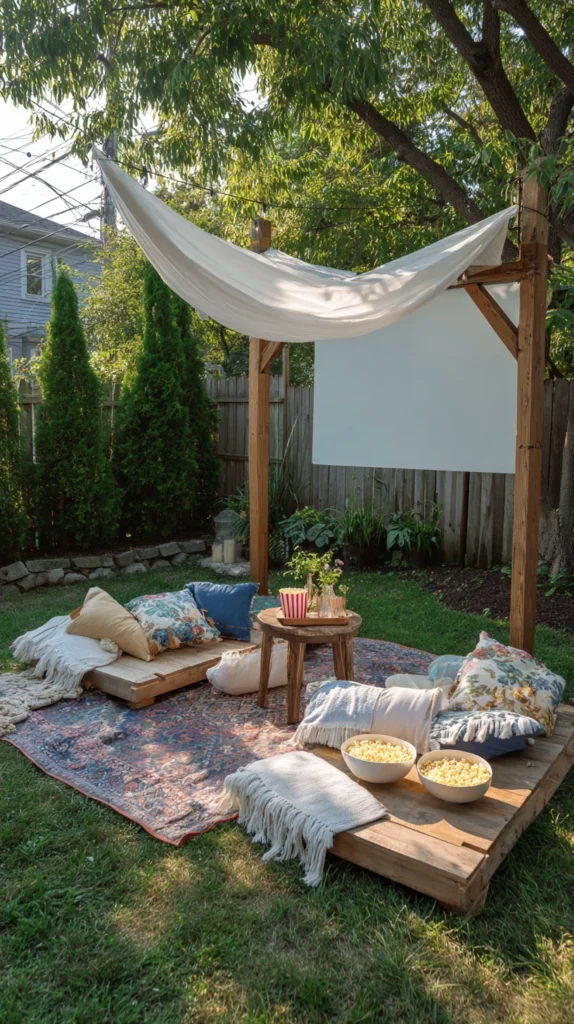
A DIY backyard cinema — a projector on an outdoor stand, a white sheet stretched between two posts, and comfortable blankets and cushions arranged in front — creates a backyard entertainment feature of genuine family magic. Add a popcorn bowl, drinks, and a child-chosen film and the backyard cinema becomes the most popular family evening activity of the summer. The memory of watching films under the stars is one childhood experience that never loses its appeal.
Pro Tip: Use a short-throw projector rather than a standard one for a setup where projection distance is limited. Short-throw projectors create a large, bright image from a much shorter distance — a significant practical advantage in a typical domestic garden where achieving the 3 to 5 metre distance required by a standard projector for a large image may be impossible in the available space.
9. Sensory Garden Path
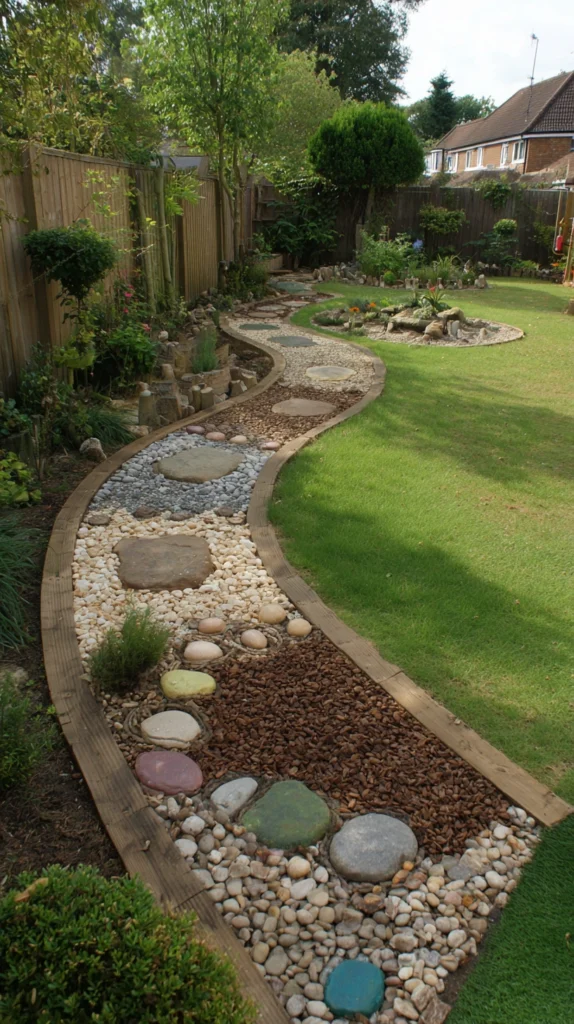
A sensory path — a defined walkway incorporating different textures underfoot at each section including smooth pebbles, soft bark chips, rough gravel, grass stepping stones, and warm timber boards — creates a permanently installed sensory play experience. Make the path at least 60cm wide for comfortable walking and label each section with a painted stone marker describing the texture for a path that develops both sensory awareness and early vocabulary simultaneously.
Pro Tip: Include a wet sand or smooth mud section in the sensory path — a shallow tray of wet play sand that children step through barefoot. Wet sand underfoot is one of the most powerfully engaging sensory experiences for young children and creates the full-body sensory engagement that promotes neurological development in ways that dry texture paths alone cannot achieve.
10. Backyard Bug Hotel
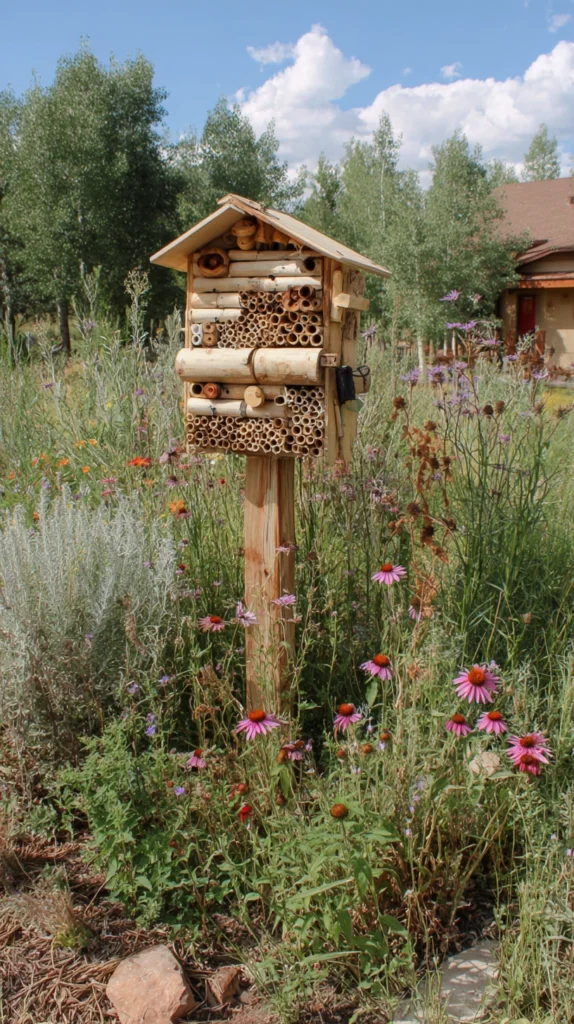
A bug hotel — a timber frame filled with bamboo tubes, pine cones, dry straw, hollow stems, and drilled timber sections that provide nesting habitat for beneficial garden insects — creates a nature education feature that teaches children about insects and biodiversity through direct, hands-on observation. Position in a sunny sheltered location and observe with children as it becomes inhabited through the seasons.
Pro Tip: Build the bug hotel at child eye height — approximately 80 to 100cm from the ground — mounted on a post or low legs. A bug hotel at adult height requires children to be lifted for every observation. Child-height positioning turns the hotel from a garden ornament into a genuinely used nature education resource that children visit independently and enthusiastically throughout the year.
11. DIY Zip Line
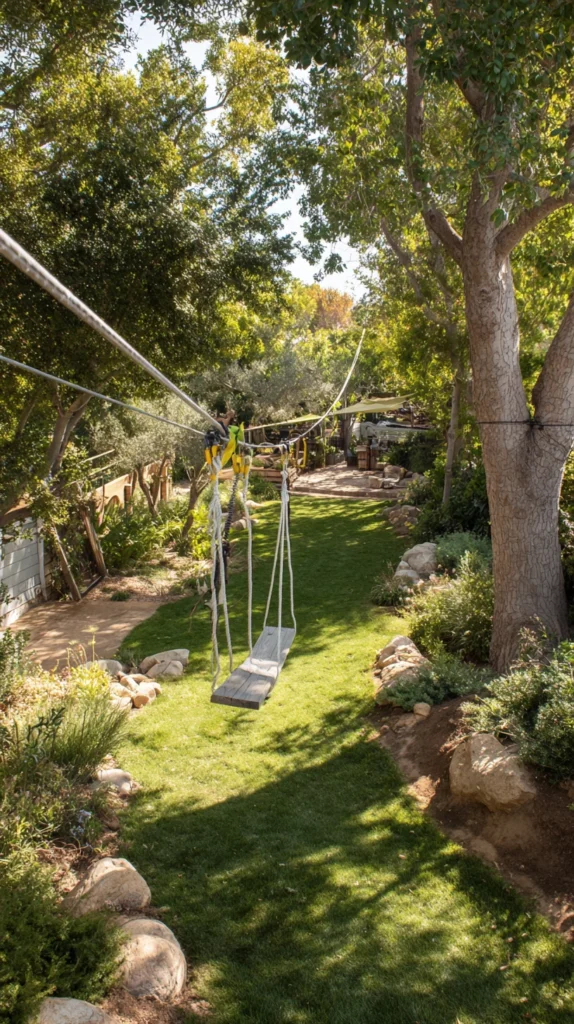
A backyard zip line — a steel cable stretched between two anchor points at a slight downward angle with a handlebar trolley — creates a backyard thrill feature of genuine heart-racing excitement that children use repeatedly with apparently inexhaustible enthusiasm. Install using proper zip line hardware with rated tensioning devices, end stops, and a purpose-made trolley. Clear the flight path completely and provide a soft landing zone at the lower end.
Pro Tip: Install the end stop with sufficient stopping distance to decelerate the trolley smoothly rather than abruptly. A sudden hard stop causes children to release the handlebar unexpectedly on arrival. A graduated end stop with a spring or bungee deceleration element provides a smooth, progressive stop that is both significantly safer and more enjoyable than a hard mechanical arresting device.
12. Backyard Digging Patch
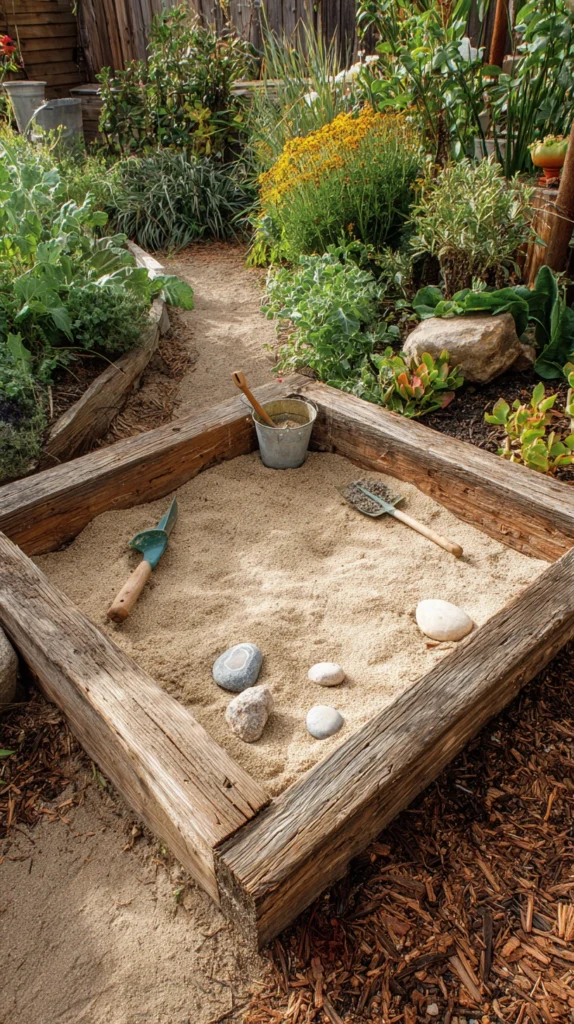
A dedicated digging patch — a defined area of approximately 1.5 metres square bordered in timber and filled with a workable mix of garden soil and sand — gives children a space where digging is entirely permitted. Children have an instinctive desire to dig, discover what lives beneath the surface, and construct in the earth. A dedicated space where this is completely allowed creates hours of absorbed, creative outdoor play without damage to the wider garden.
Pro Tip: Bury occasional treasures in the digging patch — smooth stones, old pottery pieces, interesting shells, or small waterproof toy figures — that children discover during excavation. A digging patch that occasionally yields surprising discoveries maintains its appeal far longer than one containing only soil. Refresh the buried treasures periodically to maintain the sense that further exciting finds are always possible just below the surface.
13. Garden Stepping Stone Path
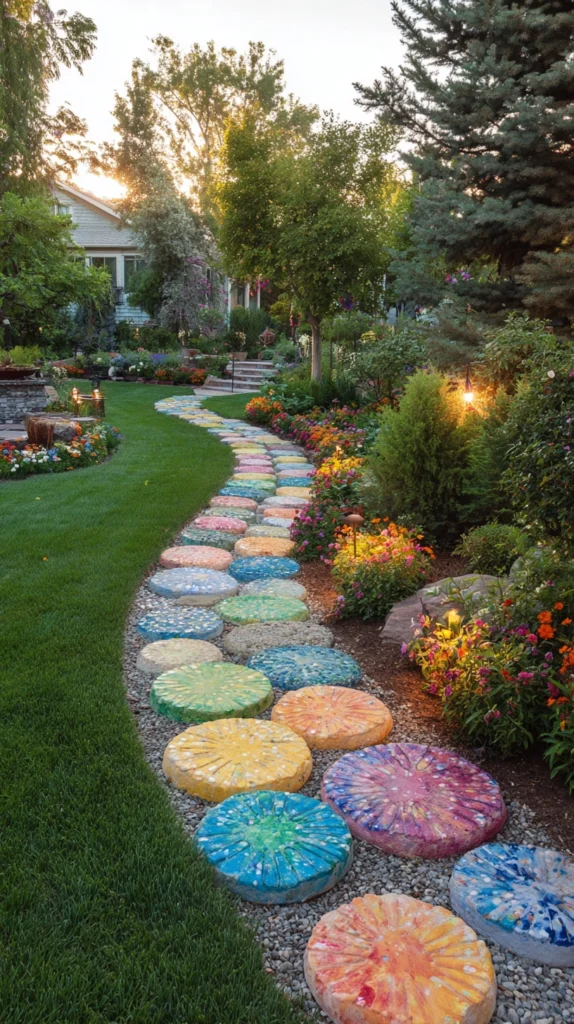
Making concrete stepping stones with children — pressing handprints, footprints, mosaic tiles, or decorative pebbles into wet concrete before curing — creates both a genuinely beautiful permanent garden feature and a craft activity of lasting sentimental value. Pour ready-mix concrete into circular molds, allow to begin setting for 20 to 30 minutes, then press the chosen decorations into the surface before curing for 48 hours.
Pro Tip: Coat each finished stepping stone with clear exterior concrete sealer before laying in the garden. Unsealed concrete absorbs moisture and is vulnerable to frost damage — the absorbed moisture expands during freezing and causes surface cracking that gradually destroys both the decorative surface and the handprint record that makes each stone precious. A single coat of sealer extends the life of the stepping stones indefinitely.
14. Backyard Nature Art Station
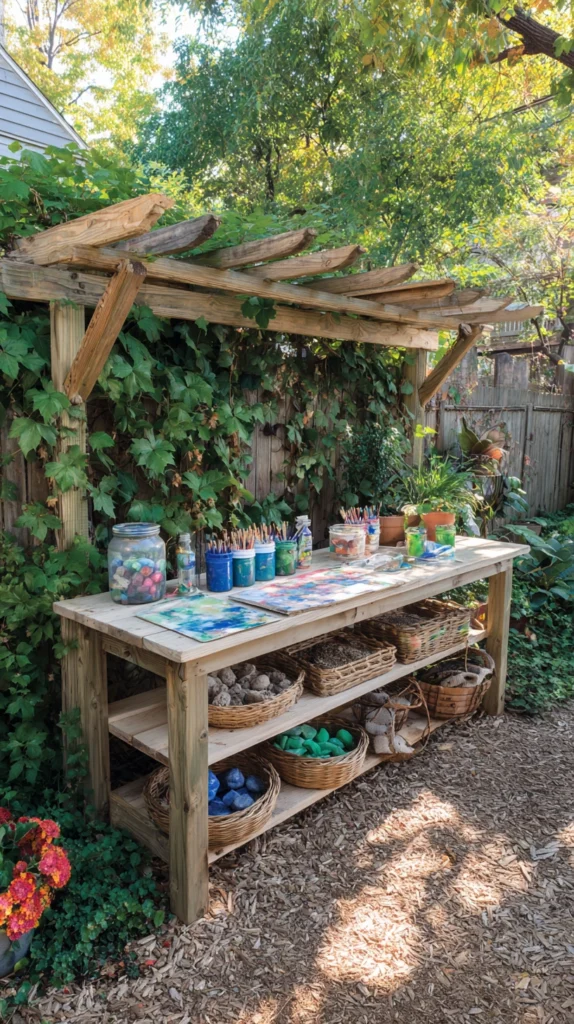
An outdoor nature art station — a weather-resistant table stocked with watercolor paints, large brushes, air-dry clay, and a collection basket for natural materials including leaves, petals, feathers, and pebbles — creates a backyard creative feature combining the sensory richness of the outdoor environment with the developmental benefits of art-making. Position in a sheltered location with partial overhead cover for use in light rain.
Pro Tip: Laminate a selection of simple nature art activity cards — leaf printing, bark rubbing, flower pounding, natural paint-making from berries — and keep them in a weatherproof box at the station. Activity cards children can follow independently allow the art station to be used spontaneously throughout the day without adult facilitation. Self-directed creative play at a well-stocked outdoor art station develops confidence, creativity, and sustained concentration simultaneously.
15. DIY Backyard Camping Setup
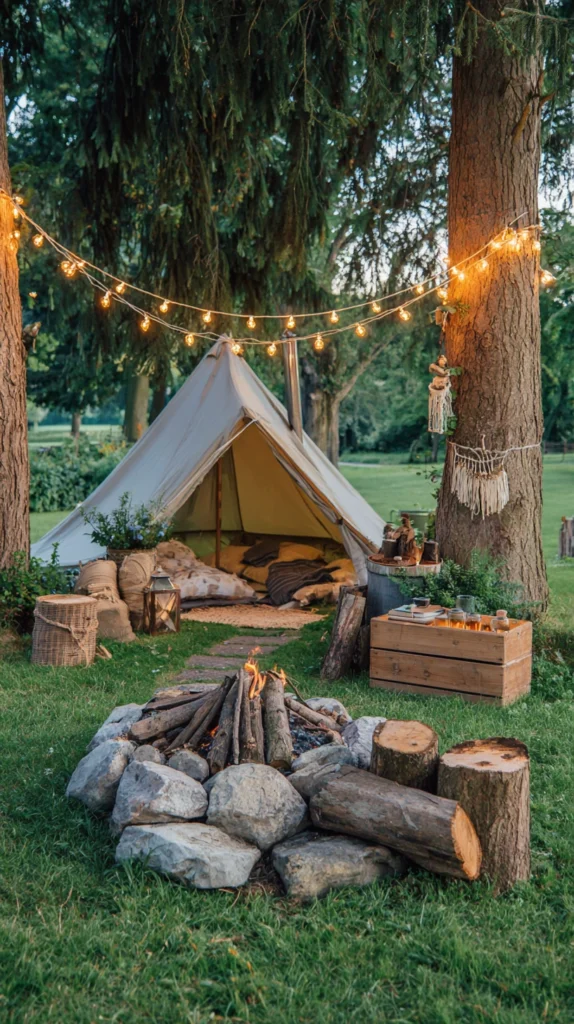
A permanent backyard camping setup — a dedicated tent pitch with level ground, a simple contained fire pit, camp lights strung between posts, and all camping equipment stored in an accessible outdoor box — turns the most familiar outdoor space into a genuine overnight adventure destination.
The permanent readiness of the setup removes the friction that prevents most backyard camping from happening — when everything is already there, the camping happens spontaneously and often.
Pro Tip: Involve children in setting up the camp on their first few uses rather than presenting a fully prepared environment.
The process of putting up the tent and arranging sleeping bags is a significant part of the adventure — the anticipatory preparation builds excitement and creates a sense of ownership and accomplishment that arriving at a pre-prepared camp entirely bypasses. Teach the setup skills early and children will organise backyard camping independently throughout their childhood.
Build It and They Will Go Outside
The backyard with genuinely engaging features is the backyard children choose over screens and indoor entertainment every time. The investment of a weekend afternoon building something pays back in outdoor hours, in developmental benefits, and in the particular quality of childhood memory that only outdoor play creates.
Build one feature this weekend. Watch how it gets used. Then build another. The best backyard for children is the one that keeps growing — one new feature at a time — into the space where their childhood happened.