15 Dining Space Styling Ideas for Open-Plan Homes
Open-plan homes are loved for their light, flow, and sense of spaciousness, but styling a dining area within an open layout can be surprisingly challenging.
Without walls to define it, the dining space can feel like it’s floating awkwardly between the kitchen and living area, or worse, get visually lost altogether. The key is to create definition without division, ensuring the dining area feels intentional, balanced, and connected to the rest of the home.
Styling a dining space in an open-plan home isn’t about adding more furniture or décor. It’s about using proportion, placement, materials, and visual cues to anchor the dining area while maintaining harmony across the larger space. These 15 ideas focus on practical, livable solutions that work beautifully in real open-plan homes.
1. Anchor the Dining Area With a Purposeful Rug
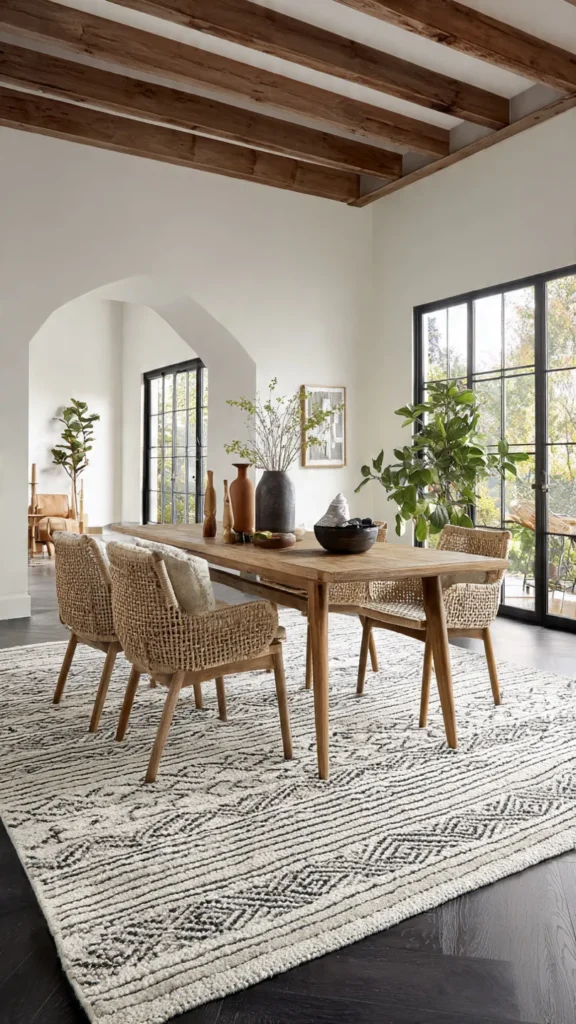
A rug is one of the most effective ways to define a dining space in an open-plan layout. It visually grounds the table and chairs, creating a clear zone without building walls or partitions.
Choose a rug large enough that all chairs remain on it even when pulled out. This keeps the area feeling cohesive and prevents awkward edges. Flatweave or low-pile rugs are especially practical, as they’re easier to clean and maintain in dining areas.
The rug’s color and texture should connect to both the kitchen and living areas, helping the dining zone feel like part of a unified whole rather than a separate room.
2. Use Lighting to Establish Identity
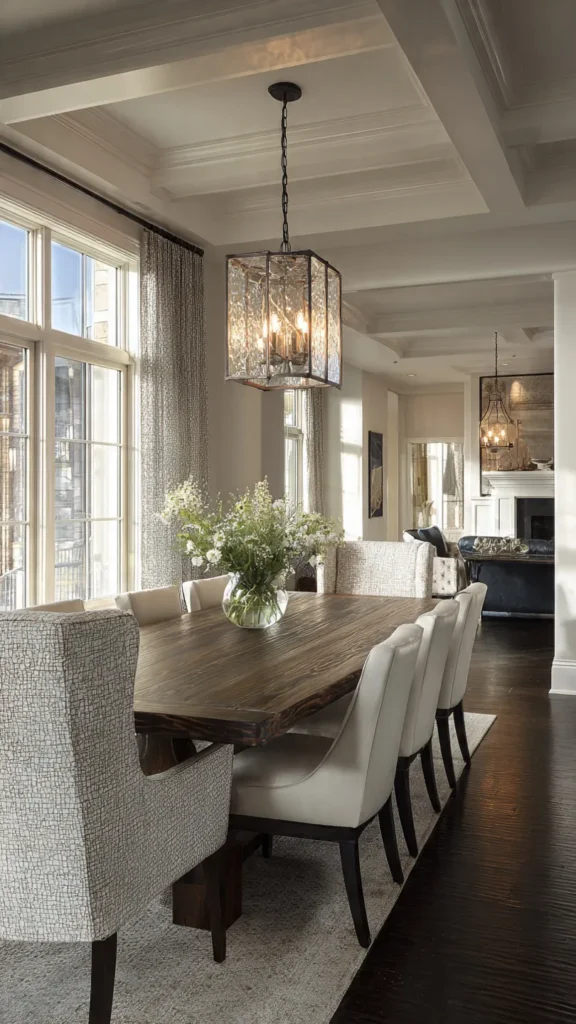
Lighting plays a powerful role in defining dining spaces in open-plan homes. A well-placed pendant or chandelier above the dining table creates a visual anchor that immediately signals the area’s purpose.
The fixture doesn’t need to be overly dramatic, but it should have enough presence to stand on its own within the larger space. Hanging it slightly lower than general lighting helps draw the eye downward, reinforcing the dining zone.
Choosing a finish or style that complements nearby lighting keeps the overall look cohesive while still giving the dining area its own identity.
3. Choose a Dining Table With Strong Visual Weight
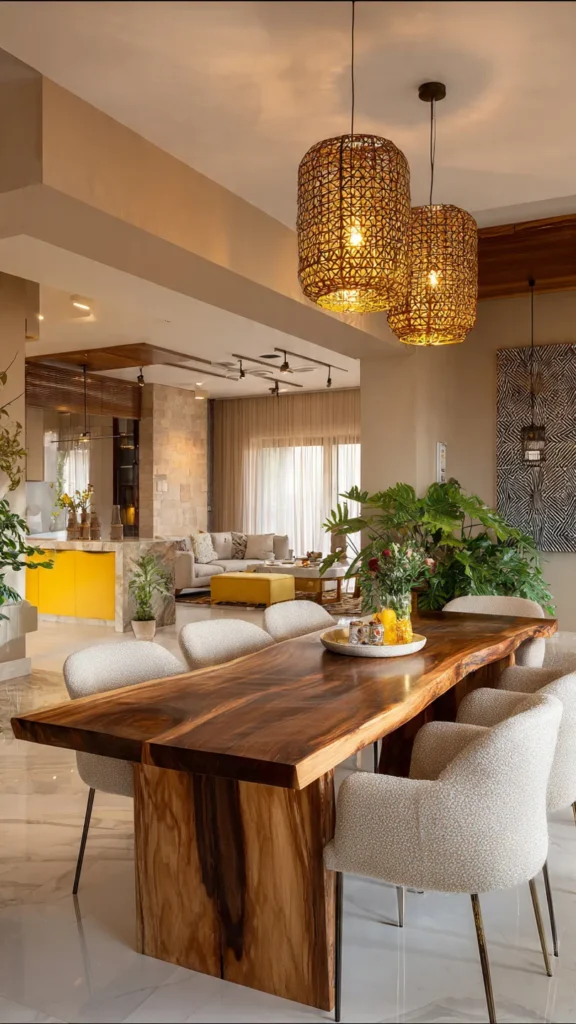
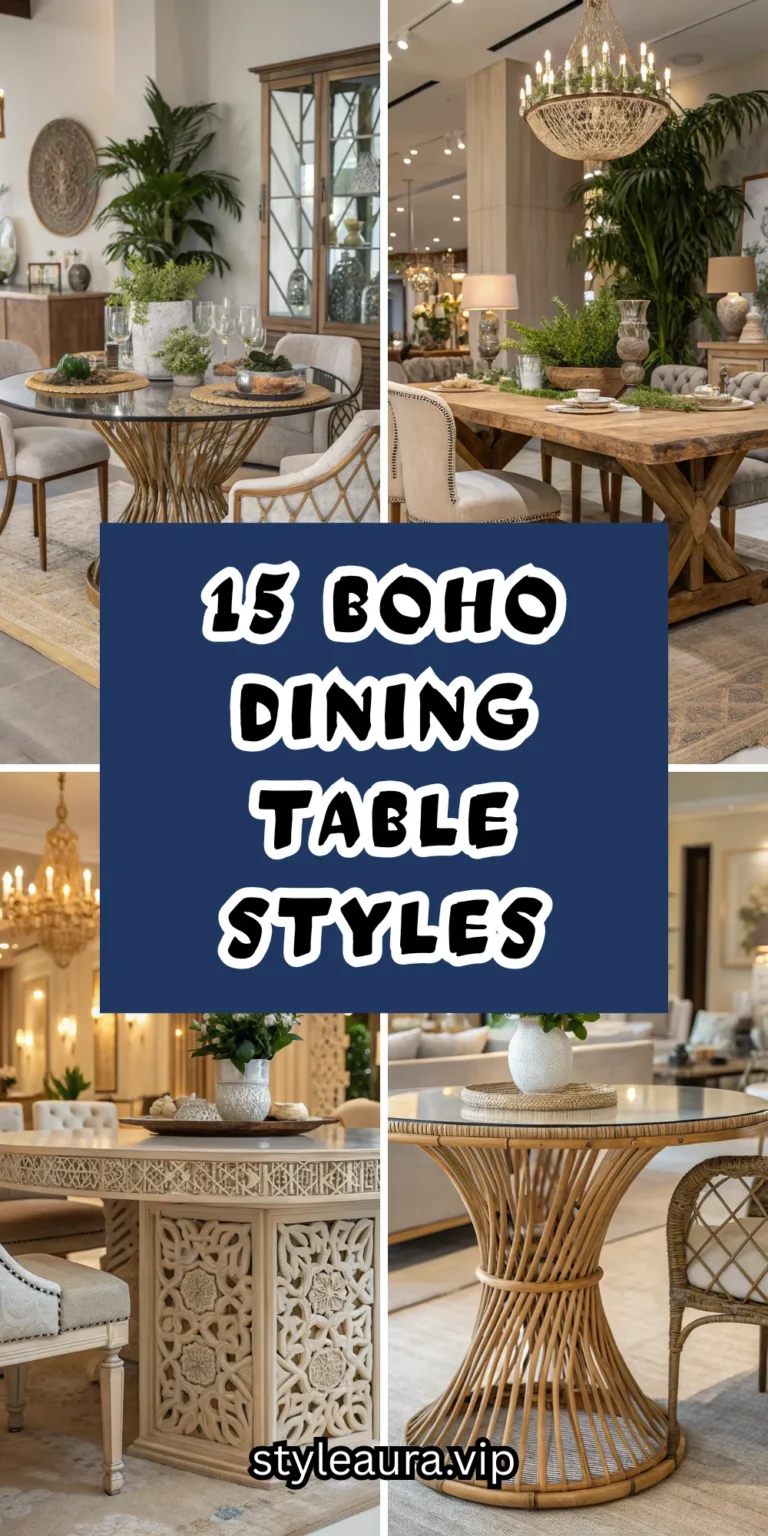
In open-plan layouts, the dining table often acts as the centerpiece of the entire space. Selecting a table with visual weight helps the dining area feel grounded and intentional.
This doesn’t mean oversized or bulky. Visual weight can come from material, shape, or detailing. Solid wood, stone, or sculptural bases add presence without overwhelming the space.
The table should feel substantial enough to hold its own between other zones while still allowing clear pathways around it.
4. Position the Dining Area Along a Natural Boundary
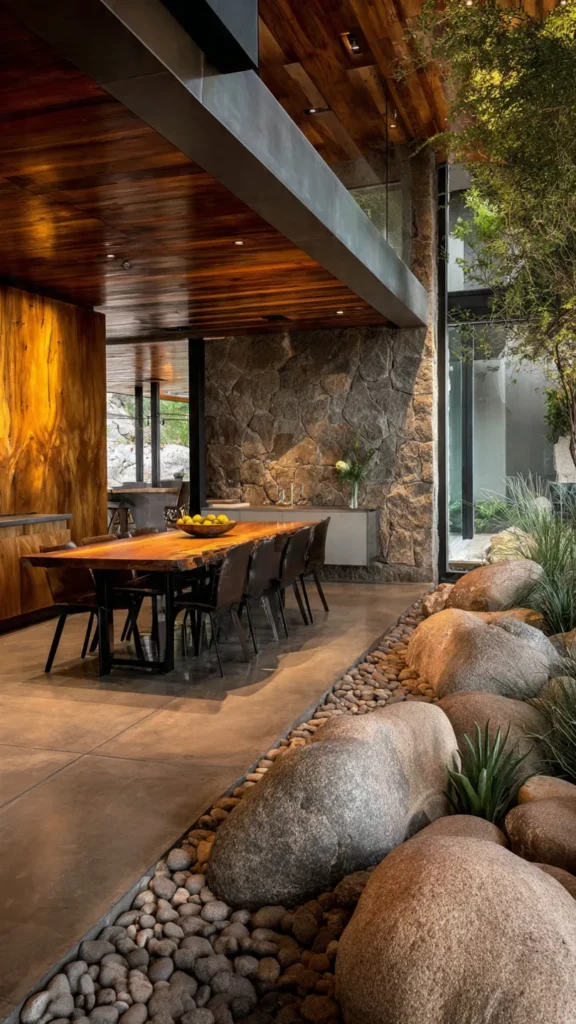
Even in open-plan homes, subtle boundaries often exist. These might include changes in flooring, proximity to the kitchen island, or alignment with windows or architectural features.
Placing the dining area along one of these natural boundaries helps it feel purposeful. For example, aligning the table parallel to a kitchen island or centering it under a window creates an intuitive connection to the surrounding layout.
This strategic placement enhances flow and makes the dining area feel like it belongs exactly where it is.
5. Create Definition With Chair Selection
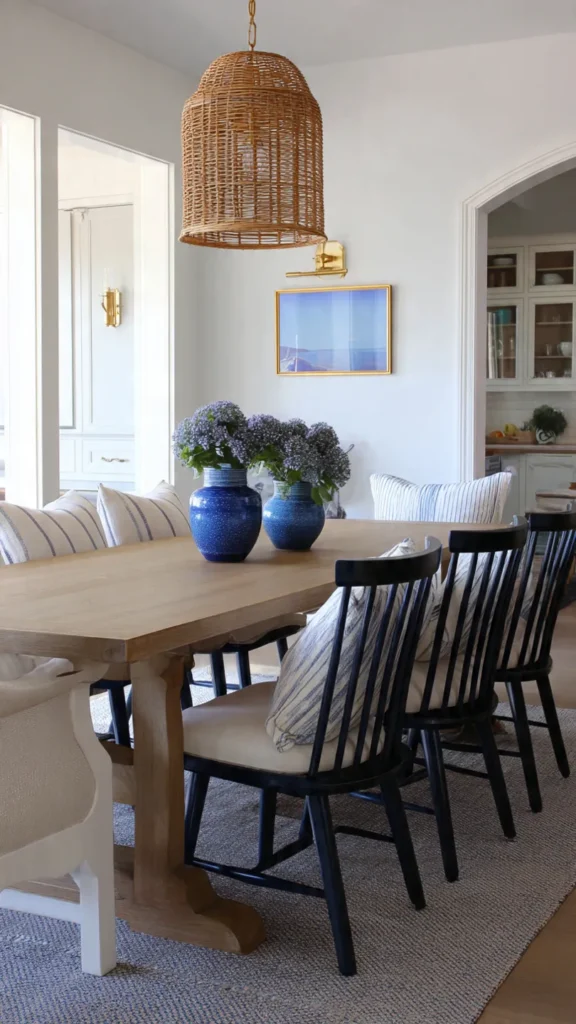
Dining chairs play a bigger role in open-plan styling than many people realize. Their shape, color, and material can visually define the dining zone.
Choosing chairs that contrast slightly with nearby furniture helps the dining area stand out without clashing. For instance, if the living room furniture is soft and upholstered, dining chairs with clean lines or natural wood can create distinction.
Consistent chair design around the table maintains order and prevents the dining space from feeling visually chaotic.
6. Use a Sideboard or Console as a Soft Divider
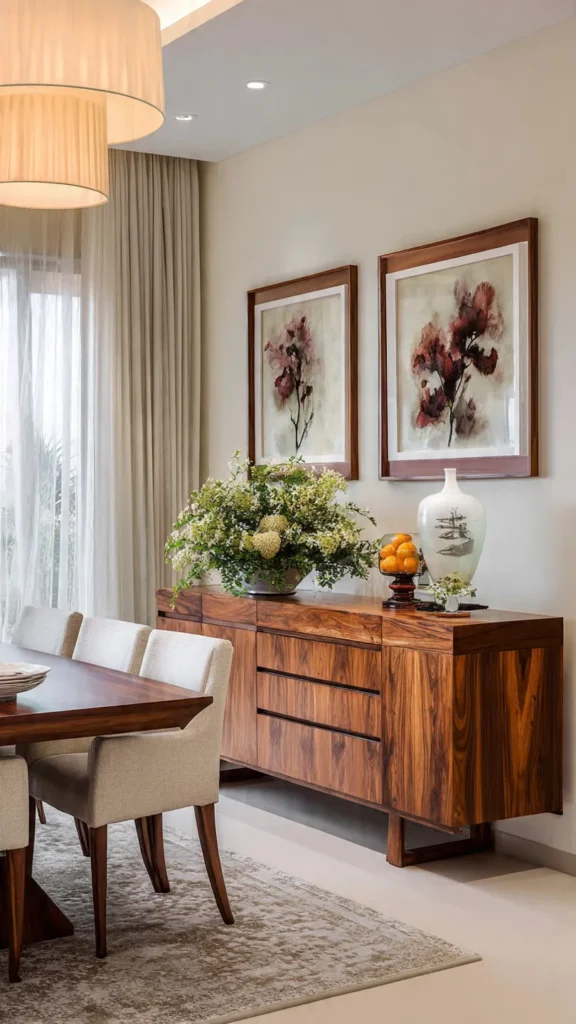
A sideboard or console placed behind the dining table can subtly separate the dining area from adjacent spaces. Unlike walls or screens, this approach maintains openness while adding functionality.
The sideboard provides storage for dining essentials and acts as a visual backdrop for the table. Styling it minimally ensures it supports the dining area without competing for attention.
This technique works especially well when the dining area sits between the kitchen and living room.
7. Align Materials Across Zones for Cohesion
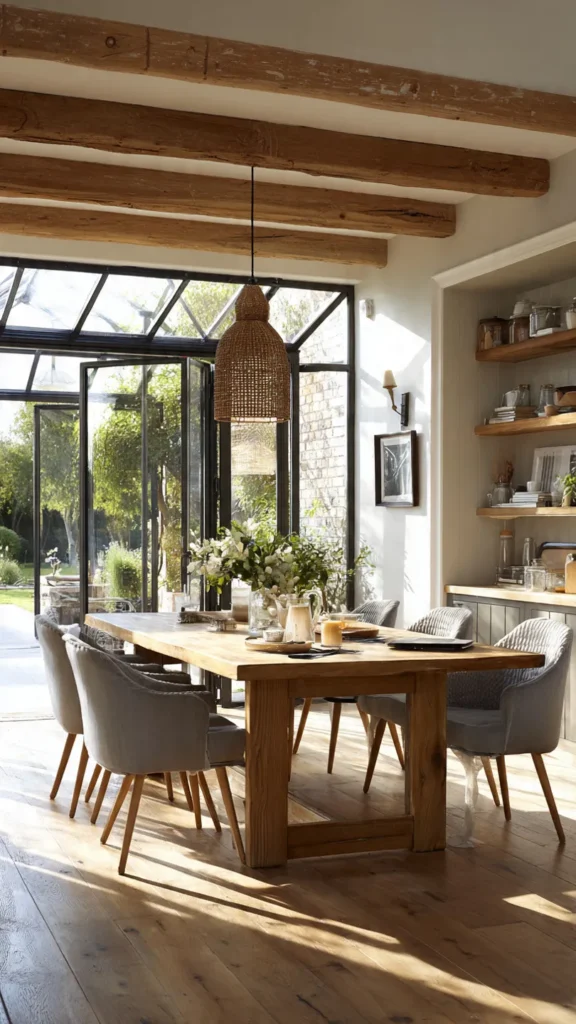
In open-plan homes, cohesion is just as important as definition. Repeating materials across different zones helps the dining space feel connected rather than isolated.
This could mean echoing wood tones from the kitchen cabinetry in the dining table or matching metal finishes between lighting fixtures. These subtle connections create visual flow without making everything look identical.
When materials speak to each other, the dining area feels naturally integrated into the larger space.
8. Use Artwork to Anchor the Dining Zone
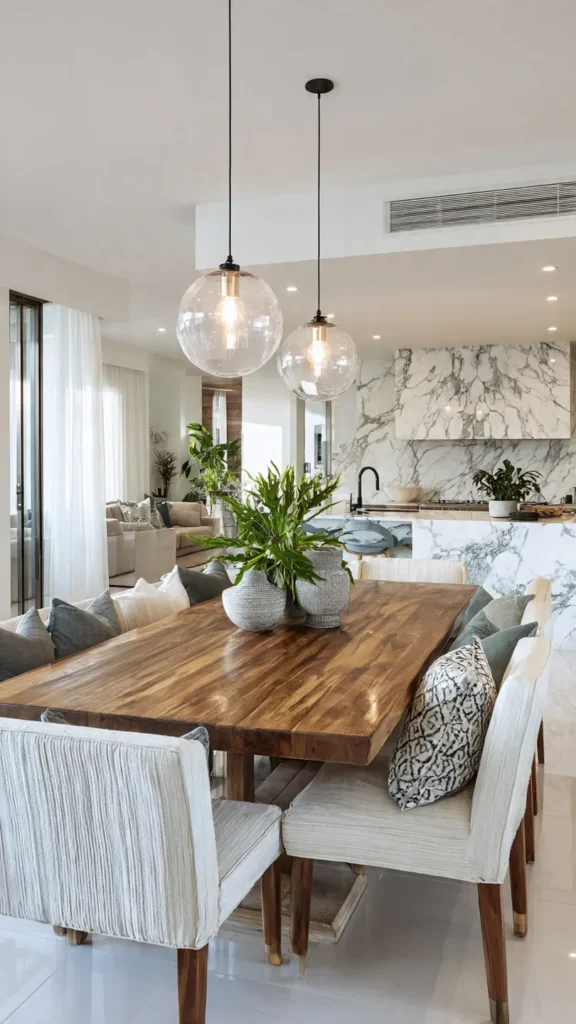
Artwork can provide a strong visual anchor for dining spaces in open-plan layouts. A large piece on a nearby wall or a gallery-style arrangement can signal where the dining area begins and ends.
The artwork doesn’t need to be food-themed. Abstracts, landscapes, or textured pieces work beautifully. The key is scale. Larger art helps the dining area hold its own within a big, open space.
Positioning art at eye level near the table draws attention to the dining zone without enclosing it.
9. Keep Table Styling Simple and Intentional
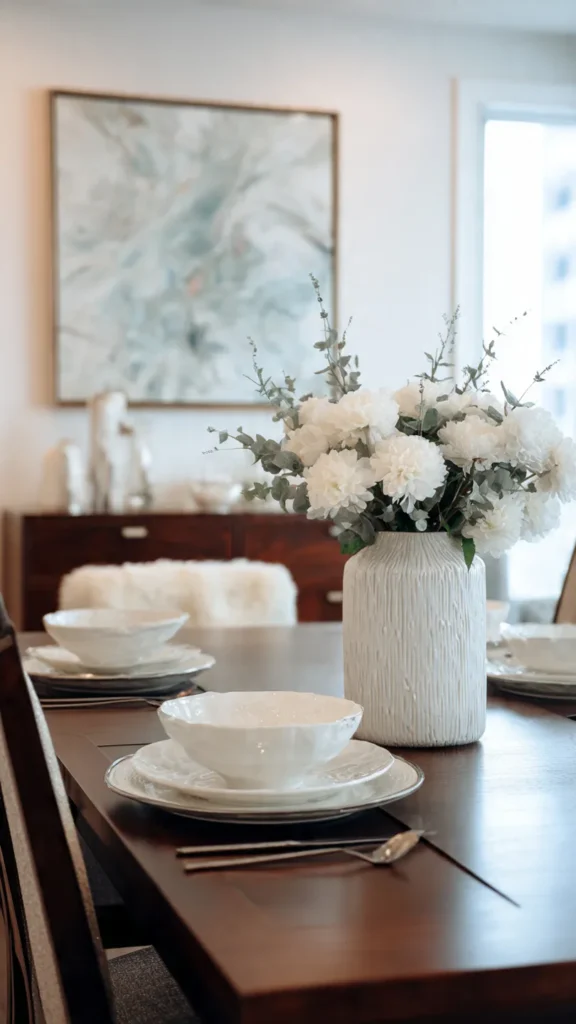
In open-plan homes, dining tables are often visible from multiple angles. Over-styling the table can make the entire space feel cluttered.
A single centerpiece, such as a low bowl, vase, or sculptural object, is usually enough. Keeping table décor minimal ensures the dining area feels elegant and ready for use at any moment.
This approach also supports daily life, as the table can quickly transition from styled to functional without effort.
10. Use Ceiling Details to Define Space
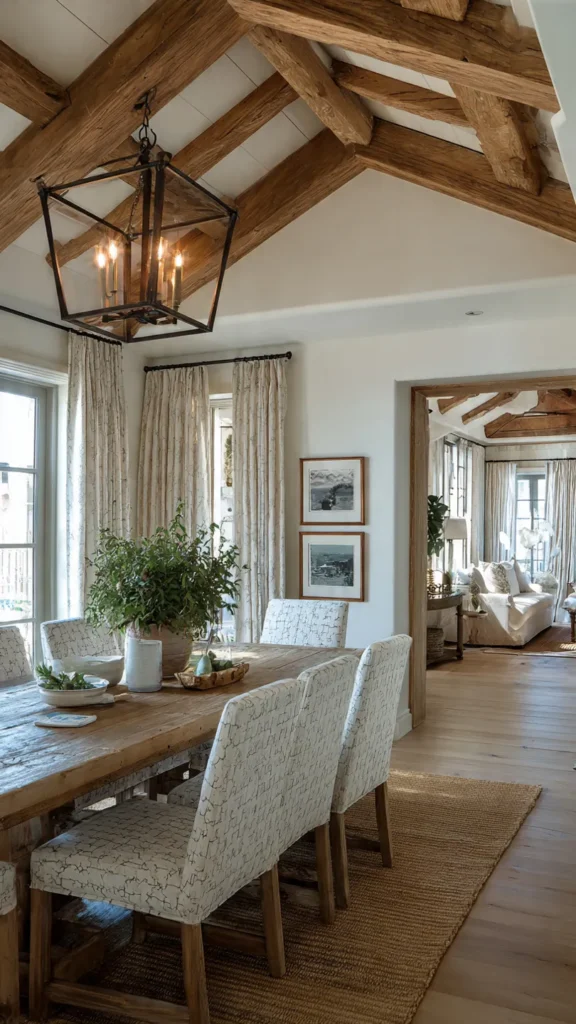
If your open-plan home allows for it, ceiling treatments can subtly define the dining area. This might include a change in ceiling height, exposed beams, or even a different paint color.
Ceiling details draw attention upward and create a sense of enclosure without walls. They’re particularly effective in larger open-plan spaces where floor-level cues may feel insufficient.
Even a simple ceiling-mounted lighting feature can serve this purpose.
11. Balance Visual Density Across Zones
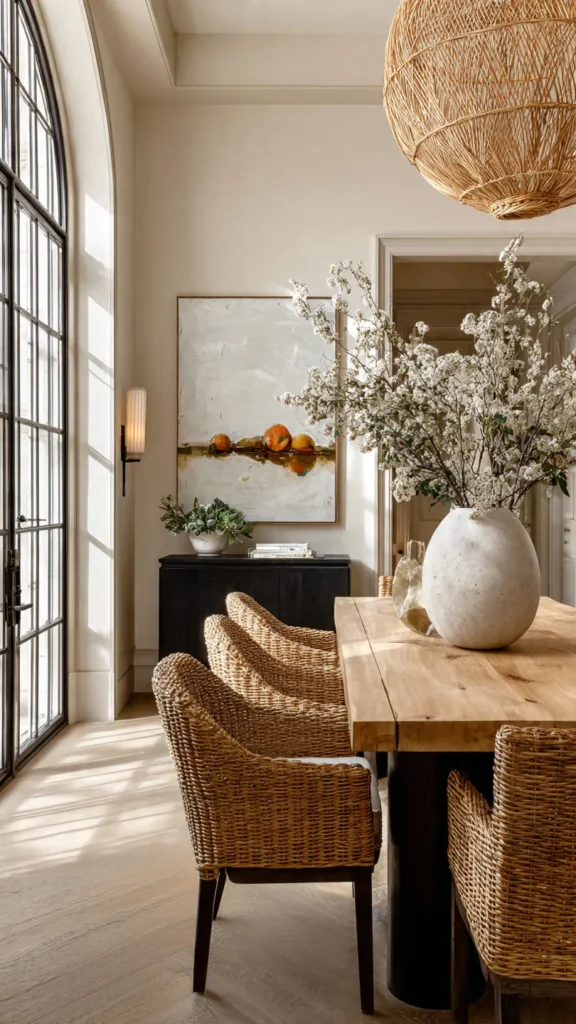
Open-plan spaces work best when visual density is balanced. If the living area is heavily styled, the dining space should feel slightly calmer, and vice versa.
This balance prevents any one zone from overwhelming the others. In dining areas, this often means focusing on fewer, larger elements rather than many small accessories.
Maintaining visual balance helps the entire open-plan layout feel intentional and harmonious.
12. Orient the Dining Table for Flow
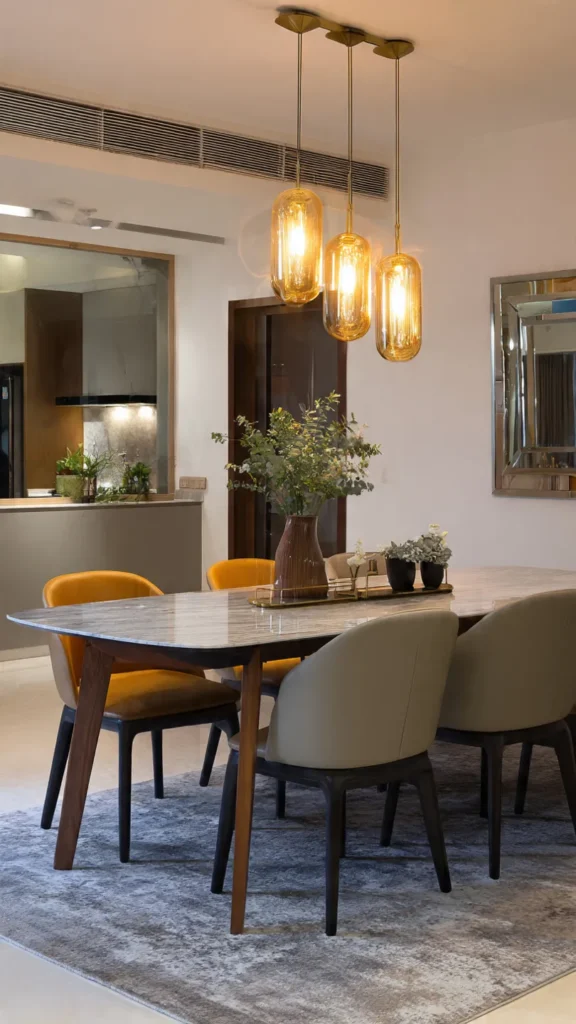
The orientation of the dining table has a major impact on how the space functions. Positioning the table so chairs don’t block walkways ensures smooth movement throughout the open-plan area.
In many cases, aligning the table parallel to major traffic paths works best. This keeps circulation intuitive and prevents the dining area from feeling like an obstacle.
Good orientation supports both daily living and entertaining.
13. Introduce Texture to Add Warmth
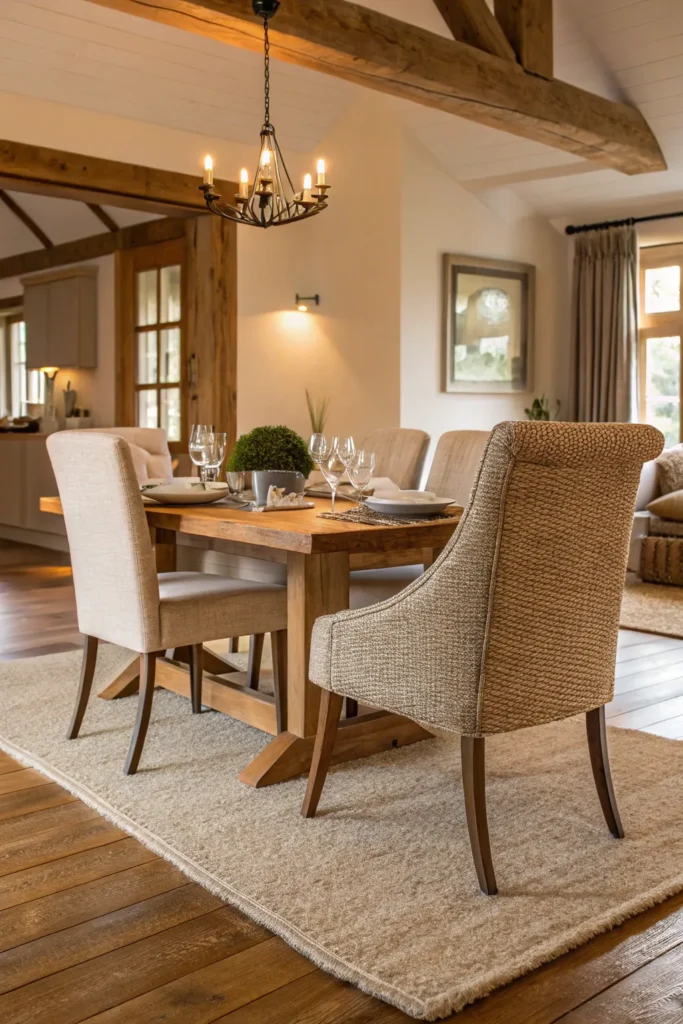
Open-plan homes can sometimes feel a bit stark or echo-prone. Introducing texture in the dining area helps add warmth and comfort.
This can come from upholstered chairs, textured rugs, or natural materials like wood and linen. Texture softens the space and makes the dining area more inviting without cluttering it.
When done thoughtfully, texture enhances both aesthetics and acoustics.
14. Keep Sightlines Clear for Openness
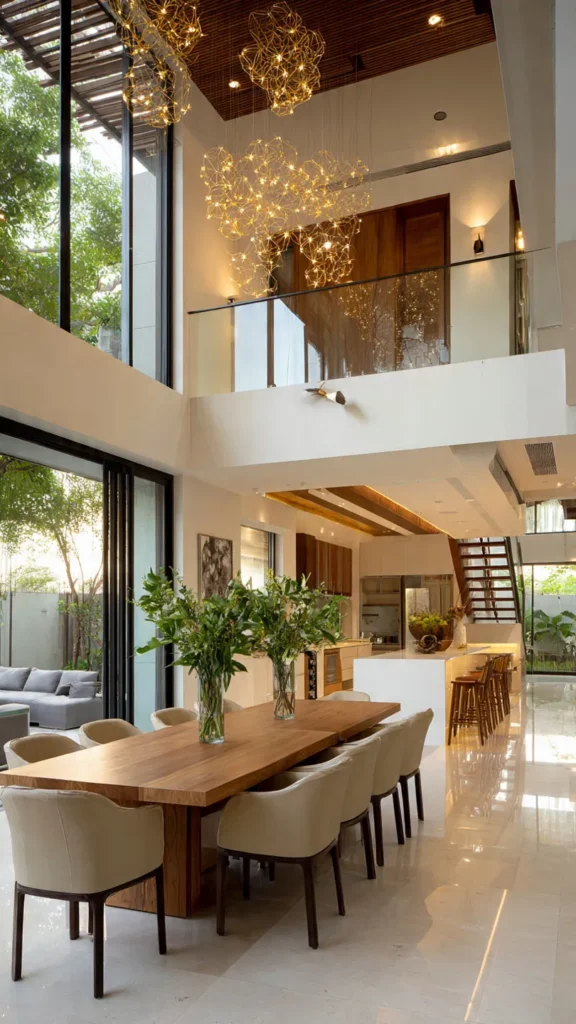
One of the biggest advantages of open-plan living is the sense of openness. Preserving clear sightlines ensures this benefit isn’t lost.
Avoid tall furniture or overly busy décor around the dining area that could block views across the space. Keeping the dining zone visually open maintains connection between areas.
Clear sightlines also make smaller open-plan homes feel larger and more breathable.
15. Let the Dining Area Reflect How You Actually Live
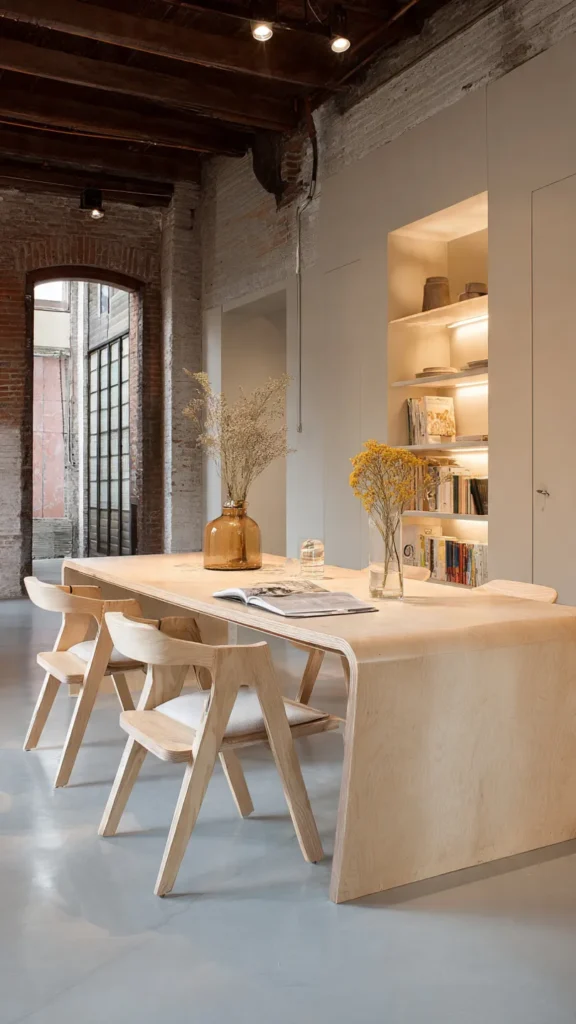
Ultimately, the most successful dining spaces in open-plan homes are those that reflect real habits. Whether your dining table is used daily or primarily for gatherings, the styling should support that reality.
If the table doubles as a workspace, keep styling minimal and flexible. If it’s mostly for hosting, focus on atmosphere and comfort. Designing around real use ensures the dining area remains functional and enjoyable.
A dining space that fits your lifestyle will always feel more intentional than one styled purely for appearance.
Styling a dining space in an open-plan home is about creating a sense of place without closing off the space. Through thoughtful placement, balanced materials, and intentional design choices, the dining area can feel grounded, functional, and visually connected to the rest of the home. When done right, it becomes a natural gathering point that enhances both everyday living and special moments.