15 Designer-Approved Bathroom Color Combos
Color is nowhere more consequential than in a bathroom. The room is small, the surfaces are hard and reflective, and you encounter it at the most unguarded moments of your day — first thing in the morning before the world has had a chance to calibrate you, last thing at night when your defenses are already down.
A bathroom that gets its color palette right doesn’t just look good in photographs. It changes the quality of the time you spend in it, which adds up to more than most people realize across the course of a year.

The good news is that bathroom color is also one of the more approachable design challenges in any home, precisely because the room is small. You can take risks here that would feel overwhelming in a living room or bedroom, and if the result isn’t quite right, the fix is never as catastrophic as it might seem.
Designers know this, which is why bathrooms are often where their most interesting color decisions happen. Here are fifteen combinations that professionals return to again and again, and the reasoning behind why each one works.
1. Navy Blue and Warm Brass
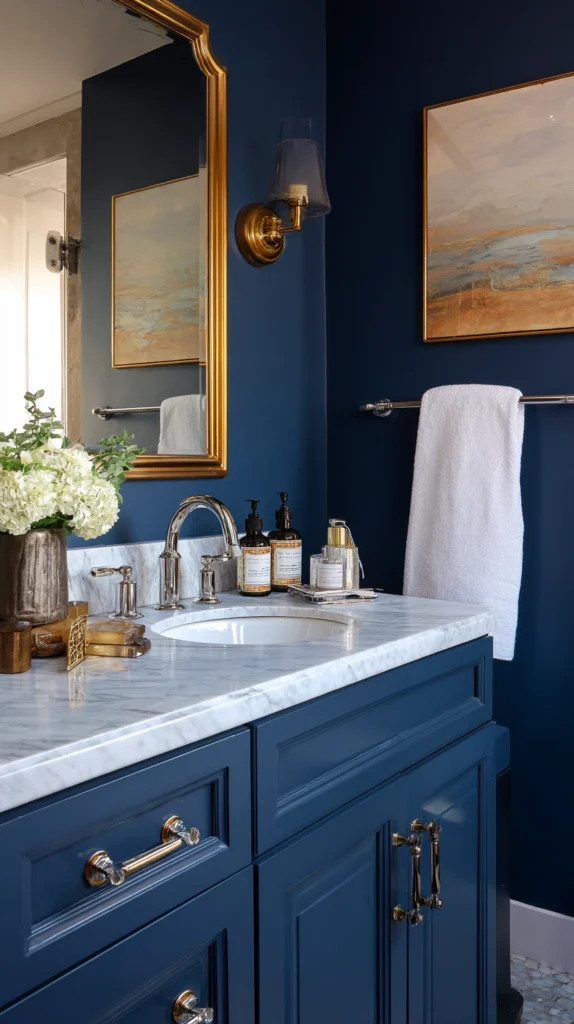
This is a combination that has genuine staying power precisely because it refuses to be trendy. Navy is one of those rare colors that reads as both bold and deeply calm — it has the visual weight to make a small bathroom feel intentional rather than cramped, and the depth to make brass fixtures glow with a warmth they can’t achieve against lighter backgrounds.
The key to making navy and brass work is ensuring the navy has enough warmth in its undertone to meet the brass rather than fight it.
A navy with a slight green undertone can be cold; one with a hint of indigo or violet reads richer and partners with unlacquered or antique brass in a way that feels genuinely luxurious. White grout lines and white ceiling keep the room from closing in, while a wooden vanity element introduces a third natural material that grounds the whole composition.
2. Soft Sage Green and Off-White
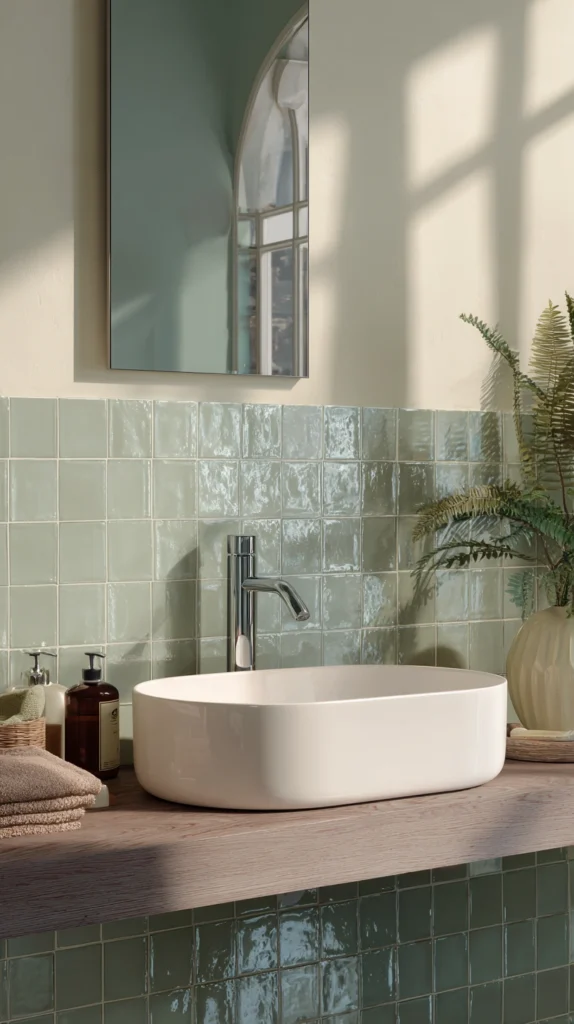
Sage green is the color equivalent of a deep breath, and in a bathroom — a space that ideally functions as a small daily retreat — that quality is enormously valuable.
Paired with off-white rather than stark white, sage creates an environment that feels organic and unhurried, like a room in a Tuscan farmhouse or a well-loved English country house that has arrived at its current state through accumulation rather than decoration.
The off-white is critical: pure white against sage can feel clinical and sharp, while a warm white or pale cream softens the contrast and lets the green breathe. Matte ceramic tiles in both colors, simple chrome or brushed nickel fixtures, and a linen window shade complete a look that is currently beloved by designers and likely to remain relevant long after more aggressive trends have cycled through.
3. Terracotta and Cream
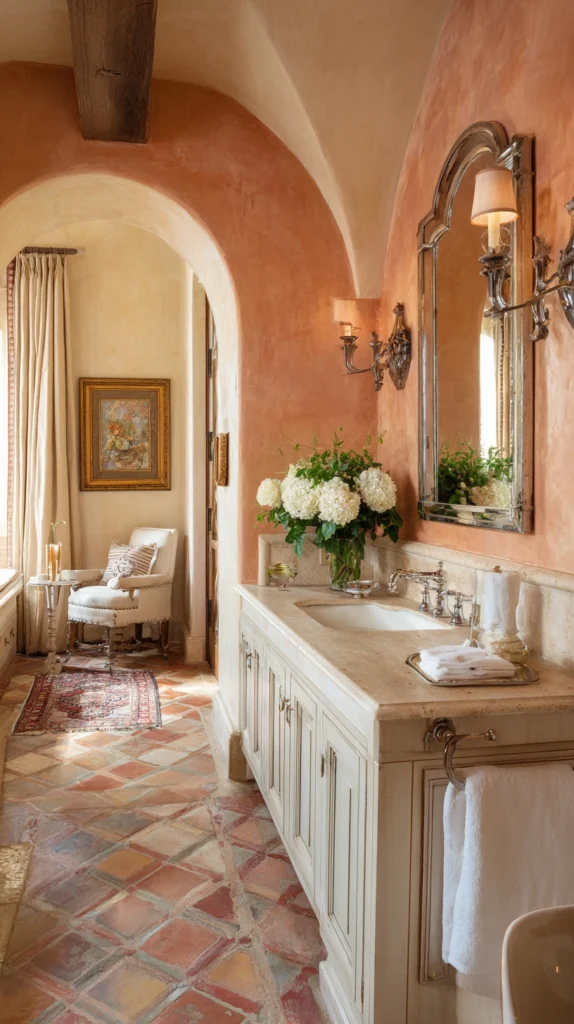
Terracotta has made a triumphant return to interior design over the past several years, and nowhere does it perform better than in a bathroom where it can interact with natural light and ceramic surfaces in endlessly interesting ways. The color carries the warmth of Mediterranean sun, the earthiness of unglazed pottery, and a richness that photographs beautifully in both natural and artificial light.
Paired with cream — in wall tile, in painted woodwork, in a freestanding bathtub if the room allows — terracotta acquires a softness it lacks when paired with stark white. Add warm brass or unlacquered copper fixtures and the combination becomes genuinely extraordinary. A terracotta zellige tile on a feature wall brings texture and handmade variation that elevates the palette from merely good to memorable.
4. Charcoal Gray and White Marble
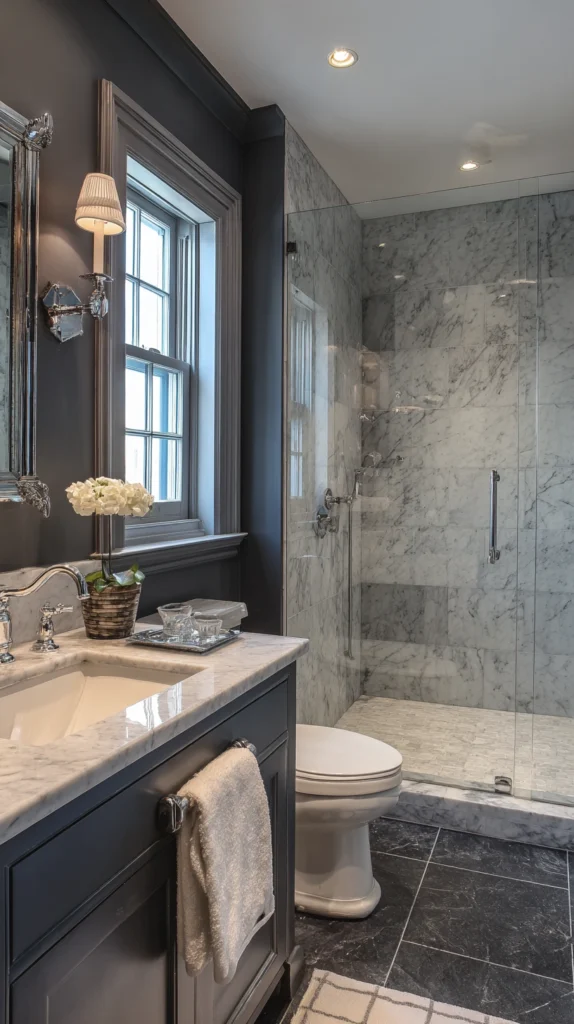
This is the combination that serious designers reach for when the brief calls for a bathroom that is simultaneously dramatic and timeless. Charcoal gray — on walls, on cabinetry, or in large-format floor tiles — provides the drama.
White marble, whether genuine or in a high-quality porcelain imitation, provides the timelessness. Together they create a bathroom that feels expensive in the way that genuinely considered things always do — not through ostentation but through the rightness of the proportion and the confidence of the choices.
The palette rewards quality fixtures: brushed chrome, polished nickel, or matte black hardware all work exceptionally well against charcoal and marble. A large mirror in a simple black metal frame and a single pendant light overhead complete a bathroom that could appear in an architectural magazine without a single change.
5. Blush Pink and Warm White
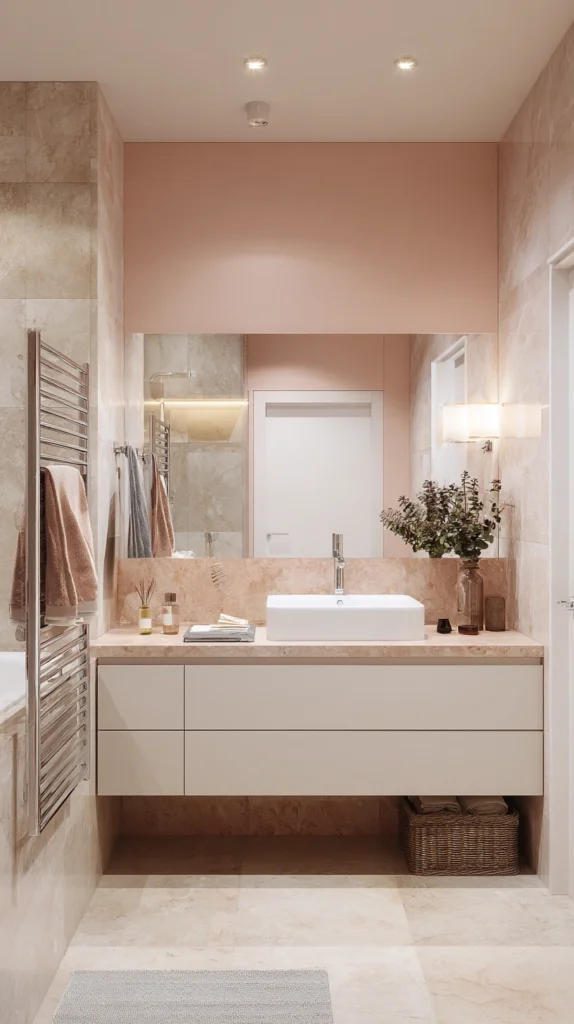
Blush pink in a bathroom is not a timid choice, despite what its softness might suggest. When handled with confidence — applied to all four walls, used in large-format tile, or committed to fully in cabinetry — blush creates an enveloping warmth that transforms the bathroom into the most flattering room in the house. Everyone looks better in blush light, and a bathroom that makes its occupants feel good is doing its job at the most fundamental level.
The essential pairing is warm white rather than cool white — cool white turns blush pink slightly gray and clinical, while warm white allows the pink to stay rosy and alive. Rose gold or unlacquered brass fixtures are the natural hardware choice, though matte white fixtures create a tonal, almost monochromatic effect that is equally beautiful and considerably more unexpected.
6. Forest Green and Black
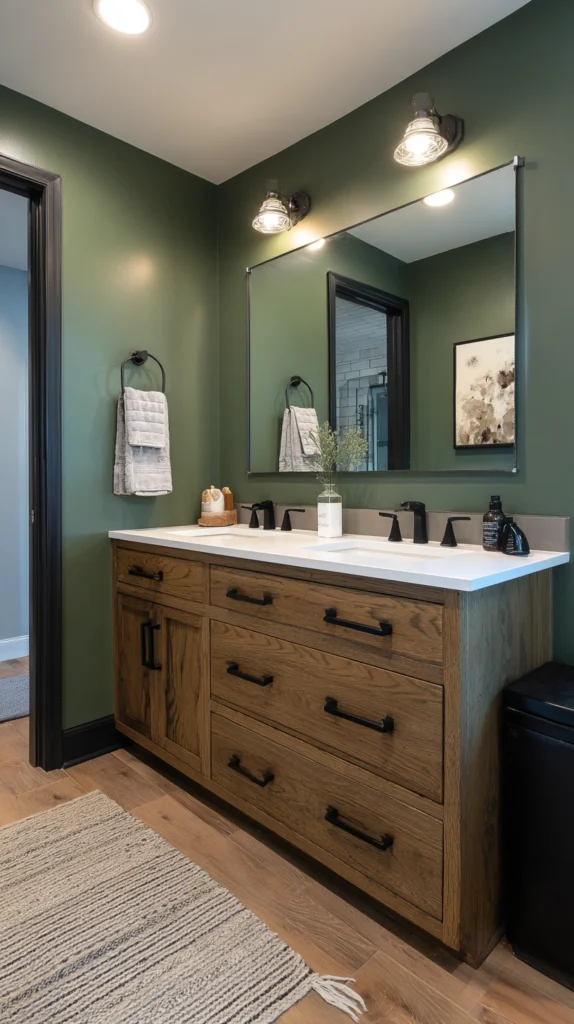
For the homeowner who wants their bathroom to make an unambiguous statement, forest green and black is a combination of remarkable power and sophistication. This palette draws from the world of gentlemen’s clubs, Victorian botanical studies, and the darkest corners of English country house libraries — spaces that prioritize atmosphere over brightness and choose depth over airiness without apology.
Forest green tile or paint paired with matte black fixtures, a black-framed mirror, and black hardware creates an immersive environment that feels both intimate and dramatic. The secret to keeping it from feeling oppressive is the introduction of natural wood — a teak bath mat, a wooden shelf, a light oak vanity — and at least one large mirror to bounce light around the space. Proper lighting is non-negotiable in this combination: recessed warm-toned fixtures and a well-positioned vanity light prevent the darkness from becoming genuinely gloomy.
7. Pale Yellow and Soft Gray
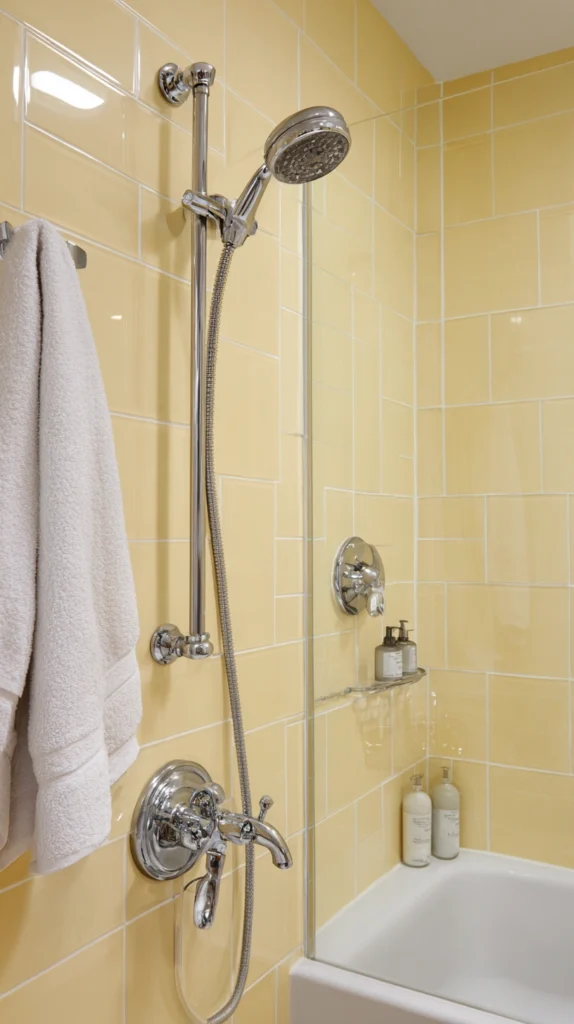
This combination is underutilized relative to how well it works, which gives it a freshness that more fashionable pairings have temporarily lost. Pale yellow — not the aggressive mustard that dominated design several years ago but a soft, barely-there yellow that reads almost as warm white in lower light — paired with a soft blue-gray creates a bathroom with the gentle optimism of a Scandinavian morning.
The yellow warms what the gray might otherwise cool, and the gray prevents the yellow from tipping into sweetness. White fixtures, simple brushed nickel hardware, and a natural fiber bath mat keep the palette grounded. This combination works particularly well in north-facing bathrooms that receive limited natural light, where the yellow introduces warmth that the light itself cannot provide.
8. Warm Taupe and Matte Black
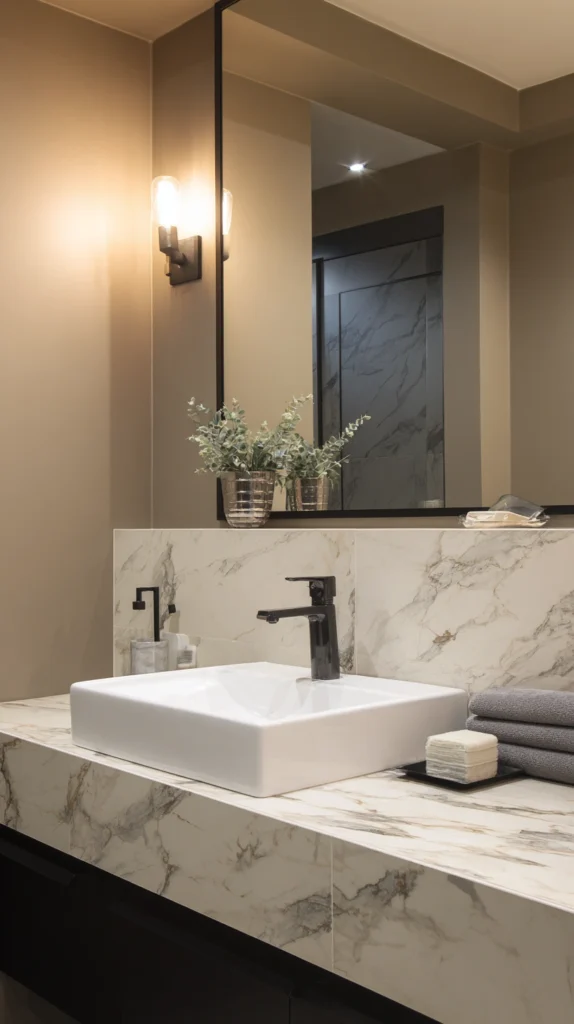
Taupe is one of those colors that polarizes designers until they see it executed well, at which point the conversation ends. A genuinely warm taupe — one with enough brown and red in its undertone to read as sand or pale clay rather than gray — paired with matte black fixtures, hardware, and accents creates a bathroom of quiet, adult sophistication.
This palette has no interest in being cheerful or decorative. It is composed, calm, and deeply confident in its own restraint. Large-format taupe tiles in a matte finish, a floating black vanity, matte black tapware and towel rails, and a simple frameless mirror create a bathroom that looks as though a very good architect designed it and then resisted every subsequent impulse to add anything unnecessary.
9. Cobalt Blue and Bright White
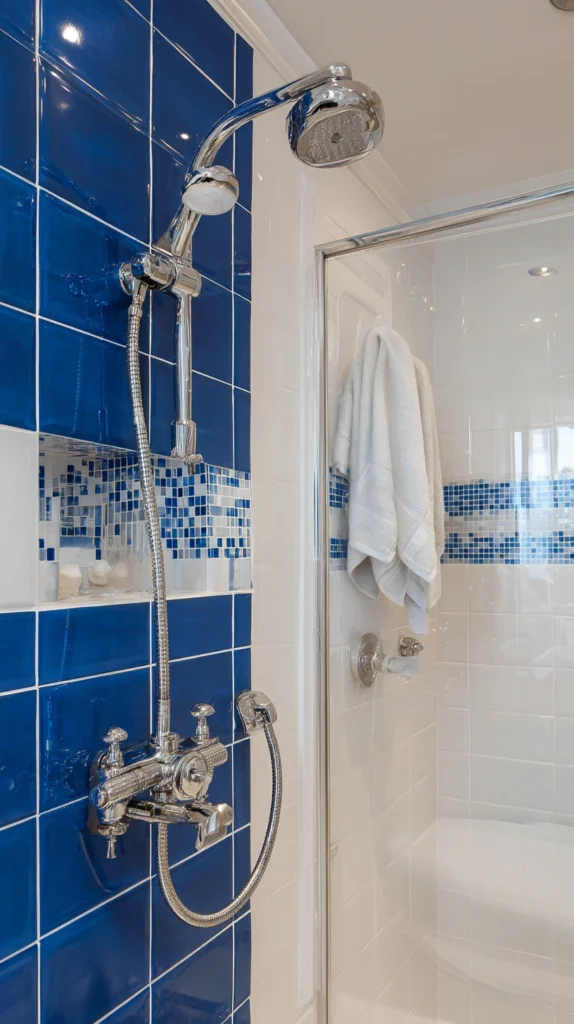
Where navy is brooding and contemplative, cobalt is joyful and energetic, and in a bathroom that you want to feel genuinely uplifting rather than merely calm, cobalt paired with bright white delivers an effect that is almost impossible to dislike. This is Mediterranean color — the blue of Santorini domes, Moroccan zellige tile, and Portuguese azulejo — and it carries with it an inherent sense of warmth and vitality that transcends its cool hue. Use cobalt in the tile rather than on the walls for maximum impact with the ability to pull back if needed, and pair it with bright white grout, white walls, and chrome or polished nickel fixtures that echo the crispness of the white. A simple wooden accessory or two prevents the combination from feeling too hard-edged.
10. Dusty Mauve and Brushed Gold
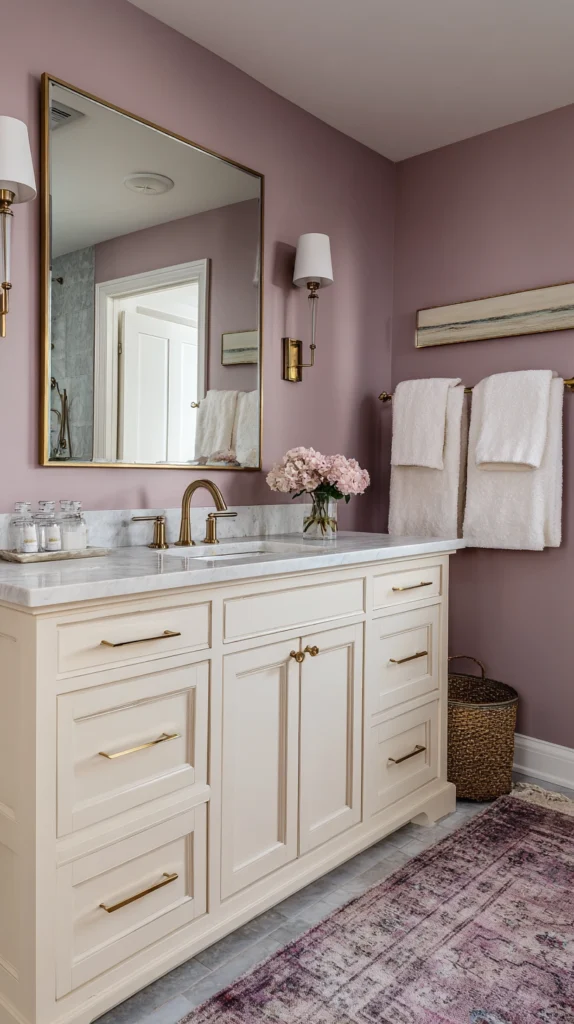
Mauve occupies a fascinating position in the color spectrum — simultaneously warm and cool, neither definitively pink nor definitively purple — and this ambiguity is precisely what makes it so interesting to work with in a bathroom setting. Dusty mauve walls or tile paired with brushed gold fixtures and accessories creates a bathroom with a quiet glamour that is entirely distinct from the louder maximalism currently circulating on social media.
This is subtle luxury — the kind that reveals itself gradually as your eyes adjust and begin to notice the way the gold catches the light and the mauve shifts between rose and lilac depending on the time of day. A white or cream vanity keeps the palette from becoming too heavy, and a simple bunch of dried flowers in a gold ceramic vase brings the whole composition together with an effortlessness that feels genuinely inspired.
11. Chocolate Brown and Warm Cream
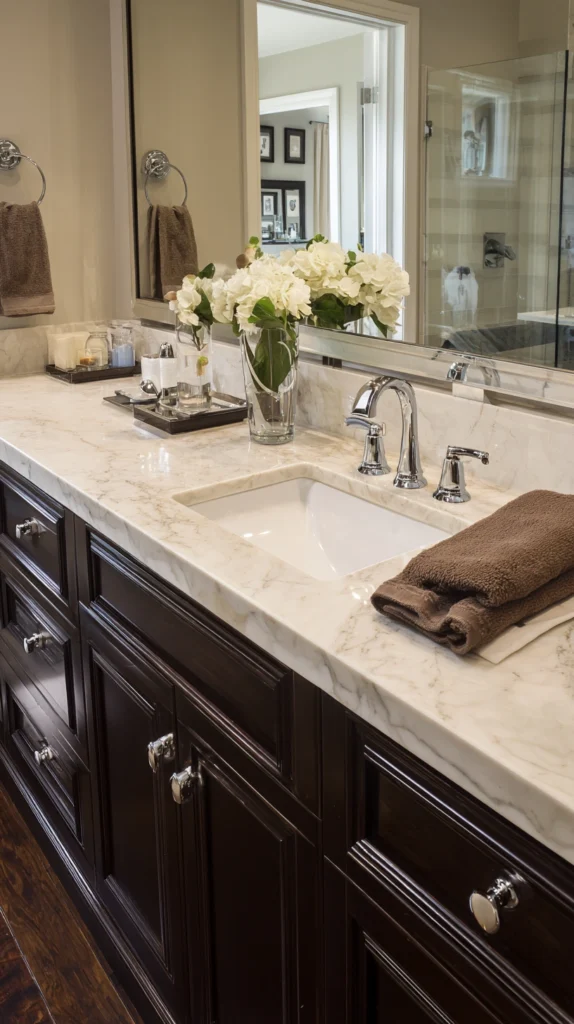
Brown has been returning to favor in interior design in a slow, confident arc that shows no signs of reversing, and a bathroom executed in chocolate brown and warm cream is a revelation to those who encounter it for the first time expecting heaviness and finding instead remarkable warmth and depth.
Dark brown tile on the floor — large format, minimal grout lines — paired with cream walls and a cream or white freestanding bath creates a bathroom that feels like the inside of a very expensive hotel suite in Marrakech or Bali.
The warmth is enveloping without being claustrophobic, the richness is genuine without being ostentatious. Brushed bronze or dark brass fixtures are the natural hardware choice, and a large skylight or generous window is the one practical requirement the combination genuinely needs to perform at its best.
12. Pale Aqua and Natural Linen
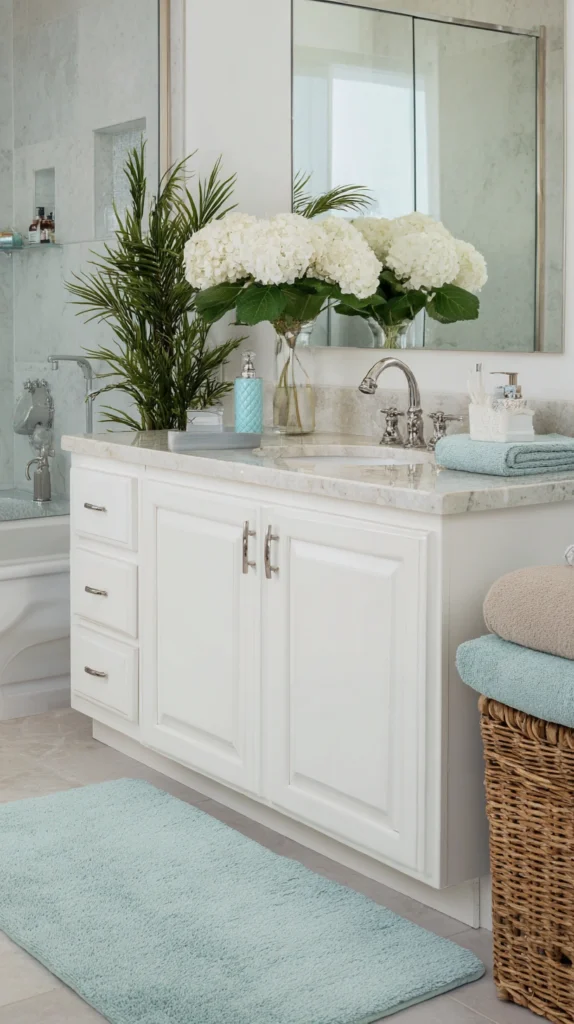
This combination captures something of the feeling of a beach house bathroom — the kind of room where the floor is slightly gritty with sand, the air smells of salt water, and everything is exactly as relaxed as it ought to be — while remaining entirely achievable in a landlocked apartment. Pale aqua, which sits between green and blue at a low saturation, is one of the most reliably calming colors available to the bathroom designer.
Paired with natural linen tones — in wall color, in window treatments, in towels and bath mats — it creates a palette that feels both coastal and timeless, neither too themed nor too generic. Natural wood accessories, simple white fixtures, and chrome hardware complete a look that is as appealing in a city apartment as it is three blocks from the ocean.
13. Inky Black and Antique White
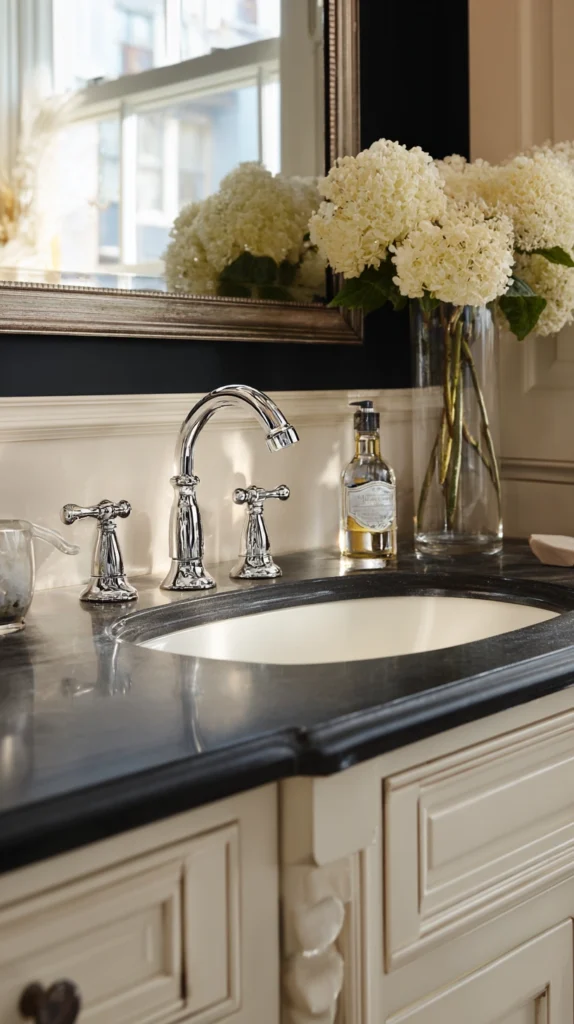
All-black bathrooms have had their moment in the design press, and while the idea remains compelling, the execution often results in spaces that feel more conceptual than livable. The solution is to pair a deep, slightly impure black — one with a hint of green or blue in its depth rather than a flat neutral — with antique white rather than stark white.
Antique white warms and softens the contrast, preventing the bathroom from feeling like a photography studio backdrop and giving it instead the atmosphere of a very beautiful, very old European bathroom that has been carefully maintained and thoughtfully modernized.
The palette demands excellent lighting — recessed warm fixtures and a generous vanity light — and rewards the addition of a single natural material, whether aged brass, worn wood, or a rough-textured linen window shade.
14. Warm Terracotta and Deep Teal
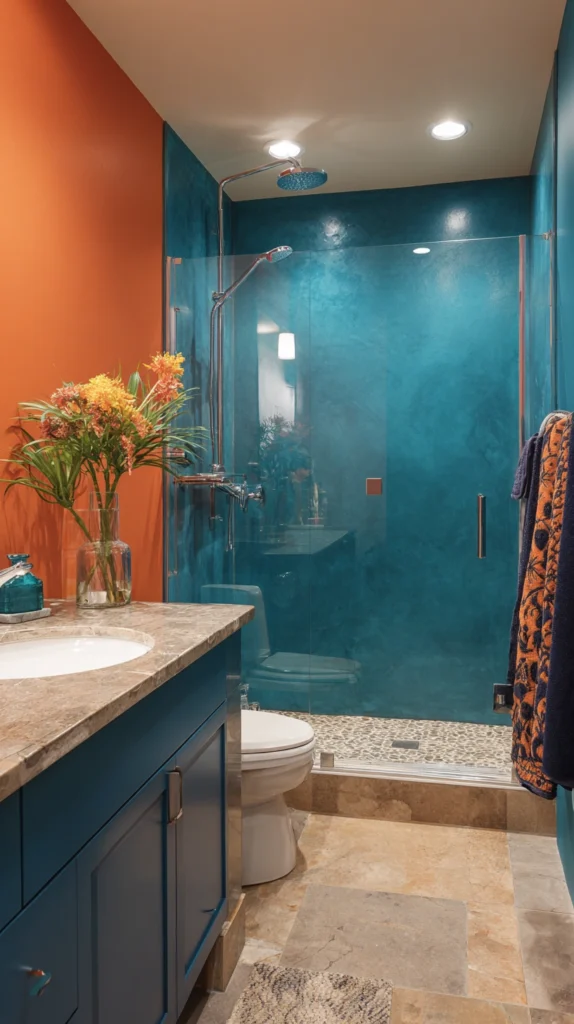
Two saturated colors sharing a bathroom might sound like a recipe for visual chaos, but terracotta and deep teal have been paired in decorative arts for centuries — from Moroccan tilework to Aztec textiles to Victorian majolica pottery — and they bring to the bathroom the same vibrancy and confidence they have demonstrated across centuries of use.
The key is proportion. One color should lead — typically the teal, applied to the majority of the tile surface — while the terracotta plays a supporting role in accents, accessories, and perhaps a single decorative tile border or floor detail. This is a bathroom for a confident homeowner who understands that a bold choice, made with conviction and followed through with good hardware and quality materials, will almost always outlast the cautious beige alternative.
15. Soft Greige and Pale Oak
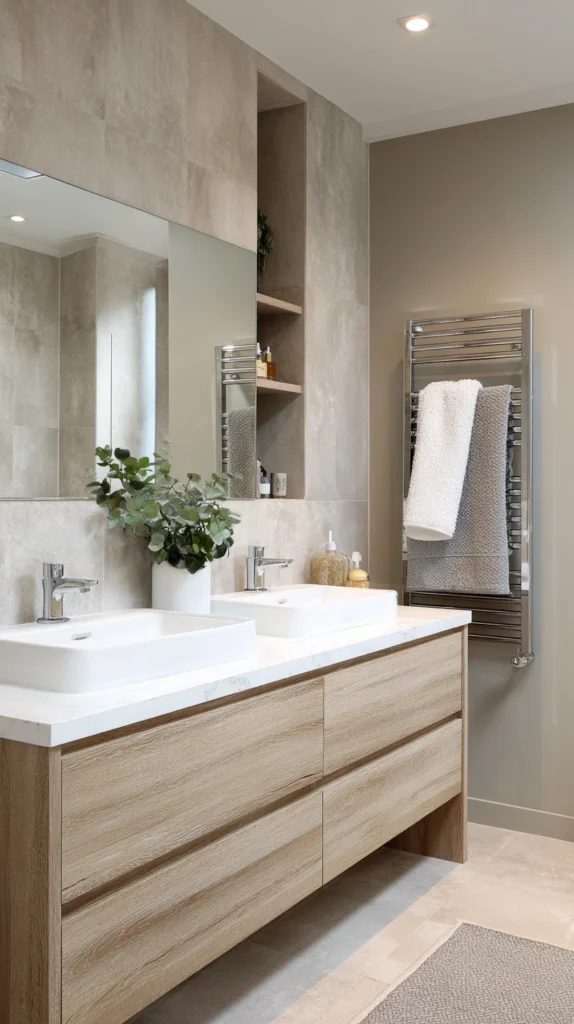
The final combination on this list is, by any measure, the most quietly brilliant. Greige — that perfect, elusive blend of gray and beige that manages to be neither — is the designer’s perennial safe harbor, but in its softest, warmest expression paired with the pale honey tones of untreated or lightly oiled oak, it transcends safety entirely and achieves something genuinely beautiful.
This is the palette of high-end Scandinavian hotel bathrooms, of the best Japanese-influenced spa spaces, of any room where the goal is serenity so complete that you barely notice the color at all and simply feel, from the moment you enter, that everything is exactly right.
Matte fixtures in warm white or brushed nickel, large-format greige tiles laid with minimal grout lines, an oak vanity with simple integrated sinks, and a single large mirror that reflects the soft natural light back into the room. There is nothing here to argue with, and that is precisely the point.