15 Cream Bedroom Ideas for a Soft Luxurious Feel
Cream is one of the most quietly sophisticated color choices a bedroom can have. It is warmer than white without the commitment of color, softer than beige without the flatness, and more complex than either in the way it responds to natural and artificial light throughout the day.
A cream bedroom at seven in the morning, flooded with early light, looks entirely different from the same room at nine in the evening lit by bedside lamps — and both versions are beautiful in completely different ways.

The mistake most people make with cream is treating it as a single color. Cream is a family of tones — warm ivory, soft buttermilk, rich ecru, pale caramel, cool off-white — each with different undertones and different relationships with light. The most beautiful cream bedrooms are rarely built from a single cream tone.
They layer multiple related shades, mix warm and slightly cooler creams, and use contrasting textures to create a room with depth and genuine visual richness that a single flat cream throughout cannot achieve.
Here are 15 cream bedroom ideas that prove this most quietly beautiful of colors deserves the attention and intention it so richly rewards.
1. Cream Linen Bedding on a Natural Timber Bed
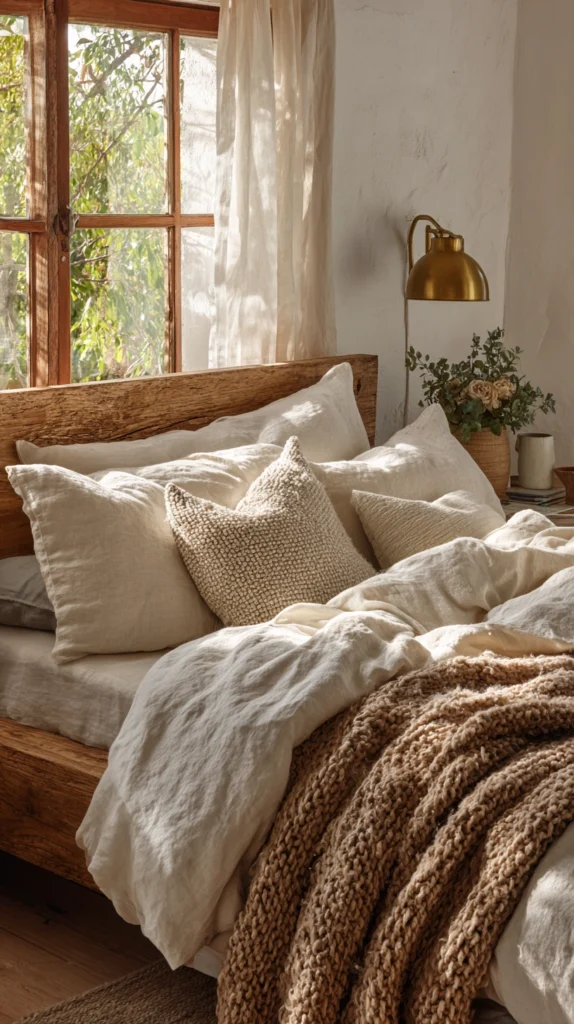
A bed dressed in cream linen bedding — the slightly rumpled, naturally textured surface of washed linen in warm ivory or soft ecru — on a natural timber bed frame creates a bedroom of effortless, organic beauty that feels genuinely restful and completely unpretentious.
Linen is the perfect cream fabric — its natural fiber variation, its resistance to looking overly pristine, and its extraordinary tactile quality make cream linen bedding the single most beautiful and most liveable bed dressing available.
The combination of cream linen and natural timber references the most elemental and beautiful pairing in the natural world — warm light and warm wood. A light oak, a pale ash, or a warm natural pine bed frame alongside cream linen bedding creates a bedroom that looks simultaneously considered and completely unstudied — the particular quality of effortless beauty that is the most difficult to achieve and the most rewarding when it arrives.
Pro Tip: Wash cream linen bedding at a lower temperature than the care label maximum — 30 degrees rather than 40 — and remove from the dryer while still slightly damp to reduce creasing.
The natural rumpled quality of linen is part of its beauty but excessive creasing from over-drying creates a bed that looks slept-in rather than beautifully dressed. Slightly damp removal and a smooth fold while the fabric retains a little warmth produces the gentle, natural texture that makes cream linen bedding so extraordinarily beautiful.
2. Cream Walls with Warm White Trim
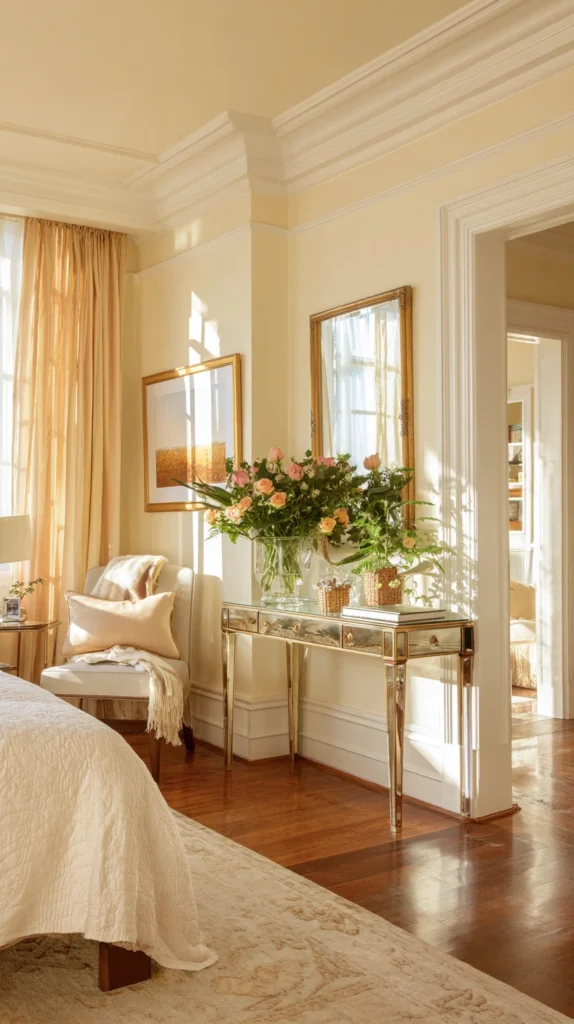
Cream walls with warm white trim — skirting boards, cornicing, window frames, and door architrave in a warm white that is slightly lighter and slightly brighter than the wall cream — creates a bedroom of classic, enduring elegance.
The tonal separation between the cream wall and the warm white trim gives the room’s architectural details clarity and definition without the harsh contrast of bright white trim against a colored wall.
The warm white trim in a cream bedroom performs the same role as a picture frame around a painting — it defines the edges of each surface, draws the eye to the architectural proportions of the room, and creates a sense of considered, finished quality that rooms without clearly differentiated trim colors often lack. The subtlety of the cream-to-warm-white transition is precisely what gives this approach its sophisticated, understated elegance.
Pro Tip: Choose trim paint with a slightly higher sheen level than the wall paint in a cream bedroom — an eggshell or satin finish on the trim alongside a flat or matte finish on the walls.
The slight sheen difference creates a visual distinction between the two surfaces that reinforces the architectural separation even where the color difference is subtle. Trim and wall paint in the same sheen level on adjacent surfaces of similar color can blur together visually — the sheen difference keeps them clearly distinct.
3. Layered Cream Textures
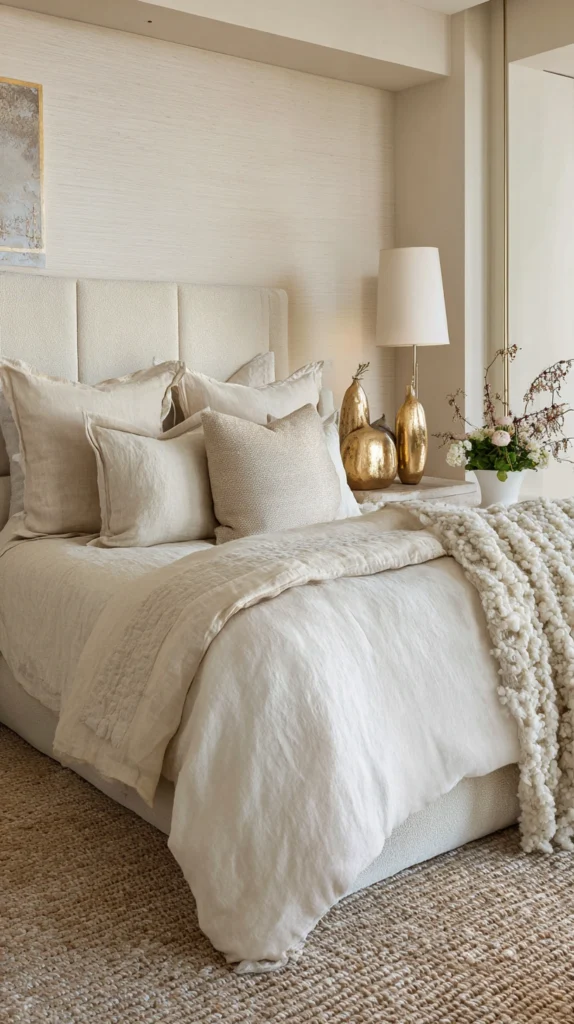
A bedroom built entirely within the cream family — walls, bedding, curtains, and furniture all in varying cream tones — succeeds or fails entirely on the variation of texture across the different surfaces.
Smooth plaster walls in warm ivory alongside rough-woven linen bedding in soft ecru alongside a chunky knit throw in warm caramel alongside a velvet headboard in pale champagne alongside a jute floor rug in natural straw — the textural variation is what creates the visual richness and depth that prevents a cream-on-cream bedroom from appearing flat and monotonous.
Each different texture interacts with light differently — the matte absorption of rough linen, the slight sheen of smooth plaster, the deep pile shadow of velvet, the woven pattern of jute — creating a room that changes visually throughout the day as the quality and direction of light shifts.
A well-layered cream bedroom is never static — it is a living composition of warm tones that rewards every glance with a slightly different quality of warmth and depth.
Pro Tip: Include at least one genuinely rough or natural texture — a jute rug, a rattan chair, a raw linen cushion, a wicker basket — in a layered cream bedroom to provide the textural contrast that prevents the overall palette from feeling too refined or slightly sterile. Exclusively smooth and soft textures in a cream bedroom create a beautiful but slightly one-dimensional sensory environment.
One genuinely rough, natural texture grounds the palette in the natural world and creates the organic counterpoint that makes all the softer textures around it appear richer and more beautiful by comparison.
4. Cream Bedroom with Warm Wood Accents
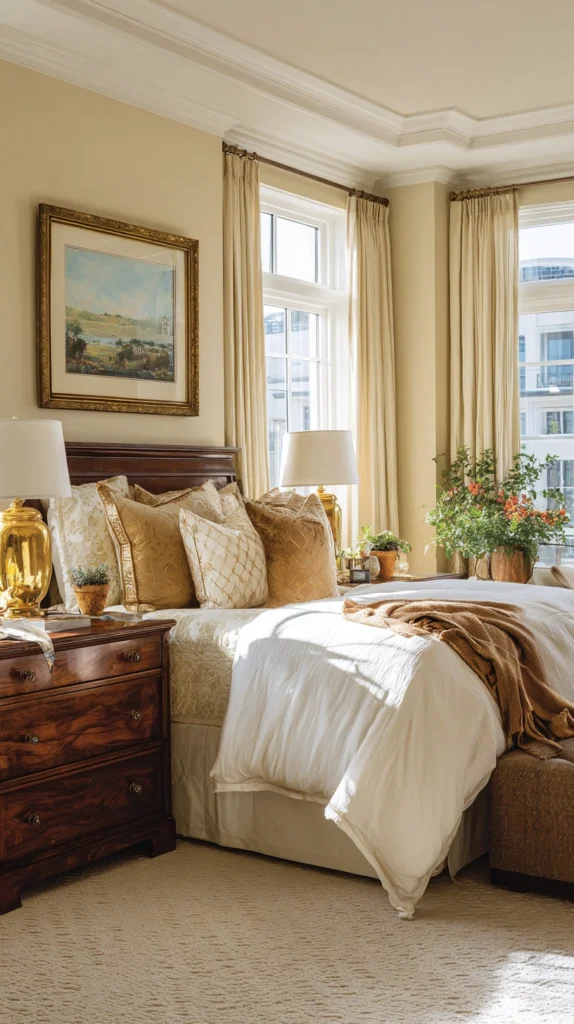
A cream bedroom accented throughout with warm timber — a walnut bedside table, an oak picture frame, a pine dressing table, a rattan chair, a reclaimed timber shelf — creates a palette of natural warmth and organic completeness that cream alongside cold or synthetic materials cannot achieve.
The warm timber accents bring the outdoor natural world into the cream bedroom and create a visual connection between the interior palette and the living garden or landscape beyond the window.
The specific timber tone matters considerably in a cream bedroom — warm, golden-toned timbers like oak, pine, and ash complement cream with extraordinary naturalness, sharing the same warm, sun-lit quality.
Very dark timbers like walnut and wenge create a more dramatic contrast that suits a cream bedroom aiming for depth and richness rather than softness and serenity. Either approach works — but the timber tone should be chosen deliberately rather than incidentally.
Pro Tip: Vary the timber tones across the different wood accents in a cream bedroom rather than attempting to match all timber elements to a single shade. Natural timbers vary in color even within the same species and attempting to match them precisely creates an artificial uniformity that looks more like a showroom display than a lived-in, naturally beautiful bedroom.
Allowing different timber tones — some lighter, some warmer, some slightly darker — to coexist creates the collected, organic quality that makes a naturally furnished bedroom feel genuinely personal and beautiful.
5. Cream Velvet Headboard
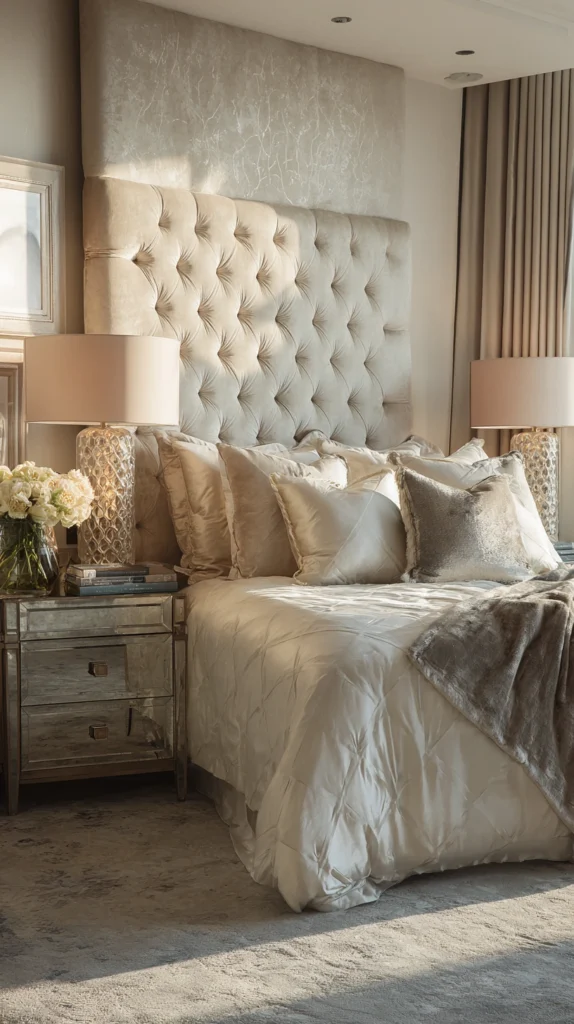
A cream velvet headboard — in the softest, warmest ivory or champagne velvet — creates a bedroom focal point of extraordinary quiet luxury.
The combination of the warm neutral color and the light-shifting depth of velvet creates a headboard that appears to change from a pale, luminous ivory in morning light to a deeper, richer champagne in the warm glow of evening lamps — a quality of shifting beauty that makes the headboard endlessly interesting as a focal point.
A large, generously proportioned cream velvet headboard — tufted for classical elegance or plain for contemporary restraint — with crisp white or warm ivory bed linen creates a bed of hotel-suite quality that transforms the bedroom into a space of genuine daily luxury.
The cream velvet has a warmth and softness that white velvet lacks and a delicacy that deeper, more saturated velvet colors do not possess — it is the headboard color of maximum quiet luxury.
Pro Tip: Protect a cream velvet headboard with a fabric protector spray applied before first use and reapplied every six months.
Cream velvet shows marks, oil transfer from hair and skin, and dust accumulation more visibly than darker velvet alternatives and without protective treatment requires professional cleaning at intervals that make it a high-maintenance choice. A regularly applied fabric protector dramatically reduces the penetration of surface soiling and makes a cream velvet headboard a genuinely practical daily bedroom choice rather than a beautiful object that requires constant anxious attention.
6. Cream and Gold Bedroom
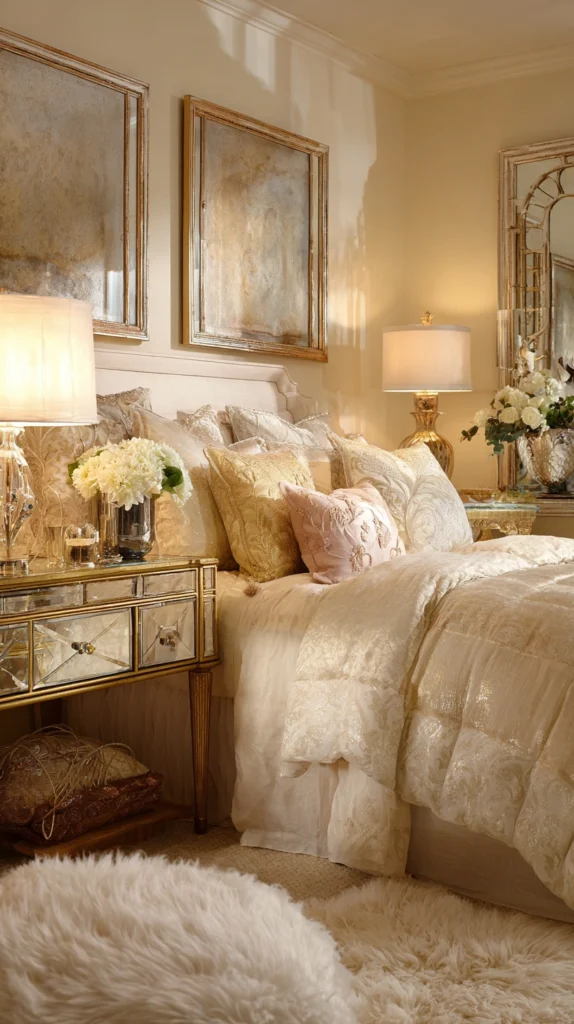
Pairing cream with warm gold accents — brushed gold light fixtures, antique gold picture frames, gold-toned mirrors, gold hardware on furniture — creates a bedroom of quiet, sophisticated glamour that feels luxurious without ostentation. The warmth of gold shares the same warm undertone as cream — the two materials belong to the same family of warm, honeyed tones — which is precisely what makes them such natural and beautiful companions.
A cream bedroom with a large antique gold-framed mirror above the dressing table, gold-brushed bedside lamps, gold picture frame hardware, and a gold-toned pendant creates a bedroom that glows with warm, layered light from multiple reflective surfaces simultaneously. The gold details amplify the warmth of the cream walls and bedding, creating an evening atmosphere of genuine, luminous luxury.
Pro Tip: Use antique or brushed gold rather than bright polished gold throughout a cream and gold bedroom.
Bright polished gold has a hardness and a high reflectivity that can feel slightly cold alongside the soft warmth of cream — it introduces too much contrast and too much shine into a palette that derives its beauty from softness and warmth. Brushed or antique gold has a depth and a muted quality that sits naturally alongside cream and amplifies its warmth without overpowering its gentleness.
7. Cream Bedroom with Sage Green Accents
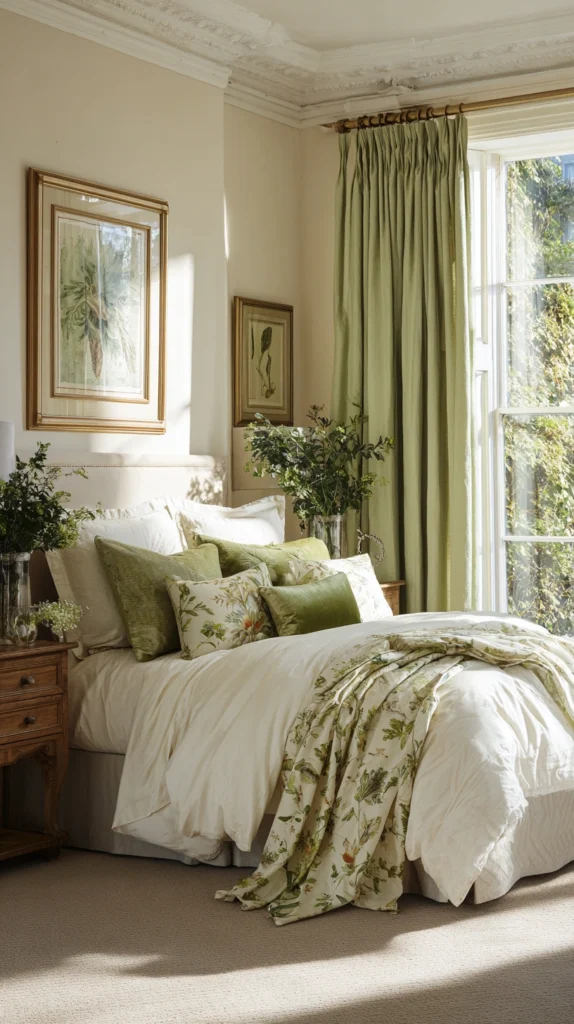
A cream bedroom with sage green accents — a sage green velvet cushion, a pair of sage green linen curtains, a botanical print with sage green tones, a sage green ceramic bedside lamp — creates a palette of natural, organic beauty that references the garden and the landscape with quiet directness. Cream and sage green are the colors of morning light on new leaves — warm, fresh, and completely naturally harmonious.
The sage green accent in a cream bedroom introduces just enough color to prevent the palette from feeling flat or colorless while remaining firmly within the natural, warm-toned aesthetic that cream establishes.
Sage green is the most restrained and most sophisticated of the green accents available to a cream bedroom — it contributes color depth without energy, freshness without brightness, and natural beauty without botanical literalism.
Pro Tip: Use sage green in the largest accent element of the cream bedroom — the curtains rather than the cushions, or a full bedding set rather than a single throw — for an accent that reads with sufficient clarity and presence to genuinely change the character of the room.
Sage green used only in very small accent details in a cream bedroom can be too subtle to register as a deliberate color choice — slightly too muted a color in slightly too small a quantity disappears into the cream palette rather than accenting it. Scale and proportion matter as much as color selection.
8. Cream Bedroom with Rattan and Wicker

A cream bedroom furnished with rattan and wicker pieces — a rattan bedhead, a wicker pendant light shade, rattan bedside tables, wicker storage baskets — creates a bedroom of warm, relaxed, slightly bohemian beauty.
The natural honey-brown tone of rattan and wicker sits within the same warm family as cream — the two materials share the same sun-bleached, natural quality that makes their combination feel entirely inevitable.
The combination of cream walls and linen bedding alongside rattan and wicker furniture creates a bedroom that feels like a beautiful room in a warm-climate boutique hotel — relaxed, natural, and deeply comfortable without any element that feels formal or effortful.
Add large leafy indoor plants to complete the natural, organic aesthetic and create a bedroom that feels genuinely alive and connected to the natural world.
Pro Tip: Choose rattan pieces in a natural, unbleached tone rather than painted or lacquered rattan for a cream bedroom. White-painted rattan creates too stark a contrast against warm cream and loses the natural, warm-toned quality that makes rattan such a beautiful companion for cream.
Dark-lacquered rattan creates too much contrast and introduces a visual heaviness that works against the soft, airy quality of a cream bedroom. Natural, unfinished rattan in its warm honey tone is the version that sits most naturally and most beautifully alongside cream in every context.
9. Cream Bedroom with Blush Pink Accents
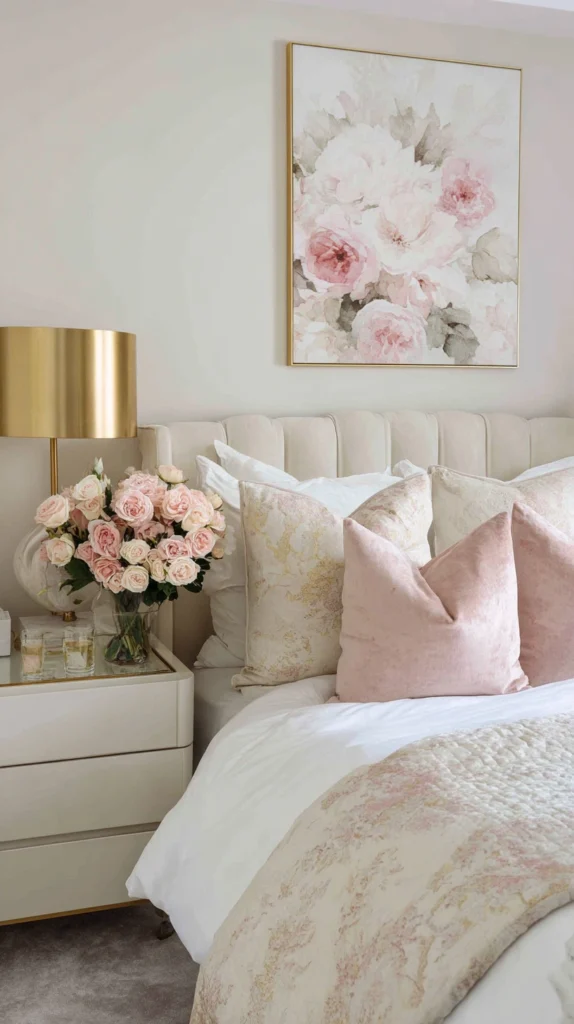
Cream and blush pink is a bedroom palette of extraordinary romantic softness — two colors that share the same warm, rosy undertone and sit so closely in the warm-neutral family that they harmonise with effortless natural grace.
The blush pink introduces just enough warmth and just enough color into the cream bedroom to give it a romantic quality and a gentle femininity without tipping into the overtly pink territory that not every bedroom aesthetic can accommodate.
Blush pink cushions on a cream linen bed, a single blush pink peony in a cream ceramic vase on the bedside table, a watercolor botanical print with blush tones on the cream wall — each individual blush element is gentle enough to be almost incidental, but the accumulation of several small blush accents throughout the cream bedroom creates a palette of genuine warmth and quiet romantic beauty that is deeply inviting and completely beautiful.
Pro Tip: Keep blush pink accents in the same muted, slightly dusty tone throughout the cream bedroom rather than mixing different versions of pink.
The subtlety of the cream and blush palette depends on all the pink elements sharing the same warm, slightly grey-toned quality — a mix of warm blush, cool pink, and bright rose within the same cream bedroom creates a confused palette that loses the harmonious, tonal beauty of this combination. Consistent dusty blush throughout creates the seamless warmth that makes cream and blush so genuinely beautiful together.
10. Cream Bedroom with Dark Contrast Accents
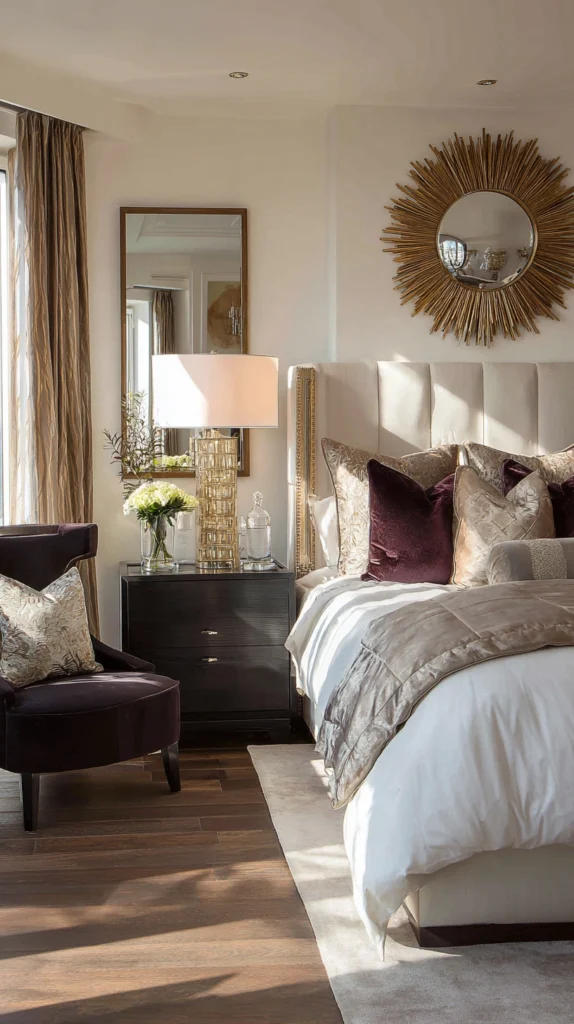
A cream bedroom with one or two genuinely dark accent elements — a deep charcoal picture frame, a near-black timber side table, a dark walnut mirror frame, a single deep navy cushion — creates a bedroom of greater visual depth and more sophisticated tension than an all-soft cream palette can achieve. The dark accents provide the contrast anchor that allows the cream tones to appear warmer and more luminous by comparison.
The dark accent in a cream bedroom works on the same principle as a deep shadow in a watercolor painting — it is the darkest element that defines the relative lightness and warmth of every other element around it.
Without any dark anchor a cream bedroom can feel slightly washed out and lacking in visual definition. One or two carefully chosen dark accents create the depth that makes the cream palette glow.
Pro Tip: Choose dark accent pieces in warm rather than cool dark tones for a cream bedroom. Warm darks — deep walnut, warm charcoal, dark bronze, aged iron — share the warm undertone of cream and sit harmoniously alongside it.
Cool darks — blue-black, cool grey-black, cold steel — create a temperature discord that disrupts the seamless warmth of the cream palette. The warmth of the dark accent is as important as its depth in determining whether it enhances or disrupts the cream bedroom’s characteristic quality.
11. Cream Canopy Bed
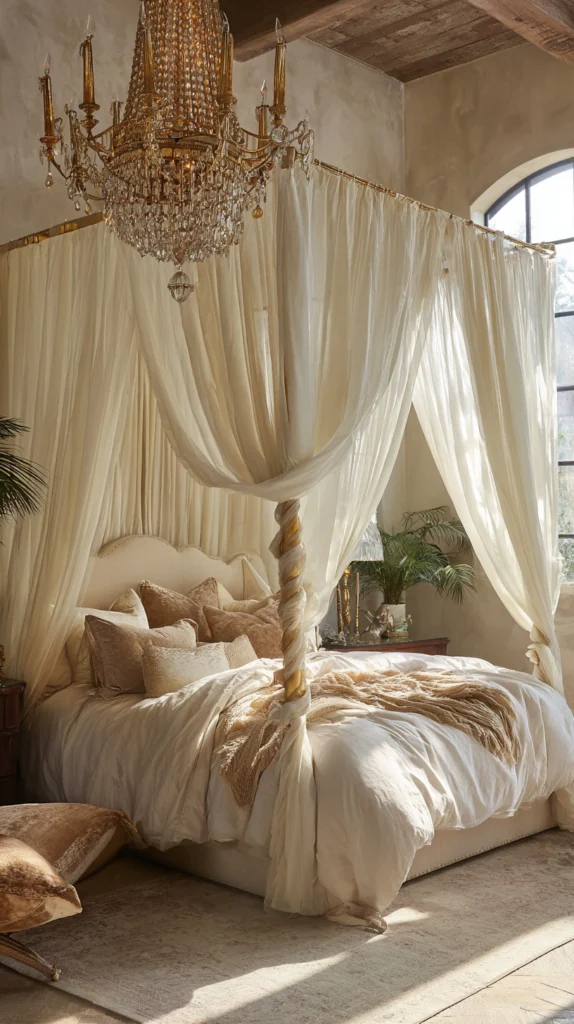
A cream canopy bed — a four-poster or canopy frame dressed with flowing cream linen, sheer ivory cotton, or soft muslin panels on all four sides — creates a bedroom sleeping space of extraordinary romantic luxury. The canopy creates a room within a room — an intimate, enclosed sleeping environment of softly filtered light and complete privacy that gives the bedroom a genuinely extraordinary quality.
Cream canopy fabric in a lightweight, flowing material — unlined linen, sheer cotton, or fine muslin — creates the most beautiful canopy effect. The fabric should be generous enough to pool slightly on the floor on all sides and sheer enough to allow the light and the bedroom around it to be seen through the fabric panels — creating the impression of sleeping within a cloud of warm, soft light rather than within an enclosed box.
Pro Tip: Hang cream canopy fabric from a ceiling-mounted track or a simple timber ceiling batten rather than from the bed frame posts wherever the ceiling height allows.
A ceiling-hung canopy falls in a straight, graceful vertical line from ceiling to floor that is significantly more beautiful than a canopy hung from bed posts — which inevitably creates a slightly awkward angle at the transition between the post top and the fabric hang. Ceiling mounting also allows the canopy to extend beyond the bed footprint, creating a larger, more dramatic and more enveloping sleeping space.
12. Cream Bedroom with Natural Stone Accessories
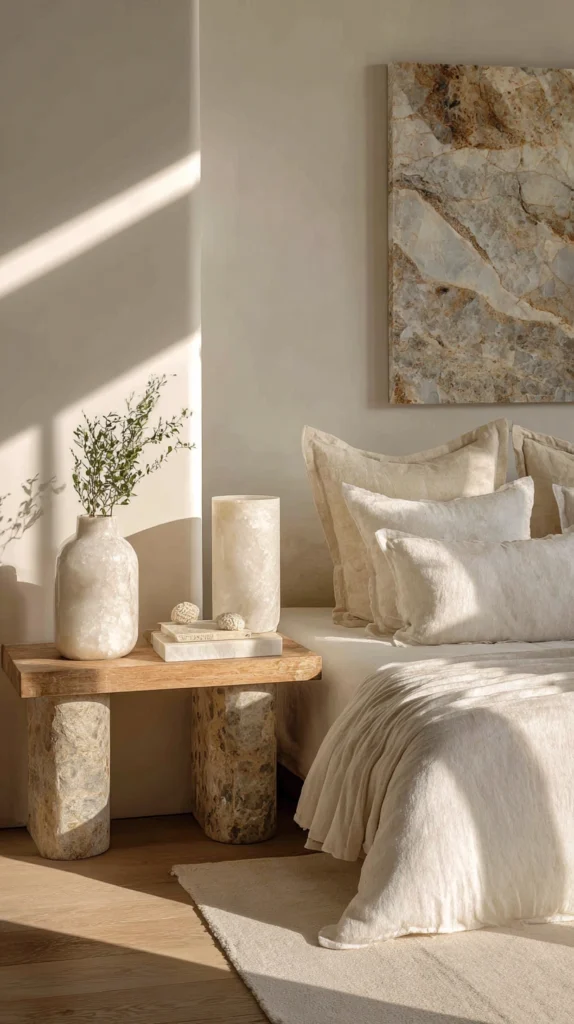
A cream bedroom accessorised with natural stone objects — a marble bedside tray, a limestone candle holder, an alabaster vase, smooth river pebbles arranged in a ceramic bowl — creates a bedroom of mineral beauty and tactile richness that connects the warm cream palette to the natural world through material rather than color.
The variation in natural stone — the veining of marble, the crystalline quality of alabaster, the smooth weight of river pebbles — creates decorative objects of genuine natural beauty that complement cream with extraordinary naturalness. The cool, slightly grey tone of most natural stones creates a gentle counterpoint to the warm tone of cream that prevents the palette from becoming too warm or too sweet.
Pro Tip: Choose natural stone accessories in warm-toned varieties — warm white marble with golden veining, honey-toned limestone, warm alabaster — rather than cool-toned stone that would introduce too much temperature contrast into the warm cream palette.
Warm stone varieties share the same golden, sun-warmed quality as cream and complement it with completely natural ease. Cool grey or blue-grey stone accessories create a slight temperature discord that works against the warm, enveloping quality that defines the cream bedroom aesthetic at its most beautiful.
13. Cream Bedroom with Lace and Embroidery Details
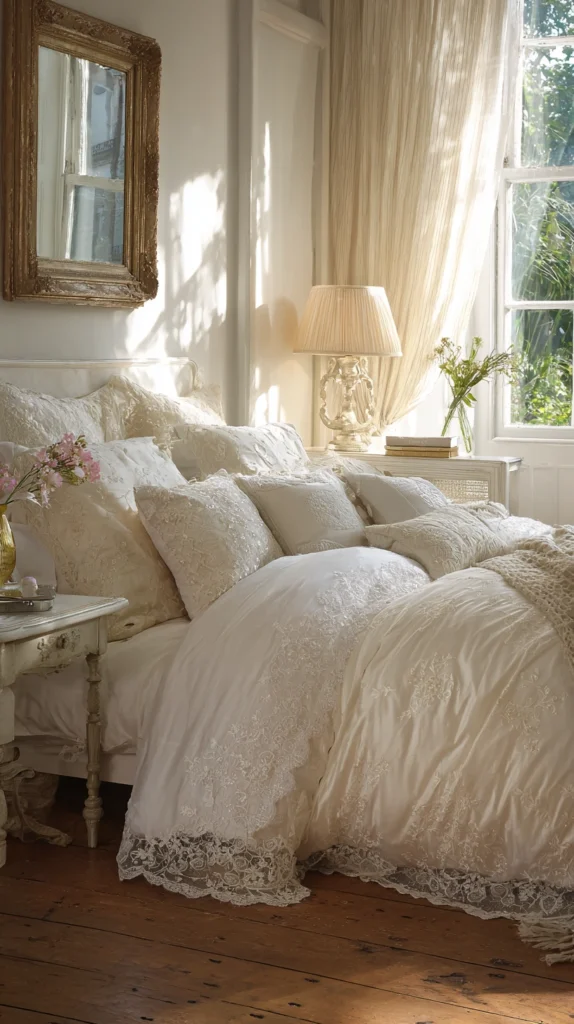
A cream bedroom dressed with lace and embroidery details — a lace-edged pillow case, an embroidered linen duvet cover, a broderie anglaise curtain panel, a fine embroidered cushion — creates a bedroom of delicate, vintage-inspired beauty that suits a romantic, slightly feminine aesthetic with extraordinary grace.
Cream lace and embroidery on a cream base creates a tonal, textural play of light and shadow that is uniquely beautiful — the pattern visible through variation in texture and surface depth rather than through color contrast.
The lace and embroidery detail in a cream bedroom creates the impression of extraordinary refinement and considered quality — the suggestion of handcraft, of time and skill invested in beautiful things — that elevates the bedroom from simply well-dressed to genuinely precious.
Each embroidered or lace detail rewards close inspection with additional beauty that cannot be appreciated from a distance.
Pro Tip: Use lace and embroidery details sparingly and selectively — one or two pieces of genuine quality rather than multiple pieces of lesser quality spread across every surface.
A single exquisite embroidered linen duvet cover as the hero piece of the cream bedroom creates a focal point of genuine beauty. Multiple ordinary lace-trimmed pieces distributed throughout the room creates a fussy, over-decorated effect that dilutes the impact of every individual piece. In a bedroom where the palette is as quiet and restrained as cream, quality and selectivity in the details matters more than quantity.
14. Cream Bedroom with Warm Lighting
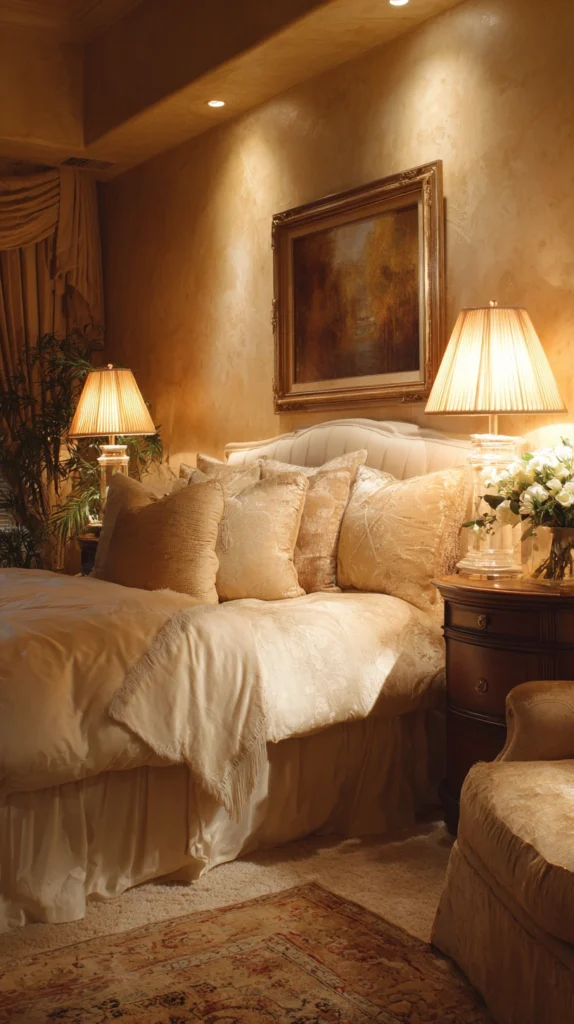
The most important design decision in a cream bedroom — more important than any furniture choice, any textile selection, or any color accent — is the quality and warmth of the artificial lighting.
Cream walls and bedding in warm, low-level light achieve their full, extraordinary beauty — the warm tones deepen, the textures become more pronounced, and the entire room takes on a luminous, honeyed quality that is genuinely breathtaking. The same cream bedroom under cool, bright overhead light looks flat, slightly grey, and completely unremarkable.
Invest in bedside lamps with warm-toned bulbs — 2700K or lower color temperature for maximum warmth — and install dimmer switches on every lighting circuit in the room.
Add a table lamp or a floor lamp in a corner for ambient light that supplements the bedside lamps with a third source of warm, low-level illumination. The quality of light in a cream bedroom is as important as every material and color decision combined.
Pro Tip: Choose lamp shades in cream, ivory, or warm linen tones for a cream bedroom rather than white shades. A white lamp shade in a cream bedroom creates a noticeably cooler, brighter pool of light that disrupts the warm, consistent quality of the room’s ambient illumination.
A cream or warm linen shade filters the light through its warm-toned fabric, adding a layer of warmth to the already warm-toned bulb and creating a pool of genuinely beautiful, honeyed light that amplifies the quality of the cream palette around it.
15. Full Tonal Cream Bedroom
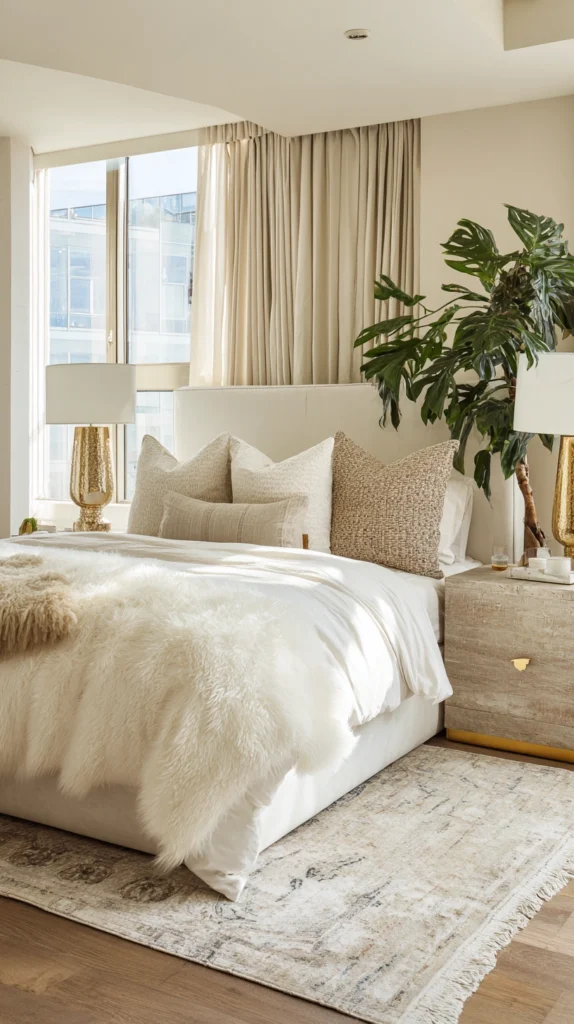
A bedroom built entirely within the cream tonal family — walls in warm ivory, bedding in soft ecru, curtains in pale champagne, furniture in natural timber and warm white, rugs in natural jute and undyed wool, accessories in cream ceramic and warm alabaster — with the variation coming entirely from texture and material rather than from color creates the most complete and deeply beautiful expression of cream as a bedroom design language.
The full tonal cream bedroom is an exercise in restraint that rewards with extraordinary subtlety and depth. Every material in the room is chosen for its specific cream tone and its specific texture — how it catches light, how it feels, how it relates to the materials immediately around it.
The room is never boring because the light is never static — the cream tones shift and deepen throughout the day and the textural variation creates an ever-changing play of warm shadow and warm light across every surface.
Pro Tip: Introduce one deliberate organic element into a full tonal cream bedroom — a large indoor plant with deep green foliage, a small arrangement of dried natural grasses, or a piece of raw timber sculpture — that provides the single point of natural contrast against which the full cream palette can be seen and appreciated most clearly. A full cream bedroom without any natural contrast reference can lose definition and appear slightly washed out in photographs and in certain lighting conditions. One considered organic element grounds the palette and gives every cream tone around it greater clarity, warmth, and presence.
Cream Is Never Just One Thing
The cream bedroom rewards those who look closely and think carefully. It is not a default or a safe choice — it is a commitment to the most subtle, most light-responsive, most texturally rich end of the neutral spectrum.
Done well, with layered tones, varied textures, warm lighting, and carefully chosen accents, a cream bedroom achieves a quality of quiet, enduring beauty that bolder color choices often promise and rarely deliver.
Choose your creams carefully. Layer them generously. Light them warmly. And discover what the most quietly beautiful color in the bedroom palette is truly capable of.