15 Cozy Attic Makeover Ideas That Add Style and Function
The attic is the domestic interior’s most consistently underestimated space. In most homes it exists in one of two conditions: either as a purely utilitarian storage area — a repository for the boxes, the seasonal items, and the accumulated objects of a household that has run out of room elsewhere — or as a space that is used for nothing at all, its potential entirely unrealized beneath the roofline of a house that could genuinely benefit from every additional usable square meter available to it.
The reasons for this underutilization are practical as much as psychological: the attic’s sloped ceiling, its limited headroom at the room’s perimeters, its access challenge, its insulation and ventilation requirements, and the cost and complexity of converting it into a habitable space all conspire to keep it in the category of a project that is perpetually considered and perpetually deferred.
The attic that is actually converted, however — that is properly insulated, properly ventilated, properly accessed, and properly finished — is almost never a disappointment.
Its specific spatial qualities, which present as challenges in the planning phase, reveal themselves in the finished room as genuine design assets: the sloped ceiling that seemed like an obstacle creates an intimacy and an architectural character that flat-ceilinged rooms lack entirely. The dormer window that required structural work provides a view that no ground-floor window can match.
The limited perimeter height that seemed to preclude standard furniture arrangements opens the possibility of built-in solutions that use the space with a completeness and efficiency that freestanding furniture never achieves. Here are fifteen ideas for making the most of every one of them.
1. Insulate Properly Before Any Finishing Work Begins
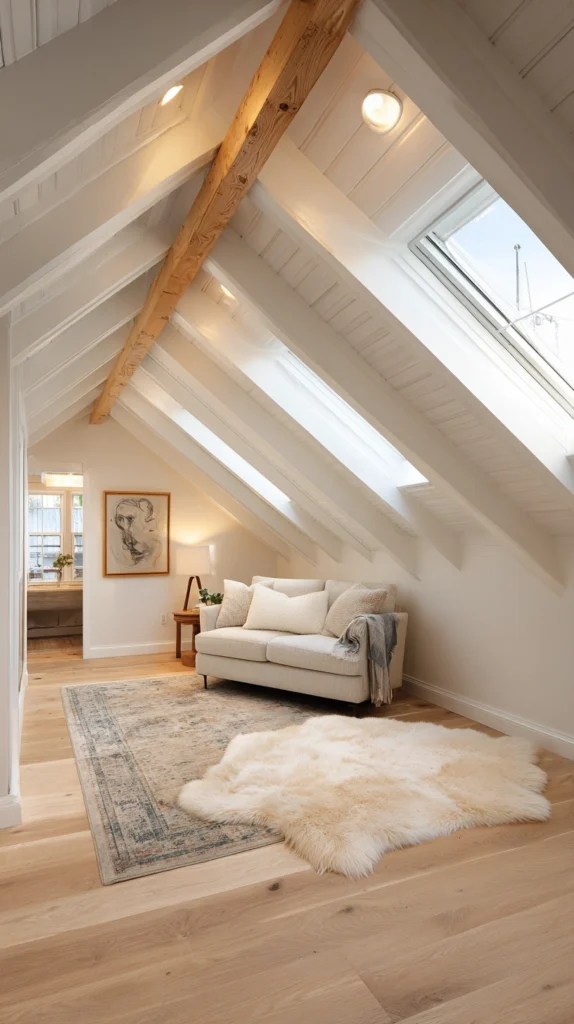
The attic makeover that skips or compromises on insulation — either because the cost seems significant relative to the total project budget or because the insulation’s thickness reduces the finished room’s dimensions — is an attic conversion that will be cold in winter, overheated in summer, and persistently uncomfortable in the shoulder seasons when the temperature differential between the attic and the rest of the house is at its greatest.
Proper attic insulation is not an optional enhancement — it is the foundational condition that makes the attic habitable as a living space rather than merely enclosed as a room. Insulate between and over the rafters with rigid foam or spray foam insulation to a standard that meets current building regulations, which in most jurisdictions is significantly higher than the minimum that earlier building codes required.
Insulating the floor as well as the roof slope — heat loss through the attic floor into the rooms below is a thermal management consideration that the attic conversion’s heating system cannot compensate for efficiently without adequate floor insulation. The insulation specification should be completed in consultation with a thermal performance specialist or a qualified builder before any finishing material is selected or installed.
2. Install Skylights or Dormer Windows for Natural Light
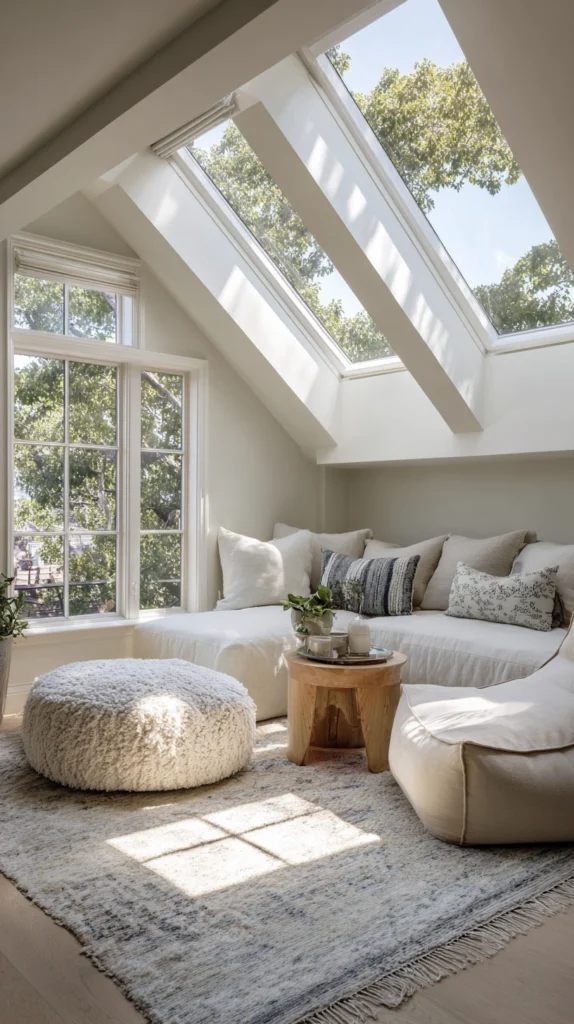
The attic room’s relationship with natural light is one of its defining spatial qualities — the quality that most determines whether the converted attic becomes a genuinely pleasant room or a claustrophobic, dark space that its occupants avoid despite its technical habitability.
Skylights — roof windows set flush with the roof slope, their glazed area admitting daylight directly from above — are the most spatially efficient light source available for the attic room, providing maximum daylight admission relative to the structural intervention they require.
A pair of skylights of adequate size — each at least one meter by one and a half meters — on the attic room’s south or east slope creates a room of considerable brightness and the specific quality of overhead light that the attic’s position at the top of the house naturally admits.
Dormer windows — structural additions that project through the roof slope to create a vertical window in a small, projecting bay — provide a different quality of light: the horizontal, eye-level light that most rooms receive from their walls rather than their ceiling, with the additional benefit of a view and the increased headroom within the dormer’s projection.
The combination of both — skylights for brightness and a dormer for view and headroom — creates the most complete natural light provision available to the attic room.
3. Embrace the Sloped Ceiling as an Architectural Feature
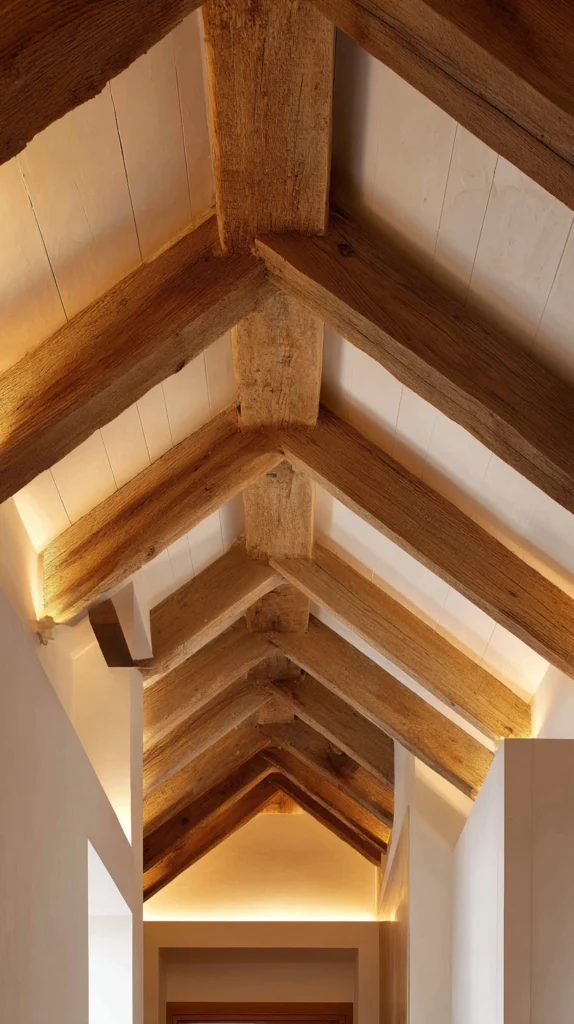
The sloped ceiling is the attic room’s most visually distinctive quality and the one most frequently treated as a problem to be minimized rather than a characteristic to be celebrated.
The instinct to install the lowest possible flat ceiling that clears the slope — creating a horizontal ceiling that does the maximum possible damage to the room’s headroom while eliminating the architectural character that the slope provides — is almost always the wrong response.
The sloped ceiling, properly finished and properly lit, creates an attic room of unique architectural character — the sense of being within the structure of the building’s roof, enclosed by the angles and planes of the building’s own geometry, is a spatial experience available nowhere else in the house and genuinely valued by the rooms’ occupants once they inhabit the space rather than simply planning it from below.
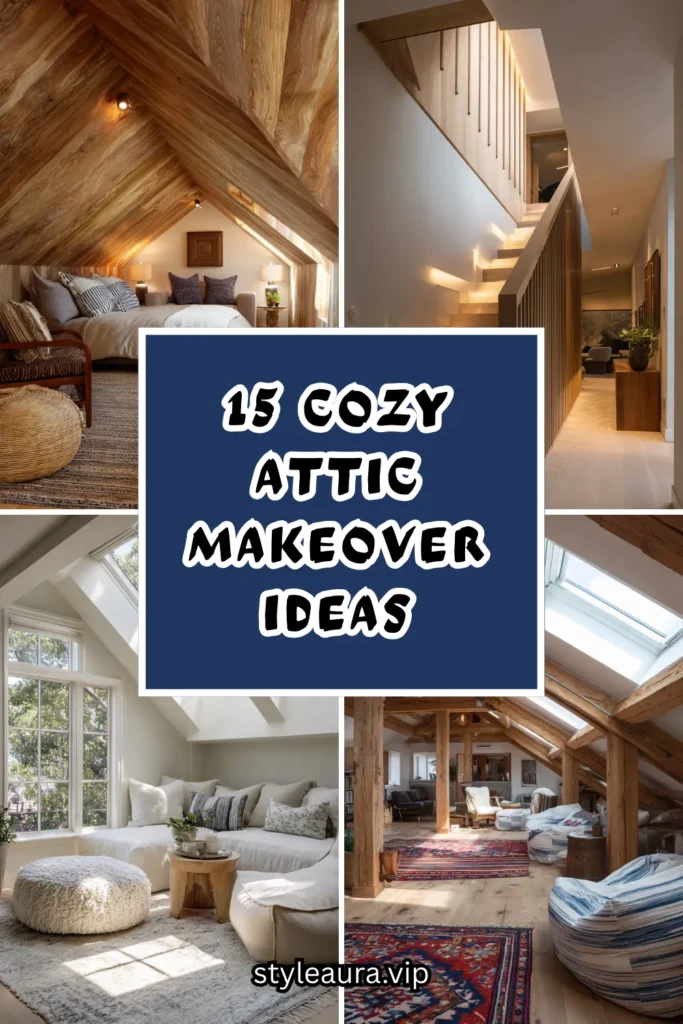
Expose the roof timbers within the slope if they are of sufficient quality — the visual rhythm of the rafters against the ceiling surface between them creates a room of remarkable material warmth. Install the ceiling finish at the actual slope of the roof rather than creating a dropped flat ceiling that wastes space and loses the slope’s character.
4. Create Built-In Storage Along the Eaves
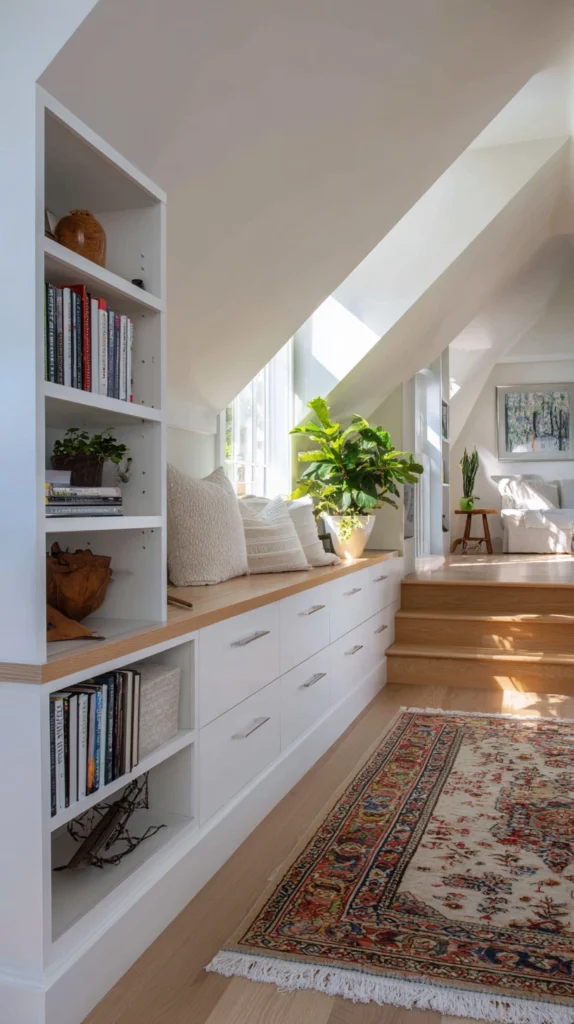
The area beneath the lowest point of the roof slope — the eaves zone where the ceiling height reduces to the point that standard furniture cannot be accommodated and comfortable standing is impossible — is the attic room’s most apparently challenging zone and its most practically useful one when properly addressed through built-in storage.
A continuous run of built-in drawers, low cabinets, or pull-out storage units fitted precisely into the eaves zone converts what would otherwise be unusable space into the attic room’s primary storage provision, and the horizontal surface of the built-in units creates a low shelf or window seat surface at the eaves that adds both display and seating function to the storage zone.
The built-in eaves storage should be designed with the specific storage requirements of the room’s intended use in mind: deep drawers for bedding and bulky items in a bedroom attic, pull-out filing and reference storage in an attic study, fabric and material storage in an attic craft room.
The fronts of the built-in units should be finished in a material and color that relates to the room’s overall aesthetic — painted timber in the wall color, tongue-and-groove paneling, or a simple flat-fronted MDF in a complementary tone.
5. Design a Cozy Sleeping Alcove Under the Slope
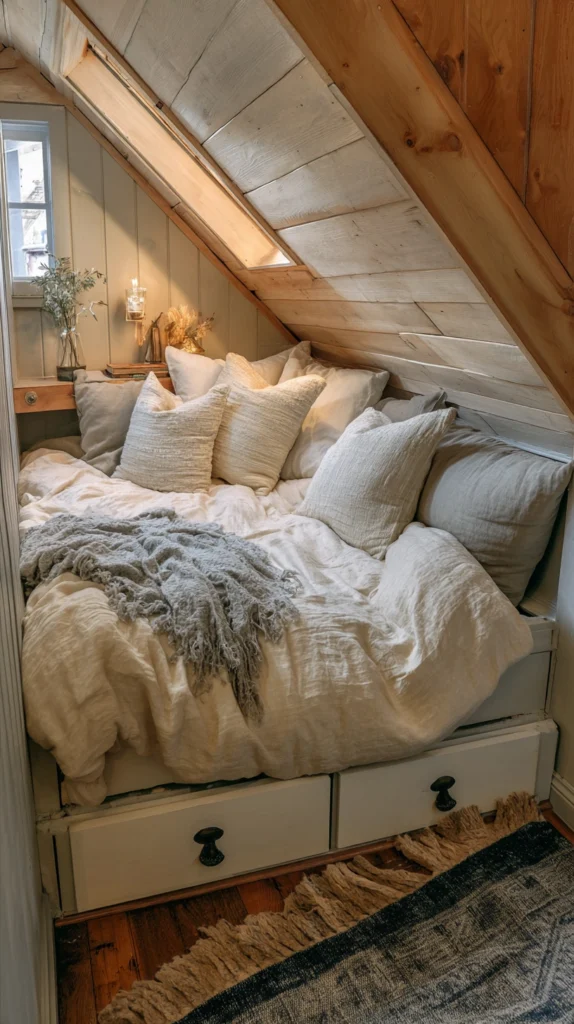
The bed positioned beneath the lowest section of a sloped ceiling — the sleeping position that the attic’s geometry most naturally suggests and that the bed’s horizontal form most perfectly suits — creates a sleeping experience of extraordinary intimacy and enclosure that the same bed in a conventionally proportioned room cannot replicate.
The sloped ceiling above the bed creates the overhead enclosure of a four-poster canopy without the structure, the sense of a sleeping space that is a room within a room, and the specific psychological comfort of a low-ceilinged sleeping zone that the adult body registers as protective rather than oppressive when the ceiling’s slope begins at the head’s level and rises gently toward the foot.
The sleeping alcove can be further defined through the addition of curtains or a canopy at the bed’s opening — a simple fabric panel hung from the slope at the bed’s foot end creates a fully enclosed sleeping cave of complete intimacy.
Built-in bedside storage on both sides of the bed, using the eaves zone behind and beside the bed for drawers and shelving, creates a sleeping alcove that is both beautiful and completely organized.
6. Install Tongue-and-Groove Timber Cladding
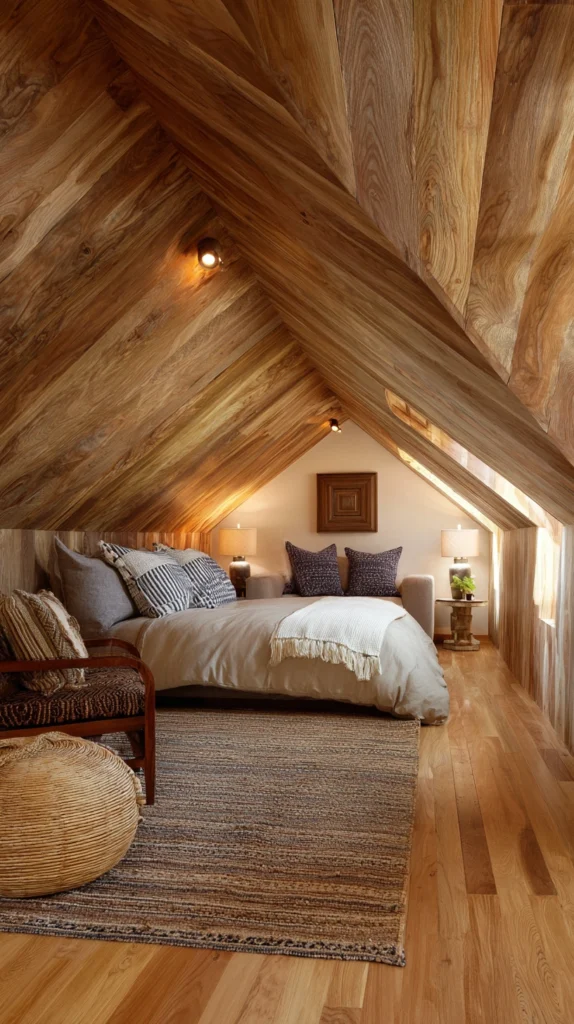
Tongue-and-groove timber cladding — individual timber boards of narrow width, their edges shaped to interlock, installed vertically or horizontally across the attic room’s sloped ceiling and adjacent walls — is the finishing material most naturally suited to the attic room’s specific spatial character.
The cladding’s warm, organic texture relates to the timber of the exposed roof structure and to the building’s own structural materials with a naturalness that plasterboard and smooth plaster finishes lack, and its installation on the curved or multi-planar surfaces of the sloped ceiling is more forgiving and more visually appropriate than the flat plaster finish that requires precise, expert installation to look its best on the complex geometry of a roof slope.
Painted tongue-and-groove in a warm white creates the Scandinavian or coastal cottage aesthetic that suits the attic room’s intimate, domestic character. Natural or lightly oiled tongue-and-groove in a pale timber creates the specific warmth of a Nordic cabin interior that the attic’s sloped ceiling and structural timber naturally suggest.
7. Create a Home Office That Uses Every Centimeter
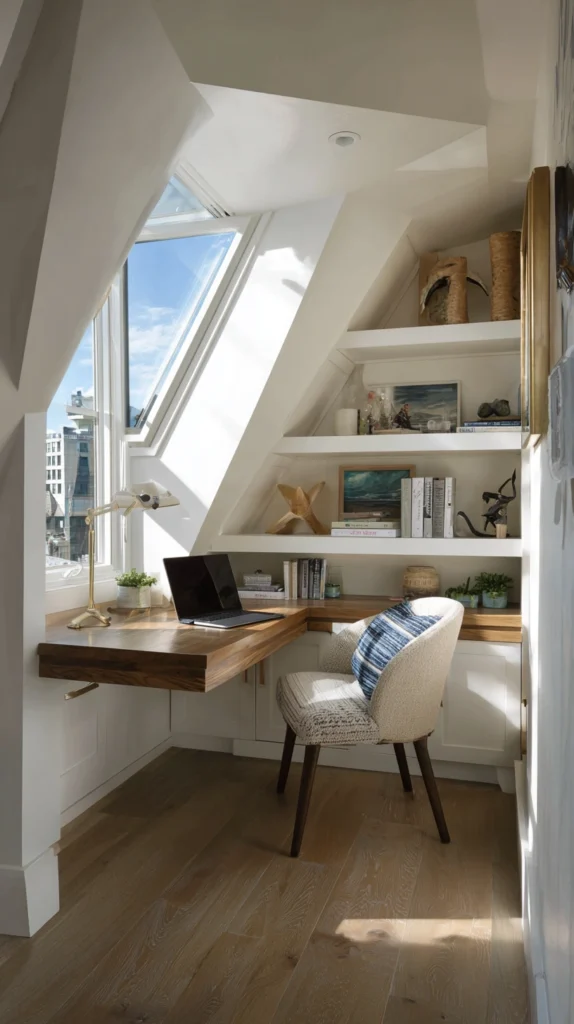
The attic home office — a dedicated workspace at the top of the house, physically separated from the main living areas by the stairs that create a genuine psychological transition between home and work modes — is among the most practically excellent attic uses available, and the specific design challenge of creating a functional workspace within the attic’s unconventional dimensions produces some of the most creative and most space-efficient desk arrangements in residential design.
A desk built into the dormer window’s projection — the desk surface filling the dormer’s floor area and the window providing the eye-level view and the natural light that desk work benefits from — creates a workspace of complete self-containment within the dormer’s enclosed bay.
Built-in bookshelves following the roof slope on the adjacent walls — their shelf heights calibrated to the decreasing ceiling height as the slope descends, the tallest books in the highest sections, paperbacks and smaller volumes in the lower sections — create a library wall of extraordinary spatial ingenuity that uses every centimeter of the attic’s available vertical dimension.
8. Add a Reading Nook in a Dormer Recess
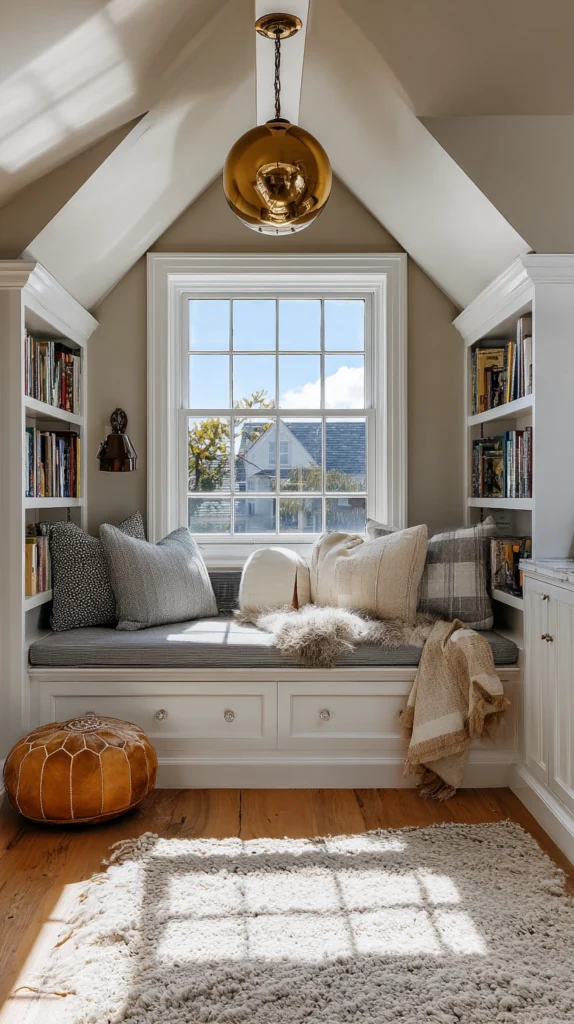
The dormer window recess — the small, three-sided bay created by the dormer’s projection through the roof slope, its window providing the view and the light, its side walls creating the enclosure — is the attic room’s most perfect reading nook location, and its conversion into a fitted reading seat with cushioned bench and flanking shelves creates a reading corner of complete intimacy and charm.
A bench seat fitted precisely into the dormer’s floor area, with a cushion of sufficient depth and quality for extended seating, creates the reading nook’s physical comfort. Bookshelves fitted into the dormer’s side walls on both sides of the window, their depth calibrated to the limited width of the dormer cheeks, hold the reading collection within reaching distance of the seat.
A pendant light hanging from the dormer’s ceiling above the reading position provides the dedicated task illumination that the reading nook requires independent of the main room’s lighting scheme.
The dormer reading nook is the attic room’s most naturally produced and most completely resolved architectural feature — a space that the building creates and that the conversion simply finishes with the intelligence it deserves.
9. Choose a Warm, Enveloping Color Palette
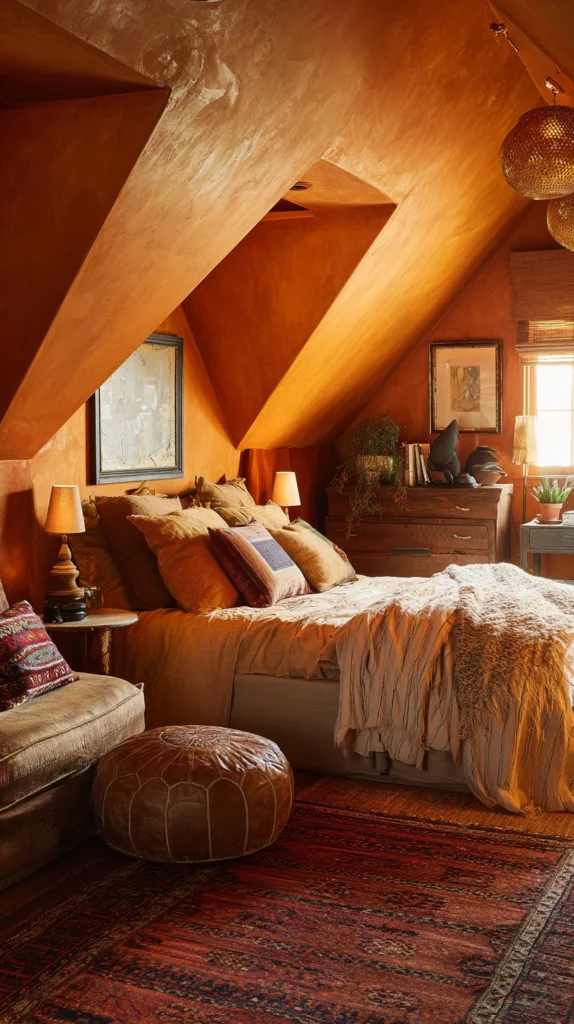
The attic room’s sloped ceiling and intimate proportions suit a color palette of warmth and depth that the taller, more conventionally proportioned rooms of the main house might not accommodate as naturally.
Where a high-ceilinged room might use a deep, saturated wall color with some caution about its potential to feel heavy or oppressive, the attic room’s lower ceiling and enclosed character embrace the same color with the welcoming quality of envelopment — the color wraps the room’s occupant in a chromatic warmth that feels protective rather than overwhelming.
Paint the walls, ceiling, and woodwork in a single warm tone — a deep, slightly brownish terracotta, a warm forest green, a dusty rose, or a charcoal that is warm rather than cool — creating the color-drenched attic room whose monochromatic application creates the intimacy that the attic’s specific spatial character most naturally supports.
The color-drenched attic room is among the most atmospherically beautiful domestic spaces available, and the specific quality of being within a warm-colored room at the top of the house, with the roof slope overhead and a skylight admitting the outside sky, creates a room of unique spatial and sensory character.
10. Install Underfloor Heating for Comfort
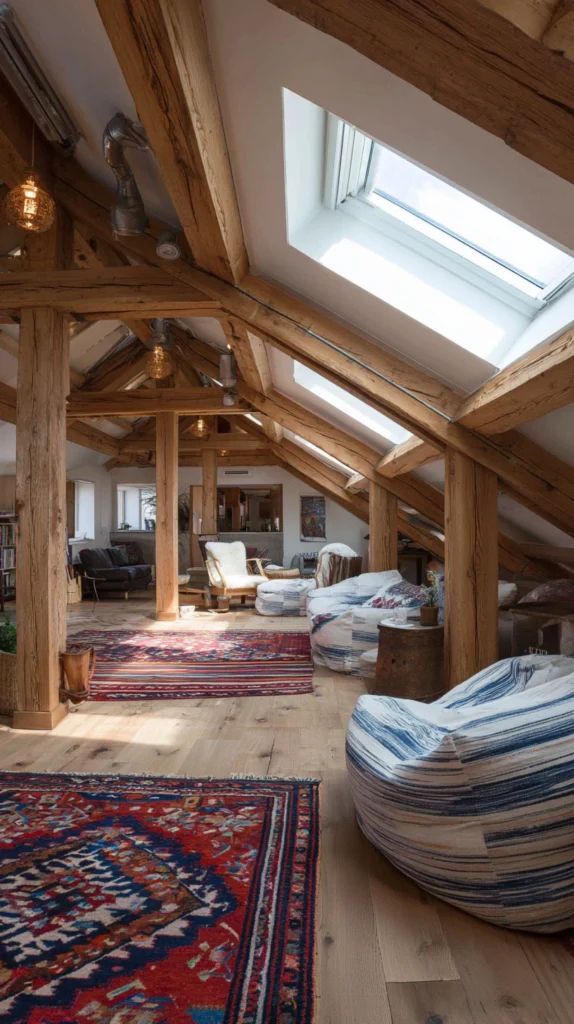
The attic room is the house’s most thermally challenged space — the closest to the exterior at its roof surface, the most exposed to temperature extremes in both directions, and the least served by the conventional central heating systems that were designed for the floors below.
Underfloor heating — electric mat heating beneath the finished floor surface, or warm water underfloor heating connected to the main heating system where the structural loading permits — provides the most comfortable and the most efficient heating solution for the attic room, creating an even, rising warmth that the sloped ceiling’s tendency to stratify warm air at the highest points cannot disrupt in the way that it disrupts radiator-based heating whose warmth rises directly away from the living zone.
The underfloor heating system’s thermostat should be independently controlled from the rest of the house, allowing the attic room’s specific thermal requirements — which differ from the rooms below in both the rate of heat loss and the specific conditions of its occupancy — to be managed independently and efficiently.
11. Design a Children’s Bedroom With Built-In Bunks
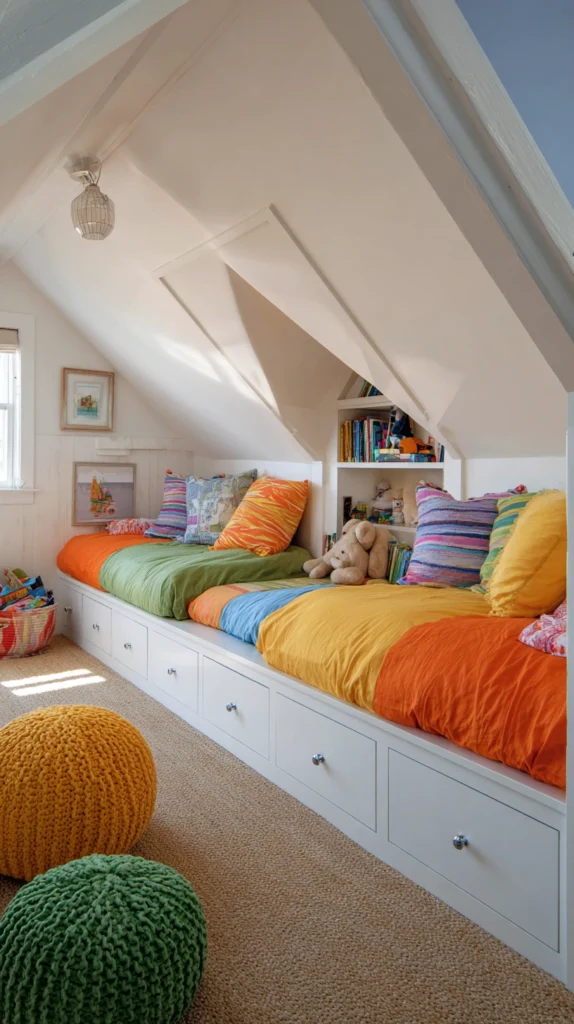
The attic children’s bedroom — a space whose sloped ceiling and unconventional geometry, far from being obstacles to the child’s bedroom’s function, create exactly the adventurous, den-like quality that children value most intensely in their sleeping and playing spaces — is one of the most delightful and most practically rewarding attic uses available.
Built-in bunks fitted into the attic’s slope — the lower bunk beneath the lowest ceiling section, the upper bunk climbing with the slope to a higher position, the two sleeping levels creating the tiered sleeping arrangement that the attic’s geometry most naturally suggests — create a children’s bedroom of complete magic.
The built-in format maximizes the attic’s available space and creates sleeping positions that are specifically designed for the room’s unconventional geometry rather than adapted awkwardly to it.
A play area beneath the highest section of the ceiling, where headroom is adequate for standing children, and eaves storage running the full length of the room’s lower sections, creates a children’s attic bedroom of complete spatial intelligence and complete childhood delight.
12. Create a Yoga or Meditation Studio
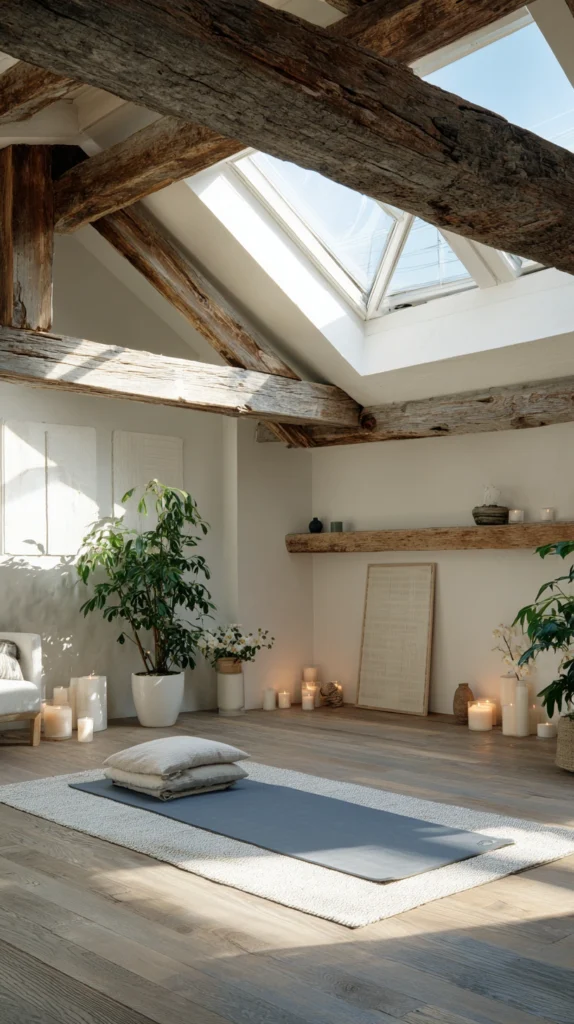
The attic yoga and meditation studio — a space at the top of the house, separated from the household’s activity by physical distance and the psychological transition of the stairs, with the quality of light and quiet that the attic’s position provides — creates one of the most genuinely restorative dedicated wellness spaces available in any domestic setting.
The attic’s specific qualities suit the yoga and meditation function with natural aptitude: the quiet of being above the main activity of the house, the sky visible through the skylights during practice, the warmth and intimacy of the sloped ceiling overhead, and the separation from the domestic routine that the attic’s physical distance creates.
A wooden floor — the smooth, warm surface that barefoot yoga practice requires — laid over the attic’s insulated floor structure creates the primary functional surface. Minimal decoration — a few plants, a simple altar with candles and meaningful objects, a mirror on the end wall for alignment checking, and nothing else — maintains the space’s quality of focused, restorative simplicity.
13. Add a Small En-Suite Bathroom
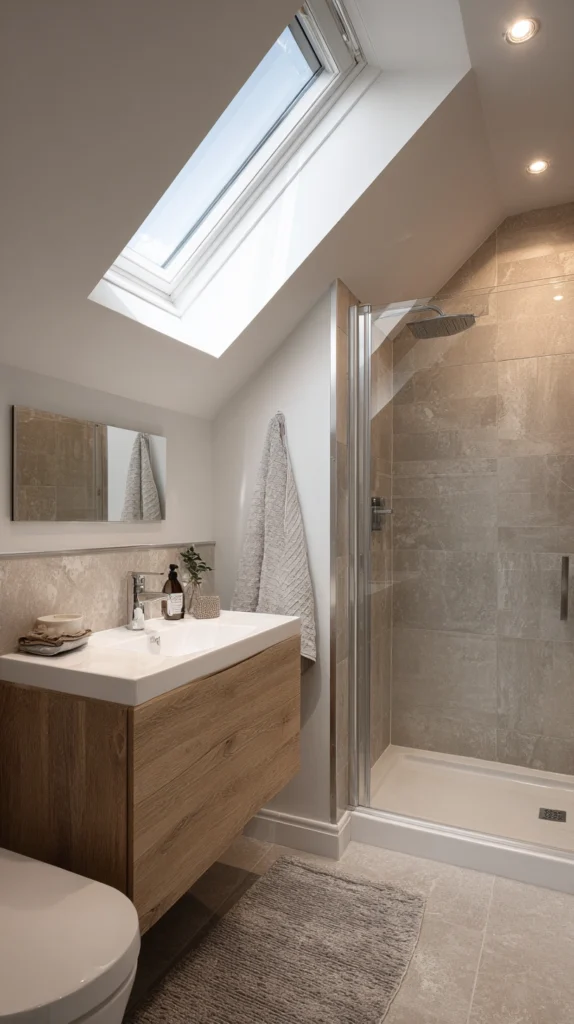
An en-suite bathroom within the attic bedroom conversion — a compact but properly specified bathroom created from a portion of the attic’s floor area, typically in the corner where the ceiling height is lowest and the space would otherwise be unusable for any function requiring standing headroom — creates an attic bedroom of complete independence and genuine guest-suite quality.
The attic en-suite’s specific challenge is the provision of drainage at the highest point of the house, which requires a macerator pump system if the floor level is above the main drainage run, and the ventilation of a room with no external wall for a window — a mechanical ventilation system or a roof light above the shower enclosure resolves this requirement.
The en-suite’s design should use the attic’s specific spatial conditions as design assets rather than fighting them: a low, sloped ceiling above the shower creates a cave-like showering experience; a small window or rooflight above the basin provides the natural light and the sky view that the en-suite’s position at the house’s highest point uniquely allows.
14. Install a Staircase That Is a Design Statement
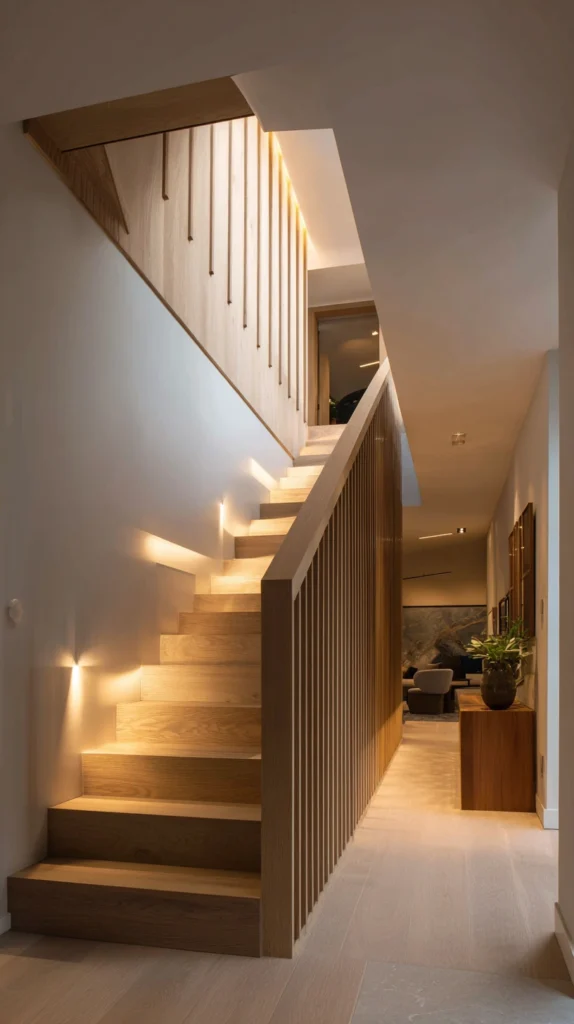
The staircase providing access to the attic room is, in many conversions, treated as a purely utilitarian element — the minimum stair width permitted by regulations, the most economical tread and riser specification, a simple handrail of standard section.
This treatment misses the design opportunity that the attic staircase presents: it is the transition element between the main house and the new room, the architectural sequence through which every visit to the attic begins, and its design quality communicates the quality of the destination before the visitor arrives.
A properly designed attic staircase — with treads of adequate width and a comfortable tread-to-riser ratio, a handrail of quality material in a design that suits the house’s overall aesthetic, and a wall treatment on the staircase’s enclosing walls that creates the sense of an ascending journey rather than a functional access route — is the attic conversion’s most visible contribution to the main house’s interior architecture.
15. Design the Attic for the Life You Actually Want to Live in It
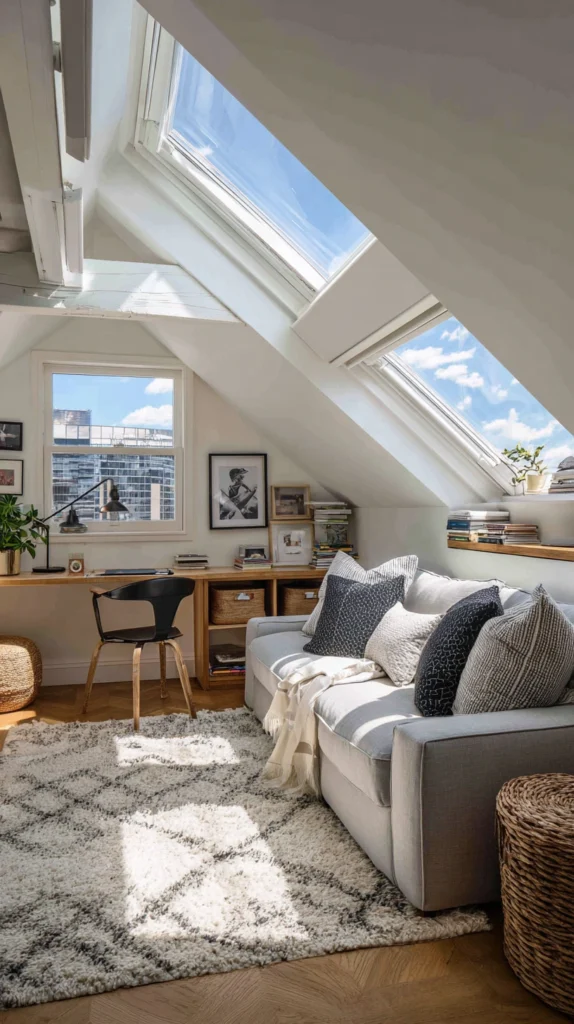
The final attic makeover idea is the most important design principle of the entire conversion: the commitment to designing the attic room for the specific, genuine use that the household will actually make of it rather than the theoretical use that seems most sensible or most valuable in abstract planning discussions.
The attic that is designed as a guest bedroom but used for storage within six months of completion — because the household rarely has guests requiring a separate room, but constantly needs storage — is a conversion whose design served an aspiration rather than a reality.
The attic that is designed as a home office but used as a teenager’s bedroom within two years — because the teenager needed their own space more urgently than the household needed dedicated desk space — is a conversion whose design served the present rather than the medium term.
Spend genuine time understanding what the household actually needs most urgently, what pattern the attic’s physical conditions most naturally support, and what investment will deliver the greatest daily quality-of-life improvement for every member of the household — and then design the attic for that, completely and without compromise.