15 Classic Home Styling Ideas for Comfort and Elegance
Classic home styling is one of those terms that risks meaning everything and therefore nothing — a catch-all for whatever is not aggressively trendy, a synonym for beige and safe choices, a retreat from genuine design ambition into the comfort of the familiar.
This is not what the best designers mean when they invoke the classical tradition in residential design, and it is not what this guide is about.

Classic home styling, properly understood, is a set of principles and aesthetic commitments that have been tested across centuries of domestic design and found to produce environments that are simultaneously beautiful, comfortable, and durable in their relevance — spaces that look as right in twenty years as they do today because they draw their authority not from the current moment but from a deeper understanding of proportion, material quality, and the specific conditions of human comfort and pleasure.
The classic home is not a museum or a period recreation. It is a living environment for contemporary people that applies the wisdom of the design tradition with genuine intelligence and personal conviction. Here are fifteen ideas for achieving it with confidence and without apology.
1. Prioritize Proportion Above All Other Considerations
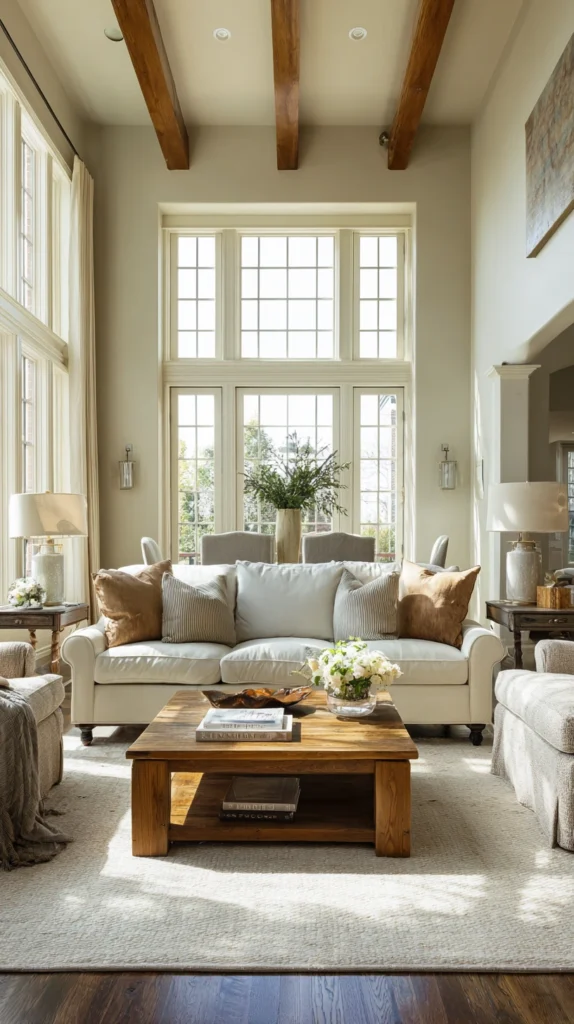
The single most important principle in classic home styling — the one that separates rooms that feel right from rooms that feel slightly wrong without anyone being able to articulate exactly why — is proportion. The relationship between the height of a ceiling and the scale of the furniture beneath it. The width of a window relative to the wall it occupies. The height of a skirting board relative to the height of the room.
The depth of a sofa relative to the size of the seating area. These relationships are not arbitrary — the Western design tradition has developed systems of proportion over centuries, from the classical orders of ancient architecture through the Georgian golden section to the proportional rules of Regency furniture design, that consistently produce the sensation of rightness that well-proportioned rooms create.
Learning to read proportion — to recognize when a piece of furniture is too large or too small for its room, when a window treatment is too heavy or too light for its window, when a coffee table is too low or too high for the sofa it serves — is the single most valuable design skill available to the homeowner who wants their home to have the quality of classic elegance.
It requires no budget and no professional training — only the willingness to observe carefully and to trust the eye’s discomfort as reliable information.
2. Invest in a Quality Sofa as the Room’s Foundation
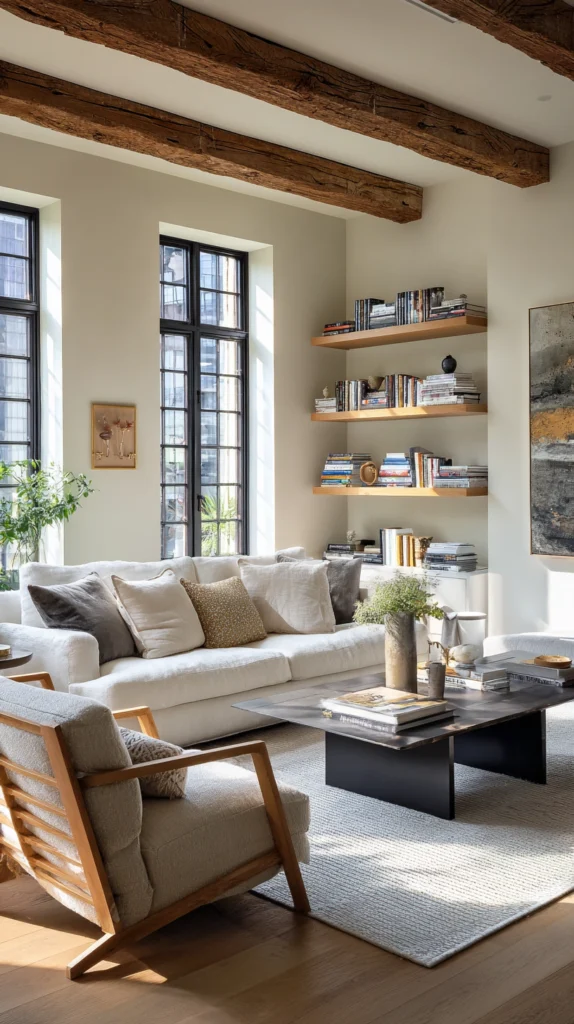
The classic living room is organized around a sofa of genuine quality — not the most expensive sofa available, but a sofa whose construction, materials, and proportions reflect a genuine understanding of what a sofa needs to be to perform its function well across decades of daily use.
The foundations of sofa quality are not visible but are felt: a hardwood frame that does not flex or creak under use, spring seating that recovers its shape after every occupant rather than gradually compressing to a permanent impression of the last person who sat in it, and cushion filling of sufficient quality — feather-wrapped foam or pure feather — that the sofa remains comfortable on the ten thousandth sitting as on the first.
The exterior — the fabric, the legs, the cushion form — should be chosen with equal care: a classic sofa silhouette in a durable natural fabric that suits the room’s palette and that is capable of being re-covered when the fabric eventually wears, which in a quality sofa frame may not happen for a generation. This is the most significant furniture investment in any living room and the one whose quality matters most to the daily experience of the space.
3. Layer Lighting for Day and Evening Versatility
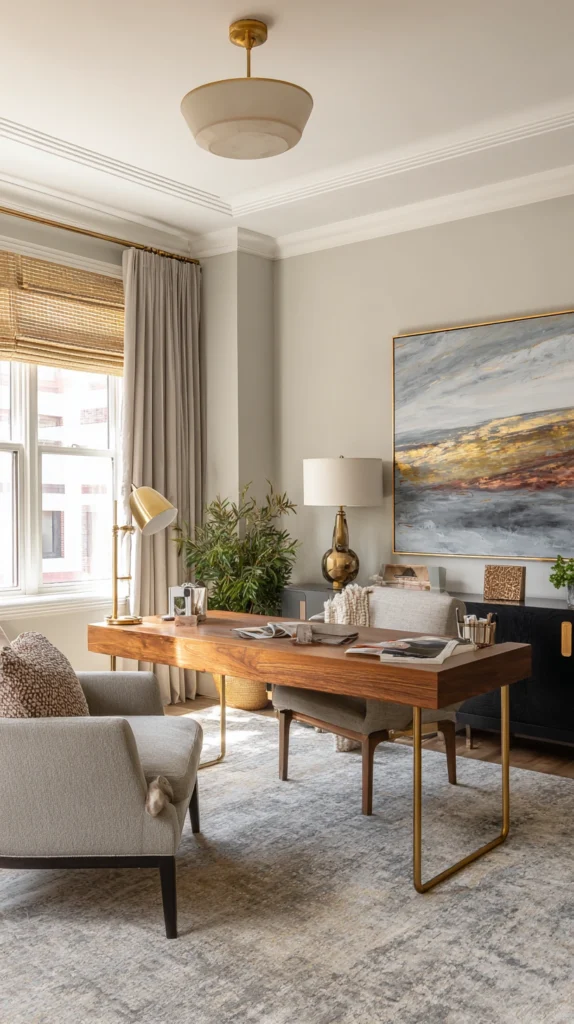
The classic home uses lighting not as a single overhead utility but as a layered atmospheric tool that changes the room’s quality and character across the hours of the day and the different activities the room supports.
A classic lighting scheme consists of at minimum three types of source working in combination: ambient lighting for general illumination — a ceiling fixture, ideally on a dimmer, that provides the room’s base level of light; task lighting for specific functional activities — a reading lamp beside the sofa, a desk lamp in the study, a directed light at the kitchen work surface; and accent or decorative lighting for the warm, intimate atmosphere that the most memorable domestic evenings require — table lamps on console tables and side tables, candlelight on the dining table, a picture light above a significant artwork.
The interaction between these three layers, all controlled independently and adjusted to the specific demands of the current moment, creates a room that works as well for a dinner party at eight o’clock as it does for reading at noon — an adaptability that the single-source room can never achieve.
4. Choose Timeless Flooring That Improves with Age
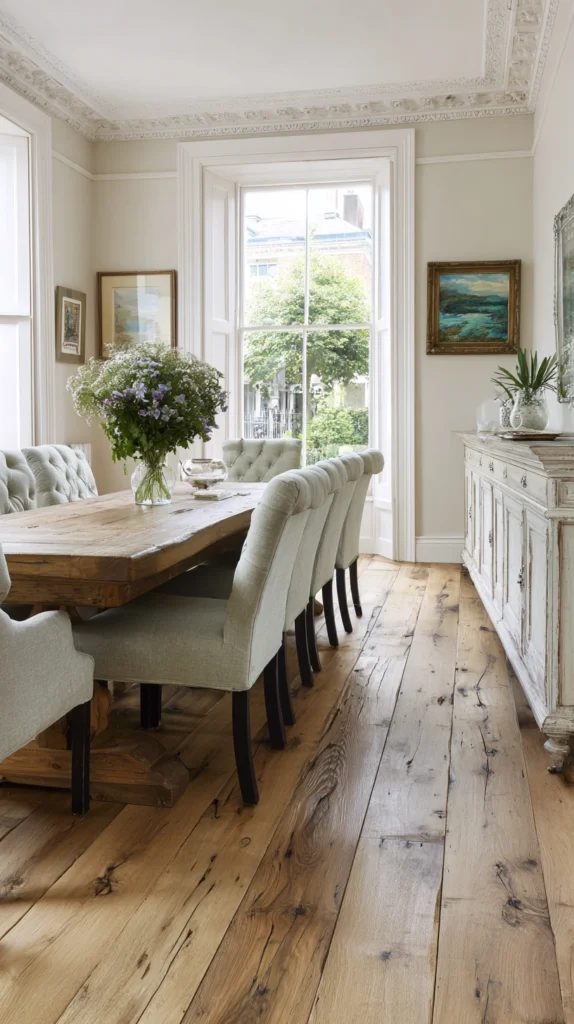
The classic home’s floors are chosen for their capacity to improve with age and use rather than for their newness, and the materials that meet this criterion — solid timber, natural stone, encaustic tile — are the same materials that have floored the most beautiful domestic interiors for centuries.
Solid oak floorboards, oiled rather than lacquered, develop a patina with every year of use that no new floor can replicate — the traffic patterns, the slight wear at the room’s most active points, the deepening of the grain’s color as the oil penetrates over time.
Natural stone floors in limestone, slate, or flagstone acquire the same quality of accumulated life — the slight polish of high-traffic paths, the gradual mellowing of the surface color, the evidence of use that speaks of a home genuinely inhabited over time.
These floors require more care than their synthetic alternatives — periodic oiling, occasional sealing, careful cleaning — but the quality of the material and the beauty of its aging are worth every aspect of that investment.
5. Use Curtains to Their Full Potential
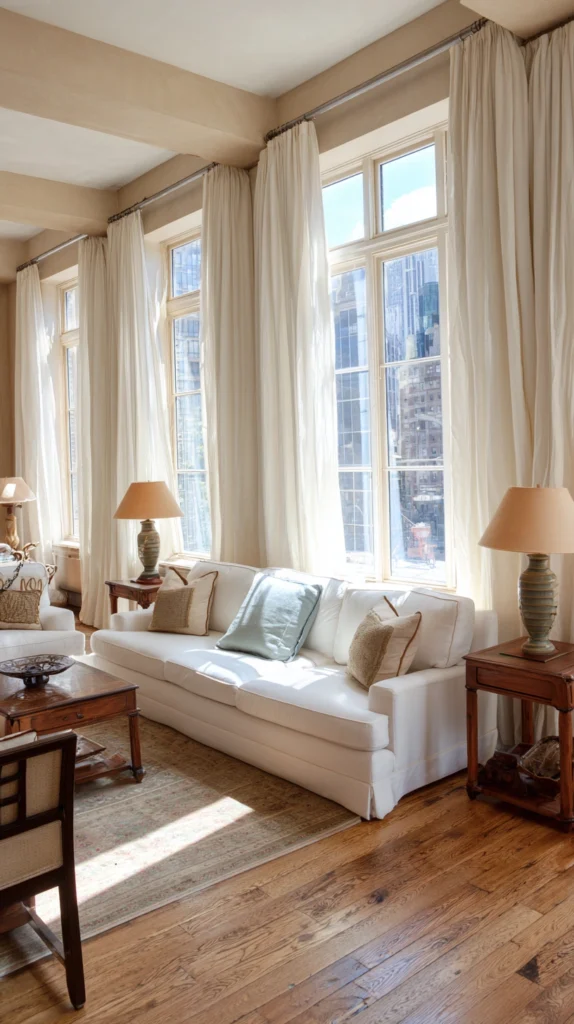
The classic home uses curtains as architectural elements rather than simply as window coverings — full-length panels in quality fabric that hang from ceiling to floor, creating the visual statement that properly dressed windows make in even the most modest room and that under-dressed windows consistently undermine.
The classic curtain formula is straightforward: hang the rod as close to the ceiling as possible, regardless of the window’s actual height; use fabric generously — curtains should be two to three times the width of the window for adequate fullness when drawn; and choose a fabric of sufficient weight and quality that the curtain hangs with the fluid confidence of a well-made garment rather than the stiffness of a curtain that has been bought to a tight budget.
Unlined linen curtains in a warm natural tone suit the broadest range of classic interiors with a simplicity that is both practical and elegant. Interlined wool curtains in a soft solid or subtle pattern suit the grandest rooms and the coldest climates. Either way, the floor-length curtain, correctly hung, is one of the simplest and most powerful classic home upgrades available.
6. Build a Considered Collection of Books
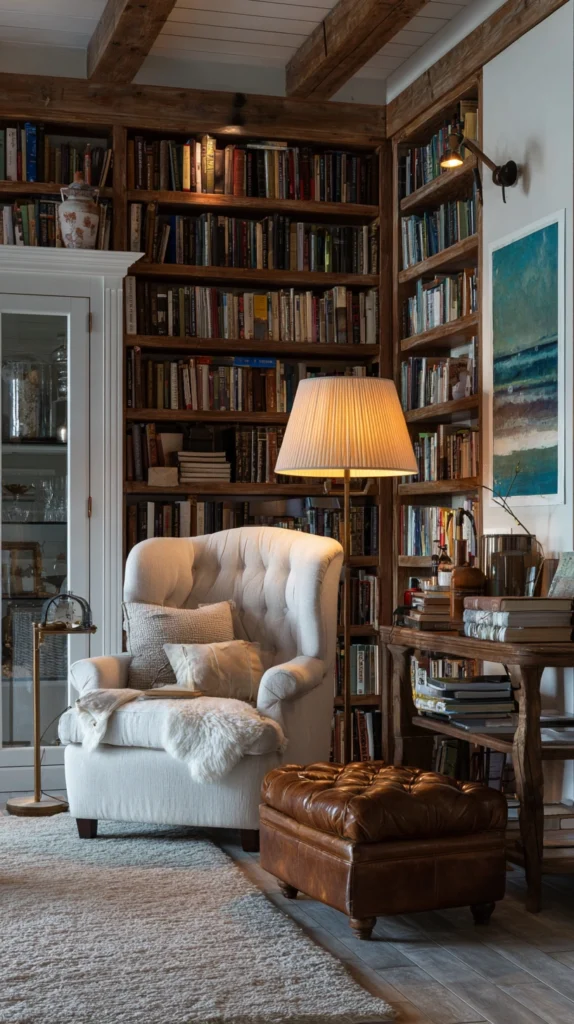
The classic home is a home in which books are treated not only as intellectual resources but as decorative and atmospheric elements — present throughout the home in a way that reflects the genuine reading life of its occupants and contributes to the warmth and depth of the interior environment. A significant bookcase in the living room, its shelves mixed with books and objects in a composition that is curated without appearing arranged.
Books on the kitchen shelf beside the cookbooks that are actually used. A stack of current reading on the bedside table. Books in the hallway, in the study, in whatever room has the space and the character to accommodate them.
The collection should reflect actual reading rather than aspirational reading — a shelf of books that have genuinely been opened and lived with has a different quality than one assembled for appearance — and it should include the full range of a genuine reader’s interests: novels and non-fiction, art and history, the specialist volumes that reflect particular passions, the beautiful illustrated books that reward visual browsing.
This collection, accumulated over years rather than purchased at a stroke, is one of the most irreplaceable elements of a classic home’s character.
7. Incorporate Genuine Antique or Vintage Pieces
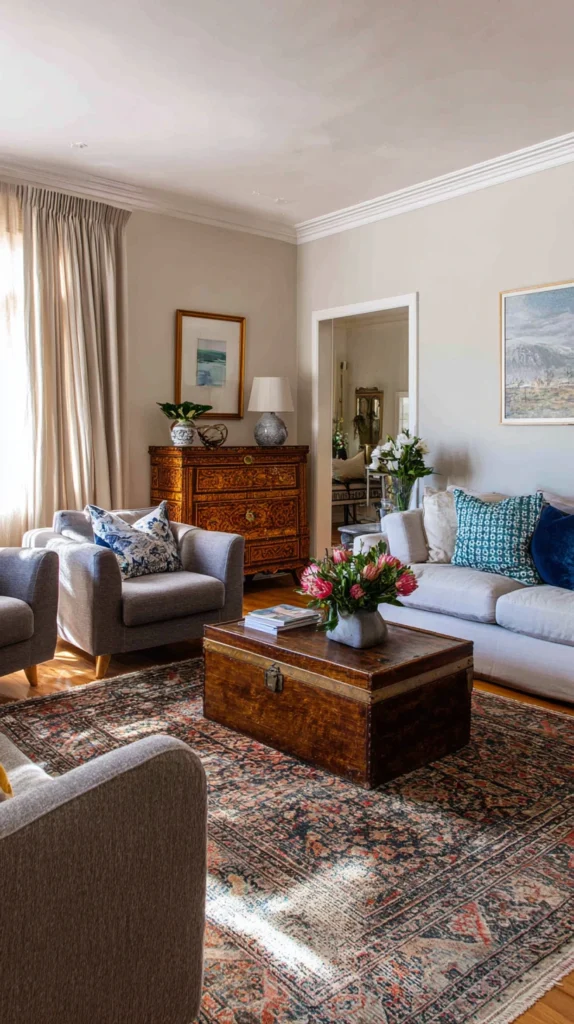
The classic home benefits from the presence of at least a few genuinely old pieces — antique furniture, vintage textiles, period ceramics — that bring to the space a quality of material history that contemporary manufacture cannot replicate regardless of its quality.
An antique piece carries the evidence of its age on its surface — the patina of old timber, the slight irregularity of hand-made ceramic, the faded but still beautiful color of antique fabric — and this evidence of time creates a depth and authenticity that the newest and most expensive contemporary piece cannot achieve.
Antique and vintage pieces do not need to be expensive — the most characterful and beautiful old objects are frequently found at auction houses, estate sales, and antique markets at prices that compare favorably with contemporary alternatives — and they do not need to create a period-consistent interior. A single beautiful antique chest in a contemporary room creates a temporal depth and material richness that is one of classic home styling’s most reliably powerful effects.
8. Create Symmetry in Key Focal Areas
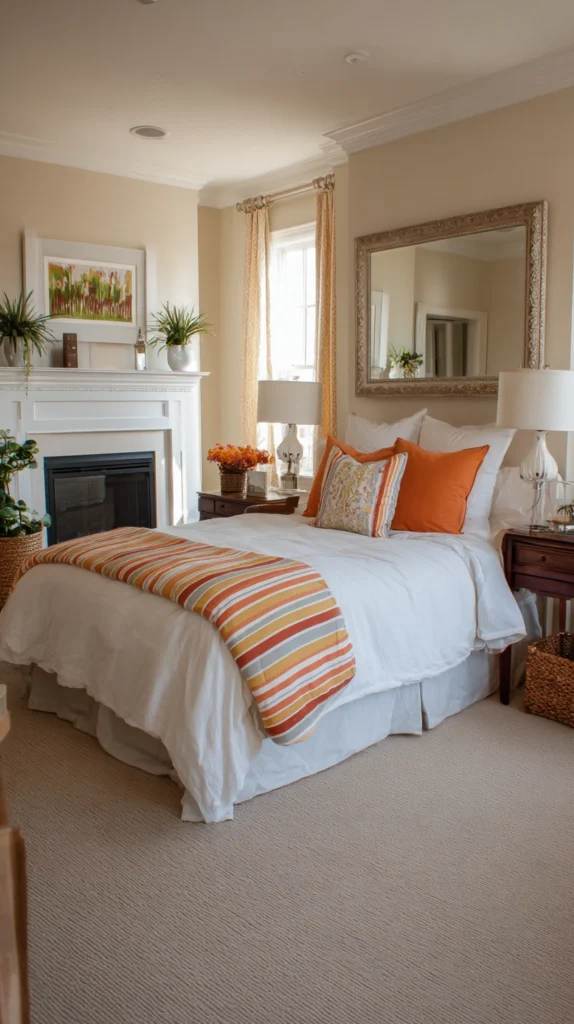
The classic home uses symmetry not as a rigid compositional law but as a repeated point of visual rest within the room’s overall composition — a mantel balanced on both sides, a bed flanked by matching bedside tables, a sofa arrangement anchored by identical lamps at either end.
These moments of symmetry create the quality of visual calm and architectural intention that the classic interior depends on, providing the stable, ordered framework within which more organic and variable decorating elements — the books, the plants, the personal objects — can exist without creating visual chaos.
The symmetrical composition is also deeply satisfying to the human eye, which responds to balanced arrangements with the same instinctive pleasure it takes in any well-proportioned form, and this satisfaction — registered unconsciously every time the eye passes over a well-balanced mantel or a symmetrically flanked bed — contributes to the room’s overall quality of elegant comfort in ways that are felt rather than analyzed.
9. Invest in Quality Bed Linen as a Daily Luxury
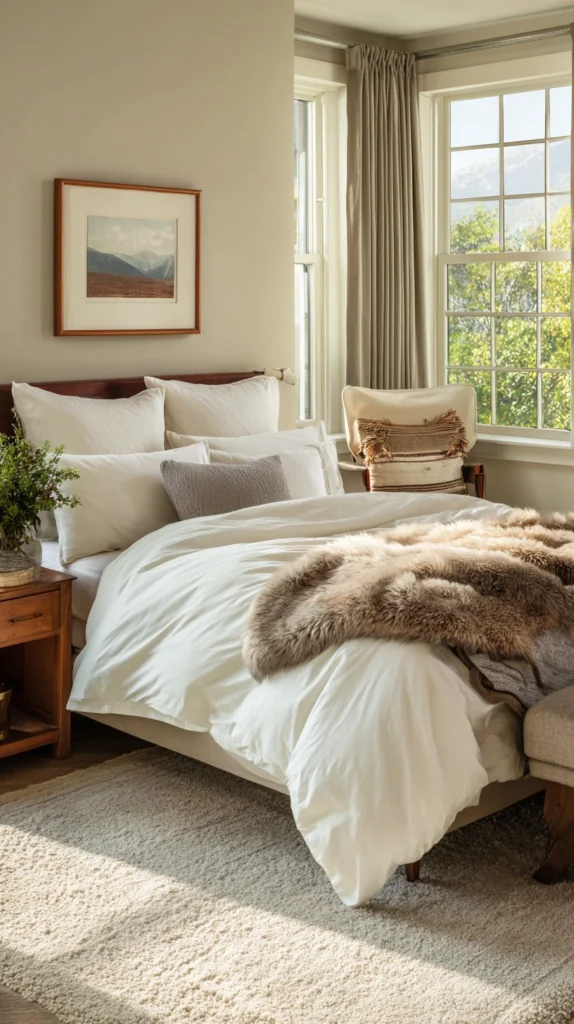
The bedroom’s primary material experience is the quality of its bed linen, and the classic home treats this experience as worthy of genuine investment rather than adequate provision. High thread-count cotton percale or woven linen in a natural, warm tone — white, ivory, the very palest blush — washed to softness and pressed to crispness, creates a sleeping environment of daily luxury that the most expensively decorated bedroom cannot compensate for if the linen is poor.
The classic approach to bed linen is the hotel approach: invest in the best quality you can afford, care for it properly to extend its life, and layer it generously — a fitted sheet, a flat sheet, a wool blanket, and a well-filled duvet in a quality cover — so that the bed is a fully functional climate management system as well as a beautiful visual element of the bedroom.
Replacing linen when it begins to look worn rather than extending its life beyond its natural beauty — the expense of quality linen replacement, spread across the years of service that quality provides, is smaller than most people assume.
10. Use Mirrors to Amplify Light and Space
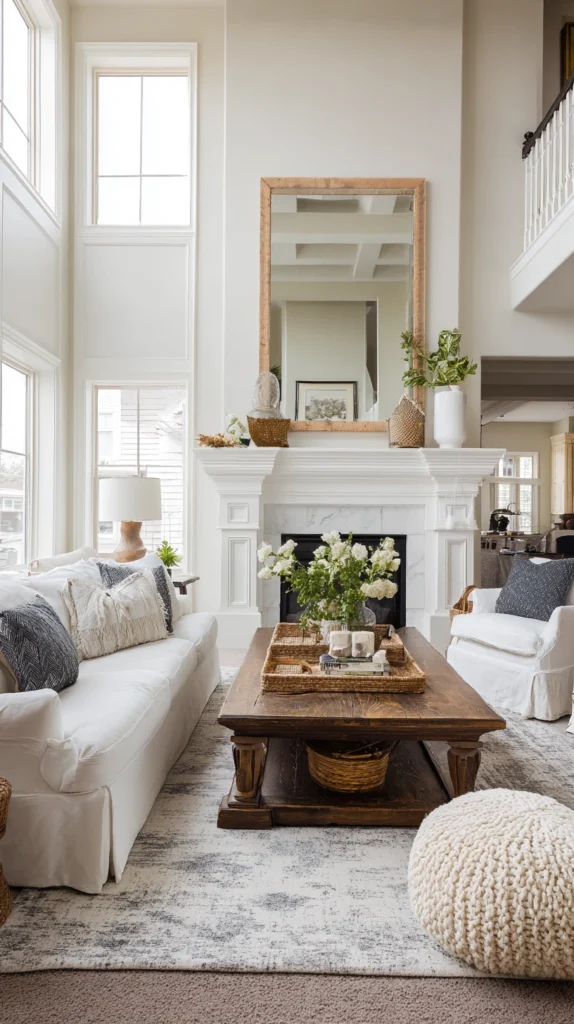
The classic home employs mirrors strategically throughout its rooms for the dual purpose of amplifying natural light and expanding the perceived volume of the space — effects that are particularly valuable in older homes whose windows, while often beautiful, are frequently smaller relative to the room’s floor area than contemporary standards would require. A large mirror above a mantel, reflecting the room and the light source opposite it.
A mirror at the end of a hallway, creating the impression of depth where a solid wall would create compression. A pair of mirrors flanking a window, reflecting the garden view on both sides. The mirror in the classic home is never merely decorative — it is a spatial tool whose placement is determined by where its reflection will do the most good, creating light, depth, and the sense of a room that extends beyond its actual boundaries. Choose mirror frames that suit the room’s period and material character — an antique gold frame in a traditional room, a simple beveled frame in a more contemporary classic space.
11. Keep the Color Palette Cohesive Across Rooms
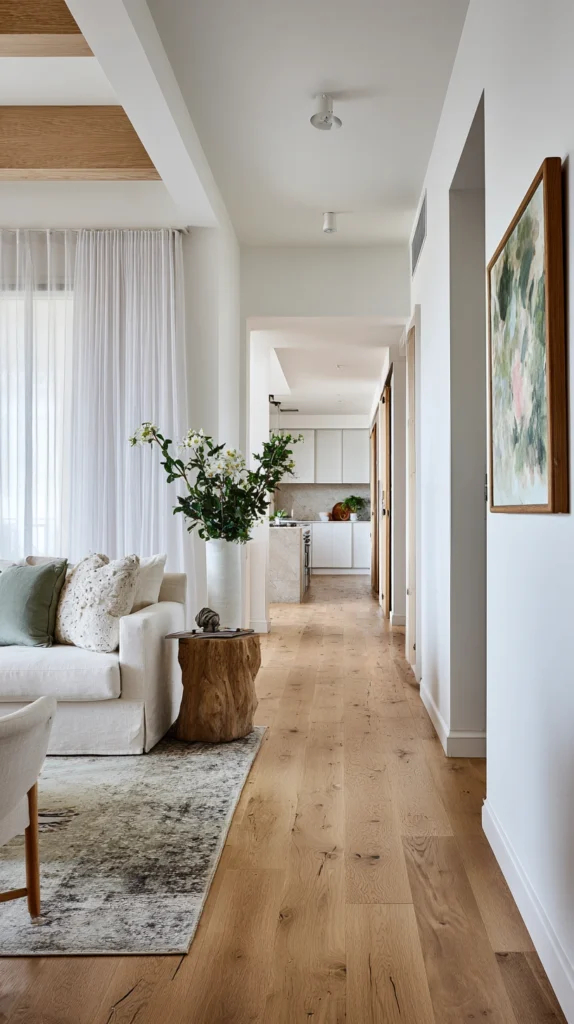
The classic home creates a sense of spatial continuity and architectural coherence by maintaining a color palette that flows intelligently from room to room rather than treating each space as a separate color experiment.
This does not mean that every room is painted the same color — it means that the colors chosen for different rooms relate to each other through shared undertones, a consistent palette register, and deliberate transitions that create a visual journey through the home rather than a series of disconnected color moments.
A warm white in the hallway that deepens to a soft sage in the living room and steps down to a pale stone in the kitchen creates a progression of related tones that feels resolved and architecturally considered. The floors, the woodwork, and the metalwork — maintained consistently throughout the home — provide the unifying thread that holds even varied wall colors together as part of a coherent overall scheme.
12. Treat Every Surface as an Opportunity for Beauty
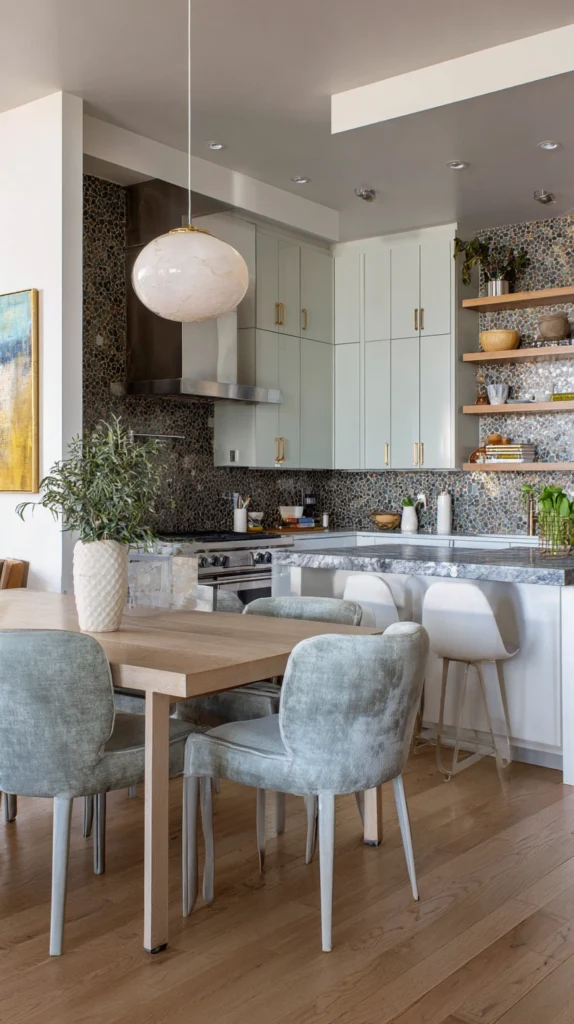
The classic home does not reserve its aesthetic attention for the large, visible surfaces — walls, floors, furniture — while neglecting the smaller ones. Every surface in a classic interior is treated as an opportunity for beauty: the inside of a kitchen cupboard painted in a complementary tone to the exterior.
The underside of a staircase with a decorative paint treatment or a wallpaper application. The back wall of a bookcase is painted in a deep complementary color that makes the books displayed against it more vivid. The ceiling of a small room or cloakroom where a bold wallpaper application creates a moment of decorative surprise.
The attention given to these secondary surfaces is what distinguishes the home that has been genuinely thought about from the one that has simply been furnished, and the discovery of a beautifully treated surface in an unexpected location is one of the small pleasures that makes a classic home genuinely rewarding to spend time in.
13. Choose Hardware with the Care It Deserves
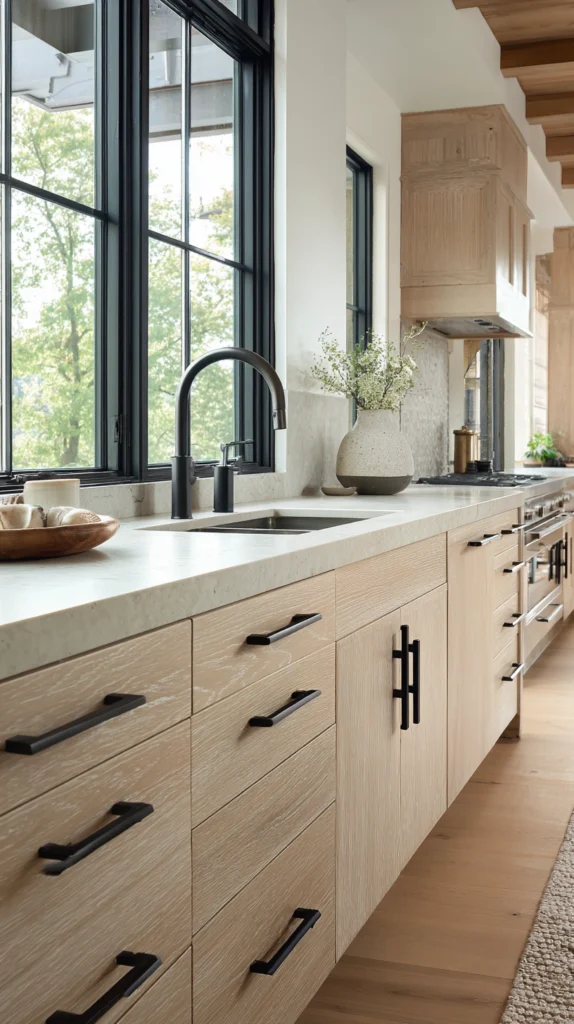
The hardware of a classic home — the door handles, the cabinet pulls, the faucets, the curtain rings, the switch plates — is the element whose quality is registered most directly by touch and whose aesthetic impact, distributed across every surface in the home that requires opening, pulling, or switching, is cumulatively enormous.
Hardware in the classic home is never simply specified to a budget — it is chosen for the specific quality of its material, the appropriateness of its form to the surface it serves, and its consistency with the metallic language that runs throughout the home. A home where every piece of hardware is in the same metal finish — unlacquered brass, brushed nickel, polished chrome, or matte black — has a visual coherence that the home with mixed metals and inconsistent hardware styles lacks entirely.
The upgrade from standard builder-grade hardware to quality alternatives in a consistent finish is one of the most cost-effective improvements available to any classic home, delivering a significant quality uplift across every room simultaneously.
14. Allow Rooms to Develop Slowly Over Time
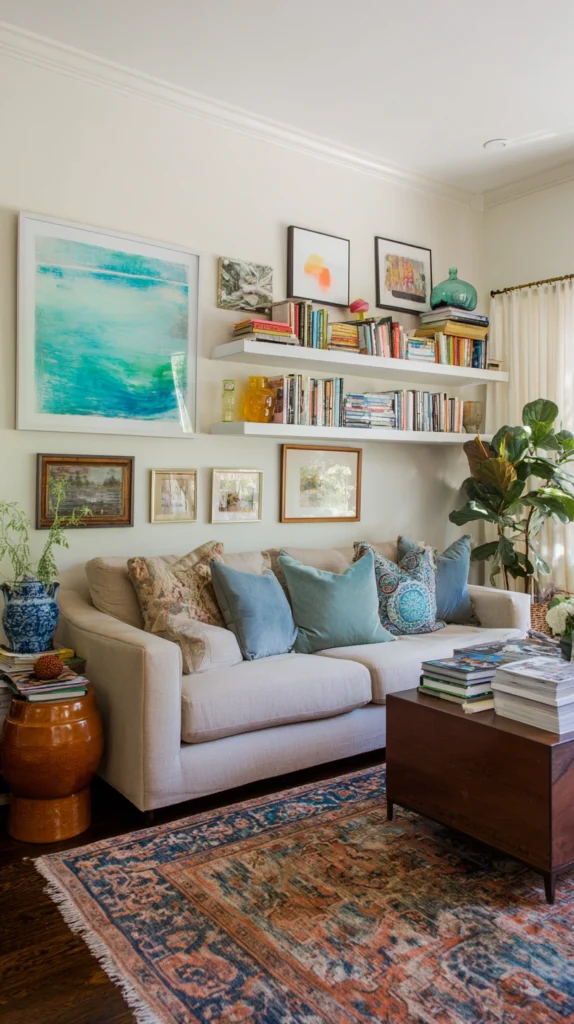
The classic home is not installed in a single decorating exercise — it develops over years as objects are found, relationships between pieces are discovered, and the specific character of the space is gradually revealed through an accumulation of choices made with increasing understanding of what the room wants to be.
The restraint required to resist filling every shelf and surface immediately, to live with a room before declaring it complete, to wait for the right piece rather than settling for an adequate substitute, is precisely the restraint that produces the quality of accumulated depth that the most beautiful classic homes possess.
A room furnished slowly, with genuine attention to every addition, develops a character and coherence that no room assembled quickly can match — the pieces relate to each other in ways that reflect a developing understanding of the space rather than the simultaneous application of a single scheme, and the result is a home that feels genuinely inhabited and genuinely loved rather than simply decorated.
15. Make Comfort the Non-Negotiable Foundation
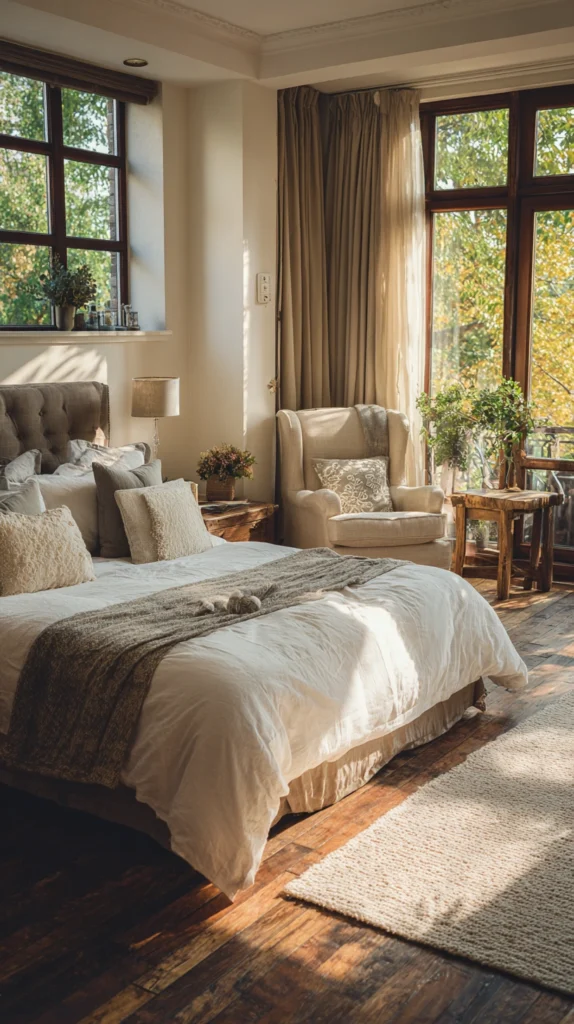
The final and most fundamental principle of classic home styling is the one that all the others serve: comfort — not as a decorating style but as the foundational condition of a home that is genuinely pleasurable to live in. The sofa that is beautiful but impossible to sit comfortably on for more than thirty minutes is not a classic piece — it is a display piece, which is something entirely different.
The bedroom that is visually perfect but whose blackout blinds do not properly darken the room is not a restful bedroom — it is a styled room that fails at its primary function. The kitchen that photographs beautifully but whose work surfaces are at the wrong height for the people who cook in it is not a classic kitchen — it is a kitchen designed for a camera rather than for a life.
Classic home styling places comfort — the comfort of the body, the comfort of the eye, the comfort of the spirit — at the center of every design decision, and it measures the success of every aesthetic choice against the single question of whether it makes the home more or less comfortable to live in. By this standard, beauty and comfort are not in tension — they are the same thing, properly understood.