15 Bold Color-Drenched Room Ideas
Color-drenching — the practice of applying a single saturated color to every surface of a room including the walls, ceiling, woodwork, and sometimes even the furniture — is one of the most transformative and most misunderstood decorating techniques available to any homeowner.
The misunderstanding typically takes one of two forms: the assumption that color-drenching is simply about painting the walls a bold color, which it is not — it is about the totality of the chromatic commitment, the ceiling and woodwork in the same tone as the walls, the elimination of the white trim breaks that conventional decorating inserts between surfaces; or the assumption that color-drenching is inherently maximalist and therefore unsuitable for anyone with restrained aesthetic sensibilities, which is also incorrect — some of the most sophisticated and most quietly beautiful interiors produced in contemporary design practice use color-drenching in tones of such considered subtlety that the technique reads as atmospheric depth rather than chromatic boldness.
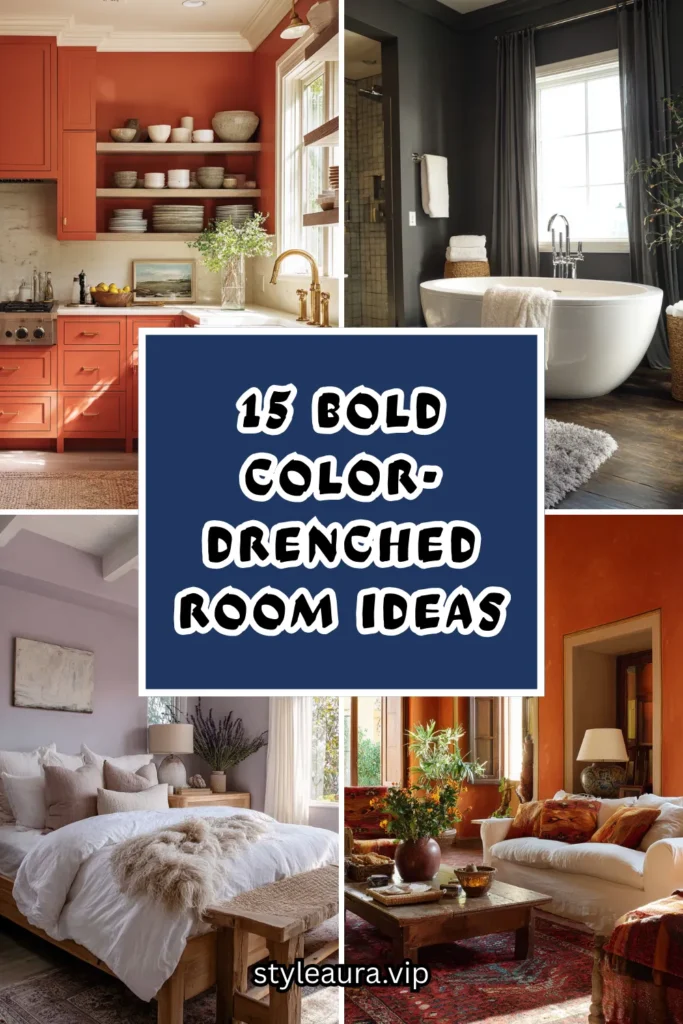
But color-drenching at its most honest is indeed bold — it is a decorating commitment that eliminates the safety net of the white ceiling, the neutral trim, the room that can always retreat to blandness — and the rooms that do it most successfully are the rooms that understand why they are making the commitment and what specific quality they are trying to create. Here are fifteen color-drenched room ideas that span the full range of moods, palettes, and domestic contexts in which the technique produces its most compelling results.
1. A Forest Green Study That Feels Like a Library
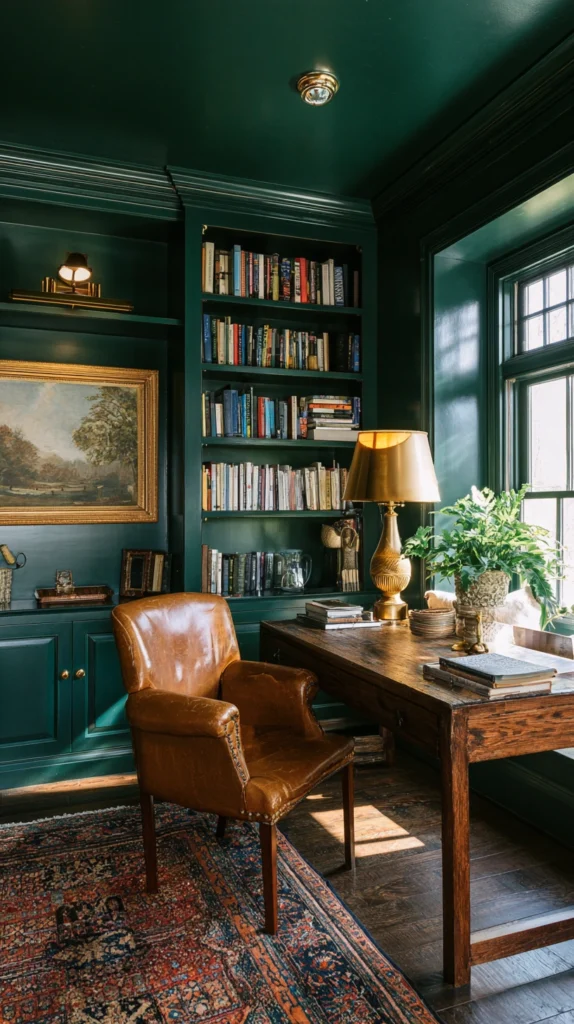
Forest green — the deep, slightly bluish green of dense conifer foliage, of the finest Victorian and Edwardian library interiors, of the color that paint manufacturers reach for when they want to evoke intellectual seriousness and the specific comfort of a room lined with books — is the color-drenched room’s most universally admired single color, and the forest green study is the room that most completely realizes the technique’s potential for creating an environment of total, enveloping comfort.
Every surface in forest green — the walls, the ceiling, the cornice molding, the architraves, the skirting boards, the built-in bookcase that lines one wall — creates a room whose chromatic totality is immediately and powerfully felt on entry. The green absorbs and returns the light from the desk lamp and the reading chair’s floor lamp with the specific quality of warm, filtered illumination that the green interior creates — a quality that has no equivalent in any other color.
Books on the shelves in their varied spines create a natural color relief against the green, and the leather of a quality desk chair, the brass of the desk lamp, and the pale paper of open books on the desk surface provide the material counterpoints that the monochromatic green background needs.
2. A Terracotta Living Room for Instant Warmth
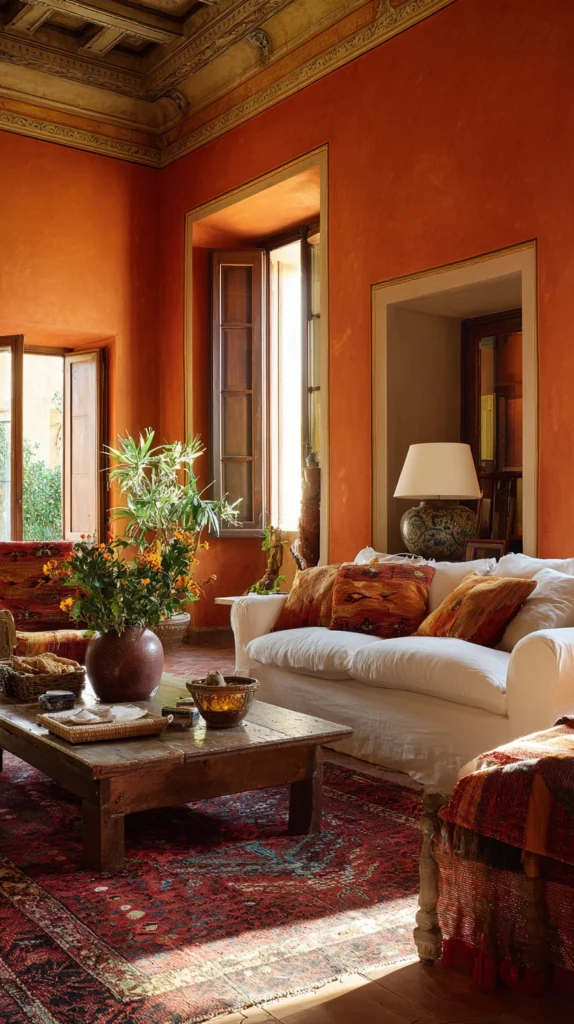
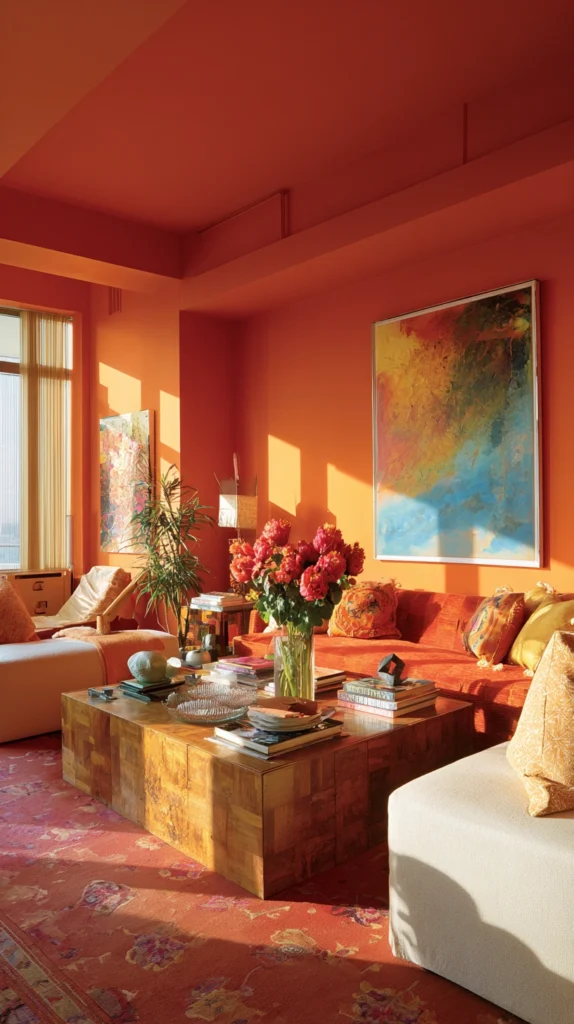
Terracotta — the warm, earthy red-orange of unglazed Italian ceramic, of Provençal farmhouse walls, of the specific color that the Mediterranean sun produces on aged plaster — is the color-drenched living room’s most immediately welcoming option, creating a room of such instant and generous warmth that entering it from a grey corridor or a neutral hallway produces a noticeable physical sensation of environmental comfort.
The terracotta-drenched room works with particular power in northern climates where natural light is limited and warm color is needed to compensate psychologically for the ambient coolness of the light — the room whose walls, ceiling, and woodwork are all in a deep terracotta creates an interior sunshine that the actual sunshine cannot always provide.
Natural linen upholstery on the sofa in a warm cream, timber furniture in a warm oak, a kilim rug in faded reds and ochres, and brass candleholders and picture frames provide the material variety that the monochromatic terracotta background needs without disrupting the room’s chromatic unity.
3. A Midnight Blue Bedroom for Deep Rest
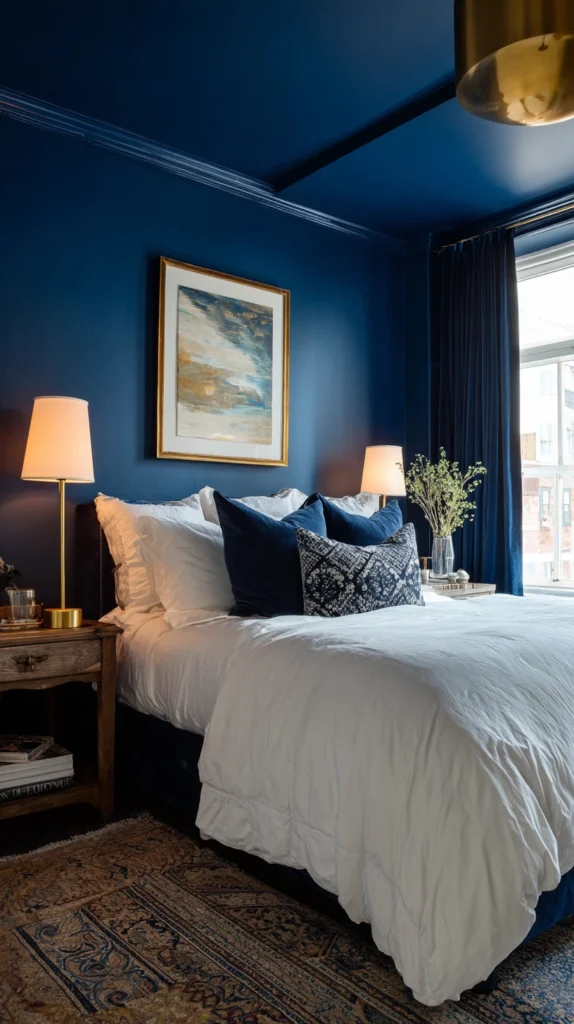
The bedroom color-drenched in midnight blue — the very deep, almost black blue of the sky at two in the morning, of deep ocean water, of the specific dark blue that carries the quality of infinite depth without the harshness of true black — creates a sleeping environment of extraordinary restfulness whose specific quality cannot be achieved in any lighter color.
The midnight blue bedroom wraps its occupant in darkness that is not black and is not merely dark — it is the darkness of color, of a room that has depth rather than absence, and the specific quality of rest that this darkness promotes has been recognized by designers since the deep blue bedrooms of European aristocratic houses in the seventeenth and eighteenth centuries.
White linen against midnight blue walls creates a contrast of absolute simplicity and absolute beauty — the pale, clean horizontal of the bed against the dark, enveloping vertical of the surrounding blue. Brass or gold bedside lamps create warm, amber-toned illumination that appears richer against the midnight blue than against any lighter background.
4. A Burnt Orange Kitchen for Energy and Appetite
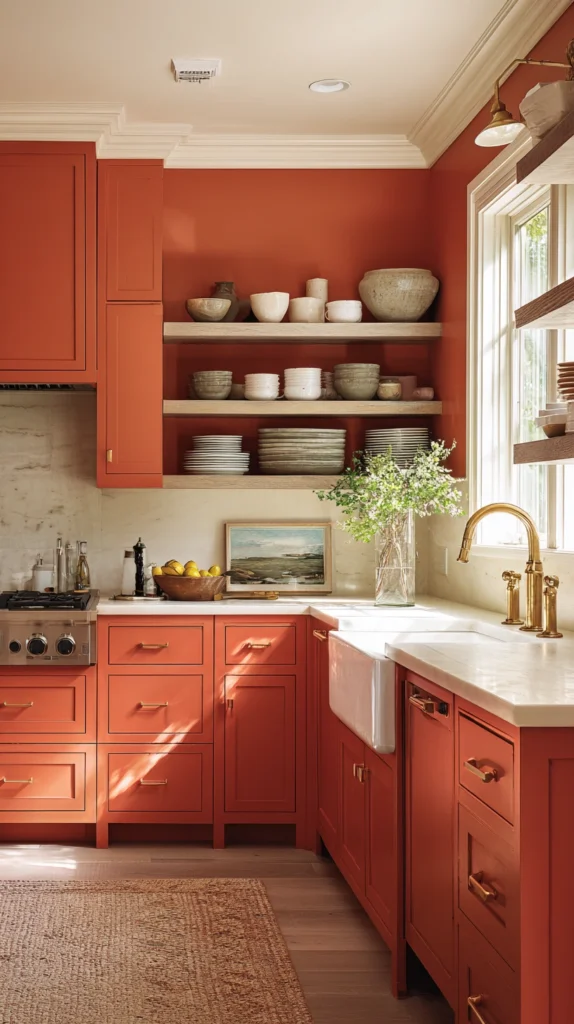
The kitchen color-drenched in burnt orange — the deep, warm orange-red that lies between terracotta and the pure orange of citrus, closer to the color of autumn leaves than of summer fruit — creates a cooking environment of remarkable energy and appetite-stimulating warmth that the neutral kitchen, however beautifully equipped, cannot approach.
Orange is physiologically associated with appetite stimulation — the marketing departments of every major fast food chain have known this for decades — and the orange-drenched kitchen creates an environment that makes the act of cooking feel energized and the act of eating feel more pleasurable through the specific warmth and vitality of its chromatic environment.
The cabinet hardware in unlacquered brass, the countertop in a warm cream or pale limestone, and open shelves holding ceramics in creams, ochres, and the varied colors of stored food and cooking equipment provide the visual variety that the monochromatic burnt orange kitchen requires to feel curated rather than simply painted.
5. A Dusty Pink Living Room That Is Sophisticated, Not Sweet
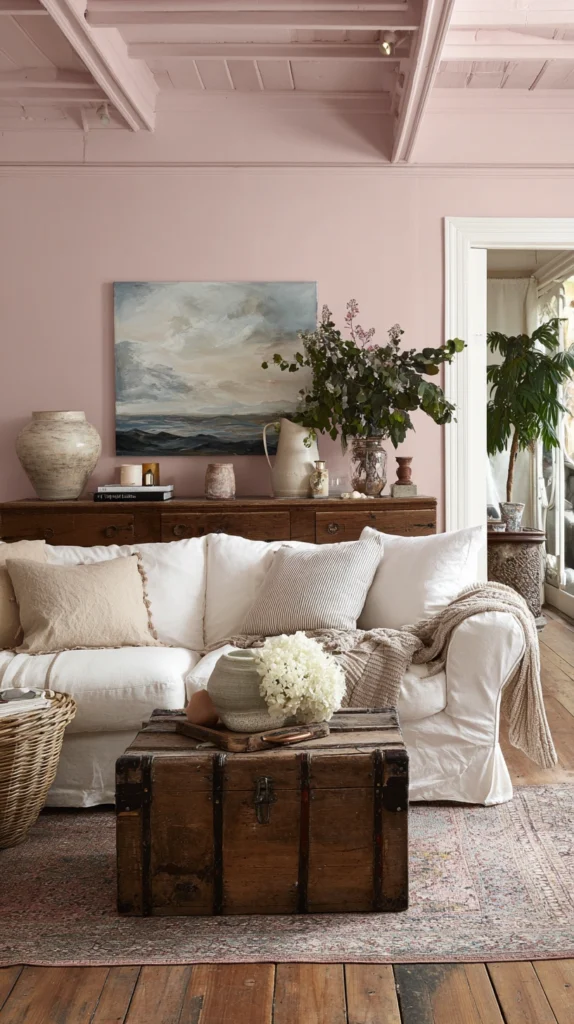
The association of pink with the nursery — with sweetness, with the infantile and the decoratively unsophisticated — is one of the most persistent and most unjustified prejudices in residential design, and the dusty pink color-drenched living room is the most effective possible argument against it.
Dusty pink — the pink that has been desaturated to approximately fifty percent of its full intensity, given a slight gray or mauve undertone that pushes it away from the candy-pink of sweetness toward the warm rose of genuine sophistication — creates a living room of extraordinary warmth and sensory comfort that no other color in the same tonal register can achieve.
The dusty pink room’s monochromatic application — walls, ceiling, woodwork, even the sofa upholstery in a slightly lighter or darker value of the same pink — creates an interior of total, enveloping rose warmth that is the visual equivalent of the warmth of candle light applied to an entire room rather than only to a flame. Antique timber furniture, white or cream ceramic objects, and soft wool textiles in tones that are nearly the same as the wall color create a room of unusual sophistication.
6. A Charcoal Bathroom for Maximum Drama
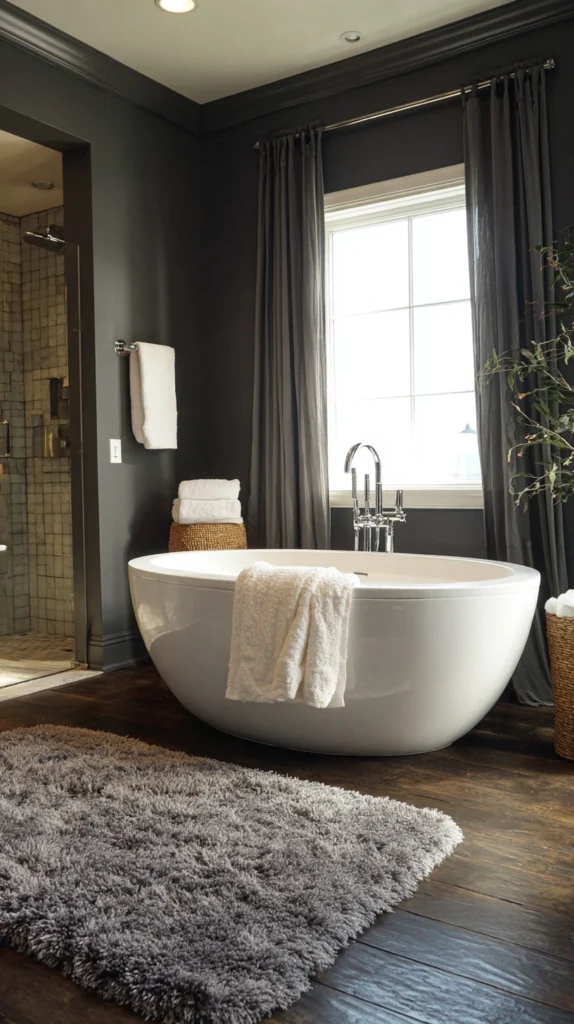
The bathroom color-drenched in charcoal — the warm, slightly brown-toned near-black that reads as the darkest possible grey rather than true black — creates a bathroom of genuine, theatrical drama that transforms the purely functional room into the most atmospherically striking space in the house.
The charcoal bathroom’s darkness creates a specific quality of intimacy that white and light-toned bathrooms cannot approach — the sense of being enclosed within a dark, warm space where the white of the ceramic fixtures, the chrome or gold of the fittings, and the pale surfaces of towels and bath products gleam with a luminosity that the same objects in a light-toned bathroom entirely lack.
A freestanding white bath against charcoal walls, floors, and ceiling is one of the most powerful chromatic compositions available in any domestic interior — the bath’s pale sculptural form dramatically isolated against the surrounding dark, creating the specific visual impact of a figure against a dark ground that portrait painters have exploited for centuries.
7. A Sage Green Kitchen for Organic Calm
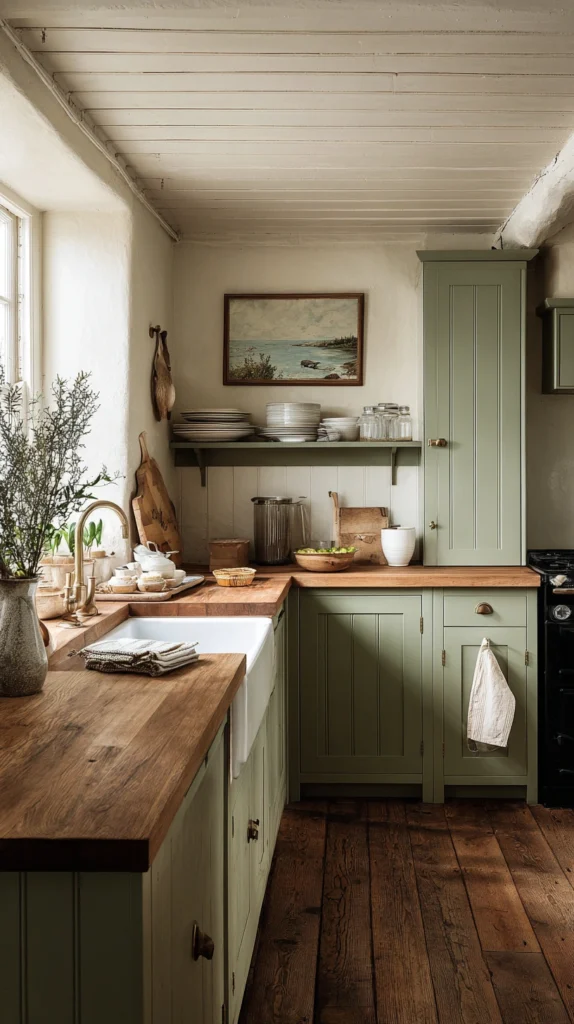
Sage green — the desaturated, slightly gray green of the herb leaf whose name it carries, of Scandinavian painted furniture, of the Nordic and British kitchen tradition’s characteristic grey-green cabinetry — as a color-drenched kitchen treatment creates a cooking environment of unusual calm and organic warmth that the more saturated green kitchens, however beautiful, cannot approach in terms of everyday livability.
The sage green kitchen whose color extends to the ceiling and the architectural moldings, rather than stopping at the cabinet doors as in conventional kitchen design, creates a room of complete chromatic coherence that feels designed rather than simply furnished. Natural timber countertops in a warm oak or walnut, ceramic sink in a warm white, and simple handmade ceramic hardware in a compatible glaze complete the sage kitchen’s natural material palette with a consistency that the surrounding green ground makes legible as a unified, considered aesthetic.
8. A Cobalt Blue Home Office for Creative Stimulation
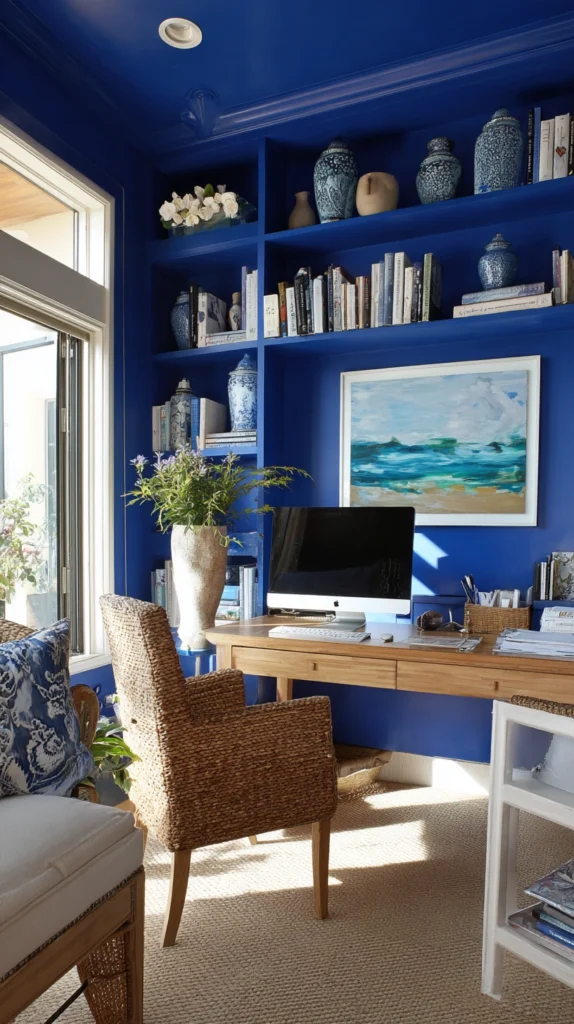
Research on color psychology consistently identifies blue’s specific cognitive associations — focus, clarity, creative stimulation, and the specific mental state that sustained intellectual work requires — and the cobalt blue color-drenched home office exploits these associations to create a working environment of maximum cognitive support.
Cobalt blue — the saturated, clear blue of the Mediterranean sky at its most intense, of lapis lazuli and of the finest blue ceramics — has a brightness and clarity that creates a working environment of genuine visual energy without the aggressive stimulation of warmer colors.
Every surface in cobalt — the walls, the ceiling, the bookcase sides, the desk surround — creates a total color environment that is energizing without being distracting, and whose chromatic intensity makes the white of the computer screen, the pale pages of reference books, and the natural timber of the desk surface appear with a clarity and contrast that a neutrally painted room cannot create.
9. A Rust Red Dining Room for Convivial Warmth
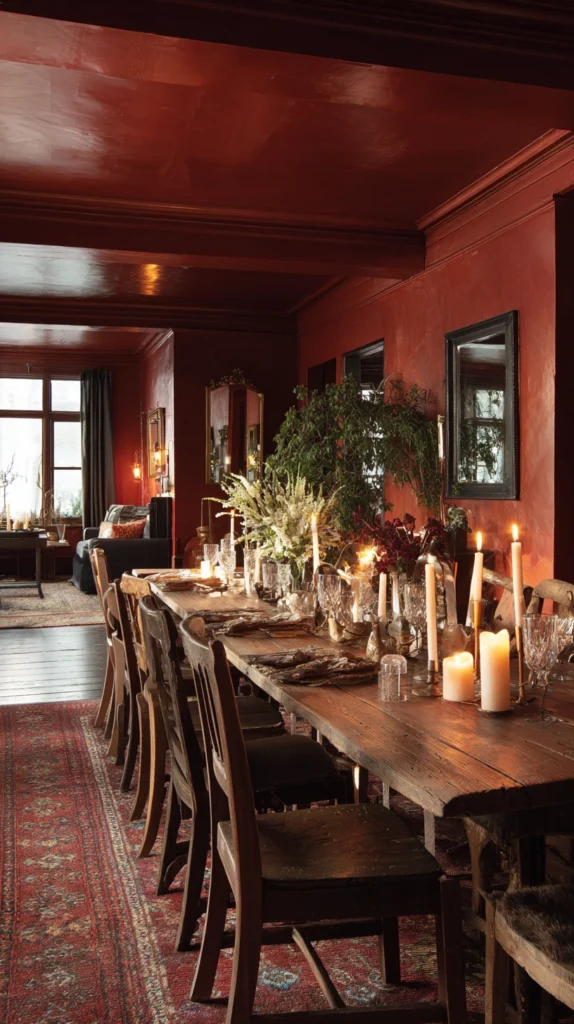
The dining room color-drenched in rust red — the warm, slightly brownish red of oxidized iron, of aged brick, of the specific red that carries more earth than fire — creates the most convivial and the most appetite-promoting dining environment available through color alone.
The dining room is the domestic room whose function — the gathering of people around a table to share food — most directly benefits from the physiological and psychological effects of warm red: the appetite stimulation, the social warmth, the specific effect of red on the perception of time that makes conversations feel shorter and more enjoyable than they actually are.
The rust red dining room with a long timber table, mismatched timber chairs, candlelight from multiple sources, and simple ceramic tableware creates a dinner atmosphere of such warmth and generosity that guests consistently comment on the room’s quality without being able to identify exactly what creates it — the color’s contribution is felt before it is seen.
10. A Lavender Bedroom for Peaceful Retreat
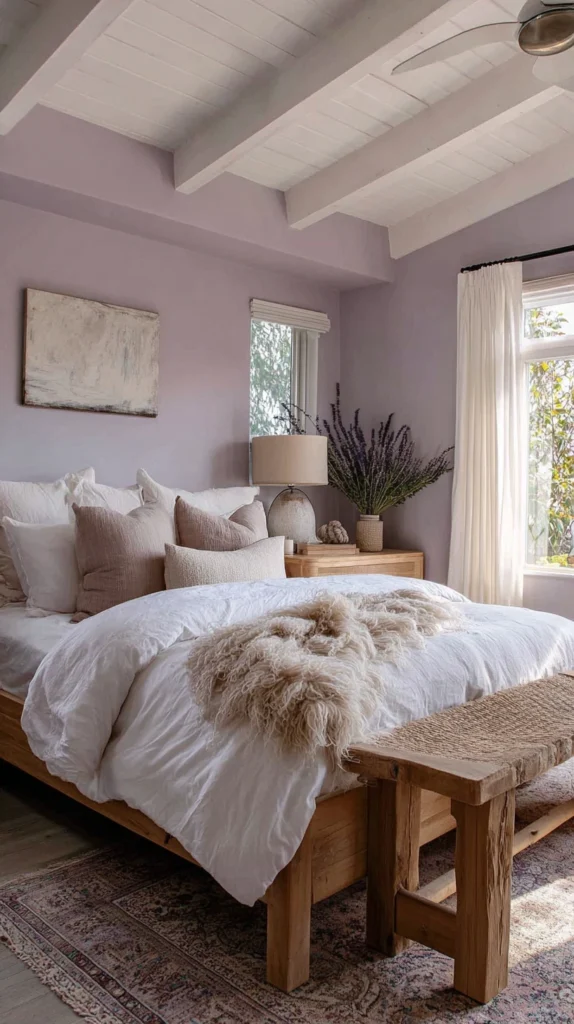
Lavender — the soft, slightly gray purple that carries the specific quality of the Provençal landscape and the calming associations of the plant whose color it takes — as a color-drenched bedroom creates a sleeping environment of distinctive, unusual beauty that neither blue nor pink, the colors on either side of lavender’s position in the spectrum, can replicate.
The lavender bedroom is particularly effective in rooms with warm natural light — south or west facing — where the golden quality of the afternoon sun interacts with the lavender’s cool blue-purple to create a room color that appears to shift between warm and cool at different times of day and in different light qualities. White bedlinen, natural timber furniture, and simple linen accessories in complementary tones of sage and dusty rose create a bedroom whose surrounding colors relate to the lavender ground without competing with the totality of its chromatic presence.
11. A Teal Green-Blue Bathroom for Jewel-Box Luxury
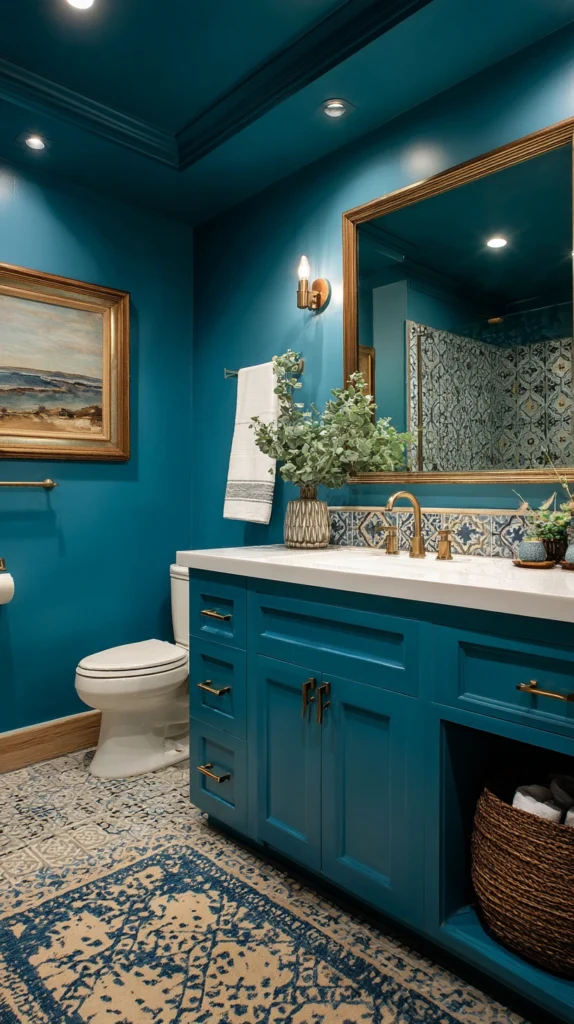
Teal — the saturated blue-green that occupies the chromatic territory between the clarity of turquoise and the depth of peacock blue, the color of the finest Iznik tiles and of Victorian encaustic floor tiles — in a color-drenched bathroom creates a jewel-box interior of extraordinary richness that is among the most visually beautiful small rooms available in contemporary residential design.
The teal bathroom’s deep, complex color — not quite green, not quite blue, but possessing the best qualities of both — creates a bathroom whose character is immediately and powerfully distinctive, and whose interaction with the warm gold of brass fixtures and the pale white of ceramic surfaces creates the colour harmony of a room that has been genuinely and carefully composed.
The small scale of most bathrooms amplifies the teal’s colour intensity, creating a jewel-box effect in which the total colour immersion of a small enclosed space produces a richer experience than the same colour would create in a larger room.
12. A Warm White Everything Room That Reads as Color-Drenched
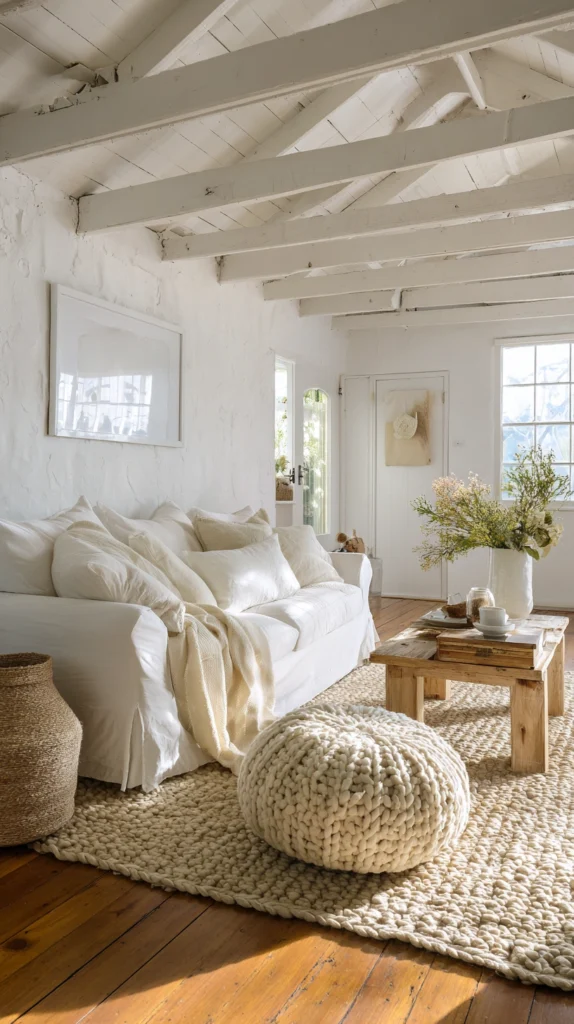
The monochromatic room in warm white — a room where the walls, ceiling, floor, and furniture are all in white but with sufficient warmth in the white’s undertone that the room reads as a genuine color environment rather than a blank canvas — demonstrates that color-drenching is ultimately about the totality of chromatic commitment rather than the saturation of the chosen color.
A warm white room where every surface is in the same tone — a white with yellow or pink undertones that reads differently at every light quality and every time of day, creating a room of subtle but continuously shifting chromatic experience — is a color-drenched room in the truest sense, and its sophistication and its difficulty are greater than many of the more obviously saturated color choices on this list.
Texture provides the visual variety that color contrast cannot: the rough linen of the sofa, the smooth plaster of the walls, the woven texture of the rug, and the grain of the timber floor all read as distinctly different surfaces within the unified white tone.
13. A Deep Plum Bedroom for Maximum Jewel-Tone Drama
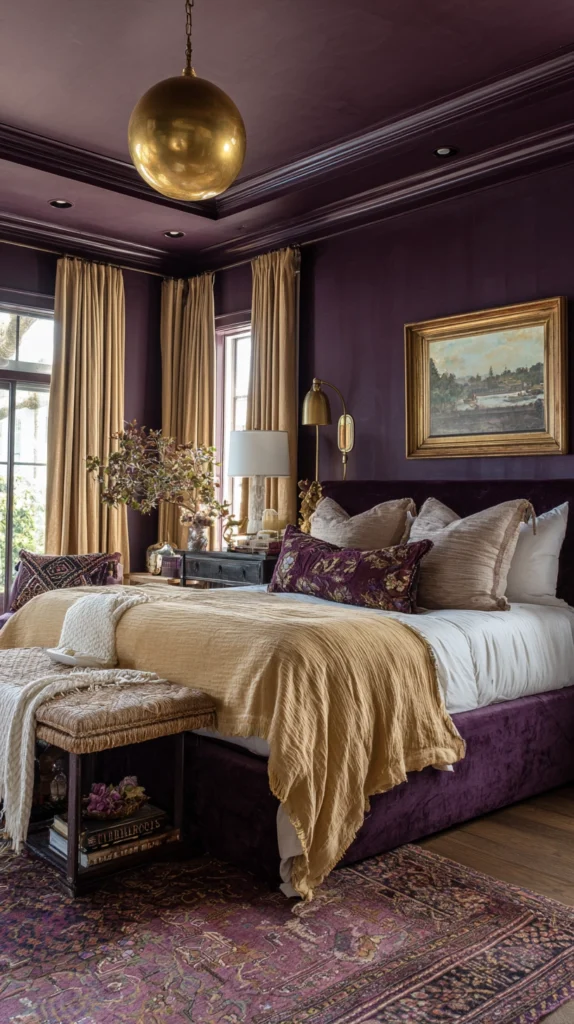
Deep plum — the darkest, most saturated purple, closer to black than to violet but carrying within its depth the specific luxury association of the color that has signified royalty and extravagance across every culture that has produced it — creates a bedroom of maximum jewel-tone drama whose impact on entry is immediate and unforgettable.
The plum-drenched bedroom is the color-drenching commitment taken to its most intense possible expression — there is no neutral escape, no white ceiling to retreat to, only the total, enveloping depth of the darkest richest purple applied to every surface.
Against this dark ground, pale gold textiles, brass fixtures, and the soft glow of warm lighting create a bedroom of such luxurious, theatrical richness that the experience of entering it consistently produces surprise regardless of how many times the room has been seen.
14. A Chartreuse Room for Unexpected Vitality
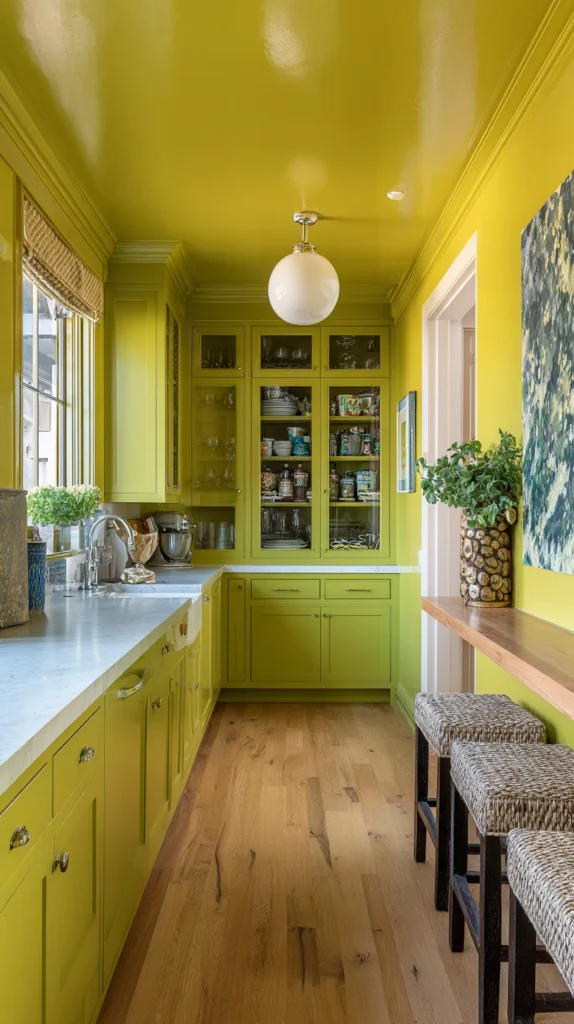
Chartreuse — the yellow-green that has no common name in most people’s vocabulary but that is instantly recognizable as the most electrically vital color available in the warm-to-cool spectrum, closer to yellow than to green but sharing neither color’s conventional associations — is the color-drenching choice for the homeowner whose commitment to chromatic courage is complete and whose appetite for the expected has been exhausted.
The chartreuse-drenched room is not for everyone — it is a color that divides opinion more completely than any other on this list — but for the person whose response to it is excitement rather than anxiety, a chartreuse-drenched interior creates the most vividly alive and energetic room available in any domestic setting.
A chartreuse kitchen or dining room, with natural timber countertops and warm oak flooring that grounds the color’s electricity, creates an eating environment of remarkable vitality whose specific chromatic character is found nowhere else in the domestic design canon.
15. The Principles Behind Every Successful Color-Drenched Room
The final color-drenched room idea is not a single color but the distillation of the principles that make every successful color-drenched room on this list work — the specific design decisions that separate the color-drenched room that is celebrated from the one that is regretted.
The first principle is total commitment: the color that stops at the picture rail and leaves the ceiling white, or that covers the walls but spares the woodwork, is not color-drenching — it is conventional bold decorating, which is entirely valid but produces a different and less powerful result.
The second principle is lighting quality: the color-drenched room is only as good as the quality and warmth of the light within it, and the wrong lighting — too cool, too bright, too flat — destroys the atmospheric quality that the color commitment was designed to create.
The third principle is material quality in the room’s non-color elements: the color-drenched room requires that the furniture, textiles, and accessories within it be of genuine quality, because the color’s dominance means that everything within it is seen more clearly and more critically than in a neutrally decorated room.
And the fourth principle is the one that encompasses all the others: the color must be genuinely loved rather than merely considered acceptable, because the total chromatic commitment of color-drenching makes the difference between a color that is loved and a color that is merely tolerated more consequential than any other design decision available in residential interior decoration.