15 Big Landscaping Ideas for Your Small Backyards
Small backyards shouldn’t limit your landscaping ambitions or force you to settle for uninspired outdoor spaces. With strategic design choices and creative thinking, compact yards can deliver the same impact, functionality, and beauty as sprawling landscapes.
The secret lies in using techniques that maximize perceived space, create multiple functional zones, and incorporate eye-catching features that draw attention to design elements rather than square footage.
Smart landscaping transforms small backyards into impressive outdoor environments that feel intentionally intimate rather than restrictively small. These 15 big landscaping ideas prove that dramatic transformations, stunning focal points, and sophisticated outdoor living are absolutely achievable regardless of your yard’s modest dimensions.
1. Multi-Level Terracing
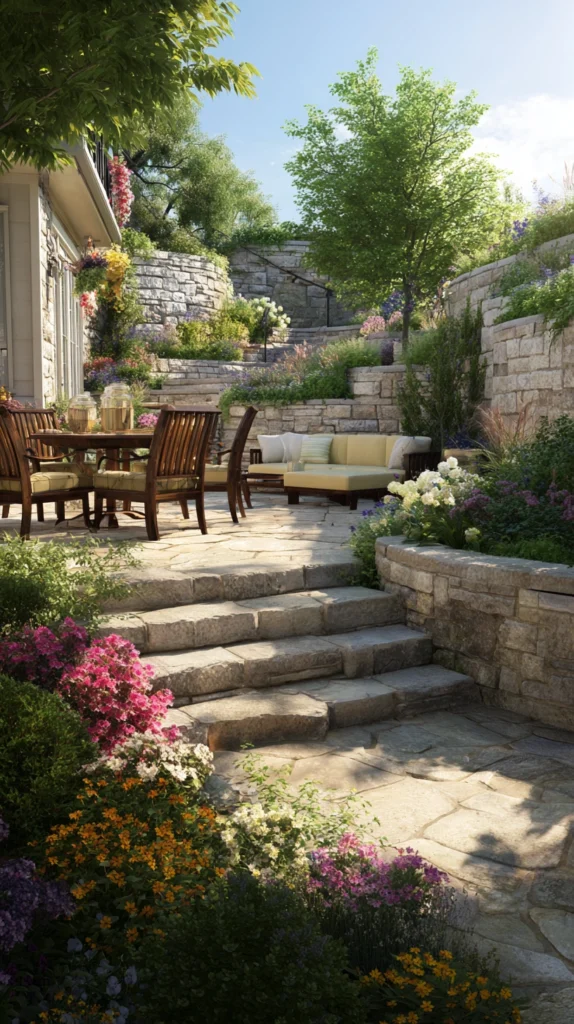
Create dimension and visual interest by building multiple terraced levels connected by steps, pathways, or gentle slopes that transform flat yards into dynamic landscapes. Each terrace level serves a distinct purpose—upper level for dining, middle for lounging, lower for gardens—maximizing functionality within limited space.
The elevation changes make yards appear larger by creating depth and allowing views across different zones rather than seeing everything at once. Use retaining walls in natural stone, timber, or concrete blocks that add architectural structure while the varied heights accommodate different plantings and activities.
2. Bold Focal Point Feature
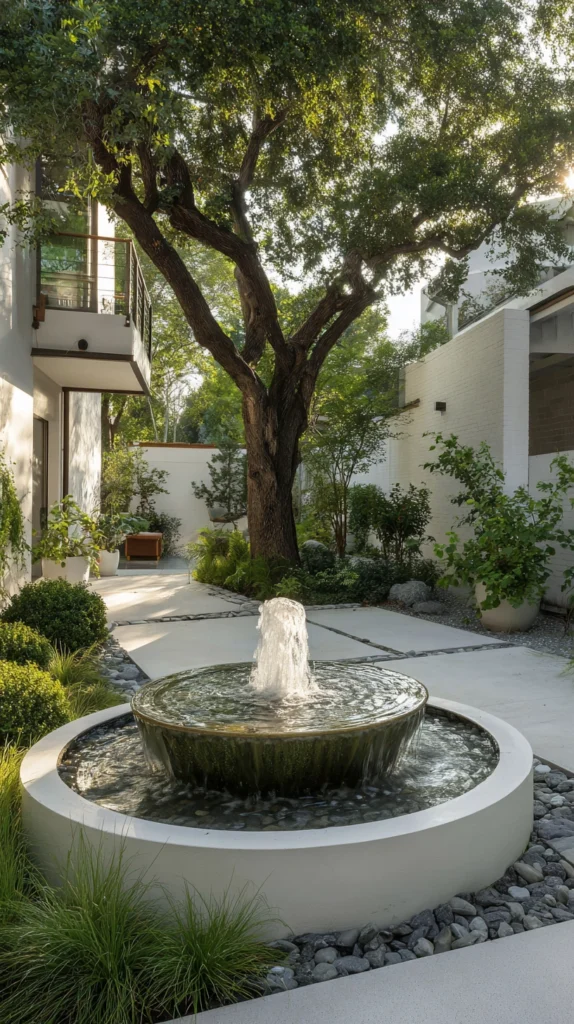
Install a single dramatic focal point like a large-scale sculpture, stunning water feature, architectural pergola, or specimen tree that immediately captures attention and defines the yard’s character.
The bold element creates a visual anchor that draws the eye, making viewers focus on the impressive feature rather than the yard’s actual dimensions.
Position the focal point strategically to be visible from interior windows and the main seating area, maximizing its impact throughout your property. Surround the feature with simpler plantings and clean hardscaping that allow it to shine without competition from busy surroundings.
3. Outdoor Room Concept
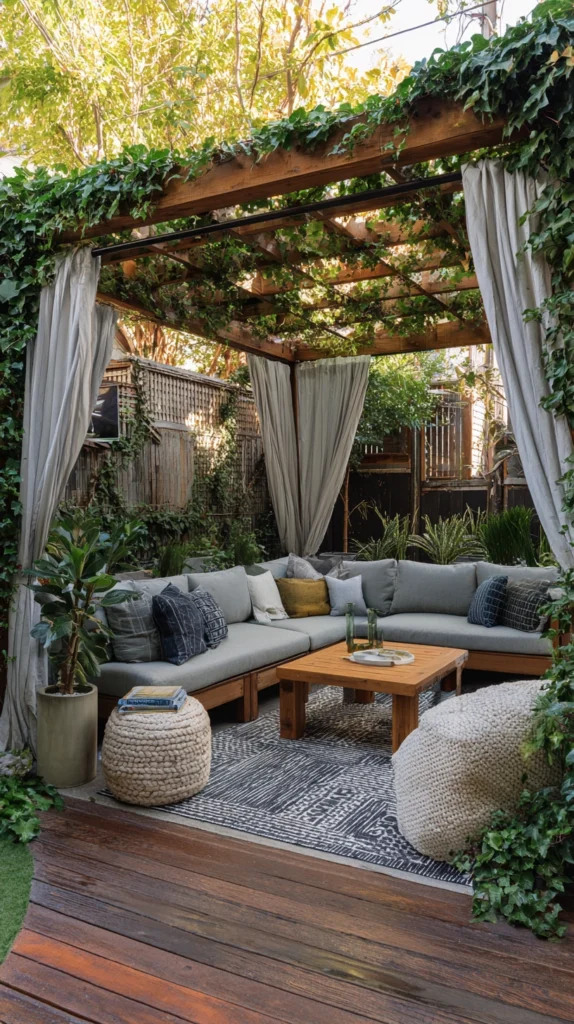
Design your small backyard as a true outdoor room with defined ceiling through pergola or shade structure, walls through fencing or hedges, and floor through decking or paving creating enclosed intimacy.
Furnish the space like an interior room with substantial furniture, area rugs, lighting fixtures, and decorative accessories that make it feel like an extension of your home. Add curtains or outdoor drapery panels that can close for privacy and weather protection, reinforcing the room-like enclosure. The complete design makes the small space feel purposeful and finished rather than like leftover exterior footage.
4. Vertical Garden Walls
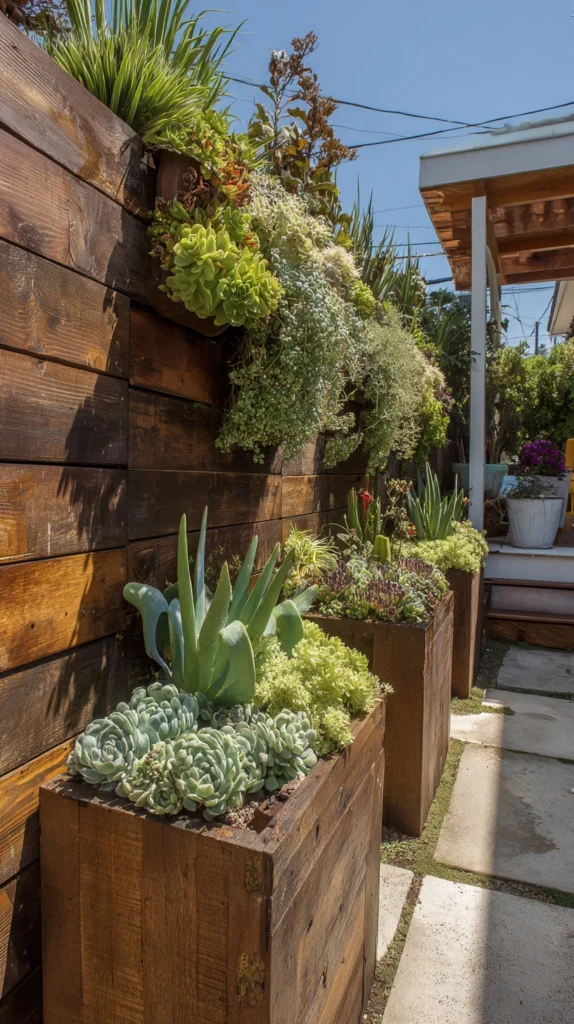
Maximize planting space by going vertical with living walls, stacked planters, trellises covered in climbing vines, or tiered garden beds that create lush greenery without consuming ground area. Install modular vertical garden systems on fences or exterior walls, filling them with flowers, herbs, succulents, or foliage plants arranged in artistic patterns.
The vertical emphasis draws eyes upward, making fences appear taller and creating the illusion of more expansive space through abundant greenery. Choose plants with varying textures, colors, and growth habits that create dimensional interest throughout the vertical plane.
5. Meandering Pathway Design
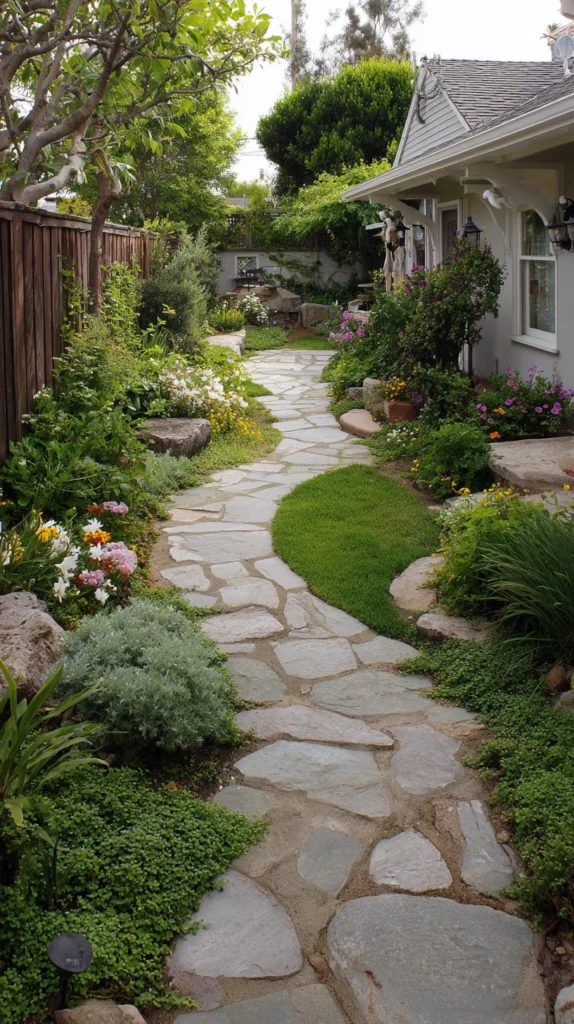
Create the illusion of greater distance by installing a curving pathway that winds through the yard rather than running straight from point to point.
The curved route forces viewers to follow the path visually, making the journey appear longer and the yard more expansive than straight lines would suggest.
Use interesting paving materials like flagstone, brick, gravel, or stepping stones with groundcover between them adding texture and visual complexity. Line the pathway with plantings, lighting, or decorative elements that enhance the journey and create discovery moments along the route.
6. Monochromatic Plant Palette
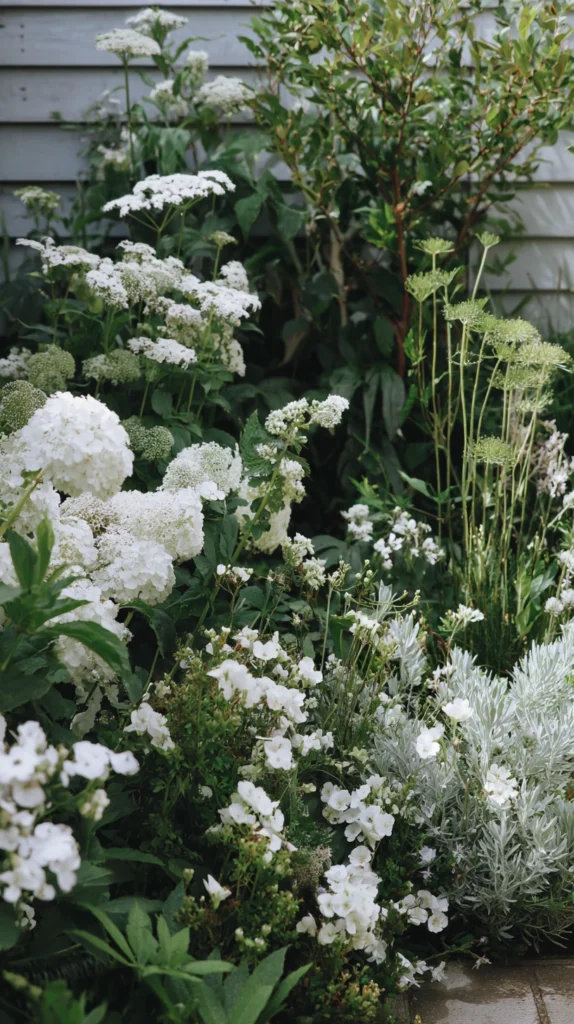
Unify your small landscape with a limited color scheme using varying shades of one color family—all whites and silvers, various greens with different textures, or gradations of purple from lavender to deep eggplant.
The restrained palette creates sophisticated cohesion that makes the space feel larger and more intentional than a rainbow of competing colors.
Add interest through diverse plant textures, sizes, and forms rather than color variation, mixing fine grasses with broad-leafed hostas and delicate ferns. The unified approach creates calm, elegant landscapes that photograph beautifully and maintain interest through seasonal changes.
7. Statement Paving Patterns
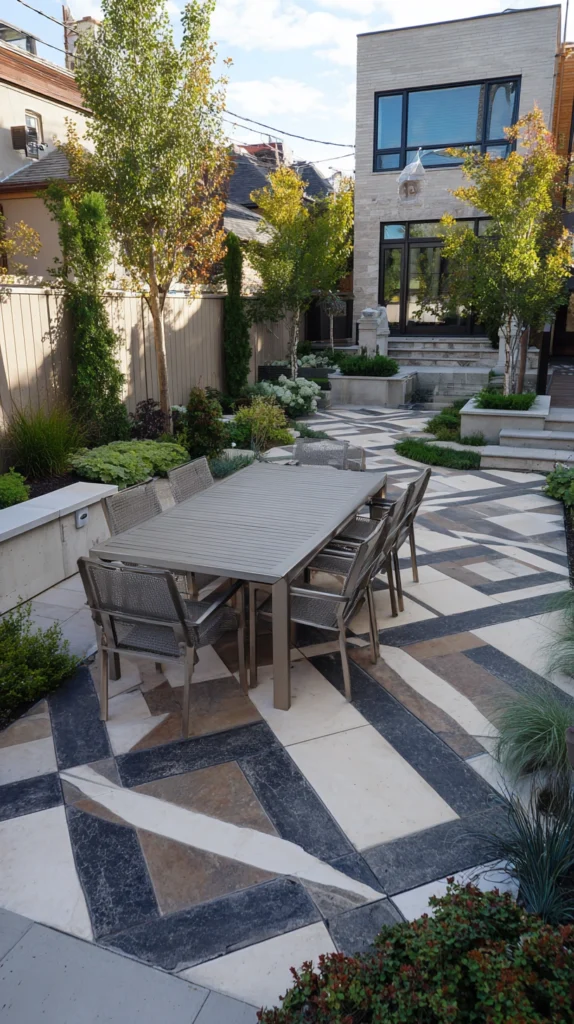
Transform ordinary patios or pathways into artistic elements using dramatic paving patterns in contrasting materials like light and dark stone, brick in herringbone or basketweave patterns, or geometric concrete tiles.
The detailed paving becomes a design feature worthy of attention, creating visual interest at ground level that adds personality without requiring space. Choose patterns that complement your home’s architecture—formal geometric for contemporary homes, organic irregular for cottage styles, classic brick for traditional properties. The artful hardscaping elevates the entire landscape, making even simple surroundings feel more designed and expensive.
8. Integrated Water Feature
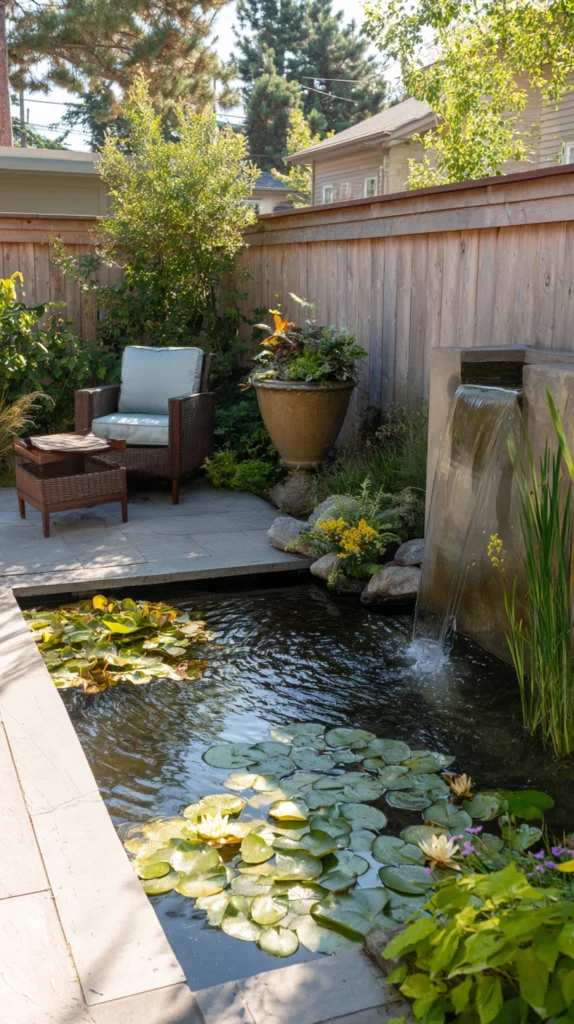
Install a water feature that creates soothing sound, visual interest, and focal point appeal through fountains, small ponds, or modern water walls incorporated into the landscape design. The moving water adds a sensory dimension that makes backyards feel more complete and resort-like regardless of size.
Choose scale-appropriate features—a small bubbling urn for tiny yards, wall-mounted fountains for narrow spaces, or compact pond ecosystems for slightly larger areas. Position water features near seating areas where you’ll appreciate the sound and visual movement most, creating meditative atmospheres conducive to relaxation.
9. Lighting Layered Design
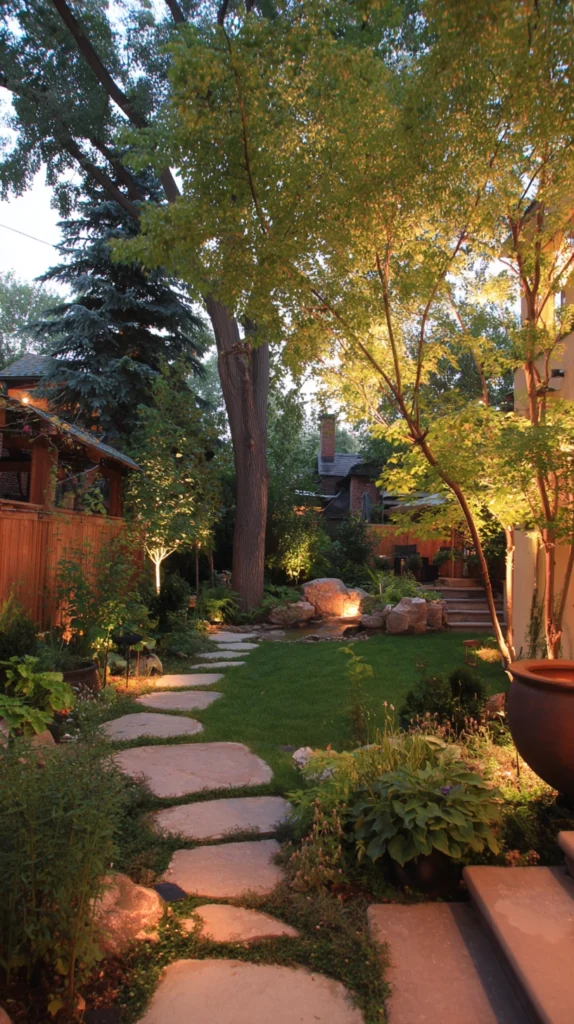
Create dramatic nighttime landscapes through comprehensive lighting design using uplighting on trees and architectural features, path lighting for safety and ambiance, and accent lighting on focal points. The layered approach transforms the yard after dark into something completely different from its daytime appearance, effectively giving you two distinct landscapes.
Use LED technology for energy efficiency and longevity, choosing warm color temperatures that create inviting atmospheres rather than harsh security lighting. Strategic lighting makes yards feel larger at night by selectively illuminating key features while shadows suggest mysterious depths beyond.
10. Container Garden Collections
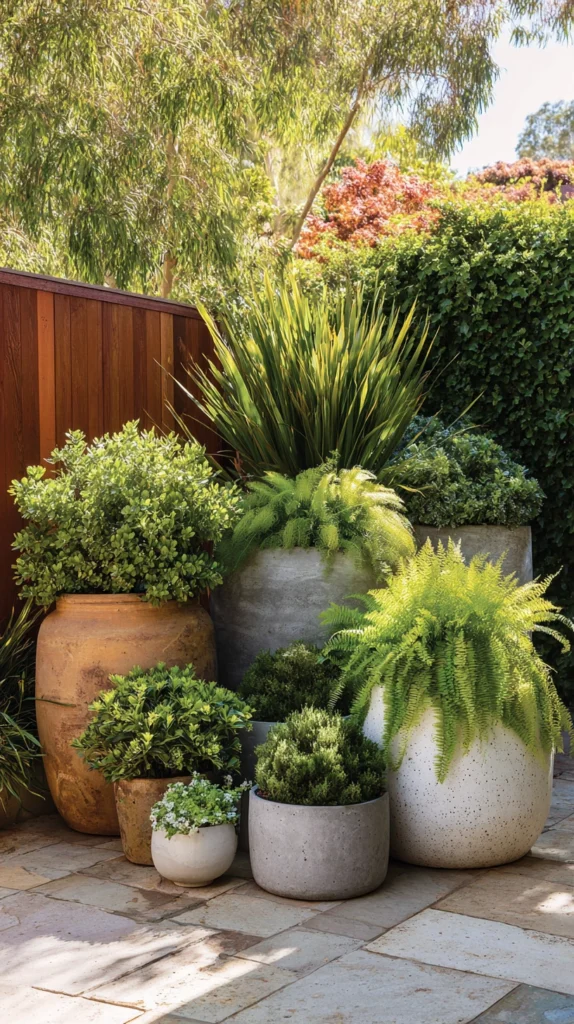
Create impressive plantings without permanent beds by using large-scale containers grouped in odd numbers and varying heights throughout the yard for maximum impact. Choose substantial planters in matching materials or coordinating styles—all terracotta, all glazed ceramics, or all lightweight concrete—for cohesive sophistication.
Plant each container abundantly with combinations of thriller, filler, and spiller plants creating lush arrangements that appear more expensive and designed than actual cost. The mobility allows seasonal refreshes and layout changes, keeping the landscape feeling fresh and adapted to current needs.
11. Synthetic Turf Perfection
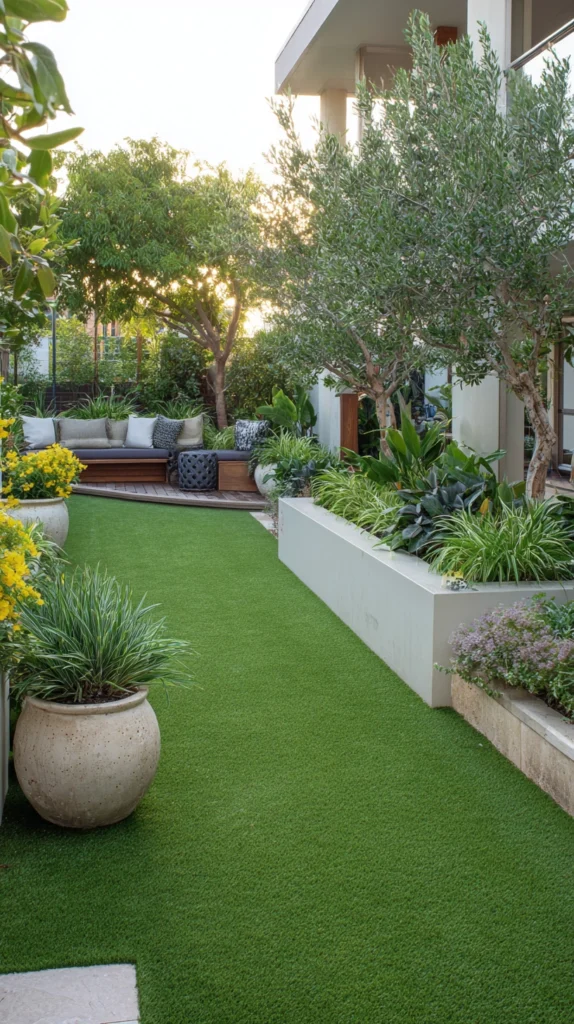
Install high-quality artificial grass creating an emerald green lawn that stays perfect year-round without mowing, watering, fertilizing, or bare patches from shade or traffic. The uniform green provides a clean, polished foundation that makes the entire yard feel more manicured and intentional while eliminating lawn care time and expense.
Choose premium products with varied blade heights and subtle color variation that look convincingly natural rather than obviously fake. Combine with real plantings in beds and containers so the synthetic lawn blends into an overall landscape rather than dominating as the only element.
12. Mirror or Reflective Elements
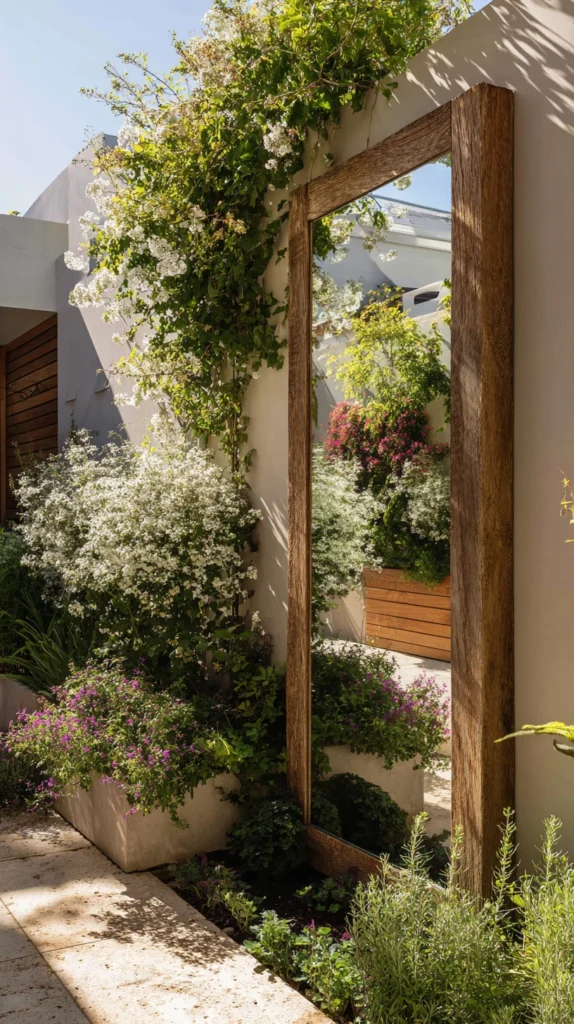
Incorporate mirrors mounted on fences, reflective metal sculptures, or water features with mirror-like surfaces that create depth through reflection and light play. Outdoor-rated mirrors positioned to reflect garden views effectively double the visual space while bouncing light into shaded areas.
The reflective elements add unexpected sophistication and artistic interest while serving the practical purpose of making compact yards feel more expansive. Frame mirrors with plantings that partially obscure edges, creating the illusion of garden vistas continuing beyond actual boundaries.
13. Architectural Screening
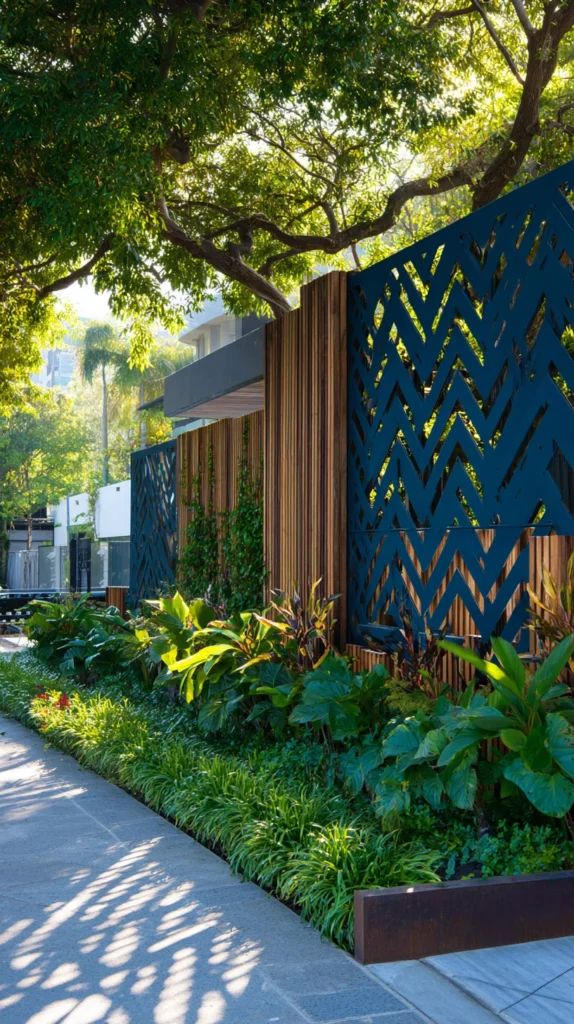
Define boundaries and create privacy through architectural screens, modern slatted fencing, or decorative metal panels that function as both practical barriers and artistic features. Choose designs with interesting patterns, geometric cutouts, or horizontal slats that add visual interest while maintaining security and enclosure.
Paint screens in bold colors for dramatic statements or stain wood natural tones for organic warmth that complements plantings. The architectural quality elevates simple fencing into design features worthy of attention, making small yards feel custom and expensive.
14. Edible Landscape Integration
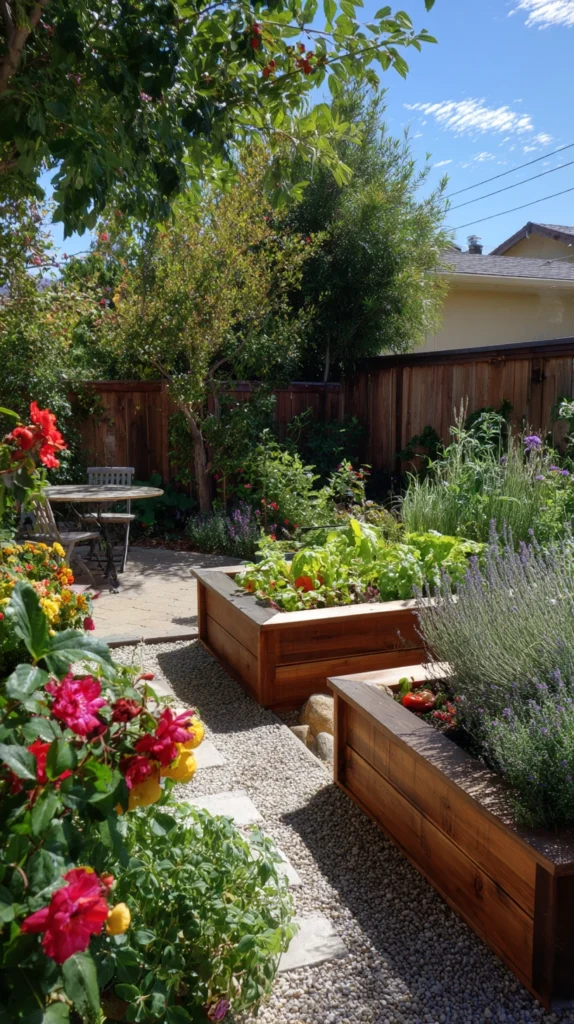
Maximize functionality by incorporating edible plants throughout the landscape—fruit trees as specimen plantings, berry bushes as foundation plants, herbs mixed into flower beds, and vegetables in attractive raised beds.
The productive landscape serves dual purposes of beauty and bounty, making every square foot work harder while providing fresh ingredients. Choose attractive edible varieties like colorful Swiss chard, purple basil, or flowering thyme that contribute aesthetically while producing harvests. The edible elements create conversation and interest beyond purely ornamental landscapes.
15. Seasonal Color Rotation
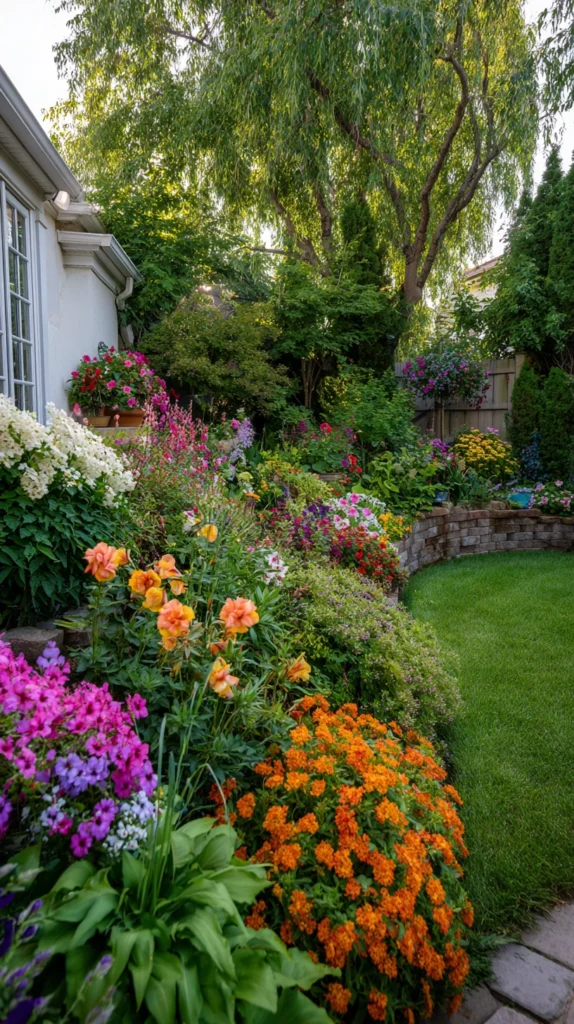
Maintain year-round interest through deliberate seasonal planting plans that ensure something is always blooming, fruiting, or displaying attractive foliage regardless of the time of year. Plant spring bulbs, summer annuals, fall-blooming perennials, and evergreens with winter interest creating continuous appeal across all seasons.
Use containers for easy seasonal swaps, rotating out spent plantings and introducing fresh colors as seasons change. The evolving landscape prevents visual stagnation and gives you regular opportunities to refresh the design without complete overhauls.
Maximizing Your Small Backyard
Successfully landscaping small backyards requires prioritizing quality over quantity, investing in fewer but better plants, materials, and features rather than filling every inch with mediocre elements. Plan the entire landscape before beginning installation, ensuring all elements work together cohesively rather than adding features randomly over time.
Maintain your landscape regularly through pruning, deadheading, and cleaning to keep the compact space looking intentional rather than neglected. Most importantly, design for your actual lifestyle and usage patterns rather than creating showpiece landscapes that don’t accommodate how you truly want to use your outdoor space.