15 Bedroom Accent Wall Ideas Using Texture Instead of Color
When it comes to bedroom design, accent walls are often associated with bold paint colors or striking wallpaper patterns. While color can certainly make a statement, it isn’t the only way to create visual interest.
Texture-based accent walls are becoming increasingly popular, especially in bedrooms where calm, balance, and subtle sophistication matter most. By focusing on texture instead of color, you can add depth and character without overwhelming the space.
A textured accent wall appeals to both sight and touch. It creates dimension, enhances the overall design, and adds warmth in a way that flat color simply cannot. Whether your bedroom style is modern, rustic, minimalist, or classic, texture offers a versatile and timeless approach to creating a focal point.

In this article, we explore 15 bedroom accent wall ideas using texture instead of color. These ideas prove that you don’t need bold hues to make a strong design statement—sometimes, it’s the quiet details that have the most impact.
Why Choose Texture Over Color for an Accent Wall?
Texture brings depth without visual noise. In a bedroom, where relaxation is key, too much color contrast can feel stimulating rather than soothing. Texture, on the other hand, creates interest in a more subtle, tactile way. It catches light differently throughout the day, adding movement and richness to the space.
Another advantage of texture is longevity. While color trends change quickly, textured finishes tend to feel more timeless. Neutral textures can evolve with your décor, allowing you to update bedding, furniture, or accessories without needing to redo the wall.
1. Upholstered Fabric Accent Wall

An upholstered fabric accent wall instantly adds softness and luxury to a bedroom. Often placed behind the bed, this type of wall creates a cozy, hotel-like feel while also providing acoustic benefits.
Choose neutral fabrics such as linen, velvet, or wool in soft tones like beige, gray, or taupe. The texture becomes the focal point, adding warmth without introducing strong color contrasts. This idea works especially well in modern and contemporary bedrooms.
2. Wood Slat Wall for Natural Warmth

A vertical or horizontal wood slat wall is a popular way to add texture while maintaining a clean, modern look. The repetition of lines creates rhythm and visual interest, making the wall feel dynamic without being busy.
Natural wood tones bring warmth and an organic feel to the bedroom. Whether you choose light oak for a Scandinavian vibe or darker wood for a more dramatic effect, the texture of wood grain adds depth that paint alone cannot achieve.
3. Textured Wallpaper in Neutral Tones
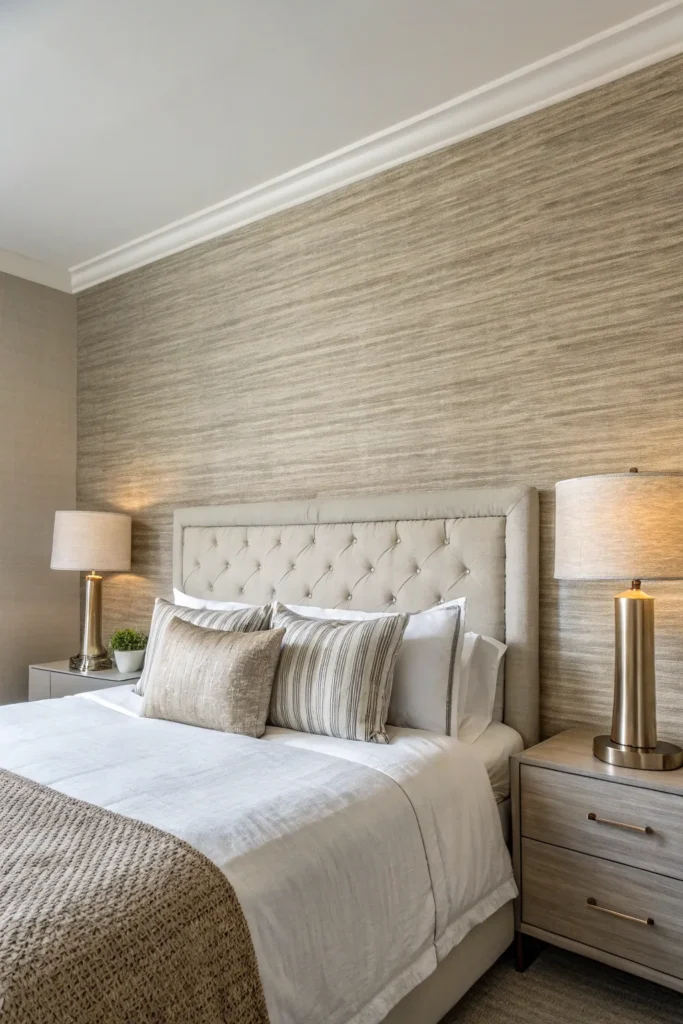
Wallpaper doesn’t have to be bold or colorful to stand out. Textured wallpaper, such as grasscloth, linen-look, or embossed designs, adds subtle complexity to an accent wall.
Neutral textured wallpaper works beautifully behind a bed, creating a refined backdrop that enhances the overall design. It’s an excellent choice for those who want visual interest without committing to strong patterns or colors.
4. Stone or Faux Stone Panels

Stone accent walls introduce a sense of permanence and natural beauty. While real stone can be heavy and expensive, faux stone panels offer a lightweight and more affordable alternative that still delivers visual impact.
The rough texture of stone contrasts beautifully with soft bedding and textiles, creating a balanced and inviting bedroom environment. This option works particularly well in rustic, industrial, or nature-inspired interiors.
5. Plaster or Limewash Finish

Plaster and limewash finishes are perfect for creating a softly textured accent wall. These finishes add subtle movement and depth, with natural variations that make the wall feel handcrafted and organic.
Unlike flat paint, plaster walls have a tactile quality that changes with the light. This makes them ideal for bedrooms, where gentle visual interest enhances the calming atmosphere rather than disrupting it.
6. Vertical Paneling for Classic Elegance

Wall paneling is a timeless way to add texture to a bedroom. Vertical panels draw the eye upward, making the room feel taller and more spacious.
Painted in the same color as the surrounding walls or left in a natural finish, paneling adds architectural interest without relying on color contrast. This idea works well in both traditional and modern bedrooms.
7. Exposed Brick for Character and Depth
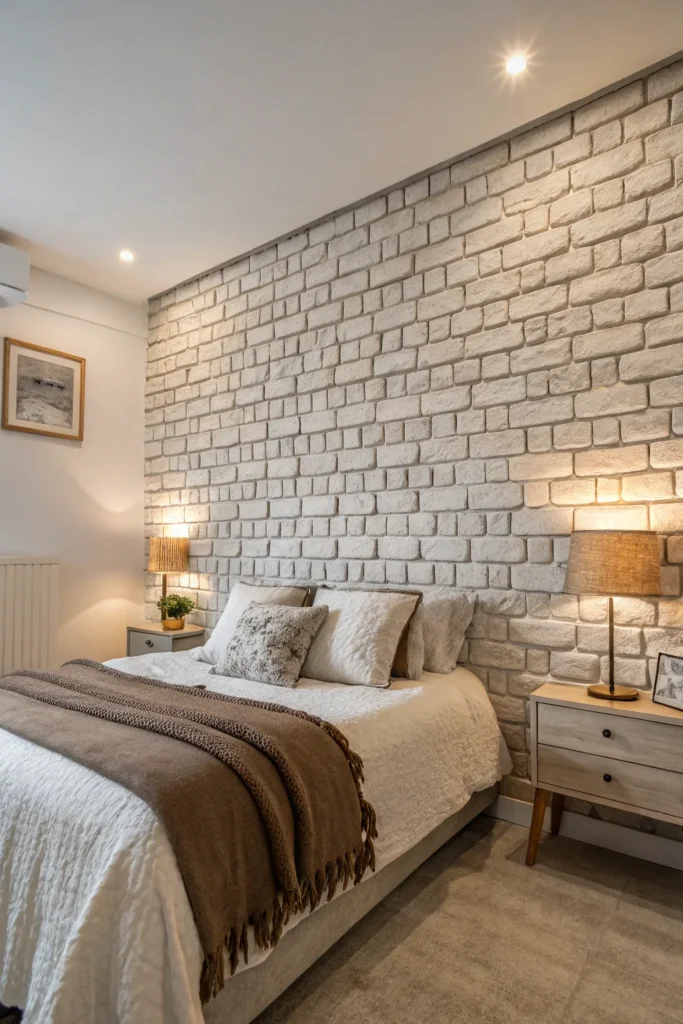
Exposed brick walls add instant character and texture. Even when painted in a neutral shade or left in their natural state, brick walls create a strong focal point through texture alone.
In a bedroom, exposed brick can be softened with plush textiles and warm lighting. This balance keeps the space cozy and inviting rather than industrial or cold.
8. Woven or Cane Wall Panels

Woven textures such as cane, rattan, or wicker add warmth and a handcrafted feel to a bedroom accent wall. These materials introduce visual softness and natural texture, making the space feel relaxed and approachable.
Cane wall panels work beautifully in bohemian, coastal, or eclectic bedrooms. Their subtle pattern adds interest without overwhelming the senses.
9. Shiplap for Subtle Texture

Shiplap walls are known for their clean lines and understated texture. While often associated with farmhouse style, shiplap can be adapted to modern and minimalist bedrooms when done in neutral tones.
The horizontal lines add dimension and structure, creating a calm and cohesive accent wall that feels intentional rather than decorative.
10. 3D Wall Panels for Modern Appeal

For a contemporary bedroom, 3D wall panels offer a striking way to introduce texture. These panels come in a variety of geometric or organic designs, creating shadows and highlights that shift with the light.
When used in a neutral color, 3D panels add drama through form rather than color. This makes them ideal for modern spaces that prioritize clean palettes and bold textures.
11. Leather or Faux Leather Wall Accents

Leather accents bring a sense of luxury and warmth to the bedroom. A leather or faux leather accent wall behind the bed can create a rich, tactile focal point.
Neutral leather tones like tan, brown, or cream add depth without introducing bright color. This option works especially well in masculine, modern, or hotel-inspired bedroom designs.
12. Concrete or Cement Finish

Concrete accent walls are a favorite in modern and industrial interiors. The raw, matte texture of concrete adds depth and visual interest while maintaining a neutral palette.
In a bedroom, concrete should be balanced with soft elements like bedding, rugs, and curtains. This contrast creates a space that feels both edgy and comfortable.
13. Layered Molding for Architectural Texture

Decorative molding can transform a plain wall into an architectural feature. Picture-frame molding, box molding, or intricate trim patterns add texture through relief rather than color.
When painted the same shade as the wall, molding creates subtle shadows and highlights that change throughout the day. This approach adds elegance and dimension without overwhelming the room.
14. Textured Fabric Panels with Patterned Stitching

Fabric panels with stitched or quilted patterns add texture through detail and craftsmanship. These panels offer both visual interest and acoustic benefits, making them ideal for bedrooms.
Neutral tones keep the focus on texture rather than pattern. This idea is perfect for those who want a soft, cozy accent wall with a refined look.
15. Mixed Texture Accent Wall

For a more layered approach, consider combining multiple textures on a single accent wall. This could include wood with fabric panels, or plaster with subtle paneling.
The key is cohesion. Stick to a limited color palette and complementary materials to avoid a cluttered look. When done thoughtfully, mixed textures create a rich, sophisticated accent wall that feels curated and intentional.
How to Style a Textured Accent Wall in the Bedroom
When working with texture, less is often more. Allow the accent wall to stand out by keeping the surrounding décor simple and cohesive. Neutral bedding, minimal artwork, and soft lighting help highlight the texture without competing with it.
Lighting is especially important. Directional or ambient lighting can enhance shadows and highlights, bringing the texture to life. Wall sconces, bedside lamps, or hidden LED strips can subtly emphasize the wall’s surface.
Final Thoughts on Texture-Based Bedroom Accent Walls
Accent walls don’t have to rely on bold color to make a statement. Texture offers a refined, timeless alternative that adds depth, warmth, and character to the bedroom. By focusing on tactile elements and architectural details, you can create a focal point that feels calm, sophisticated, and deeply inviting.
These 15 bedroom accent wall ideas using texture instead of color demonstrate how powerful subtle design choices can be. Whether you prefer the softness of fabric, the warmth of wood, or the raw beauty of concrete, texture allows you to express style in a way that enhances relaxation and comfort. In a space meant for rest, texture speaks quietly—but beautifully.