15 Bathroom Accent Wall Ideas for a Stunning Feature
A bathroom accent wall is one of the most immediately impactful and most design-confident improvements available in any bathroom. In a room that is typically small, typically functional, and typically challenging to decorate with the same freedom available in larger living spaces, the accent wall creates a focused deliberate design statement that transforms the bathroom from a purely utilitarian space into a genuinely beautiful one.
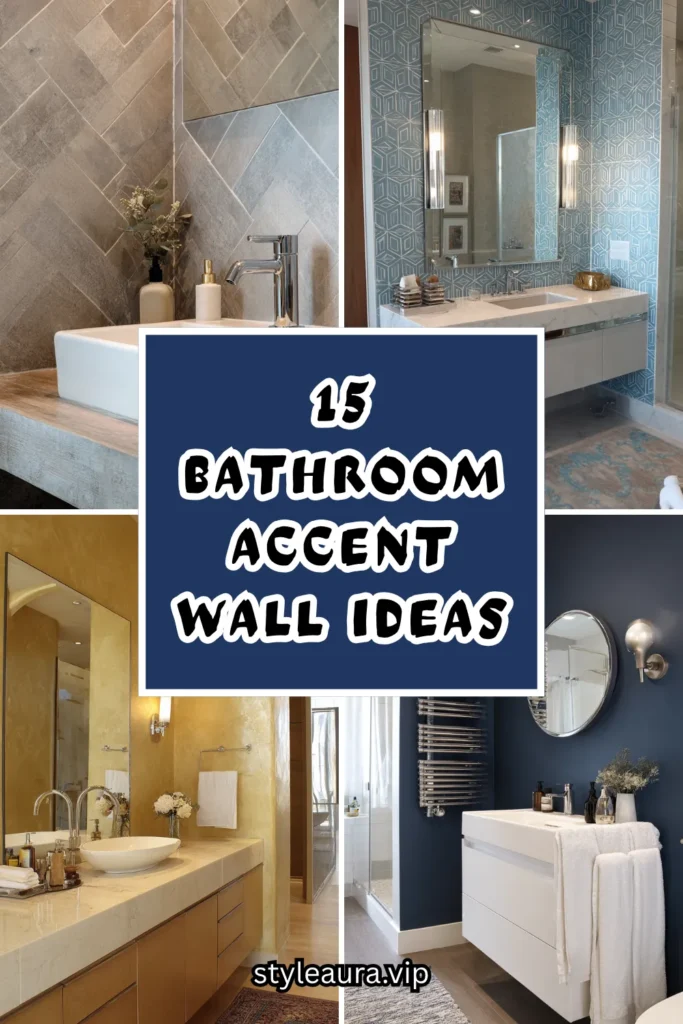
A single wall treated with genuine intention and genuine material quality elevates the entire bathroom beyond what the remaining three walls could achieve on their own.
Here are 15 bathroom accent wall ideas that create a genuinely stunning bathroom feature.
1. Dramatic Dark Paint Accent Wall
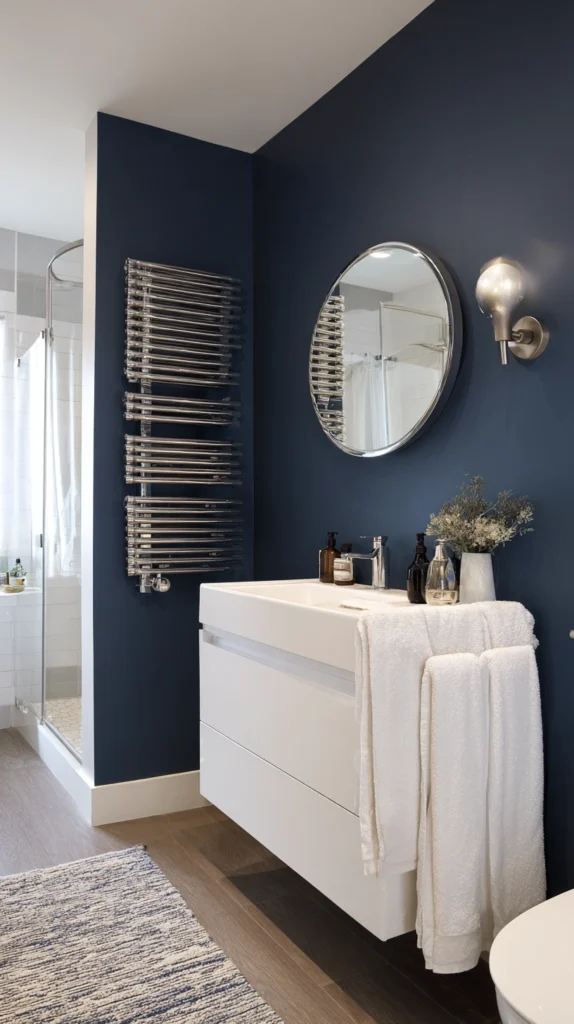
A single bathroom wall painted in a deep dramatic color — a rich forest green, a deep charcoal, a midnight navy, or a warm chocolate brown — creates a bathroom accent wall of extraordinary visual impact at the most accessible cost of any accent wall treatment available.
The deep color creates the impression of greater depth in the wall surface, makes the fixtures in front of it appear more vivid and more beautiful by contrast, and transforms the bathroom atmosphere from functional to genuinely designed.
Pro Tip: Use a moisture-resistant paint finish — a satin or semi-gloss rather than flat or matte — for a deep color bathroom accent wall.
Flat paint finishes absorb moisture and are difficult to clean in the humid splash-prone environment of a bathroom. Satin and semi-gloss finishes resist moisture, clean easily, and create a subtle reflective quality that makes deep colors appear richer and more luminous.
2. Marble Tile Accent Wall
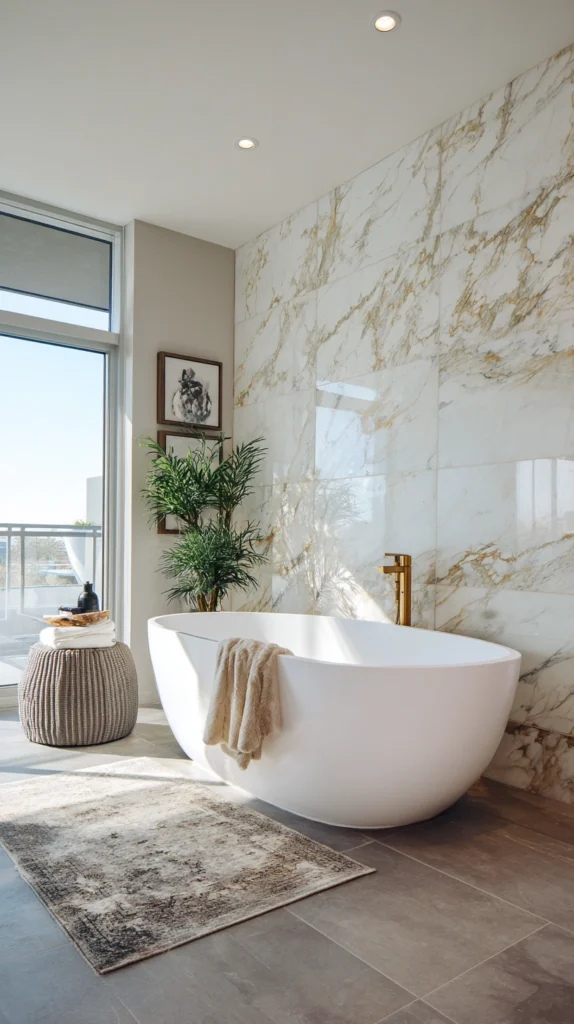
A wall of natural marble tile — full-height large format marble slabs or individual marble tiles in a classic or contemporary laying pattern — creates a bathroom accent wall of extraordinary material luxury and genuine timeless beauty.
The marble accent wall works most powerfully as a full-height installation — the tile running from floor to ceiling in a continuous material surface that creates the impression of a bathroom carved from a single geological mass.
Pro Tip: Choose book-matched marble tiles for a full-height bathroom accent wall — adjacent tiles cut from the same slab and installed as mirror images of each other so that the veining pattern creates a symmetrical butterfly-wing effect across the wall surface. Book-matched marble creates a wall of extraordinary visual drama and deliberately designed natural beauty rather than the random unrelated veining patterns of conventionally laid marble tiles.
3. Shiplap Timber Accent Wall
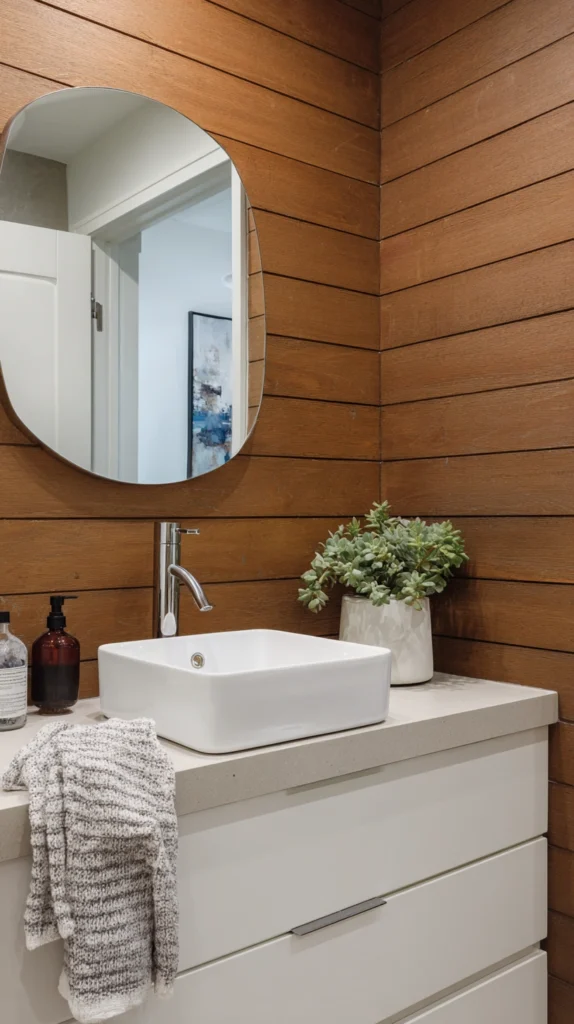
A shiplap timber accent wall — horizontally applied timber boards with a small reveal between each course — creates a bathroom accent wall of considerable natural warmth and genuine material character.
Timber in a bathroom accent wall references the natural world, creates genuine tactile warmth, and introduces a quality of organic material beauty that ceramic, stone, and painted alternatives cannot replicate. Against white fixtures and simple chrome accessories a shiplap timber accent wall creates a bathroom of relaxed natural coastal warmth.
Pro Tip: Use moisture-resistant timber or a specifically treated bathroom-grade shiplap product rather than standard interior shiplap timber.
Standard interior timber in a consistently humid bathroom environment absorbs moisture over time — swelling, warping, and developing surface mold. Moisture-resistant timber products designed specifically for bathroom applications handle the humidity of the bathroom environment without deterioration throughout their working life.
4. Zellige Tile Accent Wall
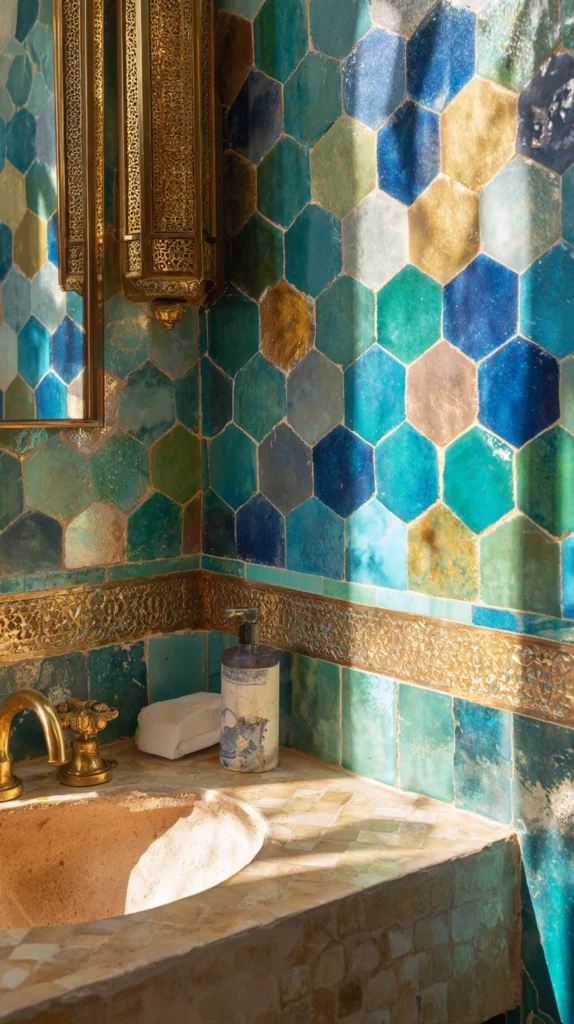
Zellige tiles — the handmade Moroccan glazed ceramic tiles with their characteristic irregular surfaces and jewel-toned color depth — create a bathroom accent wall of extraordinary decorative richness and completely individual material beauty.
The light-catching quality of zellige — each individual tile surface reflecting light at a slightly different angle from its neighbors — creates a wall surface that appears to shimmer and shift as the viewing angle changes throughout the day.
Pro Tip: Choose a single color of zellige tile for the bathroom accent wall rather than a multi-color combination.
A single color of zellige — particularly in deep teal, warm terracotta, or rich cobalt blue — creates a wall of remarkable tonal depth and visual richness from the natural variation within a single color. Multiple zellige colors on a single accent wall can overwhelm the subtle beauty of the individual tile surface quality.
5. Geometric Patterned Tile Accent Wall
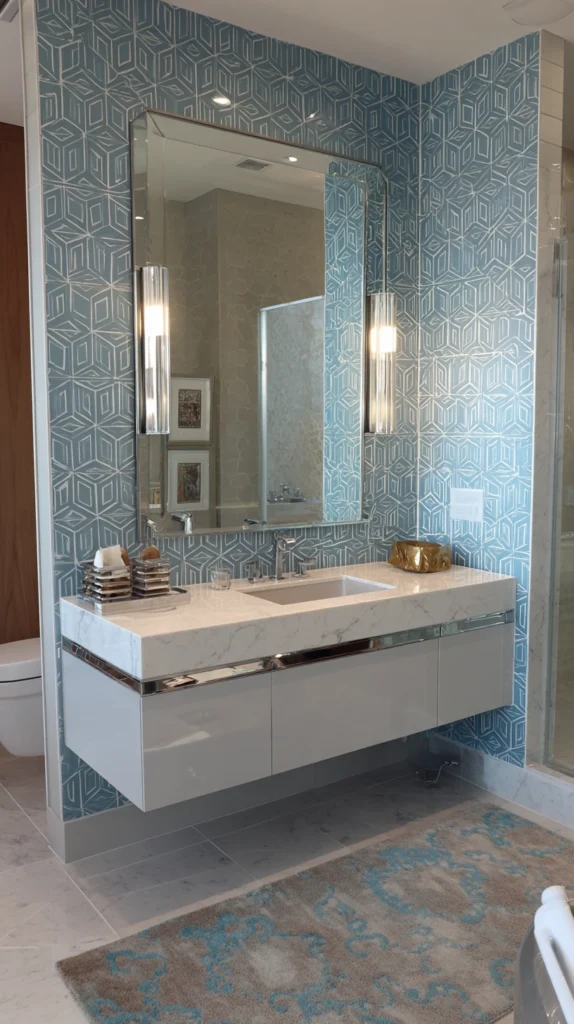
A geometric patterned tile accent wall — encaustic cement tiles, patterned porcelain tiles, or handmade geometric ceramic tiles in a bold repeating pattern — creates a bathroom of considerable graphic energy and genuine decorative personality.
The pattern-led accent wall works most powerfully where the remaining three walls are kept in a simple plain finish that allows the patterned wall to read with complete clarity and maximum visual impact.
Pro Tip: Use large format geometric patterns — tiles of at least 200mm by 200mm — rather than small mosaic-scale geometric tiles for a bathroom accent wall. Small geometric patterns read as texture rather than pattern from a normal bathroom viewing distance. Large format geometric tiles create bold pattern that reads clearly and powerfully from every position within the bathroom.
6. Fluted Plaster or Tile Accent Wall
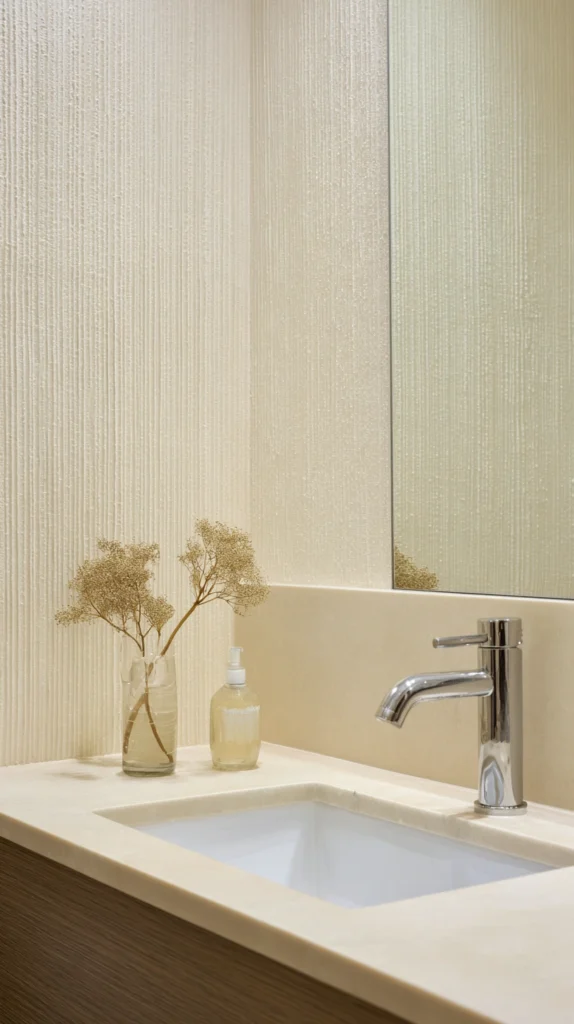
A fluted accent wall — a surface of regular vertical grooves created in plaster or replicated in fluted tile panels — creates a bathroom of considerable architectural sophistication and genuine three-dimensional visual interest. The fluted surface creates a play of light and shadow across the wall as the ambient room light catches the peaks and recesses of the fluting — a living shifting quality of wall surface texture that flat surfaces entirely lack.
Pro Tip: Install fluted plaster or tile accent walls in a single consistent color — applying no color differentiation between the peaks and the recesses of the fluting.
Color differentiation creates a striped effect that draws attention to the color contrast rather than the architectural quality of the fluted surface itself. A single consistent color across the full fluted surface creates the clean textural beauty that makes fluted walls so specifically and completely beautiful.
7. Grasscloth Wallpaper Accent Wall
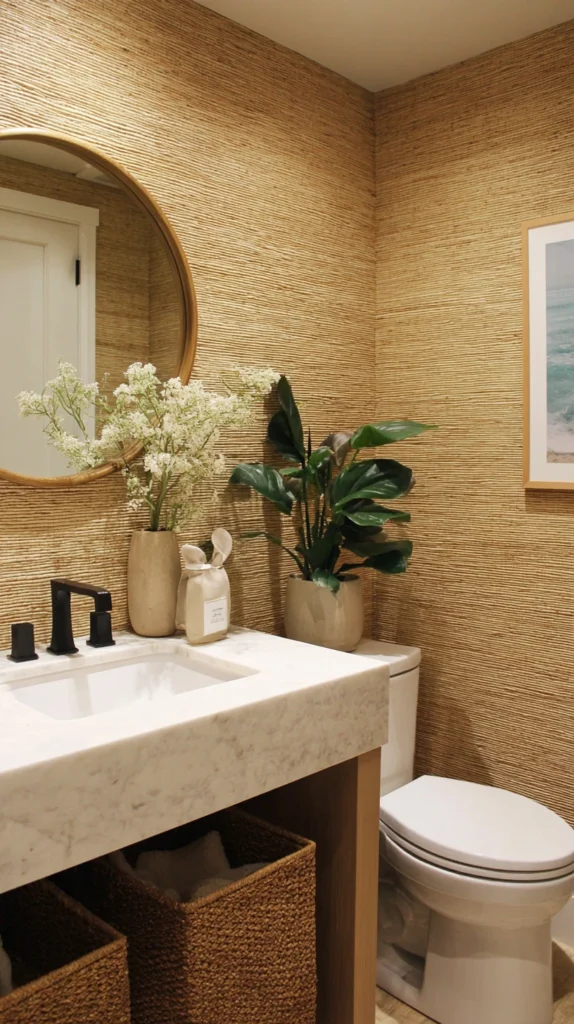
A grasscloth wallpaper accent wall — natural fiber wallpaper woven from sisal, seagrass, or jute in warm natural tones — creates a bathroom of extraordinary organic warmth and genuine material texture.
Grasscloth introduces a quality of natural handmade material warmth into the bathroom that no painted or tiled surface can replicate — the woven texture of the natural fibers creating a wall surface of considerable tactile richness and genuine botanical beauty.
Pro Tip: Apply grasscloth wallpaper only to the wall least exposed to direct water splash and steam — typically the wall opposite the shower or bath.
Grasscloth is a natural fiber product that does not tolerate consistent moisture exposure — direct water splash and persistent steam cause the natural fibers to swell, discolor, and deteriorate. Positioned on the least moisture-exposed wall grasscloth creates a beautiful and surprisingly durable accent wall treatment.
8. Mosaic Tile Accent Wall
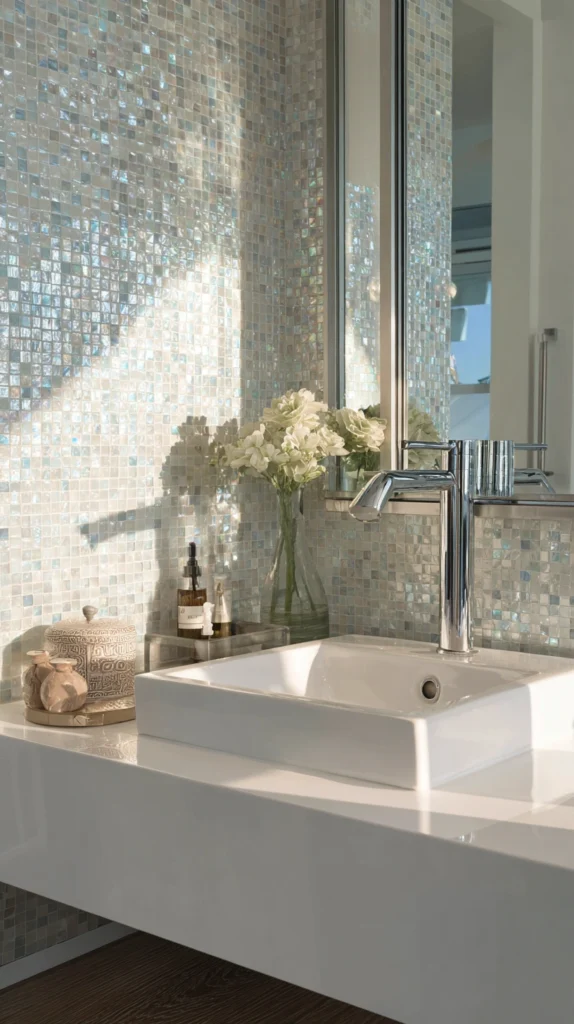
A mosaic tile accent wall — small individual tiles of glass, natural stone, or ceramic arranged in a pattern and grouted to create a continuous richly textured surface — creates a bathroom of extraordinary visual complexity and genuine artistic character.
Glass mosaic tiles in particular create a bathroom accent wall of remarkable luminous beauty — the translucent glass tiles catching and transmitting light in a way that creates a shimmering jewel-like wall surface of complete visual enchantment.
Pro Tip: Use a single mosaic tile in a consistent color and format across the entire accent wall rather than mixing multiple mosaic types within the same installation.
A single consistent mosaic tile creates a wall of remarkable tonal depth from the natural variation in light reflection across hundreds of individual tiles. Multiple mosaic types mixed together create a visually fragmented wall that loses the unified shimmering quality that makes a mosaic accent wall so powerfully beautiful.
9. Exposed Brick Accent Wall
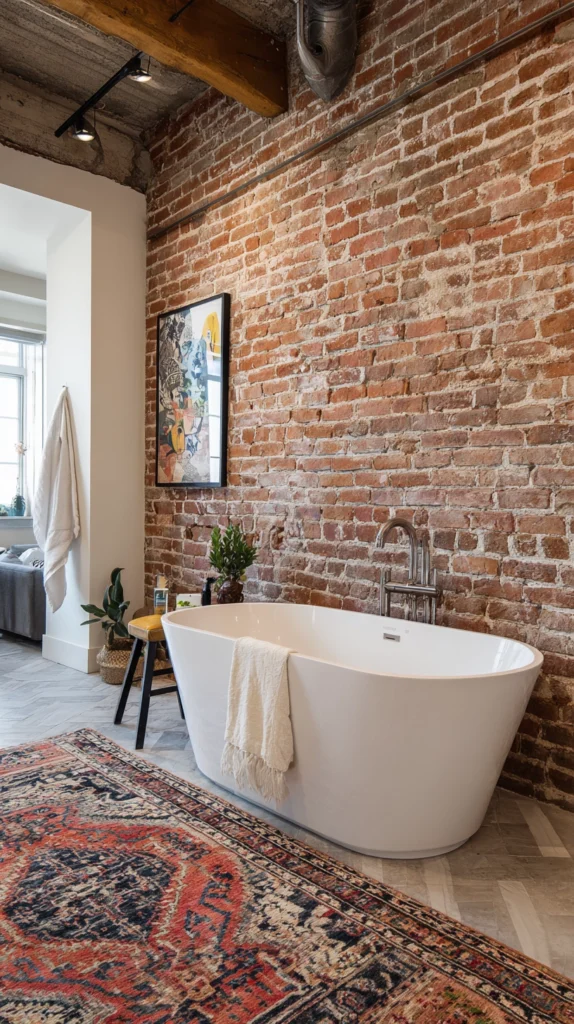
An exposed brick accent wall — either genuine reclaimed brick from an original building wall or a brick slip tile installation replicating the warmth and texture of genuine brickwork — creates a bathroom of considerable historic character and genuine material warmth.
Exposed brick in a bathroom creates an industrial loft-inspired aesthetic that contrasts beautifully with the clean white porcelain of bathroom fixtures — the warm textured red-orange of the brick creating a visual warmth that makes the bathroom feel genuinely alive.
Pro Tip: Seal exposed brick bathroom accent walls with a clear masonry sealant that provides complete moisture resistance without altering the natural appearance of the brick surface.
Unsealed brick in a consistently humid bathroom environment absorbs moisture and develops surface efflorescence — the white salt deposits that leach from unsealed masonry in wet conditions — creating a persistent maintenance challenge that a clear sealant applied before use prevents entirely.
10. Venetian Plaster Accent Wall
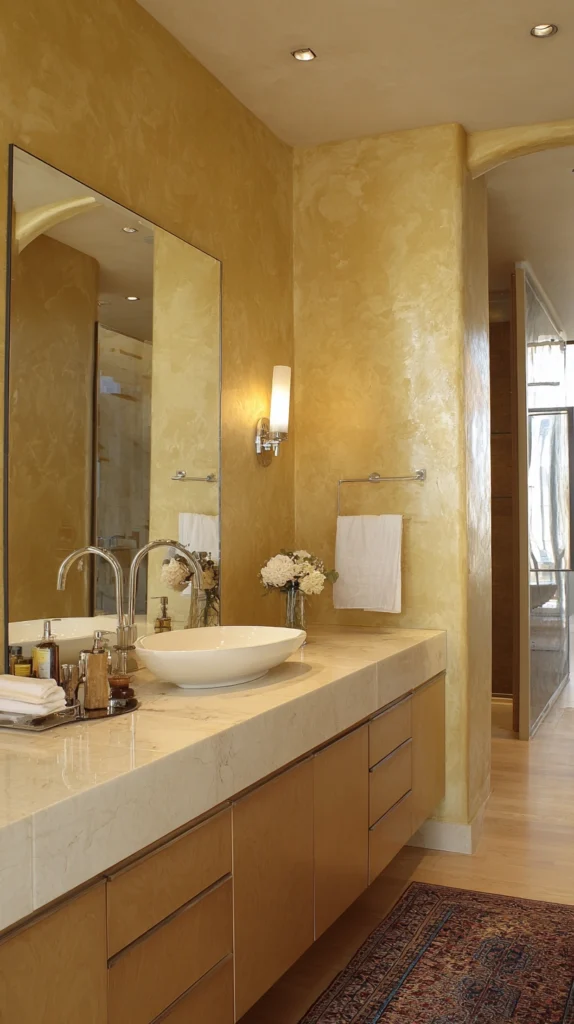
A Venetian plaster accent wall — the traditional Italian decorative plaster technique creating a smooth luminous marble-like surface of extraordinary depth and beauty — creates a bathroom accent wall of maximum material luxury and genuine artisan craftsmanship.
Venetian plaster creates a surface that appears to have depth — the multiple layers of troweled and burnished plaster creating the impression of looking into the wall rather than simply at it.
Pro Tip: Apply Venetian plaster bathroom accent walls in a warm tone — warm cream, pale honey, or muted warm grey — rather than cool white. Cool white Venetian plaster in a bathroom lit by warm artificial light can appear slightly cold and institutional — losing the luminous warmth that makes Venetian plaster so specifically and genuinely beautiful as a bathroom surface treatment.
11. Stone Feature Accent Wall
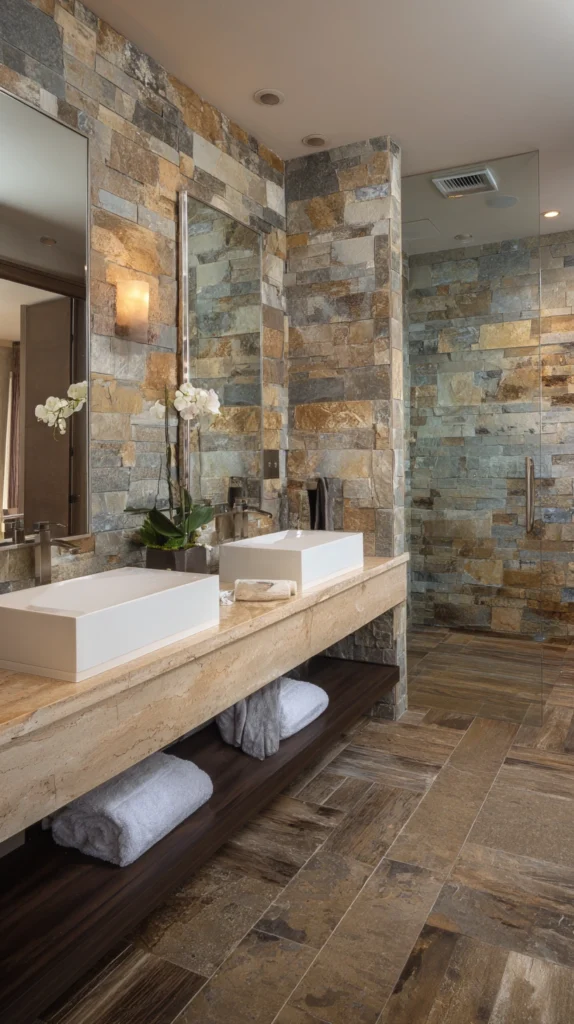
A natural stone accent wall — large format limestone slabs, stacked slate, or irregular fieldstone — creates a bathroom of extraordinary geological beauty and genuine material permanence. Stone in a bathroom context creates a quality of ancient mineral-rich luxury — the cool smooth surface of polished stone alongside the warm water of the bath or shower creating a sensory combination of genuine considered pleasure.
Pro Tip: Choose stone in a warm rather than cool tone for a bathroom accent wall that maintains warmth under artificial bathroom lighting.
Cool blue-grey stone in a bathroom lit by warm artificial light can appear cold and clinical. Warm honey limestone, warm buff sandstone, or warm grey-brown slate all maintain their genuine beauty and their material warmth under warm artificial bathroom lighting.
12. Patterned Wallpaper Accent Wall
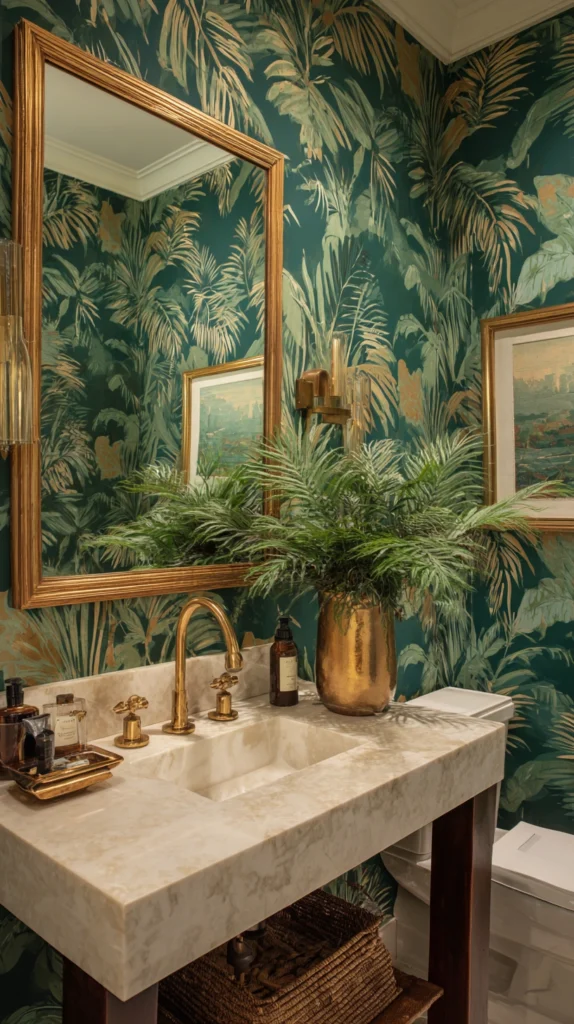
A patterned wallpaper accent wall — a bold botanical print, a dramatic geometric, or a maximalist pattern-led design in a bathroom-specific moisture-resistant wallpaper format — creates a bathroom of genuine decorative personality and considerable visual drama.
Bathroom-specific wallpaper is available in fully washable moisture-resistant formats that handle the humidity and occasional splash of a bathroom environment without peeling, discoloring, or losing their pattern quality over time.
Pro Tip: Choose a wallpaper pattern with a vertical repeat that suits the specific ceiling height of the bathroom.
A large scale pattern with a long vertical repeat suits high ceilings beautifully but can feel cramped and visually overwhelming in a bathroom of standard ceiling height. A smaller scale pattern with a shorter vertical repeat creates a more proportionally balanced accent wall in a standard-height bathroom.
13. Herringbone Tile Accent Wall
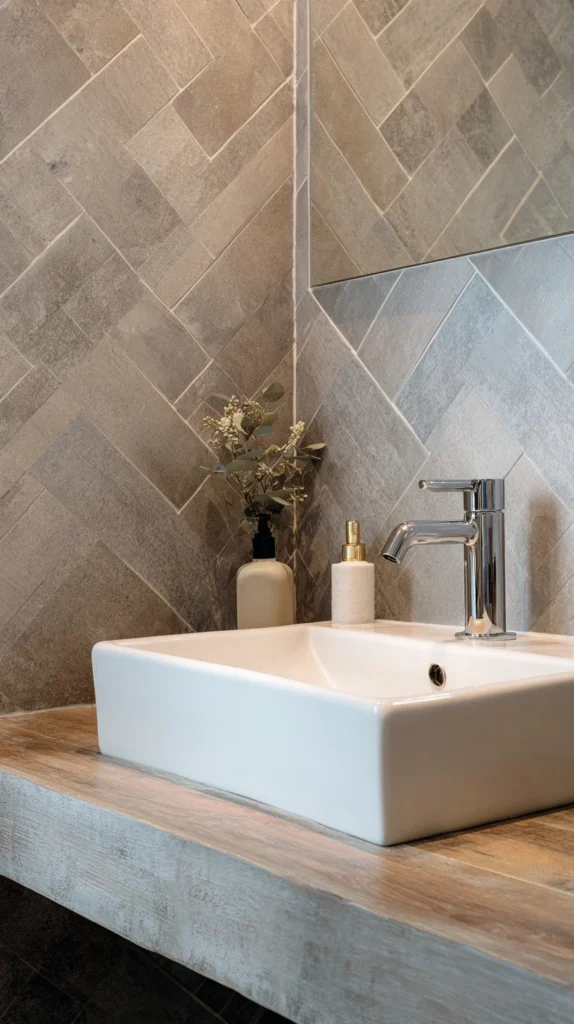
A herringbone tile accent wall — ceramic, porcelain, or natural stone tiles laid in the classic 45-degree diagonal zigzag pattern — creates a bathroom of considerable graphic energy and genuine architectural character.
The herringbone pattern creates a dynamic visual rhythm across the wall surface that the same tiles laid in a conventional horizontal or vertical pattern entirely lack — the diagonal orientation creating movement, energy, and genuine visual interest from a simple rectangular tile format.
Pro Tip: Choose tiles with a length-to-width ratio of at least 3:1 for a herringbone pattern that reads clearly as a herringbone rather than a simple diagonal grid.
Short square-proportion tiles laid in herringbone are difficult to distinguish from a simple diagonal installation. Long narrow tiles in a 3:1 or greater proportion create the distinctive clearly defined herringbone rhythm that gives this pattern its characteristic visual energy and genuine design authority.
14. Mirror Mosaic Accent Wall
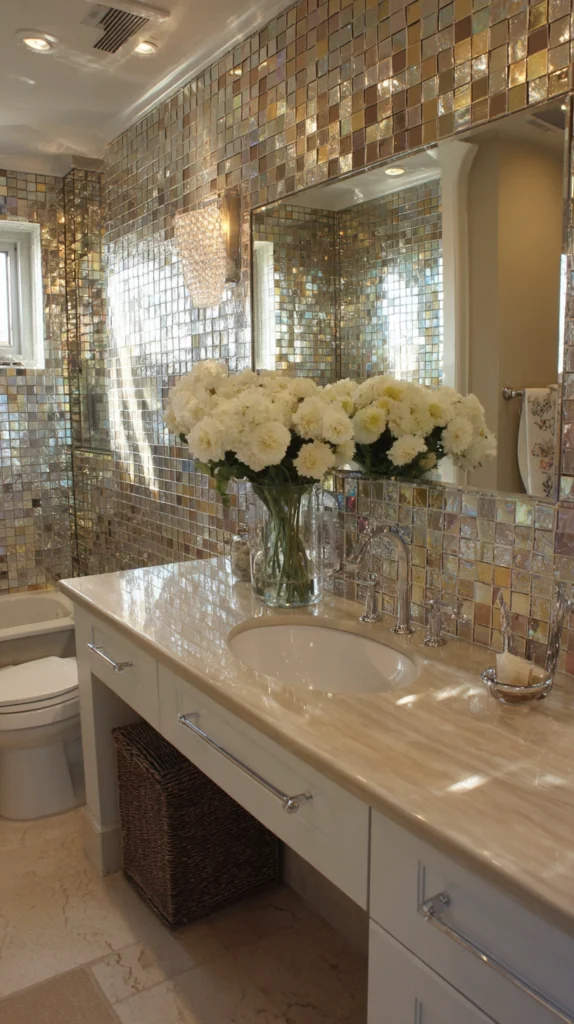
A mirror mosaic accent wall — small individual mirror tiles or larger mirror panels arranged on the bathroom accent wall — creates a bathroom of extraordinary luminous spatial expansion and genuine glamorous beauty. Mirror on an accent wall multiplies the available light within the bathroom — the reflected light creating a brightness and sense of spatial openness that no other accent wall treatment can replicate. In a small or poorly lit bathroom a mirror mosaic accent wall creates the most dramatic spatial improvement available.
Pro Tip: Use antique or smoked mirror tiles rather than standard bright mirror tiles for a bathroom accent wall of genuine sophistication.
Standard bright mirror tiles create a slightly harsh clinical reflective quality that can feel cold and overly functional. Antique and smoked mirror tiles have a warm slightly dimmed reflective quality that creates a softer, more atmospheric and more genuinely beautiful bathroom accent wall.
15. Colored Grout Accent Wall
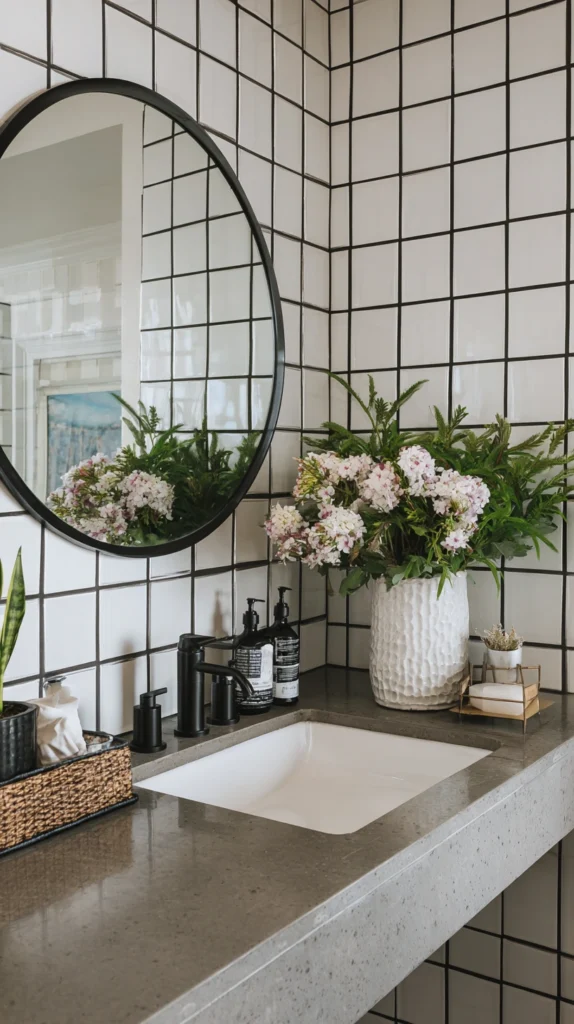
A bathroom accent wall where the design statement is created through colored grout — standard white or grey subway tiles laid with a dramatically contrasting grout color in deep charcoal, rich terracotta, or vivid black — creates a bathroom accent wall of considerable graphic impact at the most affordable cost of any tile accent wall option.
The colored grout transforms a simple inexpensive tile into a genuinely designed surface — the grout lines creating a bold graphic grid pattern that standard grout entirely conceals.
Pro Tip: Apply a grout sealer to colored grout bathroom accent walls immediately after installation and reseal annually. Colored grout is significantly more susceptible to staining and moisture penetration than standard grey or white grout and requires consistent sealing to maintain its vivid color quality.
An unsealed colored grout tile wall develops patchy faded grout lines within the first year of bathroom use — significantly undermining the deliberate bold design statement that the colored grout was installed to create.
One Wall Is Enough
The bathroom accent wall succeeds because it concentrates rather than distributes the design energy of the room. One wall treated with genuine intention and genuine material quality creates a bathroom of complete considered beauty — the single accent wall doing more for the room’s character, its atmosphere, and its daily pleasure than four walls of modest even decoration could achieve.
Choose the treatment that feels most true to the bathroom you want to create. Apply it with the care and quality that a permanent installation deserves. And discover that one beautiful wall is genuinely completely enough.