15 Basement Stairs Ideas
Basement stairs are one of the most consistently overlooked design opportunities in any home. They are treated as purely functional connectors between floors, built to code and finished to a minimum standard.

Yet basement stairs are often the first thing seen when entering the lower level, and a staircase that is thoughtfully designed communicates care and intention about the entire home. Here are 15 basement stairs ideas that are modern, practical, and genuinely worth considering.
1. Paint the Risers in a Bold Accent Color
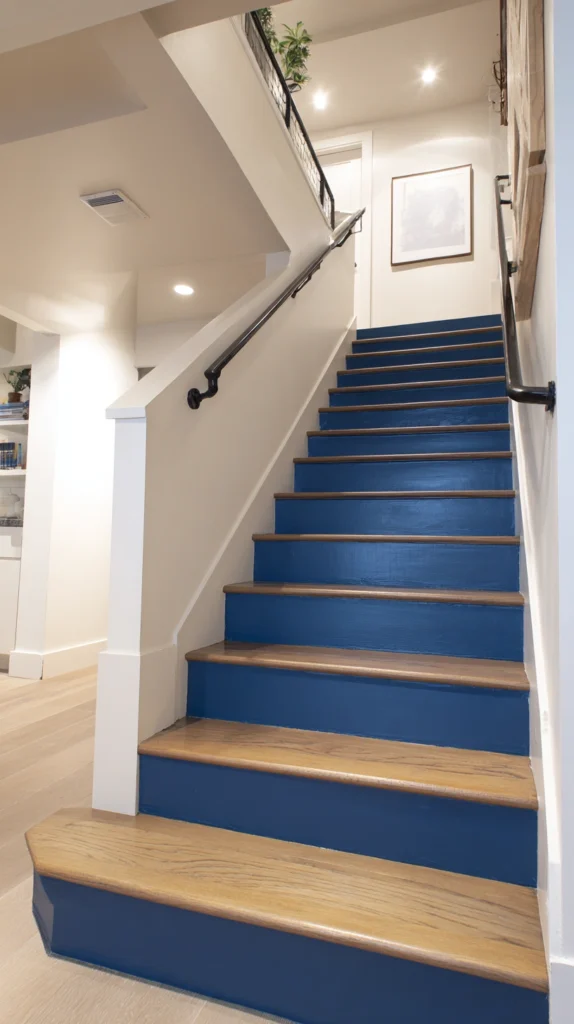
Paint the vertical face of each step in a bold accent color while keeping the treads in natural wood or white. A deep navy, forest green, terracotta, or dusty sage all work beautifully as riser colors. Use durable floor paint rather than standard wall paint as risers receive incidental foot contact and need to withstand scuffing and regular cleaning.
2. Install a Stair Runner
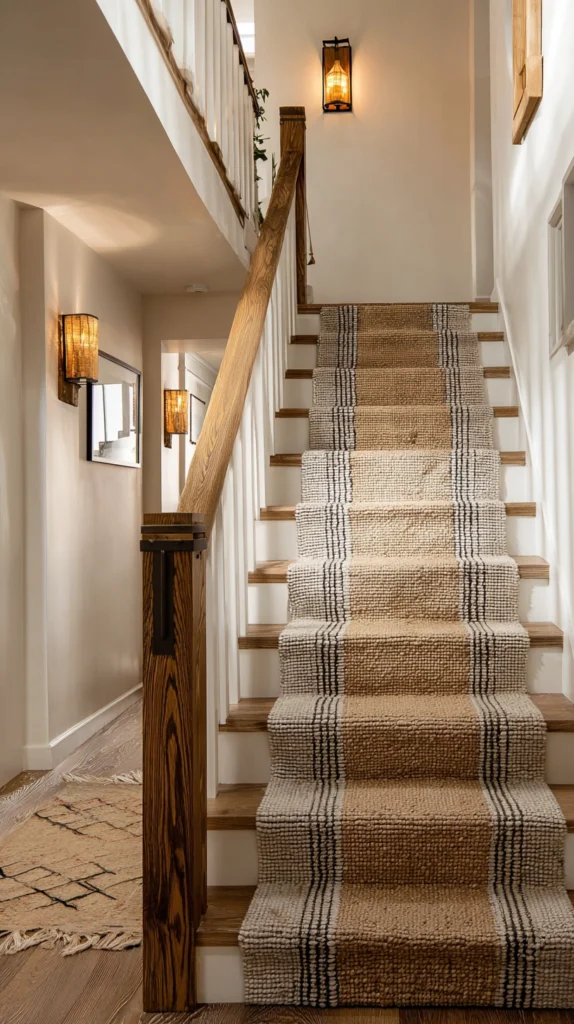
A stair runner adds warmth, texture, safety, and visual character simultaneously. It reduces noise on timber stairs and provides grip in a staircase that may lack a handrail on one side. Choose a natural fiber runner in jute, sisal, or wool in a simple stripe or geometric pattern and leave an equal border of exposed tread on each side for a balanced appearance.
3. Add Open Riser Treads for a Modern Look
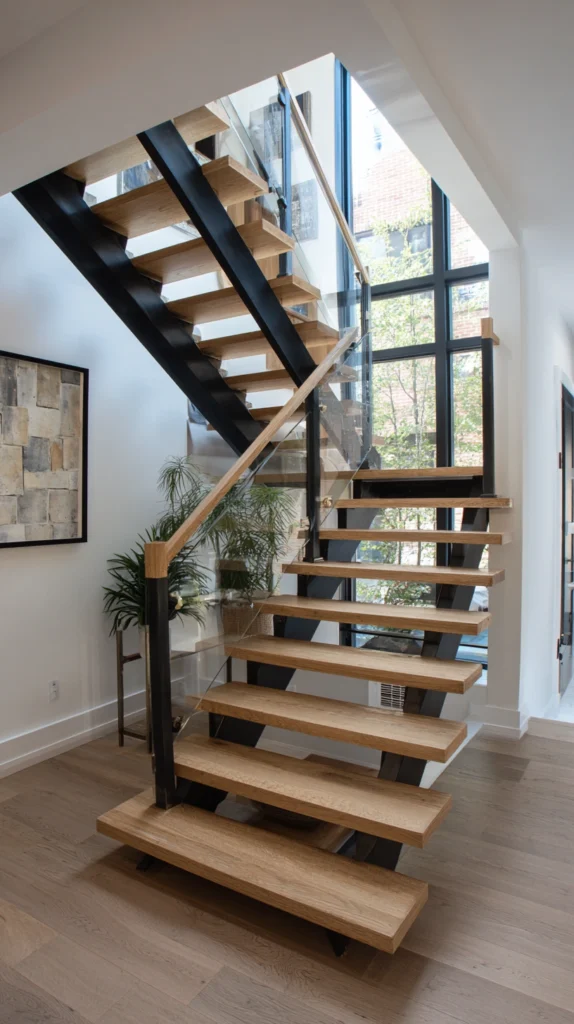
Replacing solid stairs with open riser treads creates a lighter, more architecturally interesting staircase that allows light to pass through the structure. Open riser stairs in solid oak or walnut with a steel stringer read as a considered design element rather than a functional structure. Check local building regulations regarding the maximum gap permitted between open risers before specifying this design.
4. Install a Statement Handrail
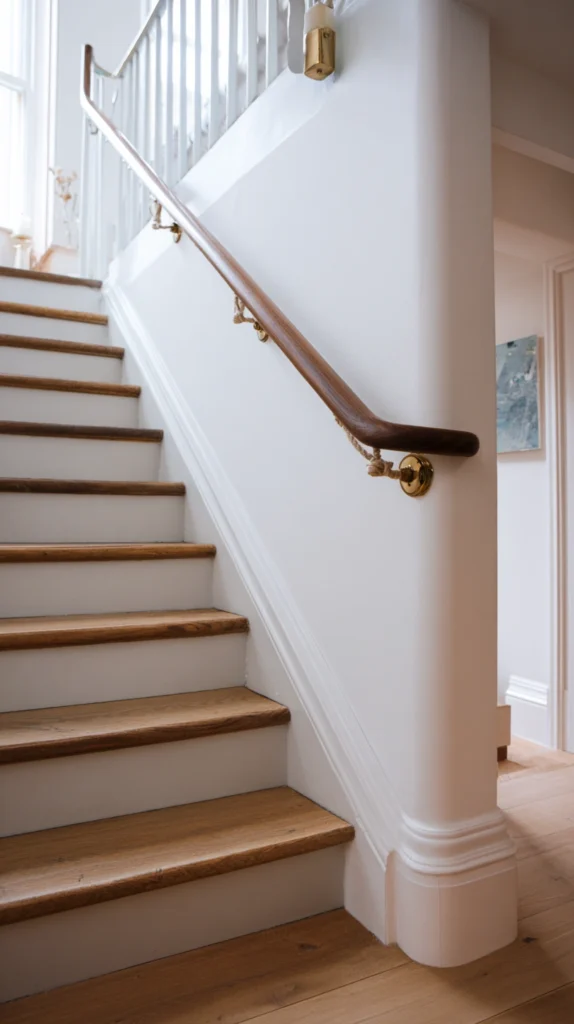
Upgrading the handrail from a basic timber rail to something more considered transforms the perceived quality of the entire staircase. A solid oak or walnut handrail feels genuinely luxurious compared to a standard softwood rail. A rope handrail threaded through wall-mounted metal eye bolts creates a casual, characterful detail that suits relaxed homes with a natural material aesthetic.
5. Use Lighting Built Into the Staircase
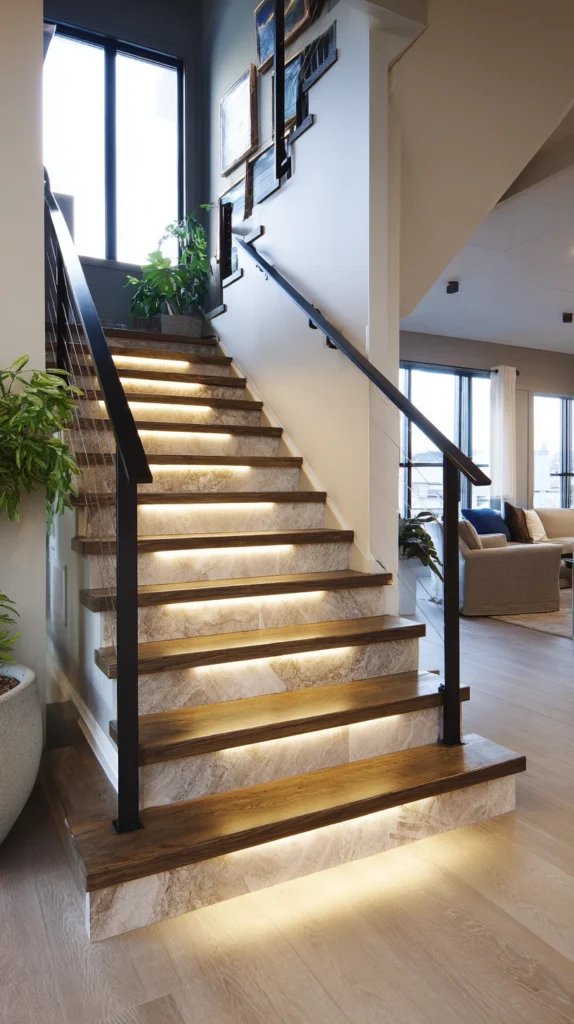
LED strip lights beneath each tread nosing or small recessed lights set into each riser transform basement stairs from a dark descent into a well-lit architectural feature.
Step lighting at a low level provides practical, flattering illumination without the harshness of an overhead downlight. Choose warm-toned LEDs at 2700 Kelvin for the most welcoming and atmospherically appropriate result.
6. Create Storage Beneath the Stairs
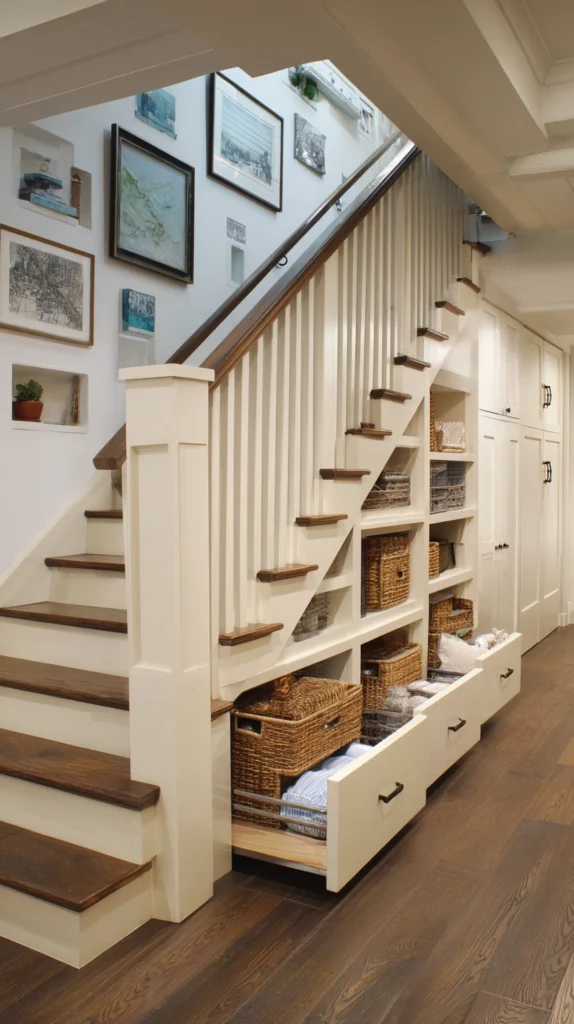
The triangular void beneath basement stairs is one of the most practically valuable storage opportunities in the lower level. Built-in shelving, custom drawers that follow the slope of the staircase, or a combination of open and closed storage transforms wasted space into useful organizational capacity. Paint the interior in a light color to maximize visibility in what is inevitably the darkest zone of the staircase.
7. Apply Patterned Tile to the Risers
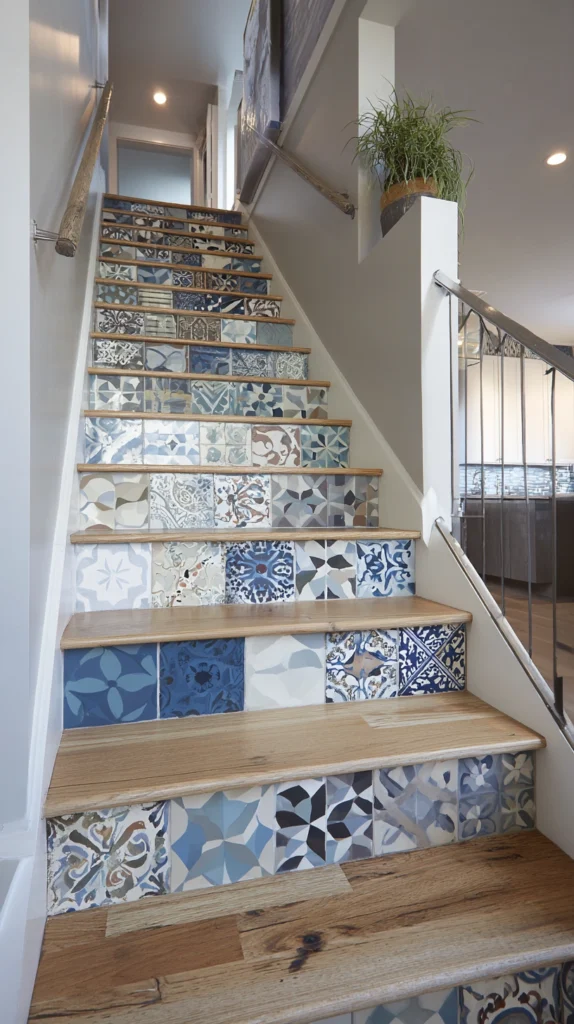
Decorative ceramic or encaustic tiles applied to each riser create one of the most visually striking staircase treatments available. Encaustic cement tiles in a geometric pattern or hand-painted ceramic tiles in a Mediterranean style create a feature of genuine visual drama. Use waterproof adhesive and grout as basement stairs may be subject to higher moisture levels than stairs elsewhere in the home.
8. Refinish Existing Timber Treads
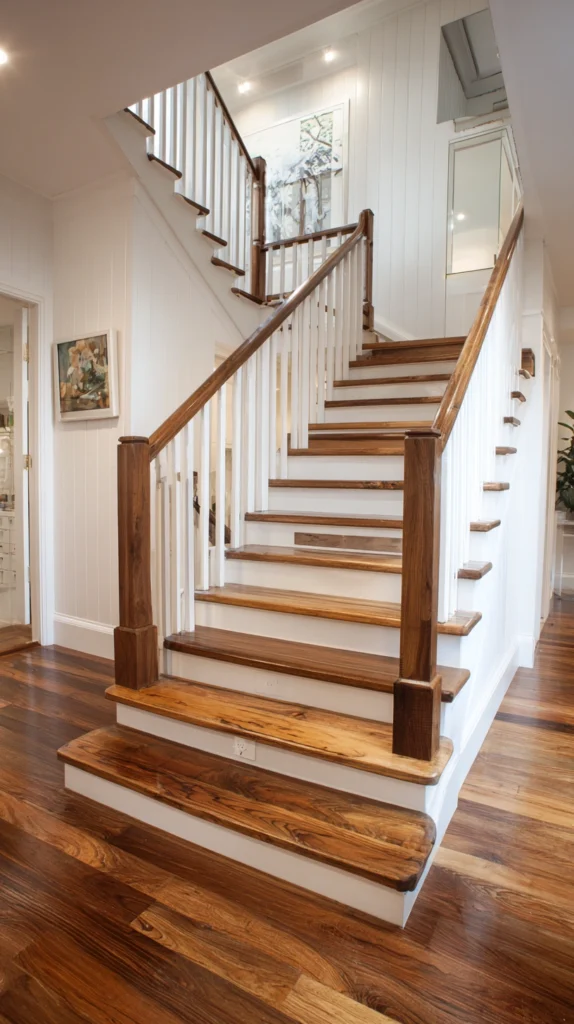
Sanding existing timber treads back to bare wood and applying a fresh hardwearing finish transforms the appearance of the stairs entirely at a fraction of the cost of replacement.
A penetrating oil, a durable varnish, or a floor paint in a considered color all create a beautiful result. Refinished natural timber treads paired with painted white risers is one of the most timeless and practically durable basement stair treatments available.
9. Add a Feature Wall in the Stairwell
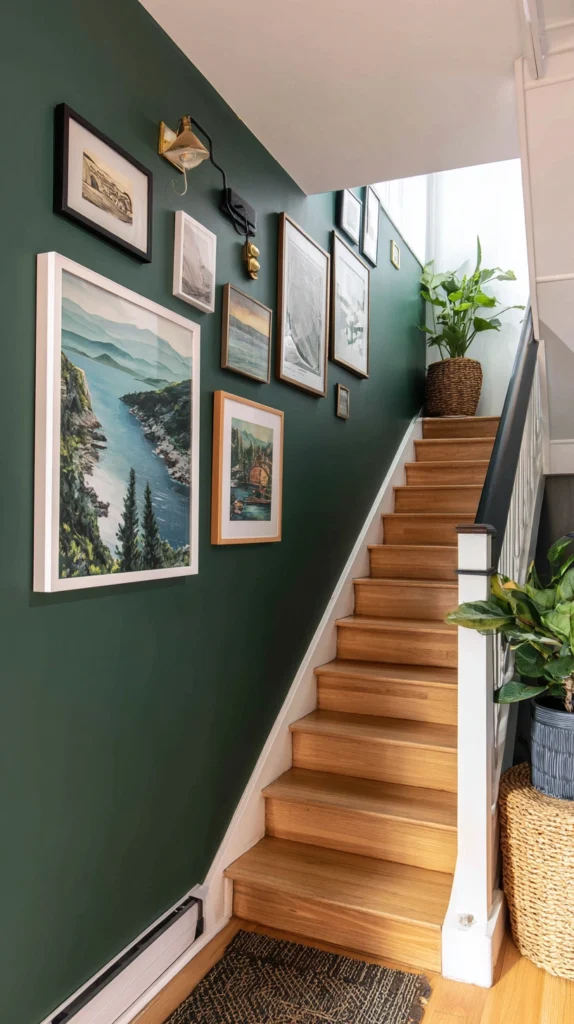
A bold paint color, a wallpaper in a pattern appropriate to the basement aesthetic, or a gallery of framed artwork along the descending wall transforms the stairwell from a transitional zone into a designed space with genuine visual character.
A deep, saturated color on the stairwell wall. rich navy, deep forest green, or warm charcoal. creates an intimate, enclosed quality that makes the descent feel like entering a distinct and carefully considered space.
10. Install Glass Balustrade Panels
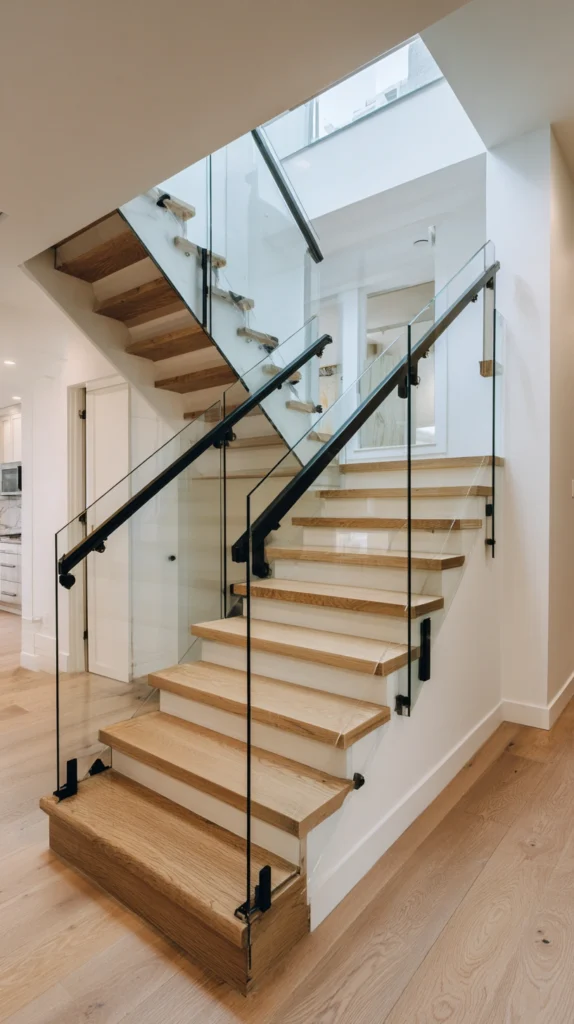
Glass balustrade panels replace solid balusters with clear panels that allow light to pass freely through the staircase structure. In a basement where natural light is limited, a glass balustrade allows light from above to travel further into the space below. Choose toughened safety glass in a minimal aluminum or steel channel in matte black or brushed stainless for the cleanest contemporary result.
11. Create a Gallery Wall Along the Descent
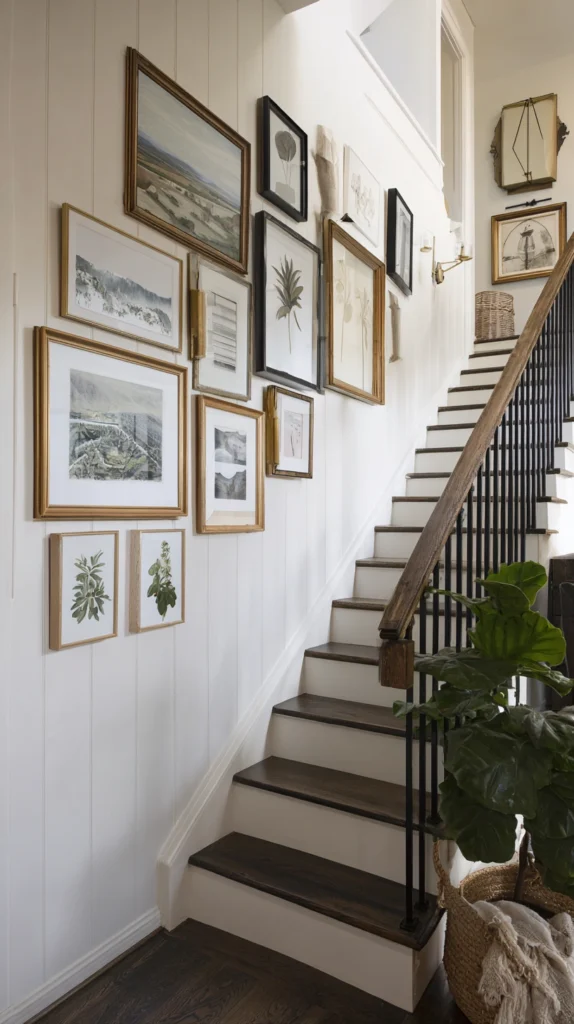
A gallery wall of framed artwork and photographs arranged along the stairwell wall makes the descent feel like a journey through a curated collection. Arrange pieces so the visual center of the arrangement tracks at eye level as the eye descends with the staircase. Use picture ledges rather than individual hooks if the arrangement is likely to evolve so pieces can be swapped without additional holes in the wall.
12. Use Concrete for a Modern Industrial Finish
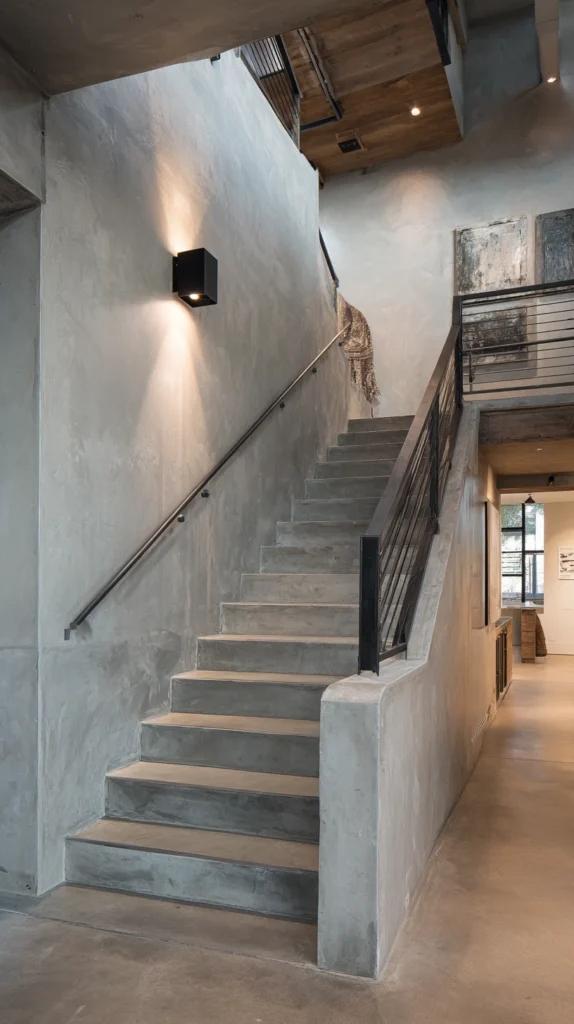
Concrete treads and risers create a basement staircase of exceptional contemporary character. Their neutral grey tone suits industrial, minimalist, and loft-style basement aesthetics particularly well. Concrete-look porcelain tiles applied to existing timber stairs create a very similar visual result at significantly lower cost. Seal the surface with a penetrating sealer and add a non-slip additive to ensure adequate grip.
13. Add Wainscoting to the Stairwell Walls
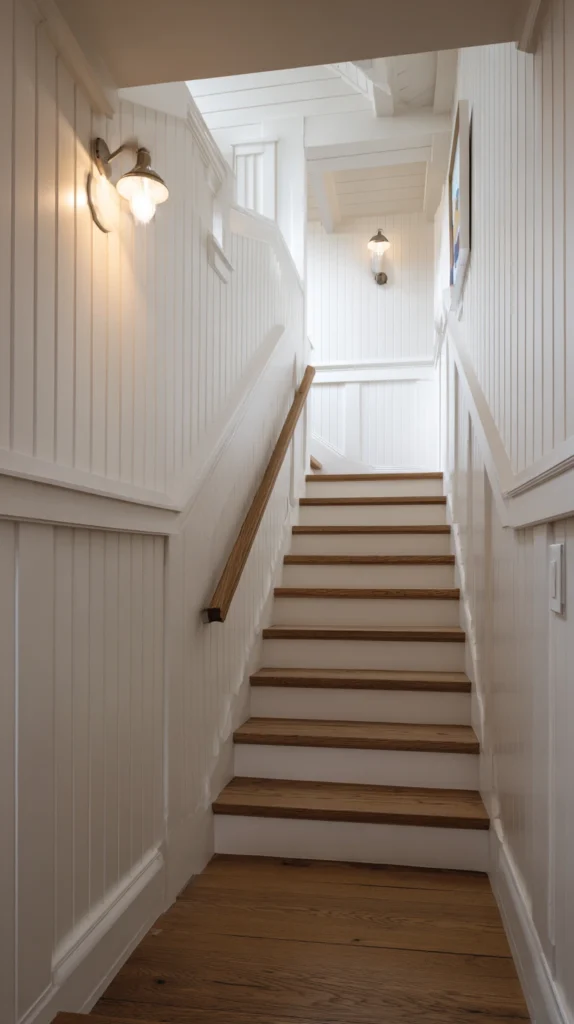
Timber paneling applied to the lower section of stairwell walls immediately elevates the perceived quality and craftsmanship of the space. Beadboard wainscoting in painted white suits cottage and farmhouse styles.
Flat panel wainscoting suits modern and transitional interiors. Install the capping rail at a consistent height relative to the floor level so it follows a diagonal line parallel to the stair pitch rather than stepping awkwardly at each tread.
14. Incorporate a Window or Skylight
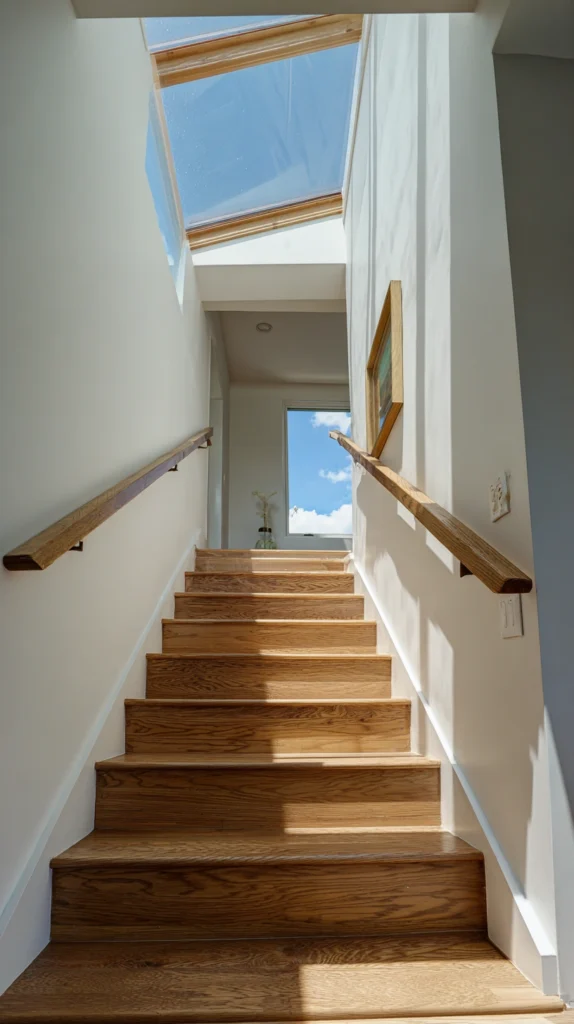
Where the house structure permits, adding a window or skylight to the stairwell brings natural light to the descent that no artificial lighting can fully replicate. Even a small window of 400mm by 600mm transforms the character of the stairwell entirely. Natural light in a basement stairwell makes the lower level feel connected to the world above and significantly less subterranean in its overall atmosphere.
15. Treat the Stairs as the Design Statement They Deserve
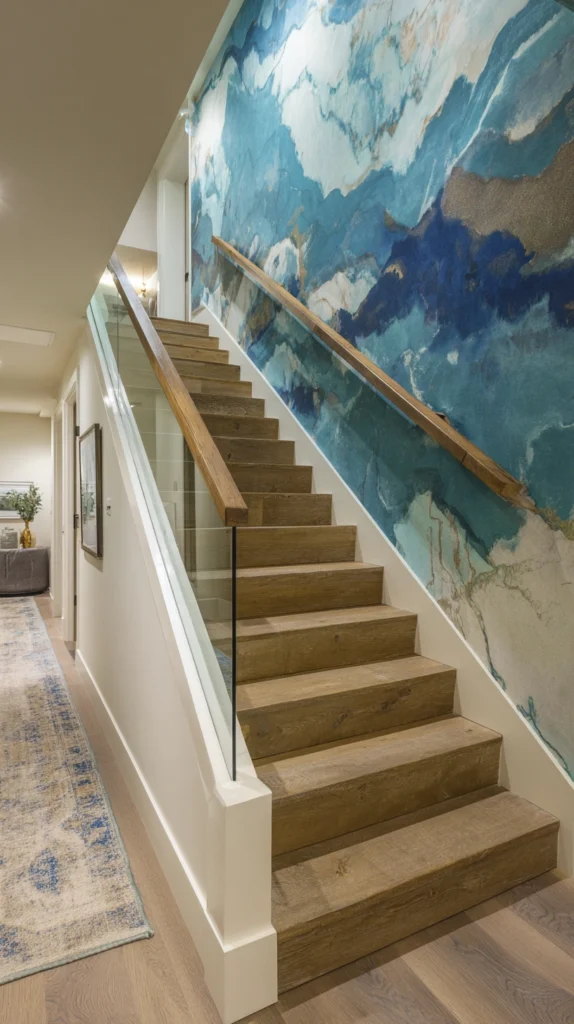
Basement stairs deserve the same design consideration as any other staircase in the home. the same attention to tread proportion, handrail profile, lighting quality, and wall treatment applied to a main staircase.
A basement staircase treated as a genuine design opportunity rather than a building code obligation communicates that every part of the house has been considered and that quality and intention extend below the surface as well as above it.
Below the Surface
A well-designed basement staircase sets expectations and creates atmosphere before a single light is switched on in the space below. Design it with the same ambition you would bring to any other part of the house and the entire lower level will benefit from the intention it establishes from the very first step down.