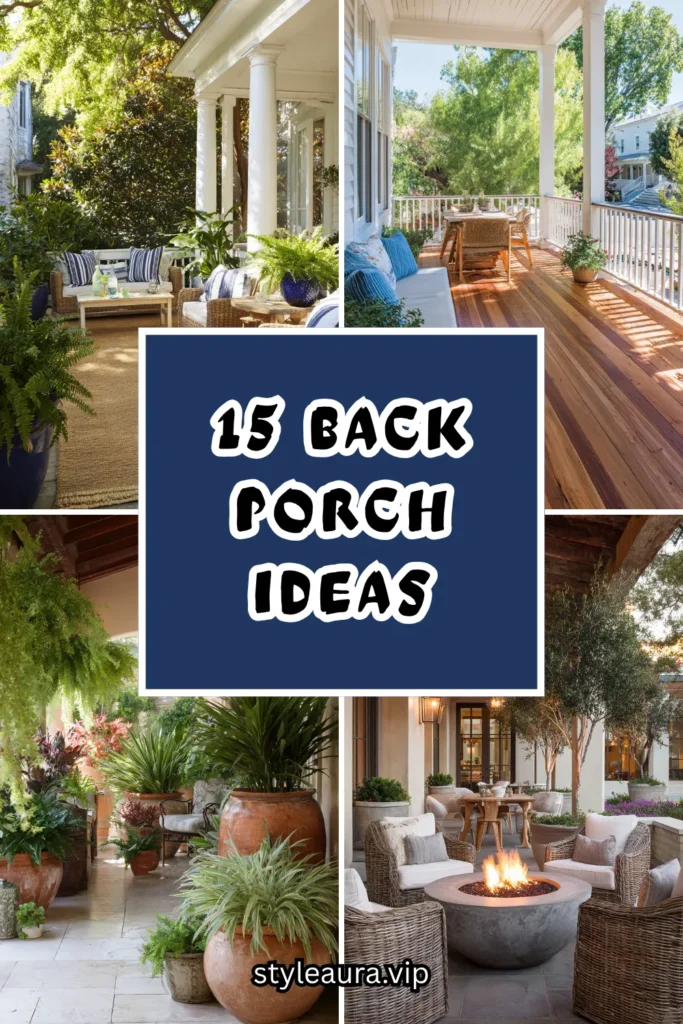
15 Back Porch Ideas
The back porch is one of the most underappreciated spaces in any home. It sits between the interior and the garden, belonging fully to neither, and that in-between quality is precisely what makes it so valuable.
A well-designed back porch extends the living area of the home into the outdoors, creating a space for morning coffee, evening meals, quiet reading, and the particular pleasure of being outside without being fully exposed to the elements.
Yet most back porches are treated as afterthoughts. A couple of mismatched chairs, a forgotten plant, and a collection of things that didn’t find a home elsewhere. With some focused attention and the right ideas, a back porch can become the most used and most loved room the house has to offer. Here are 15 back porch ideas that are modern, practical, and genuinely inspiring.
1. Define the Space with Outdoor Rugs
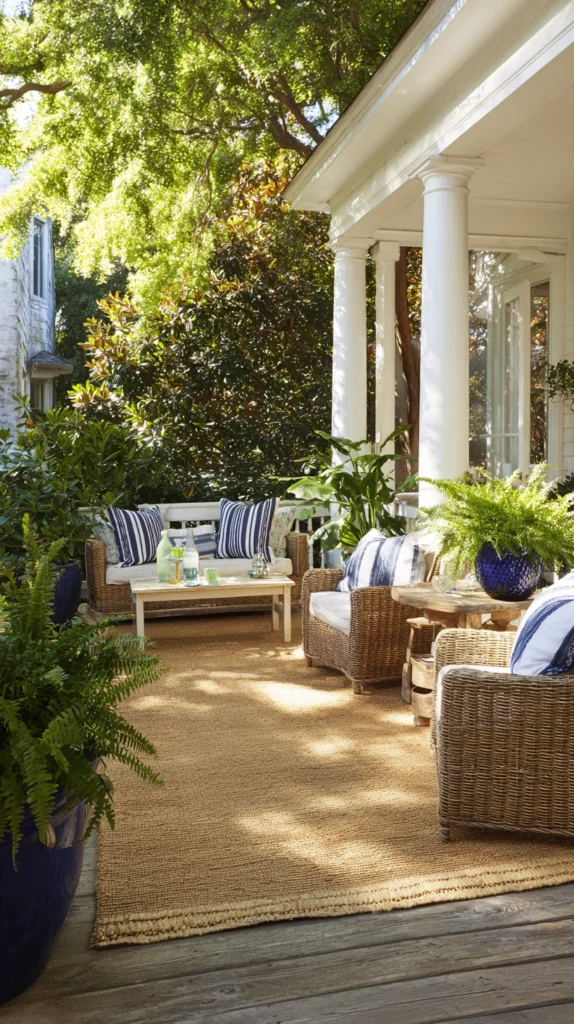
The single quickest and most transformative thing you can do to a back porch is lay an outdoor rug. A rug defines the porch as a room rather than a transitional zone, anchors the furniture arrangement, and brings the warmth and visual comfort of an interior textile to an outdoor setting. Choose a rug in a natural-look flatweave or a low-pile construction that can withstand outdoor conditions, resist moisture, and be hosed down when needed.
Size matters enormously with porch rugs. a rug that is too small makes the furniture float disconnectedly above it while a rug that extends to within a few centimeters of the porch edges creates a sense of defined, purposeful space.
Choose a pattern and color that suits the overall tone of the porch. natural stripes, simple geometrics, or a muted botanical print all work beautifully in an outdoor context without overwhelming the surrounding garden.
2. Install a Porch Swing or Hanging Daybed
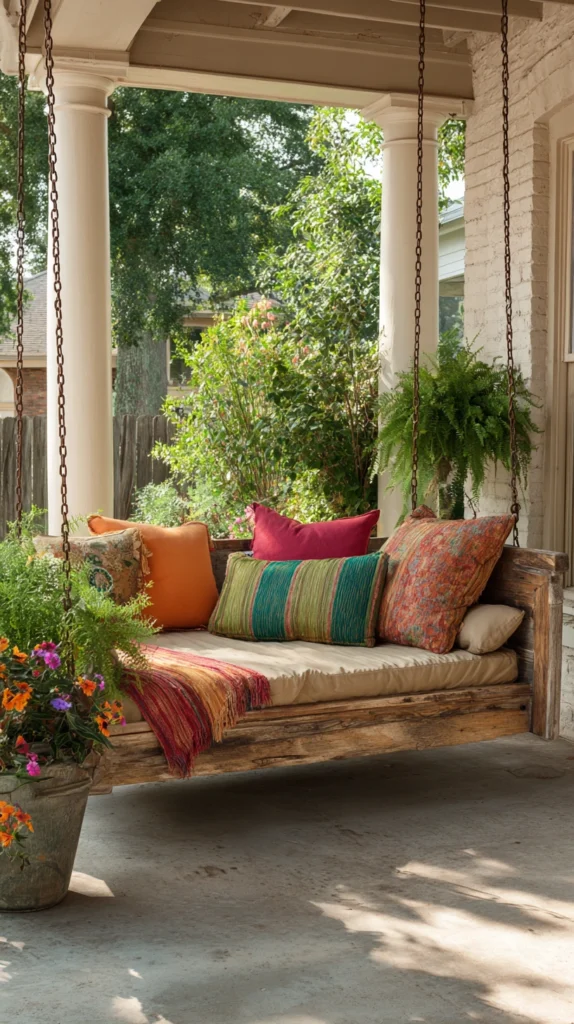
A porch swing is one of the most beloved and most evocative outdoor furniture choices available, and for good reason. The gentle movement of a swing has a deeply calming quality that static seating simply cannot replicate. A classic wooden porch swing hung from the ceiling of a covered porch on sturdy chains or rope creates an invitation to slow down and stay that very few people can resist.
A hanging daybed. A wider, more generous version of the swing fitted with cushions and a bolster pillow. takes this comfort to an entirely different level.
Ensure the ceiling structure of the porch is genuinely capable of supporting the weight of the swing plus the weight of the people using it before installation.
Use stainless steel hanging hardware rather than standard zinc or galvanized hardware in outdoor settings to prevent rust and ensure long-term reliability. A porch swing or hanging daybed needs no other furniture to justify its presence. It is enough on its own.
3. Create a Dining Area for Outdoor Meals
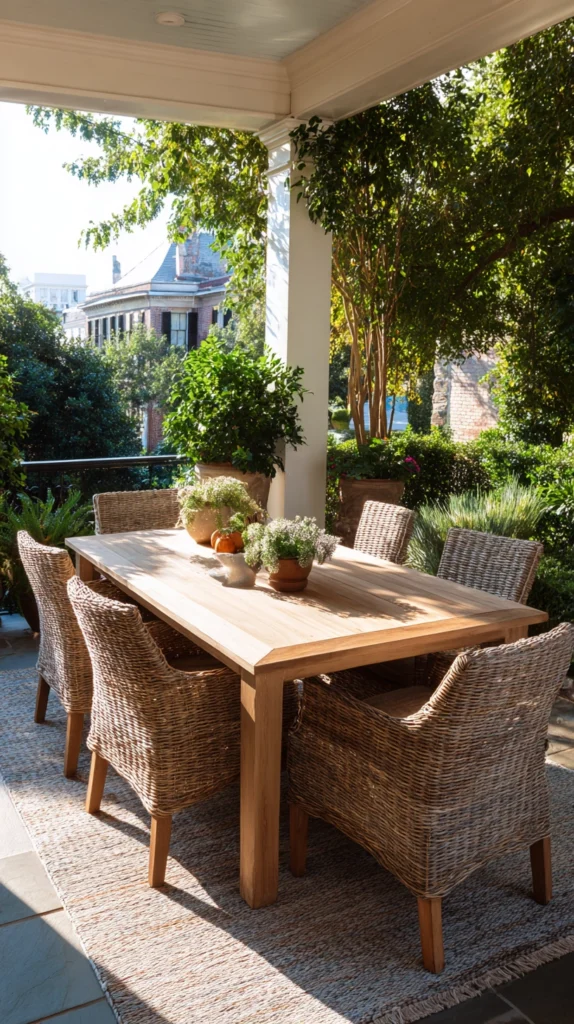
A back porch with enough space for a dining table and chairs becomes one of the most valuable extensions of the home’s living and entertaining function.
Outdoor dining on a covered porch has a particular quality that neither indoor dining nor open garden dining can match. the shelter of the roof overhead, the connection to the garden on all sides, and the informal, relaxed atmosphere that outdoor furniture and natural surroundings naturally create. Invest in a dining table of adequate size. four people minimum, six people if the porch dimensions allow.
Choose outdoor dining furniture in materials that suit the porch aesthetic and require minimal maintenance.
Teak weathers beautifully and requires only occasional oiling. powder-coated aluminum is lightweight, rust-proof, and available in a wide range of colors. woven rattan or wicker in a synthetic outdoor grade adds warmth and texture without the maintenance demands of natural rattan. A dining area on the back porch earns its space every time a meal is eaten outside.
4. Add String Lights for Evening Atmosphere
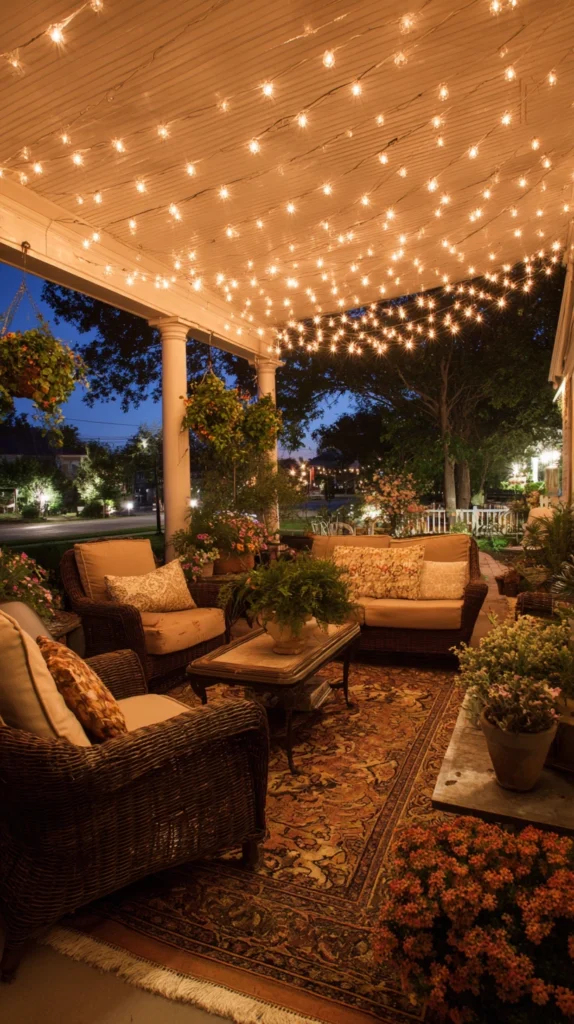
String lights are one of the most cost-effective and atmospherically powerful additions any back porch can receive. Hung in gentle catenary curves across the ceiling of the porch, strung along the roofline, or draped through the structural posts that support the porch roof, warm white or amber string lights transform the porch at dusk from a daytime functional space into an intimate, glowing environment that makes every evening spent there feel slightly special.
The quality of light they produce. warm, diffuse, and human-scaled. is unlike anything an overhead fixture can achieve.
Choose string lights with larger, globe-shaped bulbs for a more generous, deliberate look and use outdoor-rated fittings and cables throughout. Solar-powered string lights eliminate the need for an outdoor power connection and perform reliably in most climates during the warmer months. A dimmer switch or a timer that brings the lights on automatically at dusk removes any friction from the process of making the porch feel welcoming in the evening.
5. Build a Built-In Bench with Storage
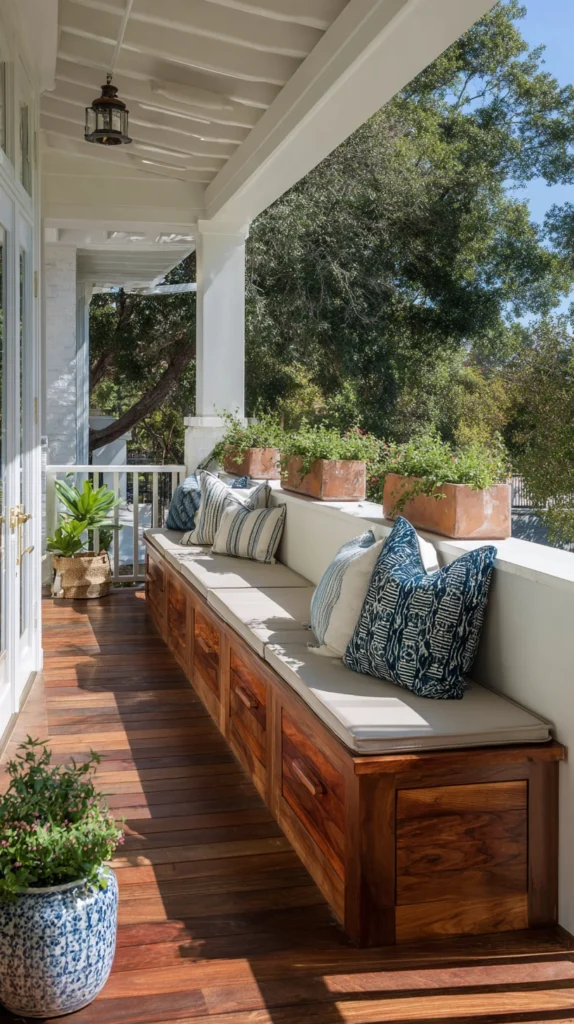
A built-in bench running along one or more walls of the back porch serves multiple functions simultaneously and uses the available space more efficiently than any freestanding furniture alternative.
It provides generous seating for multiple people, the hollow space beneath the seat provides substantial weatherproof storage for outdoor cushions, garden tools, and seasonal items, and the built-in quality of the bench gives the porch an architectural, considered finish that freestanding furniture rarely achieves. A built-in bench also frees the center of the porch for a dining table, a coffee table, or simply open space.
Construct the bench frame from pressure-treated timber for longevity in outdoor conditions and top it with hardwood decking boards. cedar, teak, or ipe. That weather gracefully and are comfortable to sit on without cushions. Add a hinged lid rather than fixed seat boards to access the storage beneath easily. Top the bench with outdoor cushions in a weather-resistant fabric for comfort and color.
6. Install a Ceiling Fan for Year-Round Comfort
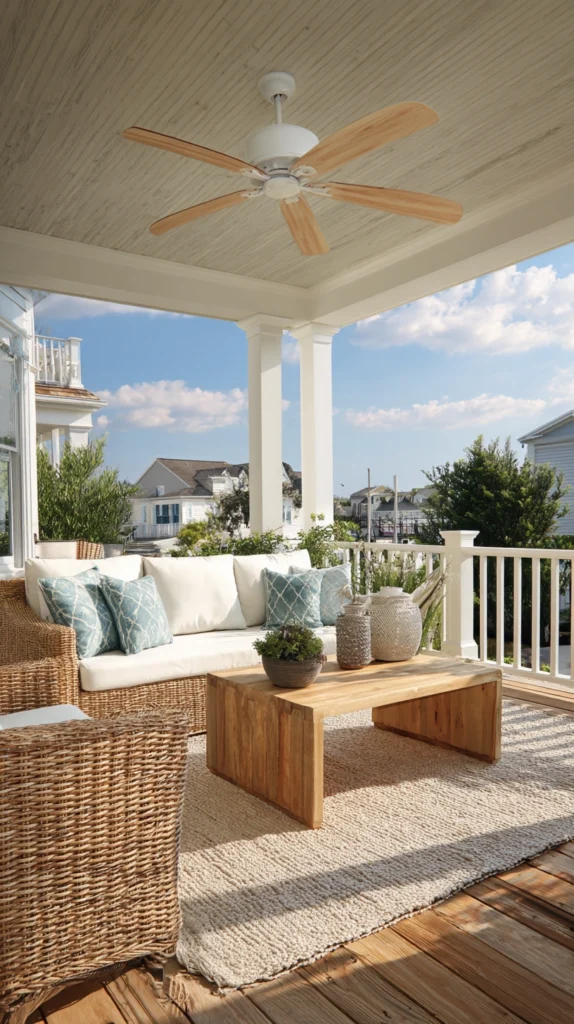
A ceiling fan on a covered back porch dramatically extends the usable season of the space in both warm and cool weather. In summer, the moving air created by a ceiling fan makes the porch comfortable at temperatures that would make a fan-free porch unbearable during the hottest part of the day.
In autumn, the fan’s reverse function pushes warm air downward from the ceiling, extending the porch’s usability into the cooler months. The investment is modest and the return in additional hours of outdoor enjoyment is significant.
Choose a ceiling fan specifically rated for outdoor or damp locations as standard indoor fans deteriorate rapidly in outdoor humidity and temperature variation.
A fan with an integrated light fitting combines two functions in one ceiling fixture, simplifying the electrical installation and keeping the ceiling uncluttered. Opt for a fan in a natural material finish. a wood-look blade, a rattan shroud, or a matte black metal. that suits the porch aesthetic.
7. Create a Reading Nook in a Corner
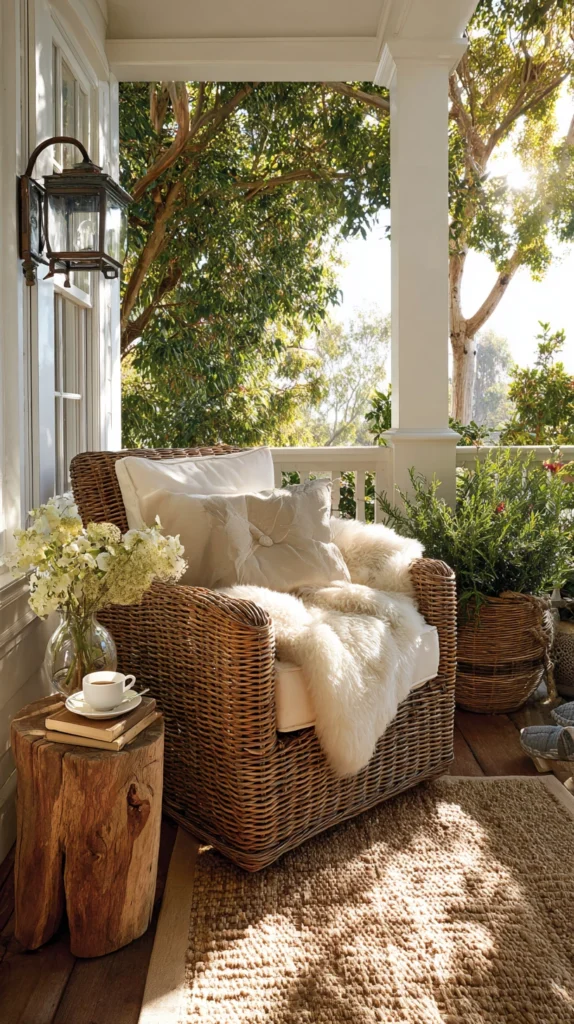
A back porch reading nook. a comfortable chair, a side table, a lamp, and enough shelter to read in all but the heaviest rain. is one of the most genuinely restorative spaces a home can contain.
The particular pleasure of reading outdoors in the shelter of a porch, with the sounds and smells of the garden immediately present, is one that many people describe as among their most valued daily pleasures. A comfortable armchair in a weather-resistant wicker or rattan with generous cushions in a durable outdoor fabric creates the foundation.
Add a small side table at the right height for a cup of tea or a glass of water. a simple outdoor lamp for evening reading. and a weatherproof basket holding a selection of current books and a light throw for cooler evenings.
Position the reading nook in the most sheltered corner of the porch, away from the main thoroughfare between the house and the garden, so it feels like a private retreat within the larger porch space.
8. Introduce Potted Plants Strategically

Plants on a back porch create the transition between the interior and the garden, softening the architecture of the porch and bringing the natural world into the living space in a way that is both beautiful and grounding.
The key is strategic placement rather than abundance. A large specimen plant in a generous pot at the corner of the porch where the structure meets the garden. a trailing plant on a high shelf or hanging from a ceiling hook. a single herb in a simple terracotta pot on the dining table. Each plant is chosen for its position and its purpose rather than simply accumulated.
Large-leaved architectural plants. a fiddle-leaf fig in a sheltered spot, a large fern in a shaded corner, a banana plant in a warm, protected position. create the most dramatic single-plant statements on a porch.
Trailing plants in hanging containers add vertical green dimension without consuming floor space. Herbs in small pots on the dining table contribute fragrance, practicality, and a casual garden quality that formal ornamental plants cannot replicate.
9. Add a Privacy Screen or Trellis
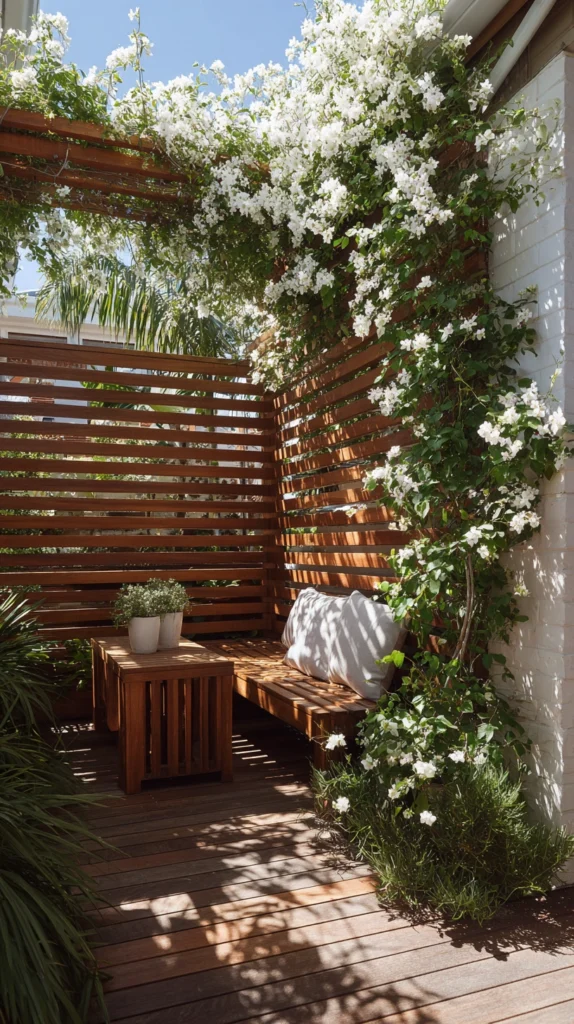
Privacy is one of the most common limitations of back porch living, particularly in urban and suburban settings where neighboring properties are close and overlooking is a genuine issue.
A privacy screen or trellis along the most exposed edges of the porch creates a sense of enclosure and intimacy that transforms the porch from a space you feel observed into one you genuinely relax in. A timber trellis panel planted with a fast-growing climber. jasmine, clematis, or a climbing rose. provides privacy that improves with every growing season.
A freestanding bamboo or cedar screen is a more immediate solution that requires no planting or growing time and can be repositioned as needed.
For a more permanent and architecturally resolved solution, a built-in privacy screen in horizontal timber slats that matches the language of the porch structure itself feels like a designed feature of the porch rather than an add-on. Position the screen to block the specific sightlines that compromise privacy without blocking desirable views or natural light.
10. Install Outdoor Curtains
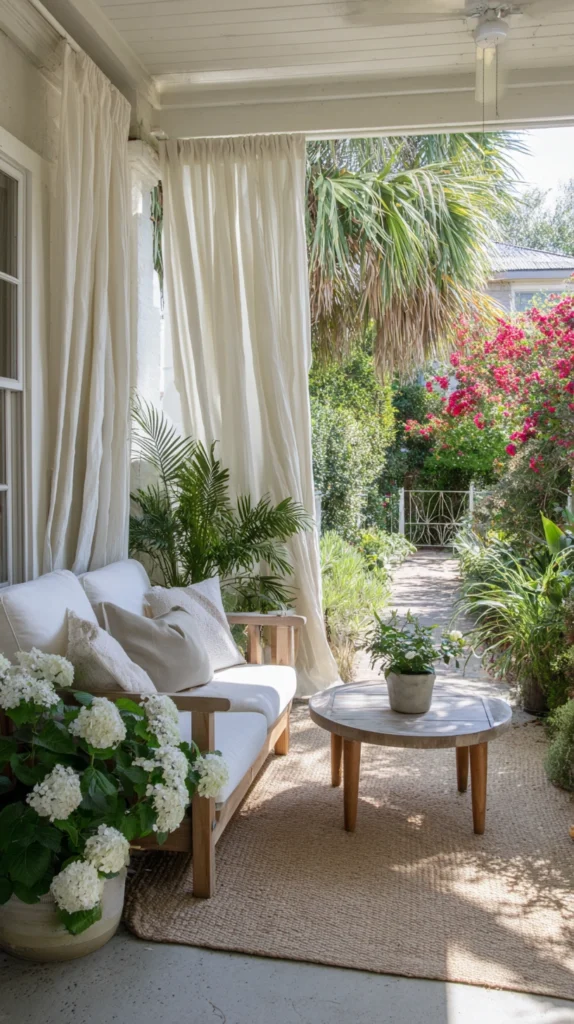
Outdoor curtains hung from a ceiling-mounted rod or track along the open sides of a covered back porch add an extraordinary degree of flexibility and atmosphere to the space. Drawn back during the day, they frame the garden view and add a soft, billowing quality to the porch perimeter.
Drawn closed in the evening or during light rain, they create an enclosed, intimate room that feels warmer and more sheltered than an open porch. The ability to transform the character of the space with a single gesture is one of the most valuable things outdoor curtains bring to a back porch.
Choose outdoor curtain fabrics specifically designed for exterior use. solution-dyed acrylic or a marine-grade canvas. that resist fading, mildew, and moisture without requiring constant maintenance.
White or natural linen-look outdoor curtains are the most versatile choice, working with virtually any porch aesthetic and maximizing the light and openness of the space when drawn back. A heavier fabric in a deeper tone creates a more dramatic, enclosed quality when closed.
11. Build or Upgrade the Porch Floor
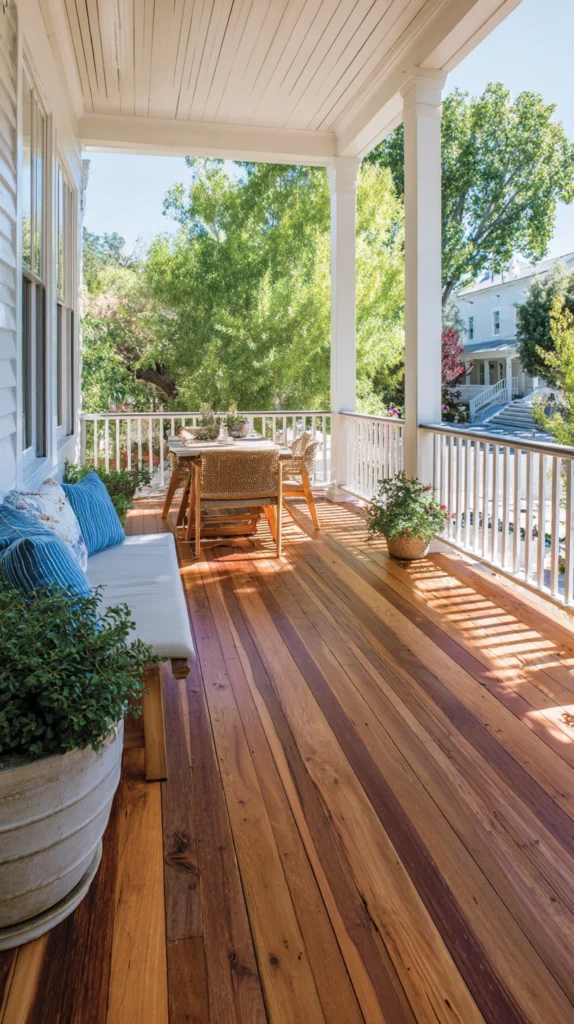
The floor of the back porch sets the foundation for every other design decision in the space, and an ugly, damaged, or simply inappropriate floor undermines even the most beautifully furnished porch above it.
If the existing porch floor is concrete, it can be transformed relatively affordably with an outdoor paint or stain in a warm, natural tone, or with the application of large-format exterior porcelain tiles in a stone or wood-look finish. If the porch is wood decking, sanding and restaining or painting the existing boards is a weekend project that delivers a dramatic visual refresh.
New decking in a hardwood like ipe, teak, or cedar brings a warmth and quality to the porch floor that concrete and composite alternatives cannot fully replicate.
The natural variation of hardwood grain, its warm color, and the way it weathers and develops character over time make it the most beautiful porch flooring choice. Ensure any new decking is installed with appropriate drainage gaps between boards and sealed or oiled on installation to maximize its longevity in outdoor conditions.
12. Create a Beverage or Outdoor Bar Station
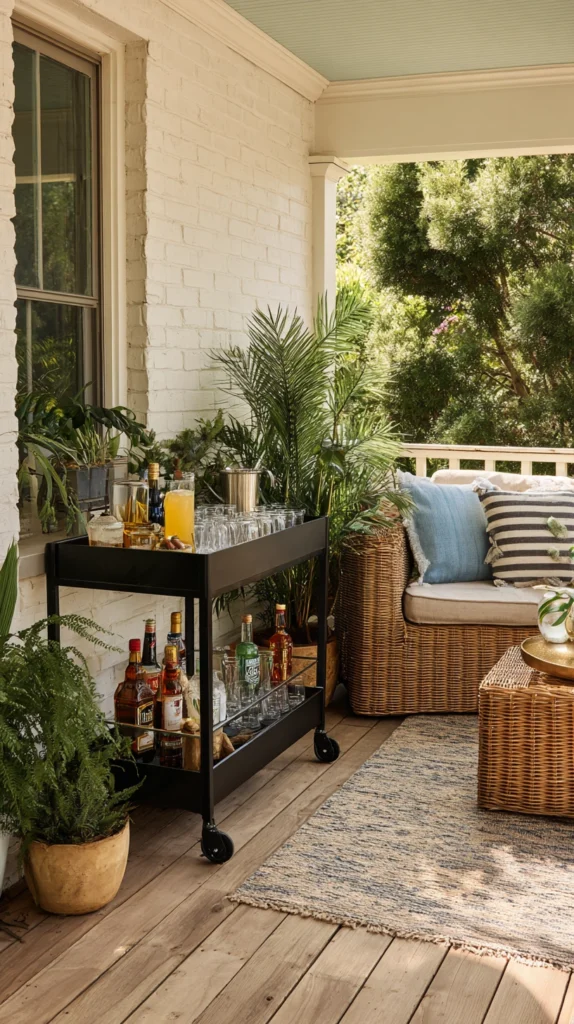
A dedicated beverage station on the back porch. a small outdoor bar cart, a built-in bar counter along one wall, or even a simple console table styled as a drinks area. transforms the porch into a genuinely self-sufficient entertaining space.
When drinks are available on the porch without requiring a trip back into the house, guests settle in and stay longer, the outdoor entertaining experience becomes more relaxed and more enjoyable, and the porch fulfills its potential as an extension of the home’s social spaces.
A simple outdoor bar cart in powder-coated black or natural teak with a lower shelf for bottles and a top surface for glasses, ice, and mixers is the most flexible and affordable option. A built-in bar counter along the porch wall in the same material as the built-in bench creates a cohesive, architectural quality that elevates the porch design as a whole.
Stock the bar station with everything needed for the household’s preferred drinks so that the porch is always ready for impromptu entertaining.
13. Use Weather-Resistant Outdoor Cushions Generously
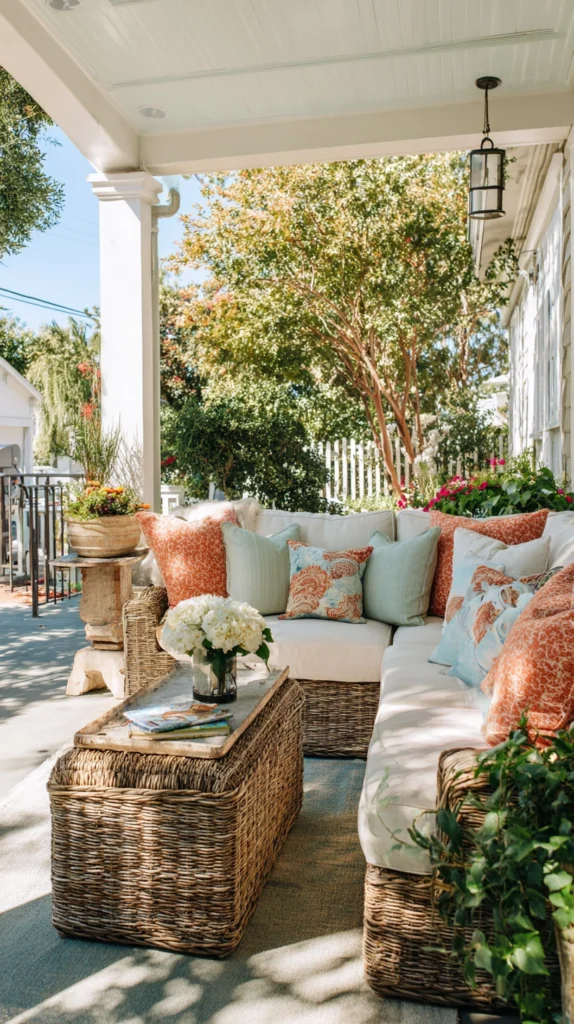
The comfort of a back porch is determined more by its textiles than by any other single factor, and generous, high-quality outdoor cushions on every seating surface make the difference between a porch that people sit on briefly and one they settle into for hours. Choose outdoor cushion covers in a solution-dyed acrylic fabric.
Sunbrella is the industry benchmark. that resists fading, repels water, and can be cleaned easily with soap and water. The cushion inserts should be a quick-dry foam that does not retain moisture and can be left outside in light rain without developing mildew.
Choose cushion colors and patterns that coordinate with the overall porch palette rather than introducing competing colors that fragment the space visually. A porch in natural wood tones, aged terracotta, and warm white is served by cushions in soft stripes or a simple solid in warm cream, sage, or a dusty terracotta. Add outdoor throw pillows in a related pattern or texture for additional layering and comfort. Replace cushion covers every three to four years as even the best outdoor fabrics eventually fade and tire.
14. Add a Fire Pit or Outdoor Heater
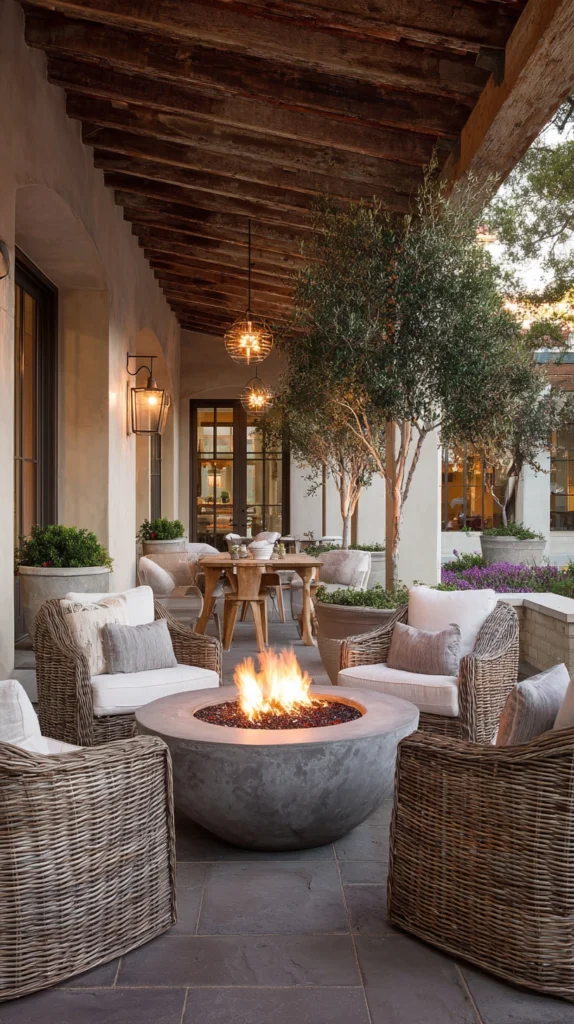
A fire pit or outdoor heater extends the usable season of the back porch into the cooler months, transforming it from a fair-weather space into one that can be enjoyed comfortably from early spring through late autumn in most climates.
A freestanding fire pit positioned safely away from the porch structure and any flammable materials provides warmth, light, and the deeply primal pleasure of an open fire in an outdoor setting. The fire pit becomes the focal point around which people naturally gather and linger.
A wall-mounted or freestanding infrared patio heater provides a more immediate, adjustable, and weather-independent heating solution for a covered porch. Infrared heaters warm people and surfaces directly rather than heating the surrounding air, making them effective even in breezy conditions where a conventional space heater would be ineffective.
Choose a heater in a finish that suits the porch aesthetic. stainless steel for a modern setting, a matte black or dark bronze finish for a more traditional or rustic porch.
15. Keep the Design Cohesive and Considered
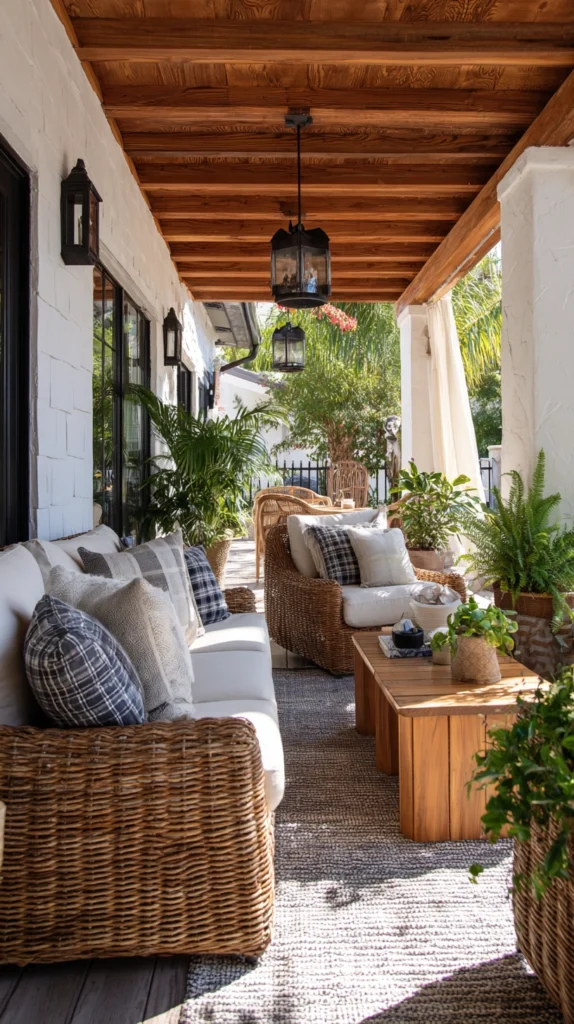
The final and most important back porch idea is about design philosophy rather than any specific product or material. A back porch that works. visually, functionally, and atmospherically. is one where every element has been chosen in relationship to every other element rather than accumulated piece by piece without a unifying vision.
The furniture style, the material palette, the color scheme, the lighting, and the planting should all speak the same design language and reinforce a consistent atmosphere rather than competing for attention.
Choose one aesthetic direction and commit to it. a relaxed coastal porch in natural rattan, weathered timber, and soft blues and whites. a modern minimalist porch in powder-coated black, concrete, and architectural planting. a warm, layered cottage porch in painted timber, floral cushions, and abundant potted plants.
The specific direction matters less than the commitment to it. A porch designed with coherence and intention is always more beautiful and more enjoyable than one assembled without a clear point of view.
The Porch as a Way of Living
A well-designed back porch changes how a household lives. It creates a daily habit of outdoor time, a natural setting for morning rituals and evening wind-downs, and a space that makes the home feel larger, more generous, and more connected to the natural world. The investment in getting it right is modest relative to the return in daily quality of life. Begin with one idea from this list and let the porch grow from there.