15 70s Living Room Decor Ideas
The 1970s represent one of the most distinctive and polarizing decades in interior design history, characterized by bold colors, experimental patterns, and an uninhibited approach to self-expression through home décor.
Far from the austere minimalism that dominates contemporary trends, seventies style embraced maximalism, texture, and a carefree attitude that celebrated individuality and comfort above all else.
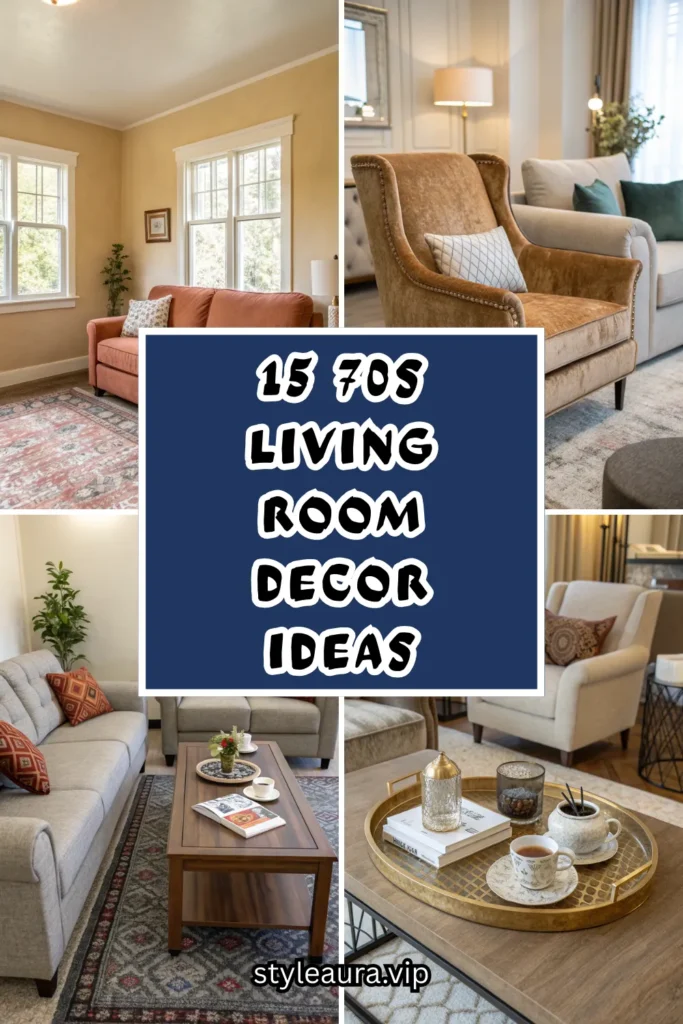
Today, as design cycles continue their inevitable revival patterns, seventies aesthetics are experiencing a significant renaissance, with designers and homeowners rediscovering the decade’s playful energy and unapologetic boldness.
Modern interpretations of seventies living room décor skillfully balance the era’s signature elements with contemporary sensibilities, creating spaces that feel nostalgic yet fresh, retro yet relevant.
The key lies in selective incorporation rather than complete period replication—taking the best elements of seventies design while avoiding the dated aspects that haven’t aged gracefully. These fifteen ideas capture the essence of seventies living rooms, offering inspiration for creating spaces with the decade’s characteristic warmth, personality, and distinctive visual impact.
1. Embrace Earthy, Warm Color Palettes
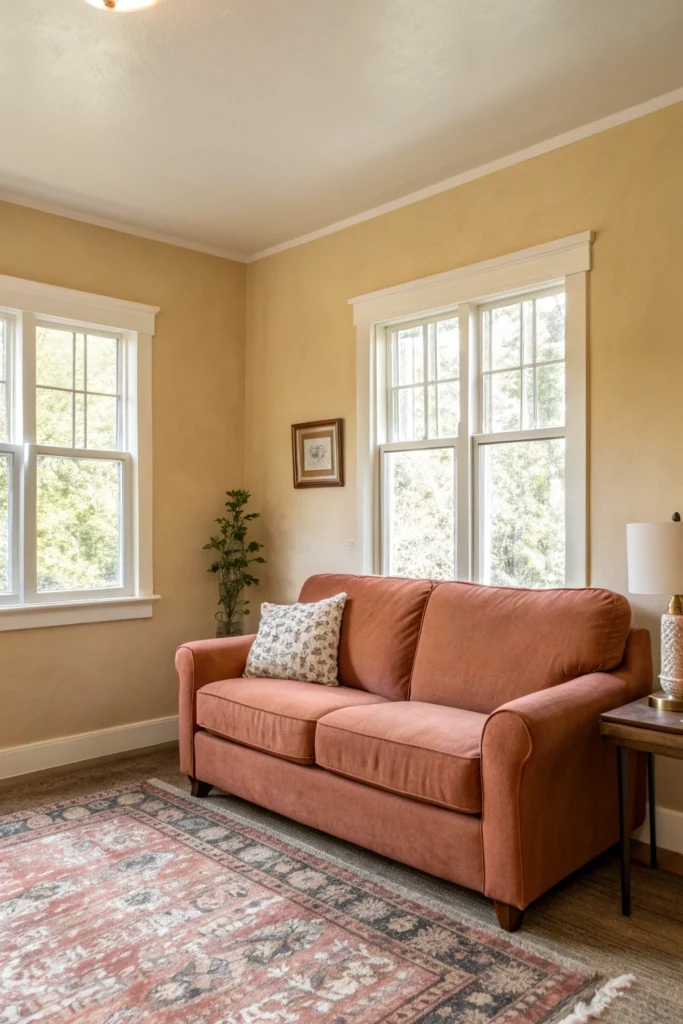
Seventies color schemes centered on warm, earthy tones that created cozy, grounded atmospheres. Harvest gold, burnt orange, avocado green, chocolate brown, and rust dominated living rooms, often combined in ways that contemporary color theory might discourage but somehow worked beautifully together. These saturated, nature-inspired hues brought warmth and richness that made living rooms feel embracing and intimate.
Incorporate these signature colors through wall paint, choosing one dominant shade as your foundation. An accent wall in burnt orange or deep mustard creates immediate seventies impact without overwhelming the space. Layer complementary earthy tones through furniture upholstery, throw pillows, and accessories.
The beauty of this palette lies in its forgiving nature—these colors blend harmoniously even when combined boldly, creating cohesive schemes that feel intentional rather than chaotic. Balance bolder walls with neutral furniture, or inverse the approach with neutral walls and colorful seating, ensuring the room feels curated rather than costume-like.
2. Incorporate Low-Profile, Modular Seating
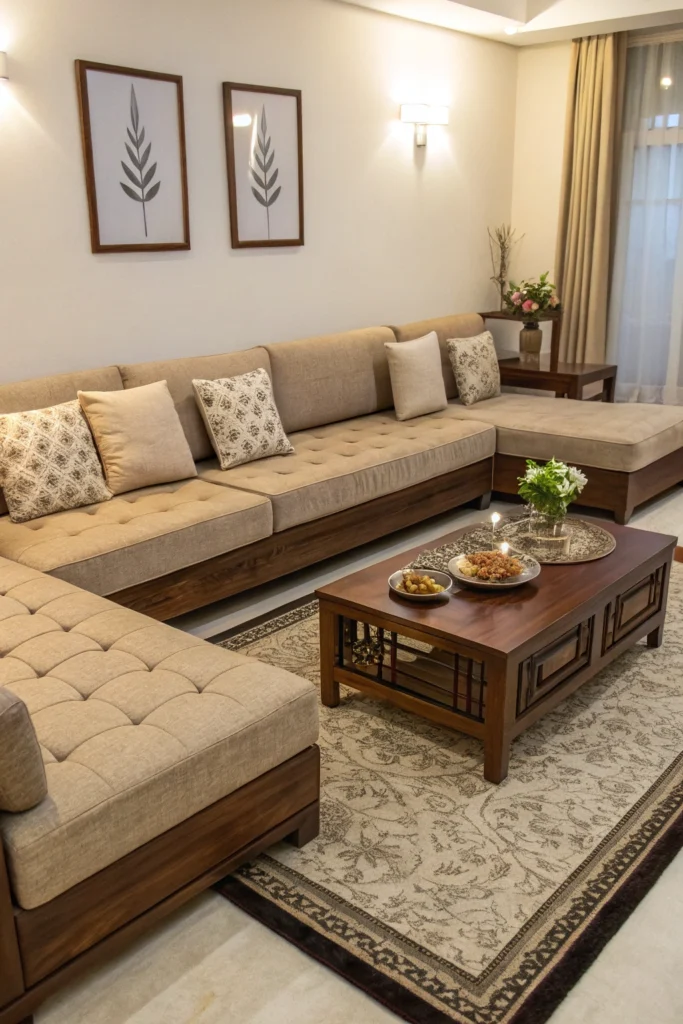
Seventies furniture design favored low-slung silhouettes that created casual, relaxed atmospheres. Modular sectional sofas became wildly popular, offering customizable configurations that adapted to different spaces and social situations. These pieces sat close to the ground, promoting lounging and informal gatherings that reflected the decade’s casual lifestyle preferences.
Seek out vintage or reproduction modular sofas with low profiles and substantial cushions. Arrange sectional pieces in conversation-friendly configurations, perhaps creating an L-shape or even a pit-style seating arrangement if space allows. Upholstery in velvet, corduroy, or nubby tweed captures authentic seventies texture.
These low seating arrangements make rooms feel more spacious by keeping sightlines open while establishing the laid-back, come-as-you-are vibe that defined seventies living spaces. Add floor cushions or poufs for additional casual seating that reinforces the relaxed, communal atmosphere.
3. Layer Multiple Textures and Patterns
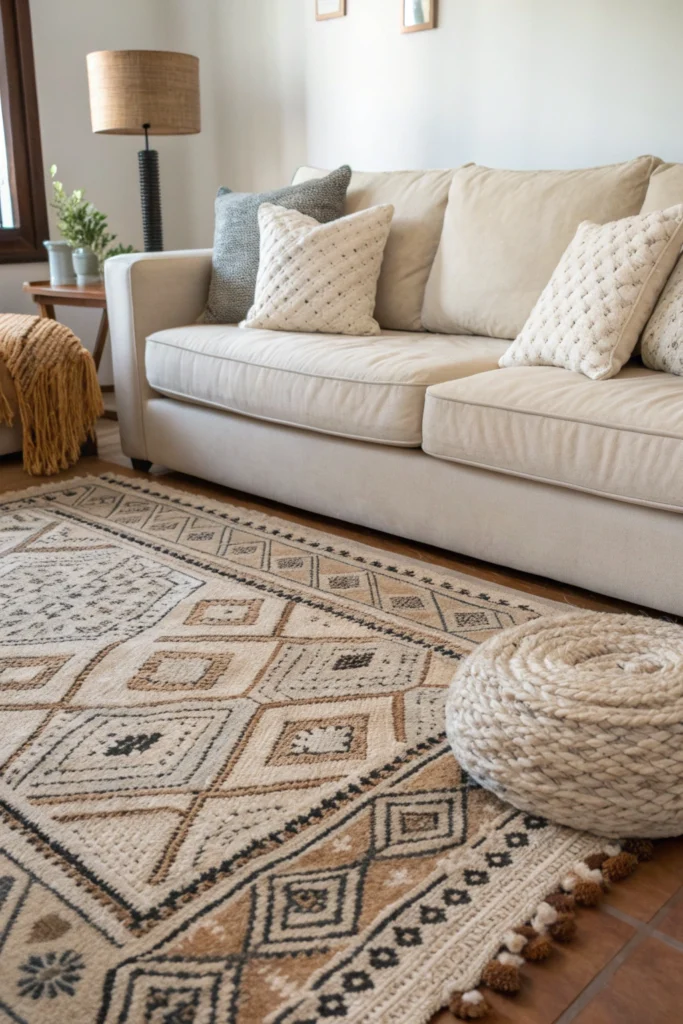
The seventies celebrated textural and pattern diversity in ways few other eras matched. Living rooms featured multiple patterns simultaneously—geometric wallpaper, floral upholstery, abstract art, and patterned rugs coexisting boldly. This fearless mixing created visual richness and personality that made spaces feel vibrant and alive.
Start with a bold patterned element as your anchor—perhaps geometric wallpaper or a distinctive area rug. Build from there, adding complementary patterns in different scales. Combine a large-scale floral print with smaller geometric patterns, ensuring colors coordinate even as patterns contrast. Include varied textures through materials like velvet sofas, macramé wall hangings, shag rugs, and nubby throw pillows.
The key to successful pattern mixing lies in maintaining color continuity—patterns in harmonious color families create cohesion even when designs differ dramatically. This layered approach prevents the sterile, overly coordinated look of matching furniture sets, creating instead the collected, personalized aesthetic that defines authentic seventies style.
4. Install Statement Wallpaper with Bold Graphics
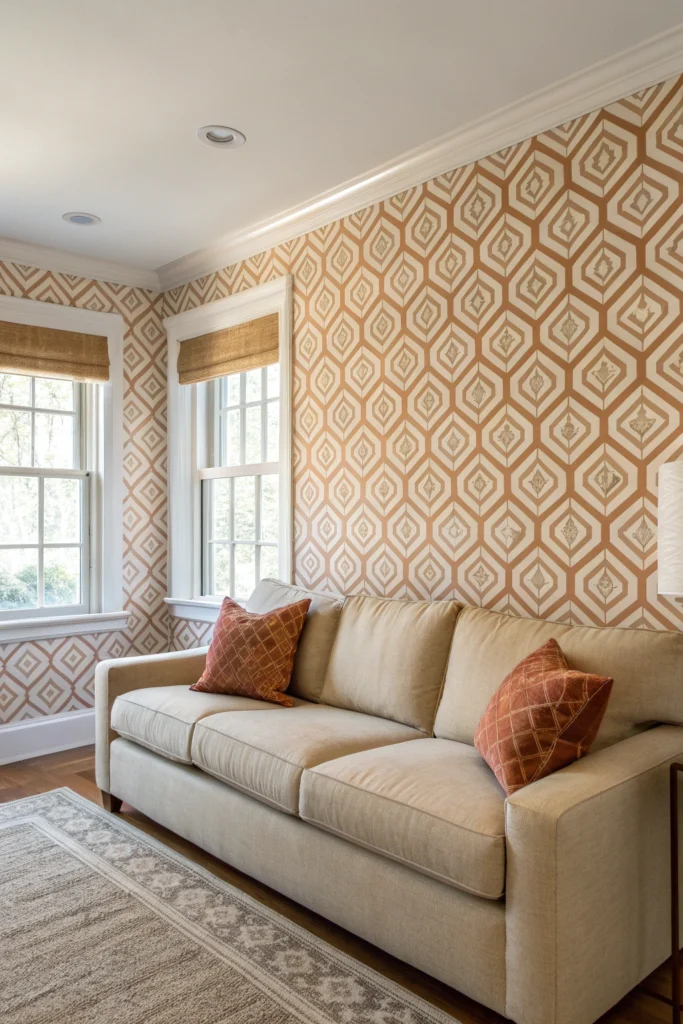
Wallpaper reached peak popularity during the seventies, with designs ranging from oversized florals to psychedelic geometrics and abstract patterns. These bold wall treatments transformed living rooms into immersive environments where walls became active design participants rather than neutral backgrounds.
Choose one wall for dramatic wallpaper treatment, selecting patterns with authentic seventies sensibilities—perhaps large-scale florals, op-art geometrics, or abstract organic shapes. Grasscloth wallpaper in warm tones offers a more subtle nod to the era while adding substantial texture.
Metallic accents in wallpaper designs catch light beautifully, adding dimension and glamour. Balance bold wallpaper with simpler furnishings to prevent visual overwhelm, allowing the wall treatment to shine as the room’s focal point. This approach creates an immediate seventies atmosphere while maintaining livability and preventing the space from feeling like a time capsule.
5. Add Macramé Wall Hangings and Plant Hangers
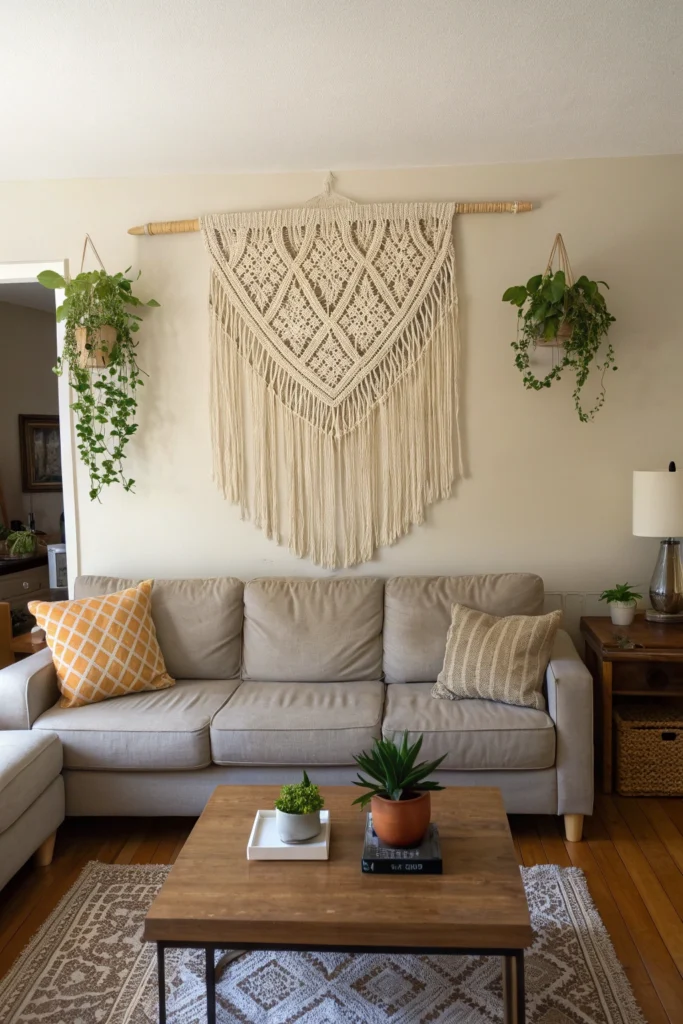
Macramé epitomizes seventies craftsmanship, with intricate knotted designs adorning walls and suspending plants throughout living spaces. These handcrafted textile pieces added organic texture and bohemian flair that perfectly captured the decade’s appreciation for artisanal work and natural materials.
Hang a substantial macramé wall hanging as living room artwork, choosing pieces with complex knotting patterns and generous fringe. Use macramé plant hangers to suspend trailing plants near windows, creating living curtains of greenery.
The natural fiber tones—cream, beige, and tan—complement earthy color palettes while the intricate patterns add visual interest without requiring bold colors. Macramé brings immediate seventies recognition while remaining remarkably current in today’s design landscape, making it an accessible entry point for incorporating retro elements. The handmade quality adds warmth and personality that mass-produced décor cannot replicate.
6. Incorporate Conversation Pits or Sunken Seating
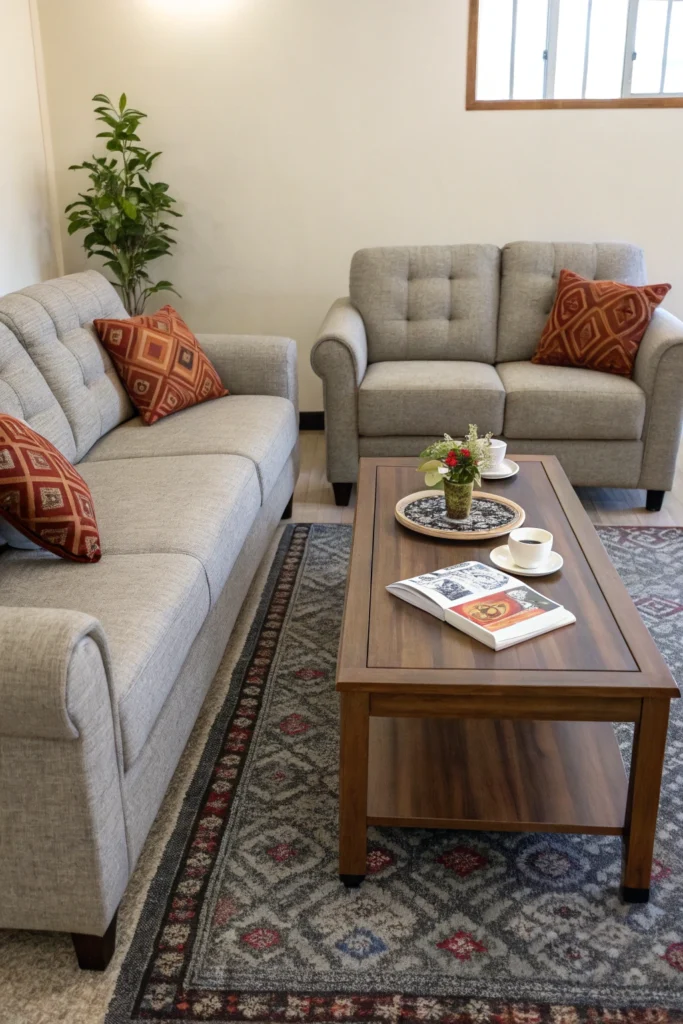
Perhaps no feature screams seventies quite like conversation pits—sunken seating areas that created intimate gathering spaces within larger living rooms. While true conversation pits require architectural intervention, you can evoke their spirit through thoughtful furniture arrangement and platform variations.
If undertaking renovation, consider creating an actual sunken seating area with built-in cushioned benches surrounding a central space. For less intensive approaches, use area rugs to define intimate seating zones and arrange furniture in inward-facing configurations that encourage conversation.
Low coffee tables at the center create focal points for gatherings. Platform risers in other areas of the room create subtle level changes that evoke conversation pit aesthetics without excavation. The goal is establishing cozy, enclosed feeling seating areas that promote face-to-face interaction rather than traditional living room arrangements oriented toward televisions.
7. Display Bold, Oversized Abstract Art
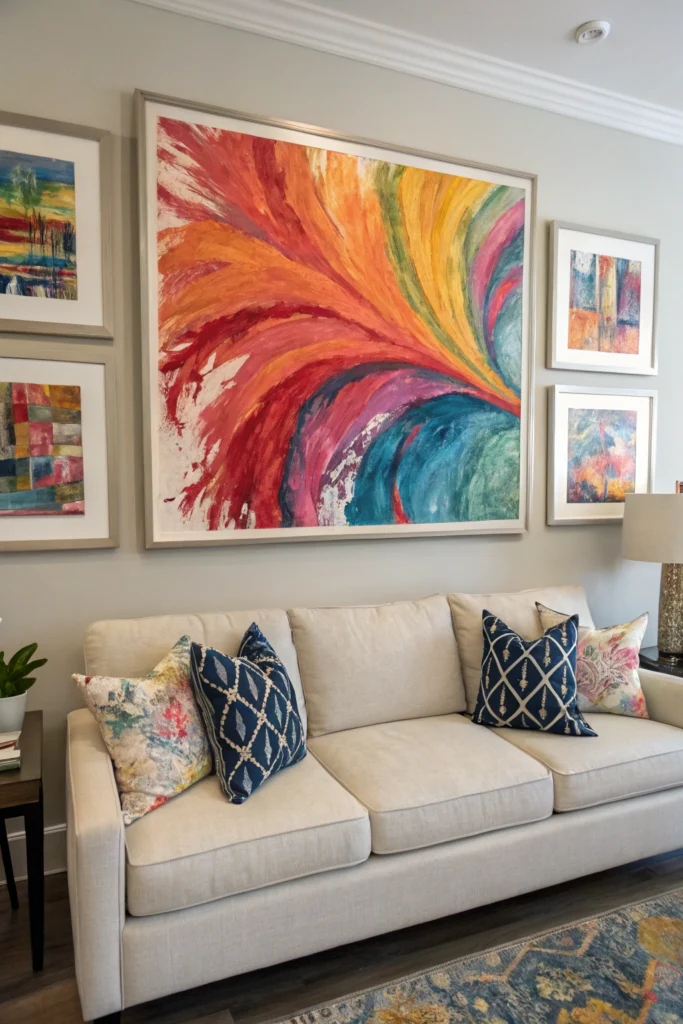
Seventies art trends favored large-scale abstract pieces with bold colors and geometric or organic shapes. These substantial artworks made powerful statements, transforming walls into galleries showcasing contemporary artistic movements.
Select or create oversized abstract art featuring seventies color palettes—burnt orange, mustard yellow, teal, and brown. Look for vintage prints from the era or commission contemporary artists to create pieces with retro sensibilities.
Geometric abstracts, color block compositions, or flowing organic shapes all capture the period’s artistic aesthetic. Frame artwork simply or leave canvases unframed for casual, modern gallery vibes. These bold art pieces anchor color schemes while providing sophisticated focal points that elevate living rooms beyond simple furniture arrangements. The scale matters tremendously—don’t shy away from artwork that feels almost too large, as the seventies embraced dramatic proportions.
8. Use Shag Rugs for Luxurious Texture
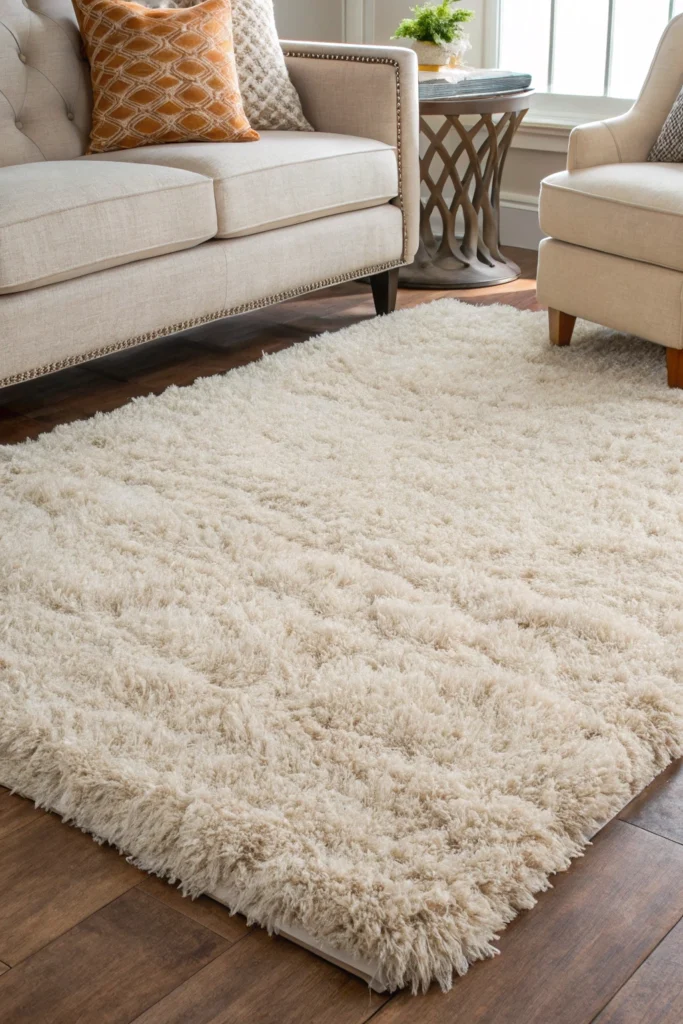
Nothing says seventies quite like deep, plush shag carpeting. While wall-to-wall shag might prove impractical for modern living, substantial shag area rugs bring the era’s textural luxury in more manageable, cleanable formats.
Choose high-pile shag rugs in warm neutral tones or bold seventies colors, positioning them in primary seating areas. The deep pile feels wonderful underfoot while adding significant visual texture.
Shag rugs work particularly well with low-profile furniture, creating appealing height contrast. Modern shag options offer easier maintenance than vintage versions while maintaining the signature deep, touchable pile. Layer shag rugs over hardwood or tile flooring, allowing the rug to define seating zones while the surrounding hard flooring provides balance. The tactile luxury of shag immediately evokes the decade while providing genuine comfort.
9. Incorporate Wood Paneling and Natural Wood Elements
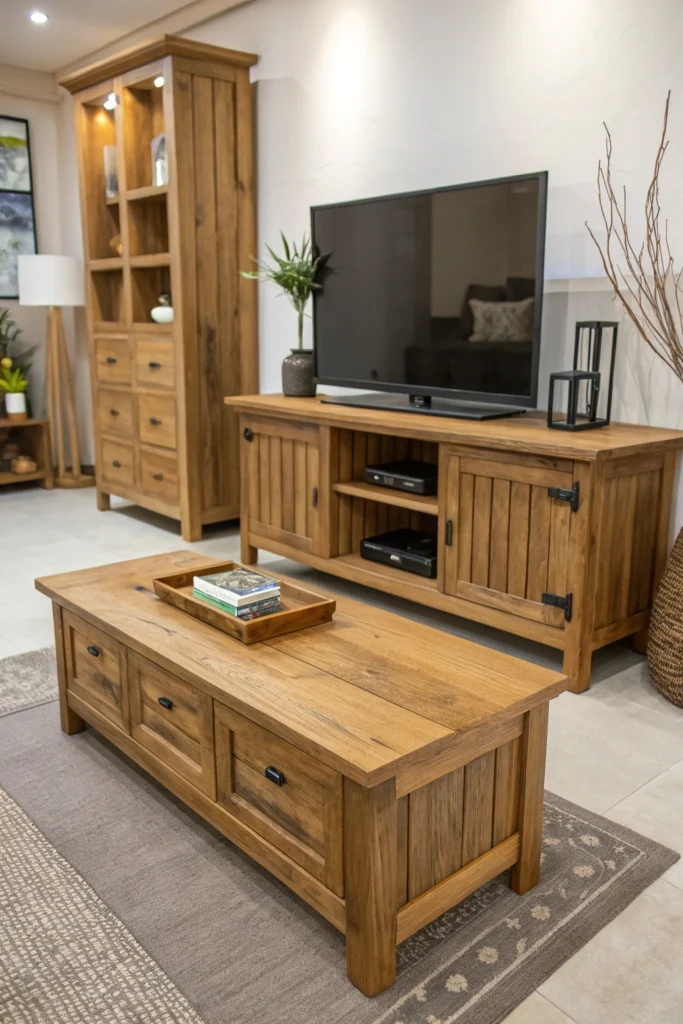
Wood paneling defined countless seventies living rooms, bringing natural warmth through floor-to-ceiling coverage or wainscoting applications. While dark wood paneling throughout entire rooms can feel oppressive, strategic incorporation creates an authentic period atmosphere.
Install wood paneling on a single accent wall, choosing warm-toned woods like pine or oak with visible grain. Alternatively, use wood paneling as wainscoting on the lower portion of walls, painting above in complementary warm tones. Incorporate substantial wooden furniture pieces—coffee tables with thick wood tops, wooden shelving units, or sideboards in warm finishes.
Exposed wood ceiling beams add architectural interest while reinforcing natural material presence. The key lies in balancing wood’s warmth with lighter elements, preventing rooms from feeling too dark or cave-like while capturing the era’s love of natural materials.
10. Add Indoor Plants in Abundance
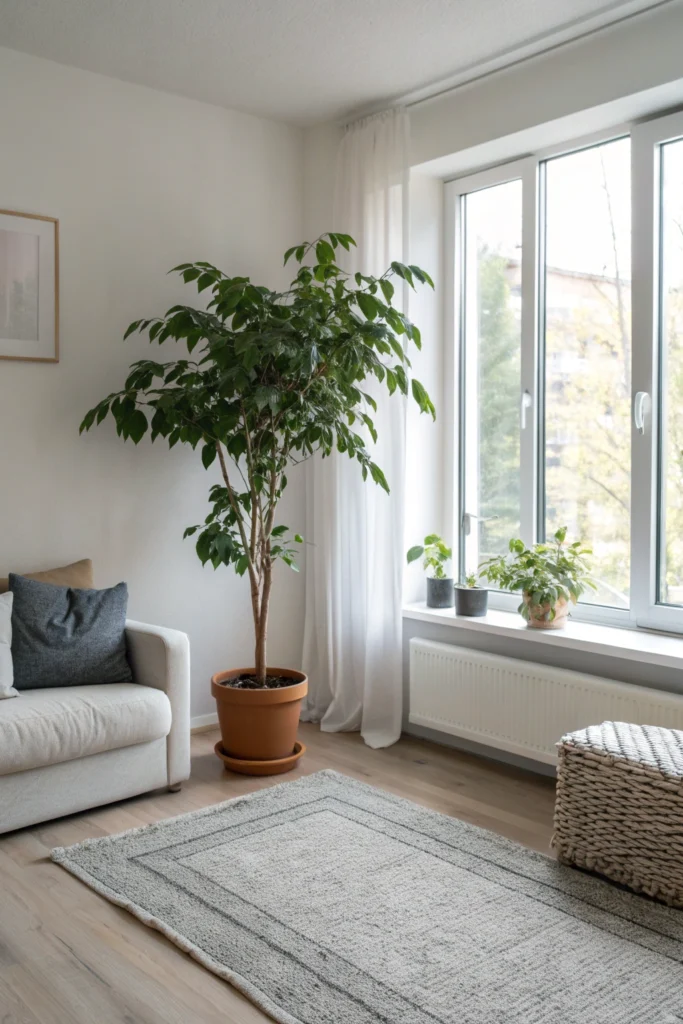
The seventies houseplant boom transformed living rooms into indoor jungles, with greenery occupying every available surface and hanging from ceilings. This plant obsession reflected growing environmental consciousness and desire to bring nature indoors.
Fill your living room with an abundance of plants in various sizes and varieties. Trailing pothos and spider plants hang from macramé hangers, substantial fiddle leaf figs or rubber plants anchor corners, and smaller plants cluster on shelves and tables. Use ceramic planters in earth tones or woven baskets for authentic seventies styling. The generous plant presence softens hard edges, purifies air, and creates the lived-in, organic atmosphere central to seventies design. Don’t worry about perfect symmetry—the casual, jungle-like accumulation of plants feels more authentic than carefully curated arrangements.
11. Incorporate Velvet and Corduroy Upholstery
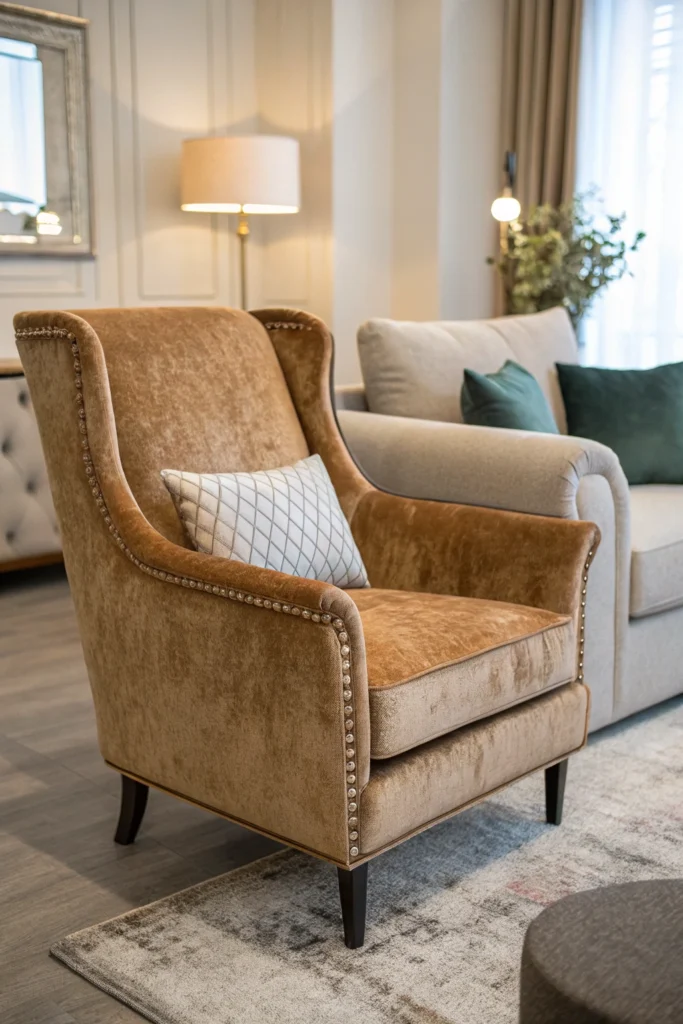
Plush, tactile fabrics dominated seventies furniture, with velvet and corduroy reigning as favorites. These rich materials added luxury and sensory appeal while complementing the era’s warm color palettes beautifully.
Choose a velvet sofa in a signature seventies shade—perhaps burnt orange, olive green, or chocolate brown. Alternatively, incorporate velvet through accent chairs, ottomans, or abundant throw pillows. Corduroy works beautifully for casual seating like bean bags or floor cushions. These fabrics catch light beautifully, creating depth and visual interest while feeling wonderful to touch.
The slight sheen of velvet adds subtle glamour that elevates living rooms beyond purely casual spaces. Mix velvet and corduroy with other textures like leather, wood, and woven materials for the layered, rich aesthetic that defines the best seventies interiors.
12. Use Teak and Chrome Furniture Accents
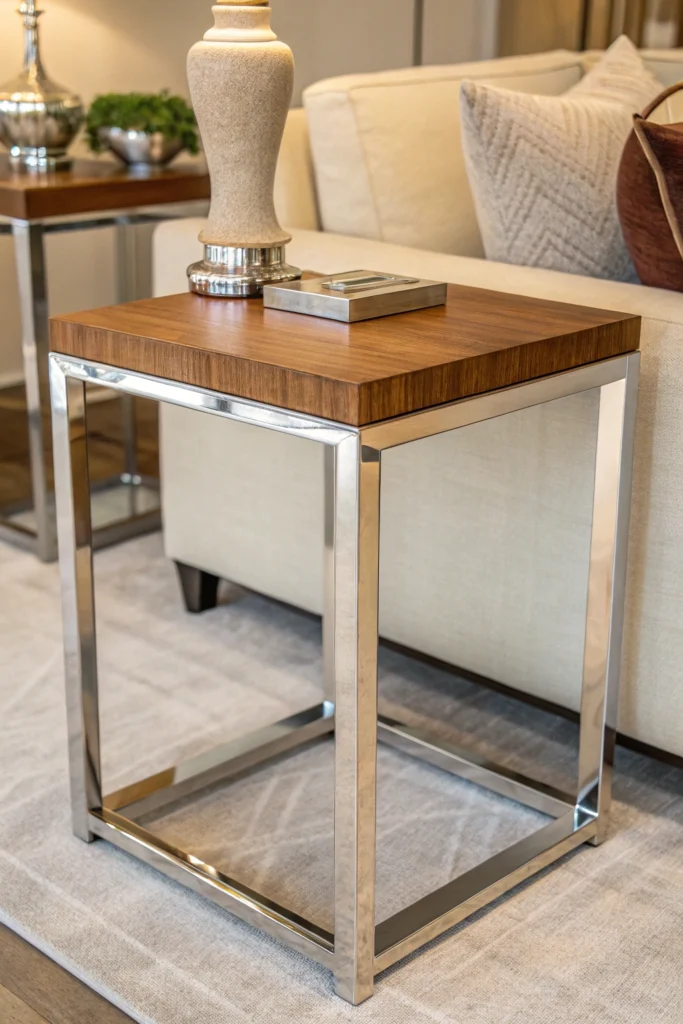
Seventies furniture design embraced both warm teak wood and cool chrome metal, often combining these contrasting materials in single pieces. This combination created visual interest through material juxtaposition while maintaining the era’s modern aesthetic.
Incorporate coffee tables, side tables, or shelving units featuring teak wood with chrome or stainless steel frames and accents. The warm wood tones complement earthy color schemes while chrome adds contemporary shine.
Bar carts with chrome frames and wood shelves bring functional glamour. These mixed-material pieces prevent living rooms from feeling too heavy or monochromatic while nodding to seventies design’s embrace of both natural and industrial materials. Look for vintage pieces at estate sales or seek contemporary reproductions capturing the aesthetic.
13. Install Arc Floor Lamps
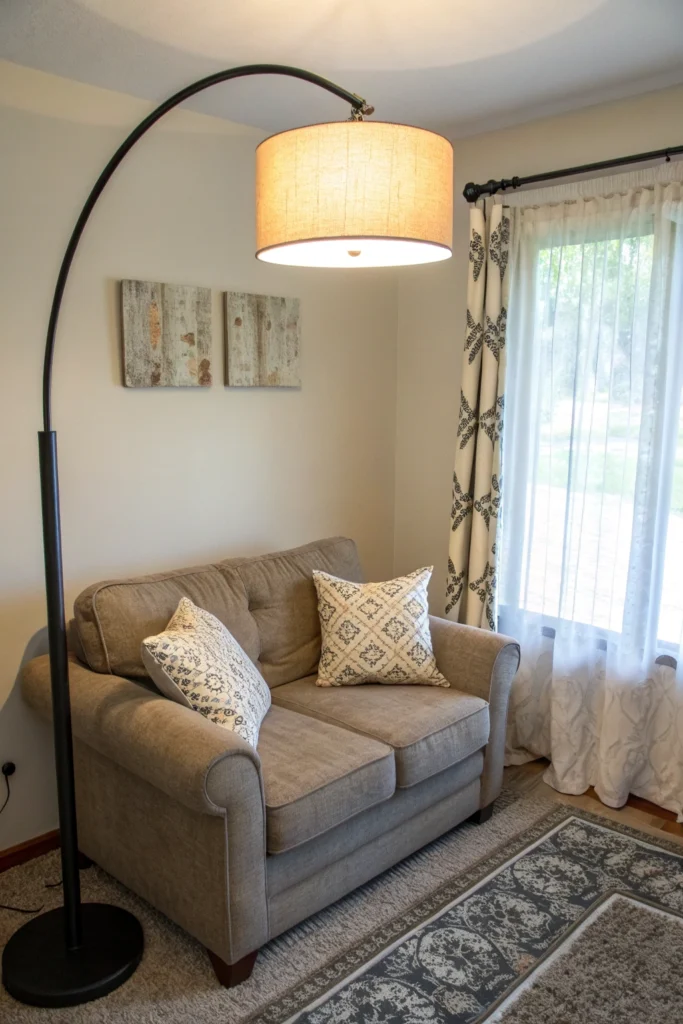
The iconic arc floor lamp became a seventies staple, with its sweeping curved stem extending light over seating areas without requiring side tables. These sculptural lighting fixtures functioned as both practical illumination and dramatic design elements.
Position an arc floor lamp beside your sofa, allowing the extended arm to curve light over seating. Choose versions with chrome or brass finishes and dome shades for authentic period styling. The dramatic curve creates architectural interest while the adjustable nature provides functional task lighting for reading. Arc lamps work particularly well in conversation pit configurations or low-seating arrangements where traditional table lamps prove impractical. This single piece immediately establishes seventies credentials while providing genuine utility.
14. Create Gallery Walls with Vintage Posters and Prints
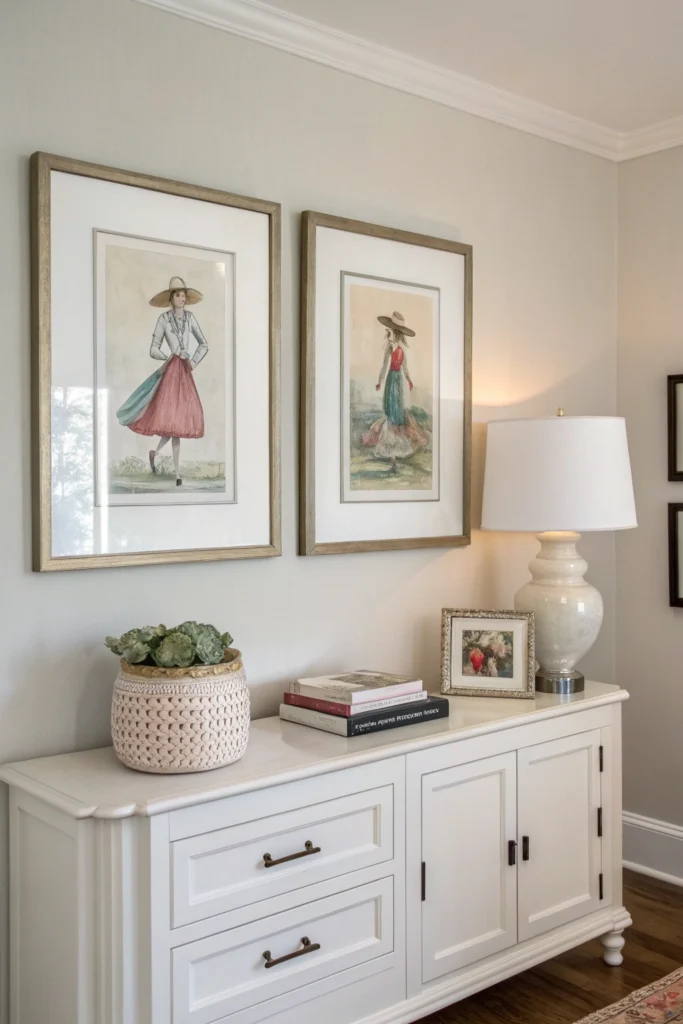
Seventies living rooms often featured eclectic gallery walls mixing concert posters, travel prints, abstract art, and photography in casual, asymmetric arrangements. These personal collections reflected individual interests while adding color and personality.
Curate a collection of vintage seventies posters—perhaps concert advertisements, travel posters, or movie prints from the era. Mix these with abstract prints and personal photographs in varying frame styles and sizes. Arrange pieces asymmetrically rather than in rigid grids, creating organic, collected compositions.
Include authentic vintage finds alongside reproduction prints, building galleries that feel personal rather than decorator-perfect. This approach adds immediate character while celebrating the era’s appreciation for accessible art and personal expression.
15. Incorporate Brass and Smoked Glass Accessories
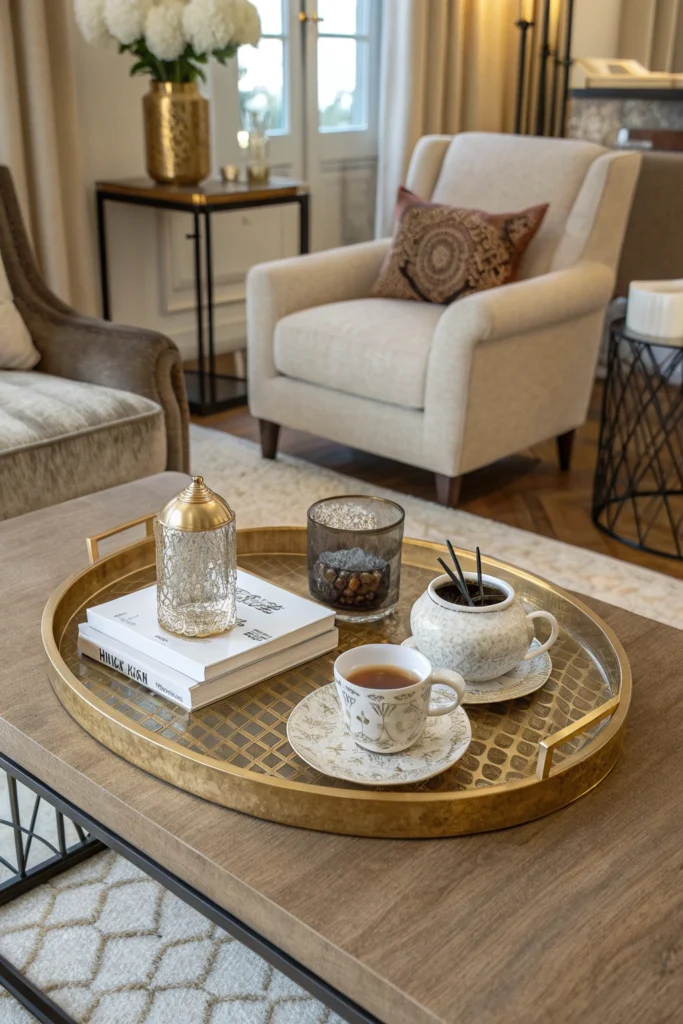
Brass and smoked glass accessories brought glamorous touches to seventies living rooms, appearing in everything from coffee tables to decorative objects. These materials added sophistication while maintaining the warm, rich aesthetic the decade favored.
Use brass candlesticks, planters, or decorative trays to add metallic warmth. Choose coffee tables or side tables with smoked glass tops and brass frames for signature seventies styling. The combination of transparent smoked glass and warm brass creates visual lightness while maintaining material richness. Add brass-framed mirrors, smoked glass vases, or brass sculptural objects.
These accessories provide finishing touches that polish living rooms while reinforcing period authenticity. The warm metallic tones complement earthy color palettes perfectly, creating cohesive schemes where every element supports the overall aesthetic vision.
Creating authentic seventies-inspired living rooms requires balancing boldness with livability, embracing the era’s fearless design choices while adapting them for contemporary life. The best interpretations capture the decade’s warmth, personality, and textural richness without becoming dated museum recreations, proving that great design transcends temporal boundaries.